
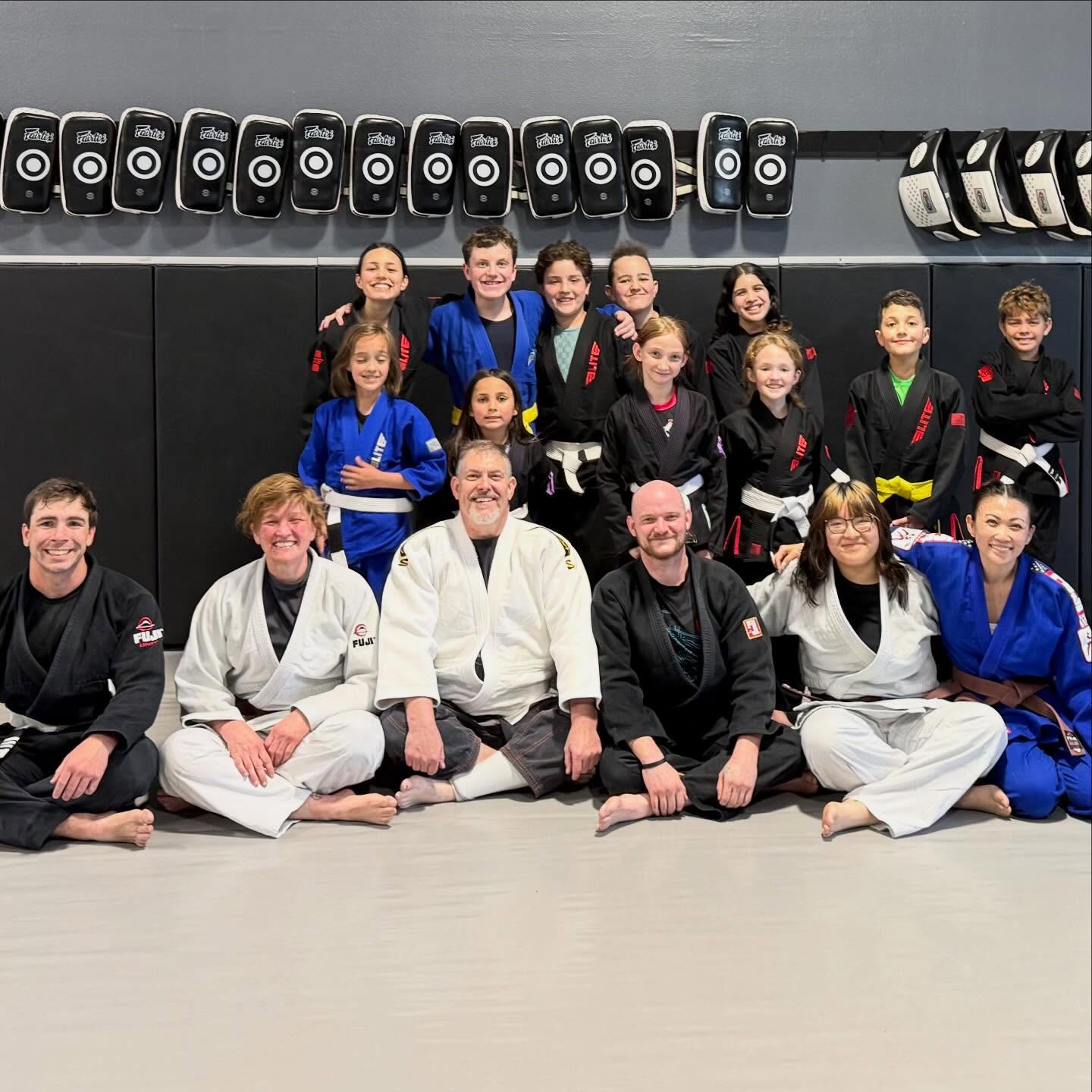
If you’ve been thinking about trying martial arts, one of the first questions to come up is one nobody warns you about: Which class do I even sign up for?
It’s a reasonable thing to feel stuck on. BJJ. Muay Thai. MMA. Judo. The options can feel overwhelming — especially if you’ve never trained before and don’t know the difference between a guard (a ground position in BJJ where you use your legs to control your opponent) and a clinch (a close-range standing position in Muay Thai where fighters tie up and use knees and elbows).
The good news: there’s no wrong answer. But there is a better starting point depending on who you are, what you’re looking for, and what kind of training environment helps you thrive.
Here’s an honest breakdown of each discipline to help you figure out where to begin.
What Is Brazilian Jiu-Jitsu (BJJ)?
Brazilian Jiu-Jitsu — often called BJJ — is a grappling art that focuses on ground fighting and submission holds. Think joint locks and chokes that allow a smaller person to control or submit a larger, stronger opponent.
In class, you’ll spend time drilling techniques (practicing moves with a partner in a controlled, cooperative setting). After drilling, you will eventually spend time rolling which is the BJJ term for live sparring on the ground.
BJJ might be the right starting point if you:
- Are drawn to problem-solving and strategy (BJJ is often described as “physical chess”)
- Want a martial art with a clear belt progression system that tracks your growth over time
- Are interested in competing in gi (traditional uniform) or no-gi (shorts and rash guard) formats
- Prefer a lower-impact way to spar where brute strength matters less than technique
At Absolute MMA, the BJJ program is built around technical fundamentals and coached in a way that makes beginners feel like they belong on the mat from day one.
What Is Muay Thai?

Muay Thai is a striking art from Thailand known as the “Art of Eight Limbs” — because it uses punches, kicks, elbows, and knees. It’s one of the most effective stand-up fighting systems in the world and doubles as an incredible full-body workout.
In a Muay Thai class, you’ll work on pad work (hitting focus mitts or Thai pads held by a partner or coach), bag work, footwork, and eventually controlled sparring.
Muay Thai might be the right starting point if you:
- Want a high-energy, cardio-focused workout with real martial arts skills attached
- Are interested in striking and stand-up fighting
- Enjoy working with a partner and want to build confidence in your hands and feet
- Are drawn to the rhythm and flow of combinations — punches, kicks, knees, elbows working together
Muay Thai at Absolute MMA is taught in a way that’s approachable for beginners while still being genuinely challenging. You don’t need to be in shape before you start — the training builds that for you.
What About MMA Classes?
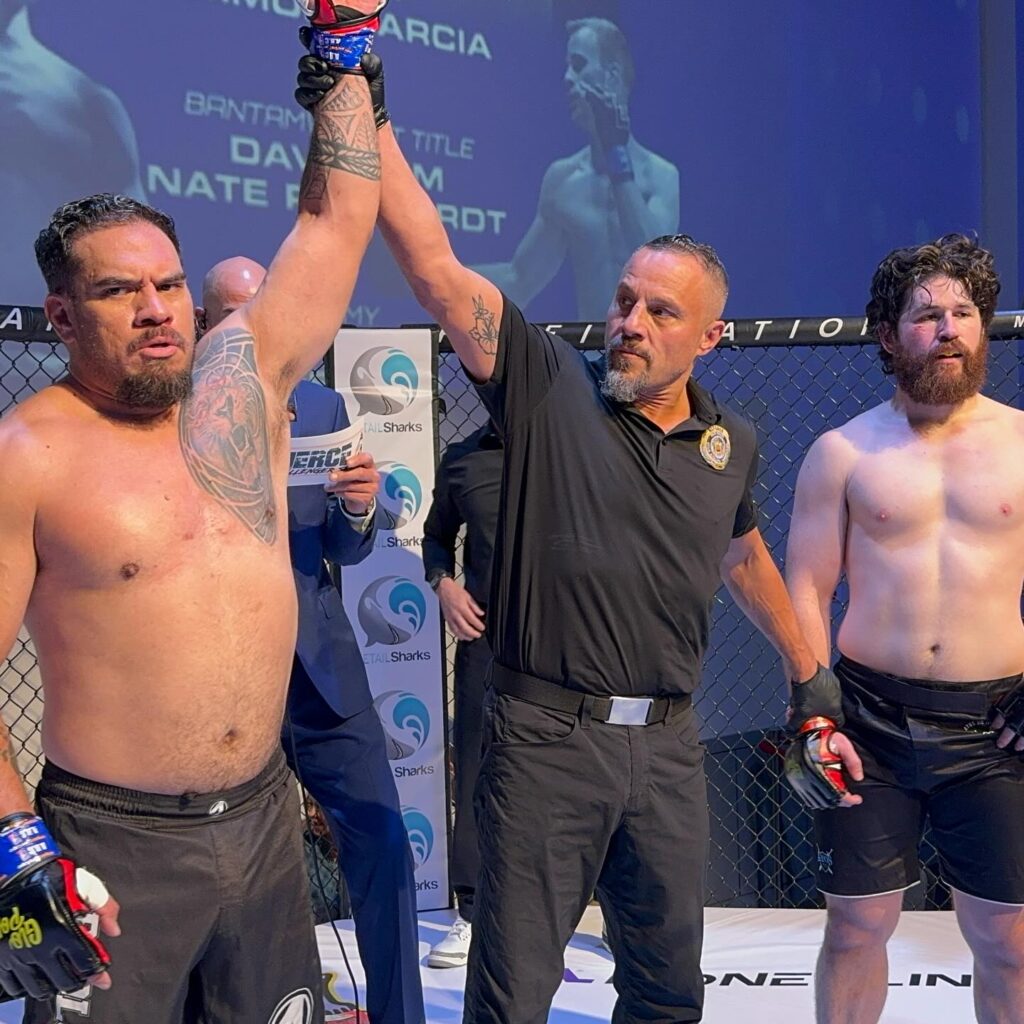
MMA (Mixed Martial Arts) combines striking (like Muay Thai) with grappling (like BJJ or wrestling). It’s the most complete martial art from a self-defense and sport perspective, but also the most complex.
Because MMA pulls from multiple disciplines, students benefit from having some foundation in at least one area before jumping in.
MMA might be the right starting point if you:
- Already have a martial arts background and want to integrate striking and grappling
- Want to train specifically for MMA competition
- Have foundational skills and are ready to put them together
For most beginners, starting in BJJ or Muay Thai first builds a stronger base. If MMA is your goal from day one, our coaches can help you find the right entry point.
How to Choose: A Simple Starting Framework
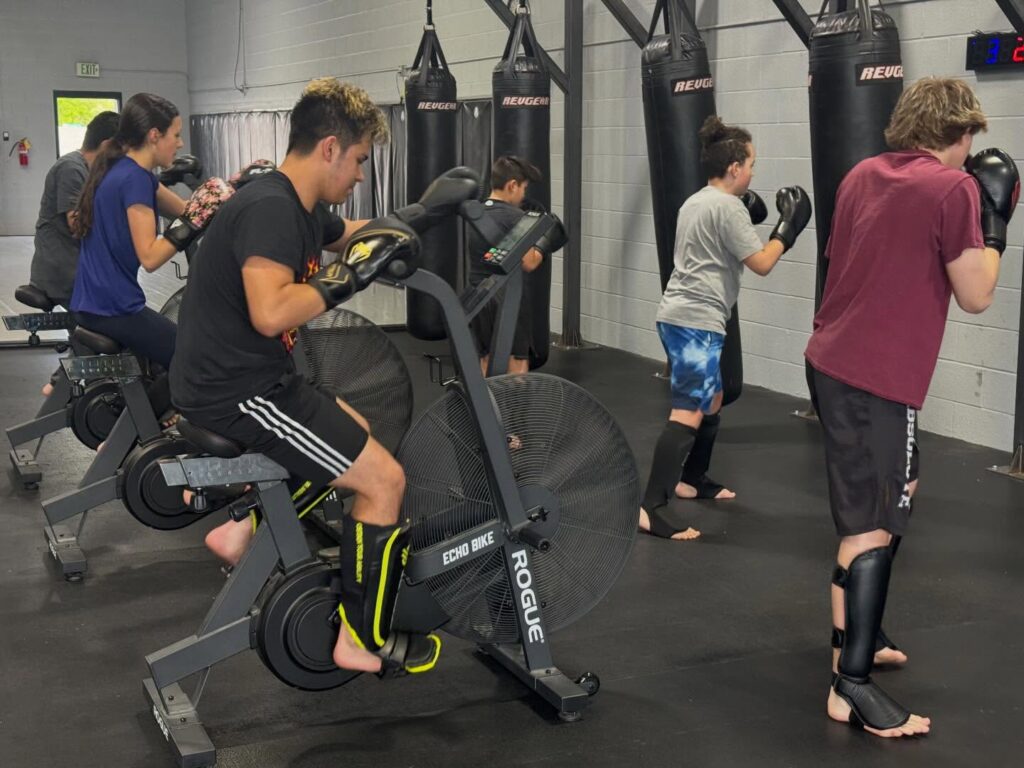
Still not sure? Here’s a quick way to think about it:
Choose BJJ if: You want a technical, strategy-based martial art with a clear development path and the ability to spar in a lower-impact way early on.
Choose Muay Thai if: You want a high-energy workout built around striking, you’re motivated by cardio and conditioning, or you’ve always wanted to learn to kick and punch with real technique.
Choose MMA if: You already have experience in at least one discipline and you’re ready to start combining skills.
None of these are permanent decisions. Plenty of students pick one class, fall in love with it, and eventually add a second. The goal is just to get started.
And you’re not locked in. Many students at Absolute MMA train in more than one discipline — it’s common to see a BJJ student add Muay Thai after a few months, or vice versa.
You Don’t Have to Figure This Out Alone
Even if you haven’t fully answered “Which class do I even sign up for?”, the coaches at Absolute MMA in West Jordan have helped students at every level. Total beginners, returning athletes, and people cross-training for the first time find their footing. You’re not expected to have it figured out before you walk in. You have team around you to support you in your journey.
Ready to see which class feels right? Come try it — schedule a free trial class here:
Frequently Asked Questions
Q: Do I need any martial arts experience to join Absolute MMA?
A: No experience is necessary. Absolute MMA welcomes complete beginners in both BJJ and Muay Thai. Coaches structure beginner classes to meet students where they are, and you’ll never be thrown into a situation beyond your skill level without guidance.
Q: Is BJJ or Muay Thai better for self-defense?
A: Both are highly effective for self-defense, but in different situations. Muay Thai prepares you for stand-up striking situations, while BJJ focuses on what happens if a conflict goes to the ground. Many students train both for a well-rounded skill set. Your coaches at Absolute MMA can help you think through your personal goals.
Q: Can I try a class before I commit to a membership?
A: Yes. Absolute MMA offers a free trial class so you can experience the gym, meet the coaches, and see how a class feels before making any decisions. You can sign up here:
Q: What should I wear to my first class?
A: For a BJJ trial class, comfortable athletic clothes work fine — board shorts and a t-shirt are common. If you continue and join the program, you’ll eventually want a gi (the traditional BJJ uniform). For Muay Thai, athletic shorts and a t-shirt are all you need to start. The gym can help you figure out gear once you decide to keep training.
Q: How long does it take to get good at BJJ or Muay Thai?
A: Progress looks different for every student and depends on consistency and how often you train. Most students notice real improvement within their first few months. BJJ has a belt system (white, blue, purple, brown, black) that provides clear milestones. Muay Thai progress shows up in your growing comfort with combinations, footwork, and sparring.
Q: Can I train both BJJ and Muay Thai at Absolute MMA?
A: Absolutely. Many students at Absolute MMA cross-train in multiple disciplines. If you’re interested in training both, the coaching staff can help you build a schedule that balances both programs effectively without overloading you early on.