
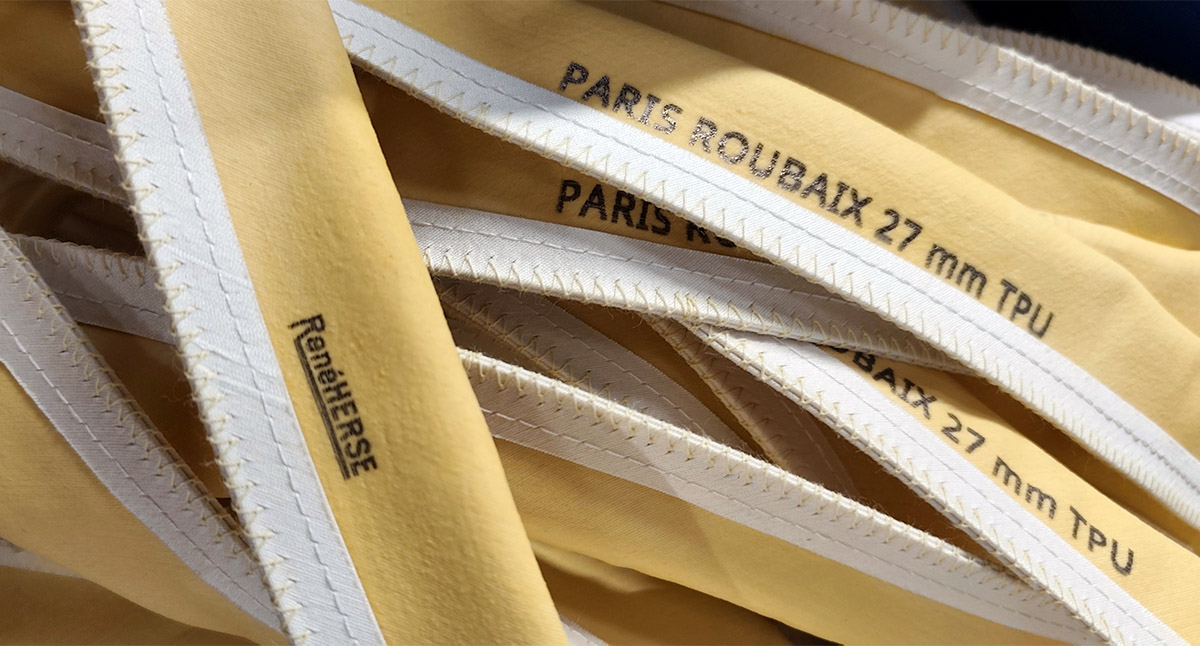
After years of promoting ‘Tubeless for Everybody,’ bike industry and media are finally realizing that many riders prefer tubes—and for good reasons. Sure, if you’re a pro gravel racer at Unbound, you’ll probably want to set up your tires tubeless. Riding in a peloton, you’ll hit huge rocks that you don’t even see coming, and the risk of pinch flats and sidewall cuts is ever-present. And if most of your riding is on the shoulders of busy highways, where steel wires from exploded truck tires work their way into the most puncture-proof tires, tubeless may also be your preferred choice (although you can run sealant in TPU tubes, too). Tubeless is great—that’s why most Rene Herse tires are tubeless-compatible, and we’ve developed our Supple Sealant that’s especially formulated for supple high-performance tires.
For many of us, the maintenance of tubeless setups is a drawback. The extra speed of TPU tubes is appealing, too, and so is their superior ride feel. TPU tubes weigh less—not just less than the tubeless sealant for a given tire, but also less than latex or butyl tubes. They pack ultra-small, so it’s easy to carry spare tubes. Compared to butyl, TPU is stronger: Despite their lighter weight, TPU tubes are more resistant to pinch flats. Rene Herse TPU tubes have patented all-metal valves that eliminate the mysterious leaks that can occur when metal valve cores are screwed into plastic valve stems. There’s a lot to like about TPU tubes.
Now that the industry has discovered TPU tubes, the focus is mostly on the popular 700C sizes. Here at Rene Herse Cycles, we offer those as well, but we’re also making TPU tubes for 26″ and 650B tires. And now we’re expanding our program to include TPU tubes for 16″ wheels—like those found on Brompton bikes. Better ride quality and lighter weight are equally welcome on a small-wheeled folding bike… Until we make supple Rene Herse tires for small-wheeled bikes, you could call this the next-best thing.
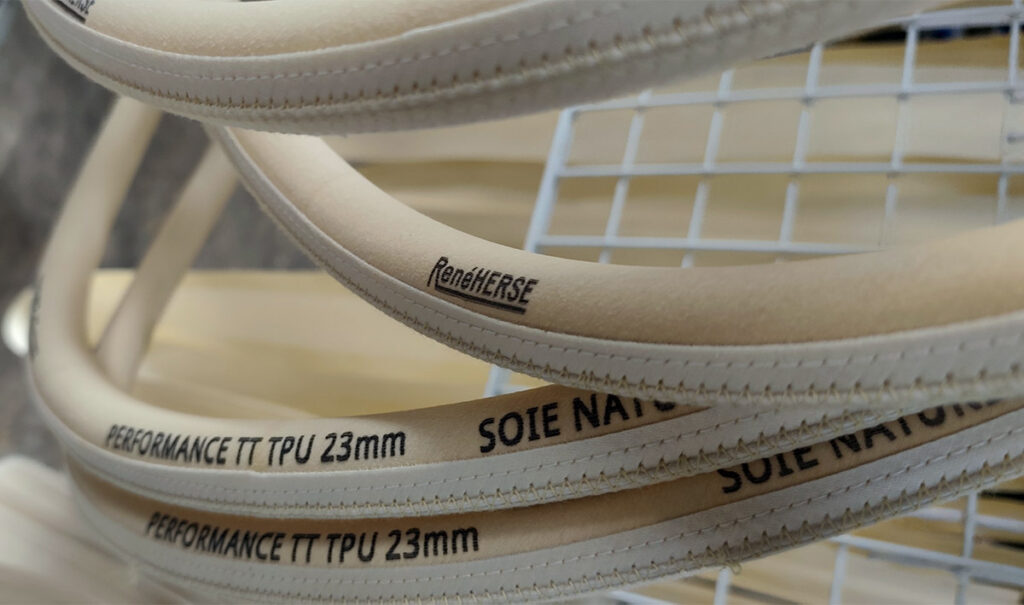
We’re also offering Rene Herse × FMB tubular tires with TPU tubes. Tubulars used to come with latex tubes: great for speed and comfort, but also requiring daily inflation. TPU tubes are even lighter, just as fast, and a little more puncture-resistant. And they don’t leak air… (The photos show our tubular tires during manufacture, before the tread is glued on by hand.)
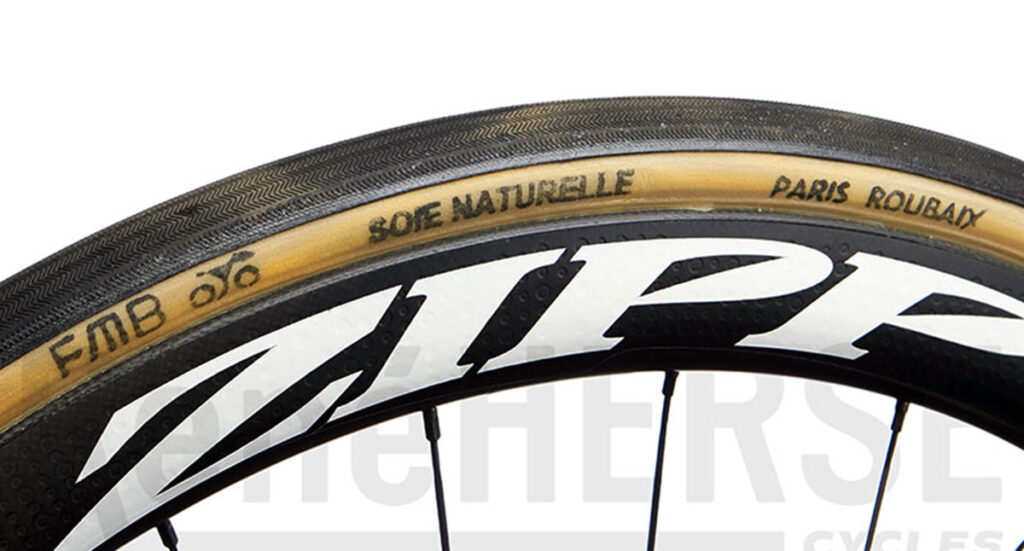
Not long ago, all pro racers were on tubular tires. For important races, rather than ride their sponsors’ tires, they bought their own tubulars from FMB. In recent years, sponsors have been pushing their tubeless tires, so you don’t see many tubulars in the pro peloton any longer. There’s another reason tubulars have fallen out of fashion: The advantage of tubular tires gets smaller with wide tires. When racers were on 21.5 or 23 mm tires, tubulars made a huge difference in real-road speed, traction and comfort. With 30 mm tires, supple high-performance clinchers offer the same performance and feel.
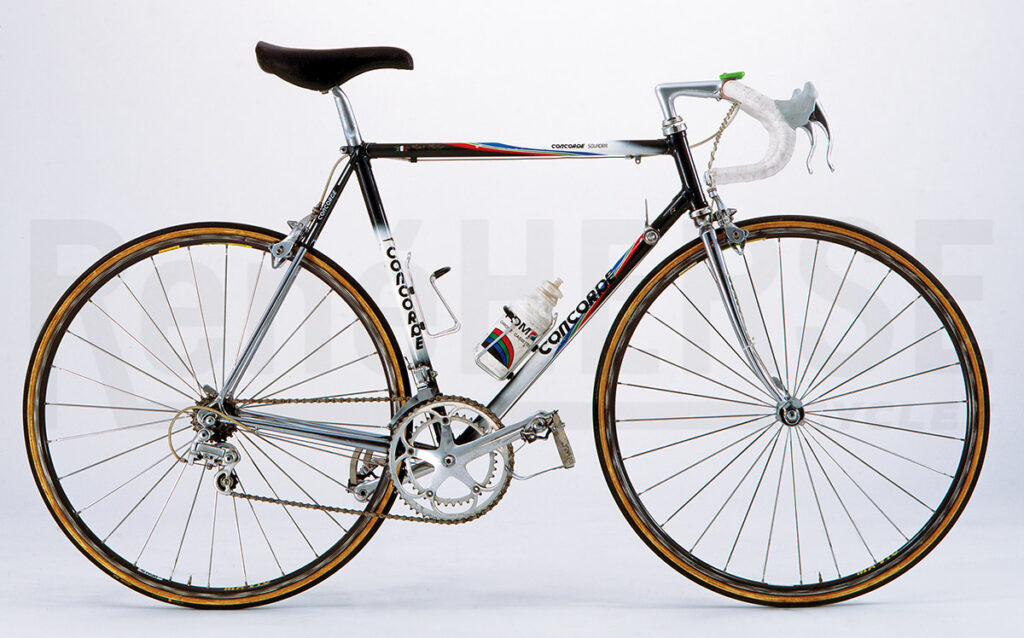
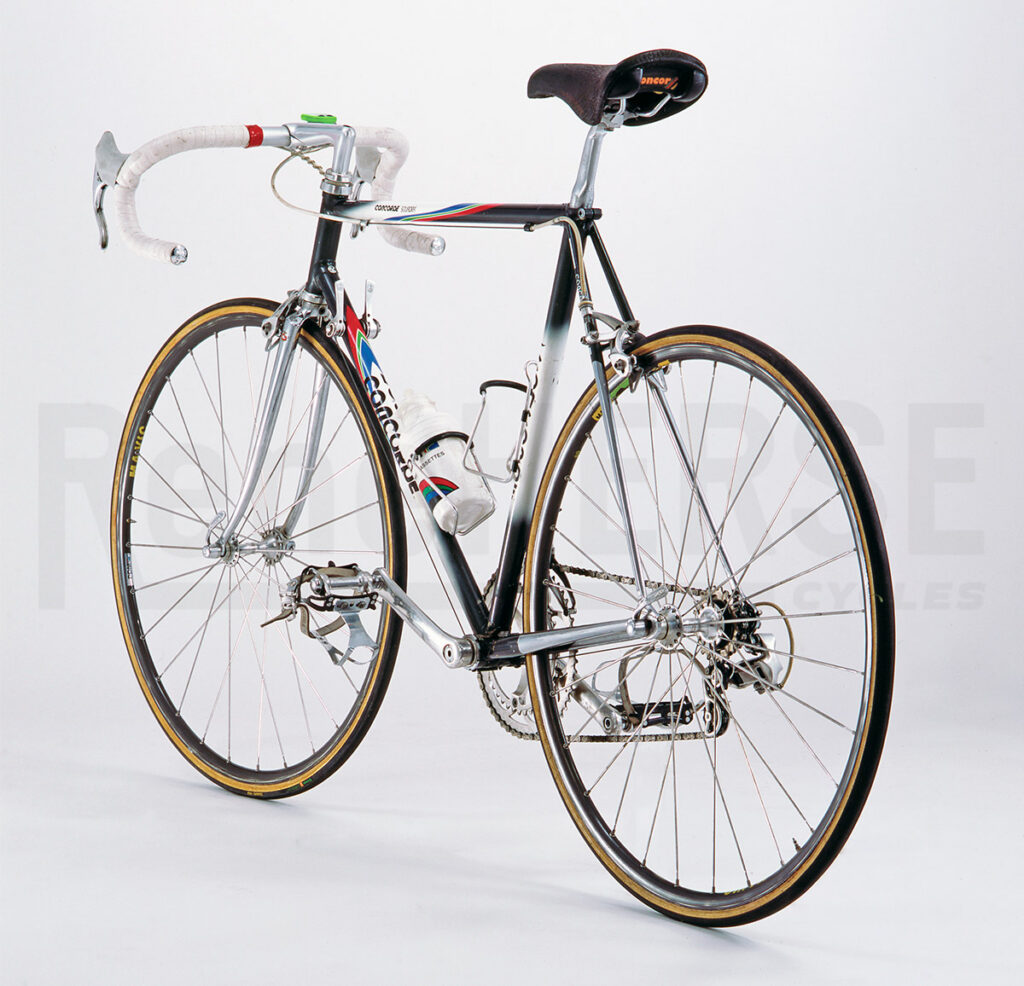
Then why would anybody run tubular tires in this day and age? The main reason: There are so many wonderful older road bikes out there. Above is the bike Sean Kelly rode to victory in the Giro di Lombardia. Bikes like these are the ultimate bargains in the bike world. The race-winning bikes of former pros are rare and sought-after, but bikes without that history are plentiful and cheap—and they have the same wonderful ride.
There’s one drawback: Tire clearance is often limited. Back in the day, Kelly raced on 21.5 mm tires. Which sounds terrible, until you realize that racers like Kelly had a secret advantage over most weekend warriors: They rode on ultra-supple tubular tires.
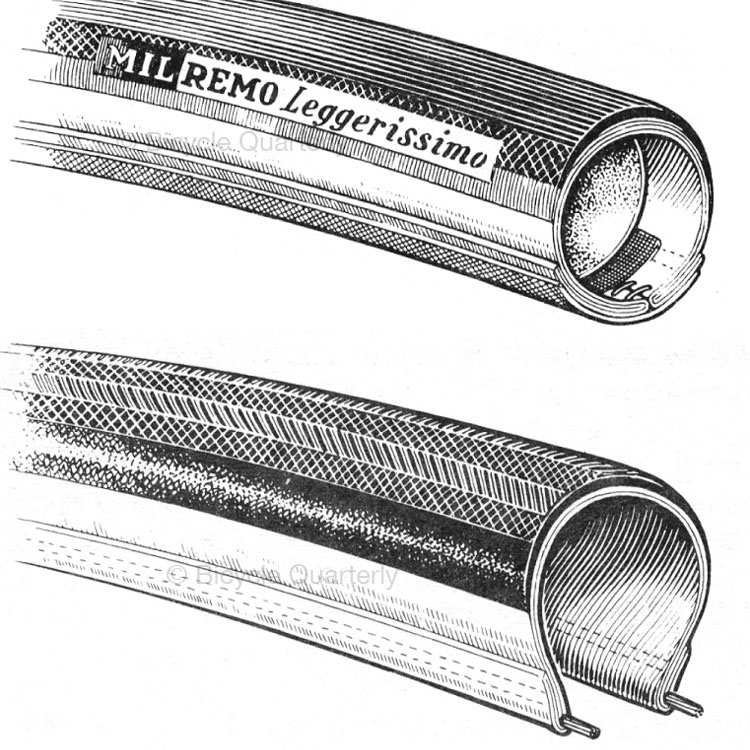
Tubulars offer a much more supple ride than standard ‘clincher’ tires, because they sit on top of the rim and flex around their entire perimeter (top). Clincher tires flex only on three sides—the fourth side is made up by the rim (bottom). In real-life terms, a road bike on tubulars feels like it’s running tires that are 20% wider (compared to clinchers). So if your bike has clearances for 25 mm tires, tubulars will give you the feel of riding on 30 mm tires. That’s with cotton casings. FMB tubulars are also available with silk casings, which take performance and feel to another level. When you add the advantages of lighter rim and tire, there’s a lot to like about tubulars.
The bane of tubular tires were flats: To patch a tube, you had to cut open the threads that hold the tubular together, pull out the tube, patch it, reinsert it, and sew the tire back together. It’s not super-difficult, and it takes about 30 minutes per tire (less with practice). Still, that isn’t something you’ll want to do frequently.
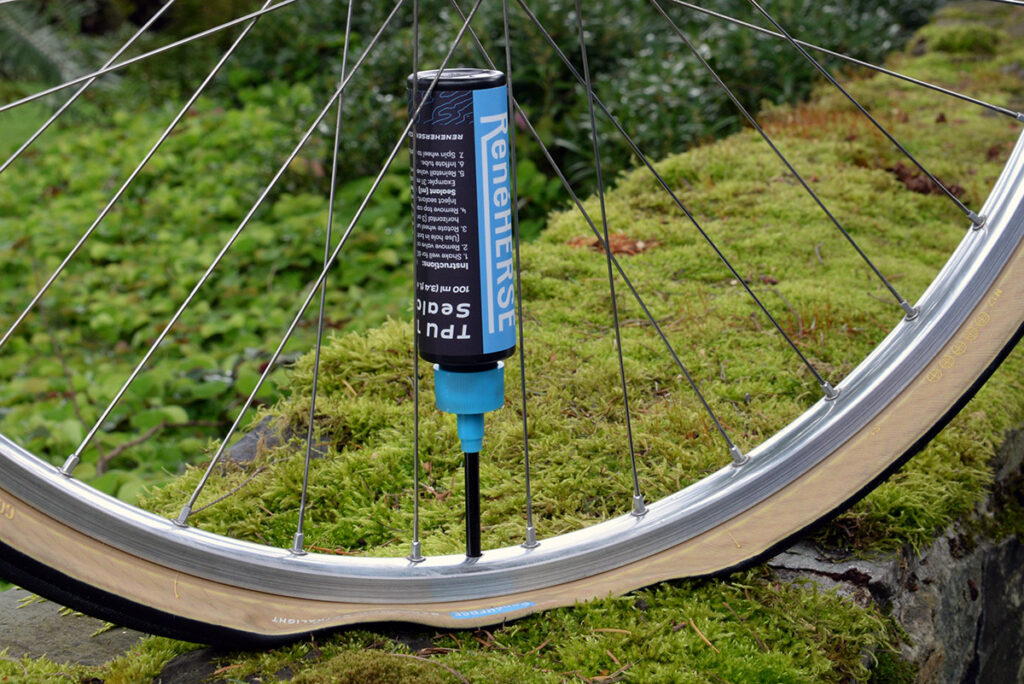
Fortunately, with TPU tubes, you can just inject a little sealant and seal most punctures without even taking the wheel out of the frame. That’s a game-changer when it comes to running tubulars…
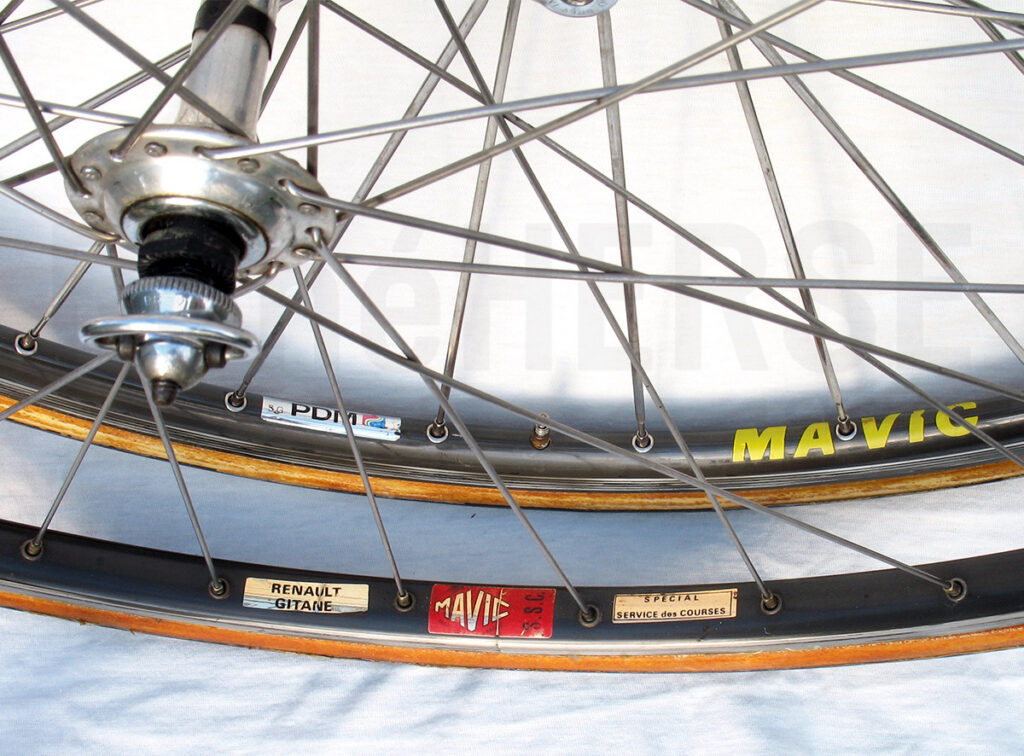
If you’ve got an older road bike, and you’re tubular-curious, you’ll find that used tubular wheelsets are dirt-cheap these days. That’s because there is a huge over-supply: Most racers used to have one (or several) tubular wheelsets for racing, so there are literally thousands of tubular wheelsets out there, looking for new owners. And since the wheels were used only for racing, many have seen only few miles and almost no braking. Unless they are pro wheels (above) that show the traces of many wet and gritty spring classics…
If you’ve got an older road bike you love, get yourself a tubular wheelset and a good set of tubular tires. (Stay away from the cheap ones, they are truly awful!) You’ll find everything you love is amplified to the next dimension, while the bumpy ride disappears.
Why no tubulars for wide tires? With a wide tire, the rim makes up much less of the tire’s circumference, so there’s not much difference in the ride quality between tubulars and clinchers. That’s why we don’t offer tubulars wider than 30 mm.
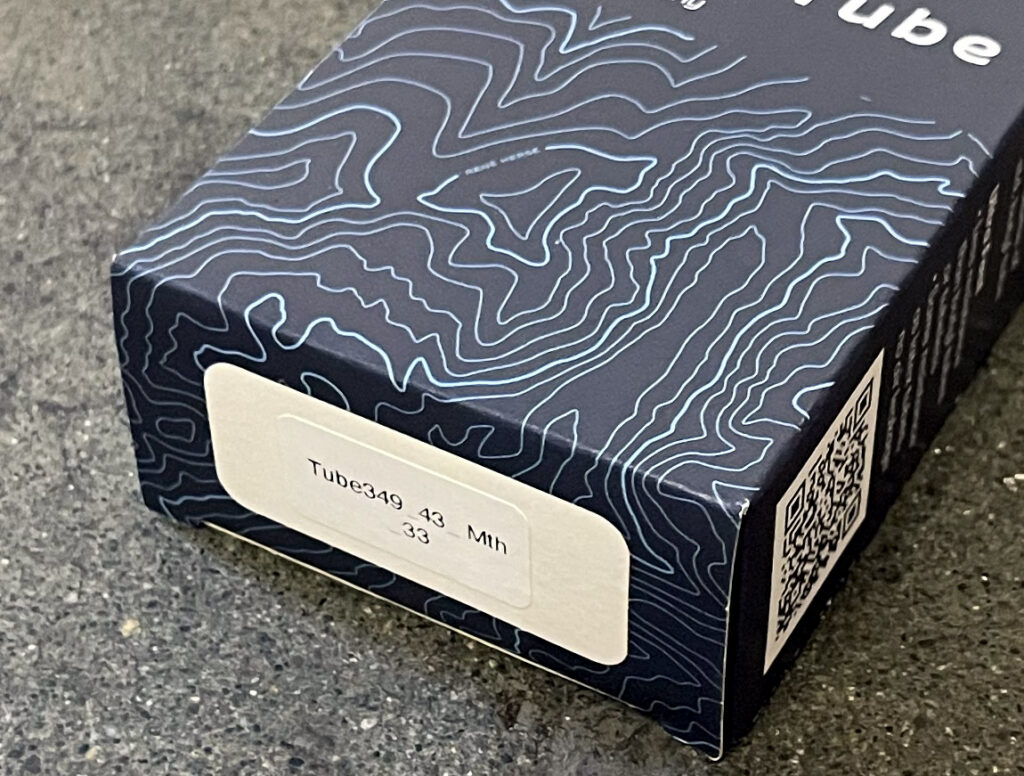
Small-wheel TPU tubes and Rene Herse × FMB tubular tires with TPU tubes are in stock now, in limited quantities. (We’ve also got a few tubulars with latex tubes at last year’s prices.) All other TPU tubes are in stock as well.
More Information:
Photo credits: FMB (tubular production); J-P Pradères (Sean Kelly bike)