
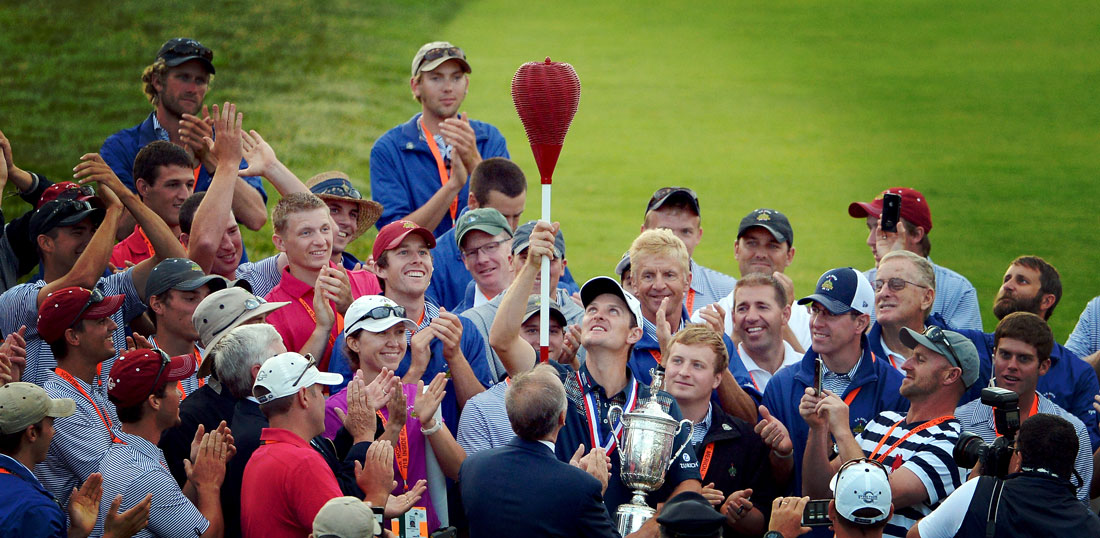
PHILADELPHIA, PENNSYLVANIA | Few American cities have as much history as Philadelphia. Founded by William Penn in 1682 and located on the Delaware River in the southeast corner of the Keystone State, it was America’s first capital and where the Declaration of Independence was signed in 1776. That same year, an upholsterer named Betsy Ross is believed to have sewn the country’s first flag in her Arch Street home.
The City of Brotherly Love was also where the polymath Benjamin Franklin made his home after moving here from Boston in 1723 as a teenager – and then made his mark as an inventor, publisher and statesman. He was one of the drafters and signers of the Declaration of Independence and the U.S. Constitution.
A little more than a century after Franklin formally endorsed those documents, golf started to take hold in town. The first seeds were sown in 1890 at the Philadelphia Country Club when it constructed a three-hole course that used empty cans of French peas as cups. Then in 1895, the Philadelphia Cricket Club, which is regarded as the oldest country club in America, having been founded in 1854, created a nine-holer. The sport became so popular there that the club quickly built a second loop, by which time local players had established the Golf Association of Philadelphia.
Also known as the GAP and formed in 1897, it was the first regional golf association in America.
As the Mid-Atlantic metropolis built upon those developments, it became one of the country’s cradles of the game and among its greatest golf towns. And that position is especially apparent this year, with the PGA Championship being staged this month at Aronimink, the U.S. Junior Amateur at Saucon Valley in July and the U.S. Amateur at Merion in August, making Philadelphia the center of the golf universe for much of the 2026 season. And recent comments by PGA Tour CEO Brian Rolapp about adding events in major markets that do not currently have them, like this city, suggest more could be on the way.
Ask area residents why golf thrives here, and they provide a multitude of reasons.
“We are blessed with great courses built by great architects,” said Sid Smith, a Texas transplant and Merion Golf Club member who moved here in 1974 when he enrolled at the University of Pennsylvania. “But it’s also the passion people have for the game. They love the history, the purity and sanctity of the sport and its traditions. And the desire to give back to golf is strong.”
Born and raised in Greater Philadelphia, which is home to more than 6 million residents, 2008 U.S. Senior Amateur champion Buddy Marucci agrees with those assessments.
“Golf is a huge part of the city’s DNA,” said Marucci, the runner-up to Tiger Woods in the 1995 U.S. Amateur who also played on two U.S. Walker Cup teams, including the winning 1997 squad, and captained two other American teams to victory in that event.
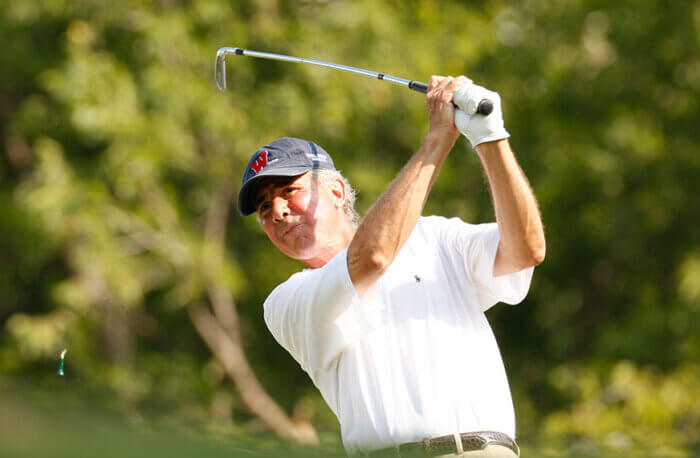
Indeed, it is, adds Marty Emeno, the director of communications and operations at the GAP for the past quarter century.
“Philadelphians play so much that we have a special handicap computer for winter golf, so people can maintain their indexes through that season,” he said. “They also support the national tournaments we host to the extent that attendance and merchandise sales records are invariably broken whenever one is staged here.”
In his nearly 40 years as the head professional at Huntingdon Valley Country Club, which is located northeast of the city and boasts 27 holes designed by William Flynn, Jack Connelly has developed a similar take on local golfers.
“Their enthusiasm for the sport is second to none,” said Connelly, who also served a term as president of the PGA of America. “They know the game, too, and they respect it.”