
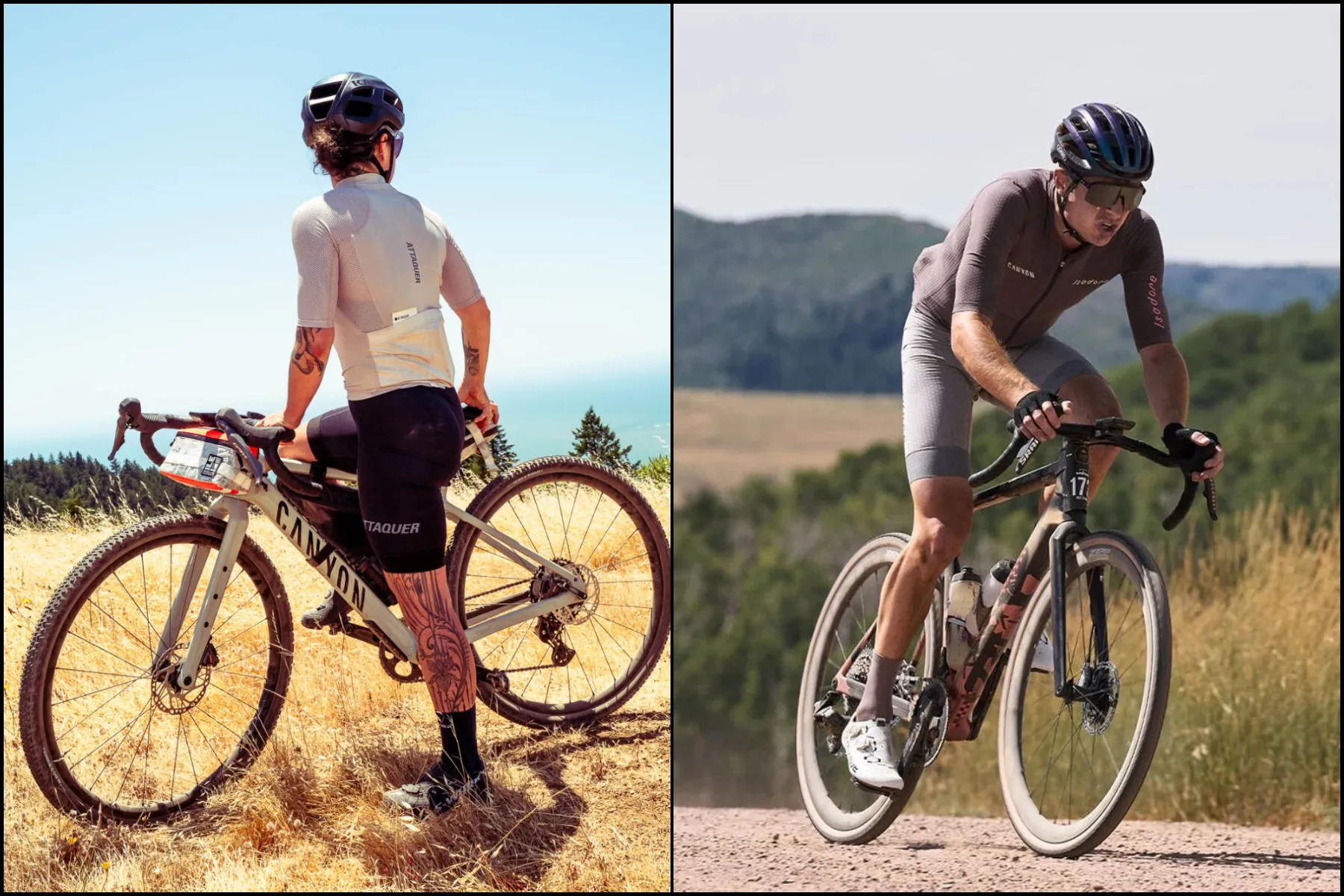
The Canyon Grizl and the Canyon Grail are both ultra-modern gravel bikes that offer versatility and fun across a range of prices and specs. Keen on both but can’t decide which one is right for you? In this detailed comparison we’ll break down the key differences between the bikes, making the Grail vs Grizl decision an easier one.
Having said that, the 2025 Grizl refresh means that choosing has become more difficult, as there are now two Grizl platforms to choose from. Both are gravel adventure bikes based on the same frameset and aimed at rougher terrain and multi-day rides.
The Grizl OG (for Original Graveller) is most akin to the previous model and designed for short hops as well as longer rides. The Grizl ESC (for Escape) is set up for longer excursions and multi-day adventures, with (yet another) unique Canyon handlebar. Both offer the option to choose a fully integrated dynamo-powered lighting and ancillary power system.
There’s also an alloy Grizl, which has had an update in 2026 to increase tyre clearance, lower weight and add extra mounting points. It too offers both conventional handlebars and an alternative Escape version.
Canyon has its own 40mm travel suspension fork fitted to some models of both the Grail and Grizl and there’s an electric Grizl:ON option too.
The Grail too had a major update in October 2023, which transformed it from the original all-rounder gravel bike launched in 2018 into an out-and-out gravel race bike. To scratch the competitive itch, there’s now a high spec CFR (for Canyon Factory Racing) frameset, which drops the claimed weight of a complete bike as low as 8kg.
So, two gravel bikes with different priorities. But which is right for you – the latest Canyon Grizl or the Canyon Grail? Read on to find out…
Canyon Grizl vs Grail: Key features at a glance
Canyon Grail
- Fast gravel race bike
- Carbon only with three grades: SL, SLX and CFR
- Narrower 42mm tyre clearance
- Double Drop bars and the option to add aero bar extensions
- Two specs with a suspension fork
- Quicker and lighter than the Grizl
- Fewer mounting points, although with the option to add more
- Read our Canyon Grail CF SLX 8 Di2 review
Canyon Grizl
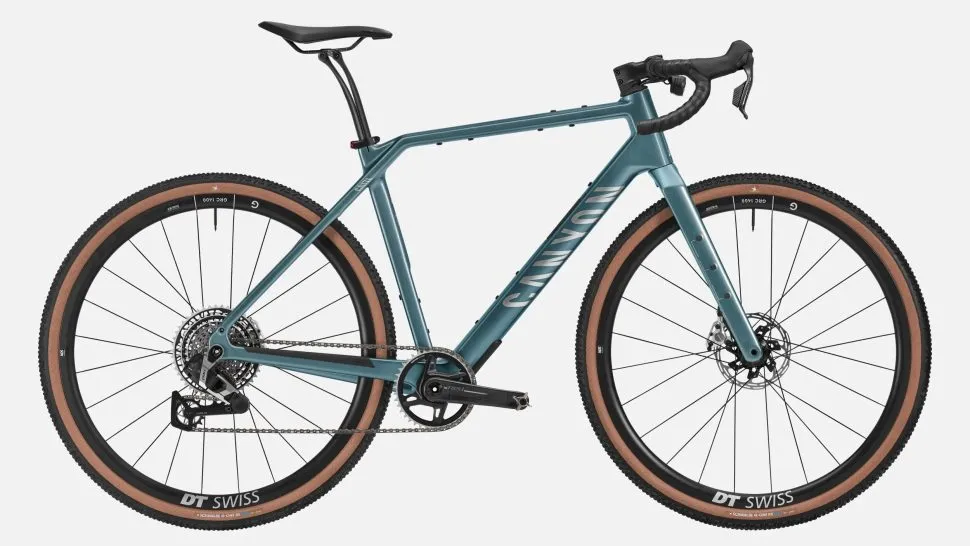
- A totally off-road-focused gravel bike
- More stable on rough terrain
- Available in carbon CF and alloy AL ranges
- Wider 54mm tyre clearance
- Extensive mounting points
- OG and ESC specs both 1x only but with different gearing and handlebars
- Carbon options with dynamo lighting, a suspension fork and with a motor
- Read our Canyon Grizl CF 7 review / Read our 2026 Canyon Grizl AL launch story
Canyon Grizl vs. Grail: Tyre clearance and mudguard compatibility
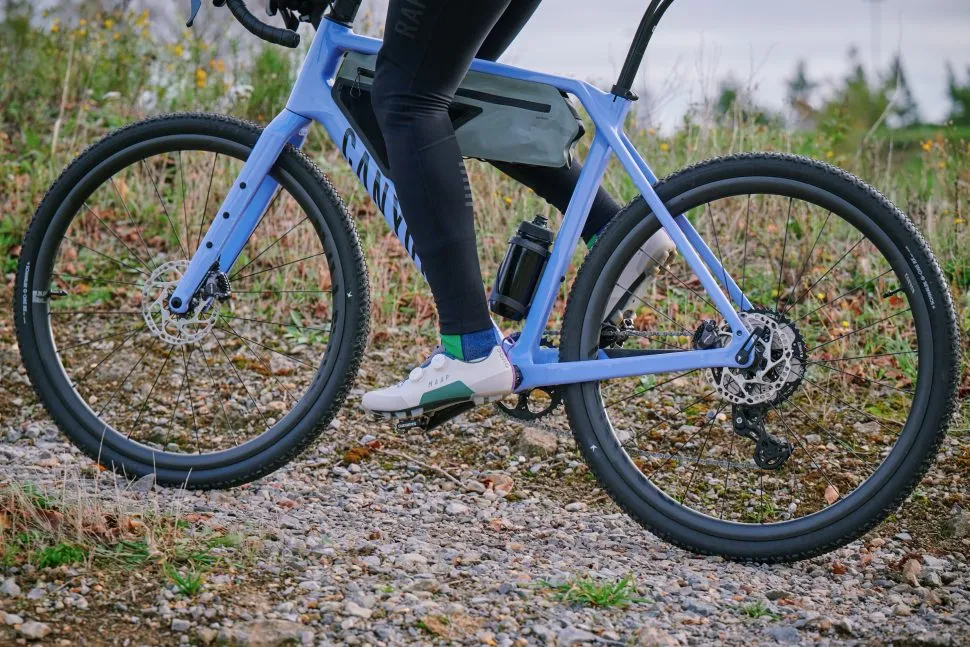
The Grail comes with 40mm tyres and can accept tyres up to 42mm wide. The carbon and alloy Grizl come with 45mm tyres and can accept alternatives up to 54mm wide.
Both bikes make use of different Schwalbe G-One tyres, with the Grail favouring the faster-rolling G-One RS, while the Grizl is fitted with a variety of knobblier G-One tyres, all potentially offering better grip in loose conditions.
Tyre clearance is a good indicator of how far you can push a bike on more extreme trails. Wider tyres provide more grip, better cushioning, and can be run softer. On the flip side, they’re heavier and generate more rolling resistance, something especially noticeable on smoother surfaces.
Bikes will come with a particular size tyre fitted, and most brands will also suggest a maximum that the bike can accommodate. It’s worth considering that you might want to use some of the space between these two numbers for mudguards (fenders) – both the Grail and Grizl accept Canyon’s proprietary mudguards (but not standard guards, unless you’re prepared to get creative with mounting solutions).
Canyon Grizl vs Grail: Geometry
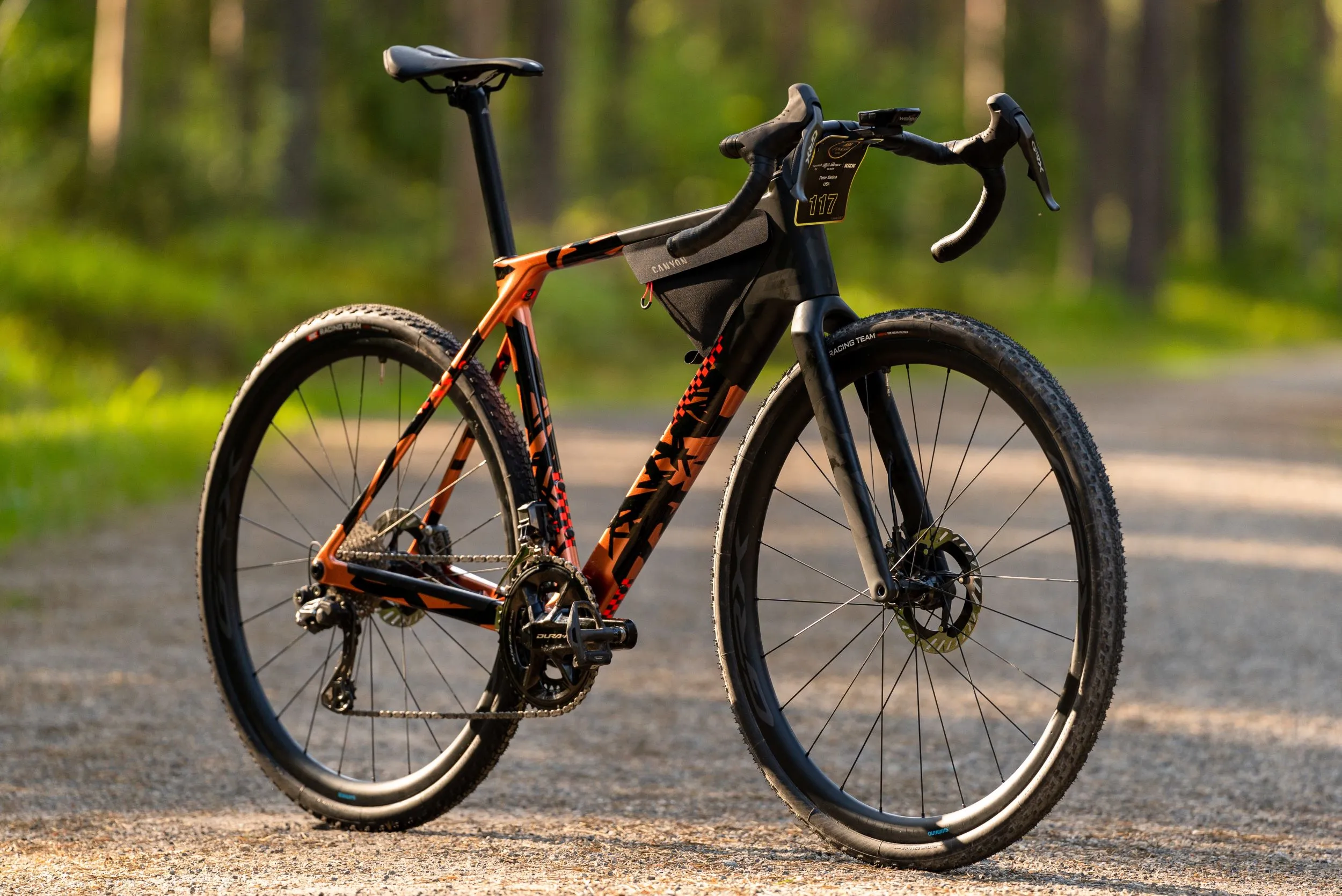
Frame geometry describes the angles and other measurements that make up the bike.
Without delving too deep into the details, bikes often tend towards feeling either nimble or stable. A nimble and reactive bike feels great when whipping around a flat corner but less fun when rattling down a loose and rocky trail.
Generally, the more rugged the terrain, the more you’ll appreciate stability over nimbleness. However, take this too far and the bike can feel sluggish.
To adapt a popular phrase, pick a horse (or bicycle) suited in stature to the prevailing conditions, and you’ll be onto a winner.
So how do the Grizl and Grail stack up? Both bikes are relatively upright in the interests of comfort and a slightly more rearward distribution of their rider’s weight, although the Grizl is designed to promote a more upright ride position than the Grail. The Grizl also has a slacker head tube angle, longer chainstays and a longer wheelbase for greater stability.
Both also have reasonably long wheelbases and a mountain bike-esque combination of long top tubes and short stems. Bottom bracket drops are the same on both bikes, although Canyon has followed the modern trend and relaxed the head tube angle on the second generation Grail from its predecessor.
Canyon quotes ‘Stack+’ and ‘Reach+’ for its bikes, also called Effective Stack and Reach, which take into account the dimensions of the bar and stem. It’s useful for comparisons within Canyon’s own range, but less helpful elsewhere as few other brands adopt this approach.
Canyon Grizl vs Grail: Handlebars
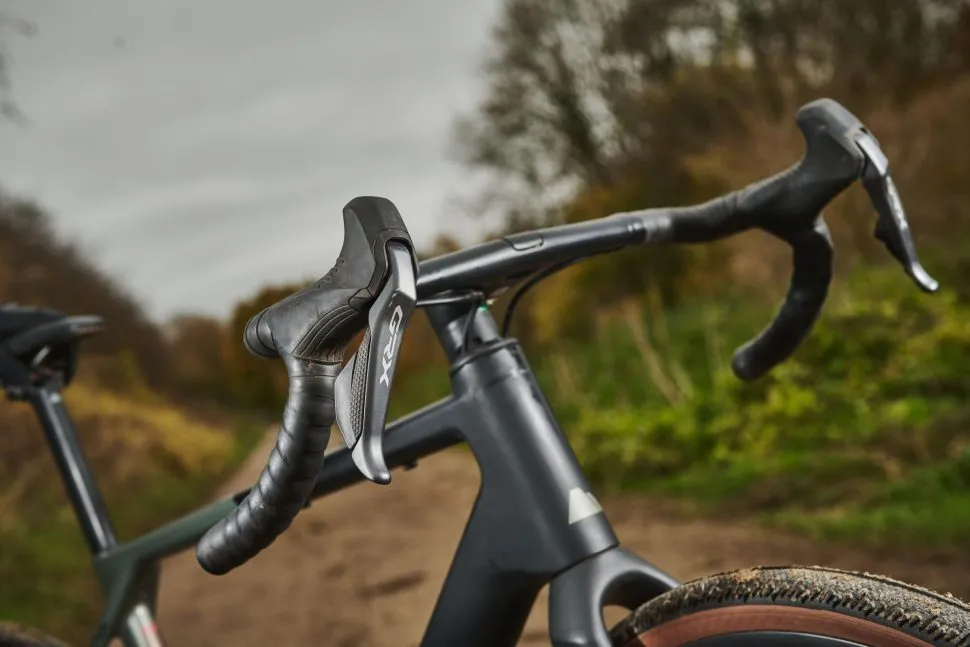
The original Grail’s double decker handlebar has been replaced in the second generation Grail by the one-piece Double Drop bar/stem on higher specs in the interests of aerodynamics – Canyon claims to see a 9.1 watts saving at 45kmh in its wind-tunnel testing.
The Double Drop bar slopes downward from the stem to the brake levers, which lowers the rider’s frontal profile. The single piece design means that you can’t easily change effective stem length or bar width, but Canyon offers a narrower 40mm wide bar as an aftermarket option, again in the interest of lowering wind resistance.
Canyon sells aero extensions and a range of accessories which can be fitted to the Double Drop bar to make you even more aero or set the bike up for night riding or with a bike computer.
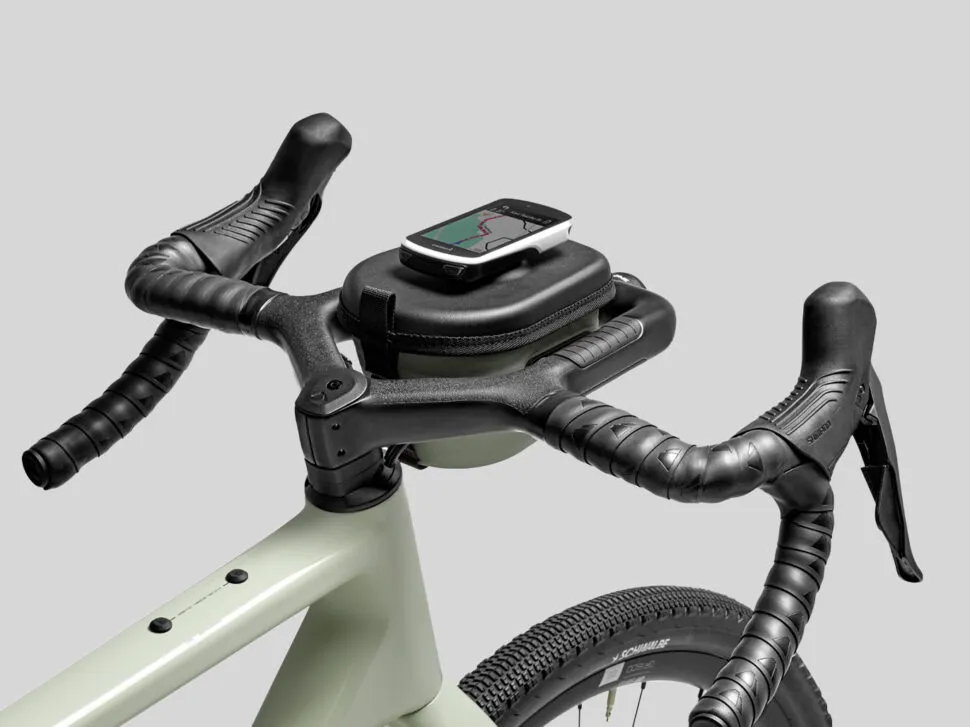
The Grizl offers two bar options. The OG models (along with the alloy Grizl AL) have a separate conventional bar and stem with a slight backsweep and flare. Meanwhile, the carbon and alloy ESC models are equipped with Canyon’s Full Mounty one-piece bar and stem. This has an extension ahead of the bar tops that can be used to attach a handlebar bag, lights and more. You can also add aero bar extensions for an additional ride position on longer rides.
Neither the Grail nor the Grizl features the massively wide flared bars now popular with some gravel riders. The argument for such designs is better handling for technical off-road riding. The disadvantages are they’re less well-suited to road riding, the angle of the brake levers can feel awkward and to some eyes they are more aesthetically challenging.
Both the Grail and the Grizl offer internal or semi-integrated cable routing on all specs but the Grizl AL, so there’s less to get in the way if you want to fit a bar bag, less to snag on passing shrubbery and less opportunity to rub the paint off your head tube.
Canyon Grizl vs. Grail: Frame mounts for bikepacking and touring
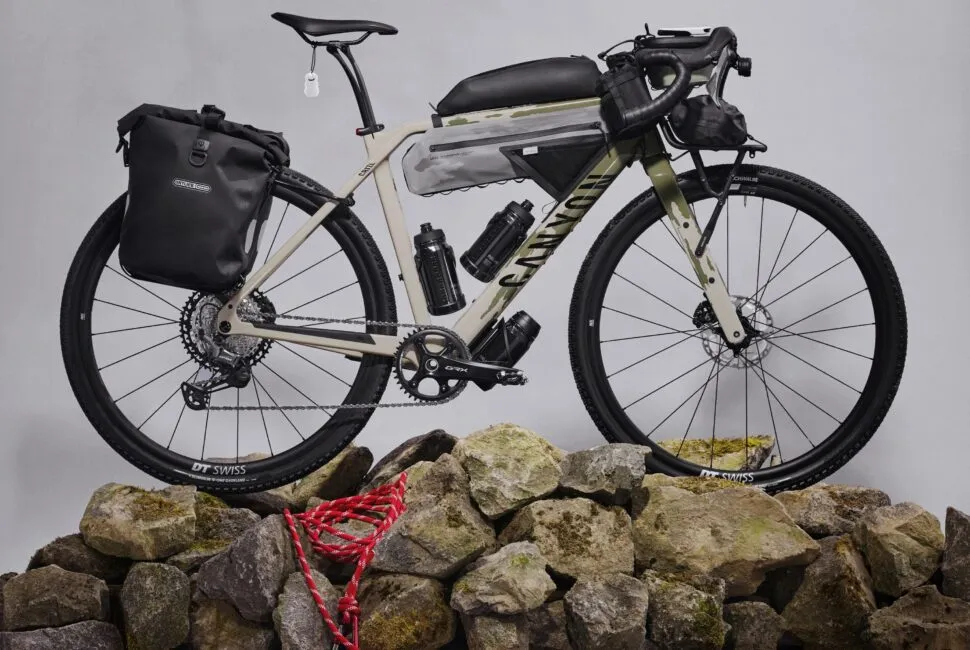
Carrying stuff in bikepacking bags or via a rack and panniers is crucial for many gravel riders. In this, the Grail and Grizl differ significantly.
The Grail continues its focus on fast riding with its storage options. As with the Endurace CF SLX, there’s internal frame storage for repair tools in the down tube.
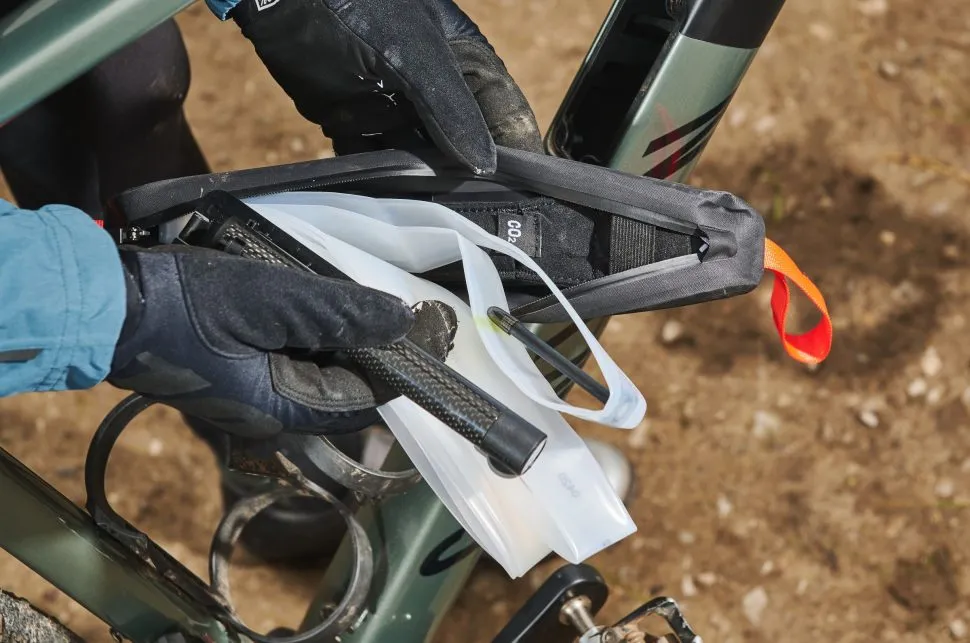
Canyon backs this up with a larger Fidlock storage bag that fits behind the head tube and is held in place magnetically. It claims that this makes the bike more aero, as it acts as a fairing, as well as adding some extra carrying space.
Canyon also includes mounts for a bag on the Grail’s top tube. You can add even more storage by using its Load Fork Sleeves, which slide over the fork legs and allow you to bolt on up to 6kg of extra luggage.
You do get a third water bottle mount on the down tube, plus those hidden mudguard mounts, but that’s it. Having said that, for a bike designed for fast riding the Grail is surprisingly versatile and beats much of the gravel race bike competition.
The Grizl has greater load-carrying capacity, with the non-suspension fork legs coming pre-equipped with mounting hardware. Choose a suspension fork model and you’ll have to purchase Canyon’s Rift fork sleeves to fit its suspension fork if you want to increase capacity.
There is in-frame storage on carbon bikes though and Canyon offers front and rear racks, a top tube bag, a cockpit bag for the ESC’s bars and fittings for its Fidlock magnetic front triangle bag, as well as three bottle cage mounts.
Add in the extra squish provided by the broader tyres and the more upright position and the Grizl is the better choice of loaded off-road touring.
Canyon Grizl: Eclips lighting system
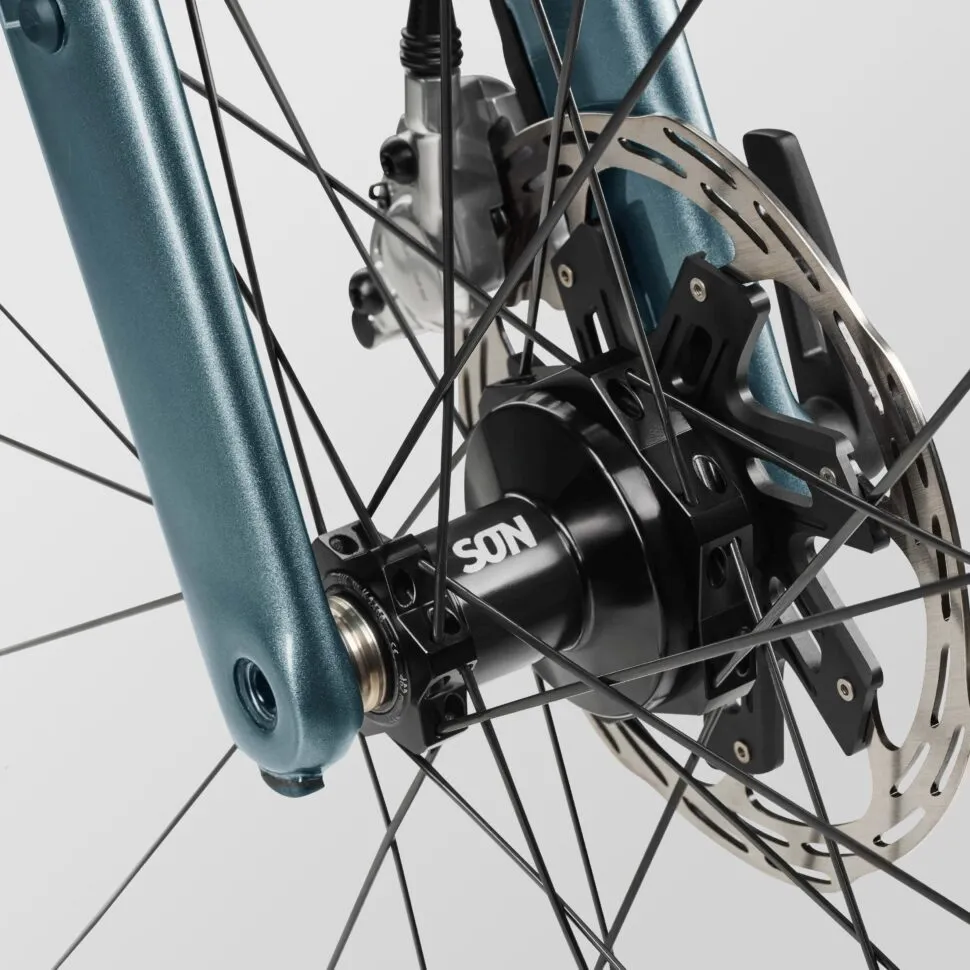
Many gravel bikes offer internal fork leg routing for a dynamo cable, but Canyon is unique in the extent of its power integration with its Eclips system.
Based on a low-drain SON dynamo in the front hub, this charges an in-frame 3500mAh battery, with an internal controller used to regulate power output to a 1,000-lumen Lupine front light and a 45-lumen Lupine rear light. There’s also an in-built USB-C port to charge a phone, GPS or other electronics, or to replenish the battery from the mains.
The dynamo adds an extra 3 watts to the rider’s power needs, will deliver enough power to keep the lights on at speeds above 15kmh and will charge the battery at over 20kmh. The battery will power the lights when you’re not moving too and there’s a low output camping mode for when you’re bikepacking.
Canyon Grizl vs Grail: Suspension and dropper compatibility
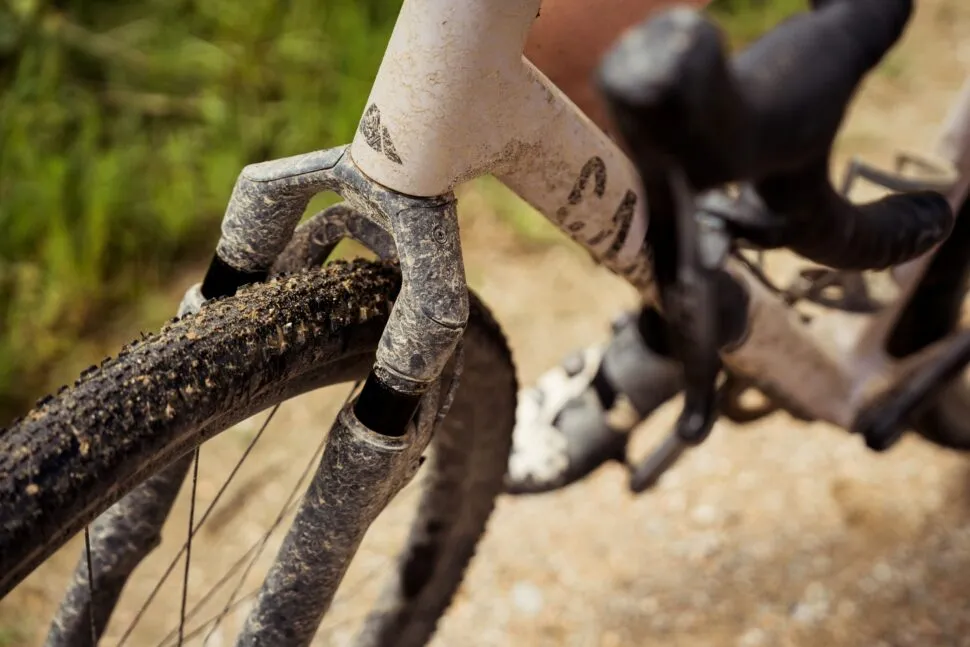
There are currently two Grizl specs and two Grail specs that come fitted with Canyon’s Rift air-sprung suspension fork, developed alongside DT Swiss and offering 40mm of travel with a bar-mounted lockout. Making for a supremely smooth ride, whether the extra weight, cost and ongoing maintenance commitment are worth it will depend on your own preferences.
Both bikes’ geometry and head tube length allow you to fit a short travel suspension fork aftermarket, should you wish.
But what is a dropper post, and why might you want one on a gravel bike? An import from the mountain bike segment, a dropper post is a seatpost you can lower via a switch (or ‘remote’) on the handlebar.
This is useful as it allows you to swap between an effective saddle height for pedalling and a lower saddle height for tackling scary sections requiring more standover.
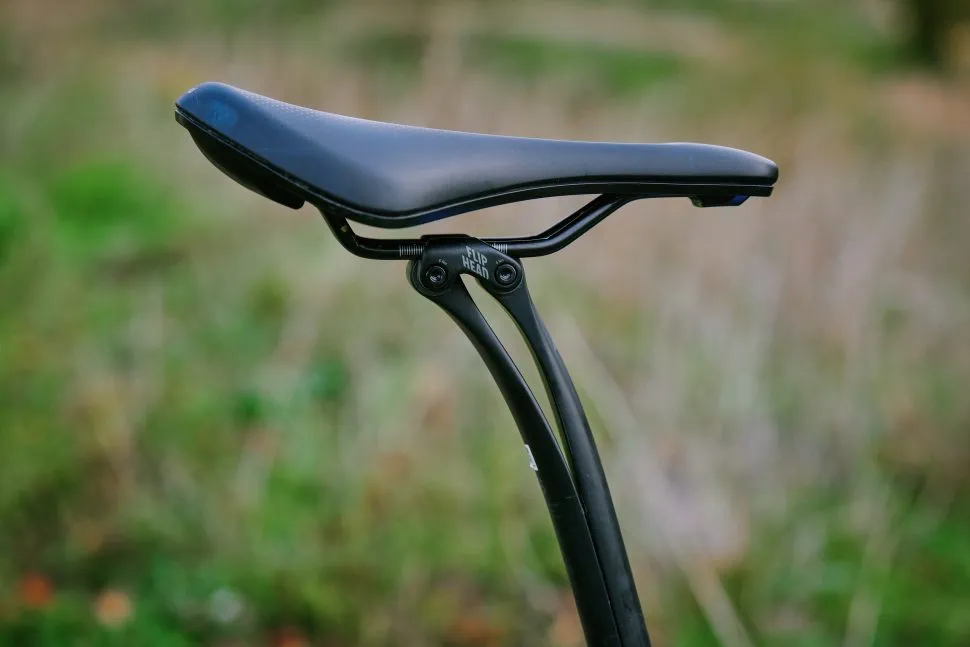
While the original Grail had Canyon’s split shaft VCLS seatpost, the new Grail has a 42g lighter, aero D-shaped one-piece post based on that used for the Ultimate road bike, but with a little extra flex. This is incompatible with a dropper post though.
The Grizl accepts a standard round 27.2mm seatpost, with most carbon Grizl CF bikes having the VCLS seatpost, while alloy bikes specs have a standard round carbon post. The standard round seatpost shape and clamp would allow you to fit a dropper seatpost aftermarket.
Canyon Grizl and Grail Ranges compared
While the Grizl comes in multiple aluminium and carbon versions, the Grail is for now carbon only.
As you’d expect, the five-bike Grail range starts at higher prices than the alloy Grizls, although carbon framed Grizl CF bikes are comparable in price to the Grail CF and CF SLX. The Grail CFR bikes add a more expensive tier above this.
Canyon Grail CF
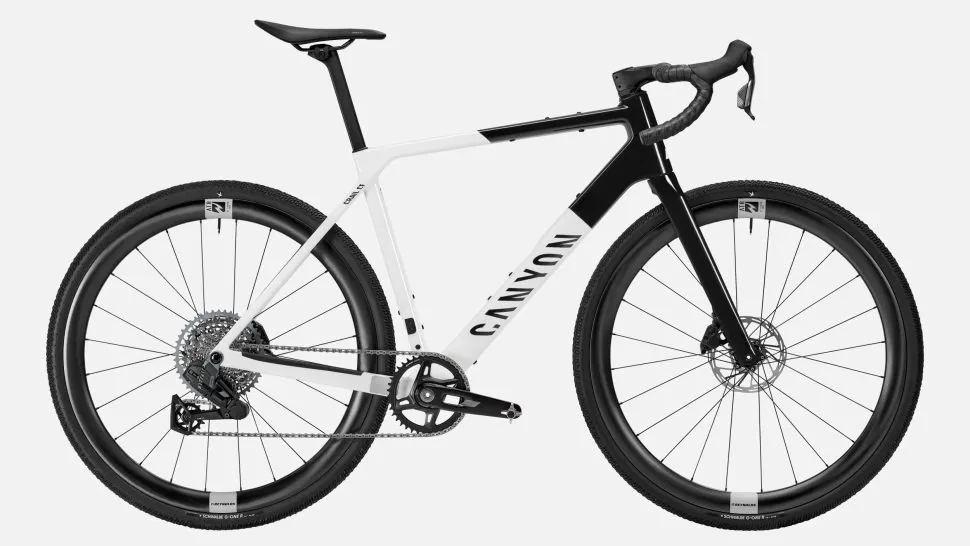
The entry point to the new Grail range, the Grail CF/CF SL is available in three specs, ranging from the Grail CF 7, currently priced at £2,099 and with a Shimano GRX 2×12-speed mechanical groupset, via the £2,799 Grail CF 8 1by with Shimano 1×12-speed shifting to the £3,299 Grail CF SL 7 Aero with a 13-speed SRAM Rival XPLR AXS groupset and Reynolds carbon wheels.
Canyon Grail CF SLX
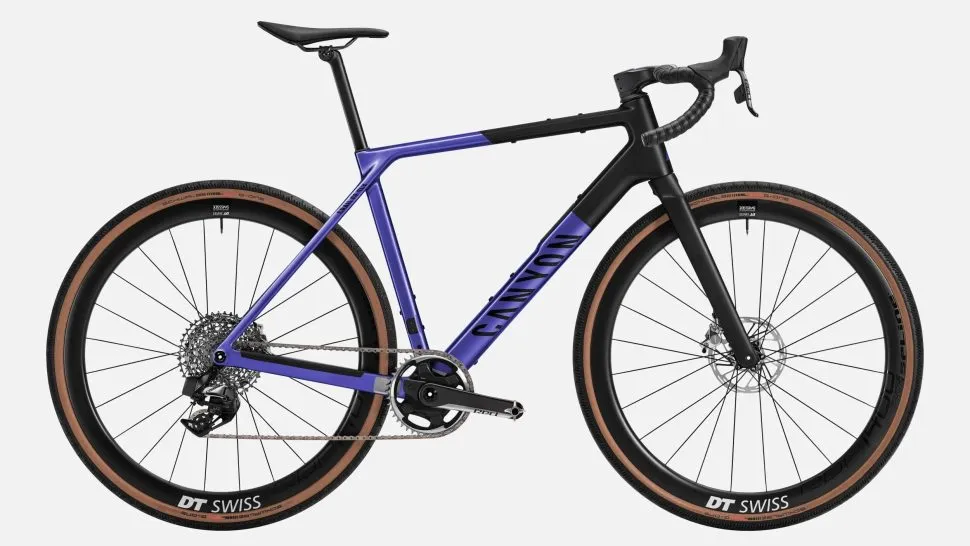
The Grail CF SLX is also available in three specs. As well as the lighter, higher grade carbon fibre frame, Canyon has upped the ante on spec levels, with a choice of electronic gravel groupsets. The Grail CF SLX 8 Di2 has a 2×12-speed Shimano GRX Di2 groupset and is priced at £4,199.
For £4,649, the Grail CF SLX 8 AXS swaps for a 13-speed SRAM Force XPLR AXS groupset, while there’s a similar spec with the Rift suspension fork priced at £4,949.
All come with DT Swiss GRC 1400 carbon gravel wheels and a power meter, either from SRAM or, for Shimano specs, from 4iiii.
Canyon Grail CFR
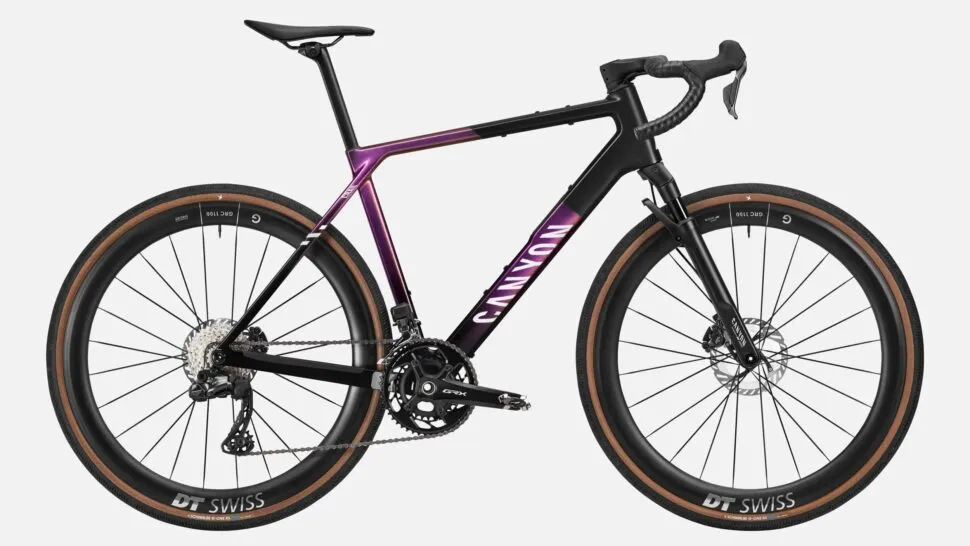
Canyon claims a 118g weight difference between the CFR frame and the CF SLX frame, with the CFR also 10 percent stiffer. The Grail CFR is available in three specs.
The Grail CFR Di2 has a Shimano GRX Di2 2×12-speed groupset and is priced at £5,999, while you can add a Rift suspension fork for £6,499. Both come with DT Swiss GRC 1100 wheels and a 4iiii power meter.
The top spec Grail CFR AXS is priced at £6,999 and equipped with SRAM Red XPLR AXS with a power meter and ultra-wide Zipp 303 XPLR SW wheels.
Canyon Grizl AL
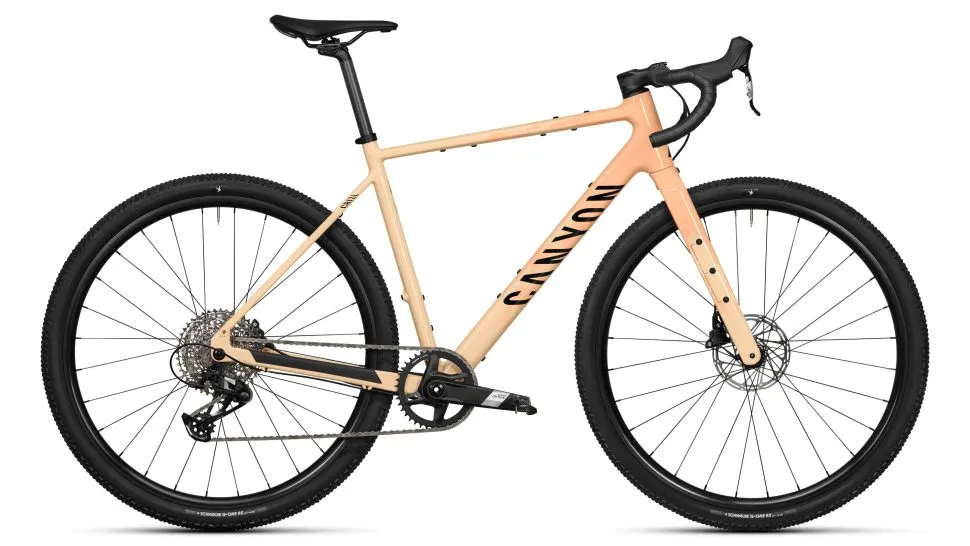
The Grizl range kicks off with a choice of three aluminium bike specs starting at £1,249 for the Grizl 5, equipped with 1×11-speed Shimano CUES. The Grizl 6 offers 1×12-speed SRAM Apex XPLR shifting for £1,749, while the Grizl 7 ESC is equipped with 1×12-speed Shimano GRX and the Full Mounty cockpit.
Canyon Grizl CF OG
The carbon Grizl CF OG loses some weight and adds a little in cost versus its aluminium sibling. The Grizl CF 6 has a SRAM Apex XPLR 1×12-speed mechanical groupset and alloy DT Swiss wheels, although it lacks the VCLS seatpost of higher specs and is priced at £1,899.
The Grizl CF 7 swaps for a Shimano GRX 1×12-speed groupset and is priced at £2,349, while the £3,299 Grizl CF 8 w/ Rift has the Rift suspension fork and an electronic SRAM Rival XPLR AXS 13-speed groupset, along with DT Swiss G1800 alloy wheels.
Priced at £3,749, the Grizl CF 8 Di2 has a Shimano Deore XT Di2 1×12-speed mountain bike groupset and Canyon’s own GR 30 carbon wheels. Finally, the Grizl CF 9 w/ Eclips is priced at £6,499 and is equipped with Canyon’s Eclips dynamo-powered lighting, a SRAM Red XPLR AXS 13-speed groupset and DT Swiss GRX 1400 carbon wheels.
Canyon Grizl CF ESC
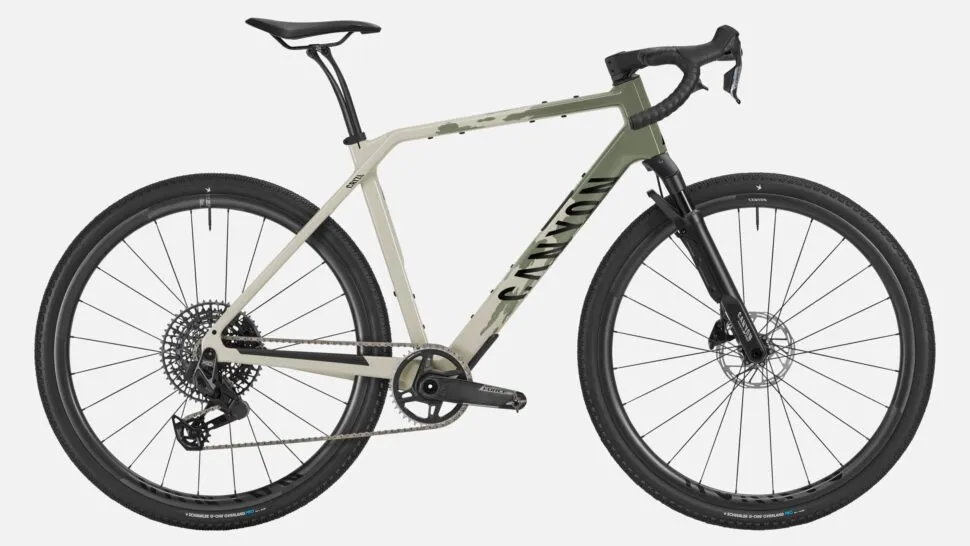
The three ESC specs are equipped with the Full Mounty combined bar/stem in place of a conventional two-piece design.
The Grizl CF 7 ESC has a Shimano GRX 1×12-speed mechanical groupset and DT Swiss alloy wheels and is priced at £2,649. In the £3,749 Grizl CF 8 ESC w/ Eclips, there’s an upgrade to the smarter DT Swiss GR 1600 alloy wheelset, although the GRX groupset remains the same. The spec does add the Eclips dynamo lighting system though.
Although the Eclips system isn’t present in the highest spec £5,599 Grizl CF 9 ESC w/ Rift, there is a Rift suspension fork, SRAM X0 Eagle AXS 1x groupset and Canyon GR 30 CF carbon wheels.
Canyon Grizl:ONfly CF e-bike
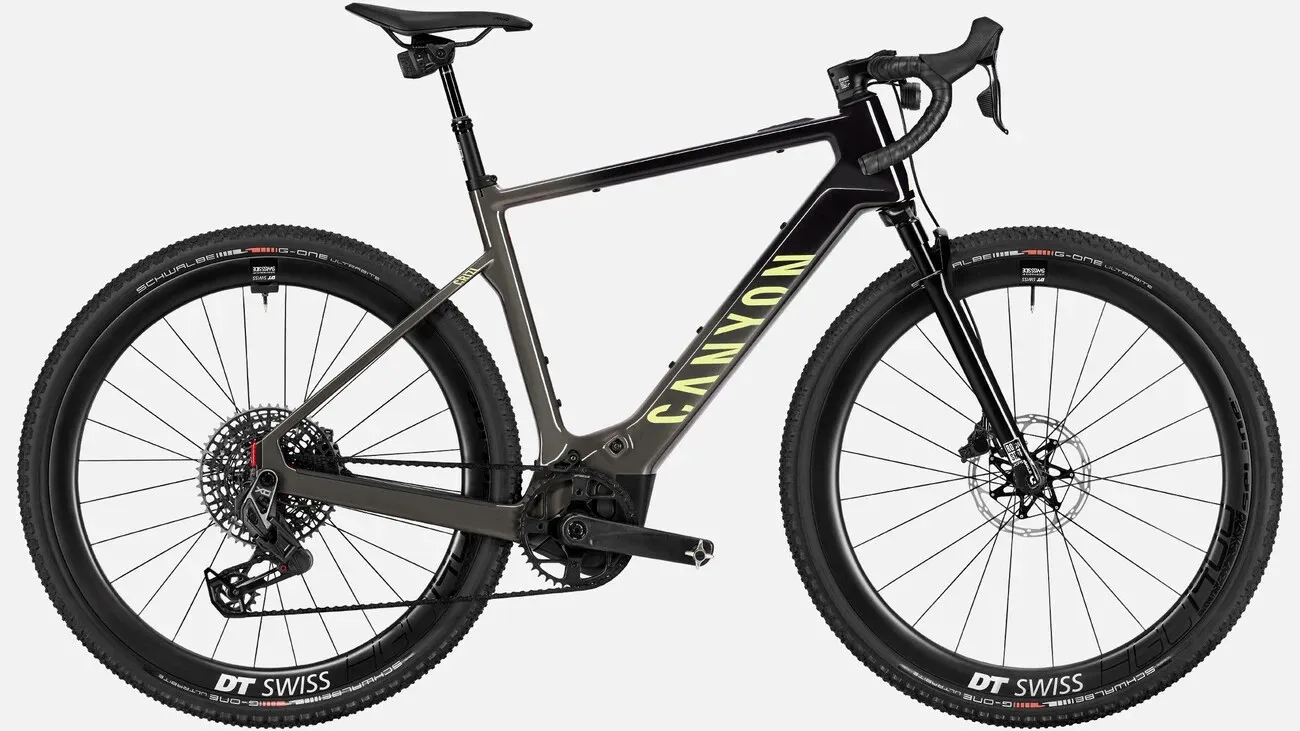
The Grizl:ONfly CF is based on the carbon Grizl, but adds a Bosch Performance Line SX mid-mounted motor and a suspension fork on all four specs. Canyon claims the 400Wh battery will power you for around 100km. There’s a plug-in range extender available if you want to go further, and the battery also powers integrated lighting.
Although two of the specs are designed for off-road riding, the Grizl:ONfly Daily is equipped with a rack and mudguards, setting it up for more rugged commutes.
Prices for the Canyon Grizl:ONfly start from £5,149 for the CF Daily and top out at £7,449 for the CF Trail, while weights range from 15.3kg for the CF 9 to 17.6kg for the CF Daily.
Canyon Grizl vs Grail: Which is the best gravel bike?
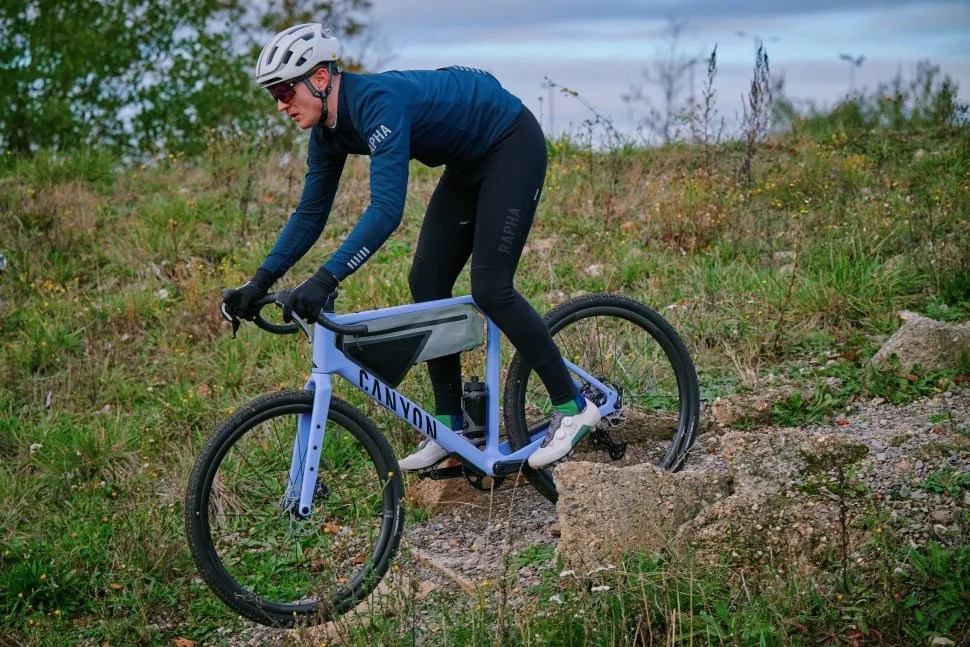
The choice between the Grizl and Grail is much less nuanced than it used to be: if you want to go fast, choose the Grail; if you want to head to more technical terrain, choose the Grizl, either in OG spec for shorter rides or the ESC for longer rides and gear lugging.
Price-wise, it’s easier to choose too, at least at the extremes: if you want a budget priced gravel bike, choose the alloy Grizl; if you want a lightweight performance gravel race bike and have the budget to pay for it, choose the Grail CFR.
In the mid-range, the Grail and Grizl are pitched at similar price points and use similar components, so if you’re in the market for a carbon gravel bike, the choice between Grizl and Grail is going to come down to the sort of riding you want to do.
If you’re excited by more extreme styles of off-road riding and mostly do shorter rides with occasional bikepacking, choose the Grizl OG. If you regularly go long and on multi-day adventures or value the extra versatility, choose the Grizl ESC. Both are great gravel bikes and are still far from mediocre on less technical terrain or tarmac. The wider tyre clearance and the suspension fork and dynamo power options may help you get further into the unknown.
However, if you prize speed on smoother surfaces or fancy trying a bit of gravel racing, you might benefit from the aerodynamics and lower weight and rolling resistance offered by the Grail. With narrower tyres, it’s also a great fast gravel bike that could be used for light touring, even if it does miss out on rack mounts.
Happily, even within the Grail and Grizl lines there’s plenty of variety. For example, both ranges provide the option to pick between single or double chainring groupsets and to add a suspension fork, so there’s no need to compromise on the spec to meet your gravel aims.
For more details, read our full reviews of the Canyon Grizl CF and Canyon Grail.
Struggling to choose your next gravel bike? Head to our buyer’s guide to the best gravel bikes for inspiration
Or maybe it’s a road bike you want, try Canyon Aeroad vs Ultimate vs Endurace: The best Canyon road bike in 2026