

Designer: Devereux Emmet (1924), Robert Trent Jones Sr. (1957, Redesign), Rees Jones (1989, 2006, Renovation), Andrew Green (2021, Redesign)
Location: Bethesda, Maryland
History: The idea behind Congressional came from Indiana Congressmen Oscar R. Bland and O.R. Luhring, who wanted a club for congressmen to meet local businessmen in Washington D.C.. The first golf course opened in 1924 with a design by Devereux Emmet. While the Club’s initial members included some of the most influential figures in politics and business, it fell upon hard times during the Great Depression and World War II and was leased to The Office of Strategic Services for espionage training during the war.
Congressional emerged from the war much better off and hired the lead architect of the day, Robert Trent Jones Sr., to redesign the course. Jones added an additional nine holes in 1957 and combined this with a redesign of nine of Emmet’s holes to create the Blue Course. The other nine combined with nine holes from Tom and George Fazio in 1977 to create the Gold Course. The Blue Course has hosted many tournaments beginning with the 1959 U.S. Woman’s Amateur. This event was a success and soon it hosted the 1964 U.S. Open won by a dehydrated Ken Venturi during a scorching heat wave. The course hosted additional majors with the 1976 PGA, 1995 U.S. Senior Open, 1997 U.S. Open, and 2011 U.S. Open. The 2011 tournament is notable for being the site of Rory McIlroy’s first major as he set the record for strokes under par in a U.S. Open at -16, crushing the field. Congressional has also hosted numerous PGA Tour events between 1980 and 2016, with Tiger Woods winning the AT&T National here in 2009 and 2012.
“U.S. Open Doctor” Rees Jones modified the Blue Course several times between 1989 and 2006 to prepare it for big tournaments and by this point, the course looked nothing like a golden age design with tree-lined fairways and modern bunkering. The Club prepared for a redesign with architect Keith Foster, but had to pivot to Andrew Green after Foster’s untimely arrest for smuggling endangered animals. Green’s renovation began in 2019 and opened in 2021 to critical acclaim. The Blue Course immediately hosted the 2022 Women’s PGA and is slotted to host numerous additional tournaments in the coming years including the 2030 PGA and 2037 Ryder Cup. Widely considered the best course in the D.C. area, Congressional holds the following awards:
- #67 Best Course in America – Golf Digest (2025)
- #61 Best Course in America – Golf Magazine (2024)
- #91 Best Course in America – Top100golfcourses.com (2024)
- #46 Best Classic Course in America – Golfweek (2025)
- #1 Best Course in Maryland – Golf Digest (2025)
- #1 Best Course in Maryland – Golf Magazine (2024)
- #2 Best Course in Maryland – Top100golfcourses.com (2025)
- #1 Best Private Course in Maryland – Golfweek (2025)
Conditions: 9/10, I played following a big rainstorm so the course was a bit wet, but overall it was in fantastic condition.
Value: N/A, This is a private course.
Scorecard:
Tee Par Yardage Rating Slope
Blue 72 7215 75.2 137
Gold 72 6775 73.3 132
Gold/White 72 6480 71.7 130
White 72 6175 70.4 127
White/Silver 72 5670 67.9 127
Silver 72 5280 71.3 128
Hole Descriptions: I never had the fortune of playing Congressional before Andrew Green’s work, but by most accounts, the Blue Course was a somewhat boring championship layout, with long par fours suffocated by trees and bunkers and greens that lacked much charm. The Club was held in high regard given its tournament pedigree and location just outside D.C., but the course that hosted the 2011 U.S. Open was probably not a Top 100 course in America. This is certainly no longer the case, as Green did a remarkable job here. While he mostly kept the routing intact (besides a new 10th hole), today’s course offers an entirely different feel, with very few trees, beautiful artistic bunkering, and expanded greens that have a lot of character. While the course is still quite long and tough from the Championship tees, it is now a fun design that gives the golfer options and features plenty of memorable holes. This is especially true on the back nine, which is one of the best you’ll find anywhere. Bravo to the membership and Andrew Green for this landmark transformation; today’s Blue Course is in my opinion the best layout in Maryland and one that lives up to its lofty reputation.
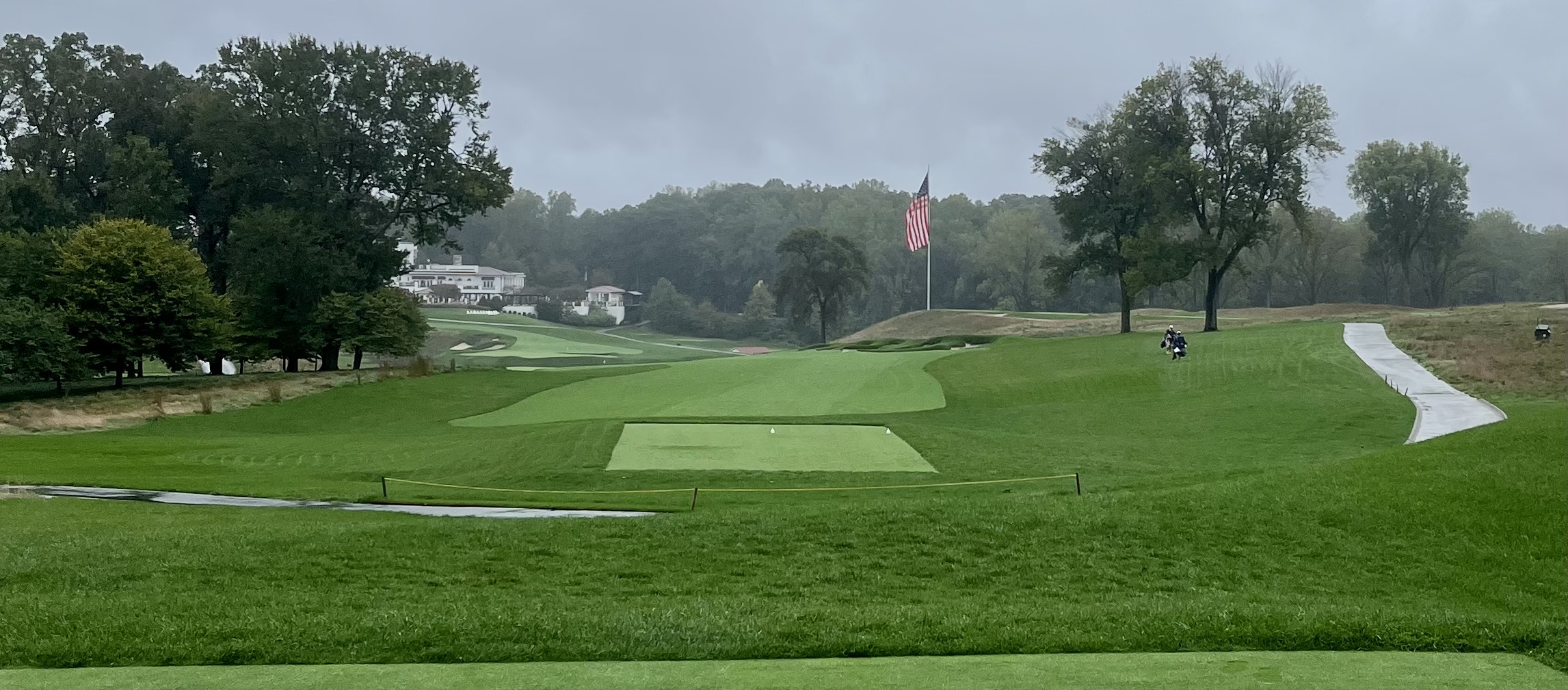
The course opens with a 365 yard straightaway par 4, a rather gentle hole to ease you into your round. Playing slightly downhill, this fairway is generous but lined by crossbunkers down the left at 215 and 275 yards and right at 250 yards that force the golfer to think a bit on their opening teeshot. The most interesting aspect of this hole is the green, which sits diagonally and is open up front with four bunkers on the right and one long left. This putting surface contains two distinct tiers, with the larger front portion sloping right-to-left towards a collection area.
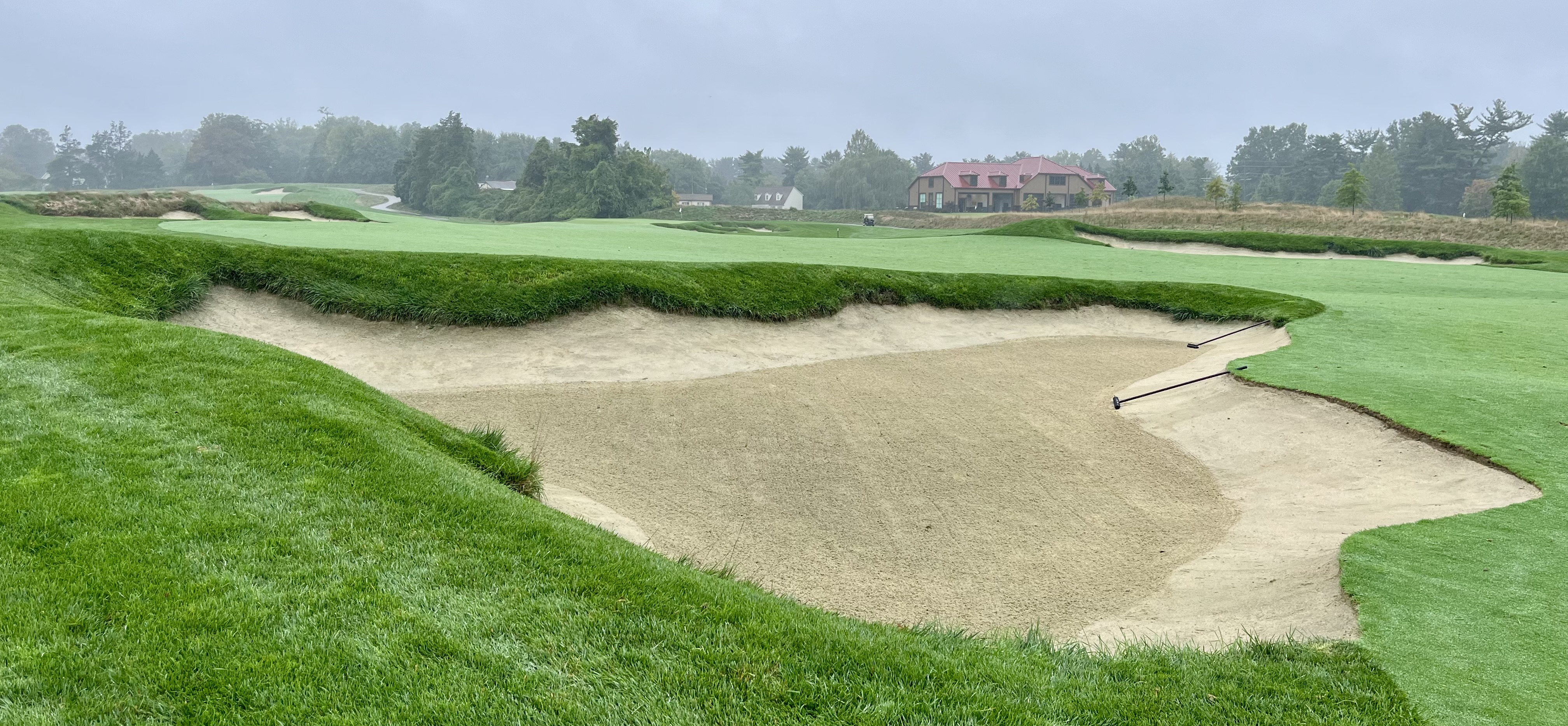
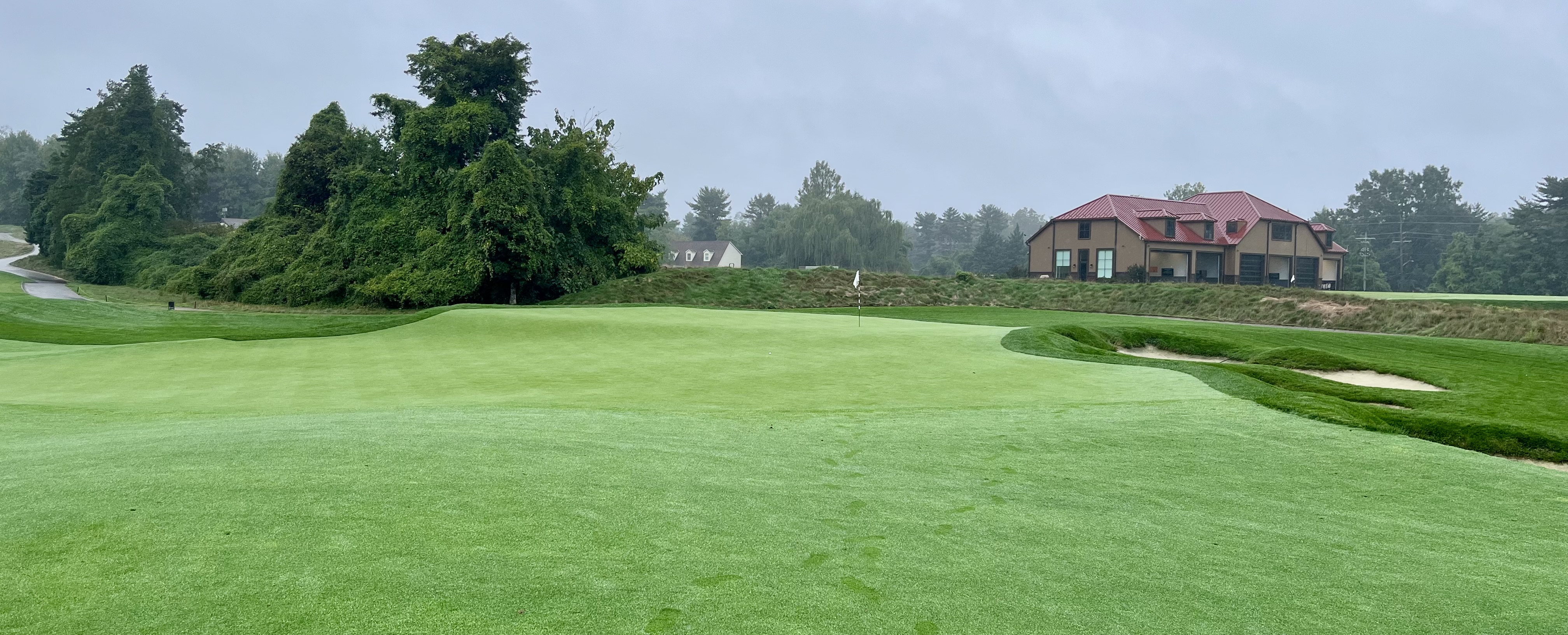
The 2nd hole is a monster and almost certainly the most difficult par 3 at Congressional. At 215 yards and stretching to almost 270 (!) yards from the Championship tees, this beastly hole runs uphill over rough and fescue to a green that slopes hard right-to-left. There’s a large bunker short right of the green but the most devastating miss is left, where a collection of deep bunkers awaits. Par here gains a shot on the field.
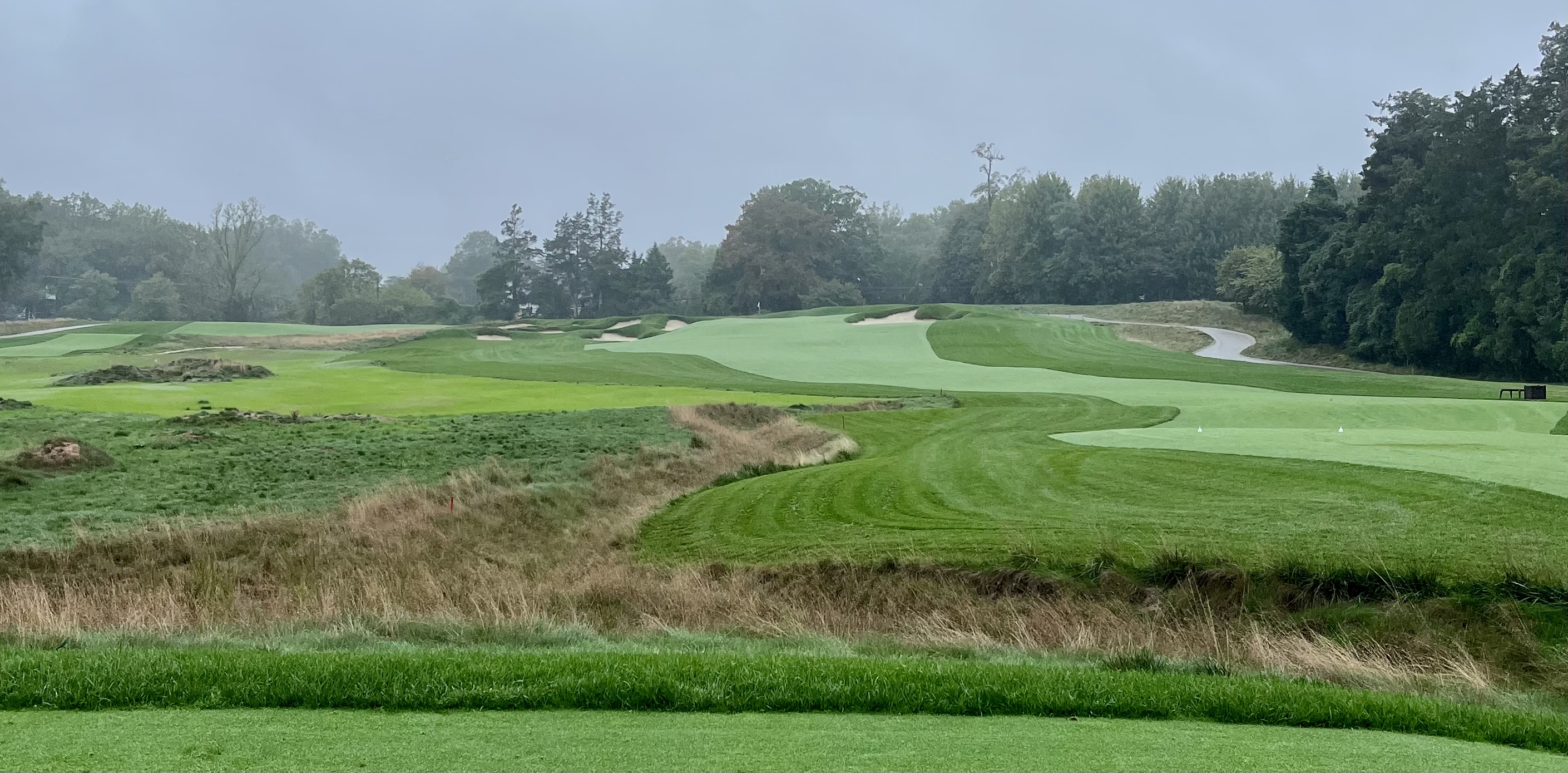
The 3rd hole is another tough one as a 410 yard par 4 running uphill. This hole features a skinny fairway lined by rough and several crossbunkers for much of the landing area. This approach plays uphill to an elevated, two-tier, back-to-front sloped green defended by a long bunker along its left side. There’s a false front short and a steep slope of tight lies to the right.
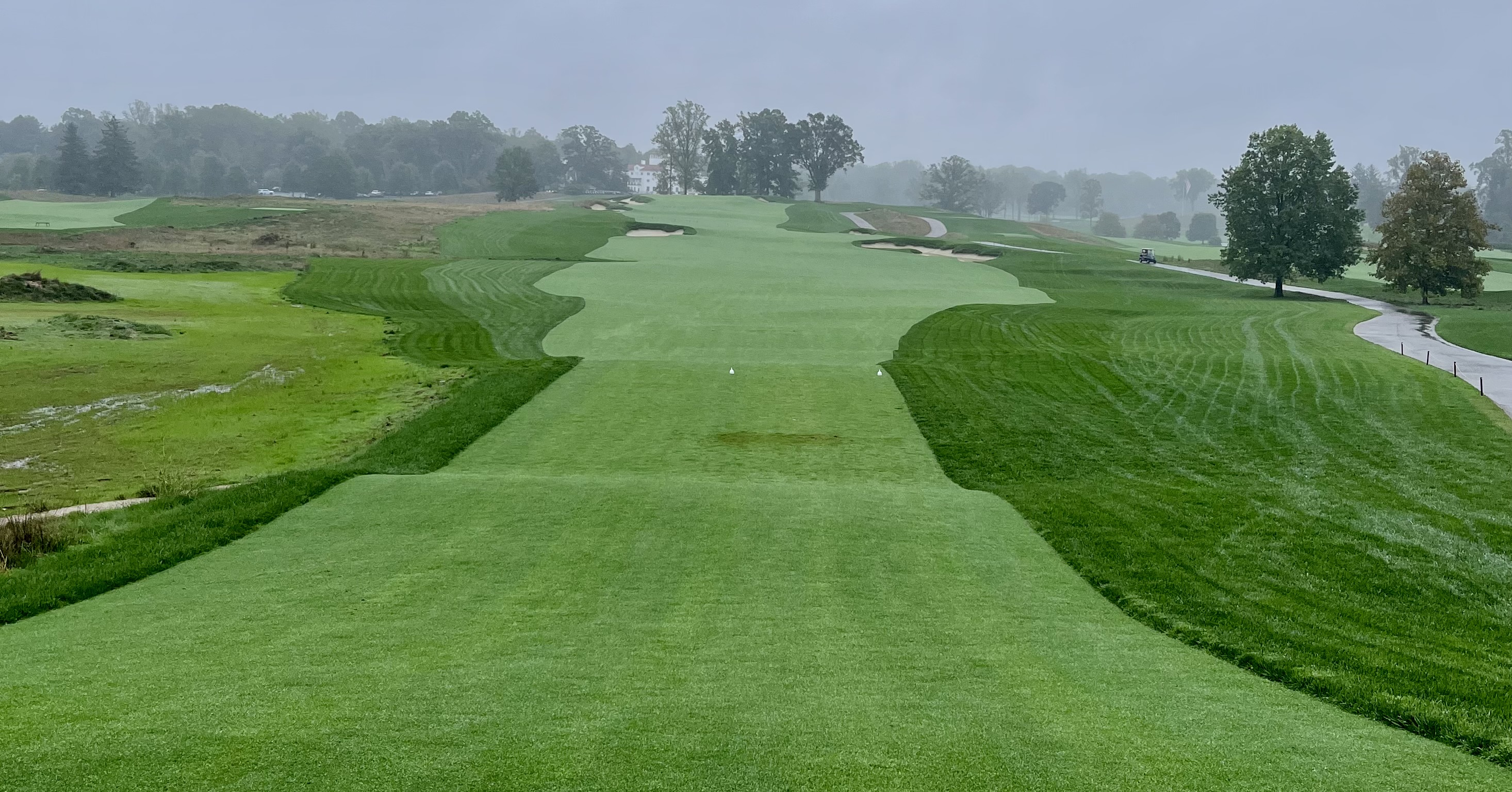
At 430 yards, the number 1 handicap 4th hole is another challenge and one of my favorites on the course. Running downhill from an elevated teebox, this beautiful hole slides to the right at about 260 yards with numerous bunkers down either side at this point. Those who miss to the left will find thick rough and have a very difficult time reaching the green while those who miss right will find either a bunker or deep fescue and be blocked out by trees. This approach runs slightly back uphill to an undulating green with bunkers on either side.
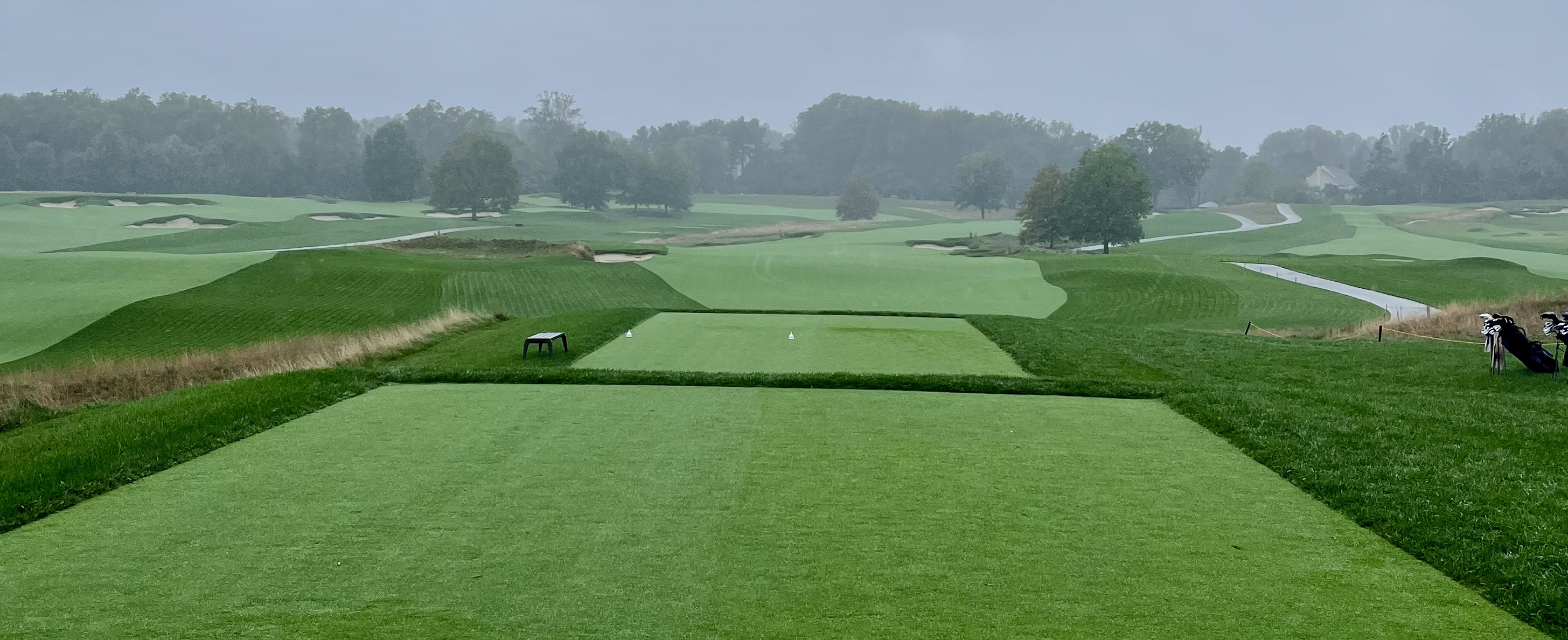
If you can make it through the first four holes only a few over par, that’s actually okay as the remaining holes on the front 9 offer some scoring opportunities. This begins with the 5th hole, a shorter 365 yard par 4 that plays as a slight dogleg left. The teeshot plays a bit uphill to a generous fairway lined by three bunkers down the right between 200 and 230 yards and two left bunkers a bit further up. At about 250 yards, the fairway plateaus and then runs downhill on the approach towards a large green with front-to-back movement. There are bunkers on either side of the green but it is open and inviting up front, making this potentially drivable for the longest hitters under the right conditions.
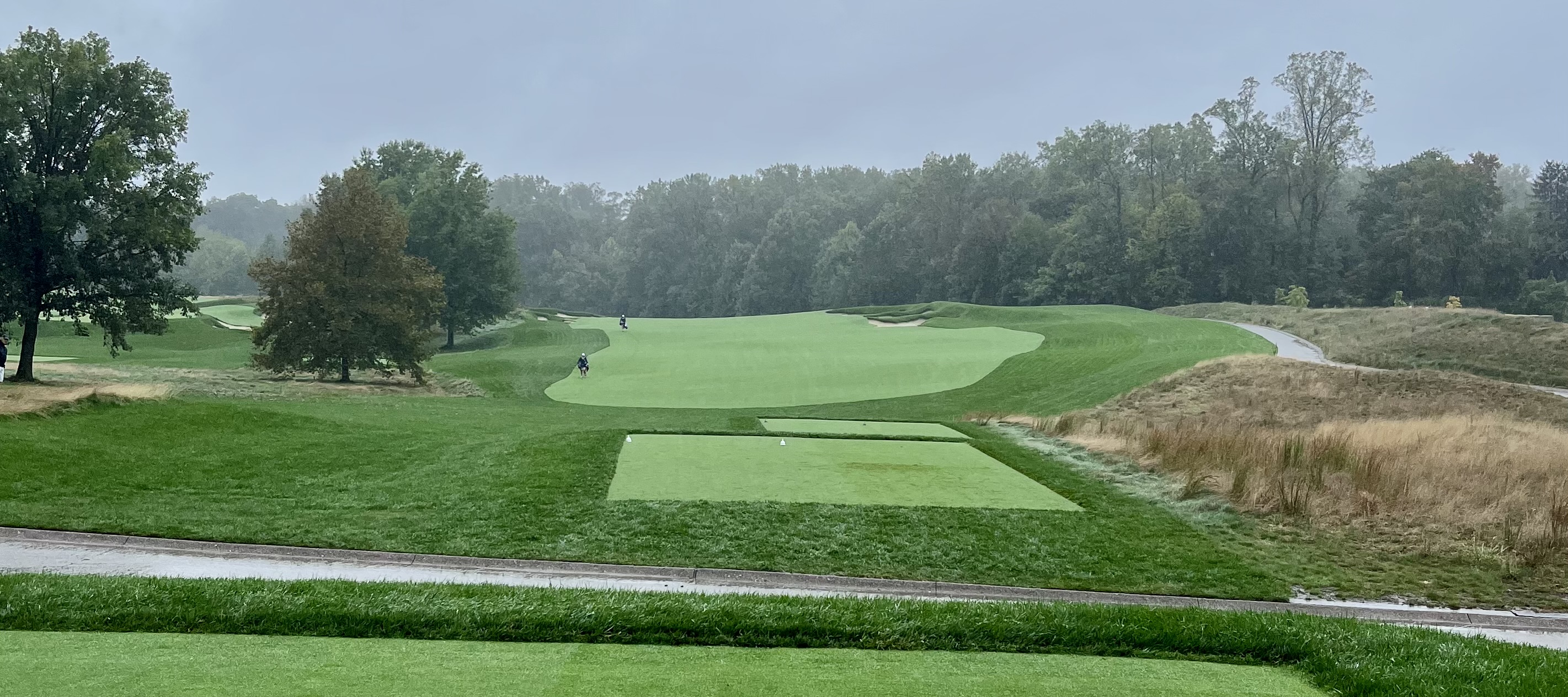
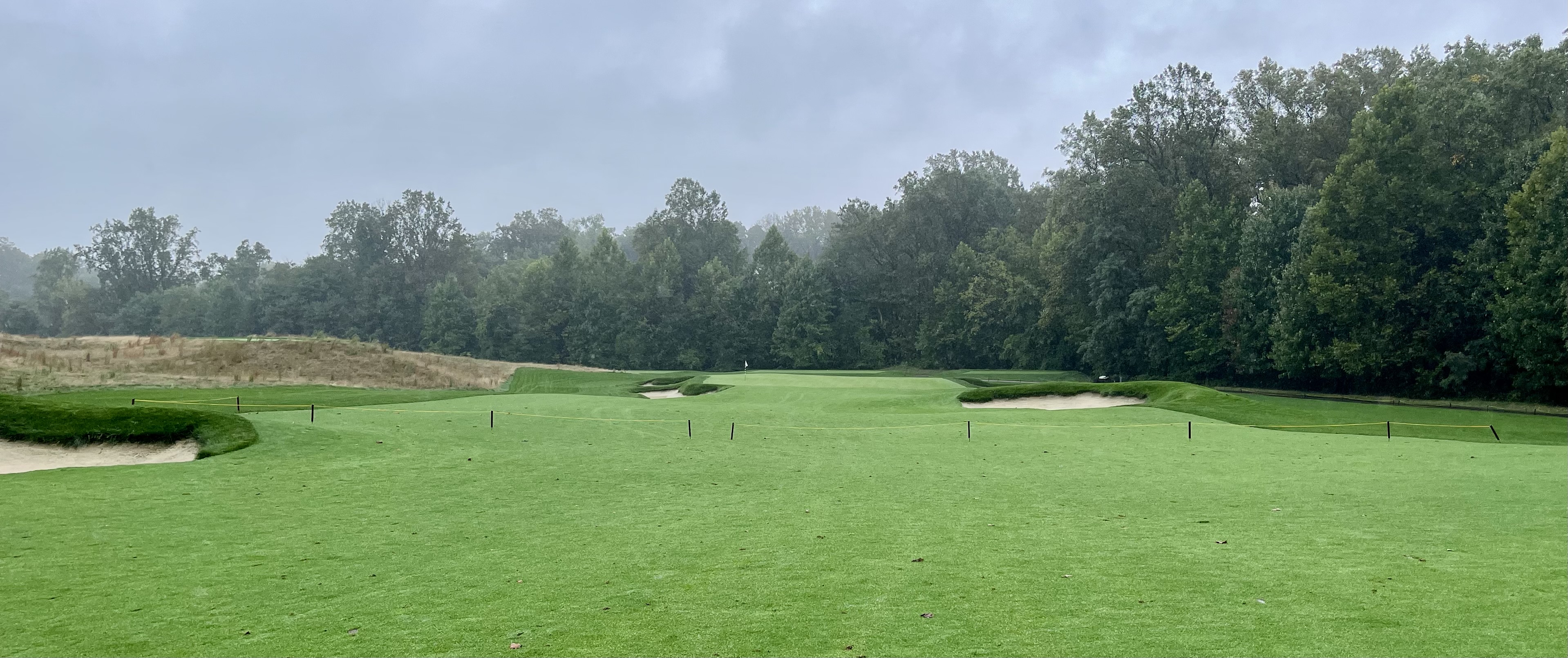
The 6th hole is the Blue Course’s first par 5 and runs along the edge of the property at 525 yards. This is an interesting hole with OB down the right the entire way and fescue to the left of a left-to-right sloped fairway. At about 290 yards, a small creek juts in on the right side of the fairway and is in play for longer hitters. The second half of this fairway tightens and moves slightly to the left with forest continuing down the right. A small pond begins down the right about 50 yards short of the green and runs along the right side of the green. The putting surface itself mostly slopes left-to-right towards this hazard and is further defended by a large collection of bunkers short left.
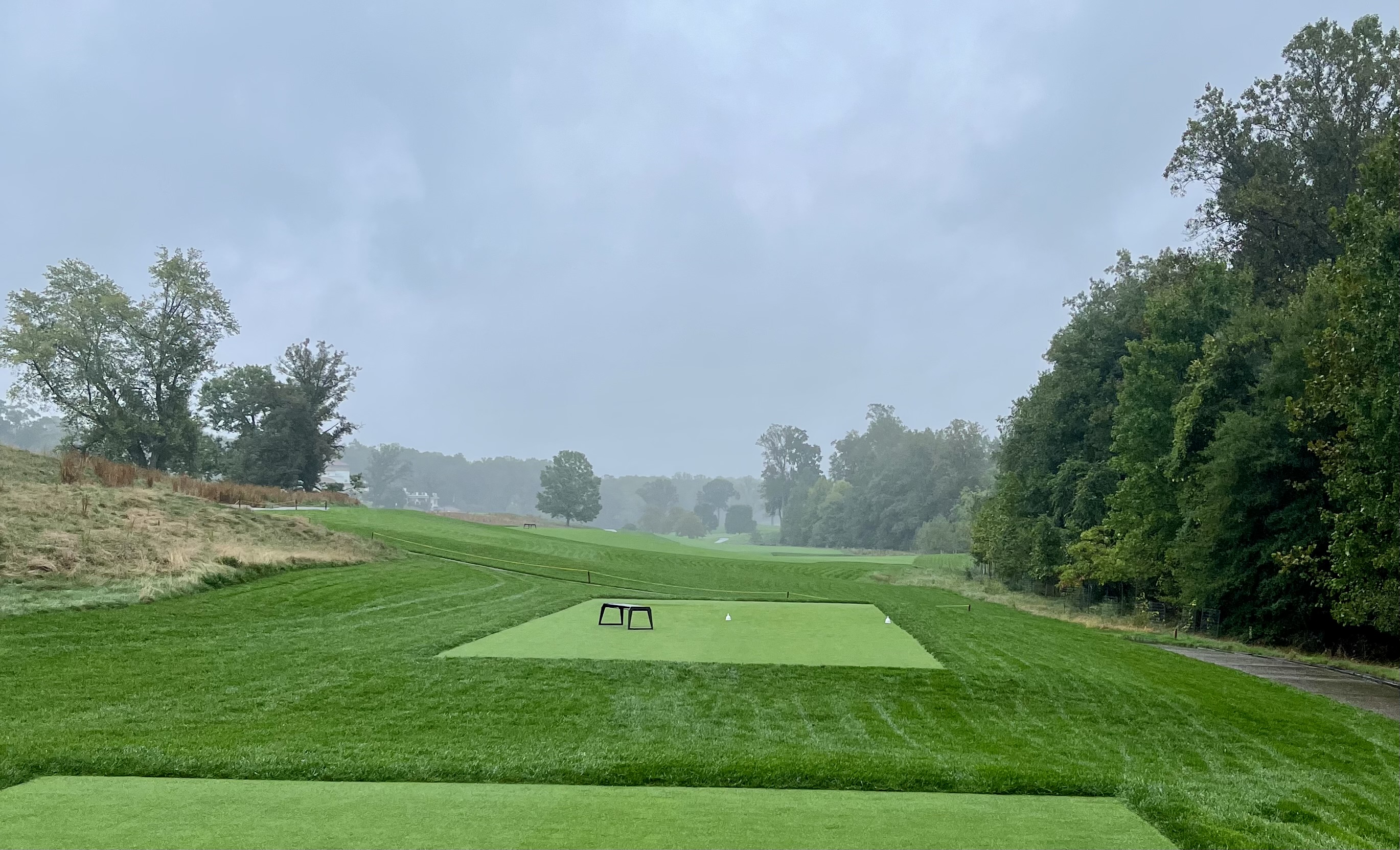
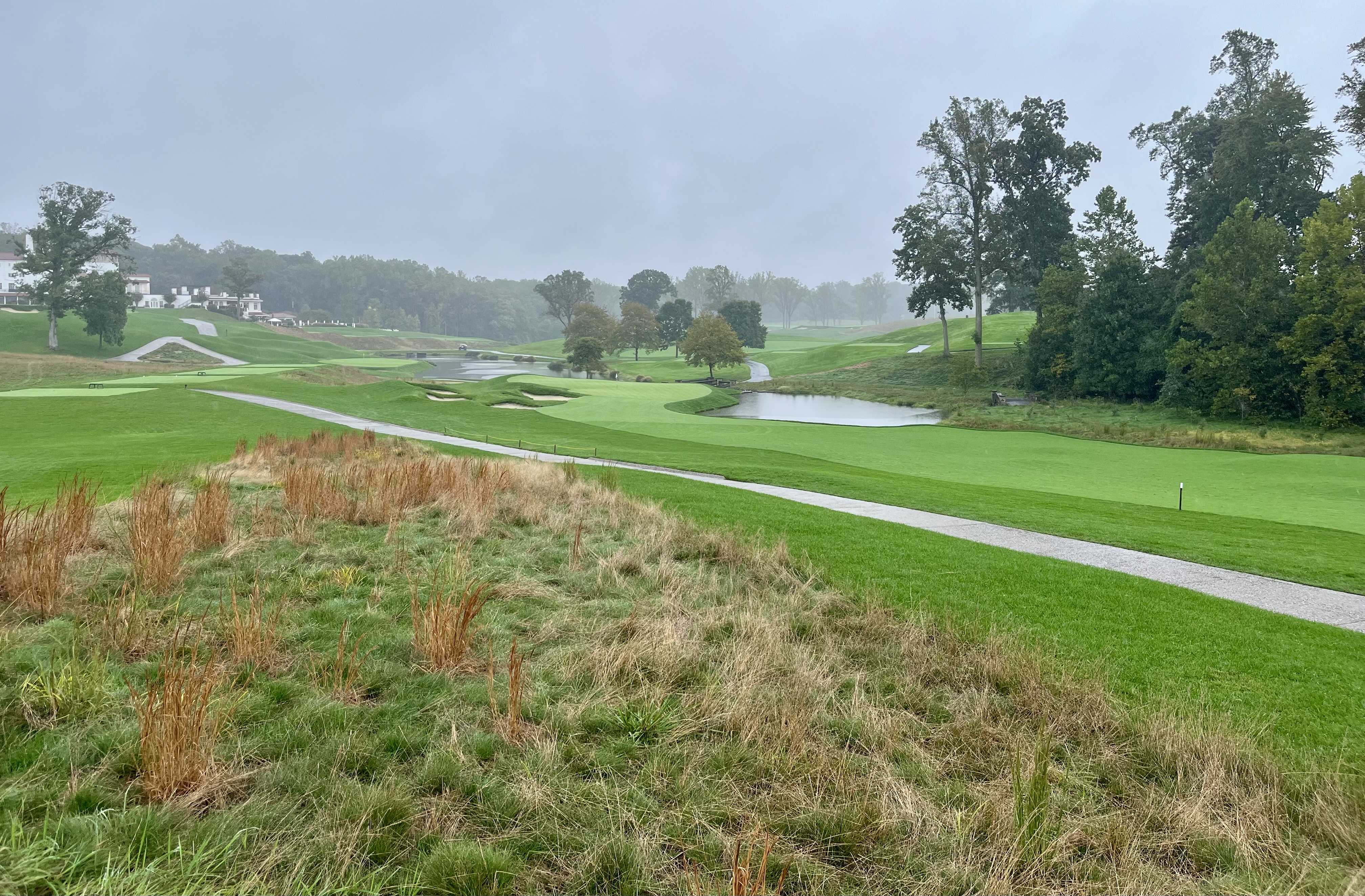
Although just 160 yards, the 7th hole is an intimidating par 3 playing longer uphill to a wide green perched above bunkers. The bunkers short left are especially deep and penal and the green features lots of movement both left-to-right and back-to-front.
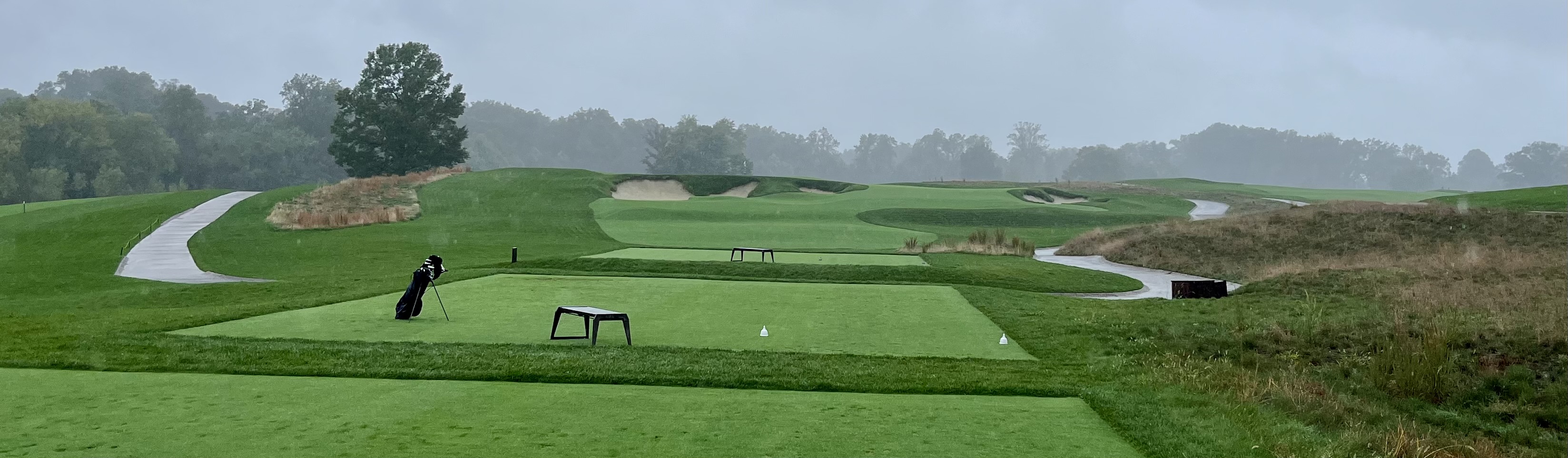
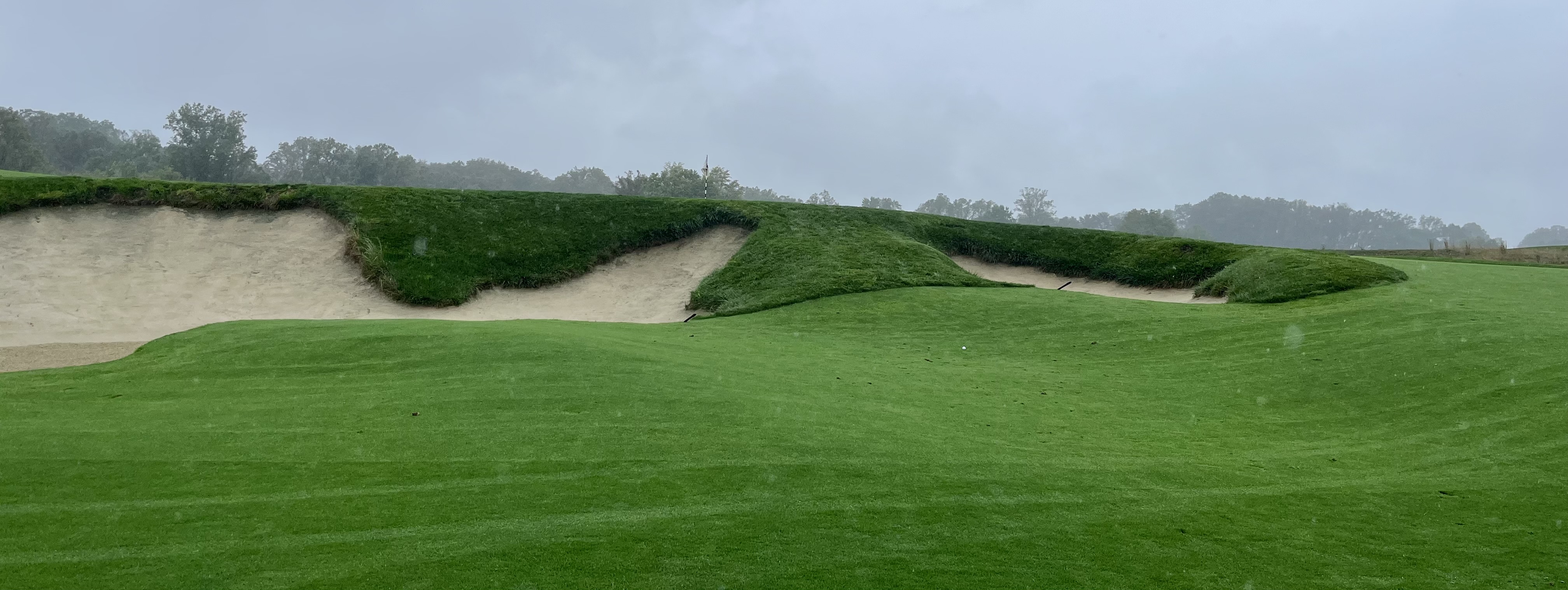
At 285 yards, the 8th is the shortest par 4 on the course and a great risk/reward hole. The golfer is given numerous options on this teebox and those laying up will need to navigate numerous crossbunkers down the right at 150 and 200 yards and left at 185 yards. Those who can avoid bunkers down either side around 250 yards may be able to play a speed slot and carom onto this green which is open on the left side. Those attempting to reach the green on the fly will likely have difficulty, as a tree blocks the direct route and the putting surface is very shallow and unlikely to hold a driver. Three additional bunkers and steep slopes defend long of the green and the green itself contains lots of movement, playing almost as a sideways Biarritz.
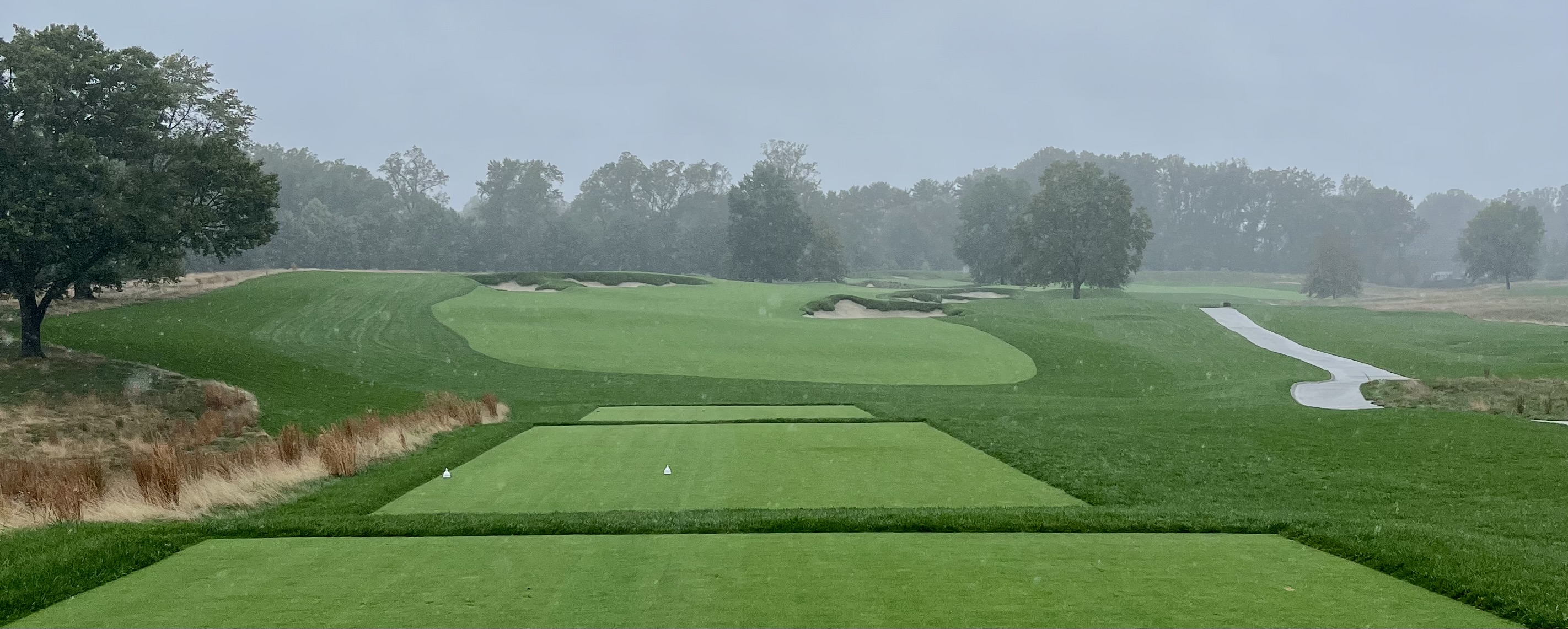
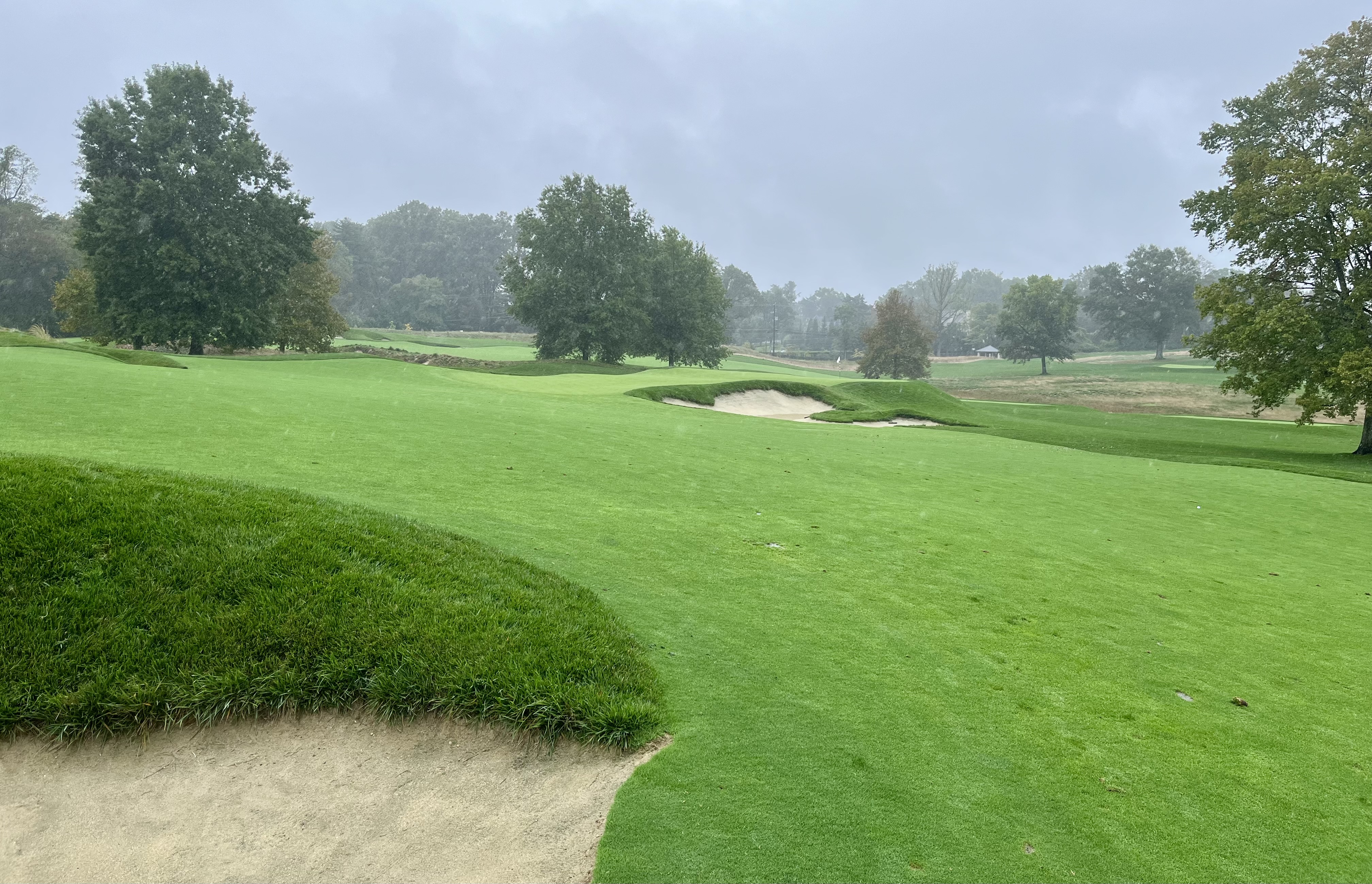
The 9th hole takes you all the way back to the clubhouse as a monstrous par 5 at 580 yards. A true three-shotter for almost everybody, this hole begins with a teeshot that plays slightly uphill to a narrow fairway. There are some early bunkers down the left that shouldn’t be in play and larger bunkers down either side around 255 yards. The goal of the second shot should be to carry a dip in the fairway and left bunker to reach a flatter part of the fairway and leave yourself a short iron in. There’s another giant valley and cart path that bisects the fairway about 90 yards short of the green and golfers would be wise to avoid hitting their lay-up down here. This putting surface is absolutely huge and slopes mostly left-to-right with bunkers down either side.
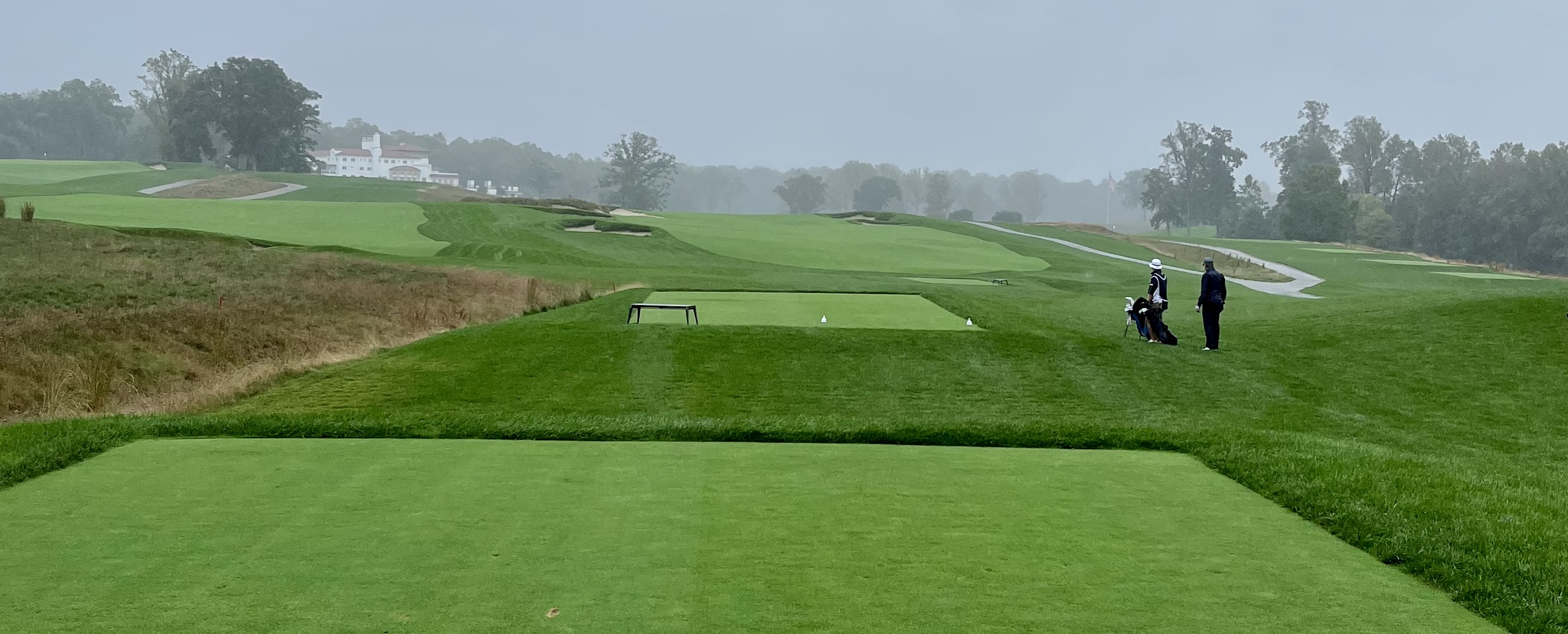
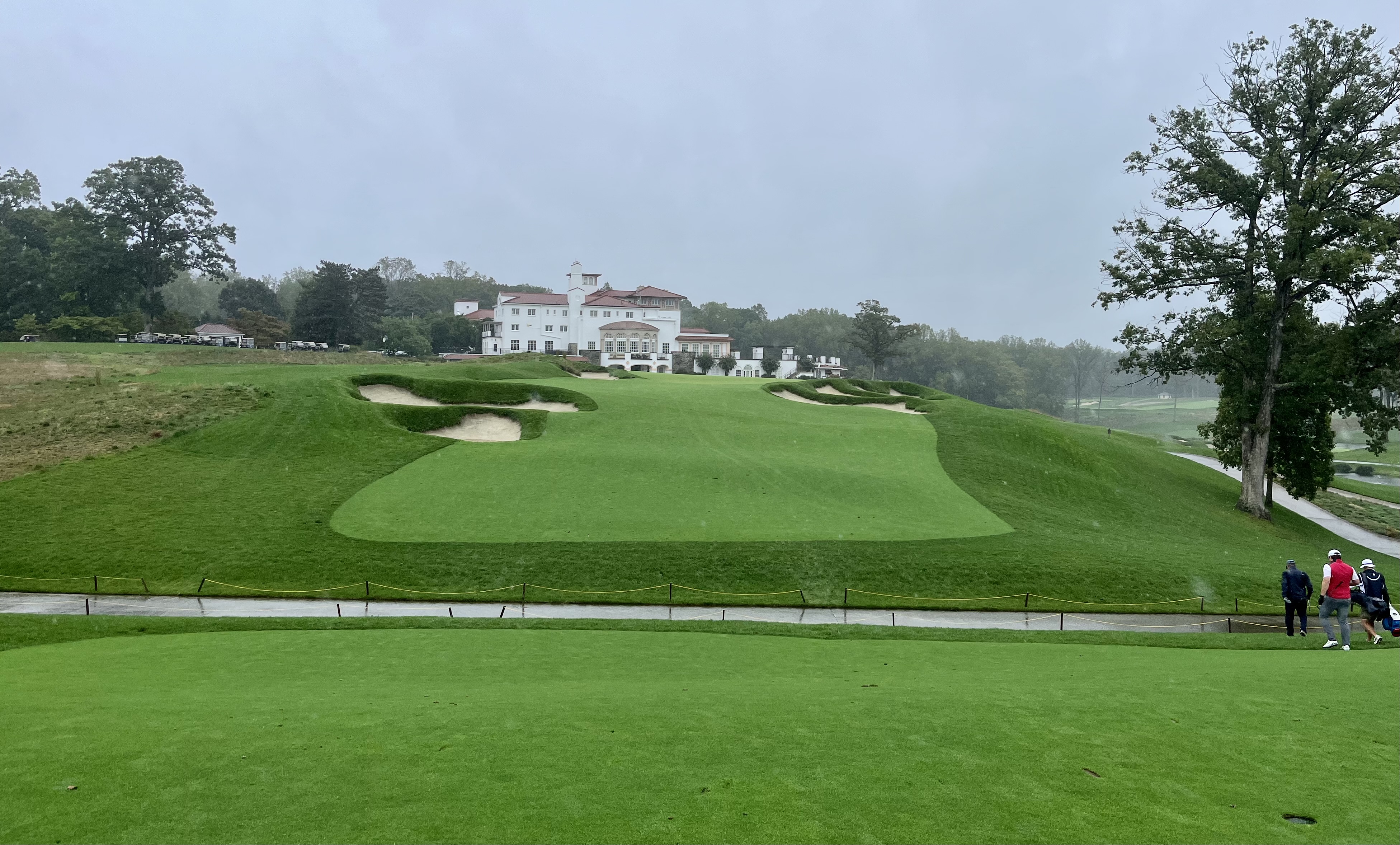
Congressional’s 10th hole is a new hole from Andrew Green as an 135 yard dropshot par 3 to a green jutting out into a pond. The 18th green sits on the other side of the pond, creating somewhat of a natural amphitheatre for viewing not dissimilar to the closing stretch at TPC Sawgrass. This part of the property has been filled with controversy, as the original 18th hole was a par 3 playing over the hazard to the base of the clubhouse. The USGA thought the 18th was anticlimactic as a par 3 and did different things over the years to overcome this, including incorporating holes from the Gold Course. The 1997 U.S. Open did include the 18th and is notable for being the only U.S. Open to end on a par 3. Shortly after this, Rees Jones reversed the hole and made it the 10th, but it made the routing a bit disjointed and was a long difficult par 3 playing over 200 yards. Green’s version fits more naturally with the routing and plays downhill towards a narrow, wavy green lined by water short, right, and long. Numerous bunkers defends short and left of the green, and there’s really no good miss here.
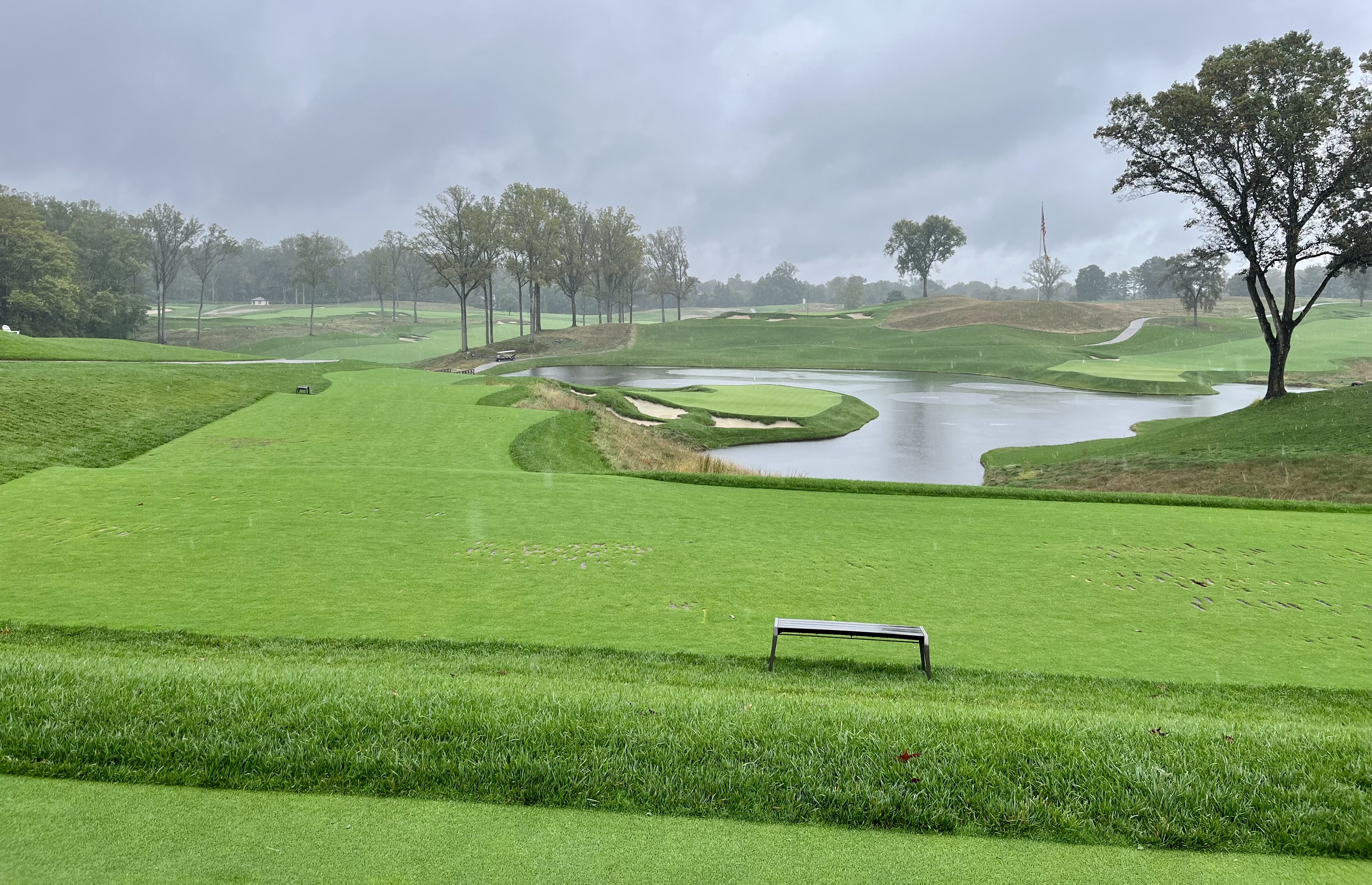
At 510 yards, the 11th hole is the shortest par 5 on the course and will be a par 4 when the pros come here for tournaments. This is a neat hole playing over a small creek to a narrow fairway that sits in a natural valley. At about 185 yards, a small creek begins down the right and a set of bunkers comes into play on the left at 285 yards. The second shot here is a fascinating one, as the green sits to the right of the creek, with another slab of fairway on this side running parallel to the original fairway for the final 130 yards. This split fairway gives the golfer plenty of options and a strategically placed trio of crossbunkers on the left fairway encourages golfers to try to carry the creek. This large green has redan-like qualities and is defended by the creek short and bunkers on either side.
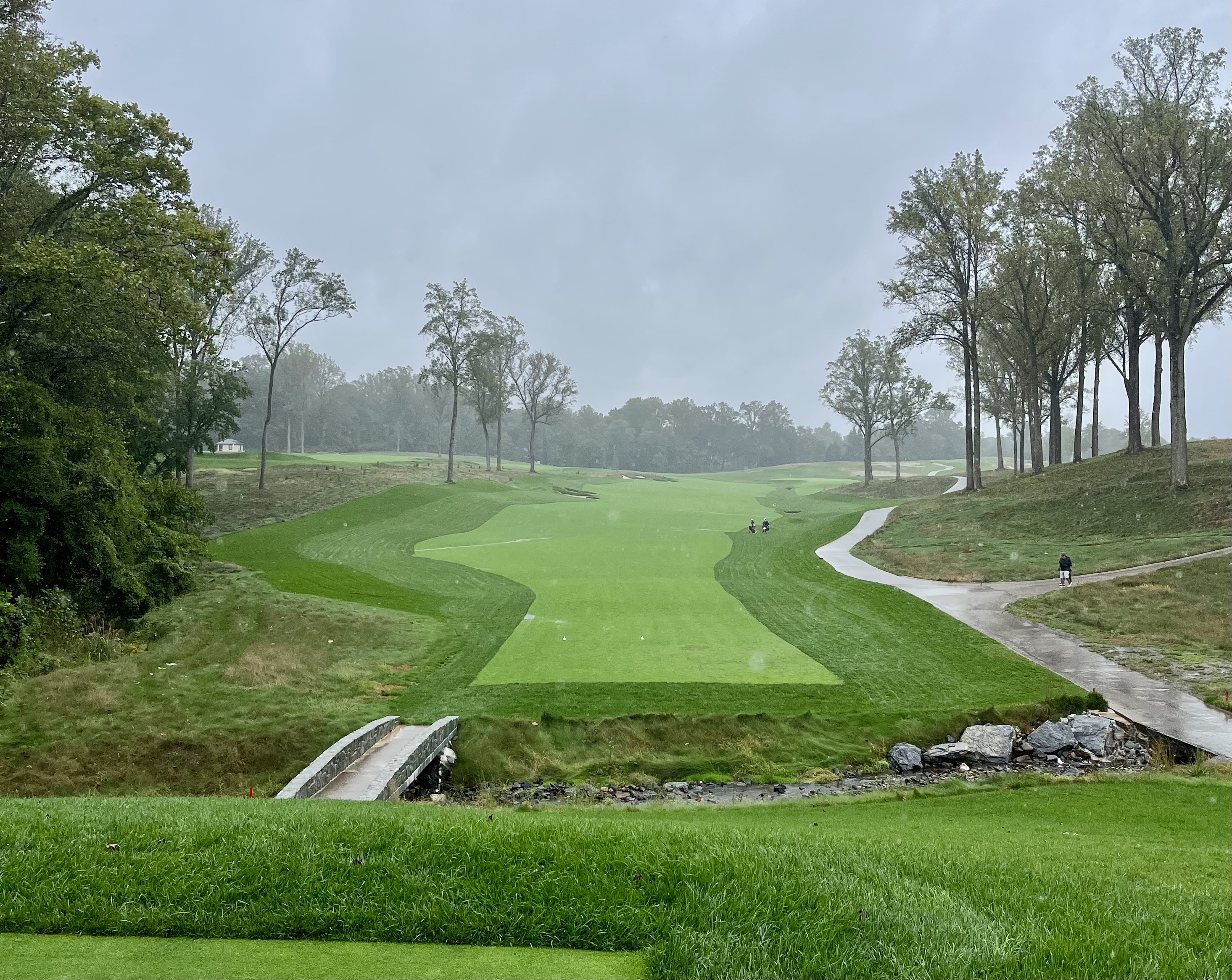
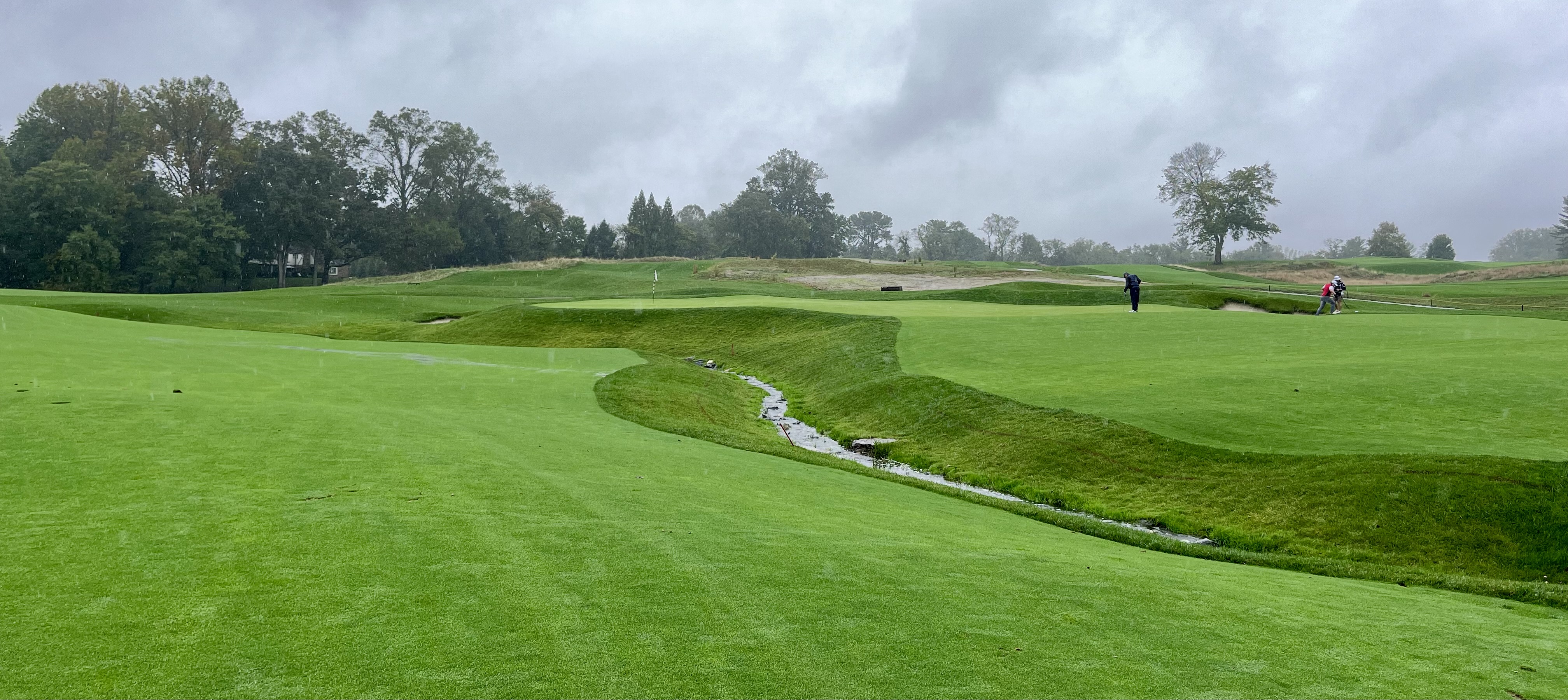
The 12th is one of my favorite holes at Congressional as a sweeping 375 yard dogleg left par 4. This gorgeous hole plays somewhat like a Cape, with a fairway turning left around 220 yards with a single bunker down the right and a large complex of bunkers on the left for most of the landing area. Aggressive teeshots can carry these bunkers and leave only a wedge in. This large bean-shaped green is defended by bunkers short left and long right, with slopes along its edges.
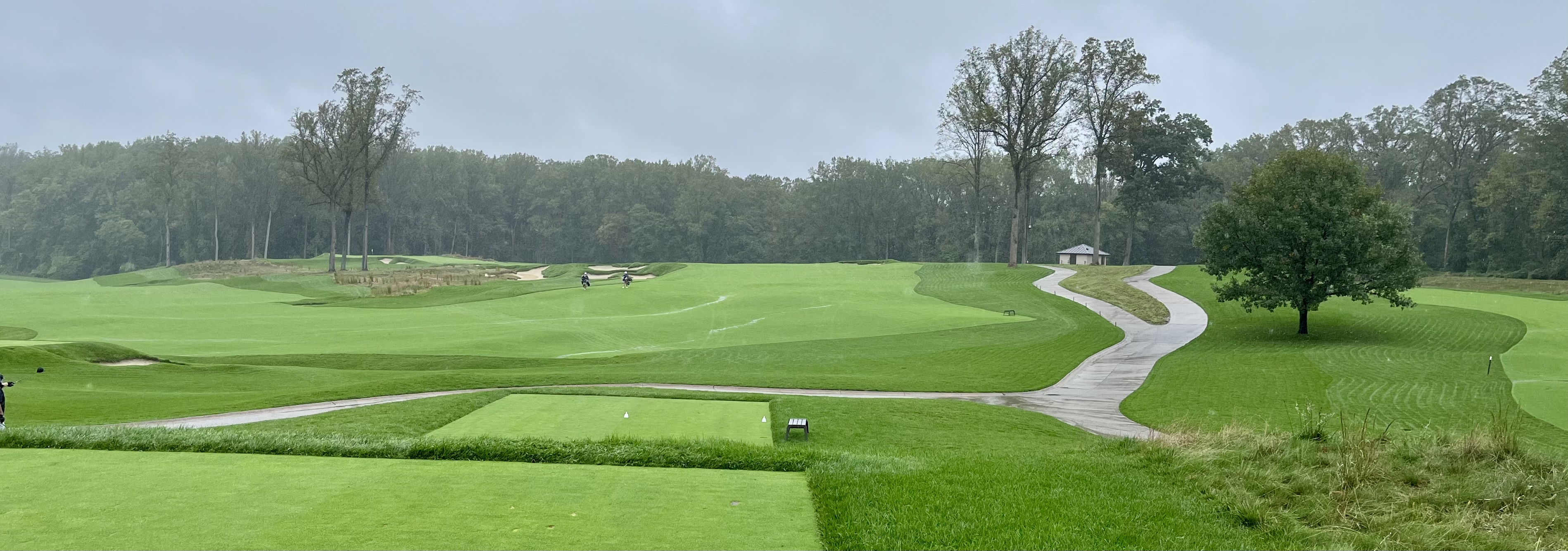
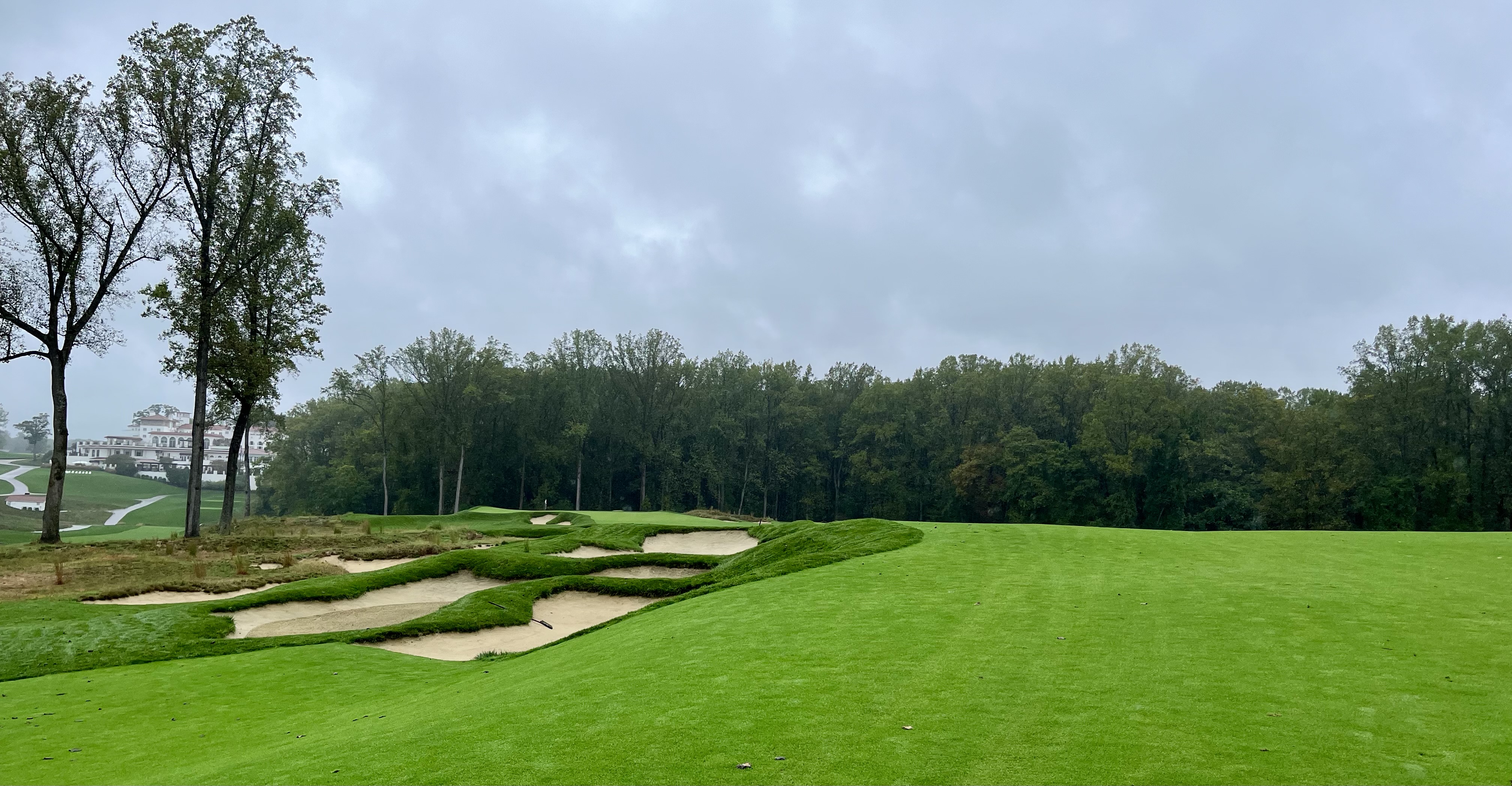
The 13th hole is the final par 3 on the course and another excellent offering at 175 yards. Running slightly uphill, this one-shotter features a large green that slopes back-to-front off a right plateau and is defended by rugged bunkers long, left, and right.
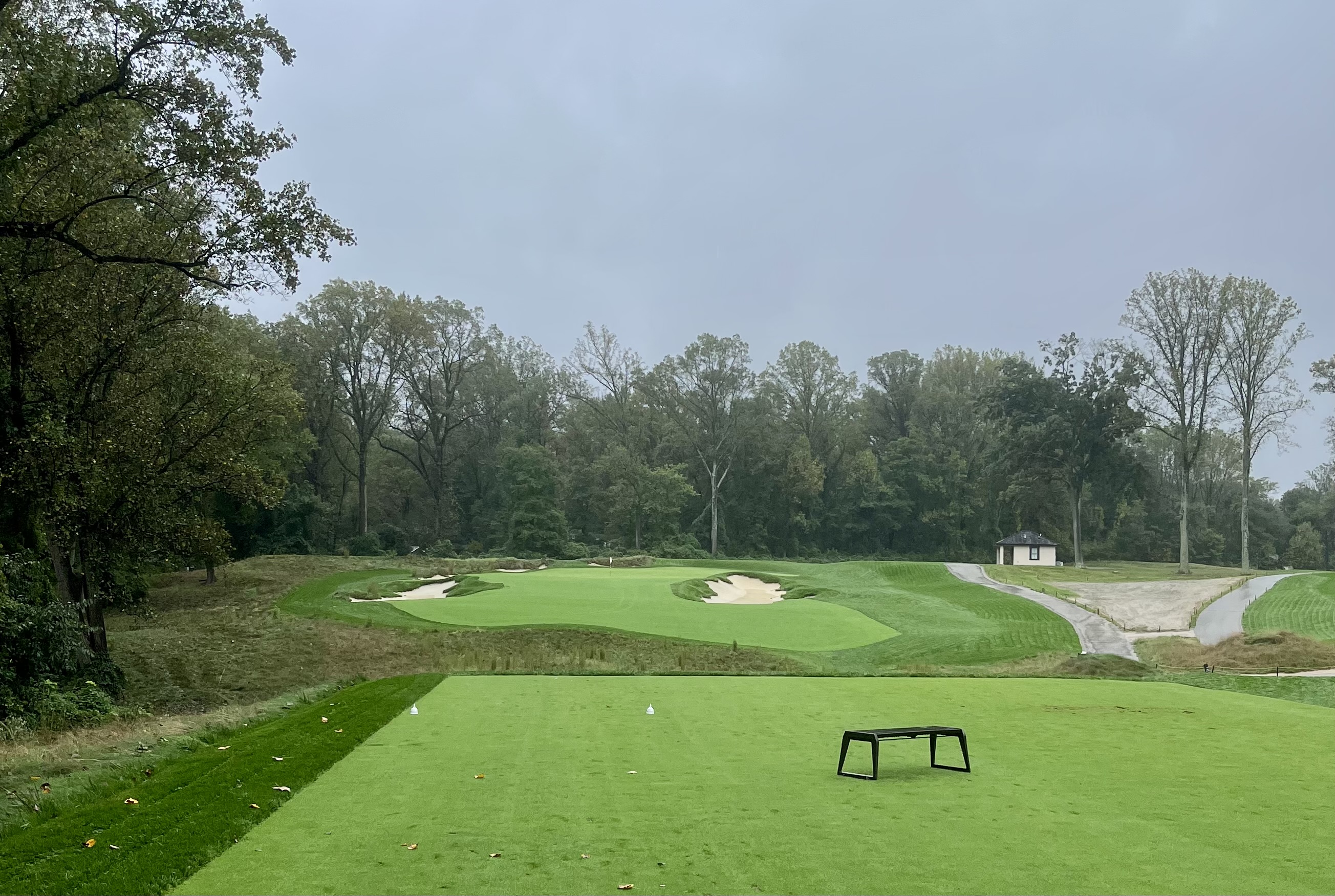
Running along the edge of the property, the 14th hole is a narrow 390 yard uphill par 4. With OB left the entire way and fescue down the right, accuracy is key on this teeshot. The approach plays at least a club uphill towards a wild, three-tiered, back-to-front sloped green lined by bunkers. As you can imagine, pin position matters quite a bit here, as this putting surface stretches nearly 50 yards long.
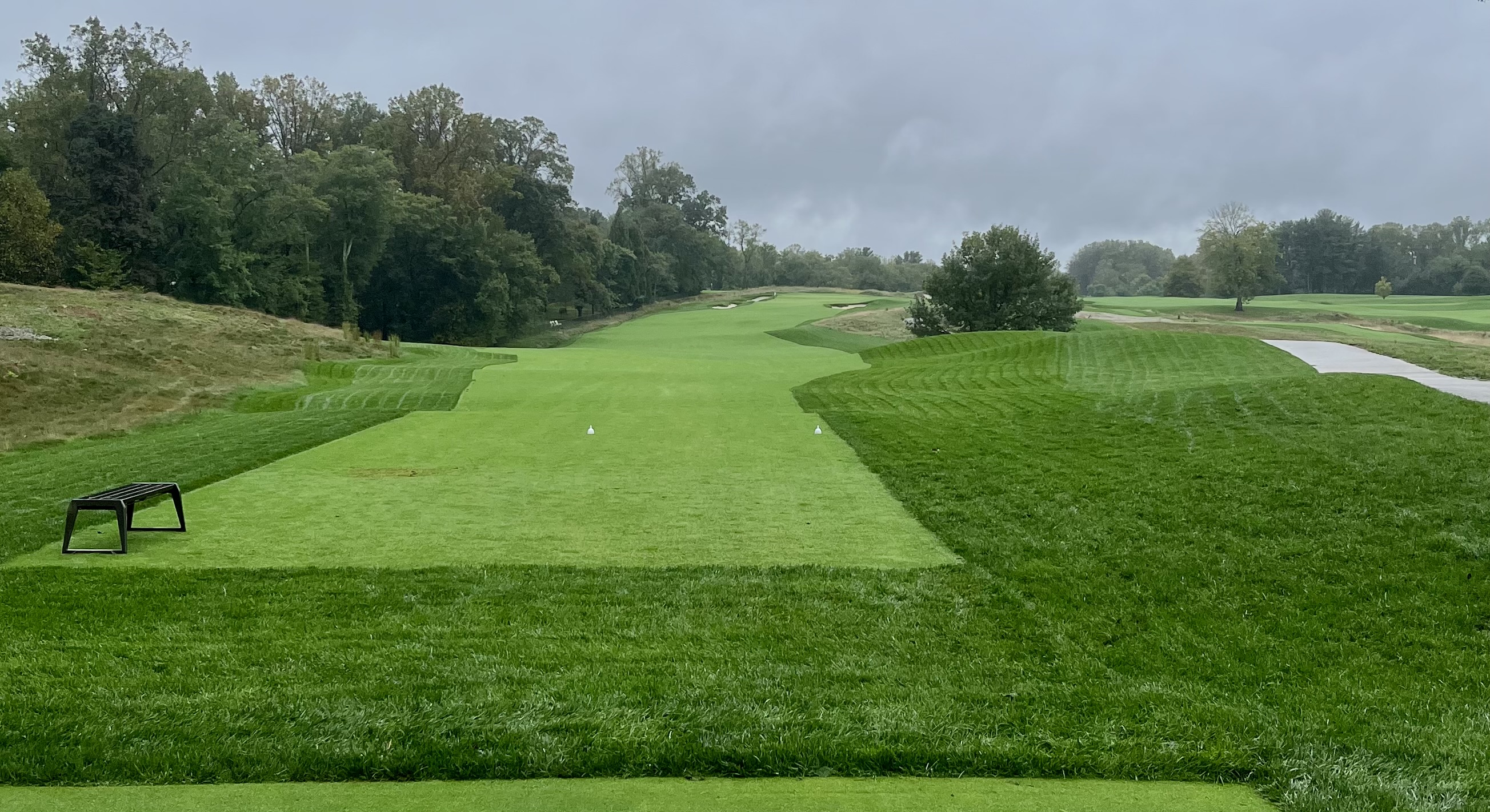
In true championship fashion, the Blue Course closes with a brutally difficult stretch beginning with the 440 yard 15th. The longest par 4 on the course, this beastly hole plays straightaway to a narrow fairway lined by sequential bunkering and thick rough. The approach plays uphill and somewhat blind towards a green that’s open up front but defended by deep bunkers left, right, and long. This green slopes front-to-back, making it very challenging to get close to a front pin.
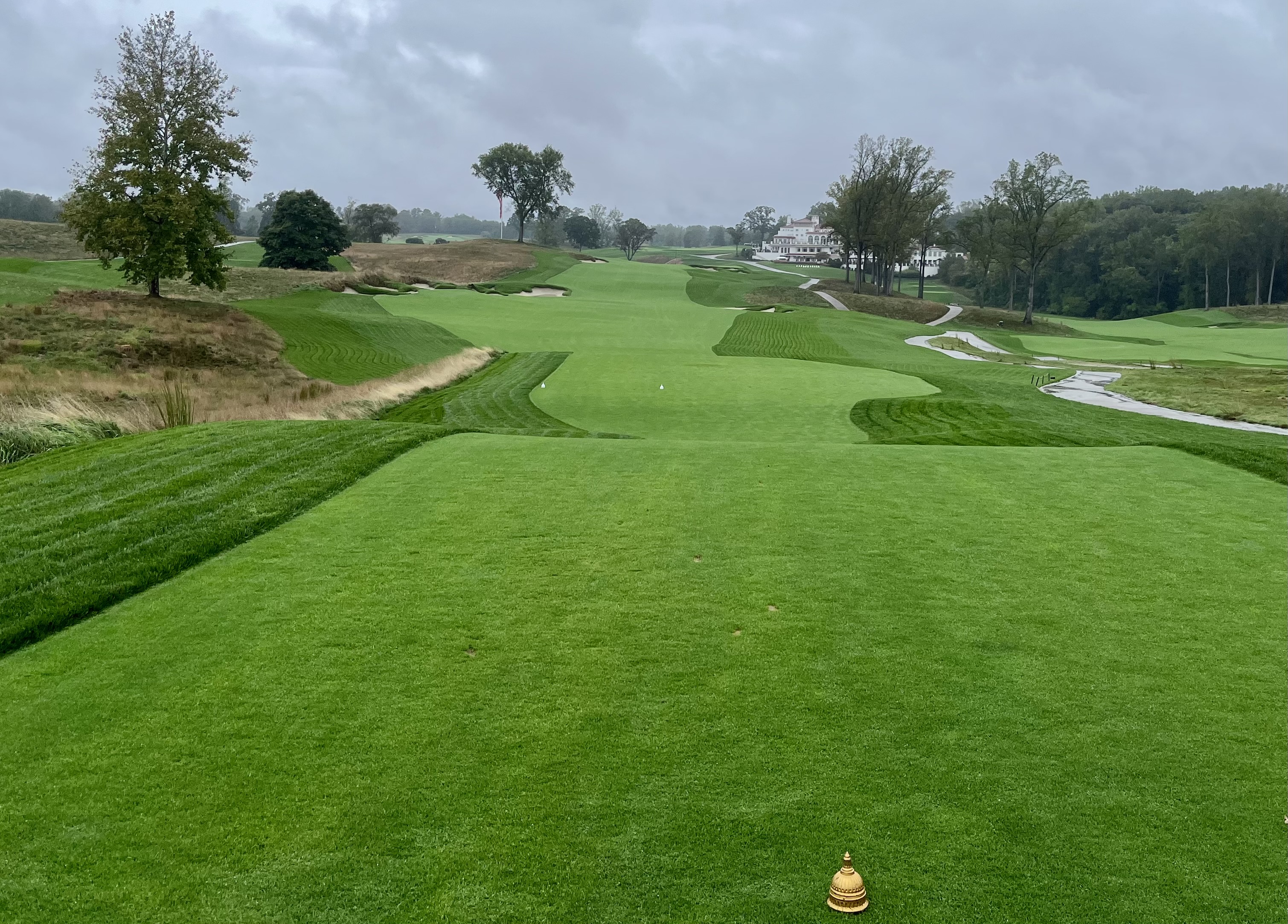
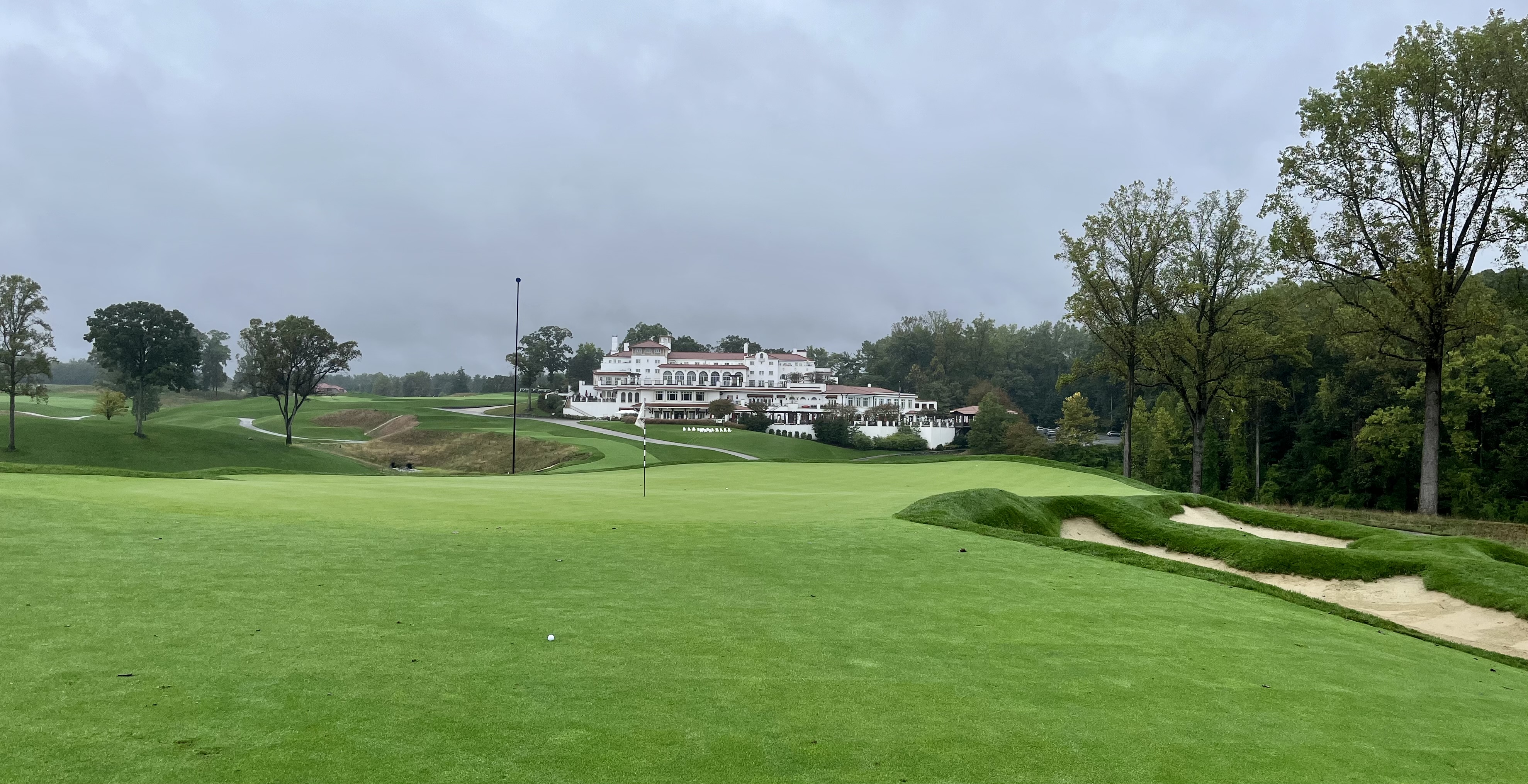
The 16th is the final par 5 on the course and plays as a slight dogleg left at 550 yards. This is a very attractive hole throughout with a crossbunker to carry down the left at 230 yards and another on the right at 275 yards. While longer hitters may be able to reach this green in two, those laying up will need to contend with a very narrow lay-up area with a total of nine bunkers down either side. The left side is especially dangerous, as the complex of bunkers here has somewhat of a Great Hazard feel. This green is on the flatter side but is elevated and small, with bunkers and steep slopes along its edges.
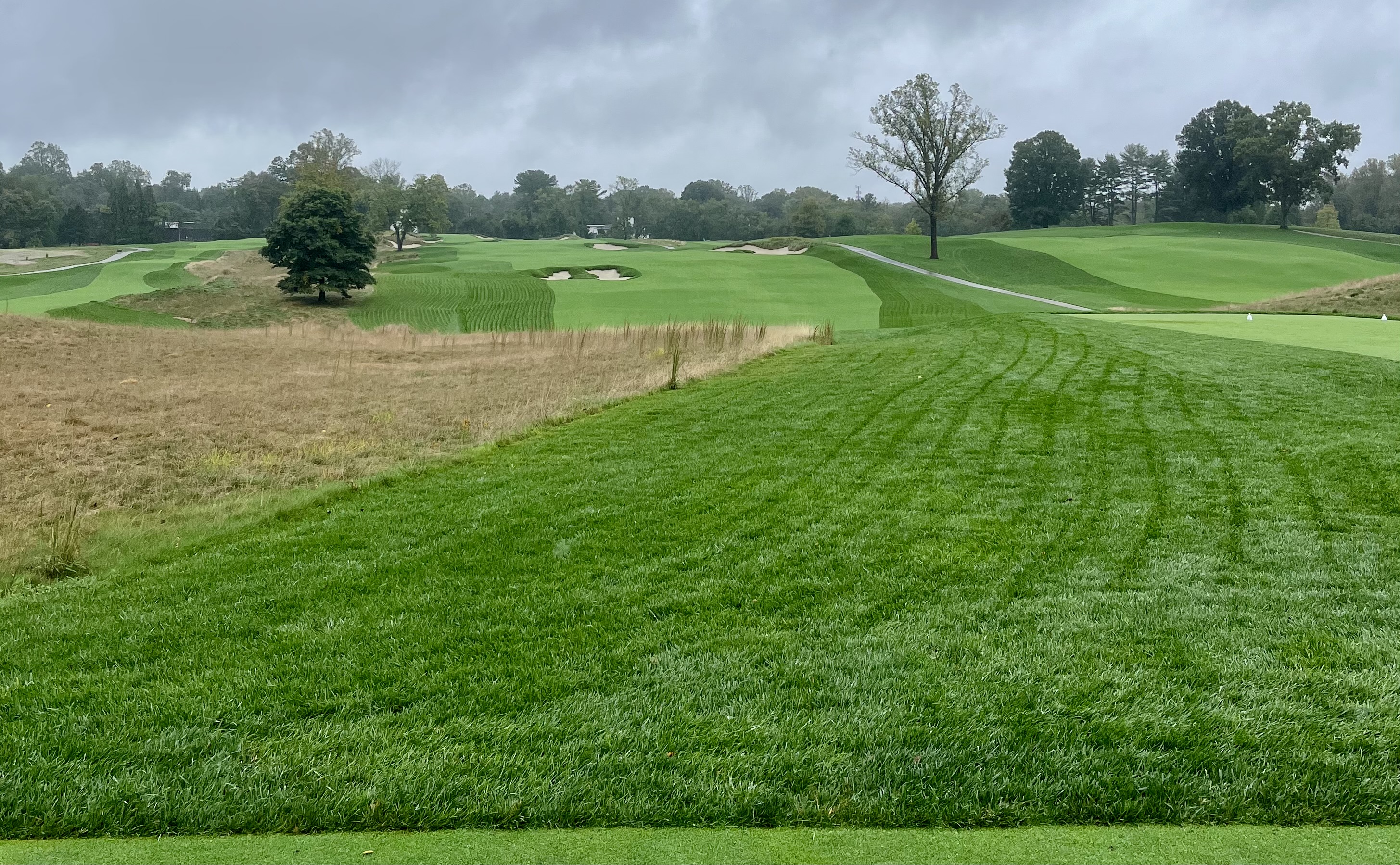
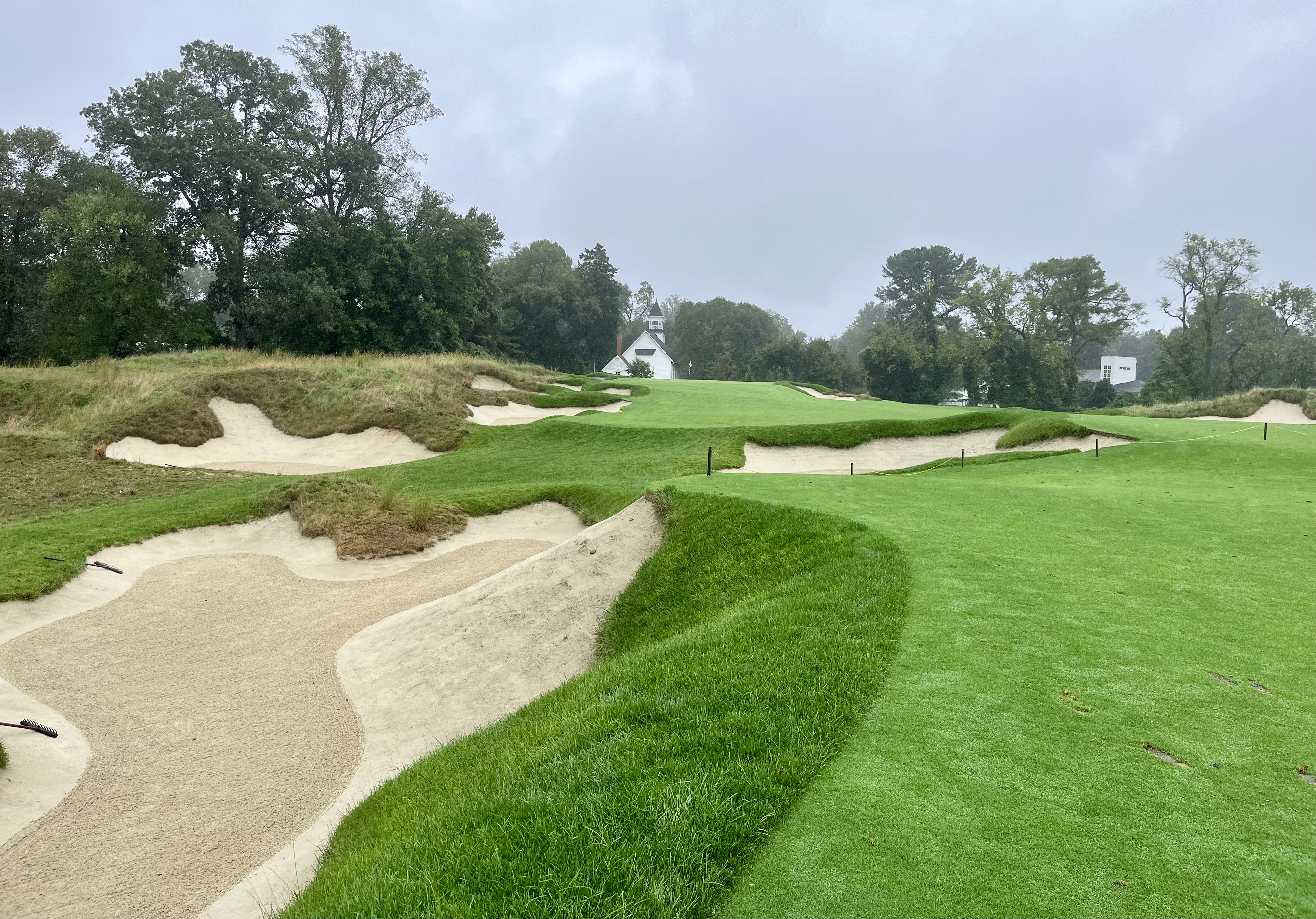
At 430 yards, the 17th is another long, tough par 4 and the sharpest dogleg on the course. This hole begins with a straight teeshot to a fairly generous fairway lined by rough. The ideal line is over a left crossbunker at 230 yards, which cuts the corner and possibly allows you to reach a speed slot as the fairway turns left. This approach plays uphill out of the valley towards a large green that slopes right-to-left with bunkers on either side.
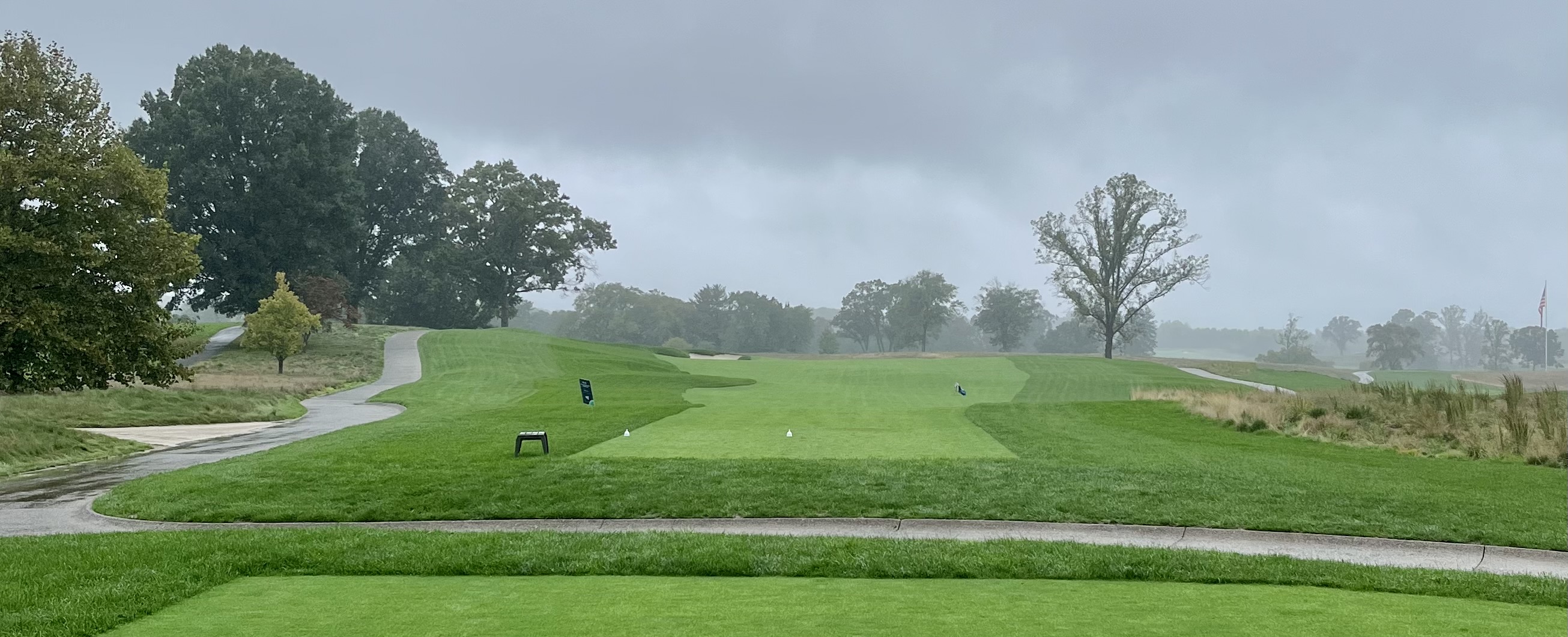
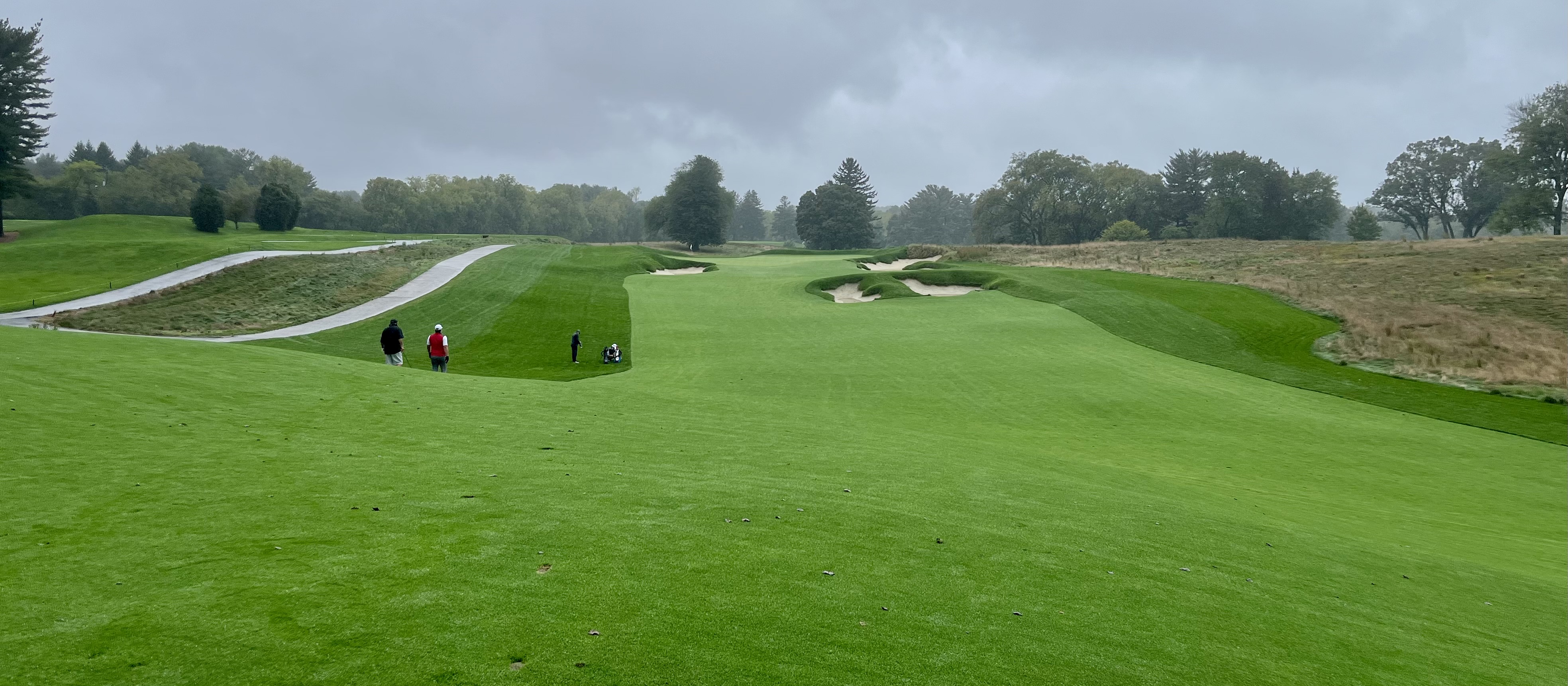
Originally designed as the 17th hole with a par 3 closer, today’s 18th has usually been the final hole in tournaments due to its memorability and difficulty. This is another big par 4 at 435 yards but runs steadily downhill the entire way. There are trees and fescue down the left and a set of bunkers running down the right between 225 and 270 yards. This approach is an intimidating one, continuing downhill towards a peninsular green defended by water on three sides and a large bunker short right. This green slopes towards the back left, and anything coming from the rough or without spin is in danger of running through into the hazard.
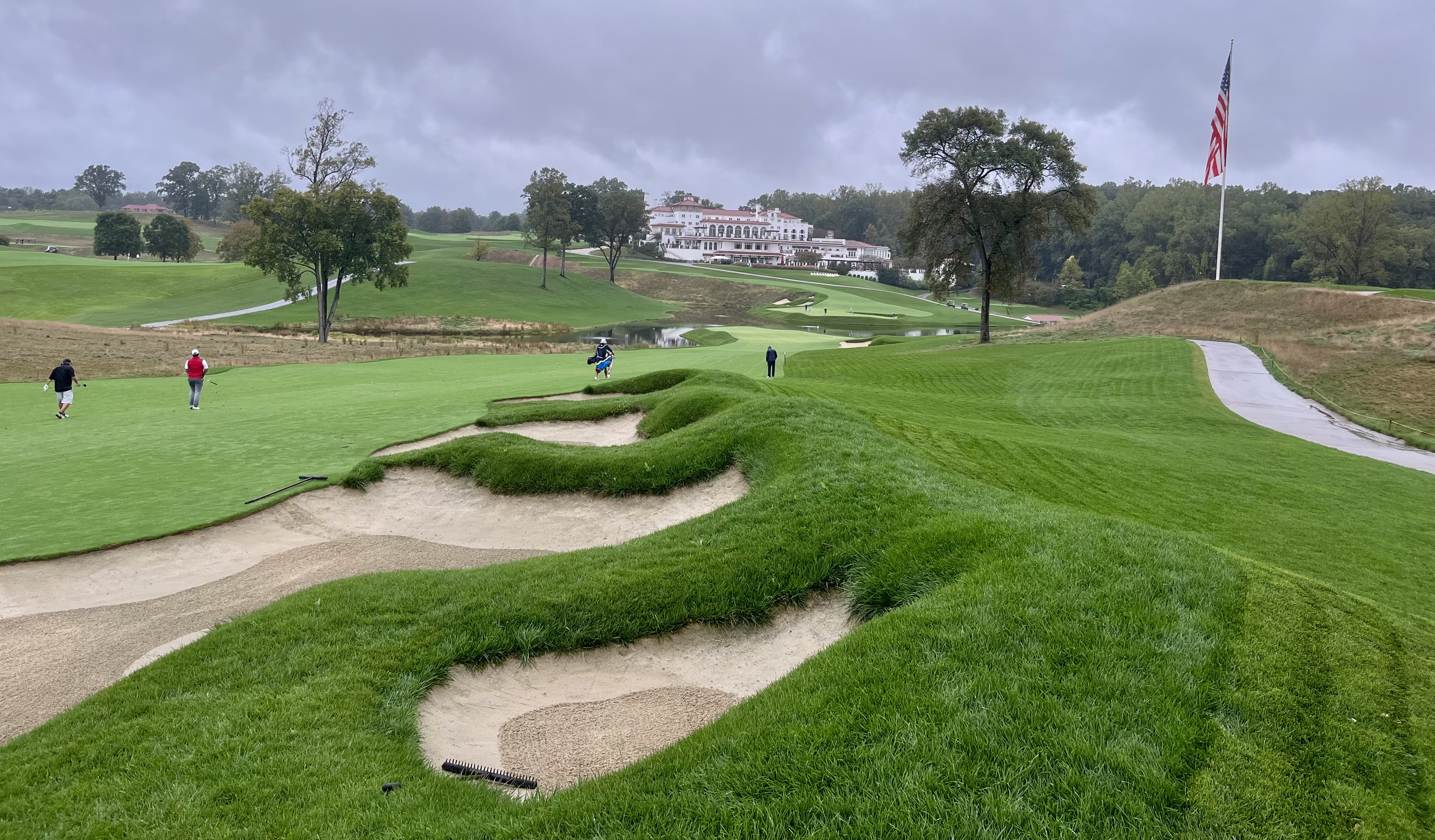
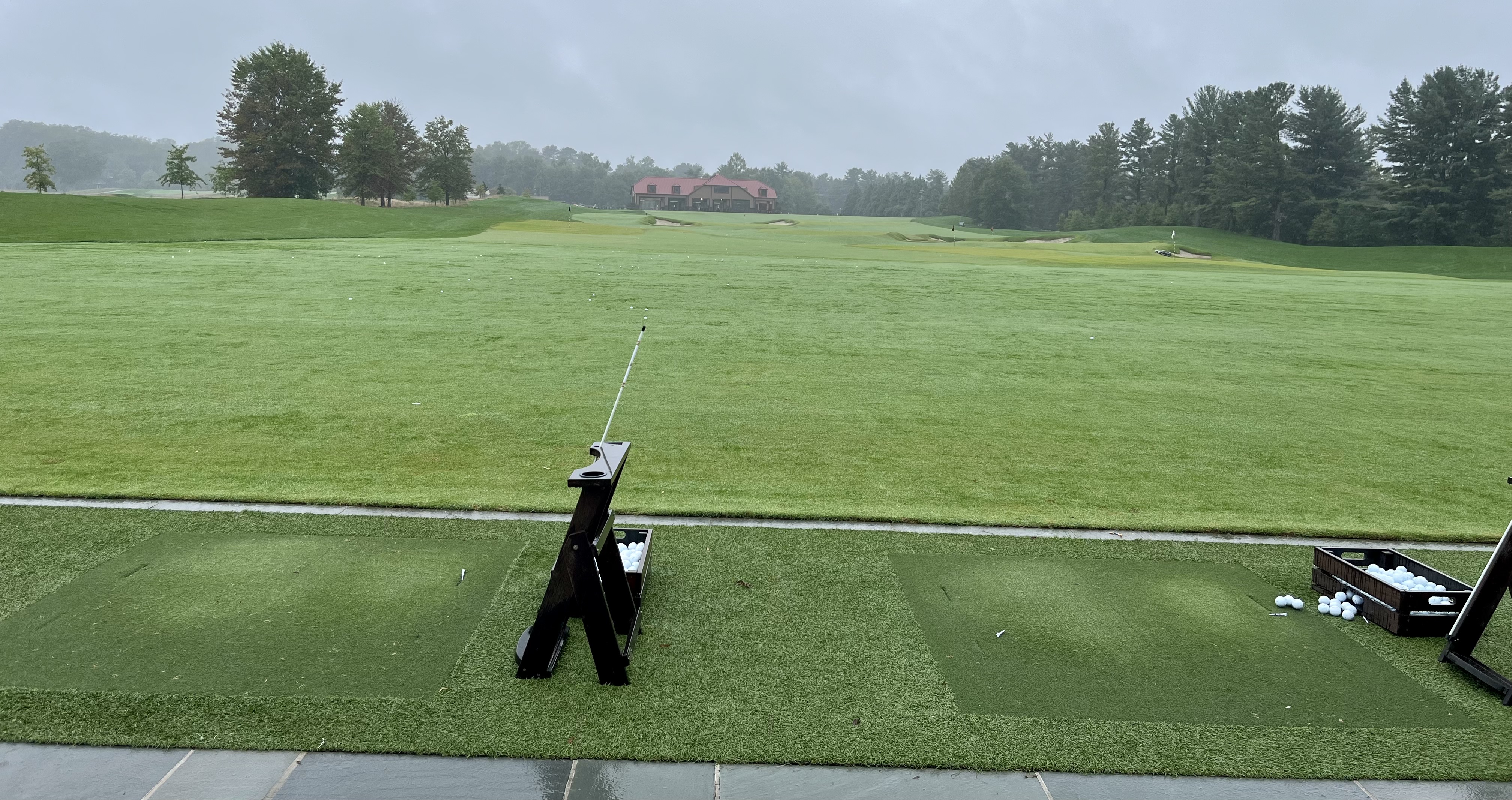
General Comments: Congressional’s practice facilities sit along the edge of the property and are impressive, with a full grass range, short game area, and teaching center. At the time of writing this, the expansive Spanish Revival clubhouse is the largest in America and features basically every kind of amenity you could ask for. The course is a wonderful walk with a caddie.
Verdict: A historic Club reinvigorated by a landmark renovation by Andrew Green, Congressional’s Blue Course now lives up to its lofty reputation as the best course in the D.C. area. This is the type of course that is worth traveling to see and one I look forward to watching the Pros tackle in the upcoming PGA and Ryder Cup.