
Honor of Kings is the most-played MOBA on the planet, and for most of its decade-long life it barely acknowledged India existed.
That changed on March 11, 2026, when Tencent’s TiMi Studio and Level Infinite launched the game in the country. The launch came with a Rs 10 crore localisation commitment, two Esports World Cup 2026 slots reserved for Indian teams, and one promise that has hung over the entire rollout: a hero built specifically for India, arriving in June.
That hero now has a name and a release date. Devara, the only fully original character in the Honor of Kings Plus Version Update landing June 17, is a Clash Lane Fighter whose story is built around legacy, lightning, and a young successor inheriting a power passed down for two thousand years. He is the first hero in the game’s main roster drawn directly from Indian tradition, and he arrives alongside three other heroes and reworks to more than 90 existing characters.
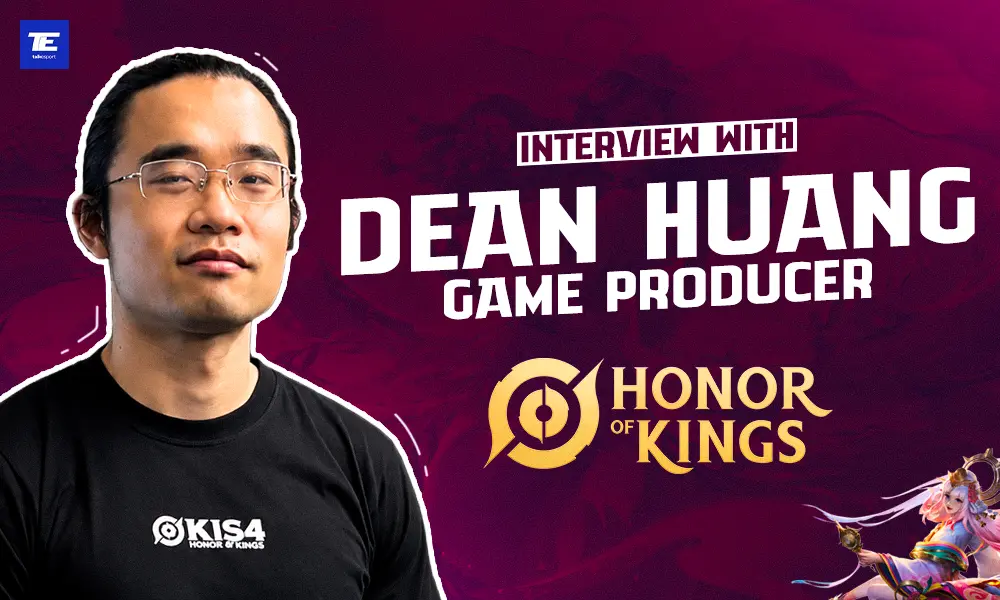
For a studio that has built its 120-plus hero roster overwhelmingly on Chinese epic tradition, Devara is the first real test of whether it can localise without flattening. We sat down with Dean Huang, Producer of Honor of Kings, to talk about how heroes get made, what Brazil’s Luara taught the team, the KPL moment that forced a mechanic rework, and the honest answer he gives Indian students who want into the industry.
Designers can predict systems, but players ultimately define how a game is played
Dean Huang, Producer of Honor of Kings
When you’re designing a new hero, at what point do you know it’s actually going to work? Is there a specific playtest moment, a metric, or just a feeling?
Honestly, data can only verify whether a hero clears the baseline. It cannot tell you whether the hero has a soul. We validate a design by looking at two things alongside the numbers.
The first is the community, whether the design genuinely responds to what players have been hoping for. The second is the design team’s own instinct as players. When the team finishes a match and immediately wants to queue up another round, that kind of joy cannot be faked.
A hero starts to feel successful when players interact with it naturally, rather than needing to be taught how to have fun with it. Pick rates, engagement time, and match performance all matter, but there is also a qualitative layer. We watch playtests and see players experiment creatively with a hero’s mechanics. When players start discovering strategies on their own, that is often the strongest signal that the design has real potential. We had a case where players on the test server developed unintended combos for a hero while the win rate held steady in a healthy range. That was the moment we knew the direction was right.
Across 10 years and over 100 heroes, name one you fundamentally reworked or quietly removed, and what it taught you about your own assumptions.
Over a long live-service journey, there are always heroes that need significant redesigns as player behaviour evolves. Those experiences reinforce one lesson: designers can predict systems, but players ultimately define how a game is played. Staying adaptable and listening to the community is critical to long-term balance and sustainability.
Honor of Kings runs much shorter matches than PC MOBAs by design. What’s the discipline that keeps matches tight without making them feel rushed, and what gets cut from a kit when 15 minutes is the ceiling?
Designing for shorter match times requires extreme clarity in gameplay systems. Every mechanic, objective, and hero interaction has to create meaningful decisions without unnecessary complexity. The focus is keeping strategic depth while reducing friction.
Abilities or mechanics that slow pacing, create excessive downtime, or require overly long setup windows are usually simplified or streamlined to preserve momentum.
Comeback mechanics are some of the hardest things to balance. Where do you draw that line, and is there a patch you wish you’d called differently?
Comeback systems should reward smart decision-making and coordinated play without invalidating early-game skill expression. They also bring real excitement to a match, because every fight feels like it can still swing. The goal is to make sure players always feel they have agency, while still making early advantages meaningful.
In a live-service game, balance is an ongoing process, and every major patch teaches the team something new about player behaviour and competitive dynamics. The game has early-game and late-game heroes, skill counter relationships, and clear macro-strategy differences between compositions. Balance work has to honour both the time curve of each hero and the synergy logic of the lineup, so the distinct strengths that make each archetype meaningful are preserved.
Honor of Kings has worked with Hans Zimmer, Joe Hisaishi, and Howard Shore. How much does the score actually shape mechanical decisions versus being layered on top of finished gameplay?
Music and gameplay are developed very collaboratively. Gameplay systems are always the foundation, but the score plays a major role in shaping emotional pacing, tension, and impact during key moments. Things like ultimate abilities, objective fights, and cinematic transitions become more memorable when audio and gameplay are designed together rather than layered independently. It gives players a more immersive experience.
When a hero’s win rate sits in a normal range but the ban rate spikes, designers will play the hero themselves for several matches to feel why players don’t want to face it
Dean Huang, Producer of Honor of Kings
How much of your design comes from telemetry, things like rage quits, surrender rates, ban patterns, versus a designer’s gut about what’s fun? When they disagree, who wins?
Both are equally important. Telemetry provides scale and objectivity. Surrender rates, hero bans, and engagement patterns help identify friction points quickly. But game design is also an emotional craft, and not everything that feels fun can be fully captured through data. The strongest decisions usually come from balancing analytical insight with player empathy and creative intuition.
For example, when a hero’s win rate sits in a normal range but the ban rate spikes abnormally high, the data tells us something is off, but the data alone cannot say what. In those cases, designers will play the hero themselves for several matches to feel firsthand why players don’t want to face it. That lived experience is usually what reveals the real direction for the fix.
You’ve confirmed an India-inspired hero for the June update. Who’s been consulting, and what’s been harder: respecting the source material, or making it work in a competitive five-lane game?
The team has put significant care into approaching the India-inspired hero thoughtfully and respectfully. The role of cultural research here is to help us understand the original context, symbolic meanings, and taboo boundaries of the cultural elements involved, so the design avoids stereotypes or unintentional offense, and the hero feels rooted rather than referential.
That work happens alongside close collaboration across creative disciplines, so the hero fits naturally into the broader Honor of Kings universe while still working competitively in a fast-paced MOBA. The biggest challenge has never been whether to adapt, but how to preserve the recognisability of the cultural core while letting it integrate naturally into the rhythm of a MOBA confrontation. Striking that balance, between thematic inspiration, gameplay clarity, and fairness, is where most of the design conversation lives.
Indian mythology has some of the richest archetypes in the world, Hanuman, Arjuna, Karna, Durga, Ravana. What’s the temptation you most have to resist: making them too “cool” and losing the cultural weight, or being too reverential and making them boring?
The challenge is finding the balance between respect and accessibility. Cultural inspiration should feel authentic and meaningful, but the character also needs to function as an engaging gameplay experience for a global audience. The objective is not to replicate mythology directly, but to create heroes inspired by those storytelling traditions while preserving their emotional and cultural resonance.
When you build a hero for a specific region, Luara for Brazil, Garuda Khageswara for Indonesia, now India, does the kit itself get localised, or only the visual and narrative wrapper? Should an Indian hero feel mechanically different from a Chinese one?
The foundation of hero design stays globally consistent, because Honor of Kings is ultimately a shared competitive ecosystem. What regional inspiration shapes is the layer that sits on top of that foundation: visual identity, narrative themes, personality, animation style, and emotional tone. The goal is to make heroes culturally resonant without fragmenting gameplay design principles across regions.
For the India-inspired hero, the team also co-created the Indian voiceover, so the way the hero speaks, reacts, and expresses emotion feels rooted rather than translated. The hope is that the cultural core comes through not just in how the hero looks and fights, but in how the hero sounds.
Brazil was the first region to get a fully localised hero on the global side. What did Luara teach the team that’s already changed how the India hero is being designed?
What Luara taught us is that, when it comes to regional representation, depth matters far more than surface-level localization. Players respond most strongly when they can feel genuine cultural understanding in a character’s identity, story, and imagery. When their own culture is being seen, taken seriously, and given room to stand on the world stage rather than simply referenced.
That insight continues to shape how we approach every regionally inspired hero, and it directly informs the India hero this time. The aim is the same: cultural resonance that goes beyond aesthetics, so players from the region recognise themselves in the character, and players from everywhere else encounter that culture as something authored with care.
There’s a constant tension between “fun to play” and “fun to watch.” When those pull against each other on a kit, who wins in your studio?
Ideally, great competitive gameplay should achieve both. But when trade-offs emerge, clarity and long-term gameplay health become extremely important, especially in esports. Comeback wins from behind or a backdoor victory in a desperate situation are great examples. A mechanic might feel exciting for individual players but become difficult to follow in professional broadcasts, or create unhealthy competitive patterns. In those cases, the team focuses on preserving the excitement while improving readability and strategic clarity.
Menglei’s tower steal in the KPL led to the crystal mechanism being modified
Dean Huang, Producer of Honor of Kings
What’s a single moment from a KPL or KIC match that ended up changing something in the game afterwards, where you watched the broadcast and thought, “we have to fix that”?
Professional competition often reveals edge-case behaviours and strategic patterns that internal testing cannot fully predict. Watching top-tier play helps us identify situations where certain mechanics create unintended gameplay loops or reduce strategic diversity. The Menglei tower steal in the KPL is one, and the crystal mechanism was modified afterwards. Those learnings regularly feed into balance updates and system refinements.
The KPL is so far ahead of every other region in skill, production, and viewership that it risks demoralising emerging regions like India. From a design and competitive-structure standpoint, not a marketing one, what is the team doing to make sure regions like India don’t feel like a permanent feeder system?
Building a sustainable competitive ecosystem takes long-term investment in player development, grassroots competition, and accessible pathways into higher-level play. The focus is not on producing elite teams overnight, but on steadily building regional depth, through tournaments, creator ecosystems, community engagement, and structured progression that lets emerging regions grow over time.
In India, for example, we have already launched a campus tour alongside an online weekly tournament series, and we are planning to offer Indian teams direct qualification slots into Asia-region tournaments, rather than asking them to leap straight from grassroots play to beating established KPL teams. The intent is to give emerging regions a clear, climbable ladder, so competitive growth happens at a realistic pace and on terms that respect where each region is starting from.
What’s a design problem in Honor of Kings you’ve been trying to solve for years and still haven’t fully cracked, and what would solving it unlock?
One of the biggest ongoing challenges in any live-service competitive game is maintaining accessibility for new players while continuing to deepen mastery for experienced players. Solving that balance perfectly would unlock even broader long-term retention and make the ecosystem more welcoming without sacrificing competitive depth.
If a 22-year-old Indian game design student wrote to you tomorrow asking how to break into the industry, not the polished press answer, the real one, what would you tell them?
Start by making things. The industry values curiosity, iteration, and problem-solving far more than perfection. Study games deeply, understand why systems work the way they do, and build small playable experiences whenever possible. Most importantly, learn how to collaborate and accept feedback. Game development is ultimately a team discipline built around continuous learning.