
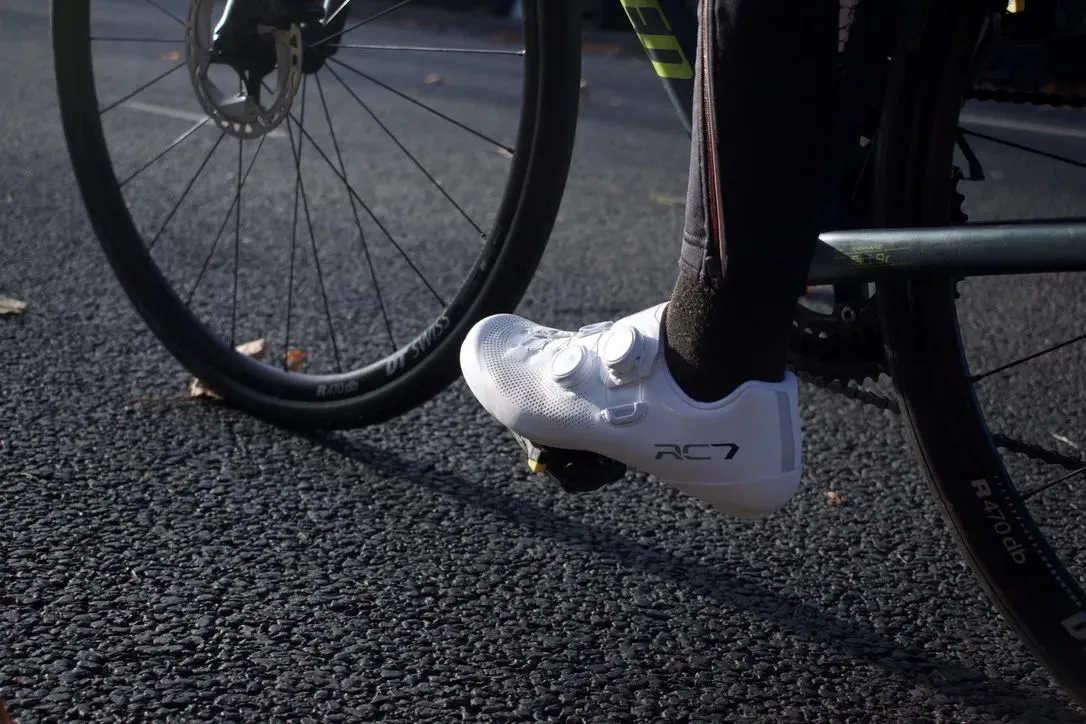
The women’s cycling shoe market is slowly growing. At the same time, brands are increasingly offering unisex options with various widths and shapes.
That leaves female riders facing a dilemma: should they seek out footwear within a limited range of women-specific shoes, or cast a wide net across all models to find the right shape?
Fit above all else
According to cycling podiatrist Mick Habgood, the answer is clear: ‘The shoe has to fit the foot,’ he says, a phrase he repeats throughout our conversation. Labels matter less than shape.
Habgood has worked in cycling since 2013, first at London-based bike fitting studio Cyclefit before going on to work with Team GB, the Japanese and US track teams and EF Pro Cycling, amongst others. His work focuses on the interaction between the foot, the shoe and the pedal – an area he believes remains underestimated, even at elite level.
‘Everyone forgets about the foot,’ he says. ‘You put them in a beautiful shoe and think, “Well, that’s it.” But the foot’s really complicated.’
For Habgood, shoe fit is not simply about avoiding numb toes or hot spots. He describes the foot as the rider’s only contact point with the bike that remains connected 100% of the time. Hands come off the bars; riders shift around on the saddle; but the feet stay fixed to the pedals.
Because of that, an unsuitable shoe can undermine even the best bike fit: ‘When a bike fitter tries to change the foot position without stabilising it and really locking it in, it’s good for that moment, but the foot tends to move about.’
Habgood often works with stiff, custom insoles designed to stabilise the foot within the shoe and improve movement patterns. Still, even the best insole cannot compensate for the wrong shoe: ‘If the insole is in the wrong shoe and the shoe doesn’t match the foot, it just won’t work,’ he says. ‘The insole controls the bottom, but the shoe controls the rest’.
What does a women’s shoe look like?

What actually makes a shoe a women’s shoe? Women’s feet tend to have narrower heels and wider forefeet relative to men. A genuinely women-specific last (the mould around which a shoe is built) would typically reflect those proportions. But Habgood says many brands simply adapt an existing unisex last rather than creating a genuinely separate shape, often adding little more than extra heel padding and a different colour scheme, not too far off the old ‘shrink it and pink it’ approach.
Determining whether a women-specific model is built around a different last often requires a deep dive into brand specifications.
The result is that many riders may be better served by understanding their own foot shape rather than restricting themselves to shoes labelled specifically for women.
Different brands cater to different foot profiles. Lake, Nimbl and Bont are often associated with wider lasts and roomier toe boxes, while shoes such as the older Specialized S-Works 7 or Shimano’s S-Phyre tend to suit narrower feet. Specialized’s Torch line, meanwhile, combines a relatively narrow heel with a wider forefoot shape – a profile that may work well for many women despite not necessarily being marketed exclusively towards them.
How you should choose cycling shoes
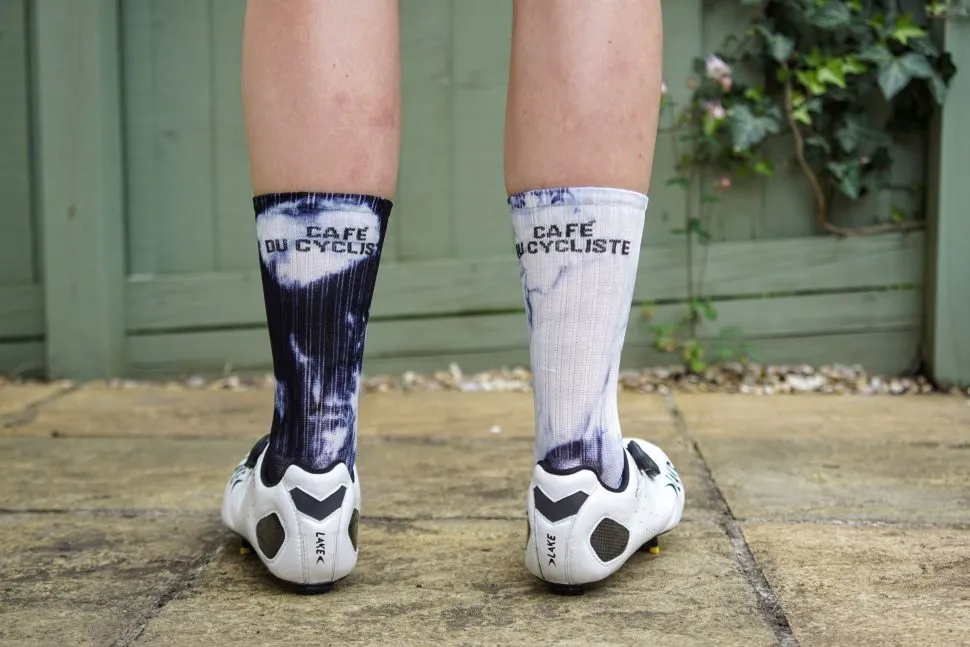
The starting point, according to Habgood, should be measuring the foot properly. Ideally, that means using a Brannock Device, the metal measuring tool commonly found in shoe shops that provides standardised measurements for length and width. Foot height also matters, but can be judged simply by trying on shoes.
Measuring both feet matters too, since few people are perfectly symmetrical. The correct shoe size should accommodate the larger foot.
Fit also matters more than stiffness ratings, despite the cycling industry’s obsession with carbon soles.
Habgood recalls a time when a group of 17 professional cyclists he was looking after switched to the same high-end shoe model following a brand deal, and 14 of them subsequently developed the same injury, which he sees as an illustration of the risks of assuming one shoe shape will suit every rider.
The lesson is simple, even if the market itself remains complicated. Women-specific branding may help some riders find a suitable model, but it is no substitute for understanding foot shape, width, depth and fit. Not only are there very few women-specific models to choose from, there is often a glass ceiling, where top-of-the-line shoes don’t come in women’s versions.
The marketing angle

Giro’s current road range includes 17 models, 14 of which are marketed as unisex and three marketed specifically towards women. None of the women’s models sit at the very top of the range: the brand’s flagship Imperial II costs £399, while the most expensive women-specific model retails for £150. Shimano’s second-most expensive road shoe, the S-Phyre RC9, comes in a women’s model, but not the top-of-the-line sprinting S-Phyre RC903 PWR.
Asked about Giro’s unisex and women’s shoes, director of footwear Raphael Dalle says that the best way to choose a shoe is to ‘try before you buy, understand your foot shape, and find the last that works for you. The right fit is the right shoe, whatever it says on the box’.
Lauren Ryan, brand and sales manager at Lake, makes a similar point. While Lake offers women-specific lasts designed to suit many female riders more closely than a standard unisex shape, she stresses that labels are only a guide. Some men, she notes, ultimately find a better fit in women’s models.
This raises a broader question about the role of women-specific branding. If the industry’s own fit experts and brands emphasise foot shape over gender, the relative absence of women-specific models at the top end of many ranges is difficult to ignore: if women’s shoes are a marketing hype, many brands don’t bother to target women for top-of-the-line options. If women’s cycling shoes are a genuine game-changer, then women have fewer high-end options than men.
The reality likely lies somewhere in between. With an ever greater choice of lasts and fits, women are more likely to find a shoe that really works for them, as opposed to having to choose from a range of lasts all designed for the average man’s foot. Women-specific shoes can be a shortcut for women to find a shoe that may fit well, but they are not a magic wand.
Bottom line

The most common advice among brands, bike fitters and podiatrists is that trying on shoes before buying them is fundamental to finding the best model. Buying a top-of-the-line shoe with a great online discount may end up costing both watts and money if they do not fit properly.
The challenge is that finding the right shoe increasingly requires access to a wide range of models, while many physical retailers carry only a limited selection. As brands expand their fit options, finding the right shoe may be easier in theory but harder in practice.
Having a wider choice is ultimately a positive development. Women’s-specific shoes can offer a genuine advantage for riders whose feet match the shape of a women’s last, but they are not a category women should feel confined to. The best shoe is still the one that fits, regardless of which section of the catalogue it appears in.