
Updated June 26, 2026 07:18AM
Welcome to Velo’s Eurobike coverage, where we share our favorite things we’ve found at the 2026 show. Bikes, components, accessories, and more: if we think it’s cool, you’ll see it. See the rest of our Eurobike coverage.
There’s energy at Eurobike, but it isn’t coming from the traditional status quo. While the prevailing narrative laments the decline of European trade shows, the real vitality at this year’s event belongs to the outliers—the brands and organizations capitalizing on the massive, overlooked opportunities left behind by an industry in transition.
It’s easy to see why that narrative of decline has taken hold. Eurobike consists of massive expo halls spread across a city block, but in years past, there were more of them. There were more floors in each hall, the booths were tighter, and the outside test area was easily double its current size.
Meanwhile, the China Cycle Show seems to have captured almost all of those missing vendors. It doesn’t take a big stretch of the imagination to look at the shifting floor space and declare a changing of the guard. But I think that’s too easy.
Canyon Shows the Template
Canyon proved there is a distinct advantage to a smaller Eurobike. The brand wasn’t expected to attend and hasn’t in recent years. Yet, Canyon showed up with the Predict concept bike aimed at capturing attention. Instead of fighting for space in the news cycle against every other major brand, Canyon had the floor.
There were not multiple major launches every day. Canyon showing off a bike like the Predict went completely unchallenged. You can’t buy it, but that didn’t matter. Journalists were still at Eurobike looking for things to report. Aero gloves and carbon brake rotors are interesting, but they don’t compete with an AI-powered concept bike.
Canyon’s execution was a masterclass in buying the dip—recognizing that an empty room is actually an uncontested stage. But while Canyon utilized this strategy to capture media attention for a concept bike, a much quieter corner of Eurobike was demonstrating how the exact same principle could unlock nearly a billion euros in actual revenue.
The Real Untapped Market
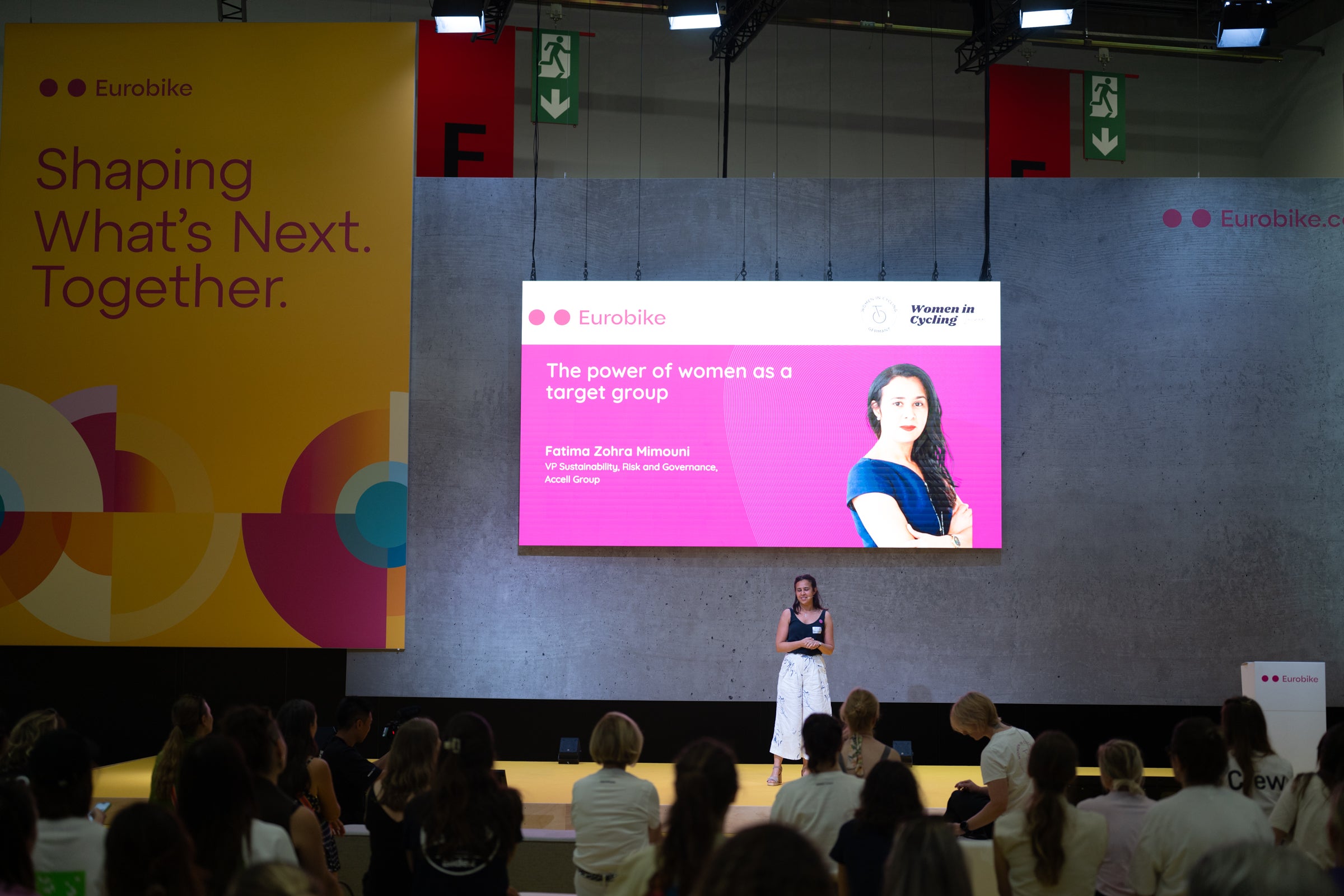
Away from the glitz of the Canyon presentation, I stopped by a much quieter affair that focused on an entirely different kind of opportunity. This group wasn’t pushing hardware; it was sharing community and pointing out the €520 million to €950 million in additional revenue available to struggling bike brands simply by changing their approach.
While many symposiums at Eurobike were under-attended, it was packed at the Women in Cycling Breakfast as Fatima-Zohra Mimouni—Accell Group VP of Sustainability, Risk, and Corporate Governance—outlined a basic marketing tenet she believes bike brands are missing. Her statement was simple: “Stop selling bikes. Sell joy, sell belonging, sell freedom.” You might also recognize that as a tweak of “don’t sell the bacon, sell the sizzle.”
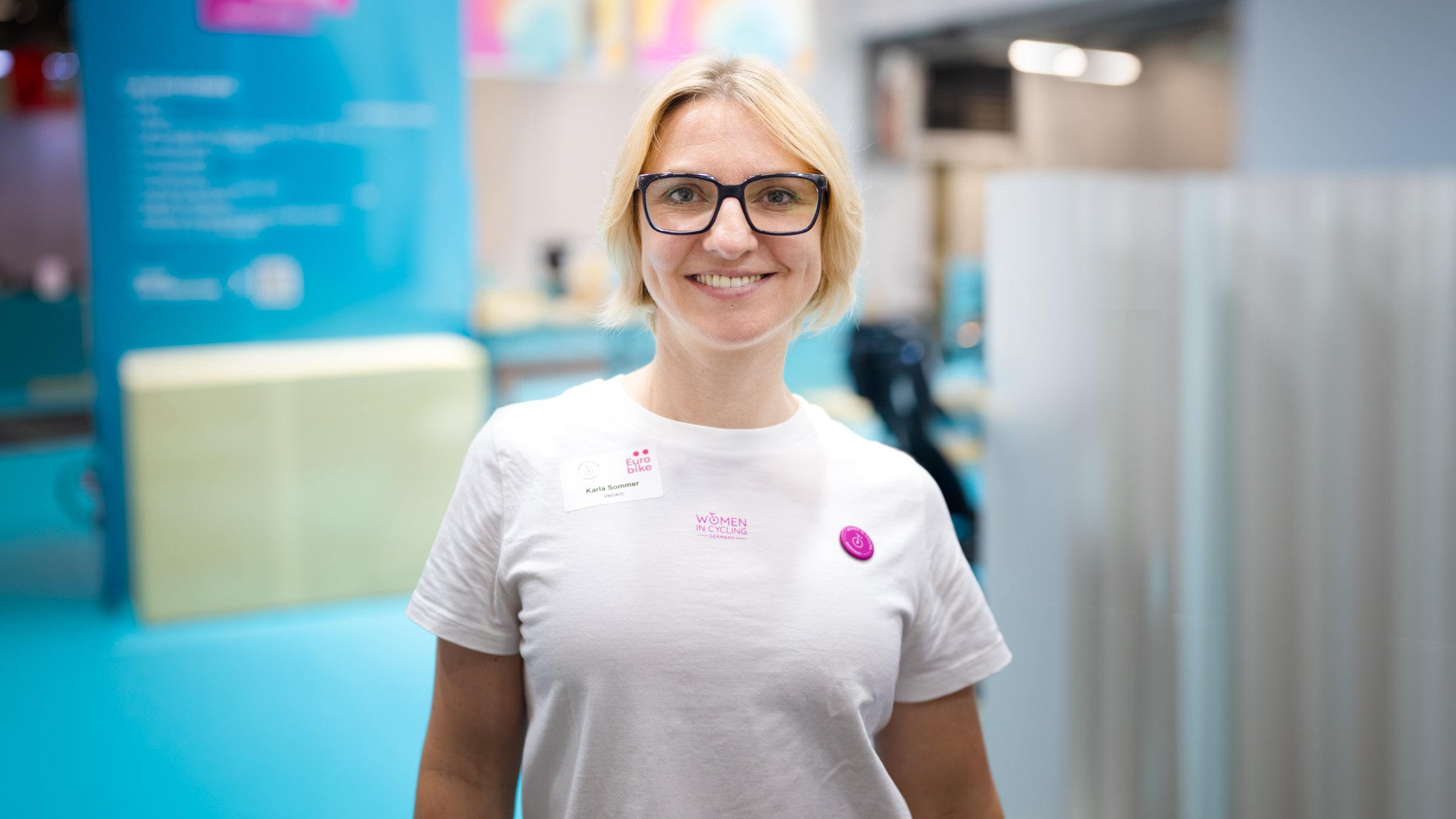
What does that actually look like in practice? Can the industry tap into the palpable enthusiasm I saw in this corner of Eurobike? To find out, I sat down with Karla Sommer, owner of sales consulting agency Velokin.
Breaking the Retail Cycle
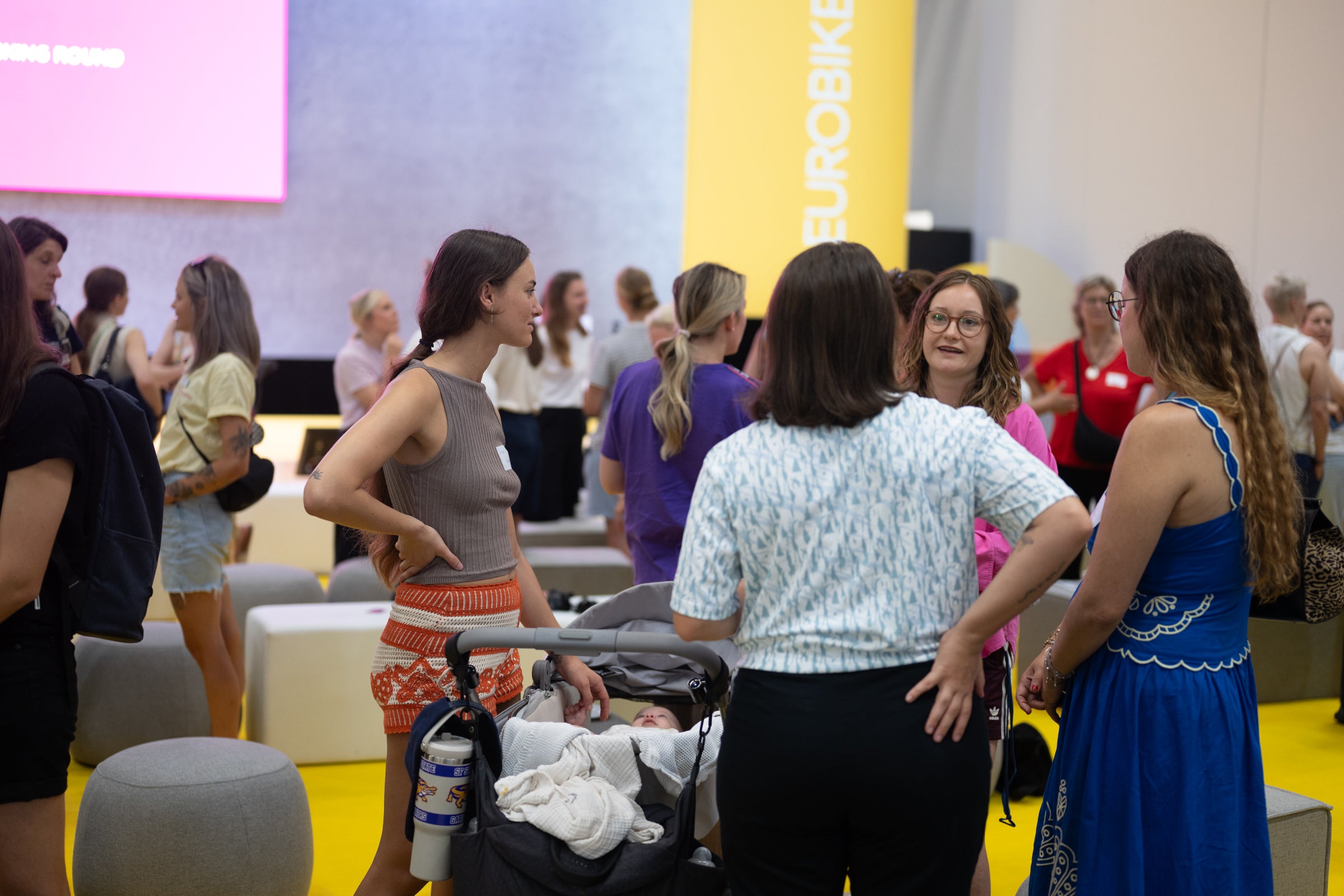
When I asked Sommer how a brand or a local shop even begins to access that kind of capital, I pointed to a classic chicken-and-egg scenario I’ve heard. Bike brands don’t have significant female customers, or bike retailers don’t see female customers, so the brands and shops don’t stock gear or bikes that appeal to women. Because the brand or shop doesn’t cater to them, women aren’t visible.
Sommer spoke from a perspective of local shops, but it applies at the brand level as well. According to Sommer, the responsibility to break that cycle lies squarely on the supply side. Waiting for a new demographic to simply walk through the door without an invitation is a failing strategy. Often, women are already walking into these shops, but retailers are failing to recognize them. If a female customer walks in and is either ignored or met with a wall of aggressive tech jargon, she leaves. The shop owner assumes there is no market, completely unaware they just drove a potential customer out the door.
To fix this, Sommer argues shops have to make the first move. That starts with baseline visibility: featuring women on the shop’s website and, crucially, hiring female staff. It also means creating low-barrier entry points like women-specific group rides and basic maintenance clinics. Teaching fundamentals—like how to set up tubeless tires, change brake pads, or fix a flat—in an environment where women feel comfortable asking questions without intimidating technical talk builds immediate trust.
The Power of the Network
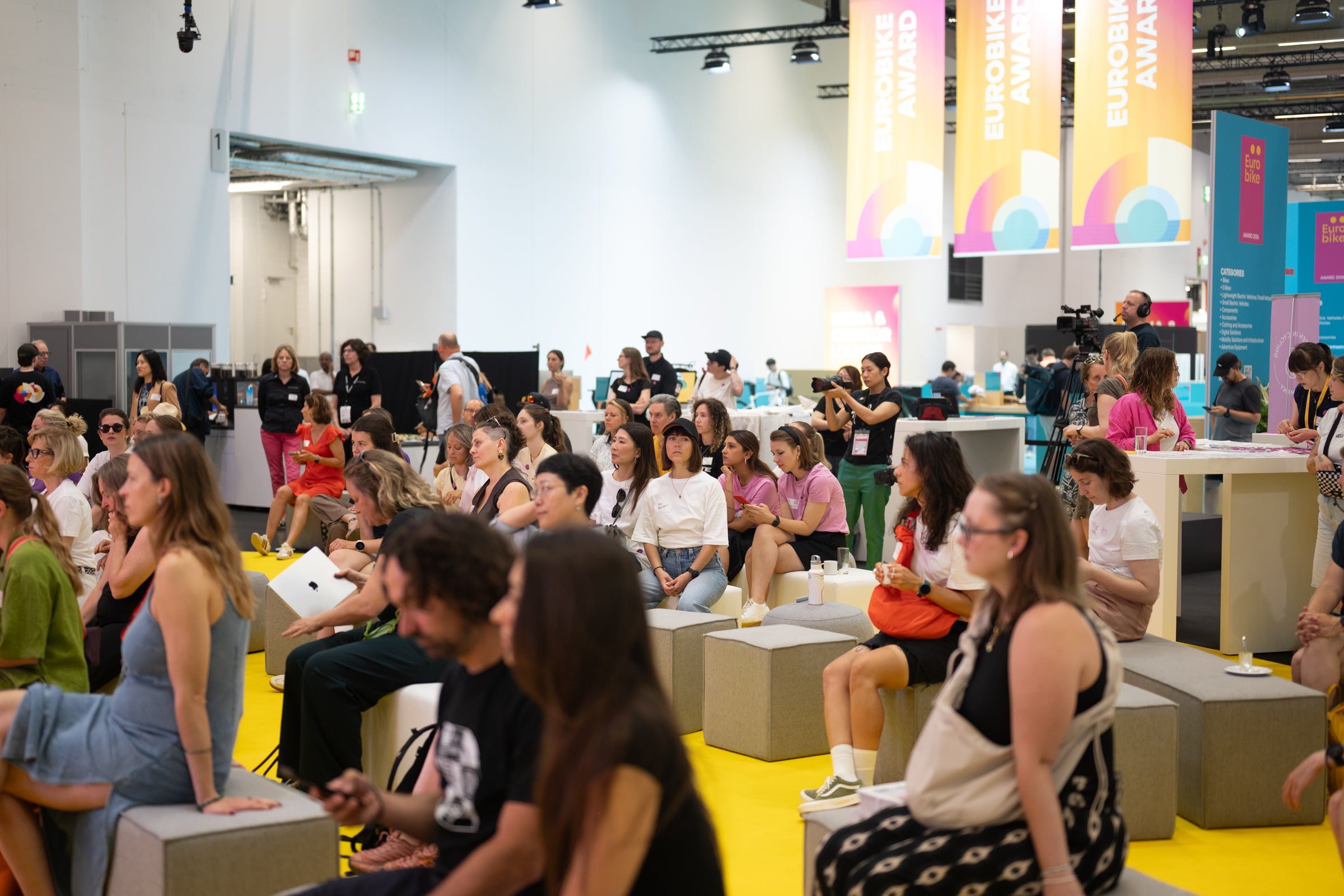
That trust is critical because, as Sommer pointed out, the purchasing behavior in this demographic is different. While the traditional male cycling consumer might scour forums or magazine reviews for the latest specs, female consumers lean heavily on word-of-mouth and personal recommendations. If a shop successfully creates a welcoming environment for one woman through a clinic or a group ride, she is highly likely to recommend that shop to her network.
Putting a Price Tag on Equality
Ultimately, this approach requires a translation in how the industry communicates, and that requires a desire to put in the work. But the motivation for brands and shops to adapt doesn’t have to be altruistic. It comes down to pure economics.
In Germany alone, the untapped potential of the women’s market is estimated at €950 million. Sommer noted that during previous masterclasses focused on women in retail, shop owners—who are predominantly men—often tune out when the conversation centers on diversity or equality. They view it as a nice-to-have metric rather than a business imperative.
To get the industry to actually pay attention, Sommer and her colleagues realized they had to stop talking about equality and start talking about revenue. When you put a €950 million price tag on a missing demographic, the people making the business decisions suddenly start listening. Just like Canyon recognizing the value of an empty room, the brands and shops that recognize this overlooked financial potential are the ones poised to find real success in the changing cycling landscape.
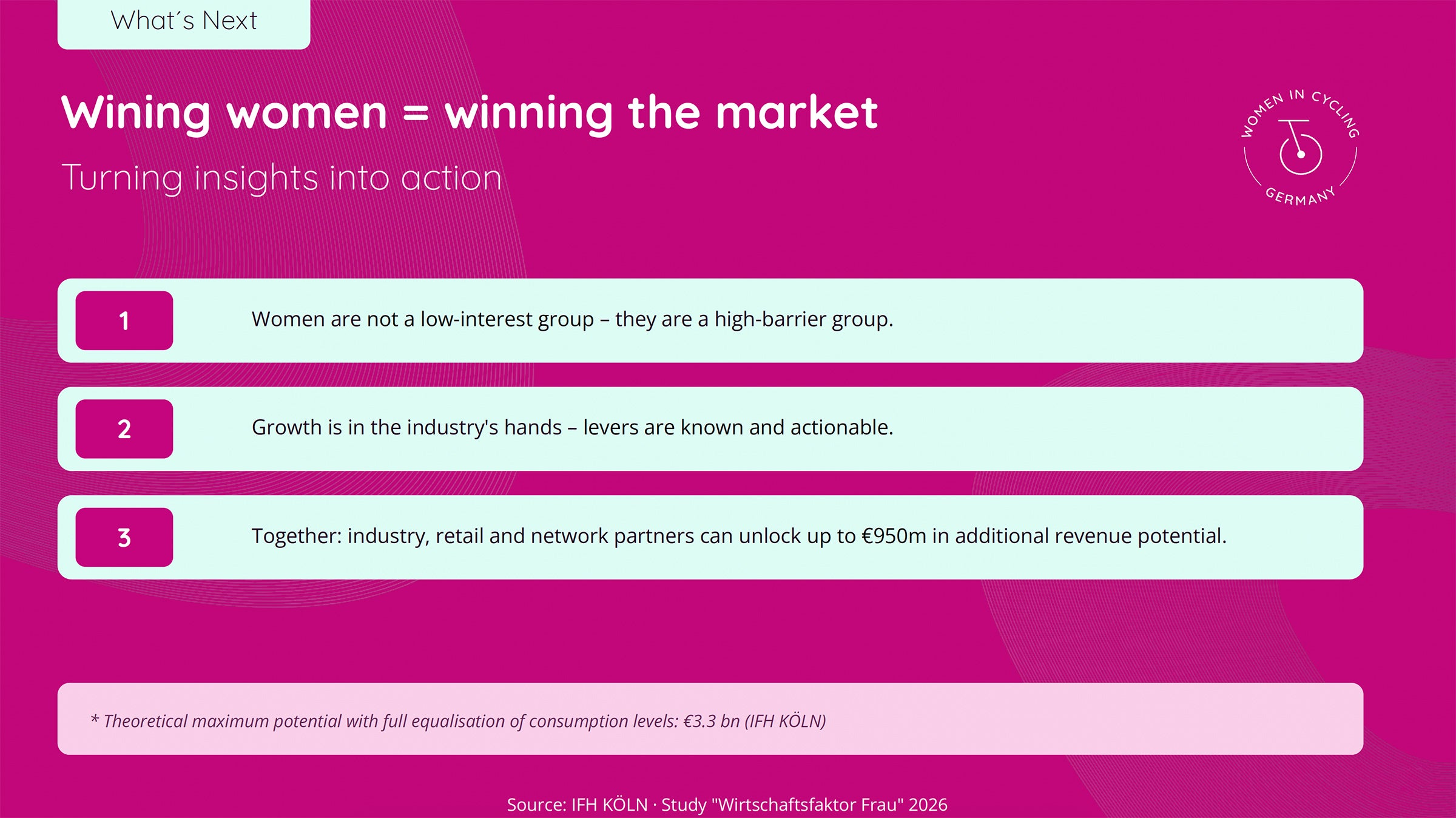
So yes, Eurobike is looking smaller this year, but that only means outsized potential for the smart brands. Canyon demonstrated that there is still plenty of room to market in a way that captures the attention of the traditional cycling consumer. But beyond the traditional consumer, there is a massive, untapped market. The women who represent that billion-euro potential weren’t just a theoretical concept; they were standing right there at Eurobike this year, packing the seats of a symposium while the rest of the trade show looked elsewhere.
They are only an invisible demographic if the traditional gatekeepers actively choose to look right past them.