

Hugo Ekitike faces at least nine months out with a ruptured Achilles, but the road to return to full fitness could be much longer.
Ekitike suffered among the worst injuries for a player’s career as he ruptured an Achilles tendon against PSG.
Knowing that his problem was major, PSG’s players surrounded Ekitike when he went down.
The seriousness of his injury is well-known to them, having seen another former teammate, Presnel Kimpembe, whom Ekitike played alongside in Paris, miss 24 months of football after suffering the same fate.
Back in February 2023, the ex-PSG defender was stretchered off in a game against Marseille and didn’t play again until February 2025.
The images of his post-operation scar, which can be Googled if you wish, are not for the faint of heart.
John Barnes’ career was changed by an Achilles injury
With any luck, Ekitike will hopefully be back in contention by 2027. However, there is no guarantee that he will be the same player.
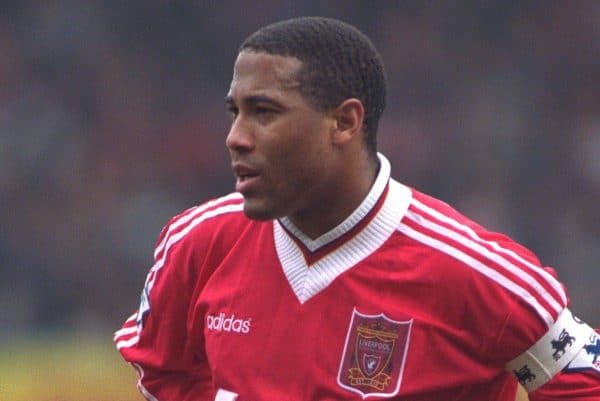
John Barnes is the most high-profile Red to have ruptured his Achilles. His 1992 injury meant that when he came back, he was no longer a flying winger and ended up becoming a holding midfielder.
The Liverpool legend is said to now have a six-inch scar and a right calf muscle an inch and a half shorter than his left.
Barnes told LFC History: “The doctor said after I had retired that he thought I wouldn’t play again.”
Another Reds great, Mark Lawrenson, also suffered a severe Achilles injury and it effectively ended his career by the time he was 29 years old.
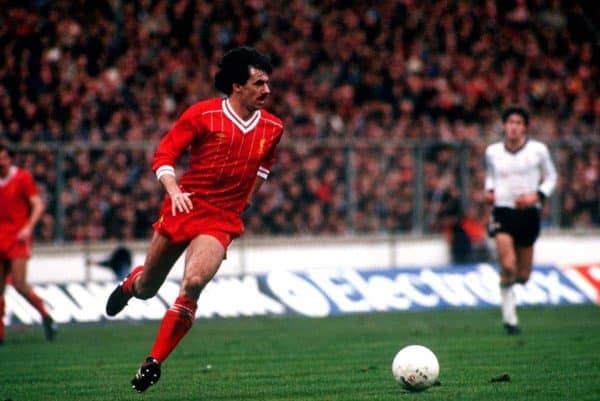
“I had an operation and carried on playing for 16 months but I was an impostor,” the ex-centre-half once told the Sunday Mirror.
“I had lost all of my pace and couldn’t put myself about. I knew the end was coming, I had prepared myself mentally. I knew what was on the cards”.
At the beginning of 1988, nearly a year after the original problem, Lawrenson re-injured the tendon against Arsenal and decided to retire.
| Player | Age at Injury | Return Time |
|---|---|---|
| Callum Hudson-Odoi | 18 | ~5 Months |
| David Beckham | 34 | ~6 Months |
| Javier Zanetti | 39 | ~6 Months |
| Laurent Koscielny | 32 | ~7 Months |
| Leonardo Spinazzola | 28 | ~9 Months |
| Ruben Loftus-Cheek | 23 | ~13 Months |
| Presnel Kimpembe | 27 | ~24 Months |
Data according to Transfermarkt
“You don’t feel the same. I don’t think you ever will.”
Thankfully, treatment has progressed since the 1980s, but even modern-day players struggle to ever regain the pace and agility they once possessed.
Callum Hudson-Odoi suffered the same injury as Ekitike in 2019 and, speaking to the Guardian, explained: “People don’t realise how difficult it is to regain the same fitness, speed and sharpness.
“It takes a lot of muscle out of your calf and other areas of your body. You don’t feel the same. I don’t think you ever will.

“I pushed everything daily to make sure I was coming back and injury-free, but niggles happen, things happen.”
Ruben Loftus-Cheek was also hit by the injury less than a month after his Chelsea teammate, Hudson-Odoi.
He told a similar story regarding his recovery, saying: “I came back from injury but didn’t feel myself, didn’t feel powerful, wasn’t running past people and felt like I lost a lot of muscle and power.”
Why are Achilles injuries so difficult to recover from?

Returning to playing and returning to full fitness are very different things. While Ekitike may be back on the pitch within a year, he almost certainly won’t be sharp.
Luke Anthony, clinical director of GoPerform and former injury prevention specialist at Norwich City, explained to the Athletic: “It’s heavily involved in acceleration, deceleration, jumping — any plyometric movement.
“It needs to propel you forward, so it has to have some elasticity for that recoil, but it needs tension too, because once you start running, three to five times your body weight is going through that tendon.
“Once you start sprinting, those forces are really quite high — the equivalent of hundreds of kilograms.
“If the tendon were to heal with more elasticity, but less strength, then you don’t get that propulsion. For someone who’s athletic and able to run 11 metres per second, the tendon has to withstand that force and push you forward.
“If you don’t have that mechanical property, you can’t restore that. They’d still be able to run, but wouldn’t be able to push through the tendon in the same way.
“That’s the long-term challenge: to restore the mechanical properties to what they were before the injury.”
In addition, consultant physiotherapist Nick Worth told BBC Sport: “The quality of repair to the tendon is better when surgery is done quickly, instead of leaving it.
“The initial healing process sees the tendon stitched back together. Then you have to make sure the tendon is strong and let it settle.
“Progressive loading, and exercises to keep the tendon moving, help prevent scar tissues.”
Hugo Ekitike’s chances of recovery

All this doesn’t make for optimistic reading when considering Ekitike’s future, but time is on his side.
With a contract running until 2031, the 23-year-old must take care when coming back, not just in the initial phase but when re-joining the team, too.
Given that he will likely suffer recurring problems at some point and may not be the same player for the entirety of next season, if ever, Liverpool could need to look into the transfer market.
This would have been a good opportunity for striker Jayden Danns to step up in the Frenchman’s absence, but he too is enduring difficulty in getting up to full speed following a succession of hamstring injuries.
The Reds will just have to hope that a full pre-season will majorly benefit both Danns and Alexander Isak.