
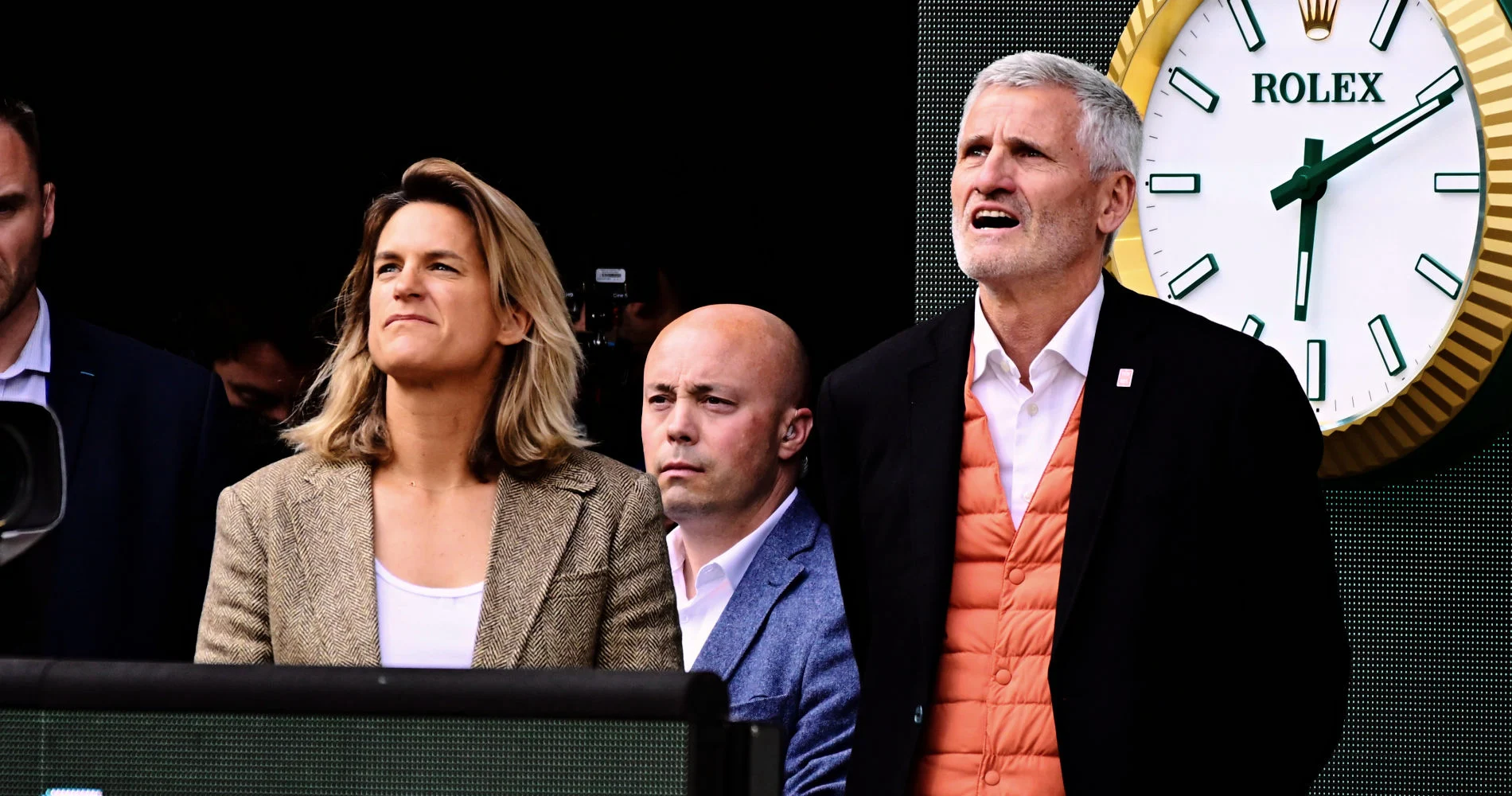
Diplomatic, but firm on the essentials. The position of the French Tennis Federation (FFT) in the face of the players’ rebellion over the prize money for Roland-Garros 2026 consists of reaffirming the specificity of its economic model and the full range of investments made for player welfare, with no clear sign at this stage as to whether the situation will shift before the tournament’s May 24 start, or whether this response will be enough to prevent any further escalation from the players, who have come together in an informal group operating under the code name Red Eye
“In 2026, the Roland-Garros tournament will offer total prize money of 61.7 million euros, an increase of 9.53% compared to 2025 and approximately 45% since 2019,” the FFT points out in a written response sent to Tennis Majors in French. “This reflects a sustained commitment to increasing player compensation over time.”
“The French Tennis Federation has chosen to direct a significant share of these increases towards players eliminated in the early rounds of the main draw and qualifying, with raises exceeding 11%, in order to better support those who rely most heavily on tournament earnings to fund their season.” This clarification is an implicit response to the demands of the twenty signatories — who represent the world’s top players — calling for a commitment from the Grand Slam tournaments to support players’ long-term career development.
“Beyond prize money, the Roland-Garros model rests on a specific economic framework. We’re a non-profit organization”
“Beyond prize money, the Roland-Garros model rests on a specific economic framework,” the federation argues. “The FFT is a non-profit organisation, and all revenue generated by the tournament is reinvested into Roland-Garros, as well as into the development of tennis in France and internationally.”
“This includes direct support for the development of tennis at club level, training programmes and performance pathways, a strong commitment to women’s tennis, inclusive tennis and wheelchair tennis, as well as significant contributions to the development of international tennis through the International Tennis Federation.”
The FFT also points out that it has completely rebuilt Roland-Garros to welcome players and the public into a new setting, brought to maturity between 2020 and 2022. “The FFT has also recently invested more than 400 million euros in Roland-Garros’ infrastructure, in particular to improve player accommodation and on-site services.”
As a new meeting is expected to be held among players in Rome, ahead of their gradual arrival in Paris for Roland-Garros, the FFT is asserting its availability for “direct dialogue” and claims to maintain “ongoing dialogue” with them. “The French Tennis Federation remains fully committed to ongoing dialogue with all stakeholders in world tennis and stands ready to engage directly with players.” The lack of consultation is precisely one of the main criticisms levelled at the FFT by members of the RedEye committee. The federation, the statement concludes, “will continue its efforts to improve overall player conditions, in line with its responsibilities and its model.”