
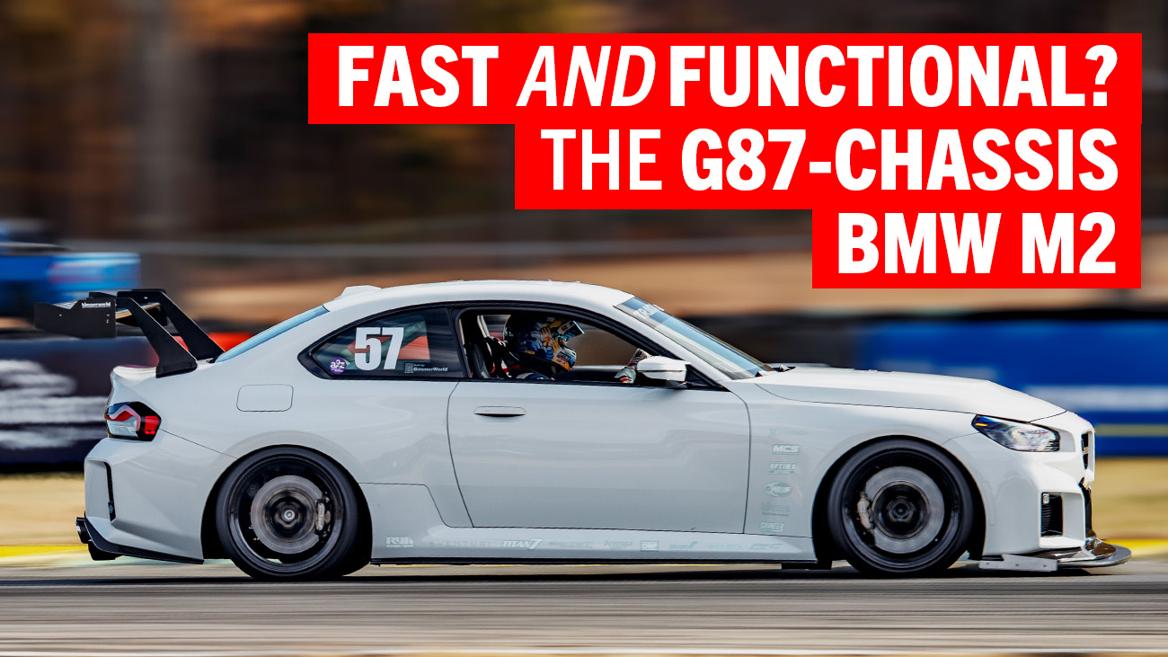
What laps faster than a Supra but offers more room for you and your stuff? How about the G87-chassis BMW M2?
Don’t believe us? Let the numbers do the talking.
In our track testing at the Florida International Rally & Motorsport Park, we turned a 1:18.35 with the GR Supra. The M2 bested that with a 1:16.69 lap–all with a back …
Which G87-Chassis BMW M2 Performs Best?
Don’t like choosing from a myriad of different packages and trim levels for a car? Good news then, as the list of options and variants for the G87 is slim.
The big question: six-speed manual or eight-speed ZF 8HP automatic?
Sure, most traditionalists view the manual as more fun, and it’ll save you 53 pounds over the automatic. “But,” Phil concedes, “automatics today are crisp, precise and fast. For performance purposes, you’re not going to be able to shift the car as fast as an automatic.”
Disagree with Phil? Don’t send him hate mail; just opt for an M2 with the third pedal–it’s one of the few cars today available with a stick.
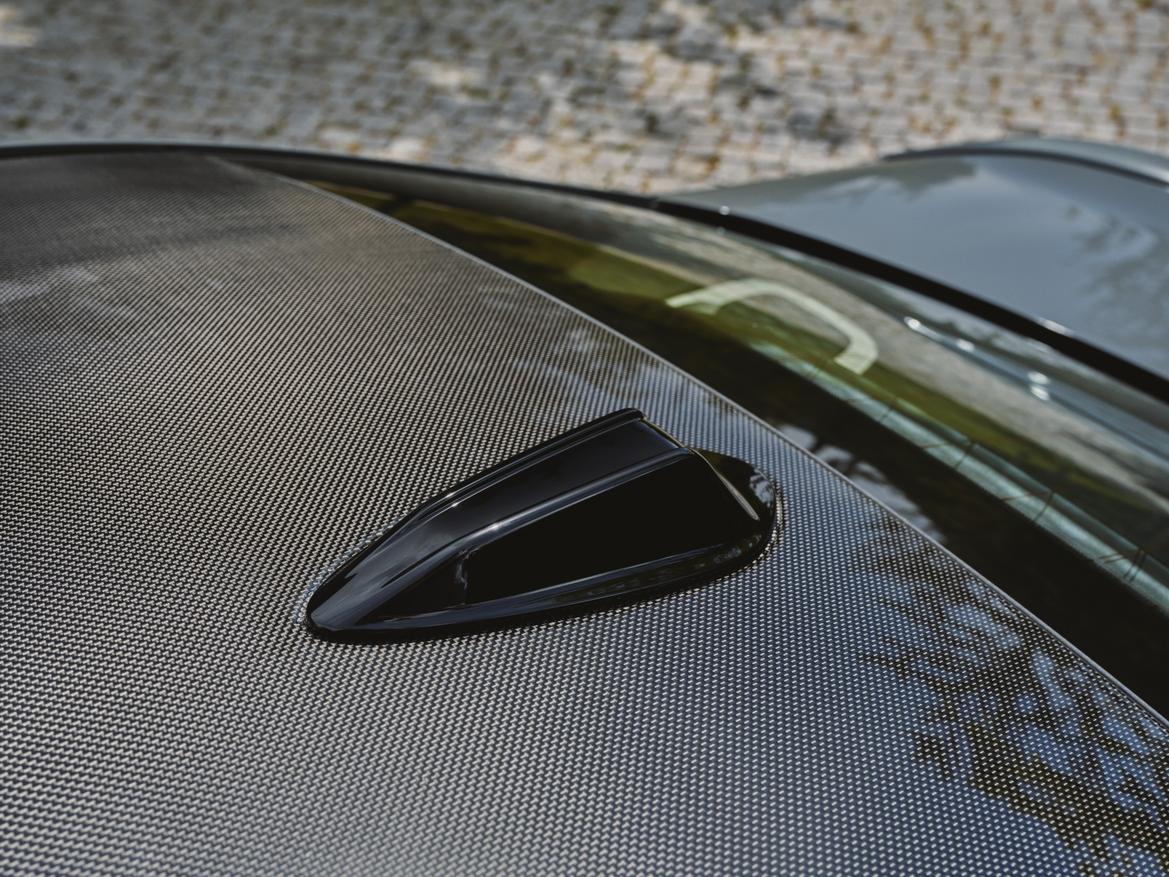
Of the few other options, strongly consider a carbon-fiber roof. It replaces the moonroof and will save you a whopping 50 pounds, Phil says. A Carbon package for the M2 also includes M Carbon seats and other carbon-fiber embellishments, but the roof is the biggie.
Note that only two model years after its 2023 debut, the BMW M2 received a mid-cycle refresh in 2025. That refresh included a power boost of 20 horses and 32 lb.-ft. of torque, but the torque upgrade only came with the automatic.
Then, for 2026, the BMW M2 CS came out. It had significantly more power (523 horsepower versus 453 for the original), more torque (479 lb.-ft versus 402) and 100 pounds lighter.
It also comes with a ducktail spoiler, sits about 0.2 inches lower and has its own performance-oriented adaptive damper programming. The CS only comes with the automatic. The MSRP difference for the CS is just shy of $30K.
Depreciation hasn’t hit the BMW M2 hard, with 2023 cars still selling in the low $60s. Because of that fact, BimmerWorld went with a new M2, as its MSRP starts at $69,000.
Your First BMW M2 Modifications to Make
Phil’s first mod? A mesh front grille insert. Performance-related? Not really, but you want it for the protection offered.
“The front grille is basically wide open,” Phil explains. “I had one guy call recently saying he had the car for a couple of weeks and needed a new radiator. A rock had kicked up from a car in front of it and went right through the radiator.”
The car is plenty fast out of the box, but there are always areas to improve. Let’s start with autocross applications first. (If you go straight to track days, skip to the next section for your highly recommended first mod–brakes–and then return to this section.)
Start by swapping in some camber plates: “Adding camber plates will help your front-end bite and help with tire wear,” he says. Stock camber on the BMW M2 is limited to about -1.6° to -1.8°, while camber plates will take that figure up to -3.6°.
The next mod Phil highly advises is replacing the stock front rubber control arm bushings with bearings–aka monoballs.
The stock BMW M2 rubber bushings, being quite compliant, allow the tires to skip across the road surface under hard braking, a problem exacerbated by ABS, BimmerWorld says. It’s an issue for all G8x-chassis cars, including the M3 and M4, but one the bushing replacement solves.
After that, like with most cars, reconsider your tires and wheels. Phil feels the stock 19-inch front and 20-inch rear wheels work well, but a 19×11-inch square setup fitted with 305/30ZR19 tires works better. Why? For one, you’ll save money on tires, with more options for 19-inch wheels and the ability to rotate tires for better wear. A square setup will also help the balance of the BMW M2, reducing the understeer of a staggered setup.
In case you skipped ahead, to fit that kind of wheel-and-tire setup, you’ll need those camber plates. This will permit you to fit those size tires without touching the bodywork.
Next Steps for the BMW M2
Want to go faster than autocross and do a track day? Phil highly recommends starting by beefing up your brake package before doing anything else, including the aforementioned camber plates, monoballs and square tire setup.
The OEM rotors and calipers should be fine for BMW M2 owners. After all, the M2 came sporting six-piston calipers with 15-inch rotors up front and single-piston calipers with 14.6-inch rotors in the rear.
But Phil strongly advises swapping in some high-performance brake fluid and pads, such as those from PFC, as the M2 is no lightweight–the automatic version of the car weighs 3867 pounds.
After that, do the camber plates, control arms with monoball bushings and a square tire setup for more gains.
Other items built for the road rather than the track: the shocks and springs. Phil recommends a set of track-oriented coil-overs.
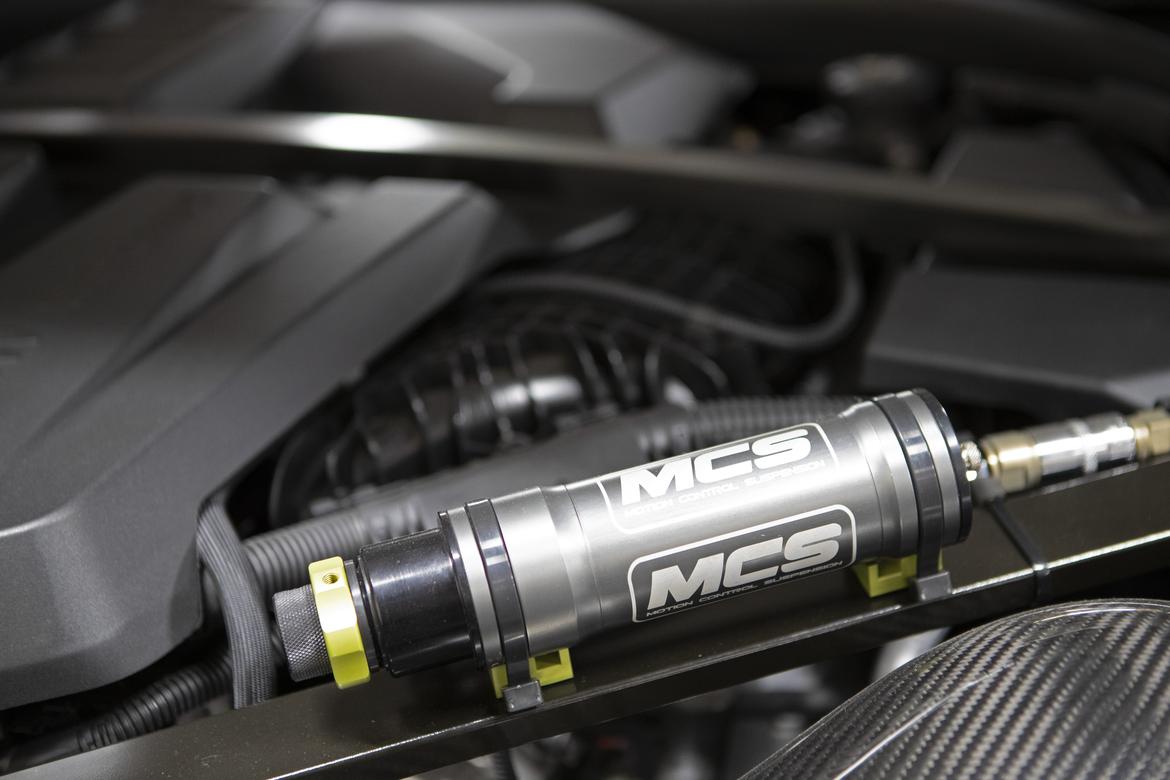
BimmerWorld uses an MCS package that, Phil says, keeps the car very streetable but allows the suspension to help “hide some of that weight.” The coil-overs also make the car feel less floaty and more controlled. The result? “You’ll have more confidence to go faster in the car,” he says.
“I’ll use VIR as an example,” Phil further explains. “Driving the car in stock trim, going over the uphill esses, you have to be very patient with the car. You have to let the car take a set as it’s moving side to side through each of the corners there. Once you get a [coil-over] suspension on there, where you can handle the curbing a little bit better, you can hammer on it and roll through the esses without having to wait for the car.”
Want even more suspension help for your BMW M2? Swap in more adjustable arms in the five-link rear so you can improve your geometry and help the car rotate around turns without losing grip.
Can the BMW M2 Shed Any Weight?
Want to shed weight from the BMW M2? Good luck. There are no magic bullets, Phil implies. You’ll lose a few pounds here and there, which adds up, but he reminds us that it’ll never be a sub-3000-pound car.
A set of aftermarket wheels will cut 10 to 20 pounds. A lithium battery will net roughly 40 pounds. A lightweight brake system, 30 to 40 pounds. Gutting the car will also help, but then you’re nearing dedicated track car territory, and the beauty of the M2 is that it makes a fine street car, too.
BMW M2 Track Prep and Big Power
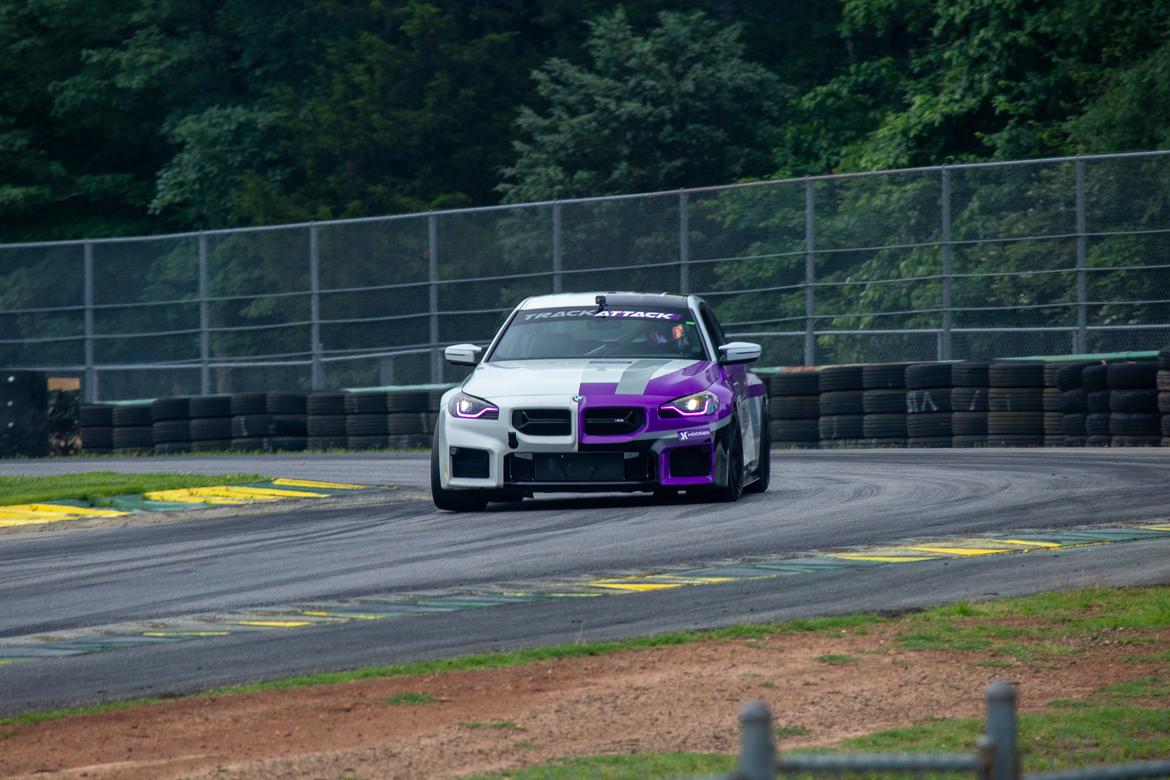
We’re now at the pointy end of the spectrum, but some gains are still to be had–especially with aero and power.
But first, let’s talk safety. If you’re heading on track, strongly consider a roll bar, proper seat and safety harness. “It’s more than safety, too,” Phil reminds us. “It’s a performance advantage. When you add a bunch of grip, holding yourself upright takes away from your ability to drive fast.”
After installing a new roll bar, seat and harness, BimmerWorld starts with aero since the M2 comes with plenty of power out of the box. (BimmerWorld’s car made 470 horsepower at the wheels, stock, on a dyno.)
While a front splitter and a rear wing increase grip, especially at higher speeds, don’t discount other aero measures. Hood vents reduce front-end lift and extract heat from two turbos doing their magic. Fender vents reduce a high-pressure zone around the tires.
Once you have all that grip through mechanical and aero means, consider upping the power. The car’s S58 engine is a tried-and-true platform that came out in 2019.
“The engine is incredibly strong, and the turbos are sized appropriately so you can turn up the power quite a bit without having to upgrade the turbos or get inside the engine,” Phil explains. “The catch is the ECU is locked.”
However, you can get that ECU flashed by a tuner, and Phil says you can up the power to 550 at the wheels, no problem.
BimmerWorld is looking to set up its BMW M2 with port injection, explaining that the intake manifold is set up for it but just needs the holes drilled. Combined with the ECU tuning and E85 fuel, the M2 should make 600 to 700 horses at the wheels.
Yes, 600 to 700 horsepower. For a coupe with a useable back seat and trunk. Haul the family and groceries, and haul ass around the track.