
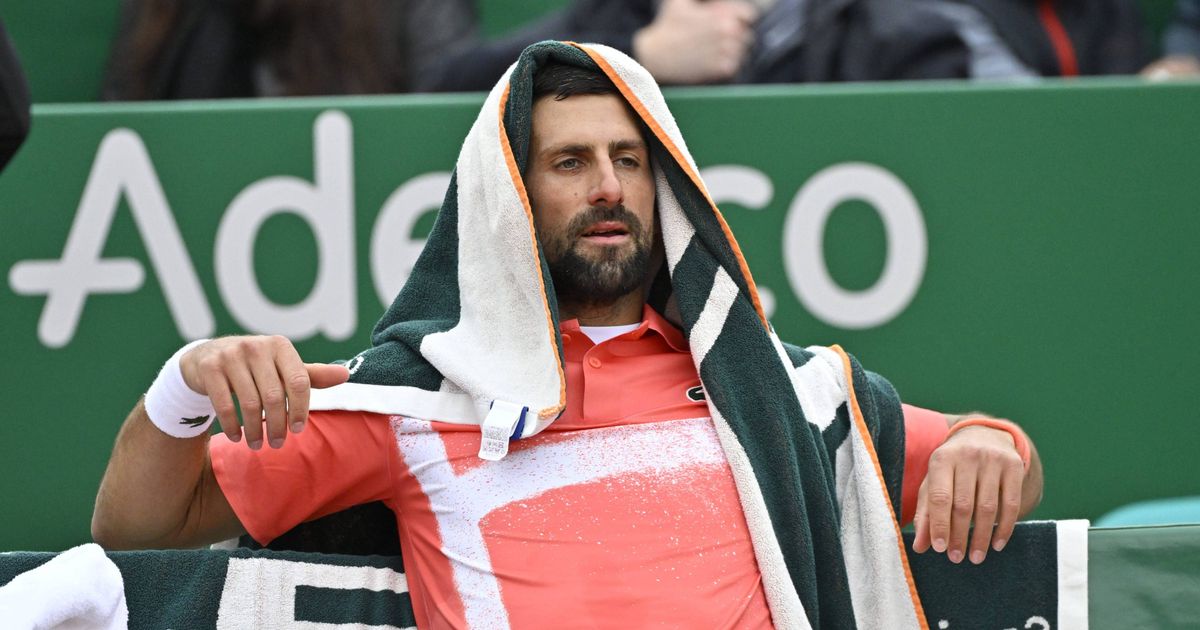
João Fonseca def. Novak Djokovic 4-6, 4-6, 6-3, 7-5, 7-5
However, the advantage was not enough to contain Fonseca’s sustained resistance. Djokovic’s level began to drop gradually as the match progressed, with increased physical strain affecting his movement and serve consistency. By the fourth set he was visibly more vulnerable in extended rallies, and although he produced a final surge of energy in the fifth, it was no longer sufficient to re-establish control.
Fonseca raised his level in the decisive moments, producing his most reliable patterns under pressure and improving execution in key return games. A late break sealed the match for the Brazilian, who capitalised on Djokovic’s fading resistance to complete the comeback and secure his first-ever Grand Slam fourth-round appearance.
Ruud survives five-hour epic to complete comeback against Paul
Casper Ruud def. Tommy Paul 4-6, 6-7, 6-4, 7-6, 7-5
Casper Ruud produced one of the standout comebacks of Roland Garros, recovering from two sets down to defeat Tommy Paul in a physically and emotionally draining five-set battle. Paul took early control through cleaner baseline execution and greater stability on serve, building a two-set lead by managing the key moments in longer rallies.
Ruud responded with two consecutive sets of his own, gradually increasing depth on return and improving efficiency in extended baseline exchanges. The two-time Roland Garros finalist showed his clay-court resilience by absorbing pressure in neutral rallies and reducing unforced errors at key stages, shifting the match into a pattern where physical endurance became decisive.
By the fifth set, the finish line appeared to be heading toward a tiebreak as both players held serve under increasing fatigue. However, Paul failed to convert a 40-0 lead in a critical service game, allowing Ruud to win five consecutive points and complete the decisive break. That swing sealed the victory and sent the Norwegian into the Roland Garros fourth round, where he will face João Fonseca in a high-intensity matchup.

Zverev overcomes Halys after third-set scare before closing in four
Alexander Zverev def. Quentin Halys 6-4, 6-3, 3-6, 6-2
Alexander Zverev advanced to the Roland Garros Round of 16 after defeating Quentin Halys in four sets, in a match defined by a clear momentum swing in the third set before Zverev reasserted control in the fourth. The German started strongly, breaking early in both of the opening sets and establishing authority through service consistency and controlled baseline depth.
In the third set, Zverev moved a break ahead and appeared in position to close out the match, but Halys rebuilt his composure and gradually shifted the dynamic through improved return pressure and extended baseline exchanges. Halys recovered the break and, as the set progressed, Zverev’s level dropped under pressure, with the German appearing increasingly tense in key service games before eventually surrendering the set following a late break.
The fourth set followed a different pattern entirely, with Zverev stabilising immediately by breaking early and taking a more disciplined approach on serve. From there, he consolidated the advantage through improved first-serve efficiency and reduced unforced errors, holding firm throughout the remainder of the set. That controlled finish allowed him to close out the match 6-3 and secure progression into the Roland Garros Round of 16.

Menšík recovers from bagel to overpower De Minaur
Jakub Mensik def. Alex De Minaur 0-6 6-2, 6-2, 6-3
Jakub Menšík recovered from an opening-set bagel to defeat Alex de Minaur at Roland Garros, producing a controlled comeback after a slow start in which he struggled to handle the Australian’s early intensity. De Minaur initially dominated baseline exchanges, taking full control of the first set as Menšík adjusted to the pace and court positioning.
The match shifted sharply from the second set onwards, with Menšík increasing first-serve reliability and shortening points through earlier ball striking. De Minaur’s physical condition also became a factor after a demanding five-hour second-round win over Navone, with his level dropping in longer rallies and his ability to sustain defensive patterns gradually decreasing.
Menšík capitalised on that decline by consistently generating pressure on return and breaking serve multiple times across the final three sets. He finished the match with seven breaks of serve and only two conceded, while also improving his overall service efficiency to close at 58% of service points won compared to 51% for De Minaur. The Czech completed the turnaround to secure progression into the Roland Garros Round of 16.

Rublev dominates key moments to dispatch Borges in straight sets
Andrey Rublev def. Nuno Borges 7-5, 7-6, 7-6
Andrey Rublev overcame a demanding clay-court challenge against clay specialist Nuno Borges, prevailing in straight sets after a match where margins remained extremely narrow for long stretches. The early stages were evenly balanced, with both players holding serve consistently and exchanging baseline pressure without clear separation.
Rublev’s greater experience in deep runs at Grand Slam level became increasingly visible in the most decisive moments of each set. While Borges matched him through large portions of the contest, the Russian elevated his level at the end of sets, tightening his serve and increasing first-strike efficiency under pressure. A late break in the first set set the tone, preventing Borges from establishing momentum in key phases.
Both the second and third sets were decided in tiebreaks, where Rublev’s execution proved significantly more efficient. The world No. 13 raised his level on return mini-break opportunities and closed out both breakers with authority, reflecting his ability to manage high-pressure scenarios. That control in the closing stages allowed him to secure progression into the Roland Garros fourth round in straight sets.
