
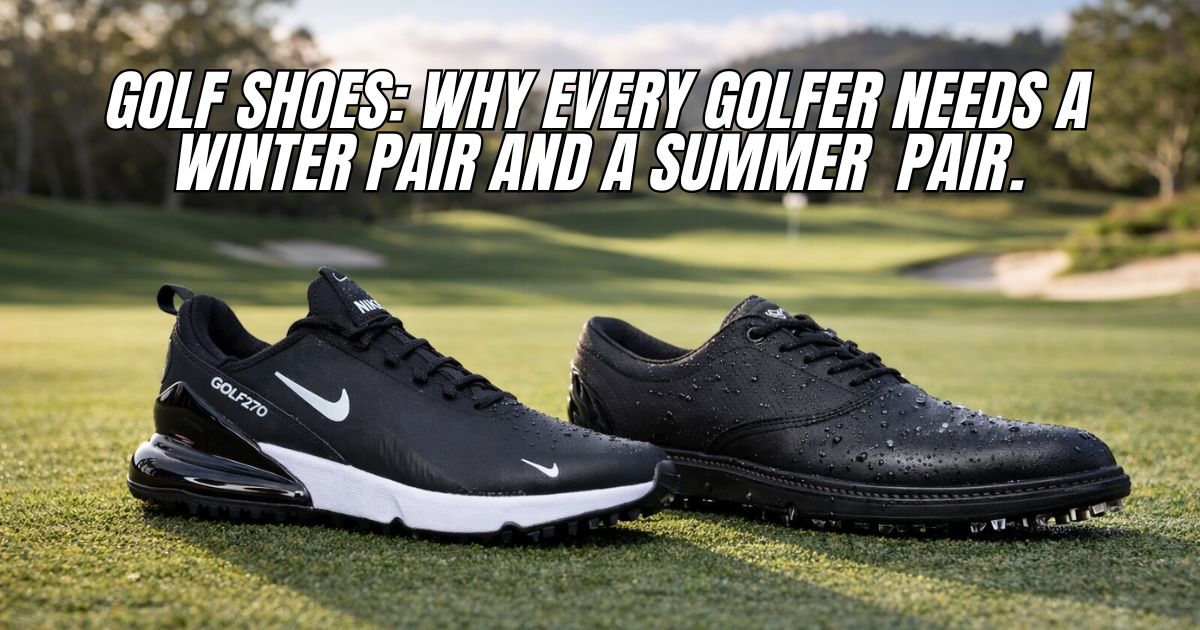
Discover why more golfers are choosing both waterproof winter shoes and lightweight summer styles to stay comfortable and prepared year-round.
For years, most golfers owned one dependable pair of golf shoes. They wore them in the rain, in the heat, in the cart, walking 18, practicing on the range, and sometimes even out to dinner on the way home.
Today, that mindset has changed. Just as golfers have a rain glove and a regular glove, or a wind jacket and a short-sleeve polo, many now carry two distinct pairs of shoes in their rotation:
- A winter shoe built for protection and traction
- A lightweight athletic model designed for comfort and breathability in warmer, drier conditions
Built for the Elements: The Winter Golf Shoe
The winter golf shoe is typically constructed from premium leather or advanced synthetic materials with a waterproof membrane. Brands like FootJoy, ECCO, adidas Golf, and Sun Day Red have invested heavily in creating shoes that can handle wet fairways, soft ground, and unpredictable weather.
These shoes often feature replaceable cleats or molded spikes that provide maximum grip when the turf is muddy or saturated. The leather upper not only repels moisture but also provides structure and support, something many golfers appreciate when the ground beneath them is less stable.
Why Winter Shoes Matter
- Waterproof protection keeps feet dry in dew, rain, and winter conditions
- Added traction builds confidence during the swing
- Structured leather offers stability on soft turf
- Classic styling pairs well with traditional golf attire
The Trade-Offs
- Heavier than athletic models
- Can feel warmer during hot summer rounds
- Less airy than mesh-based designs
For golfers who walk frequently in high temperatures, that extra weight and reduced breathability can become noticeable by the back nine.
Lightweight and Breathable: The Modern Athletic Golf Shoe
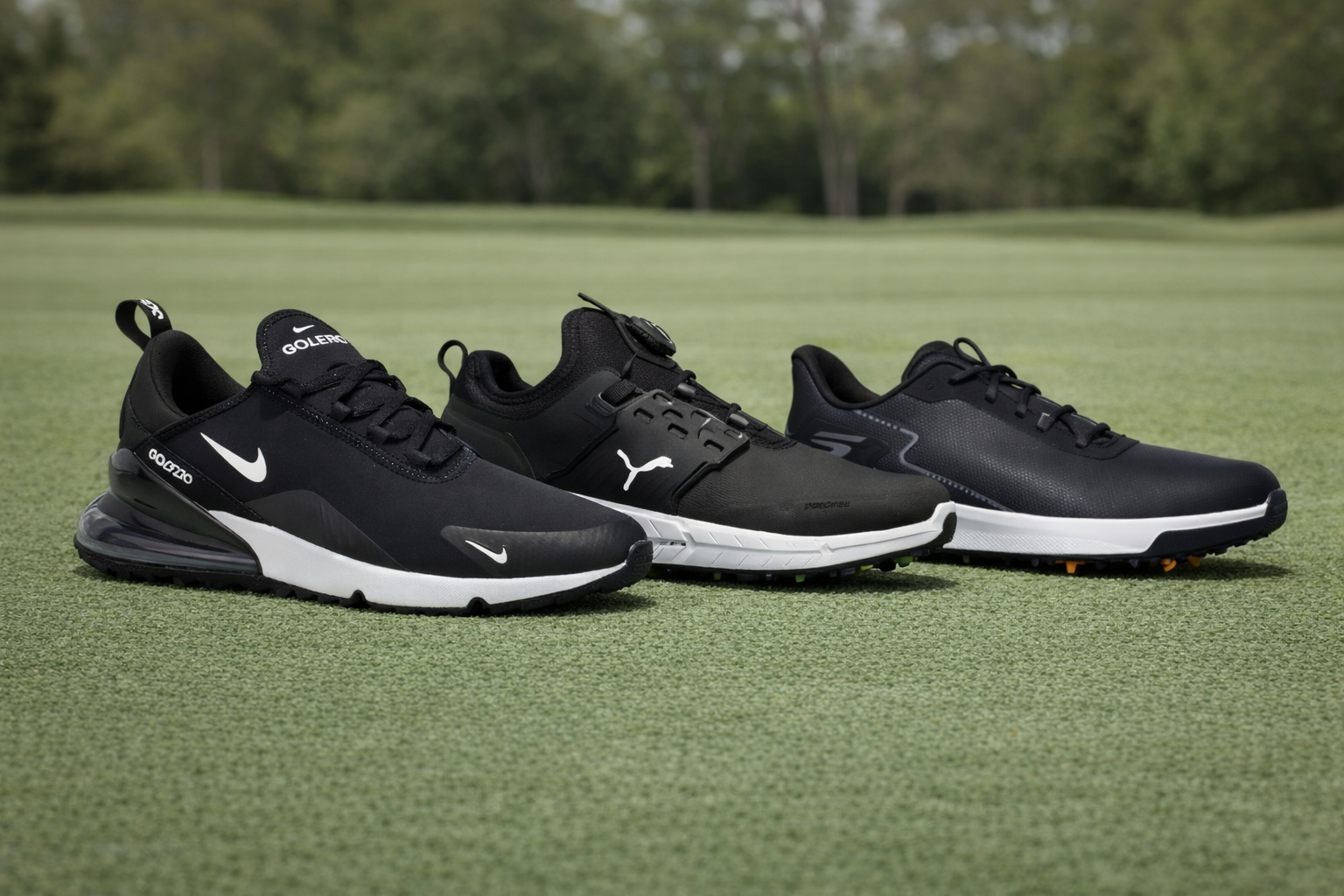
On the other end of the spectrum is the modern athletic golf shoe. Inspired by running and training footwear, these models often feature lightweight foam midsoles, engineered mesh uppers, and spikeless outsoles.
Companies like Nike Golf, Puma Golf, and Skechers have helped push this category forward with shoes that look as comfortable on the practice tee as they do off the course.
Why Golfers Love Athletic Models
- Mesh uppers promote airflow and keep feet cooler
- Lightweight construction reduces fatigue
- Spikeless soles transition easily from course to clubhouse
- Flexible design feels natural, like a favorite running shoe
The Considerations
- Mesh materials are not always fully waterproof
- Morning dew or rain can leave feet damp
- Spikeless traction may not match cleats in muddy or steep conditions
For golfers who play year-round in varied weather, relying solely on a lightweight summer model can limit performance when conditions turn wet.
A Smarter Approach: Build a Shoe Rotation
More golfers today view footwear as a rotation rather than a single purchase:
- A structured, waterproof, spiked shoe for winter and wet conditions
- A lightweight, breathable, athletic spikeless model for spring and summer
Each serves a purpose.
Each enhances performance in different environments.
And together, they allow golfers to feel prepared no matter what the forecast says.
See the Difference for Yourself
If you have not explored how far golf footwear has evolved, we invite you to come see it for yourself.
Just over a year ago, Haggin Oaks opened a 3,500 square foot Golf Shoe Super Shop addition, featuring one of the most comprehensive selections of golf footwear in the country. From classic waterproof leather designs to modern athletic mesh models, we have options for every season, every style preference, and every walking pattern.
Our team would love to help you find not just a shoe, but the right combination of shoes for your game and your calendar. Stop by, try a few on, and feel the difference for yourself. Your feet will thank you long before the final putt drops.
If you would like to stay up to date, subscribe to Golf In The City Of Sacramento.