
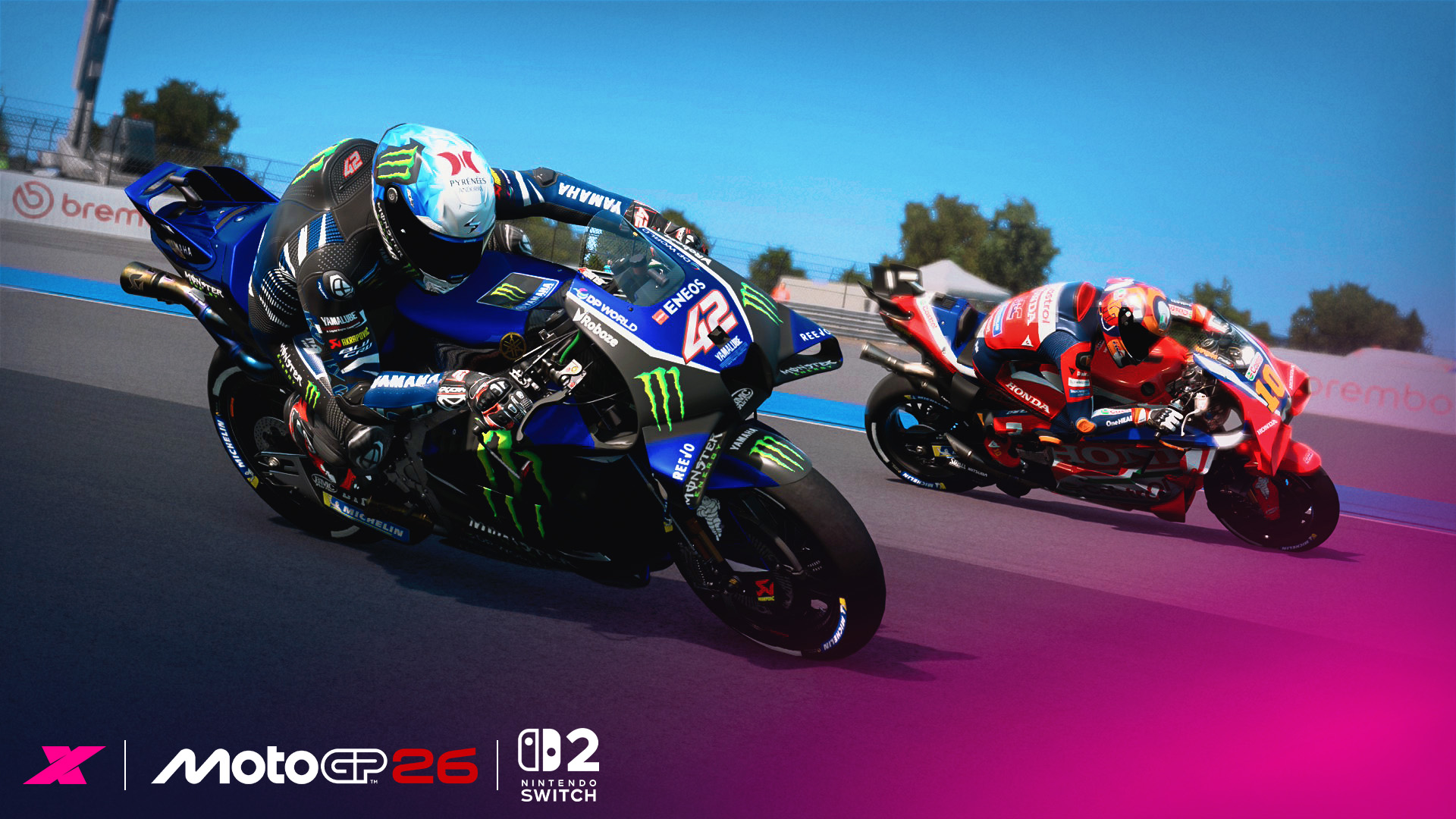
For returning players on PC, PS5 and Xbox Series X|S, MotoGP 26 is a marginal upgrade over its predecessor.
Its new “rider-based” handling is less revolutionary than it was touted to be, the addition of production bikes feels like a token gesture and some features, like ranked multiplayer, are removed. While it’s another serviceable entry in Milestone’s long-running motorbike franchise that will appease hardcore fans of the sport, it doesn’t move the series forward.
It’s a different proposition on Nintendo Switch 2, however. MotoGP 26 not only marks the series’ debut on the console but also the Switch 2’s first serious racing simulation, contrasting the platform’s abundance of arcade-style racers like Gear.Club Unlimited 3, GRID Legends and Mario Kart World.
The Switch 2’s first racing simulation
Racing simulations don’t typically translate well to Nintendo’s hybrid console, however. Like its predecessor, the Switch 2 bewilderingly lacks analogue triggers. Instead, the digital buttons are like an on/off switch, making it difficult to modulate acceleration and braking.
This isn’t an ideal setup for a bike racing game that requires precision and finesse. As a workaround, you can assign the right analogue stick for accelerating and braking, but this feels cumbersome on the Switch 2’s small stick.
Mercifully, Milestone has adapted MotoGP 26’s physics for the Switch 2 to compensate for the digital controls.
“I think the arcade experience is a lot easier this year,” Game Director Matteo Pezzotti told Traxion in a recent interview. “We made the first step in last year’s game. This year, I think we went further in that direction for Switch 2.”
In practice, this means the brakes are more powerful, resulting in shorter stopping distances than in other versions of the game. Even on full power, acceleration also feels more gradual, making the bikes fluid to control and stable at speed. These subtle changes make MotoGP 26 better suited to the Switch 2 without making the bikes feel too light and floaty.
In Arcade mode, nailing apexes feels satisfying, particularly as the platform lacks serious track-based racing games. With no F1 games available, it’s currently the only Switch 2 game where you can race on real-world tracks like Silverstone, Red Bull Ring and Circuit of The Americas.
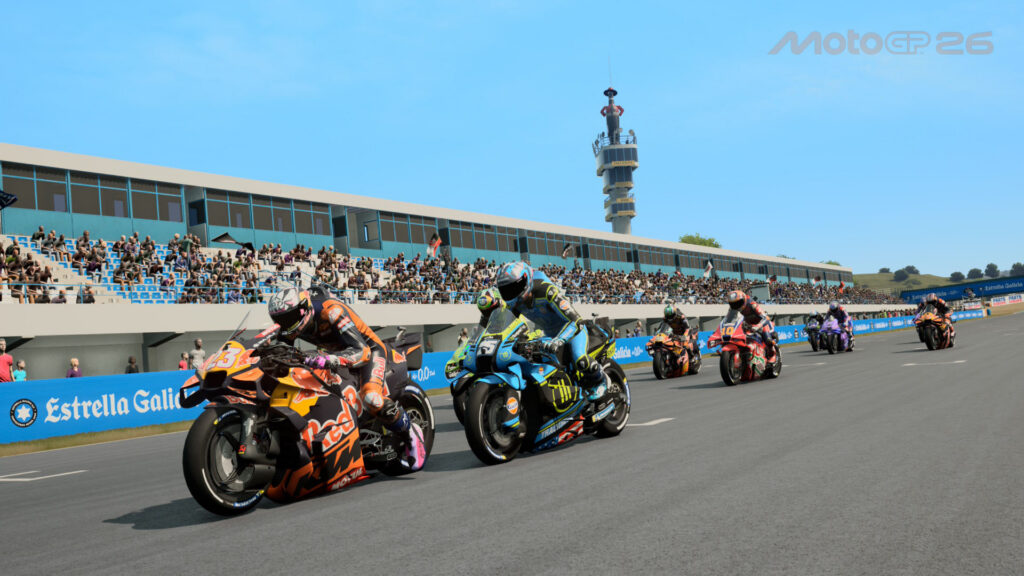
Pro mode, on the other hand, remains challenging, requiring conservative use of the brakes and wheelie management. Veering off track in this mode will have you tumbling off your bike and kissing the gravel.
It’s still more forgiving than other versions if you make a mistake, though, so you won’t fall off the bike as often.
“The Pro experience on Switch 2 is not similar to the experience you have on PC or other consoles,” explained Pezzotti. “We had to work on the triggers for the accelerator and brakes because you can’t have the same feel. In a way, it’s easier on Switch 2.”
Almost feature-complete
Milestone’s MotoGP series has been ported to the original Switch since MotoGP 18, but visual and content cutbacks made them drastically inferior. Fortunately, the Switch 2 version has fewer omissions, but it’s still not quite feature-complete.
Crucially, races feature full grids of 22 official riders compared to 16 on the original Switch, while the new production bikes, Brazilian GP and rider rating cards carry over from other platforms.
One exception, however, is crossplay multiplayer, which prevents you from racing online with PC, PS5, and Xbox players. This was a necessary sacrifice, though, as the Switch 2 game’s easier physics would give an unfair advantage.
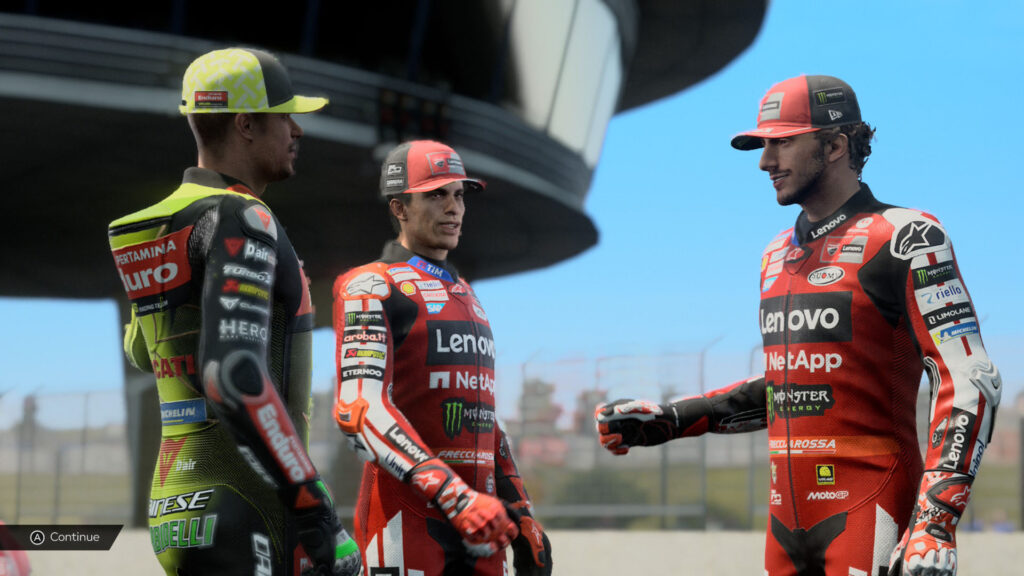
Visually, MotoGP 26 looks impressive on Switch 2 despite its less-powerful hardware. While it’s not on par with the PC, PS5 and Xbox Series X|S versions, with reduced environmental detail and some peculiar background flickering, the bike and rider models look sharp.
The leap in quality from the original Switch to its successor is stark, too. Judging from online video comparisons, the low shadow quality makes the bikes look like they are floating in the original Switch version, coupled with blurrier textures, distracting aliasing and flatter lighting.
Whether you play on a TV or in handheld mode, MotoGP 26 is locked at 30fps on Switch 2 with no noticeable slowdown.
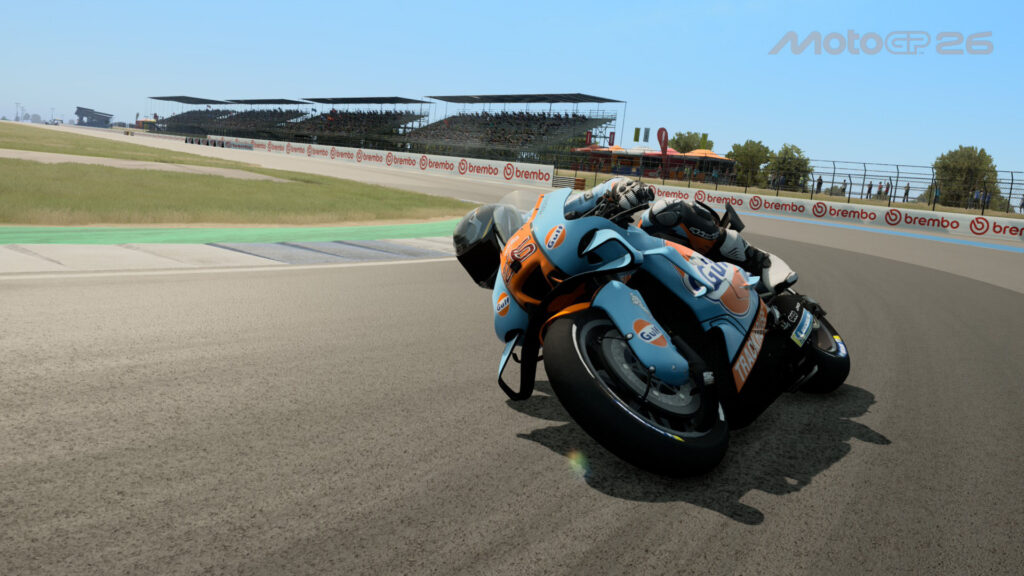
A lower frame rate is the biggest blemish. Dropping from 60fps in other versions to 30fps is jarring at first, but you soon adapt. That said, it’s a shame there are no quality or performance modes to prioritise visual fidelity or performance. Loading times between events are also laboriously slow.
These drawbacks mean the Switch 2 version falls behind its PC and console counterparts, but the compromises are less severe than in previous Switch ports.
With its impressive visuals, retained features and modified controls, MotoGP 26 is well-optimised for Switch 2, showing that realistic racers can be adapted for Nintendo’s platform. As the only bike simulation on the platform, it’s in a class of its own. If the Switch 2 is your primary console, this is a must-play for motorcycle enthusiasts.
It bodes well for future racing game ports on the platform. Screamer next please, Milestone?