Mixed martial arts has grown from a fringe spectacle into one of the fastest-rising sports in the world, driven largely by the UFC’s mainstream success over the past two decades. While fans are drawn to the violence, athleticism and high-stakes competition inside the cage, fighters and coaches say the sport’s biggest impact often happens outside of it.
It was not long ago that politicians like the late Sen. John McCain dismissed MMA as “human cockfighting,” questioning whether it should even be recognized as a legitimate sport. Today, however, the sport has evolved into a global business, a cultural force and a daily lifestyle for thousands of athletes across the country.
Mental Health in MMA
Beneath the bright lights, title fights and highlight-reel knockouts, there is still a person. Fighters deal with pressure, anxiety, self-doubt and the demands of everyday life just like anyone else. For many, training is more than just preparation for competition; it becomes structure, therapy and community.
Glover Teixeira
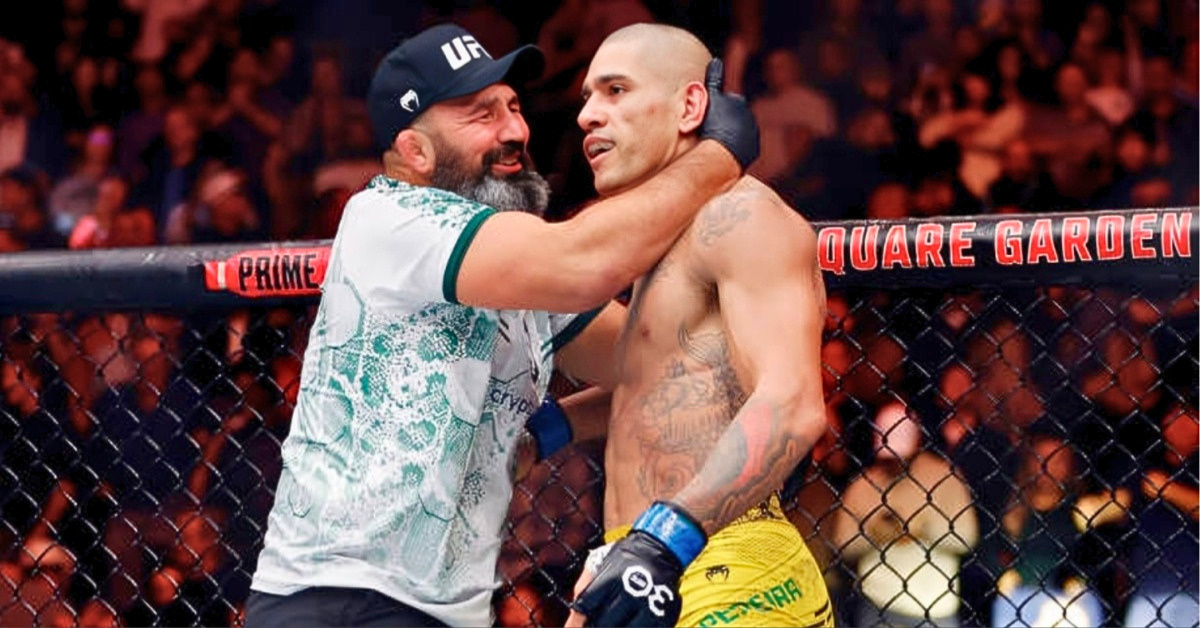
Former UFC light heavyweight champion Glover Teixeira has spent years living every side of that reality.
Since retiring from active competition in 2023, Teixeira has shifted his focus toward mentoring the next generation of fighters at Teixeira MMA & Fitness in Bethel, Connecticut. Since opening the gym’s location in 2019, he has prioritized coaching professional fighters like Cage Titans bantamweight Kyle Boller and former two-time UFC champion Alex Pereira, while also teaching commercial and youth martial arts classes.
For Teixeira, fighting has always been as much mental as physical.
He believes conditioning and strength matter, but discipline, consistency and the willingness to return to the gym every day are what separate success from failure. A strong body means little, he said, if the mind is weak.
“All the time you have to fight the mind,” Teixeira said. “It’s a game. It’s no different for anyone who’s going to do anything, whether it’s business, marriage or whatever the mind is going to pull you back.”
Teixeira said sports in general can help people move forward, challenge themselves and improve their lives, but MMA requires a unique level of focus because of its physical and mental demands.
While he loves the sport, he believes any form of athletics can be a positive tool for managing depression, anxiety and stress. In his view, the hardest opponent for most people is often not standing across from them, but inside their own head.
He also warns against allowing confidence to become arrogance.
Knowing how to defend yourself and carry confidence can improve quality of life, Teixeira said, but overconfidence can be just as dangerous as insecurity. Balance, discipline and humility are what create long-term success.
Kyle Boller
Boller, one of Teixeira’s students and an active Cage Titans bantamweight, said that balance is exactly what MMA has given him.
“There’s peaks and valleys,” Boller said. “As things go up and down, you realize why you have those peaks and valleys, and once you do that, you realize discipline and doing the right thing can keep you on that upward trajectory.”
Boller describes training as a form of therapy. He applies the lessons he learns in the gym to every part of his life, saying martial arts helps him push through difficult moments, whether they are physical or mental.
He believes the focus required in MMA creates clarity outside of training as well. When life becomes stressful, he said, showing up to train gives him something concrete to work toward and something that cannot be faked.
Joining a martial arts gym, he said, is one of the best things someone can do for both mental and physical health because few activities demand the same level of discipline, challenge and accountability.
“MMA has basically formed my entire life,” Boller said. “A lot of the relationships I have in life are because of MMA.”
That includes his personal life. Boller recently introduced his girlfriend to training, giving them not only a shared hobby but another way to grow together.
Because of that, he said, MMA touches nearly every part of his life. It is not just something he does for competition it shapes the way he handles work, relationships and setbacks outside the gym.
What Does The Science Say?
Research supports what many fighters describe.
According to Harvard Medical School, aerobic exercise helps release endorphins, dopamine and serotonin chemicals linked to reduced stress, improved mood and emotional regulation. The physical demands of MMA create the same biological benefits, helping explain why so many fighters describe training as essential to their mental health.
Mitch Raposo
“I feel it makes me a more peaceful person,” Mitch Raposo, an active UFC flyweight, said. “I notice that when I don’t train, I get aggravated easily. I don’t feel good about myself, and I feel like training keeps me sane.”
Raposo sees training as something he gets to do rather than something he has to do.
Like Teixeira, he believes fighting is his outlet and one of the main ways he protects his mental health. At the UFC level, where every athlete is talented and physically prepared, he believes mindset becomes even more important.
A fighter can have a perfect camp and perform poorly, or struggle through camp and still win, he said. Once the cage door closes, preparation matters, but mentality often decides the outcome.
Raposo said the discipline required to compete at the highest level forces fighters to become honest with themselves. There is no hiding in training, and there is no excuse once the fight begins.
Outside of the Octagon, Raposo finds stability in his Christian faith. He said understanding his “why” through faith helps him stay grounded while so much of his life revolves around fighting.
Still, that lifestyle comes with sacrifice.
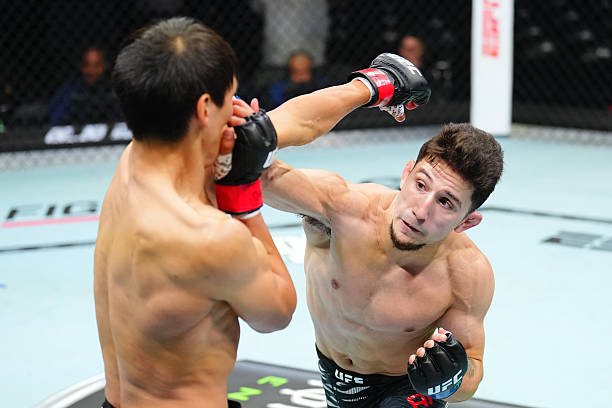
Raposo said hobbies like comics and video games often get pushed aside because of the demands required to stay competitive at the highest level. Training camps, recovery, dieting and constant preparation leave little room for much else.
“I try to keep Mitch Raposo the person and the guy who gets to do what I do in front of millions of people,” Raposo said. “But it gets hard since this is all I do.”
Raposo first entered the UFC through “The Ultimate Fighter” at 22 years old as the No. 1 pick on Alexander Volkanovski’s team. He later said the spotlight came too early.
After rebuilding on the regional scene, he was re-signed by the UFC in 2024 and made his return at UFC 302 against Andre Lima. He is scheduled to fight Allan Nascimento on June 20 at the UFC Apex.
There is an irony in combat sports: people often assume fighters are the most aggressive people in the room, but many describe the opposite.
Consistent training creates patience, emotional control and humility. Getting submitted, corrected and pushed every day forces athletes to confront their ego. For many, the gym becomes the one place where honesty is unavoidable.
That environment is why martial arts gyms across New England are becoming unlikely spaces for mental health support.
While UFC fighters like Raposo experience pressure at the highest level, coaches say the same lessons apply to beginners walking into a gym for the first time.
Maddie and Ross Levine
At Turbo Kickboxing Academy in North Kingstown, Rhode Island, co-owner and coach Maddie Levine said the biggest transformation she sees in students is rarely physical first it is mental.
“After six months, you just see an overall positive mental health,” Levine said. “Whether you’re doing it for fun or to fight, if you take it seriously, you’re going to see gains on and off the mats.”
Levine said many students arrive looking for fitness but stay because they find confidence, structure and a sense of belonging.
In a sport often misunderstood for its violence, she said the strongest gyms are built on trust.
Students are encouraged to leave their ego at the door, creating an environment where people feel safe enough to talk openly about stress, anxiety and depression. That culture, she said, matters just as much as technique.
She said many beginners walk in expecting only a workout, but often leave with stronger friendships and a better sense of self-worth. For some, the gym becomes the first place they feel fully supported in years.
Head coach Ross “Turbo” Levine, a former Karate Combat champion, said fighters often find their strongest support systems inside the gym.
“A good coach is also a bit of a therapist,” Levine said.
For Levine, one of the biggest misconceptions about MMA gyms is that outsiders expect constant aggression. In reality, he said, the best fighters are often the calmest people in the room.
“You can’t train with people every day without trust,” Levine said. “You’re putting your body and your safety in someone else’s hands.”
That trust creates a bond between teammates that often feels closer to family than friendship. Fighters rely on one another not only for preparation, but for accountability during difficult periods both inside and outside the gym.
Levine said coaches often notice mental struggles before anyone else does missed sessions, sudden mood changes, unusual silence or a drop in energy can all be signs that something deeper is happening.
He said part of coaching is recognizing when a fighter needs more than better technique. Sometimes the right conversation matters more than the right game plan.
Pete Jeffery
At Triforce MMA in Pawtucket, head coach Pete Jeffery sees the same pattern.
He said discipline starts long before fight night with consistency, accountability and the willingness to show up on difficult days.
Jeffery believes martial arts changes people because of how demanding it is. Whether someone joins an MMA gym, a jiu-jitsu school or a kickboxing class, he said they often leave more confident in everyday life.
“Do something hard every day,” Jeffery said. “Then the little things won’t matter to you and go away.”

Not everyone who joins a gym plans to compete professionally. Many simply need structure, a challenge or a place where progress feels possible.
Jeffery said many people live lives built around convenience, but learning to push through hard rounds, fatigue and discomfort creates confidence that carries far beyond the gym.
He believes most people underestimate how powerful small victories can be. Showing up on a bad day, finishing a difficult round or surviving a hard class can change the way someone sees themselves.
“Win or lose, you got through that,” Jeffery said. “When you get through that, it makes you feel good.”
Evan Judkins
For TKA lightweight fighter Evan Judkins, that consistency has become essential.
“There’s a lot of days when it’s hard to get here,” Judkins said. “But as soon as you get here and get going on the mats, all that goes away. Everything in my life seems to start going smoother.”
Both Maddie and Ross Levine said positive mental health can only come from a gym culture that reflects the same values fighters are trying to build in themselves.
“A good martial arts gym gives you not only discipline and a great workout, but it should also be a reflection of your mental health,” Maddie Levine said. “It’s not just about the outside.” Ross Levine said a gym only feels like home if it feels warm and welcoming the moment someone walks through the door.
At TKA, he said, that starts with a clean facility, coaches greeting students by name and teammates asking about each other’s day. Those small things are what keep people coming back. A bad gym culture, he said, can ruin even the most talented fighter.
“You are the sum of the five people closest to you,” Levine said. “So if those people don’t treat people right, it’s not going to go well for you.” For him, relationships between fighters, coaches and teammates are essential to long-term success.
“Culture is king,” Levine said.
For some, MMA leads to championships and professional careers. For others, it simply provides confidence, discipline and a place to belong.
Coaches say both victories matter. Long after the fight ends, what stays with many athletes is not the competition itself, but the resilience, structure and belief that they can handle life outside the cage.