
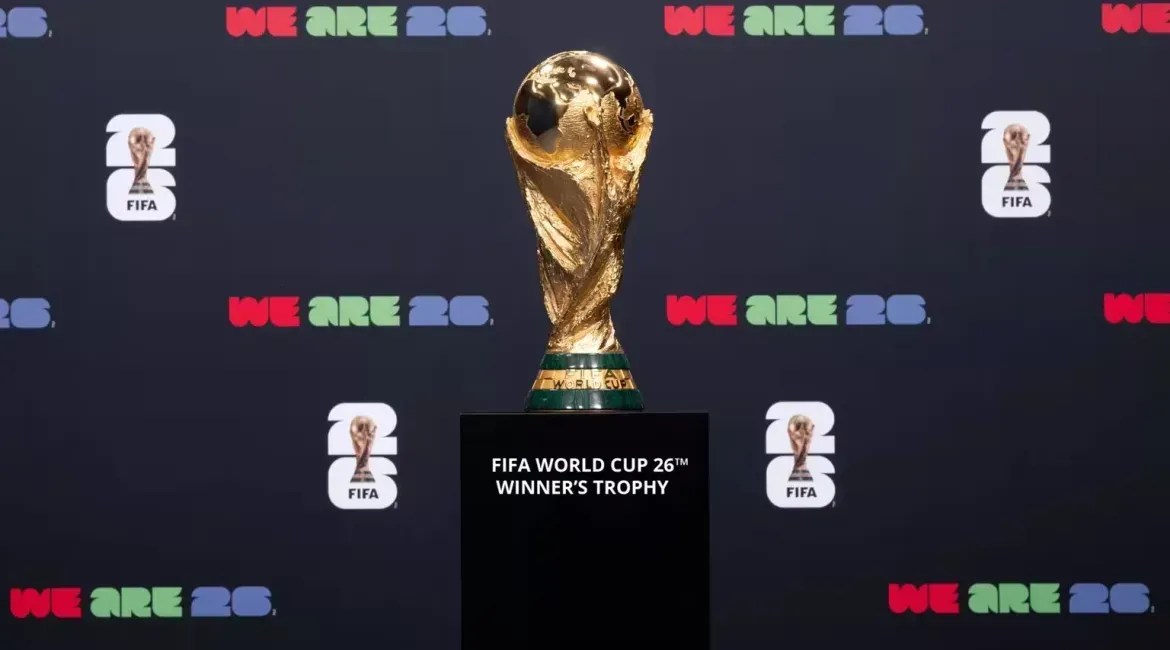
The ball has not been kicked yet, and the anthems have not been played. And already, the 2026 FIFA World Cup has rewritten football’s financial history.
When the tournament opens on June 11 in Mexico City, before a single goal, before a single heartbreak, FIFA will have already committed $871 million to the 48 nations competing across the United States, Canada, and Mexico.
That number did not arrive silently; it arrived on April 29, in Vancouver, when the FIFA Council met at the Fairmont Pacific Rim hotel and voted to lift the prize pool by another 15 percent, pushing a figure that was already a record into territory that would have seemed faintly absurd four years ago in Qatar.
For context: the entire prize pool for Qatar 2022 was $440 million, split among 32 teams. The 2026 tournament will distribute nearly twice that sum among 48. The sport’s relationship with money has always been complicated, always been contested, always been drenched in arguments about who gets what and whether any of it reaches the right hands.
But the raw scale of what FIFA is putting on the table this summer is genuinely hard to ignore.
Before a Match Is Played, Every Team Already Has .5 Million
This is where the 2026 prize structure separates itself from anything that came before it. Every single one of the 48 qualified nations receives $2.5 million before the tournament even starts.
Call it preparation money. Call it a travel subsidy. FIFA calls it a contribution toward the logistical reality of getting a national squad to a three-country, multi-city competition where the distances between venues can stretch across an entire continent.
On top of that, each nation receives a $10 million qualification bonus just for making it to the tournament. Put those two figures together and you have a guaranteed floor of $12.5 million for every team, regardless of what happens once the group stage begins.
Cape Verde are making their World Cup debut this summer. So are Uzbekistan, Jordan, and Curacao. Nations whose entire annual football federation budgets likely do not come close to this number in a normal year. They fly home from this tournament, however it goes, with $12.5 million in hand.
To understand why that matters, here is a number worth sitting with. Brazil earned $9 million for winning the 2002 World Cup in Yokohama. In 2026, a team can lose all three group stage games, collect zero points, finish last in their group, and still leave with more money than the world champions took home twenty-four years ago. The floor of this prize structure now sits higher than the ceiling did not so long ago.
FIFA raised the preparation fee from $1.5 million per team in Qatar to $2.5 million for this tournament, partly in response to pressure from smaller federations who pointed out that the expanded format costs more to participate in, not less. Three different tax systems across three host countries.
More flights. More hotels. The prize money needed to reflect that reality rather than obscure it.
Group Stage Exit: .5 Million
The 16 nations that do not make it out of the group stage depart with $12.5 million total. That figure includes the $10 million qualification bonus, the $2.5 million preparation fee, and the performance payment, which for a group stage exit lands at roughly $9 million on its own.
One important structural detail worth knowing. FIFA pays each team one fixed payment based on the round they reach. It is not cumulative. You reach a stage, you get that stage’s payout. A group stage exit is worth $12.5 million total. Full stop.
For debutants and smaller nations, the group stage payout is already serious money.
Serious enough to rebuild training facilities. Serious enough to hire a proper technical director, fund the women’s programme, run regional academies for another four years. The group stage is not the consolation round it once was financially.
Think about what Uzbekistan can do with $12.5 million. Their entire domestic football infrastructure, the clubs, the youth leagues, the coaching pipelines, has been built on a fraction of that annually.
One World Cup appearance, even one that ends in three defeats, funds years of work that would otherwise take decades to accumulate. That is the quiet revolution buried inside this prize structure.
Round of 32: .5 Million
Here is where 2026 genuinely breaks new ground.
The Round of 32 does not exist in World Cup history. It has never existed before. It is a product of the expanded 48-team format, a new knockout round inserted between the group stage and the traditional last sixteen, where the 32 group stage qualifiers reduce to 16.
Survive this round, and your payout rises to approximately $13.5 million. One more game. One win. Two million more dollars than a group stage exit.
In the context of a single match that can turn on a deflection or a goalkeeper going the right way in a shootout, two million dollars is a strange kind of motivation to contemplate.
But for federation presidents and general secretaries watching from the stands, the arithmetic is not abstract at all. A second million dollars in prize money is for a youth academy. It is a new training pitch. It is four more years of paying a head coach who actually knows what they are doing. The Round of 32 is brand new to the World Cup, and it already carries real weight.
Round of 16: Million
The Round of 16 is the World Cup’s traditional first knockout stage, the place where the tournament historically gets its heartbeat and its chaos. In 2026, surviving to this point pays $15 million.
That is $4 million more than a Round of 32 exit and $2.5 million more than Qatar 2022 paid for the same achievement. Every rung has gone up. Every round cleared now produces a bigger gap between what you earned and what you would have earned by going out earlier.
A single knockout win separating the Round of 32 from the Round of 16 is worth $2 million. The leap from the group stage floor to the last sixteen is worth $2.5 million in performance prize alone. That gap will feel very real to the coaching staff of whichever team converts a penalty in extra time to stay alive.
Quarterfinal: Million
Eight teams left. Everyone still standing can tell themselves they have a real chance. Reaching the quarterfinals in 2026 is worth $19 million, a $4 million jump from the Round of 16.
The 2022 quarterfinal payout was $25 million under a different prize structure. The 2026 figure looks smaller at first glance, but the restructuring of the ladder means the total financial package across preparation fees, qualification bonuses, and performance prizes is more generous throughout, not just at the top.
The math looks different when you account for everything a team is already guaranteed before they reach this stage.
For nations that rarely get this far, and in a 48-team draw, the door is wider than it has ever been. $19 million at the quarterfinal stage is the kind of figure that changes what a federation can plan for over the next four years. It is generational in a very real sense.
Semifinal Exits and the Third-Place Playoff
This is where the prize money begins to feel like something genuinely life-changing at a federation level.
The team that exits at the semifinal stage, losing the right to contest a final but winning a third-place playoff berth, will receive $27 million if they finish fourth.
Win that third-place match, and the figure rises to $29 million for bronze. The difference between third and fourth, a single game, often an afterthought in the broader drama of a World Cup, is worth $2 million.
These numbers represent a meaningful step up from Qatar 2022, where fourth place paid $25 million and third paid $27 million. The gap has widened slightly, but the hierarchy remains consistent: every additional game played, every additional hurdle cleared, produces a higher payout.
For the nations that reach this stage and in 2026, with 48 teams starting the journey, getting to a semifinal still requires navigating five knockout rounds. $27 to $29 million is the kind of figure that funds academies, coaches, youth structures, and grassroots programs for years.
The Final: Million for the Runner-Up, Million for the Champion
Stand in the final and lose, and you take home $33 million. Win the World Cup, lift the most coveted trophy in the sport, deliver the culmination of four years of qualifying cycles and camps and tactical preparation and FIFA hands you $50 million.
The winner’s prize is $8 million more than what Argentina received for their triumph in Qatar. Lionel Messi’s extraordinary night in Lusail, that penalty shootout, that moment all of it netted Argentina $42 million.
The 2026 champion will receive $50 million. Still the largest winner’s payout in the tournament’s 96-year history.
The gap between runner-up and champion is $17 million. Between the group stage floor and winning the whole thing, the difference is roughly $37.5 million in total payouts.
In a tournament decided by fine margins by penalty kicks, by VAR calls, by whether a goalkeeper guesses the right way, that financial cliff between stages is a reminder of how much is riding on every single moment.
The Full Prize Money Breakdown
| Stage | Prize Money |
|---|---|
| Group Stage Exit (33rd-48th) | $12.5M total guaranteed |
| Round of 32 Exit (17th-32nd) | ~$13.5M |
| Round of 16 Exit | $15M |
| Quarterfinal Exit | $19M |
| Fourth Place | $27M |
| Third Place | $29M |
| Runner-Up | $33M |
| Champion | $50M |
Performance prizes are fixed payments, not cumulative. The $12.5M baseline includes the $10M qualification bonus and $2.5M preparation fee paid to every team.
Where the 1 Million Comes From
The figure started lower and kept climbing. When FIFA announced the prize pool in December 2025, following the draw in Washington D.C., the headline number was $727 million. Already a record.
Already a massive step up from Qatar. Then on April 29, at that council meeting in Vancouver, it went up by another 15 percent to $871 million.
The April increase was not just Infantino being generous. It came after sustained pushback from participating federations about the actual cost of competing in a tournament spread across three countries with very different tax environments and travel requirements.
Smaller nations raised legitimate concerns that the expanded format was costing them more to participate in than previous tournaments had, and that the original prize structure did not fully account for that. The bump addressed some of those concerns.
“FIFA is proud to be in its most solid financial position ever, enabling us to help all our Member Associations in an unprecedented way,” Infantino said in April. “This is one more example of how FIFA’s resources are reinvested back into the game.”
FIFA is projecting roughly $11 billion in total revenue from this tournament.
The $871 million distributed to teams is around eight percent of that. That ratio has attracted criticism, particularly given the tournament’s ticket pricing controversy.
CNBC reported in May that some category-one tickets for group stage games had reached $4,105, with prices in some instances rising more than tenfold compared to Qatar 2022. The prize pool going up does not quiet those concerns, but it exists in that same conversation.
The Clubs Get Their Cut Too: 5 Million Through the CBP
The national association prize money is only part of what FIFA is distributing because of this tournament. Clubs releasing players to their national teams will collectively receive $355 million through FIFA’s Club Benefits Programme, a 70 percent increase on the $209 million clubs received after Qatar 2022.
For the first time, this programme includes clubs whose players participated in qualifiers but did not make the final tournament squad. If a player featured in their nation’s qualifying campaign but missed the cut for the 48-man squad, their club can still receive compensation.
That is new in 2026 and it broadens the financial reach of the programme considerably.
Real Madrid, Manchester City, Bayern Munich and others release dozens of internationally active players to World Cup squads and carry the insurance risk of injuries sustained during the tournament.
The Club Benefits Programme is the mechanism FIFA uses to manage that arrangement, keeping clubs commercially engaged with international football rather than actively hostile to it. Whether $355 million is the right figure for that relationship is a debate that never fully goes away, but it represents a serious increase from four years ago.
Add the $871 million in team distributions to the $355 million in club compensation and you are looking at $1.22 billion flowing out of FIFA’s accounts as a direct result of this tournament.
That is a number that would have seemed extraordinary at any previous World Cup.
Do the Players See Any of It?
This is the question that the prize money numbers always eventually arrive at, and it does not have a clean answer.
FIFA distributes prize money to national associations, not to individual players. What happens after that depends entirely on the bonus structures each federation negotiates with its squad, and those arrangements vary enormously from country to country. Some are transparent, publicly disclosed, genuinely generous to players. Many are not.
The disconnect between what associations receive and what players take home generated real friction during Qatar 2022, when players and union representatives from several nations questioned publicly whether the financial benefits of World Cup participation were moving in the right direction within their federations.
FIFA’s response, consistent over many years, is that internal distribution is a matter for each member association to govern independently.
It is a position that protects FIFA from accountability and places the burden entirely on players to fight their own battles within their own federations.
Some do. Many cannot.
The players with agents and global platforms can push back. The striker from a smaller nation who just played the biggest games of his life and has no leverage when the federation writes the cheques, his cut is whatever they decide it is. The $871 million headline is clean. What happens after that is considerably less so.
So the $50 million that goes to whoever wins in East Rutherford on July 19 will belong to the federation first. How much each player sees of it will depend on arrangements made months before anyone kicks a ball, in rooms most of them will never enter.
The prize money is real and it is HUGE. The distribution is a different, messier, far less photographed story.
For now, the tournament starts June 11.
The numbers are set. $12.5 million waiting for every team that shows up, $50 million sitting at the end of the road for whoever goes the whole distance and still has legs on the final whistle. Somewhere between those two figures is seven weeks of football, and all the noise and beauty and human drama that comes with it.
You Might Also Want To Read This
(Visited 1 times, 1 visits today)