

In 2024, Newark Golf Club was days away from the kind of end that dozens of British golf clubs quietly suffer each decade, an insolvency that would have scattered members, sold off land, and written off a course with decades of history.
Stellar Asset Management stepped in, acquired the club, and began what has become one of the more instructive turnaround stories in UK leisure hospitality.
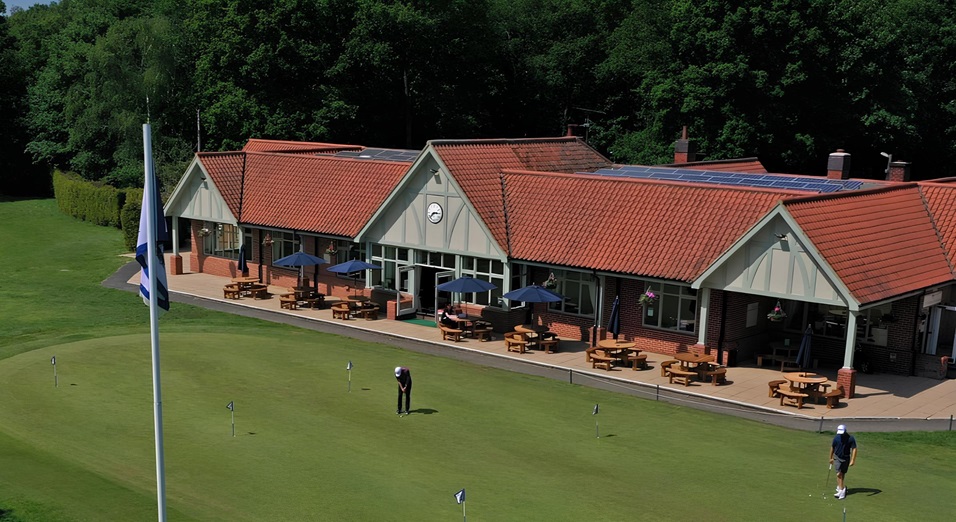
What followed was not a single grand gesture but a deliberate, layered capital program: a renovated clubhouse and changing areas, a full TrackMan grass driving range, a simulator room, and a retail overhaul.
The transformation was swift enough that Molly Pavey, the Group General Manager, says the venue is “unrecognizable from two years ago.”
But the more telling investment decision, and the one with the clearest long-term financial logic, may be the one still underway: the wholesale renovation of every bunker on the course using EcoBunker‘s synthetic edge technology.
The economics of a bunker
Golf course bunkers are, in a financial sense, a liability that rarely appears on anyone’s balance sheet, until it does.
Sand contamination from rain and erosion, collapsing edges requiring hand labor, and the continuous topping-up of washed-out hazards can quietly consume thousands of pounds per bunker per year in maintenance staff time and materials.
For an 18-hole course with a typical complement of 40 to 60 bunkers, the cumulative drag on operating margins is substantial.
EcoBunker, a South Wales-based company that has developed layered synthetic turf tile technology for bunker edges, has built its commercial case squarely on this maintenance calculus.
Its system locks in the bunker’s designed profile, prevents sand migration, and eliminates the erosion cycle that forces greenkeeping teams back to the same hazards season after season.
The guaranteed lifespan exceeds 20 years, a horizon that transforms what looks like a capital expenditure into a straightforward net present value (NPV) calculation against avoided maintenance costs.
“As with every investment, we wanted to be sure that the owners got great value, golfers got a fantastic playing experience, and that we’re securing the best possible solution for many years to come.”— Molly Pavey, Group General Manager, Newark Golf Club
Installation as a competitive advantage
One detail in the Newark rollout deserves particular attention from any operator evaluating similar investments: the installation model.
EcoBunker’s system is designed so that, after brief on-site training, the club’s own greenkeeping team can carry out the renovation work.
Newark’s team is currently completing the front nine in exactly this way, with the full 18-hole program scheduled for autumn 2026.
This matters for two reasons.
First, it eliminates the large contracted labor cost that typically accompanies a course renovation of this scale, keeping capital outlay proportionate to a club that, two years ago, was entering administration.
Second, it builds institutional knowledge directly into the maintenance staff, the people who will keep the system performing over its multi-decade lifespan are the same people who installed it.
For Stellar Asset Management, whose portfolio approach demands that every pound deployed across its leisure assets demonstrably earn its return, the model is a clean fit.
The owners are not simply spending on aesthetics. They are converting a recurring operational cost center into a depreciating asset with a known end-of-life and a clear maintenance-saving curve from day one.
Experience as a revenue driver
The bunker program sits within a broader strategic logic at Newark that any hospitality operator will recognize: the compounding effect of removing every friction point from the customer experience.
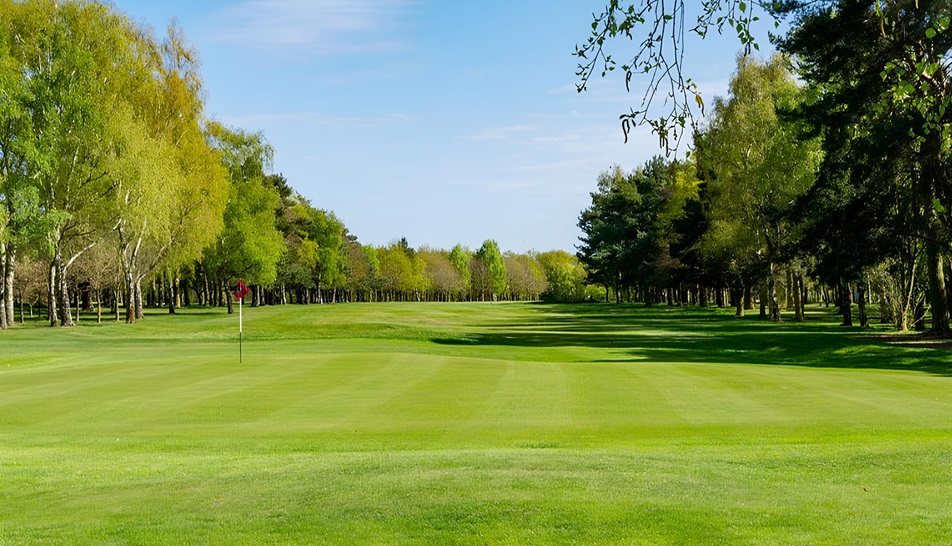
A golfer who plays a course with beautifully maintained hazards, consistent sand conditions, and clean-edged bunkers is experiencing the course as designed, and is far more likely to return, recommend, and become a member than one navigating crumbling edges and contaminated sand.
Pavey frames the bunker upgrade explicitly in those terms: the course and facilities are winning on experience, and the bunkers were the last remaining gap.
Closing that gap is not a vanity project.
In a competitive regional market for golf memberships and green-fee visitors, the marginal quality improvement that tips a prospective member’s decision is worth far more than the cost of achieving it.
Newark is also not a single asset in isolation — it sits within a group structure that can leverage learnings, supplier relationships, and installation expertise across multiple venues.
The EcoBunker rollout at Newark is, in effect, a proof of concept for a replicable capital program.
If the maintenance savings materialize as projected across the course’s nearly two-decade guarantee window, expect Stellar to apply the same framework elsewhere in the portfolio.
The bigger picture for UK golf
Newark’s story is, at one level, a local one: a club saved from insolvency, revived by committed owners, and now investing rationally in its own long-term health.
But it also reflects a broader inflection point in UK golf course management. Greenkeeping labor costs have risen sharply.
Water and agrochemical costs are under increasing regulatory pressure.
And golfers, particularly the younger demographic that the industry desperately needs to attract, increasingly select venues on holistic experience, not just handicap courses.
Sustainable infrastructure solutions that reduce ongoing labor dependency while improving playability are no longer niche procurement decisions.
They are, increasingly, table stakes for any course that intends to still be operating — and thriving — a generation from now.
Newark Golf Club, once on the verge of disappearing entirely, is now building toward exactly that horizon. That, as much as any individual investment decision, is the real story of its remarkable two-year turnaround.