
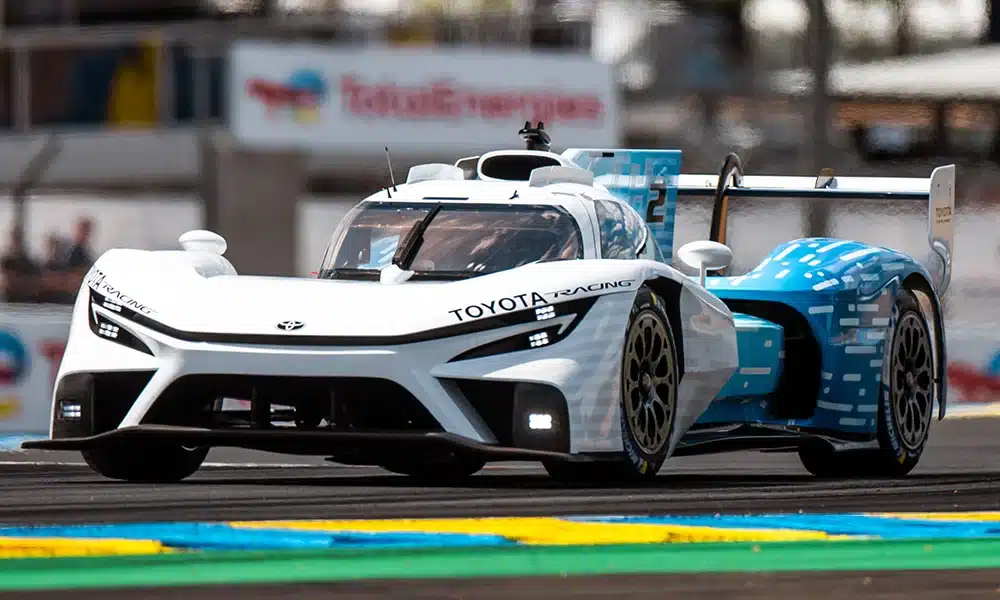
Hydrogen motorsport hit the track at this year’s edition of the 24 Hours of Le Mans, and I have the details (plus video) on this week’s Sustainable Motorsport Roundup. I also have details on Formula E’s Gen4 calendar, sustainability in GT3 and more.
Sustainable Motorsport News
Hydrogen Hits the Track at Le Mans
This year’s 24 Hours of Le Mans continued the tradition of showcasing the latest developments in hydrogen-powered motorsport. There were also developments announced regarding the “H2 Class” set to be launched in 2030 including the possibility that a Garage 56 entry for a hydrogen-powered car is still possible at the 24 Hours of Le Mans before 2030.
As part of the demonstration of hydrogen motorsport, a liquid hydrogen prototype, the Toyota TR LH2 Racing Prototype, completed a demonstration lap on the legendary circuit. This marks a significant milestone in the ACO’s commitment to the energy transition.
Here is a roundup of coverage of hydrogen at this year’s 24 Hours of Le Mans.
Sustainable Fuel and More Sustainable Tires Mandated for GT3 Competitions
Amendments to the GT3 technical regulations, in line with the Sustainability Roadmap previously defined by the Commission, have been approved.
These will include the exclusive use of sustainable fuel becoming mandatory in any GT3 competition from 2028. The change is aligned with the previous introduction of sustainable fuel to the FIA GT World Cup in 2024.
In addition, all tyres used in GT3 competitions will be required to contain a minimum of 20 per cent sustainable materials, either bio-sourced and/or recycled, from 2028 onwards. This follows on from the recent appointment of the tyre supplier for the FIA World Endurance Championships’ LMGT3 class, which will utilise tyres made from 66 per cent sustainable materials during the 2027, 2028 and 2029 seasons.
These changes represent the next step in the FIA’s long-term strategy to increase sustainability in GT racing while maintaining current levels of performance, cost and competitiveness within the class.
MIA Insights: The Environmental Evolution of the Motorsport Industry
While the motorsport industry is often associated with speed and innovation, it also presents an evolving story of environmental awareness and technology solutions. From its early days of efficiency-driven advancements, motorsport has become a testing ground for cleaner, more sustainable solutions, and continues to make significant progress in this arena.
The Motorsport Industry Association (MIA) tracks the environmental evolution of the motorsport industry in their LinkedIn post here.
Dundee to Host FIA Eco Rally Scotland and StreetCar Festival in Major Celebration of Sustainable Motorsport
Motorsport UK confirms FIA Eco Rally Scotland will return to Dundee from 31 July to 2 August following the success of the inaugural event last year. Running as an official round of the 2026 FIA Eco Rally Cup, the event will be expanded to incorporate the new StreetCar Festival Scotland, a unique festival of sustainable motorsport and community participation.
Full details can be found on the Motorsport UK website here.
MRF Achieves FIA Three-Star Environmental Accreditation, Reinforcing its Global Motorsport and Sustainability Commitment
MRF Limited has been awarded the prestigious Three-Star level of the FIA Environmental Accreditation Programme, marking a significant milestone in the company’s sustainability journey and its continuing presence in global motorsport.
The certification, awarded recently, follows an audit conducted under the FIA Environmental Accreditation framework. The FIA audit recognised MRF’s structured approach to environmental management, continual improvement and responsible manufacturing practices across its motorsport tyre operations.
Commenting on the achievement, Mr Arun Mammen, Vice Chairman and Managing Director, MRF Limited, said: “MRF’s global motorsport journey is powered by performance and responsibility. This FIA Three-Star accreditation reinforces our commitment to sustainable innovation, environmental stewardship and continuous improvement across our operations worldwide today.”
Change Accelerated Live: Tokyo
You can register to attend here.
Sustainable Motorsport Tech
What is Motorsport UK’s Vision for Sustainable Fuels?
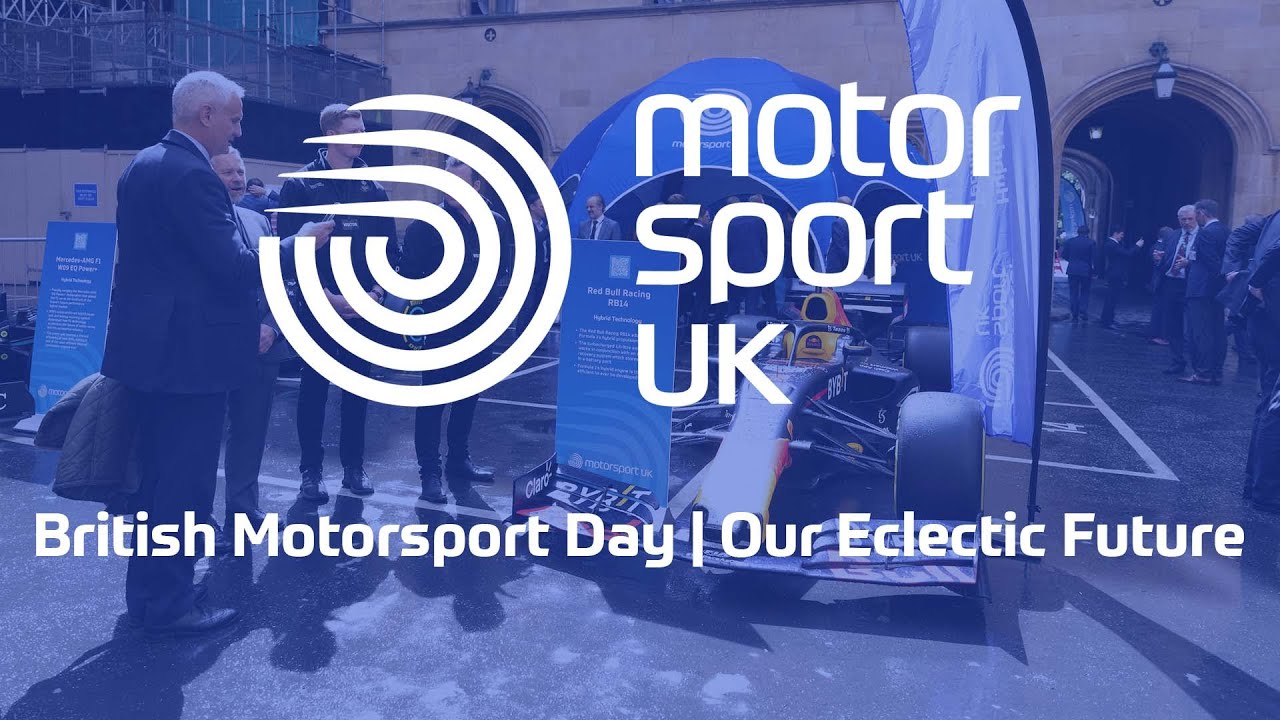
Motorsport UK’s vision is that the future of mobility will be inextricably linked to the accelerated development and demonstration of low-carbon solutions within our sport.
Fossil-fuels will continue to power existing vehicles around the world for quite some time, and therefore solutions are needed to shift to alternative net zero fuels, as well as new technologies that promise a cleaner and more sustainable future.
Motorsport engineers are pioneering new forms of propulsion to meet the challenges of climate change by creating an eclectic range of solutions – including sustainable fuels, hybrid technology, battery electric technology and hydrogen technology.
Find out more about Motorsport UK’s vision for Our Eclectic Future above.
Evasive’s IONIQ 5N EV Returns for Another Crack at Pikes Peak 10-Minute Barrier
Evasive Motorsports is gearing up once again to take on the legendary Pikes Peak International Hill Climb on Sunday with its modified Hyundai IONIQ 5 N electric vehicle.
“This will be our second Pikes Peak attempt with the IONIQ 5 N and we’re fully prepared for the mountain. In fact, we’ve been able to carry out further upgrades following last years’ experience to ensure we can extract the most out of our latest setup,” said Mike Chang, co-founder and CEO of Evasive Motorsports. “We’ve been testing at Hyundai’s private facility during the off-season and we’re confident we’ll break the 10-minute barrier if the weather cooperates this year. ”
More details can be found at RACER here.
Christian Fischer of Bcomp on the CW Talks Podcast
Bcomp’s CEO shares how natural fiber composites went from powder skis to BMW series cars — and what’s next for sustainable materials in mobility.
“In this installment of CW Talks, we explore the world of natural fiber composites and their growing role in sustainable lightweighting with Christian Fischer, CEO and co-founder of Bcomp (Fribourg, Switzerland), a company specializing in high-performance natural fiber composites for automotive, motorsports, marine, aerospace and even satellite applications. What started as a garage project focused on lightweight skis has evolved into an award-winning technology now headed into series production with BMW M. Fischer discusses Bcomp’s “race-to-road” strategy, the technical hurdles of scaling natural fibers for demanding markets and where flax-based composites fit — and don’t fit — in the broader composites landscape.”
Listen to the full podcast here.
Sustainable Racing
A Great Success in Sicily for the SWS International E-Finals
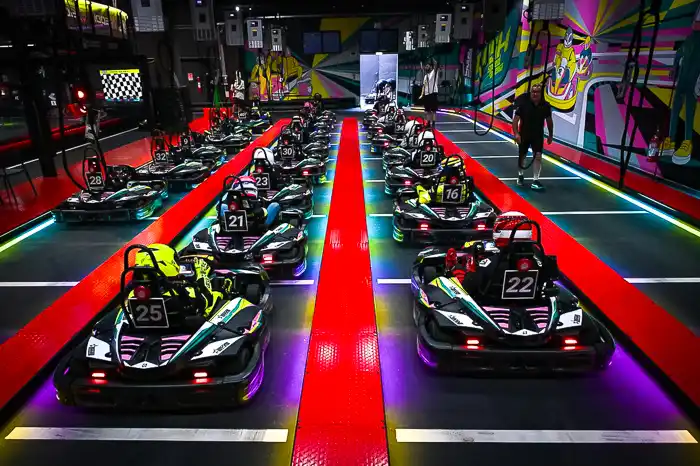
The fourth edition of the SWS International E-Finals has just come to a close on a very positive note. In recreational karting, electric power is inexorably gaining ground year on year. The SWS perfectly reflects this trend by increasing the number of participants and, for the first time, including the Juniors in the major electric karting event in Italy.
Read how the competition went here.
Series News
Formula E and FIA Unveil 21-Race 2026-27 Calendar for GEN4 Era
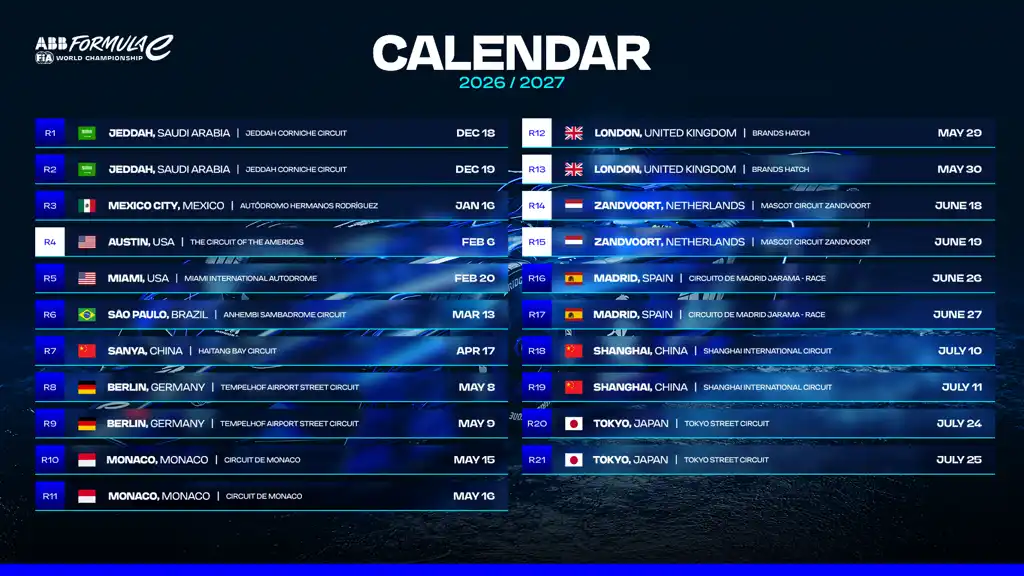
Formula E and the FIA has announced the first provisional calendar for the 2026-27 season of the ABB FIA Formula E World Championship following validation from the FIA World Motor Sport Council.
Featuring its most expansive season yet with 21 races across 13 global cities, highlights include new races at The Circuit of The Americas (COTA) in Austin (US) and MASCOT Zandvoort Circuit (NL), as well as a new home for the London E-Prix at the iconic Brands Hatch circuit (UK).
Full details and further analysis can be found in the articles below.
Further Analysis of Formula 1’s Sustainability Report
A number of outlets have reviewed Formula 1’s latest sustainability report that I wrote about last week. Here are a few of them for you to review.
FIA Confirms 2027 F1 Power Unit Changes
The FIA has formally greenlit F1’s move towards a 60/40 power unit split over the next two years, as it makes two key safety changes for 2026.
“For 2027, F1 is moving to a 58-42 split between combustion power and electric energy to further fine-tune the racing amid driver complaints, moving to a 60-40 split by 2028. To enable those changes without drastic hardware or chassis changes, F1 will limit the reconnaissance laps at specific circuits like Monza, and reduce the race distance by one or two laps if required.”
The Next Chapter of FIA Truck Racing
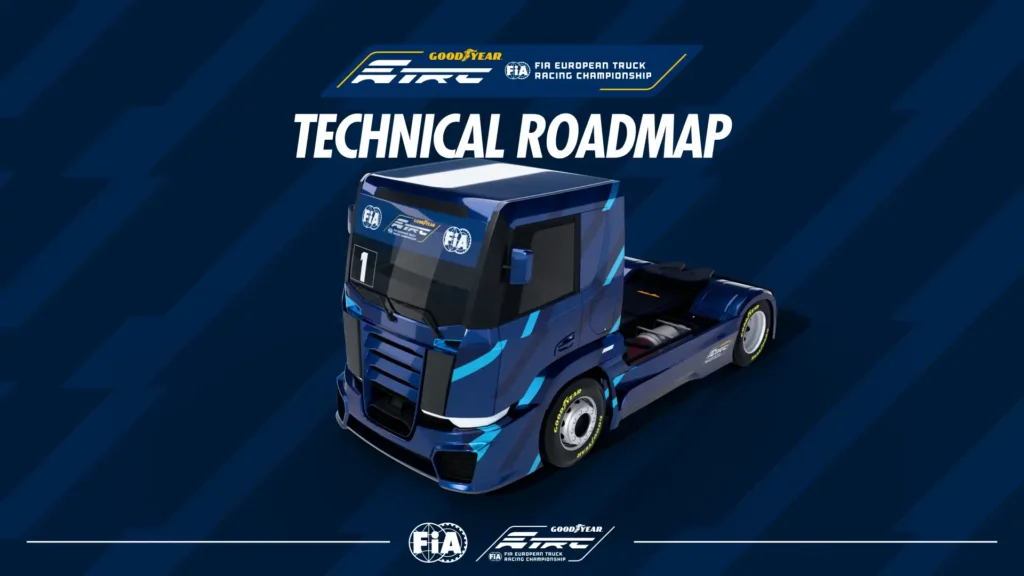
The World Motor Sport Council approved the general principles of an updated technical roadmap for the Goodyear FIA European Truck Racing Championship, which includes the introduction of a new technical platform for the next generation of race trucks that will run alongside the current specification of race trucks.
The new Category I chassis regulations will also promote greater technical freedom through open suspension geometry, improved vehicle dynamics and increased chassis stiffness. In addition, the Category I trucks will be ballast-compatible and designed to accommodate multiple energy sources, including fully electric, hybrid and liquid hydrogen (LH₂) powertrains in the future.
Toyota’s Hypercar Commitment Thrown Into Doubt by 2030 Regs
Toyota has admitted that its future in the FIA World Endurance Championship’s Hypercar class could be thrown into doubt if it is forced to abandon the four-wheel drive configuration of the current Toyota TR010 Hybrid in the 2030 regulations.
“Kaji explained that Toyota hopes to develop a hydrogen-powered car to take advantage of the new ‘H2 Hypercar’ rules that were also unveiled and are due to come on stream in 2030 at the same time as the new Hypercar rules. While Toyota will not be alone in having to redevelop its current LMH concept to fit the new rules, he said that the Japanese brand’s desire to race with hydrogen puts it in a unique position, and that it could not commit resources to developing a new two-wheel drive Hypercar concept that does not suit its interests at the same time.”
Driving the Future: ETS Racing Fuels Powers F4 Spanish Championship with Sustainable Performance
Motorsport is evolving. While the thrill of competition remains unchanged, the technology behind it is undergoing a quiet revolution—one that is redefining performance, responsibility, and the future of racing itself.
At the heart of this transformation is ETS Racing Fuels, which continues its partnership with the Formula 4 Spanish Championship for another season—delivering advanced sustainable racing fuels to the next generation of drivers.
Getting to the Track Sustainably

Formula 1 has now cut its carbon footprint by 35% since 2018 – which it calls the equivalent of 100,000 London-to-New York passenger flights – as it pursues its goal of becoming ‘Net Zero’ by 2030.
“F1 says that emissions from travel will continue to decrease as a result of the calendar rationalising in effect from this year – with races continuing to be grouped together more by region – but also as teams scale their fuel investments and FOM’s own remote broadcast operations plan is expanded.”
Read the full details at The Race here.