
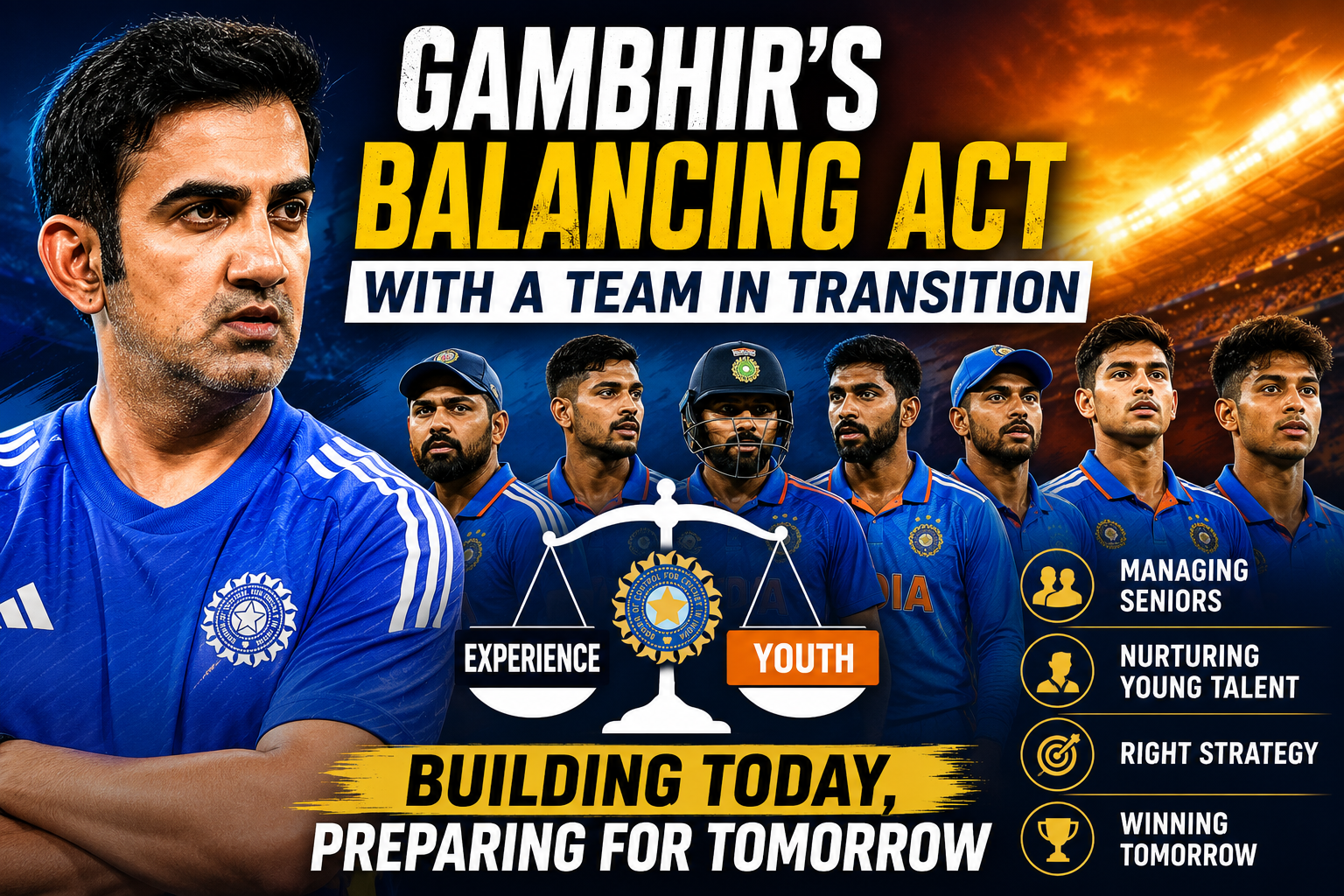
Indian cricket is entering a crucial phase of transition, and at the center of this transformation stands head coach Gautam Gambhir. Following India’s recent successes and the gradual shift away from an era dominated by senior stars, Gambhir faces the challenging task of building a team capable of sustaining excellence while preparing the next generation of cricketers.
With experienced players nearing the twilight of their careers and emerging talents eager to establish themselves, Gambhir’s role extends far beyond coaching. He must balance immediate results with long-term planning, ensuring India remains competitive across formats while developing a strong foundation for the future.
A Team in Transition
Every successful cricket team eventually undergoes a period of transition. India is no exception.
The retirements of legendary players and the evolving roles of senior members have created opportunities for younger cricketers. While the team still possesses experienced leaders, selectors and management are increasingly looking toward the future.
Young talents such as Tilak Varma, Yashasvi Jaiswal, Rinku Singh, and Abhishek Sharma represent the next wave of Indian cricket. Integrating them into the national setup without disrupting team balance is one of Gambhir’s biggest challenges.
Maintaining Success While Rebuilding
Transition periods often lead to inconsistency. However, India remains one of the strongest teams in world cricket and is expected to compete for every major title.
Gambhir must therefore walk a fine line:
- Winning bilateral series.
- Preparing for ICC tournaments.
- Giving opportunities to young players.
- Maintaining dressing-room harmony.
- Managing player workloads.
Finding the right balance between youth and experience will determine the success of India’s transition.
Gambhir’s Coaching Philosophy
Throughout his playing career, Gautam Gambhir built a reputation as a fiercely competitive cricketer who valued discipline, preparation, and team-first thinking.
As a coach, he has emphasized:
- Fearless cricket.
- Strong work ethic.
- Tactical flexibility.
- Merit-based selection.
- Mental toughness.
His straightforward approach has already influenced the team culture, encouraging players to take responsibility and embrace pressure situations.
Leadership Questions and Future Captains
One of the biggest issues during a transition phase is leadership succession.
While established captains continue to lead various formats, discussions about future leadership options have intensified. Players such as Shreyas Iyer, Ishan Kishan, and Tilak Varma are increasingly being viewed as potential future leaders in white-ball cricket.
Gambhir’s role involves identifying leadership qualities early and helping future captains develop decision-making skills, tactical awareness, and the ability to handle pressure on the international stage.
Managing Senior Players
A successful transition does not mean abruptly replacing experienced players.
Veterans continue to provide:
- Stability.
- Match-winning ability.
- Dressing-room guidance.
- Tactical experience.
Gambhir must carefully manage the workload and roles of senior players while ensuring younger cricketers receive sufficient opportunities to develop. This balance is often the difference between a smooth transition and a difficult rebuilding phase.
Building Bench Strength
Modern cricket’s demanding schedule requires strong bench strength across all formats.
India’s depth has traditionally been one of its greatest strengths. Gambhir and the selectors are expected to continue rotating squads, giving emerging players international exposure and preparing backups for key positions.
The objective is clear: ensure India has multiple match-ready options for every role before major tournaments.
The Importance of Domestic Cricket
Gambhir has repeatedly stressed the value of domestic cricket as the pathway to national selection.
Players performing consistently in domestic competitions and franchise leagues are increasingly rewarded with opportunities at the highest level. This merit-based approach motivates aspiring cricketers and strengthens the overall talent pipeline.
A robust domestic structure remains critical to India’s long-term success.
Challenges Ahead
Despite India’s strong talent pool, Gambhir faces several challenges:
Managing Expectations
Indian cricket operates under intense public scrutiny, where every result generates discussion.
Balancing Formats
Different formats require different strategies and personnel, making squad management increasingly complex.
Injury Management
Modern schedules place significant physical demands on players, making fitness and workload management essential.
Preparing for ICC Events
Ultimately, success in global tournaments remains the benchmark against which every coaching tenure is judged.
Why This Transition Matters
The current transition is not merely about replacing players. It is about shaping India’s cricketing future for the next decade.
The decisions made today regarding player development, leadership succession, and team culture will influence India’s competitiveness in future World Cups and ICC events.
Gambhir’s challenge is to ensure that India evolves without losing its winning identity.
Conclusion
Gautam Gambhir’s tenure as India’s head coach arrives at a pivotal moment. With a talented generation waiting to take center stage and experienced stars still contributing, he must carefully balance continuity with change.
If managed successfully, this transition could produce a stronger, deeper, and more versatile Indian team capable of dominating world cricket for years to come. The coming seasons will reveal whether Gambhir’s balancing act can transform a team in transition into the next great era of Indian cricket.
References
- BCCI – https://www.bcci.tv
- ICC – https://www.icc-cricket.com
- ESPNcricinfo – https://www.espncricinfo.com
- Cricbuzz –