
Bill Simons
Here’s a lightly updated version of our 2013 reflection on how tennis reacted to the NBA’s Jason Collins coming out and the transformative power of tennis and sports.
•••••
In 1981, just after we published our second edition, Billie Jean King announced she would be holding a press conference at the Oakland Coliseum in relation to her sexual preference.
This was huge.
After all, it was an era of suffocating homophobia. Gays were marginalized, the conventional wisdom was harsh. Many viewed them as perverts and unworthy of acceptance. Then word emerged that King had a romantic relationship with her assistant, Marilyn Barnett. The press conference was raw and raucous. King’s husband Larry, stoic and loyal, was on the podium to lend symbolic support as King told her truth: I’m gay, she confided. So what, you might say. Then, it was brave and bold.
The packed interview room was filled with tension. King, the Long Beach fireman’s daughter, later recalled that she had grown up “in a homophobic environment. So this was really something…[It was] the biggest struggle I’ve ever had in my life, but I told my PR person and lawyer, I want to have a press conference, and I’m going to tell the truth. They said, ‘You cannot do that. No one’s ever done that.’ I said, ‘I don’t care what people have done before…I have to tell the truth.’ So I told the truth. You could have heard a pin drop, because I said, ‘Yes, I did have an affair with Marilyn Barnett.’ The truth always sets you free, eventually. I did lose all my money overnight, in 24 hours, every single endorsement I had…But it’s okay. You just start over…Everyone has to decide when they’re ready to do something, each human being.”
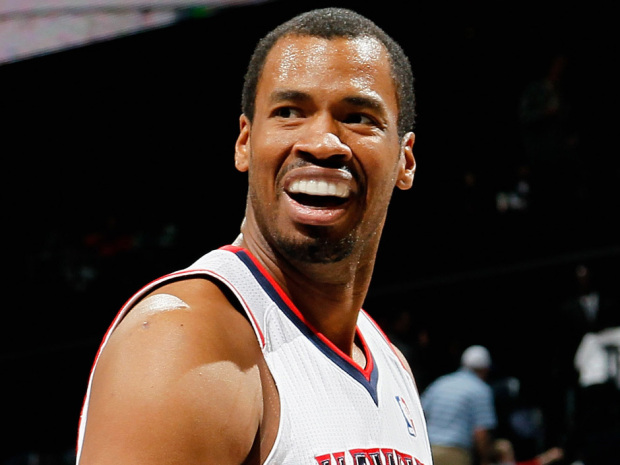
King’s raw emergence was in stark contrast to that of NBA player Jason Collins, who became the first active athlete in a major American team sport to announce that he was gay. His historic coming out was thoughtful and reflective. The former Stanford star, who long has been celebrated as a caring pioneer, just died after a long battle against brain cancer. When he came out, he wrote a first-person Sports Illustrated cover story, packaged with care and savvy. President Obama and First Lady Michelle Obama said he was a hero. A slew of celebrities, from former President Bill Clinton, Kobe Bryant, and Shaquille O’Neal to tennis players such as Andy Roddick and Mardy Fish enthusiastically concurred. Collins became an emblem of courage in an era when acceptance of gay rights was beginning to accelerate with lightning speed
Many dismiss tennis as a fuddy-duddy sport, living in the past and played, for the most part, at stiff country clubs: “I do say, Charles, splendid backhand.”
But look again.
Despite all its don’t-rock-the-boat predilections, tennis repeatedly has been on the cutting edge of change. Let us count the ways:
• LA rebel Gussy Moran, who tweaked Wimbledon’s haughty fashion police, was a feminist long before bras were burnt.
• The Jackie Robinson of tennis, Althea Gibson, integrated a whites only game.
• Arthur Ashe fought racism, apartheid and AIDS, and battled for education and Haitian immigration rights.
• Venus and Serena woke ’em up at the country club and, as their daddy predicted, revolutionized the game. Just watch the movie.
• Martina Navratilova fled Communist oppression, came out and introduced fitness into women’s sports.
• Michael Chang opened wide an Asian door and made clear you don’t have to be a tower of power to succeed.
• Similarly, China’s Li Na became an inspiration for millions of Asians and, more recently, the Minister of Happiness, Tunisian Ons Jabeur, became an African pioneer.
• Mr. Image is Everything, Andre Agassi, who was dismissed as “just a forehand and a haircut,” evolved into a role model for personal change.
• The USTA named their stadium after a man of conscience, Arthur Ashe.
And, lest we forget, Billie Jean King’s 1973 defeat of male chauvinist Bobby Riggs had, with the exception of Jackie Robinson’s shattering of baseball’s color barrier, more impact on American life than any other sporting event.
Free of the collective restraints of team dynamics, and not nearly as conservative as golf, tennis is shaped largely by strong individuals and visionaries, and is enriched by both genders and by diverse world cultures. In America, tennis always had to deal with issues of race and gender. And gay culture has long been an unspoken, sometimes tragic, thread in the fabric of the game.
Popular in gay circles, tennis was often viewed as a sissy sport. Certain tennis phrases like “Tennis, anyone?” spoken by Humphrey Bogart on Broadway in the ’40s had gay connotations. Adolf Hitler shipped the Davis Cup hero Baron Gottfried von Cramm off to a camp for being gay.
The most tragic high-profile scandal in the sport was the messy fall from grace of Bill Tilden. Elegant and dramatic, the best tennis player of the early 20th century became entangled in a devastating sex scandal that led to headlines, seven months in jail and a broken life.
The singular gay designer and advisor Ted Tinling evolved into a beloved figure. In 1981 Martina Navratilova was outed by the New York Daily News. “It was a disqualifier to be gay,” said Navratilova, who would become Collins’ idol. Officials encouraged her not to talk about her sexuality so as not to endanger sponsorships. She feared it would hurt her hopes of becoming an American citizen. Many insults came her way – but no endorsement deals.
Yes, tennis is by far the world’s most successful female sport and there is equal pay at the game’s biggest events – what a hard-won achievement. Still, the sport has its own homophobic, sexist backstory. After bad losses, macho men would say, “I played like a woman.” Exhibitions by comedic players, like Yannick Noah and Henri LeConte often featured demeaning homophobic gestures, and after winning the French Open, a pre-transformation Agassi joked that he was “as happy as a faggot in a submarine.”
At the Australian Open, Martina Hingis said the 19-year old Frenchwoman Amelie Mauresmo—who would soon come out—was “here with her girlfriend. She’s half a man.”
But it was Margaret Court, the Aussie icon with 24 Grand Slams, who became a conservative minister, who was most outspoken. Just after Navratilova won her record ninth Wimbledon, Court said she was a bad role model. “It is very sad for children to be exposed to homosexuality,” she stated. Navratilova countered, saying that Court “bashed me for being gay. Her line was that it’s in the Bible, against God’s wishes… She’d hardly spoken three words to me in my life, but then chose one of my finest hours to bash me.”
Martina barely blinked. Speaking before hundreds of thousands at a Washington D.C. rally, she mocked the “Don’t ask, don’t tell” policy that was applied to gays in the military, saying, “The army gives medals to people for killing people and would throw me out for loving one.”
Of course, you could say tennis has its own quieter version of “Don’t ask, don’t tell” policy. Still, Navratilova was defiant, saying, “I grew up in a communist country where they locked up homosexuals. I never could understand that … I didn’t think there was anything wrong with loving a human being, which is why I never apologized. To this day it really baffles me why it is people’s business to judge you.”
Billie Jean asked, “Who in their right mind would choose to be gay and be ostracized? It’s not a choice.”
Jason Collins’ announcement to come out seems to have opened a door and cleared some air in tennis. “Thank you Jason!” tweeted broadcaster Rennae Stubbs. “Let the conversation begin, you will be loved & embraced by those that love & care & matter.” But former player Michael Joyce noted that Collins was merely a back-bench player and contended the former Nets player came out to get attention.
In contrast, Billie Jean was ecstatic. “This has been one of my prayers,” she said. “We’ve reached a tipping point. He’s going to encourage people to come out … I’m thrilled [he] was able to come out on his own terms and … is ready to continue the conversation. This is a day of celebration for the LGBT community and for all of us. I look forward to the day when the news of anyone coming out is a non-issue. Once we reach that point, we will know we have arrived.”
Navratilova tweeted, “Hey Jason Collins—you are now an activist!!! And trust me, you will sleep a lot better now—freedom is a sweet feeling indeed!” She also referenced the recent whiplash change in society’s views on gay rights after decades of glacier-like movement. Unlike her coming out experience, she told USA Today, “It’s going to be completely the reverse [for Collins.] He’s going to get huge support and it’s the homophobes now that are getting shushed…It is the people that are against gays that need to stay in the closet.”
On The Today Show, Martina said, “It’s about time…I can’t believe it’s 32 years after I came out…Jason coming out this way is going to push that forward a little bit, and most of all, he is going to save lives, there is no doubt in my mind…There is some kid out there who is not going to commit suicide because Jason is out.”
Still, doubts linger. Will Collins be signed up to play for another NBA team next season? [He retired a year and a half after he came out.] Will a top-level NBA player come out? [The little known Australian Isaac Humphries is the only other pro basketball player we know of to come out.]
And, in tennis, will a top-100 male tennis player at last come out? Stubbs once suggested, “Male athletes aren’t going to come out because they’re going to get ridiculed and be embarrassed. Men aren’t supposed to be gay if they’re playing sports.”
Has there been a shift? Time will tell.
In 2024, Brazilian Joao Lucas Reis da Silva, who reached No. 189 in the rankings, became the first ATP player to state that he was gay. A year later, Swiss Mika Brunold, who got to No. 289, also came out.
All the while, the 2012 claim by Russian Svetlana Kuznetseva somehow rings truer than ever: “Being different is one of the most beautiful things in the world.”