
Henry Winter’s World Cup Diary, Day 13
We’re giving away five annual subscriptions to World Soccer. For you chance to win one, click here.
Boston.
Does Thomas Tuchel have a problem with individuality? Is England’s head coach so obsessed with the team ethos that he overlooks the maverick who might possess the key to unlock a defensive door? Whenever Tuchel talks about Jude Bellingham, there often seems a caveat about the player, who’s still only 22. “He fully buys into the idea that we do this as a team,” Tuchel said of Bellingham on the eve of England’s stalemate with Ghana.
And so Bellingham should buy into the idea. It’s a team game. And so he usually does. He isn’t maturing into one of the best players in the world without understanding the concept of togetherness. Bellingham’s team-mates certainly don’t consider him selfish. They see a young player with a huge talent who can lift the team. Bellingham even modestly wanted to refuse the man of the match trophy for England’s stalemate with Ghana. Bellingham needed to watch out for one tackle, that could have drawn a booking, but frustration is simply a reflection of a huge hunger to win. England needed more of Bellingham’s edge and individual determination to try to bend the game to England’s will.
It was impossible not to sit in the Boston Stadium, watch England fail to break down a well-organised Ghana, and not let the mind drift to whether things would have been different had Trent Alexander-Arnold been there to come off the bench and change the game with one pass. Tuchel went safe.
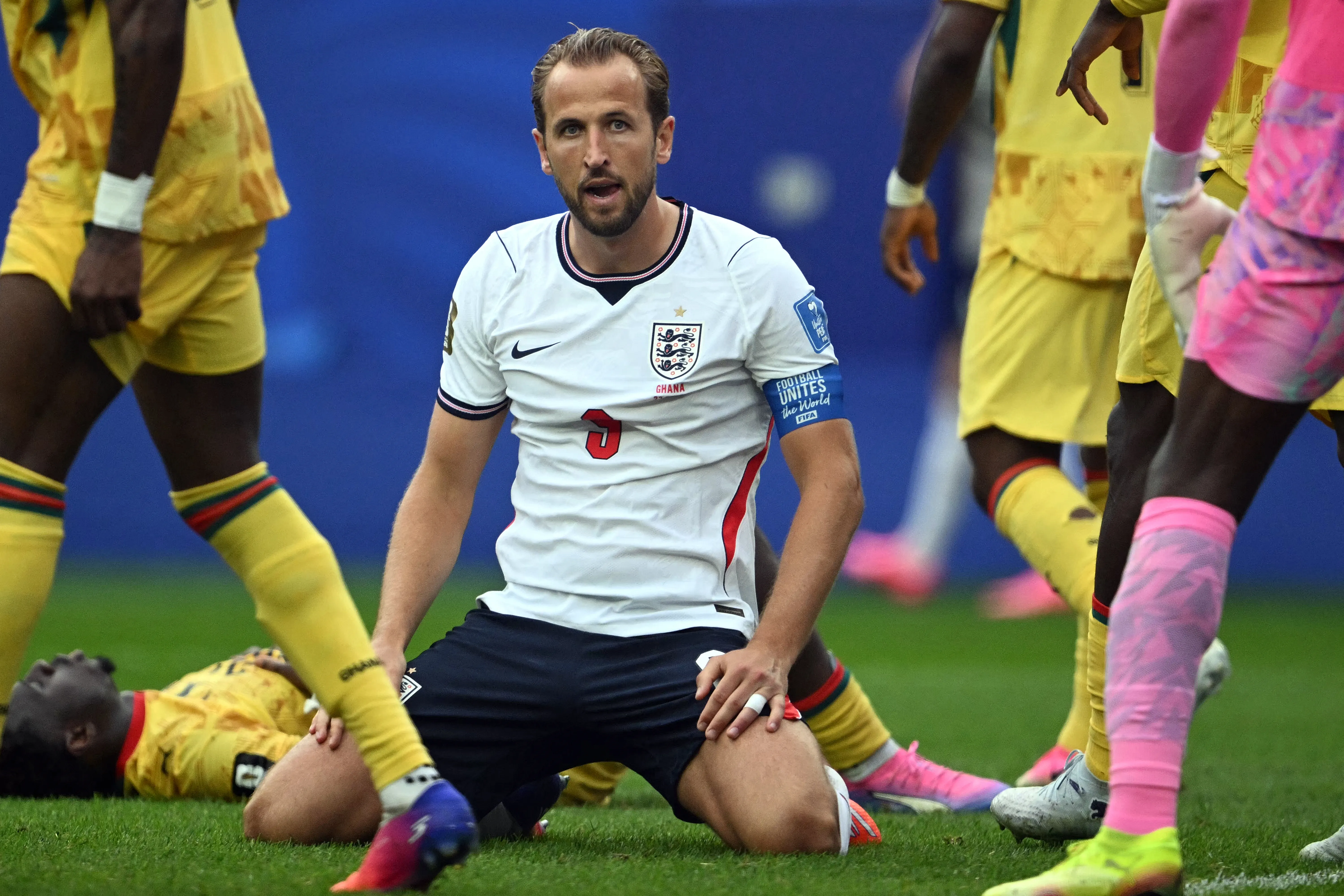
Tuchel also played it safe with Harry Kane. He kept him on when Kane wasn’t playing well. Tuchel undermined his own philosophy that it should all be about delivering for the team. Kane wasn’t. Yet Tuchel looked almost surprised when asked whether he thought about taking Kane off and trying Ivan Toney or Ollie Watkins. “Change Harry Kane in a game that is stuck and 0-0?!” Tuchel replied. “Taking Harry off? No!”
Kane is special but he didn’t look like scoring. No player should have a sinecure, even a captain and serial saviour like Kane. Tuchel should not be afraid to take his No.9 off.
Click here to read World Soccer’s guide to the 2026 World Cup
⚽ ⚽
After Tuchel’s press conference, I rushed back to the media centre in the Patriots indoor training bubble and went on the Brazilian Shirt Name podcast hosted by Tim Vickery. Tim mentioned that Brazilian TV had suggested it was only England fans booing the two hydration breaks, and English fans were just being conservative, and essentially backward-looking. First, it was many, many more than simply the England fans present. Ghanaian fans resented the break to the flow of the game. Americans, some wearing shirts of the two teams, also voiced their disapproval. Real fans, who love the essentially uncomplicated nature of the sport, want to defend it.
This is not about temperature and player welfare. Talking to a couple of Americans at the game, they warned about the inevitability of the mid-half break staying and being used as a commercial break. It’s the way TV works. It’s where the way business works. It’s the way sports work in the US. Follow the money.
Fifa president Gianni Infantino responded to fans’ criticism of the breaks by saying that his organisation gains “absolutely nothing” from the pause in play that TV has used for commercials. “There is no additional revenue for FIFA, as all commercial agreements were signed well in advance,” Infantino said. “So, this is not a financial issue for us. For us, it is purely a sporting matter.”
FIFA, meanwhile, insisted that, “We want to ensure equal conditions for everyone, and that’s why these breaks are implemented in every match. Basically why should two teams, and two managers, have an advantage in one stadium – and not in a cooler one? It’s not sporting to have it at some, and not all. Imagine going into the simultaneous matches and one game could and the other game couldn’t? That wouldn’t be fair.” Yet the level playing field argument has gone when one team plays twice in an air-conditioned stadium and a rival once. The level playing field argument ended when France’s delayed game with Iraq scrapped the second-half hydration break at Lincoln Financial Field.
It is “a purely sporting matter”, as FIFA says, and it damages the sporting element of football by wrecking the rhythm.
⚽ ⚽
Boarding a lift to the media floors at Boston Stadium, I bumped into Brad Friedel, famously of Liverpool, Blackburn Rovers, Aston Villa and Tottenham Hotspur and the US on 82 occasions. Seeing Friedel reminded me of his trial at Brian Clough’s Nottingham Forest after leaving UCLA in 1993. Friedel considered Clough “a football genius” and appreciated his unique style of motivating players.
They were playing eight-a-sides in training, somebody opened the scoring, and Clough barked, “Right, that’s it lads, go in.” Game over. It was all about concentration for Clough. “If you switch off in the first minute that can be the end of the game sometimes,” Clough told Friedel and the other players. It was an eclectic way of managing, very much the Clough way. Work permit problems thwarted Friedel’s hopes of playing long-term for Clough but the young keeper appreciated the demands of concentration he would need to make it in England.
Catch up on the rest of Henry Winter’s World Cup Diary here