

I accidentally sent it with comments allowed to Paid Subscribers only, so this is a resend*
First Mail Bag and the response was awesome. Here’s my answer to a couple. If I didn’t respond to yours here, hopefully I’ll get back to you with a direct reply to your comment.
From Tommaso:
My question is about stroke mechanics, are there players in the top 100 that you consider have an elite wing, like top 10 level, but are brought down by other areas of their game?
There’s a couple of guys that spring to mind. Perhaps number one on my list is Roberto Bautista Agut’s forehand. In an age defined by racquet head speed and power (i.e., projection), RBA is testament to the value of a pushy Eastern forehand that can receive balls supremely well.
He’s as slow and flat as Mensik and Giron on 2024 speed and spin data, but makes nearly 90% of his shots off that wing (more than anyone else on tour). Since 2022, when Tennis Insights started creating leaderboards of individual shots, RBA has consistently punched above his ranking on the forehand:
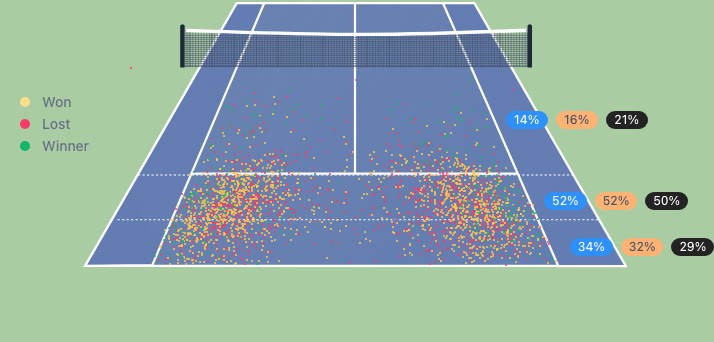
I don’t take Tennis Insights ratings/rankings as gospel, but I do think they do a pretty good job of putting players in the right ballpark. If we look at RBA’s 2023 data specifically, where he was ranked 57th but 2nd on the forehand, we can see he did incredibly well at putting them deep in the court; five-percent better than tour average. He doesn’t offer short balls (for comparison, Zverev dropped 23% of his forehands into the service box the last 52-weeks).
And juxtaposed next to one of the game’s greatest ever projector’s and racquet-head speed Kings in Rafael Nadal, we can see that RBA’s anachronistic forehand resembles the easy-going push of your local club coach:

I’ve spoken about how seeing the racquet tip get left (from this behind angle for righties) early post-contact is a good sign of racquet head speed and internal shoulder rotation into contact (here). If you resemble RBA post-contact as a pro (racquet head forward, palm not down, strings not down), it’s usually a sign of slow swing speed/internal shoulder rotation, and that’s usually a death knell for a forehand:


But RBA’s old-school eastern grip allows him to “push” the ball like this and pocket the ball deeper in his strike zone, and it’s one of the advantages of an eastern grip: you can swing slower, catch the ball later, and still produce speed and depth off compact, punchy strokes.
You need a big engine and quick set of wheels to operate on such a flat-counterpunching style (read: long punishing rallies), and at 37 years RBA is certainly in the twilight of his career, but his humbly-swung forehand continued to keep the lights on in 2025 despite the ranking slip.
Other honourable mentions:
-
Nicholas Moreno de Alboran’s forehand. You probably haven’t heard of this guy as he never cracked the top-100 (yet), but the forehand is modern and huge. His serve and backhand let him down immensely.
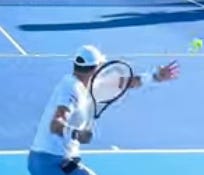
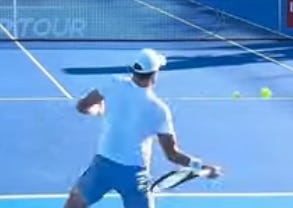
Modern setup, great deep slot position.


-
Gasquet’s backhand: ranked #7 in 2023, and #6 in 2024 by Tennis Insights. Such a long and vicious swing. It required the Frenchman to play from deeper court positions, and you really needed an elite forehand and movement (neither of which Gasquet ever possessed) to make his game compatible with that (think Fils, Nadal, Medvedev in a sense). Of course, gasquet was top-10 in his prime, so perhaps he doesn’t qualify.
From Martin:
Your enthusiasm for Fonseca is contagious. Does anyone else in the NextGen Group create similar excitement for you?
I’m always on the look-out for youngsters coming through the Challenger and junior ranks. Here’s a look at the current Race to Jeddah:
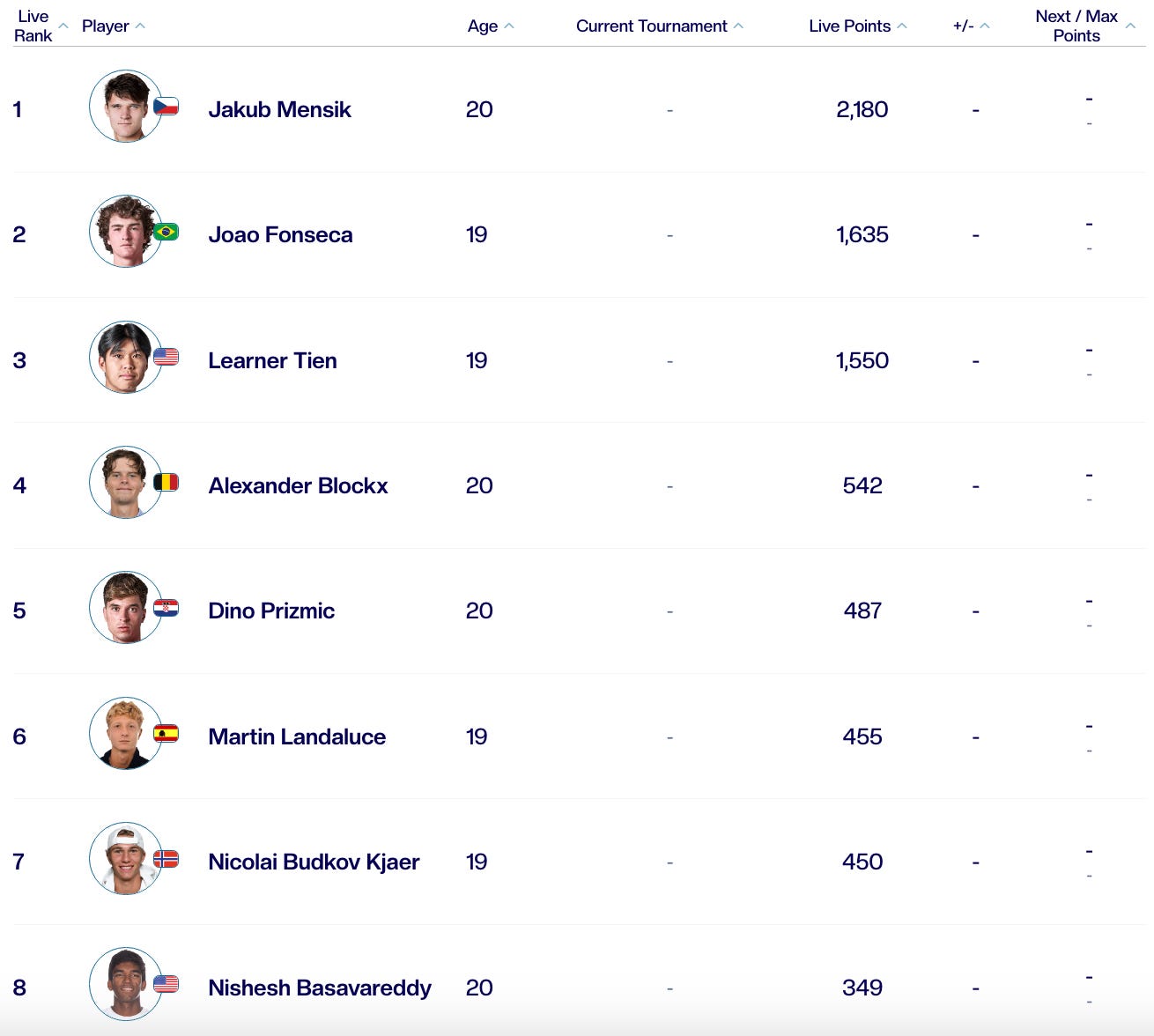
Most of these players are known and have had tour exposure at ATP events. I think the top three here are obviously the most exciting prospects given they are already winning tour titles, and Fonseca is still my number one pick by some margin over Mensik and Tien, but if we dig a little deeper on this rankings list, there are some other players I am more bullish on besides the 4 through 8 players:
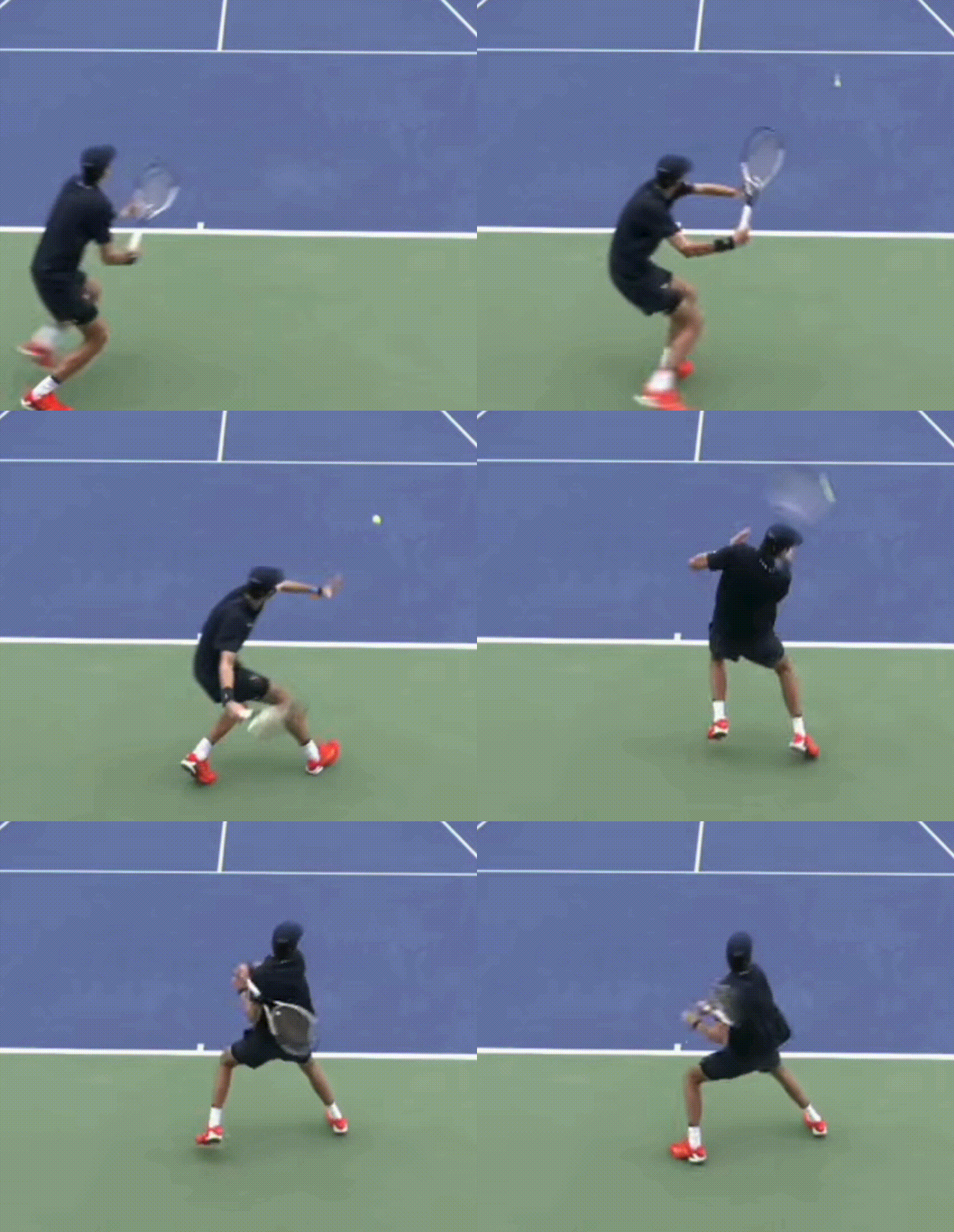
Rafael Jodar: You’ll likely see Jodar in Jeddah this month, as he’s 9th in the race and Fonseca has opted-out of the event to focus on managing an injury. The 2024 US Open Junior Boys Champion (def. Kjaer, FYI) is currently a University of Virginia college player, although given his meteoric ranking rise late in 2025, I think he will turn professional for 2026. Jodar has the makeup of your typical modern player: rangy, double-handed, aggressive and big forehand. The forehand reminds me of FAA in it’s modern path but flexed-wrist setup, and the swing path is deep with a great slot position. Keep an eye out for him next week.
Then there’s a bunch of others I have mentioned briefly in recent posts:
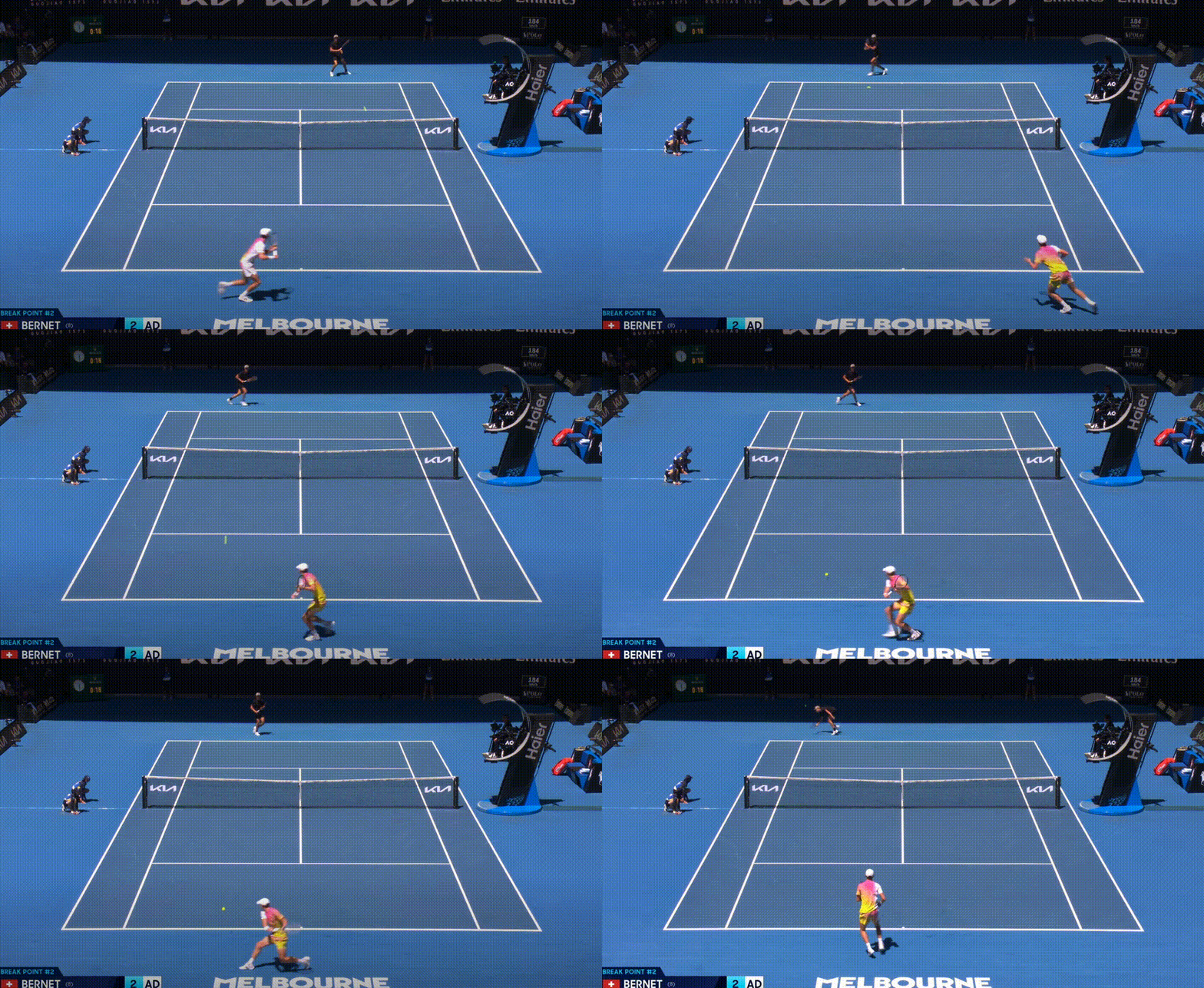
Henry Bernet: My interest in Bernet is driven by my one-handed backhand prediction as much as his talent. Bernet has a single-hander, and unlike Tsitsipas (and even Musetti, to a lesser degree) I think the Swiss’ reverse is going to be a weapon, rather than some ornamental weakness for the purists to eye-fuck. The swing is low and long, and it’s going to be the one-handed blueprint for the future, I’m almost certain of it. Beyond the backhand there’s a silky and feline movement to his game (what is up with that and the Swiss? Hingis, Federer…) and the serve already earns him free points: a must for 2025 and beyond.
Justin Engel: the highest-ranked 18-year-old on tour, Engel has a forehand that will print money for the next decade. I off-handedly made the comp to “Rublev but with a better backhand” on Twitter some time ago, and I still kind of subscribe to that notion, although the serve is technically underpowered and has similarities to someone like de Minaur:
Federico Cinà: Another Italian youngster. Cinà actually squared off against Engel in a recent Challenger final, although I haven’t seen a tonne of his game to pick up on anything other than that he can hit the shit out of his forehand with a Sinner-esque backswing. From the short clips I’ve seen I think he has good fundamentals and athleticism across the core components of the game.
From Frauderer:
Over the years you’ve opened your heart to Sinner’s “merry-go-round” FH with more dynamic flip. As you work on Death of a Forehand Part 4, do you still contend those shorter/whippier strokes, while being a product of their time, represent a slight technical degradation in control compared to longer, fully gravity-assisted Ferris Wheels?
And David:
I feel shortening the forehand hurt Federer; his earlier stroke looked more fluid and less prone to breaking down. Do you agree with that sentiment? What are your thoughts on how Federer’s forehand changed specifically?
My first post, Death of a Forehand, was about pro forehand technique’s drifting in recent years, becoming more compact (lower, and with the racquet kept more on the hitting side) and overall whippier (due to lighter frames and more extreme grips, I suspect).
So, after all of Sinner’s success, do I still think the modern forehand (Fed ‘06, Djokovic) is “better”?
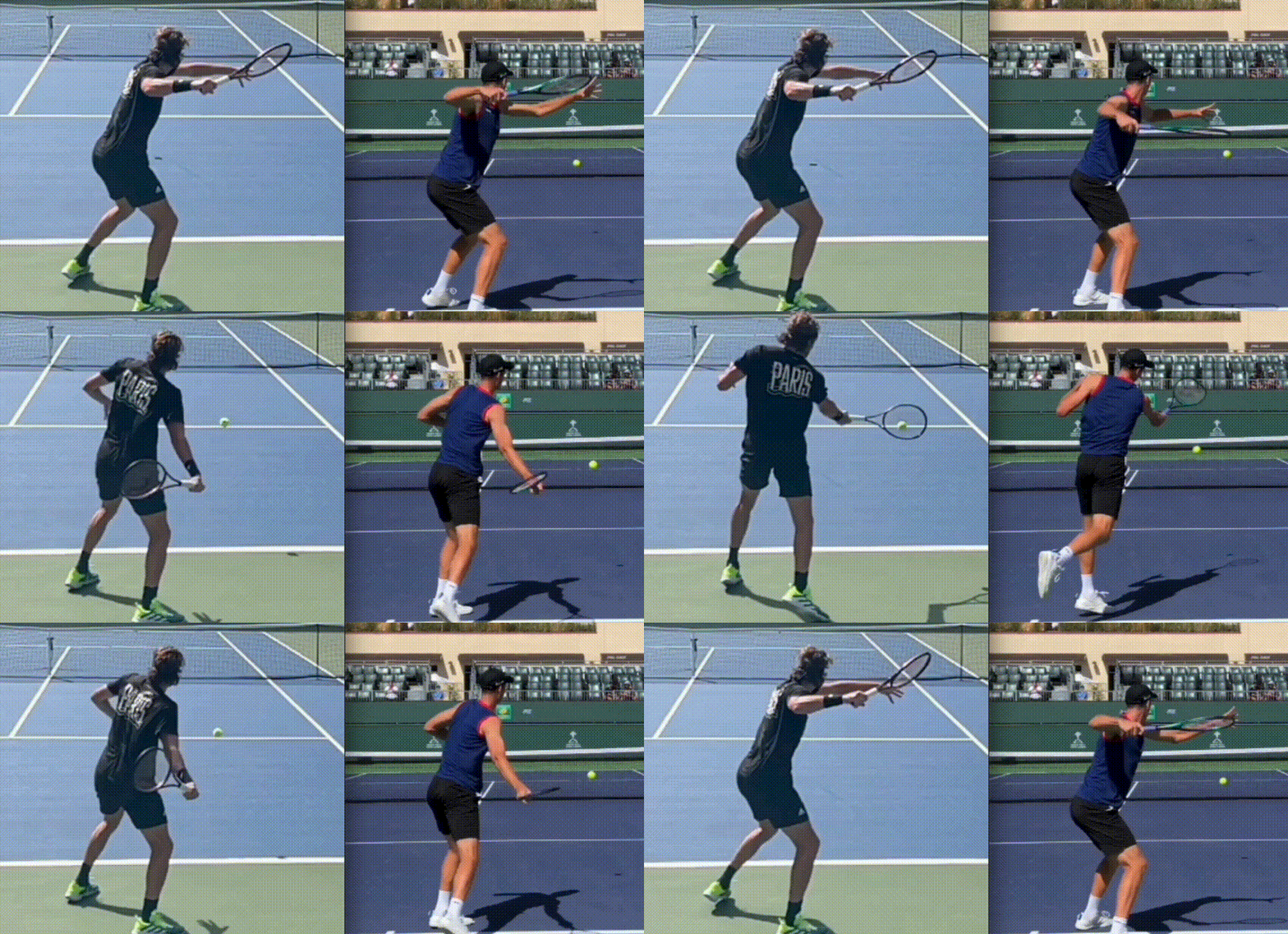
Short answer: Yes, but… My forehand thesis has changed. It’s less about control/fewer moving parts/less “flip” of the racquet, and more about what swing creates (a) a great stretch in the hitting-arm muscles, and (b) a deep slot to accelerate on an in-to-out swing path. More of both is better, and for reasons I will outline in DOAF IV, the modern style tends to produce both (a) and (b) in greater quantities, but there are caveats that I will outline when it’s ready. A teaser GIF:
From Ernie:
Is there anything mechanically or tactically that Bublik did differently this season to achieve his career high ranking, or was this just the first time he mentally locked in consistently and took tennis seriously?
The short story is that Bublik was in a slump, went to Vegas for a couple of nights, bought some Babolat Pure Aero 98’s (as every struggling pro seems to do these days) and then turned his season around. I think his ranking rise may in part be due to his racquet change. Rumours are that he went way down in weight compared to his Tecnifibre frame, but he did get rid of the natural gut strings in the cross and switch to an all-poly setup with the Aero, likely because the Babolat frame gave him enough power that he didn’t need it from the strings. A look at Bublik’s year-on-year groundstroke data has Babolat Bublik hitting harder off both wings, hitting more winners off both wings, and hitting fewer unforced errors off both wings compared to prior years:

On serve it’s a similar story for the above mentioned periods. The speeds are the same, but the first serve-accuracy is up ~5cm, the aces/match are up slightly (from 9.5 in 2023/24 to 11 post-Vegas) but the double faults are way down (from ~6.8 in 2023/24 to 3.9 post-Vegas).
But I also think a mental inflection point happened for the 28-year-old; a huge number of his wins came at Challengers (Phoenix Final, Turin Champion) and post-Wimbledon 250s (Gstad, Kitzbuhel, and Hangzhou Champion in the fall). I think the upper ceiling of Bublik’s game is quite high given his serve and chaotic style, but his current career-high ranking reflects his ability this year to shore up the dips and lock-in during out-of-the-spotlight events and early rounds where a couple of years ago he might have mentally checked out.
From Thomas:
On the forehand side, I’ve seen a couple analysts (including in this blog iirc) that the finish is dependent on the situation, the grip, and the incoming ball. Yet, on the backhand side, I hear that the finish should always be head height. Is there any reason for this difference, or am I misunderstanding these principles? Personally, I feel like it’s difficult for me to always finish head high, and some balls feel way more comfortable with different finishes (e.g. running open stance backhands finishing waist height).
One of the reasons the modern forehand finish is so variable is that it allows for much more angular momentum compared to a two-handed backhand: a longer lever, more degrees of freedom in wrist action with only one hand on the racquet, and you can rotate your body and shoulder (internally) more aggressively. So much so, that your hitting shoulder leads when you hit the shot with the modern forehand. Compare Alcaraz and Sinner’s contact points and shoulder orientations, with Sampras and Graf’s more eastern pushes (that finished above the shoulder nearly always):


Let’s compare the flatter, linear swing of del Potro with an eastern grip, against the steeper swing path of Kyrgios’ more extreme grip that finishes low:
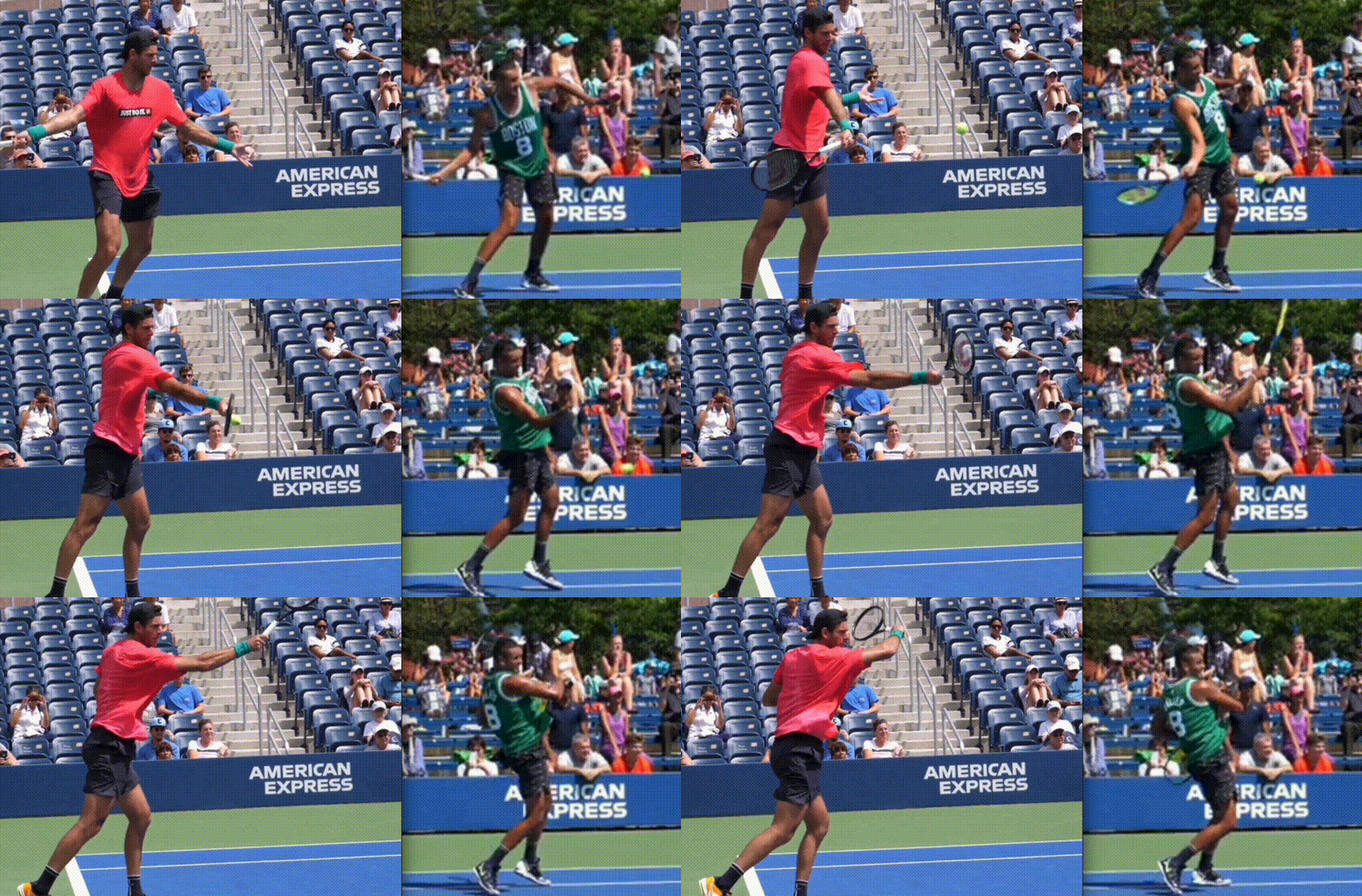
The path of Kyrgios’ hand and racquet can be this steep, yet still create awesome ball speed, because his legs, hips, torso, and shoulder create a lot of angular momentum, and on this particular shot — inside the baseline with a low ball — he needs a lot of spin to bring the ball over the net and into the court. del Potro has a much flatter path with his hand and racquet on this particular ball (and with his grip), which is higher and on the baseline, allowing him to drive it much flatter (and likely faster). It’s still got a lot of angular momentum, but you can see there’s also a linear aspect to it; the arc is much longer because of his grip, and how much he straightens the hitting arm and extends through the shot, rather than just emphasising internal shoulder rotation coming across it in a more windshield manner.
Now with two-handed backhands, we have much less possibility to create this much racquet speed because we often have much less angular momentum, but speed is not the perk of the two-hander. This shot dominates pro tennis because it is:
-
Quick to prepare
-
Easier to control the racquet face
-
More adaptive with various contact points (especially late/high)
These three points are all helpful on returns, and when playing against faster, heavier incoming balls.
We hit it with our hitting shoulder always leading, indicative of less torso rotation than our modern forehands (more like Graf and Sampras):
Because we have less angular momentum, and we have less wrist action/degrees of freedom, less (non-dominant) internal shoulder rotation, and a shorter lever compared to the forehand, the actual speed of the racquet head is lower. This means we have to create ball speed with more of a linear path, and this often results in higher finishes, because as our palms (non-dominant) keep going toward the target (more “push” feeling, less “roll” for most), our elbows extend, and because our arms (thankfully) stay connected to our body, our palms stop going toward the target as much and start going up more. Carlos isn’t trying to swing up on this shot as much as he’s wanting to swing forward, it’s just that he hits the limitations of his own body:
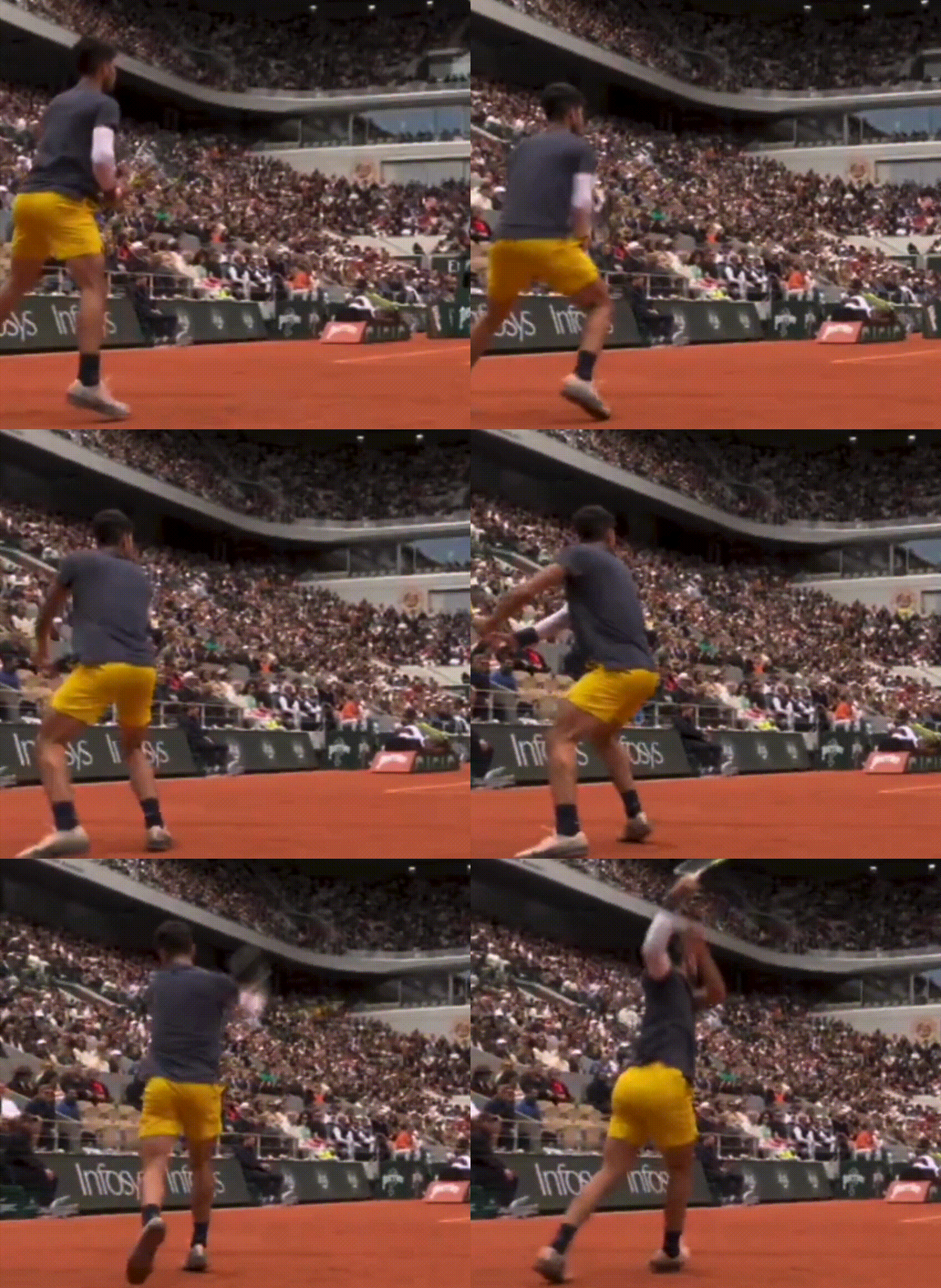
You might have noticed this on a prior post on locked-wrist backhands:
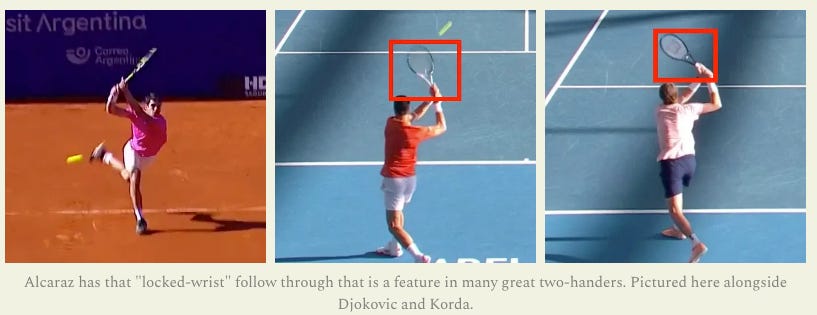
Now is when I address a situation you mentioned: some balls feel way more comfortable with different finishes (e.g. running open stance backhands finishing waist height).
Let’s consider why a lower finish might feel more natural on a running open-stanced backhand. What generally is attached to this situation is that your rushed, and catching the ball late.
Catching it late means the left hand/wrist (flexion)/shoulder is going to have to work a lot more than it usually would to help square the racquet face for contact, and the left arm isn’t going to have time to extend, and this is why you end up with this low finish on wide backhands; the finish tells a story of what was happening before the strike.
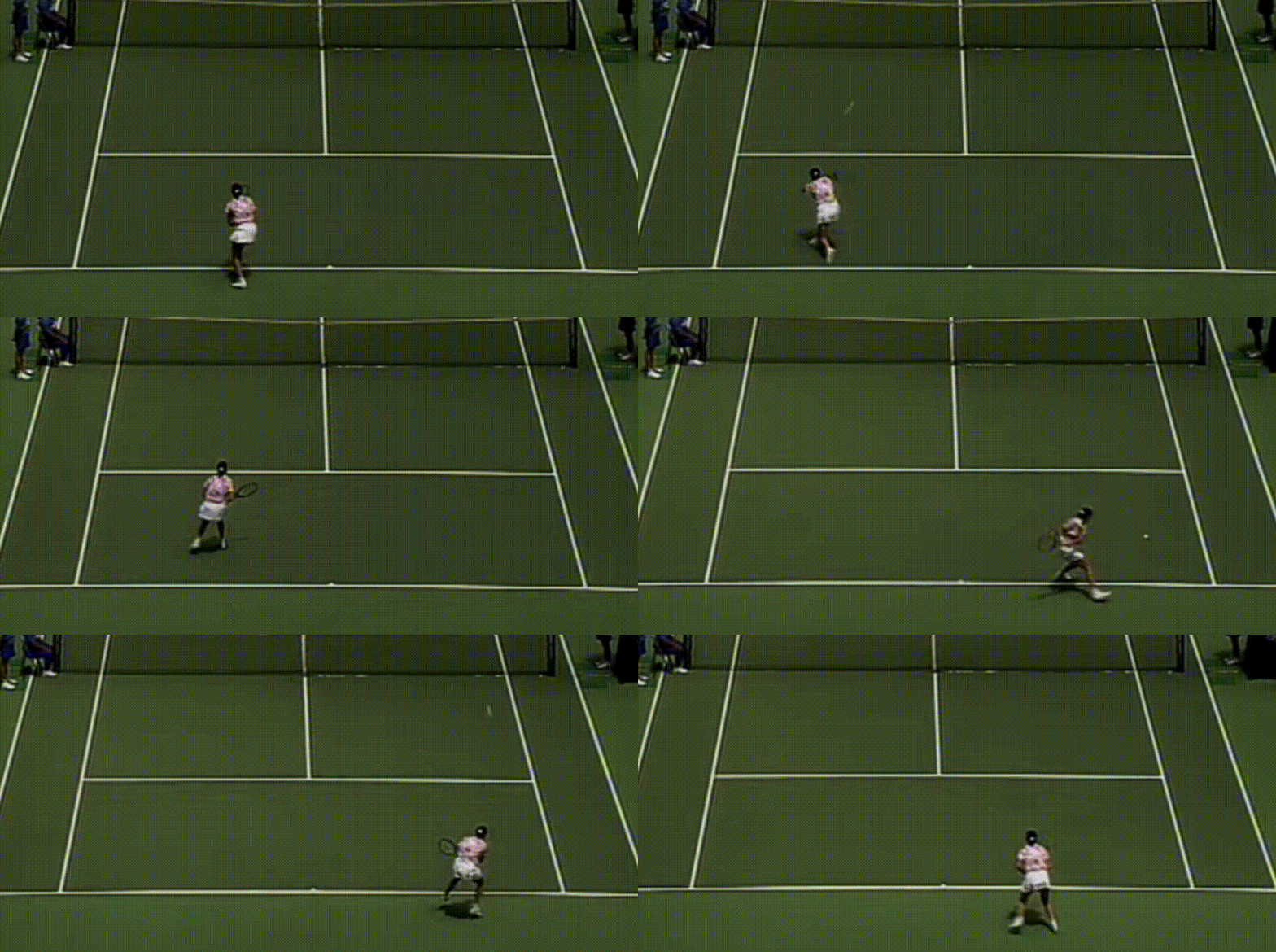
You can have forehand-esque backhand finishes in other scenarios and with other swings, though. Look at Seles here in the 1993 Australian Open final against Graf. With her deep swing path (like Sinner), and kind of natural late contact, she hits this backhand (she’s two-handed both sides, but she is a lefty, so in this case it’s the second shot on the deuce side) with a windshield wiper finish:
Anyway, follow throughs are by-products of what was happening with things going into contact. The ball has left. I don’t teach them really.
That’s all I got!
Went in-depth on these more than I anticipated. I’ll see you in the comments. HC