
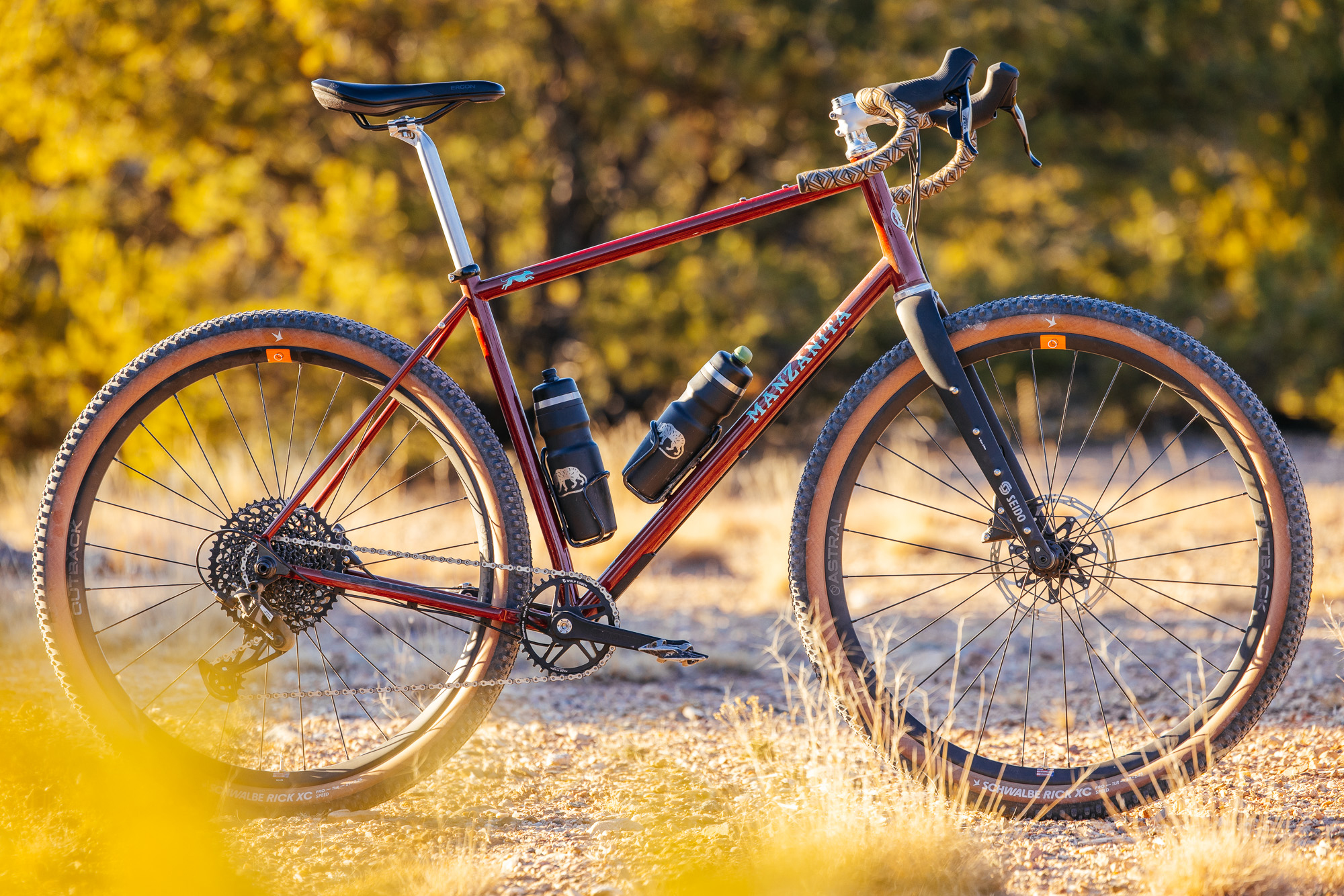
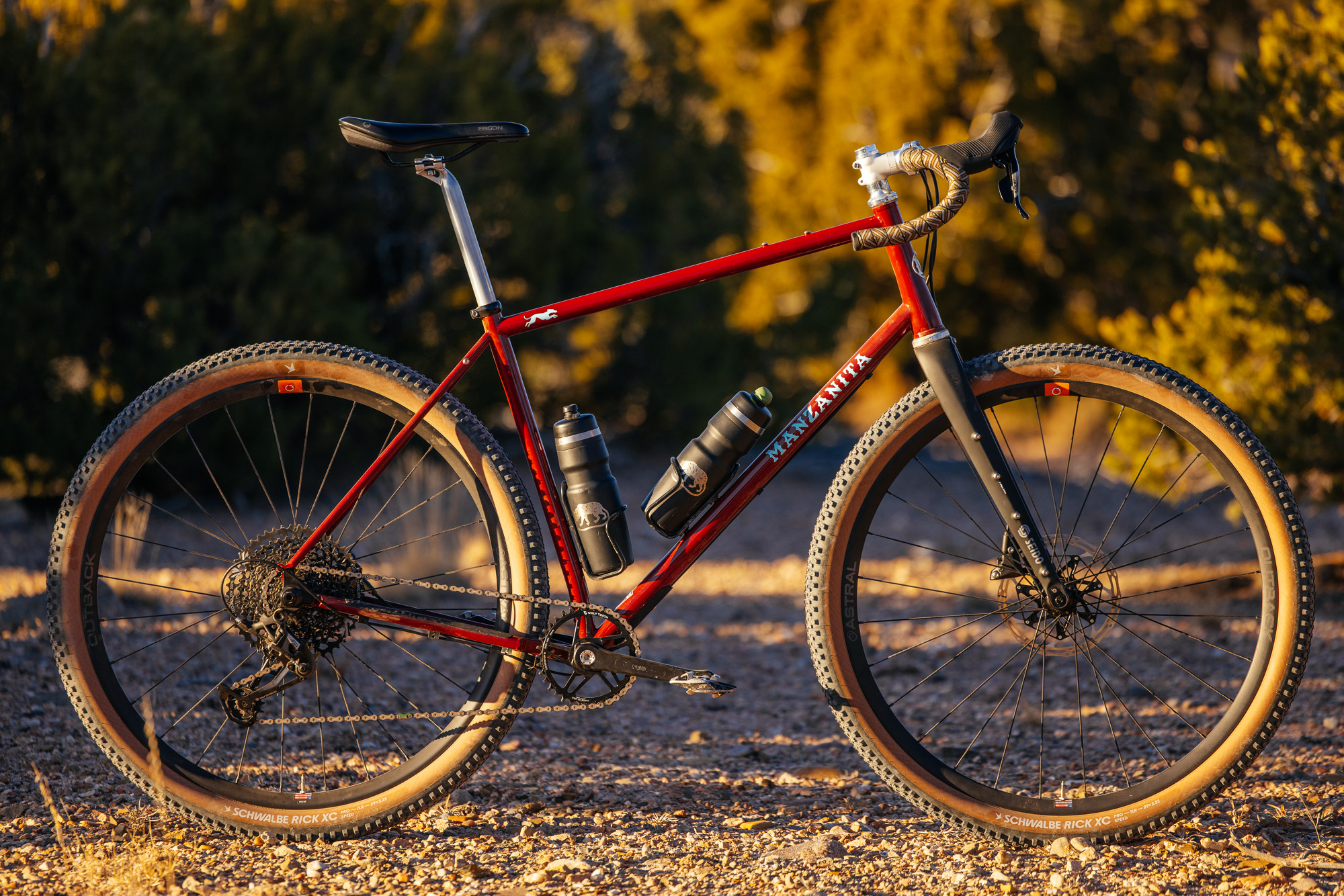
The Manzanita Cycles Whippet is a gravel bike with a steel frame, carbon fork, and clearance for a 2.25″ tire, but there’s a lot more going on with this Nevada-welded bike. Read on for John’s in-depth look at this sleek, modern steel machine, with a perspective on how the same frame can be built for adventure riding or gravel racing…
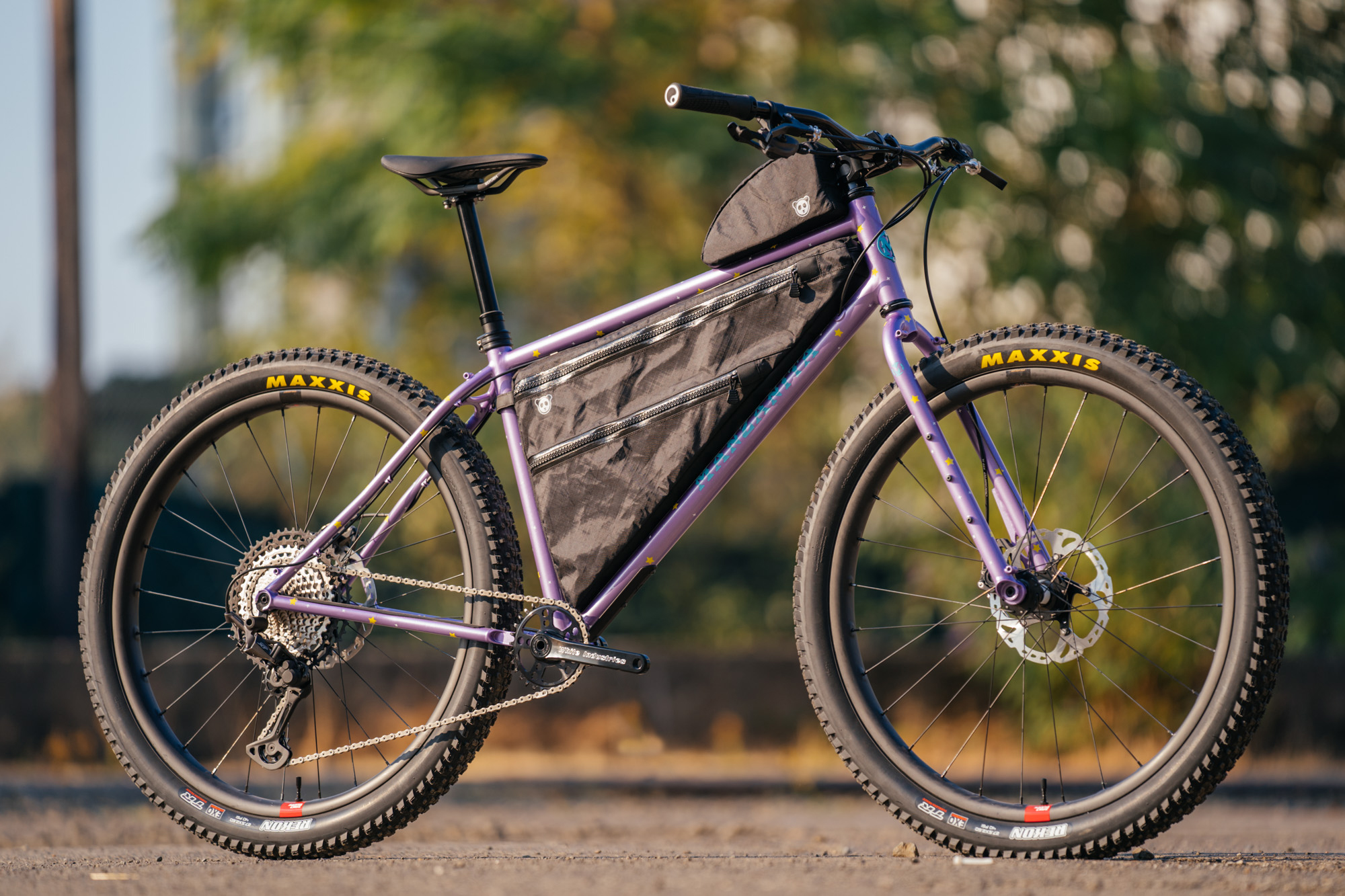
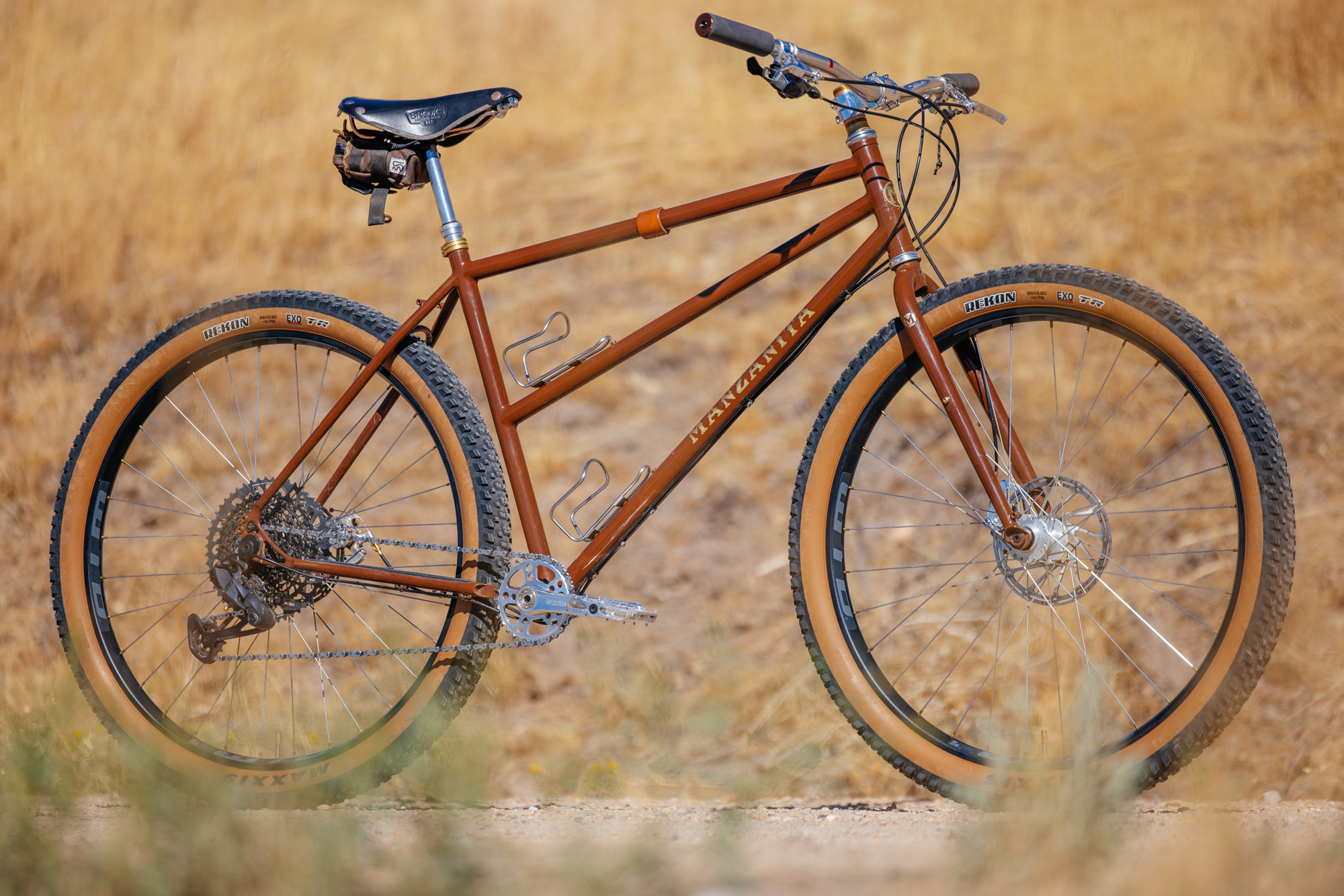
Manzanita Cycles Intro
Nick Jensen runs a small framebuilding business out of his home in Reno, Nevada. You may recall Miguel’s video, which he made while visiting Nick before this year’s Lost and Found gravel race. While I came to know Nick’s work for his mountain touring bikes, hardtails, and my friend Casey’s klunker, a lot of people have heard of Manzanita through Nick’s production gravel model, the Whippet.
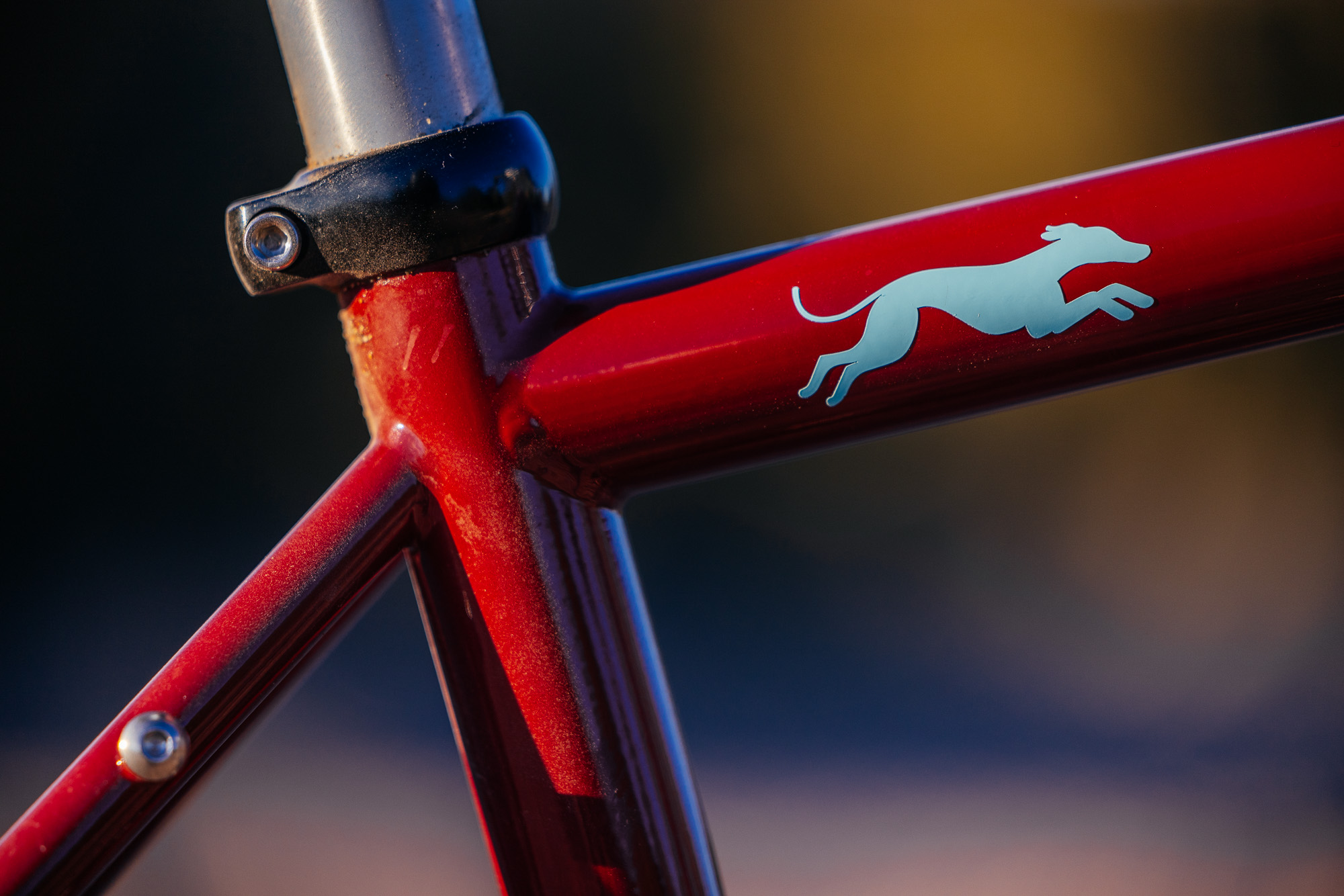
The Whippet is named after Nick’s dog, Beasley.
Manzanita Whippet Quick Hits
- $1,000 deposit, $2,800 frameset
- Completes start at $4,859
- Made in Reno, Nevada
- M2-M7 sizing
- Gen 1 reviewed here
- Size M7 reviewed here, 24 lbs
- Seido RGT carbon fork (painted to match on the current Whippet frames)
- Tire clearance 700 x 57 mm (2.25″)
- Non-Boost chassis
- UDH / SRAM Transmission
- 46t max chainring
- Flat mount brakes
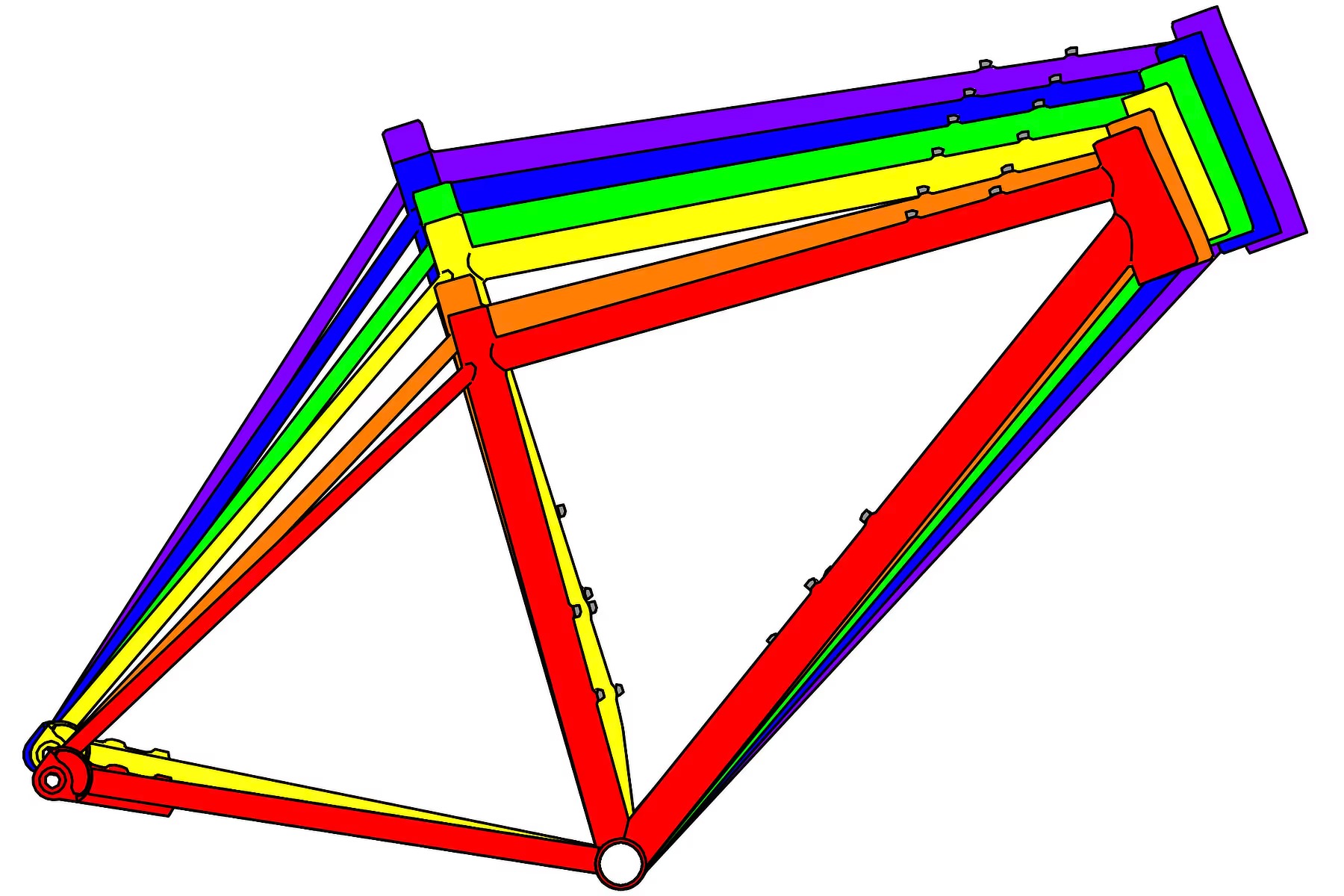
- Size-specific geometry
Run the Numbers
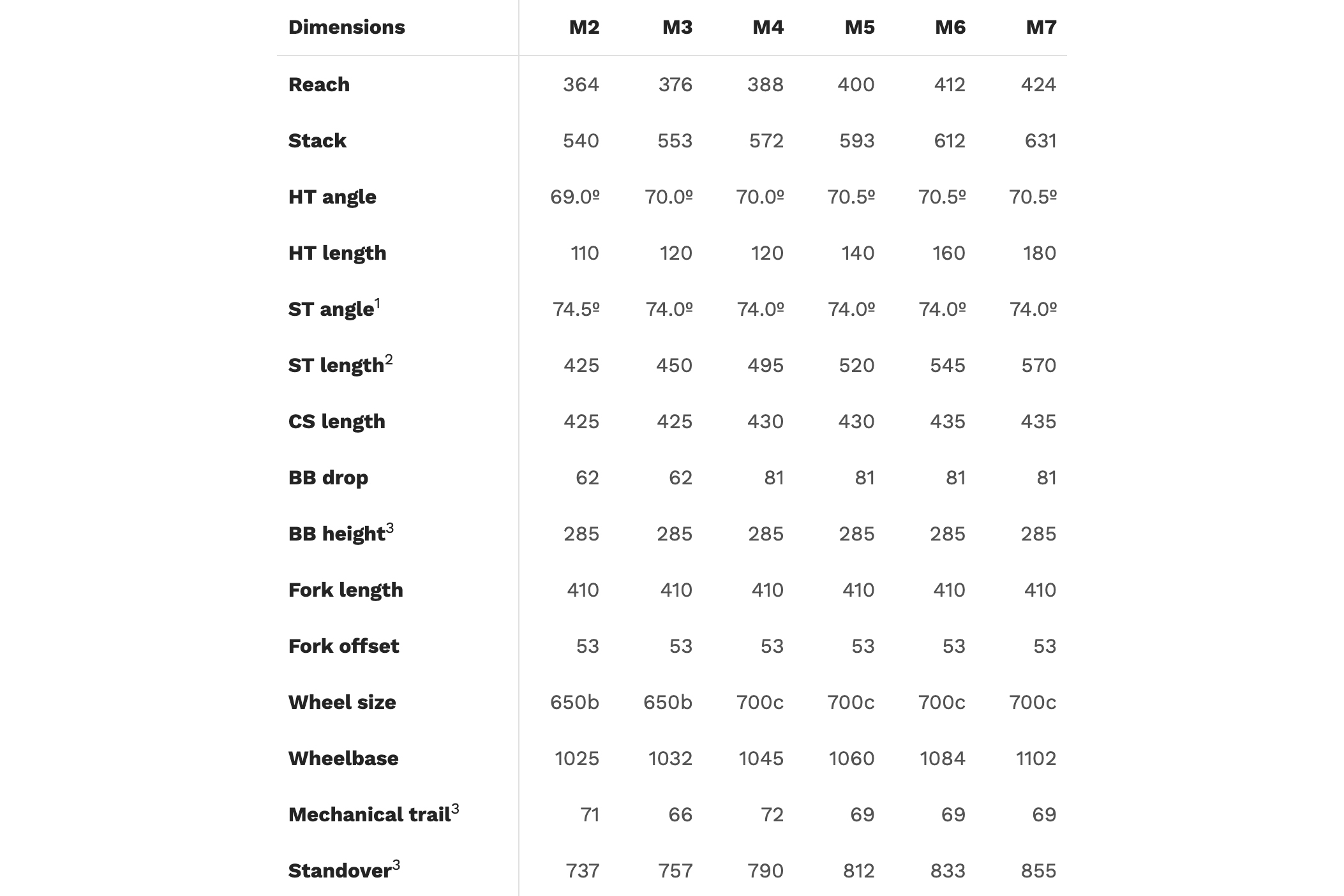
Gravel bikes will often end up around a 74º seat angle and a 70º head angle, and that’s where the Whippet lands, too. These angles, in conjunction with variable chainstay lengths (more on that later) and 81 mm of bottom bracket drop (the smaller two sizes use 62 mm), create a balanced and comfortable riding position when “sizing up”. If you prefer a more snappy and whippy ride quality, sizing down can achieve that.
Whippet 2.0 Updates
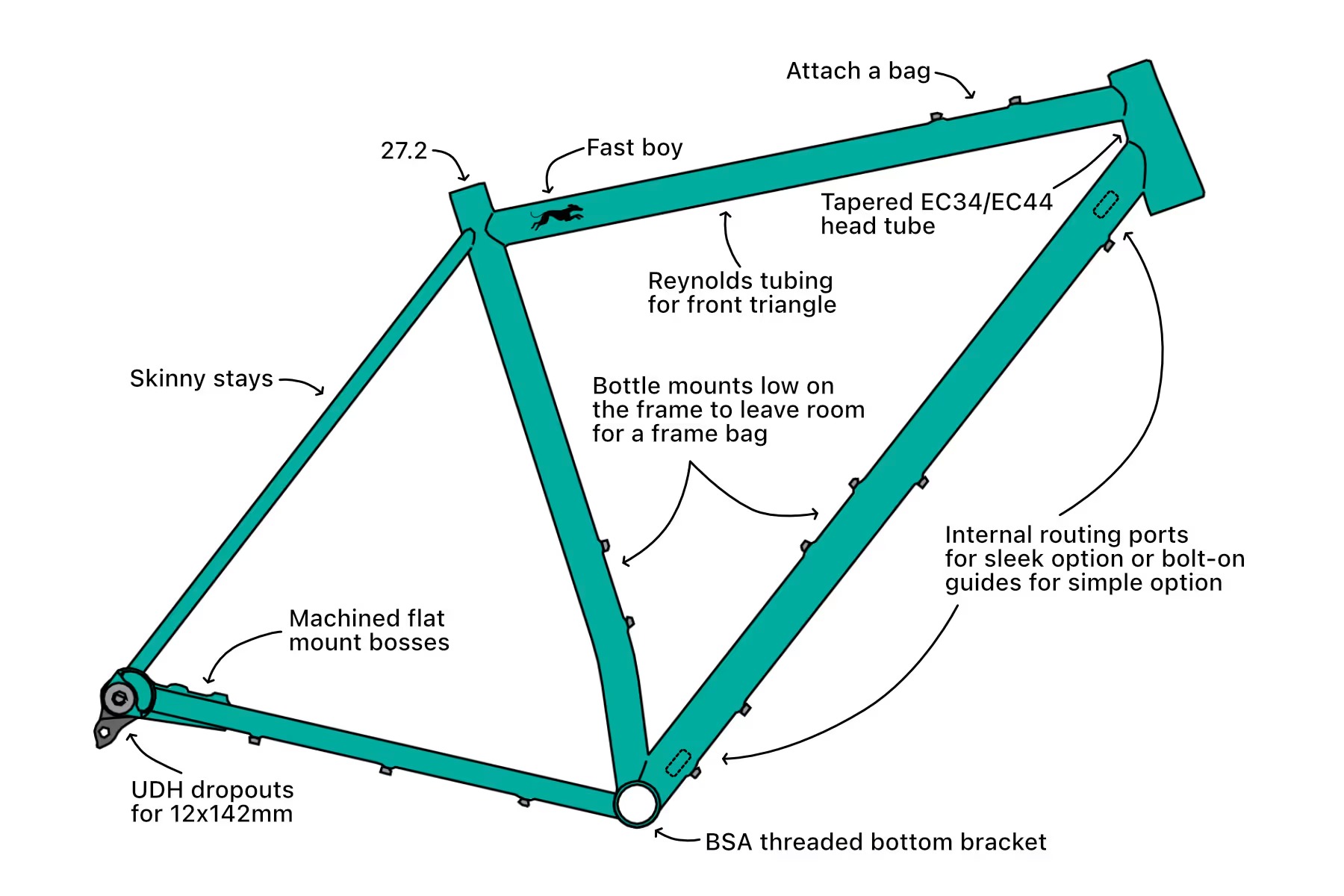
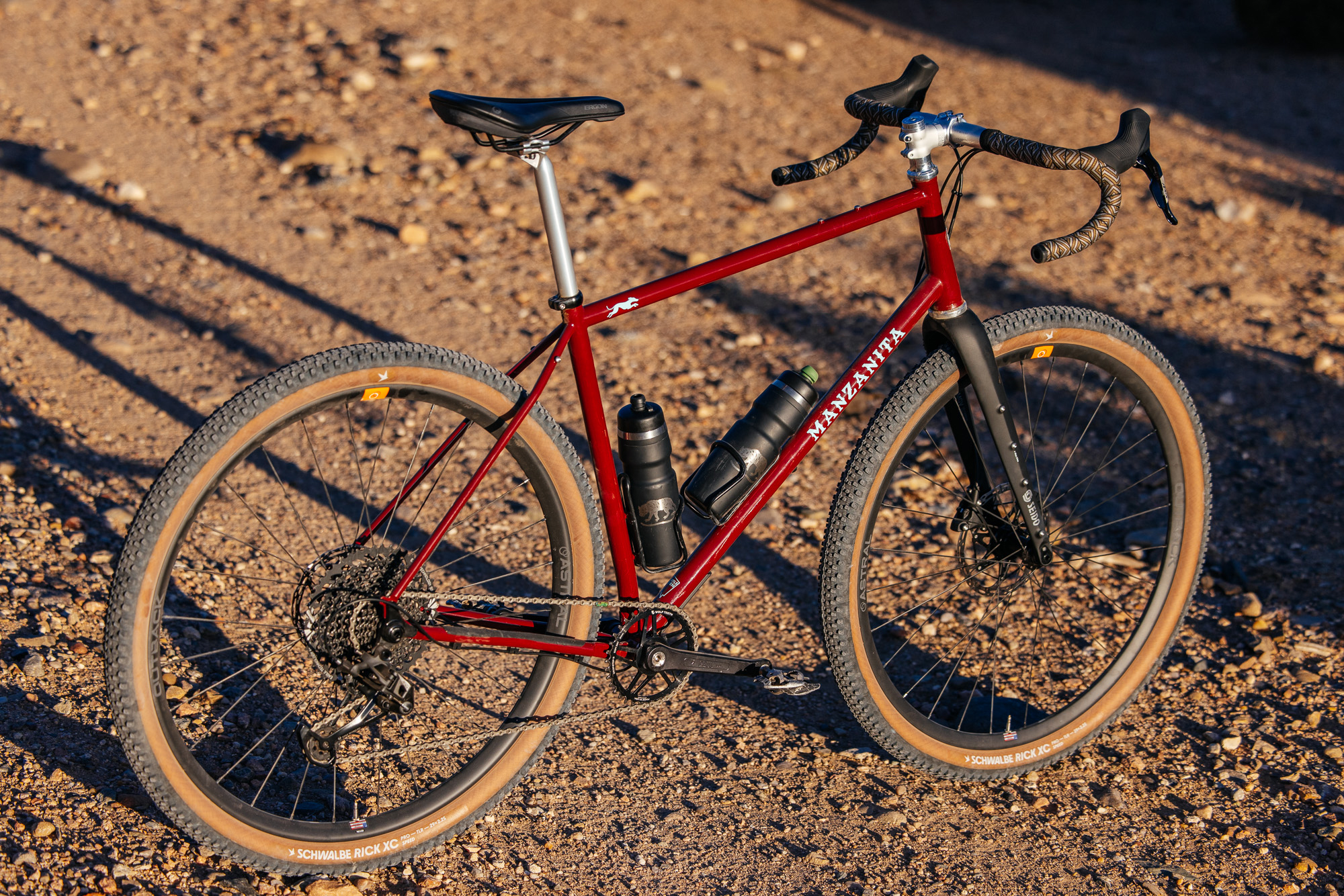
My Whippet is an early prototype. Since taking receipt of the bike, Nick has changed a few things, most notably the tubing selection and dropout choice. The Whippet 2.0 now features a Reynolds front triangle and Paragon Machine Works dropouts. There are also slight geo tweaks which, for the sake of this review, don’t impact how I feel about the bike. Buyers can also choose between wireless/semi-internal routing (sleek option) or external lines (simple option).
Each Whippet now gets a Dark Matter powdercoat finish, and Nick is selling them in batches to his newsletter subscribers.
Miguel, who briefly reviews his build below, was riding a Gen 2 Whippet.
Sizing Up or Down?
A rule of thumb I like to use for sizing gravel bikes, in conjunction with considering effective top tube lengths, is determining fit by use case. If I wanted to race gravel, I would have asked Nick for a size 58 cm bike, run a lot more seatpost, and a longer stem. But that’s not my vibe anymore. I’ll leave that world to young, race-minded whippersnappers like Miguel.
For me, a gravel bike is a bike I use to casually pedal doubletrack or XC singletrack on, where I’d have to pedal 10 miles of mixed-terrain surfaces to reach my desired riding locale. These routes might not necessitate suspension and would benefit from drop bars for better control and mashing out miles.
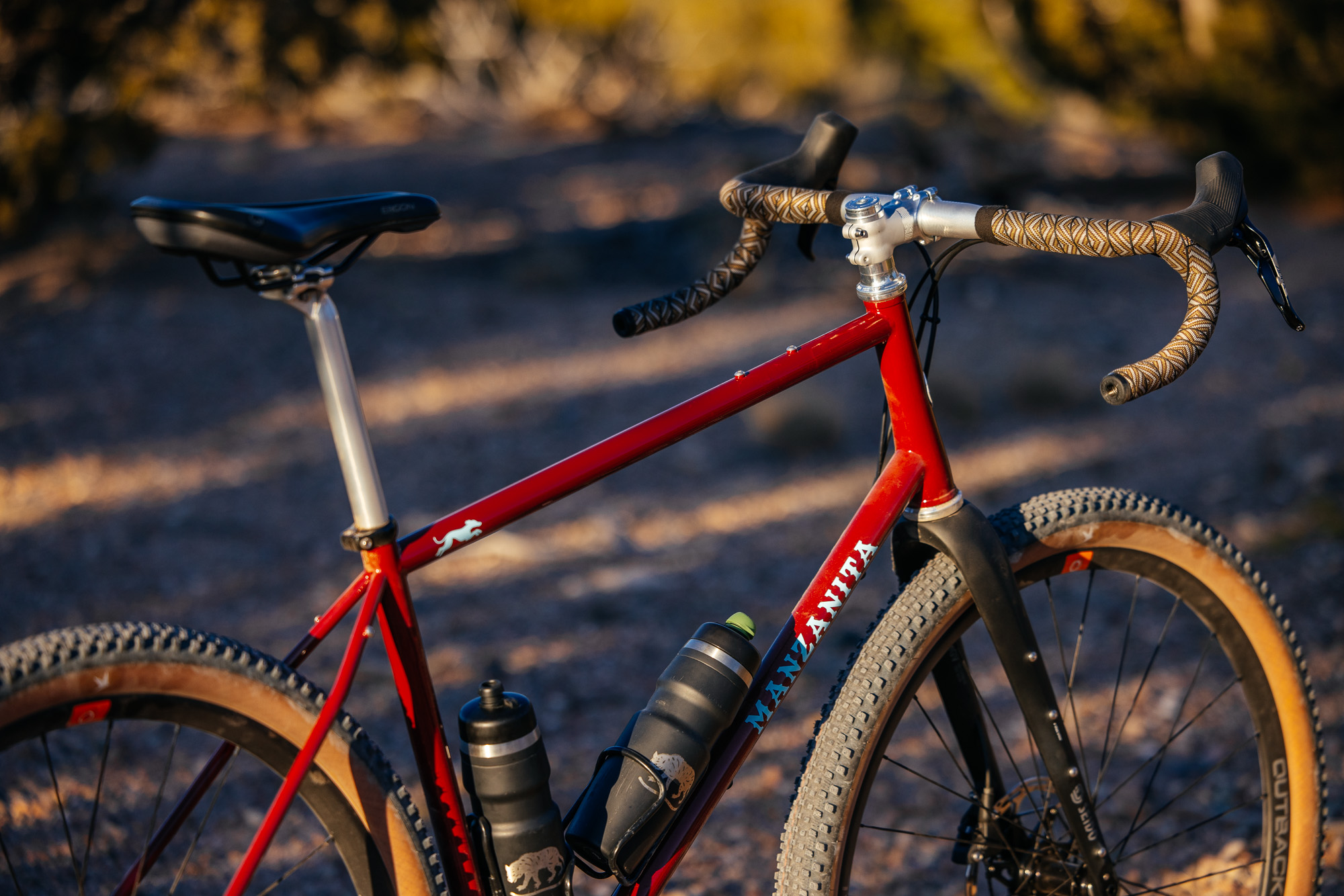
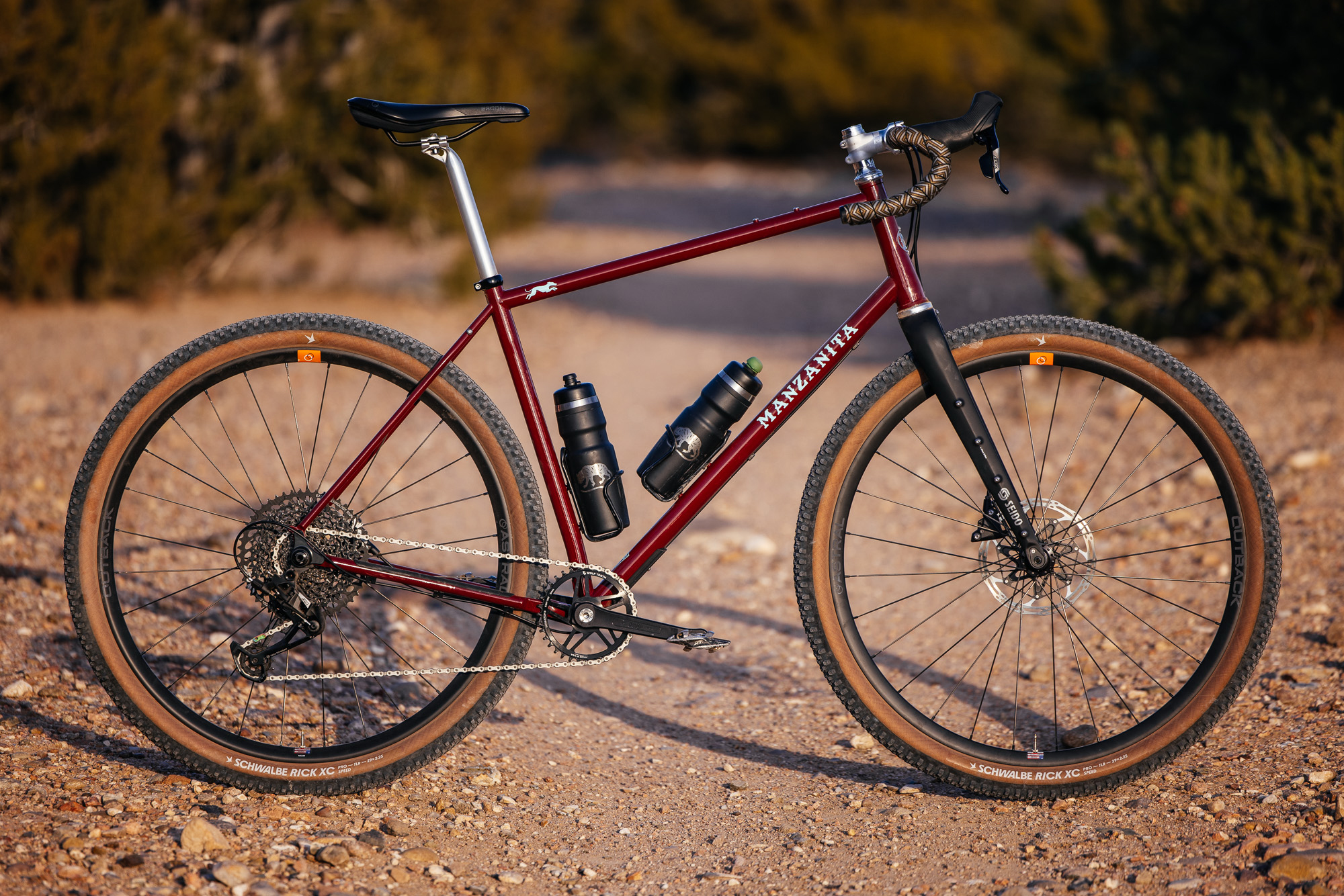
My Whippet is a size M7, which is about a 60 cm frame, set up with a PNW Components LTD Coast 52 cm handlebar and a short 60 mm Coast stem. How good does that silver cockpit look? Dang!
My saddle height these days is between 82 and 83 cm, depending on seat tube angle, and my crank length preference is still 175 mm.
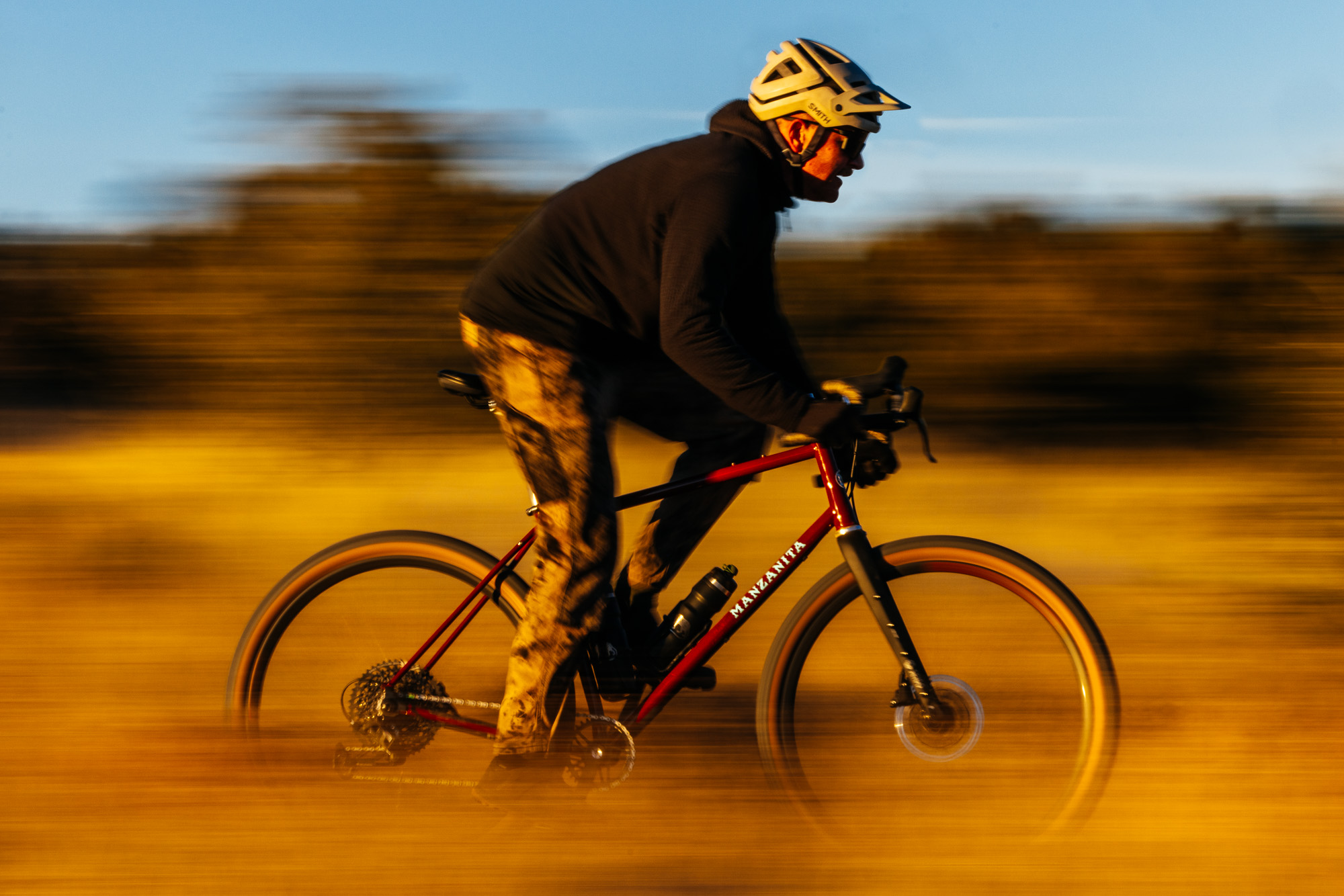
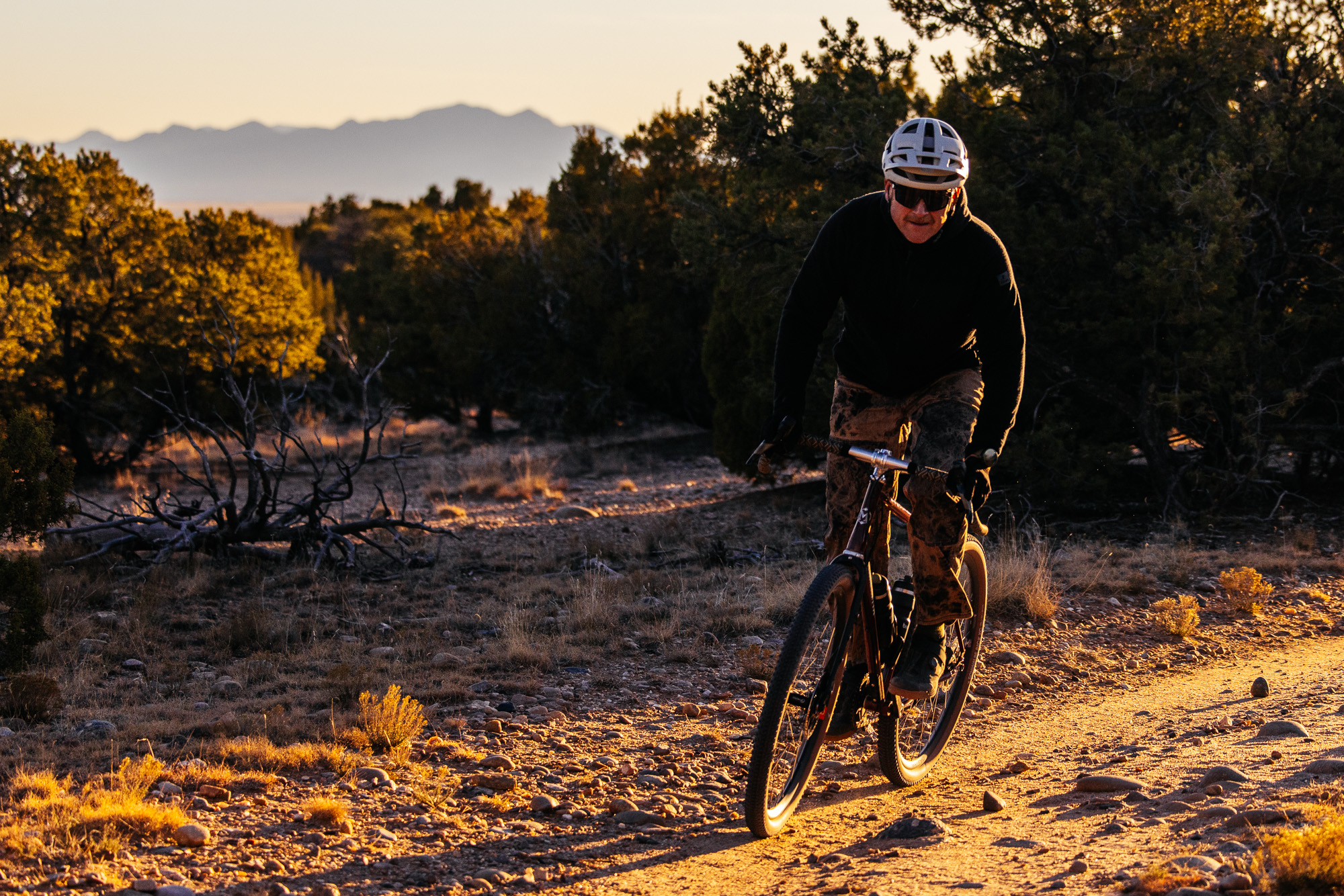
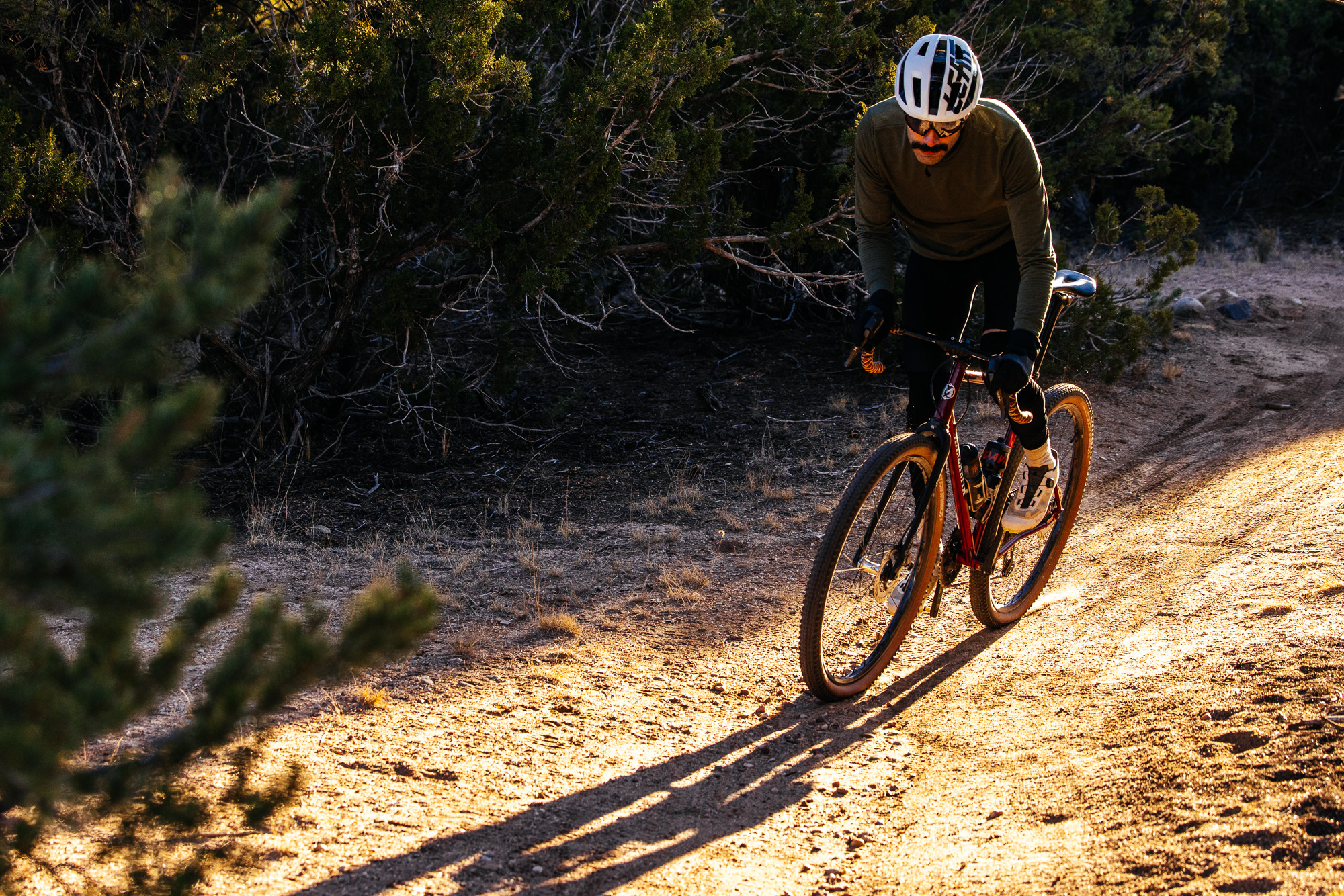
As you can see from these riding photos, I’m in a comfortable riding position. The Whippet is a very comfy bike – not just in terms of bike fit, but also in its tubing selection.
Carbon Fork vs Steel Fork
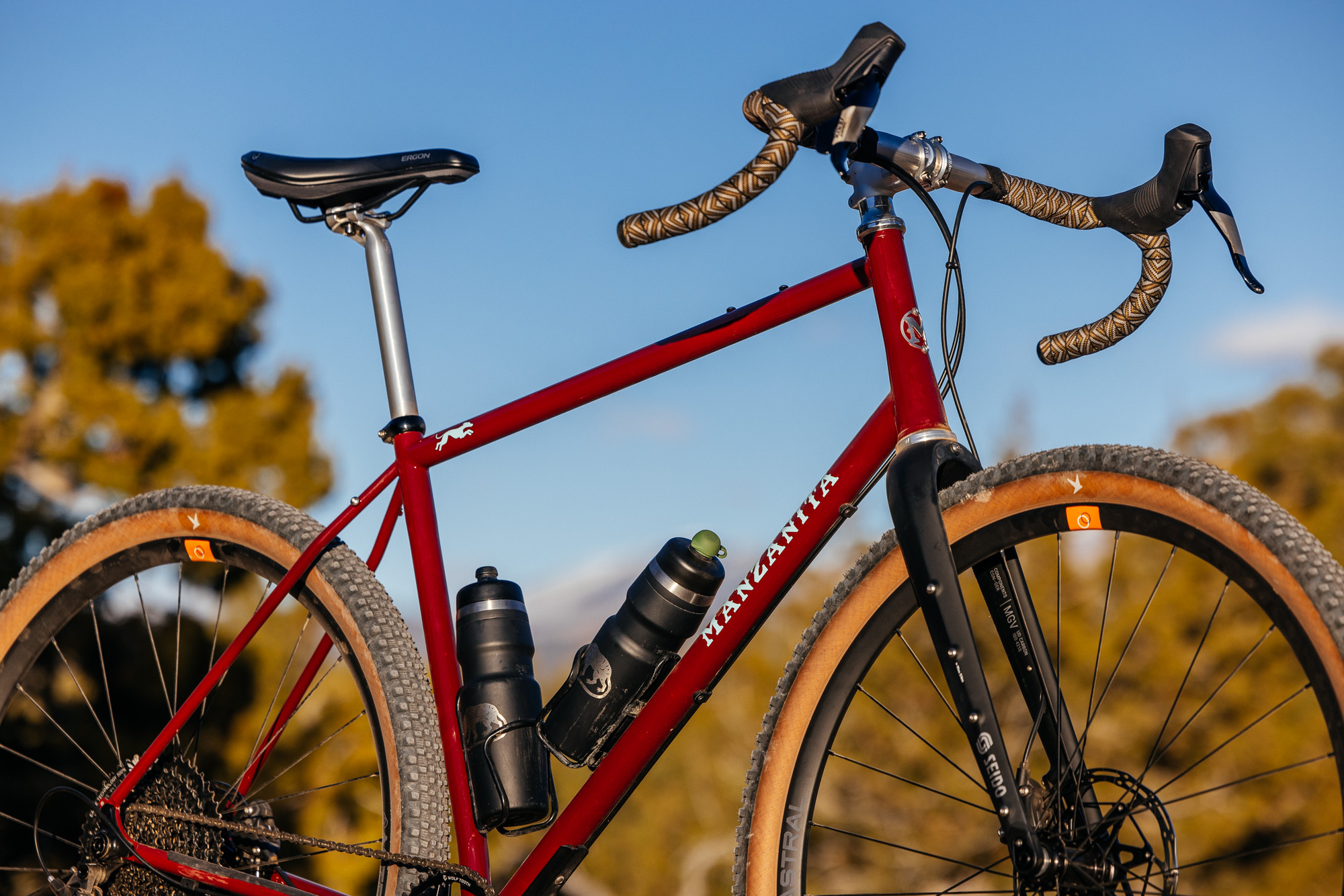
When Nick first contacted me, he asked what my ideal gravel bike would be and asked if I’d like to see some development sketches he had for the Whippet. We went back and forth, primarily on the carbon fork versus steel fork decision, before agreeing to disagree on that matter. Nick believes people who race bikes – like Miguel, for instance – are opposed to steel forks due to their weight penalty. My comment is “comfy is fast,” and there’s nothing more comfortable than a nice and flexy steel fork but I understand Nick’s intention here. Not everyone is a fan of steel forks. Even Miguel says they’re heavy!
To be completely transparent, I wasn’t sure I’d like how the Whippet would ride. The thin, elegant lines of the frame seem diametrically opposed to the thicc n chonky Seido carbon fork.
Before we get into my findings, let’s talk about the frame.
Tubing
If you’ve ridden a fair number of steel frames and carbon forks, a lot of them are very similar in stance and proportions.
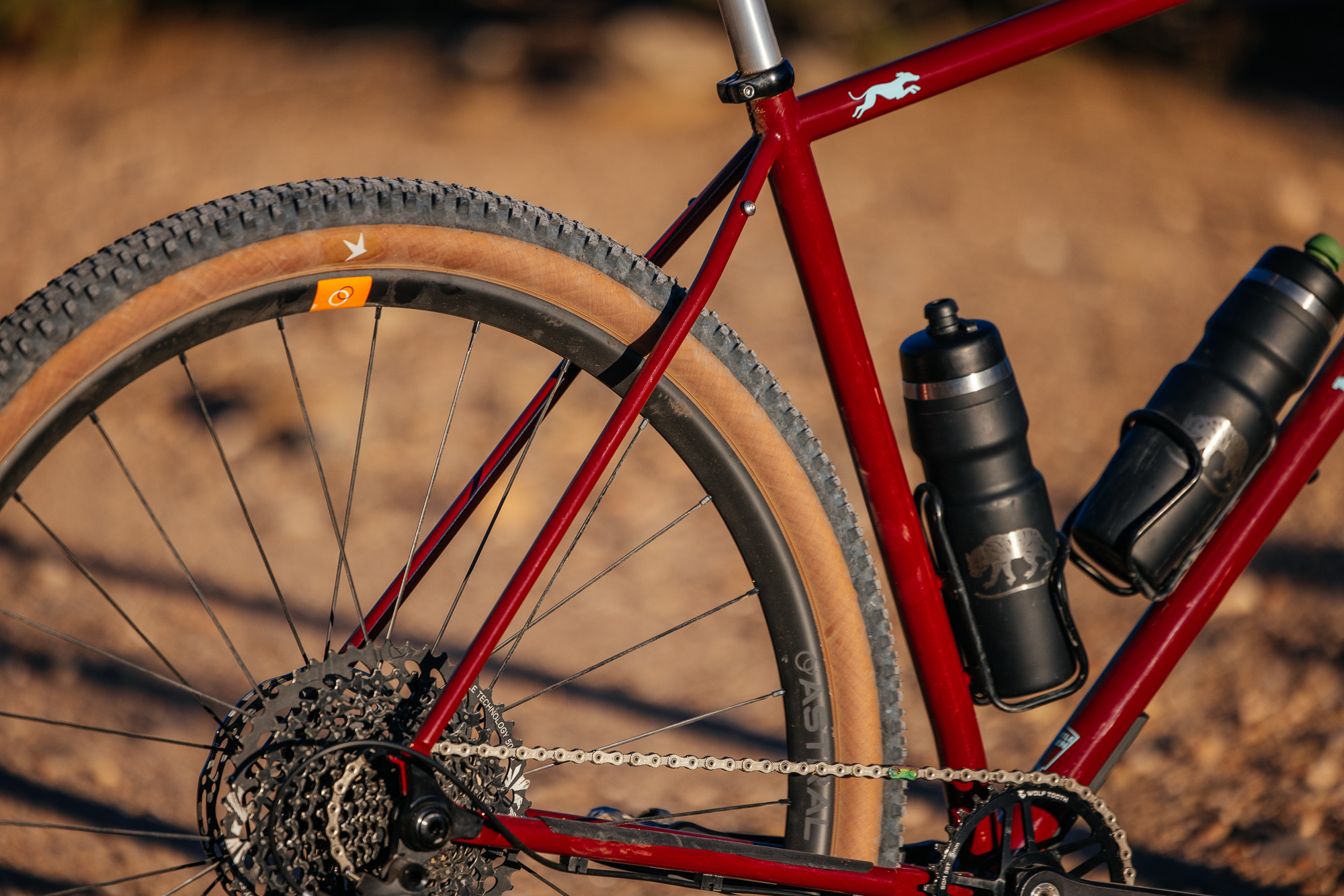
That’s not the case here. The Whippet has a lot going on in terms of tubing profiles. What caught my eye immediately about the Whippet, and why I agreed to review one, is the slender seat stays. These spindly tubes were specced with the intention of offering some rear-end flex, thus softening the blow from things like washboard or rutted gravel. In a racing environment, this can be crucial.
For non-racers, chilleurs like myself, this just means my butt isn’t dying at the end of a long (ish) ride.
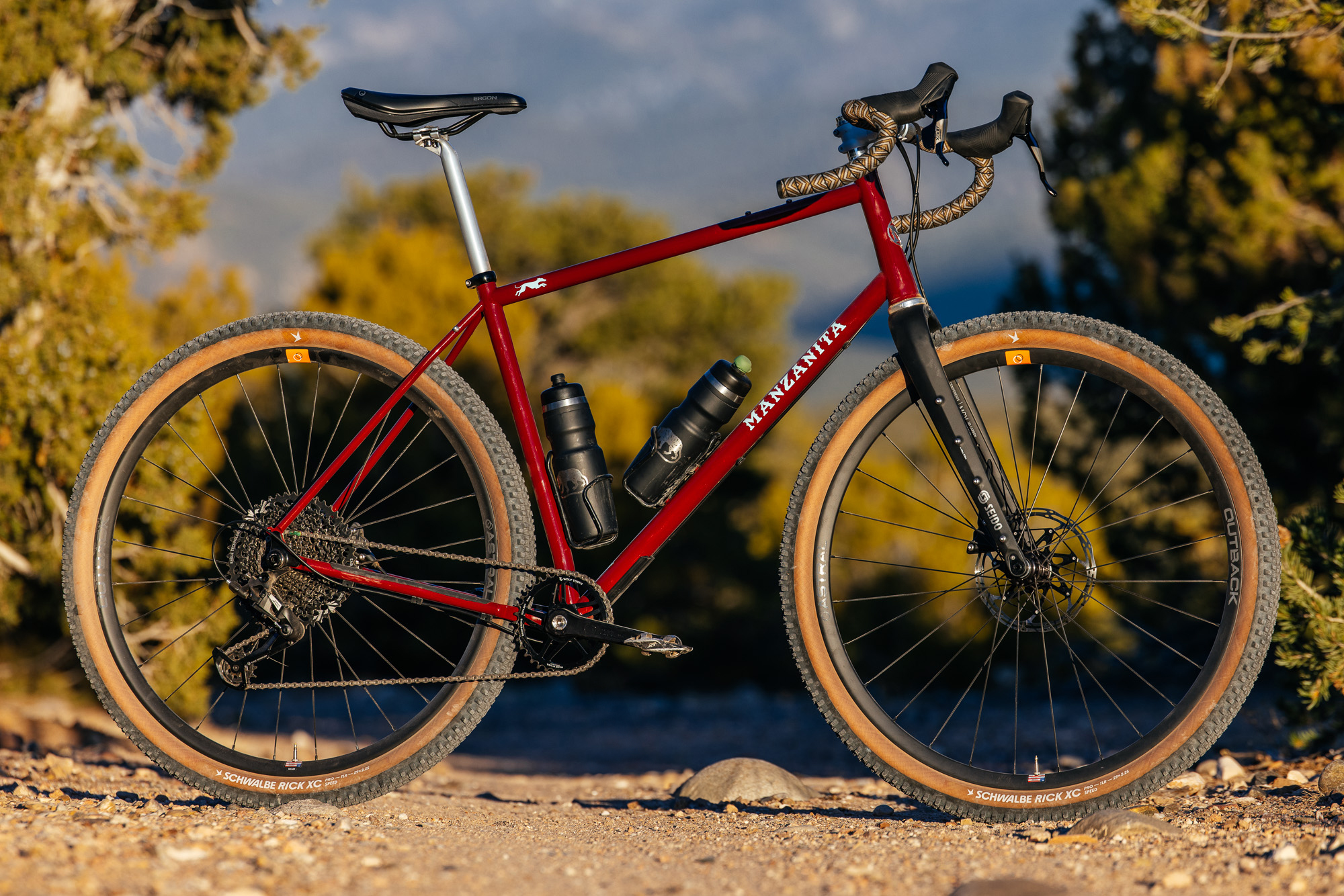
Perhaps another place to note where the Whippet’s lovely compliance comes from is its thin top tube. The frame sways from side to side nicely, ever so delicately balanced by the downtube diameter of 34.9 mm, which offers rigidity for such a large front triangle.
For my Gen 1 whippet, Nick specced a mix of Columbus Zona and Velospec Pro tubing, with butting profiles to match each size frame, knowing a rider of a 60 cm model will have different requirements than a rider of the 48 cm model. I’ll give this tubing selection for the size 60 cm frame an A+.
When pedaling without intent, the Whippet all but disappears under you, and when you turn up the heat and mash out of the saddle, it sways nicely, pushing back ever-so-slightly to your input.
The head tube diameter matches the carbon fork nicely, and the aesthetic grew on me quickly.
Fat Rubber
Without a doubt, the number one comfort factor for any bike is its tires. Super stiff carbon race machine? Put bigger tires on it to eke out some compliance and comfort. Noodly, 1″ diameter tubing neo classic dirt road rambler? Bigger tires just accentuate the smooth-as-silk ride quality, too. It’s widely known that your tire spec determines how your bike will ride!
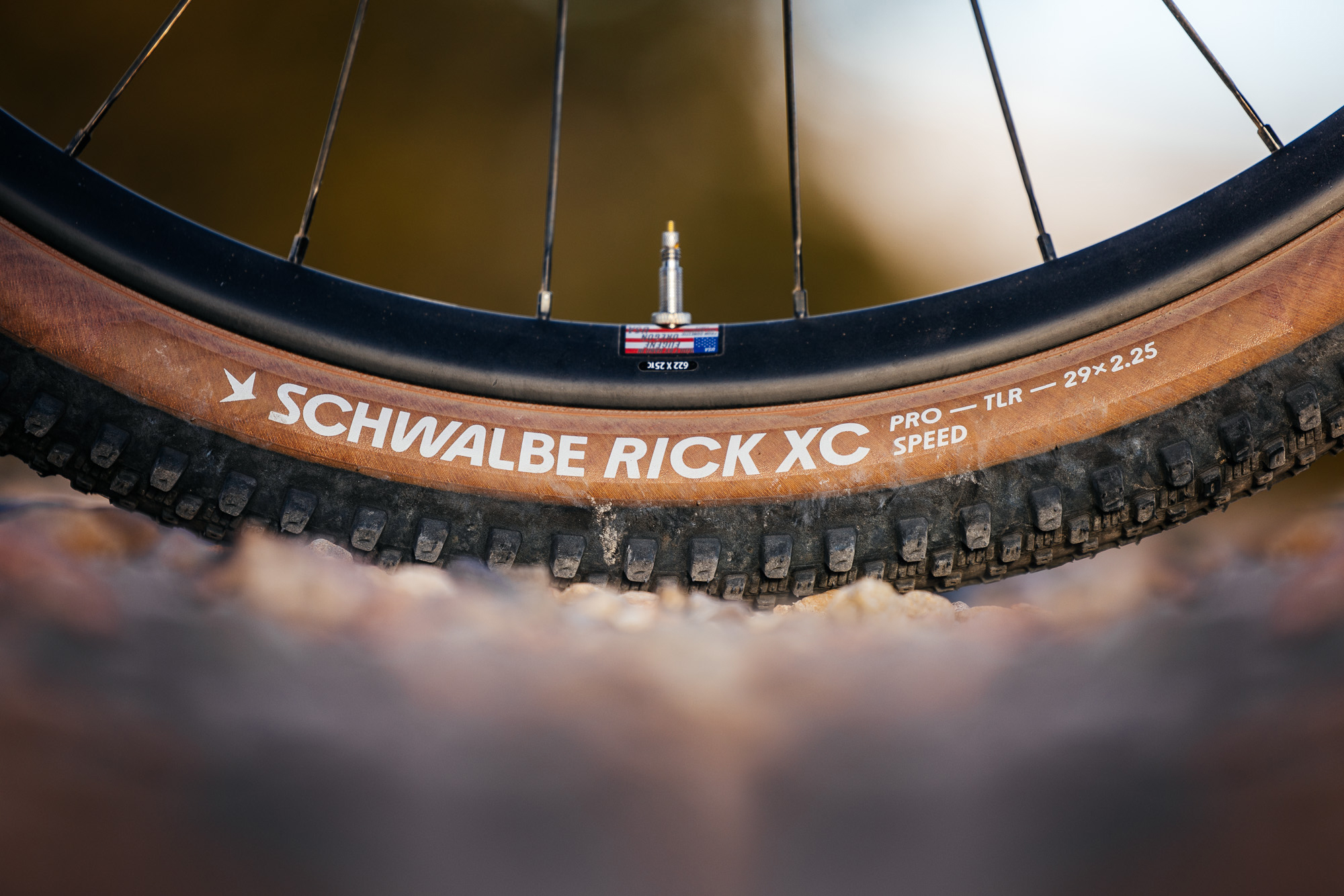
The Whippet is specced to fit a 2.25″ tire. It’s possible to squeeze in a 2.3″, depending on the tread pattern and rim width. A nice, low rolling-resistance set of rubber, run at moderate pressures, just emphasizes the frame, rather than deadens it. Feeling the Whippet corner across washboard with tires at 18 and 22 psi (front/rear) is quite the experience.
It’s taken the bike industry some time to adopt such large rubber on 700c wheel platform bikes, and a lot of that has to do with the advent of 3D sintered, or printed frame parts.
Whippet Frame Details
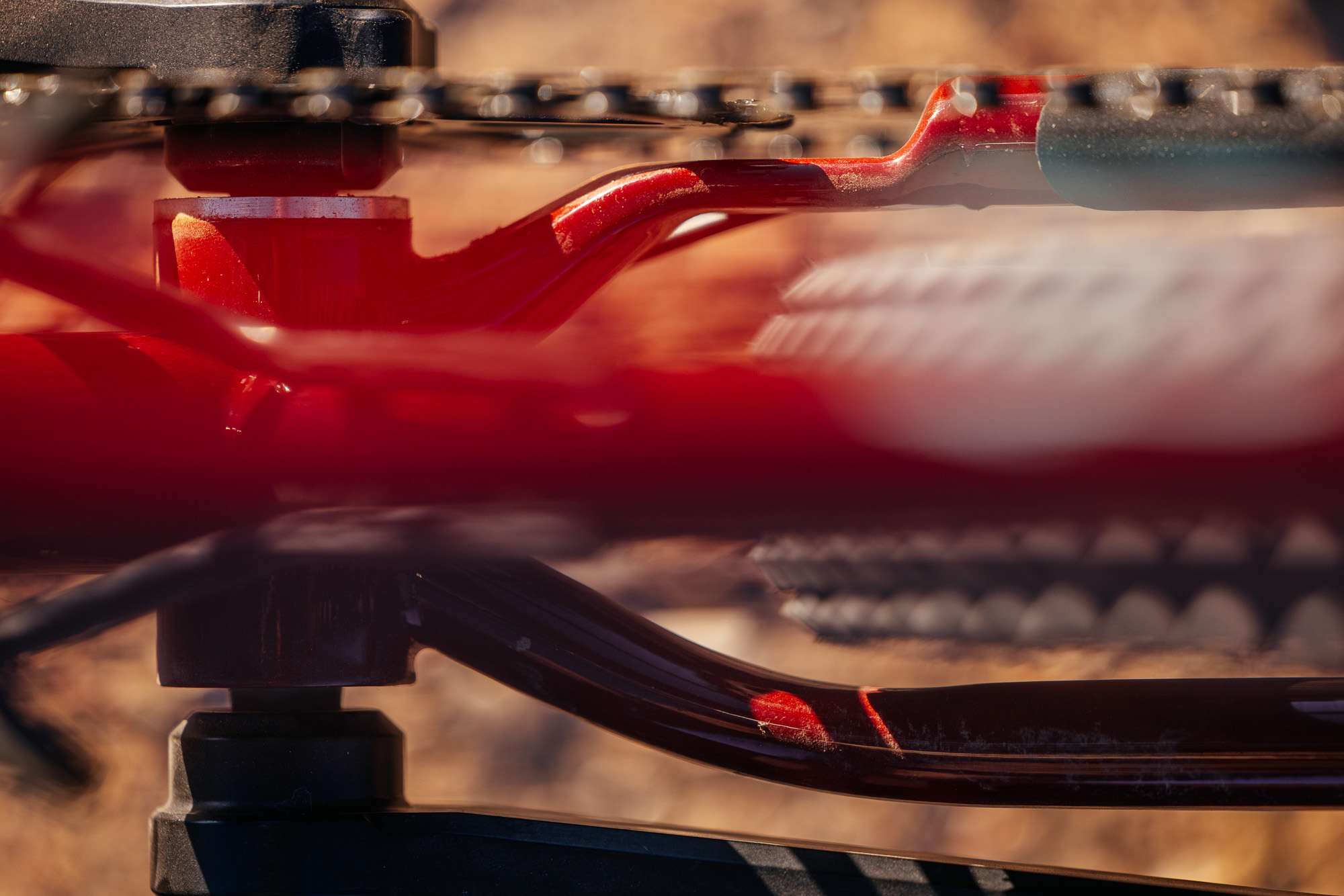
The Whippet achieves this tire clearance by utilizing a chainstay yoke, which allows for up to a 46 tooth chainring, a 57 mm or 2.25″ tire, and the 435 mm chainstay length encourages a healthy chainring, to chainstay, to tire clearance triangle.
Plenty of riders like the look of a slammed rear end, but I actually prefer a bit more chainstay length overall as a tall rider. As saddle height rises on slack seat tubes, it edges closer to the rear hub. The closer your weight is to the rear hub, the more likely you’ll feel slightly unbalanced descending. It tends to want to loop out, so to speak. But if you scooch the rear hub back more by lengthening the chainstays, you can create a more stable ride quality.
The Whippet’s two larger sizes utilize 435 mm chainstays for this very reason, while the smaller sizes use 425 mm chainstays.
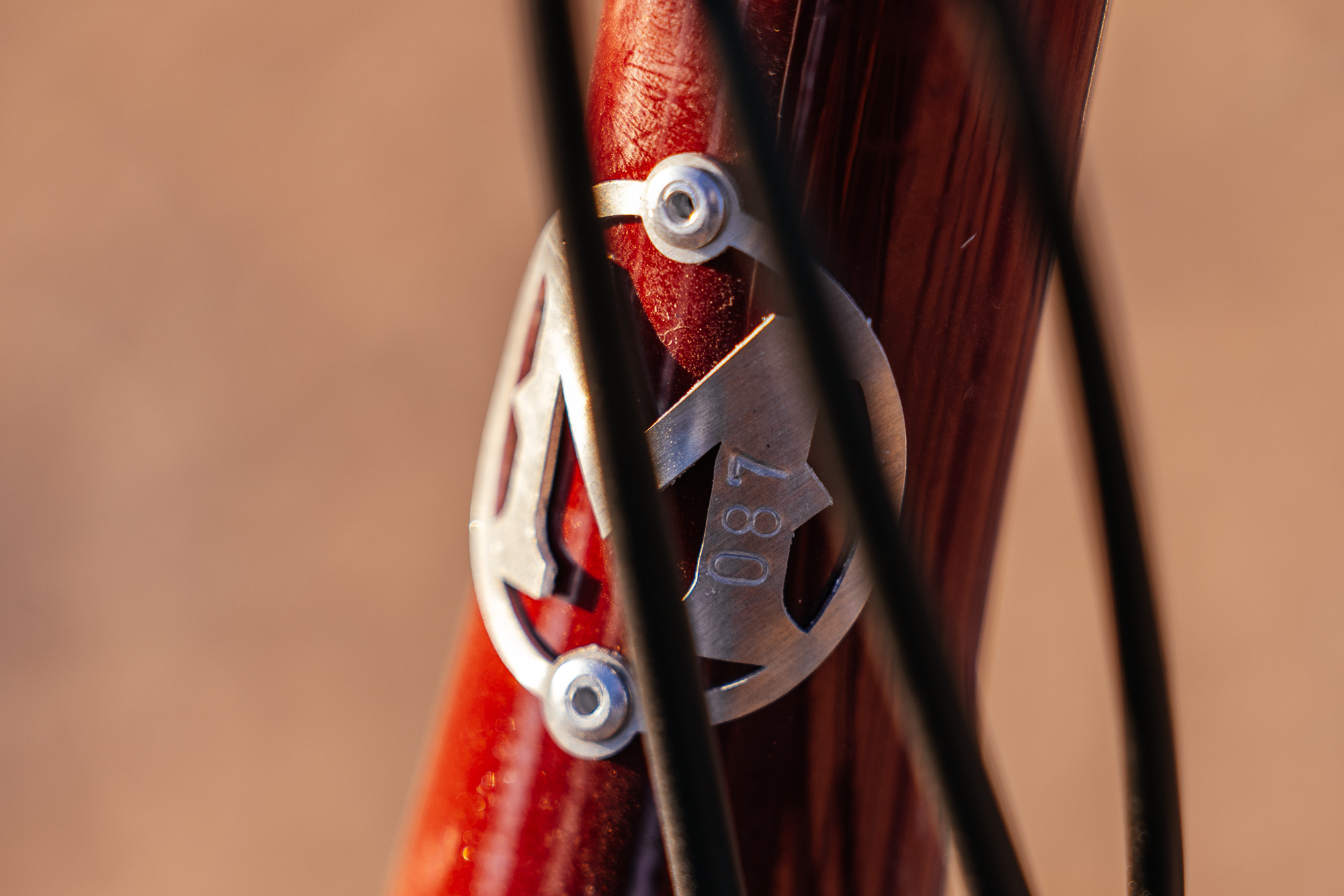
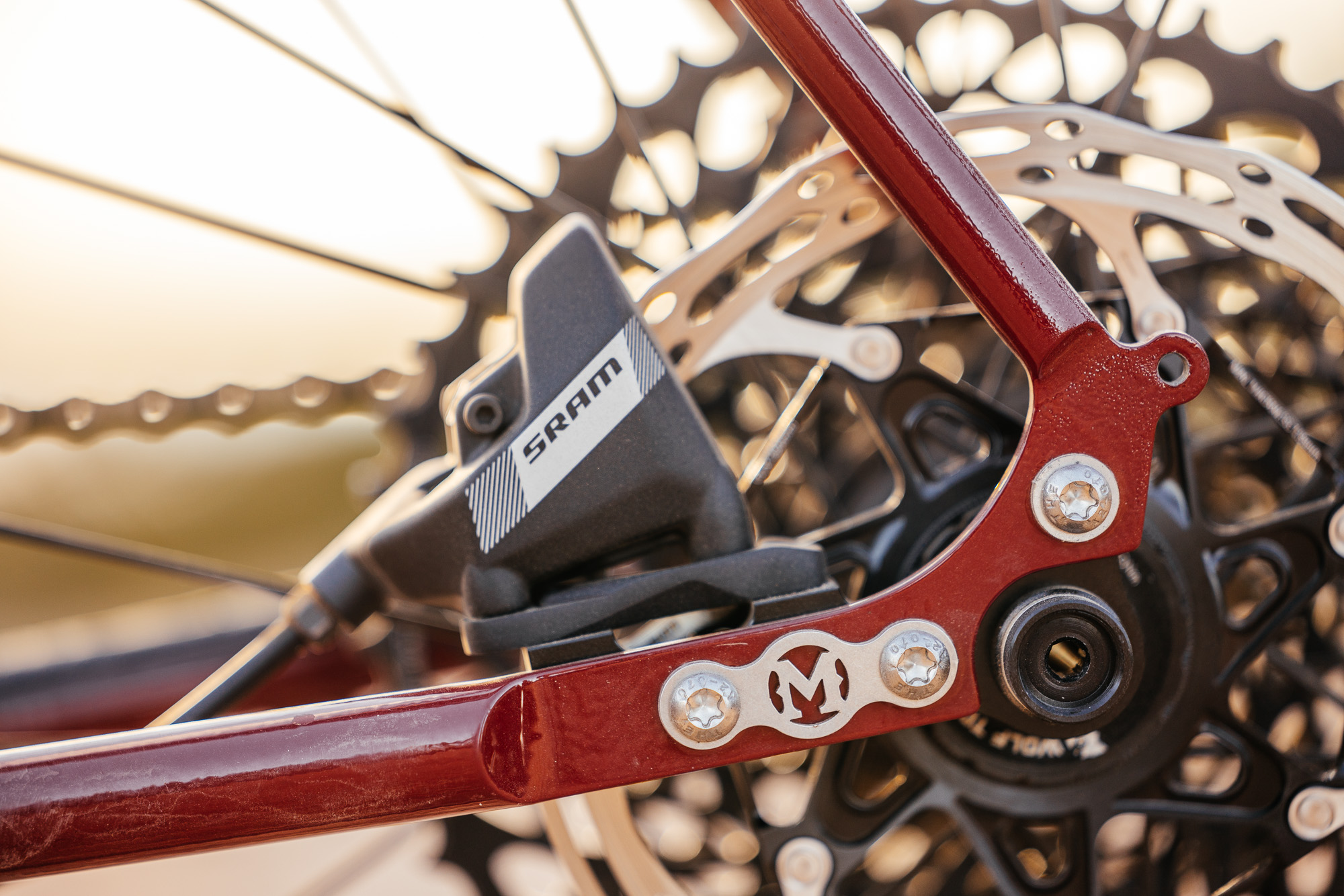
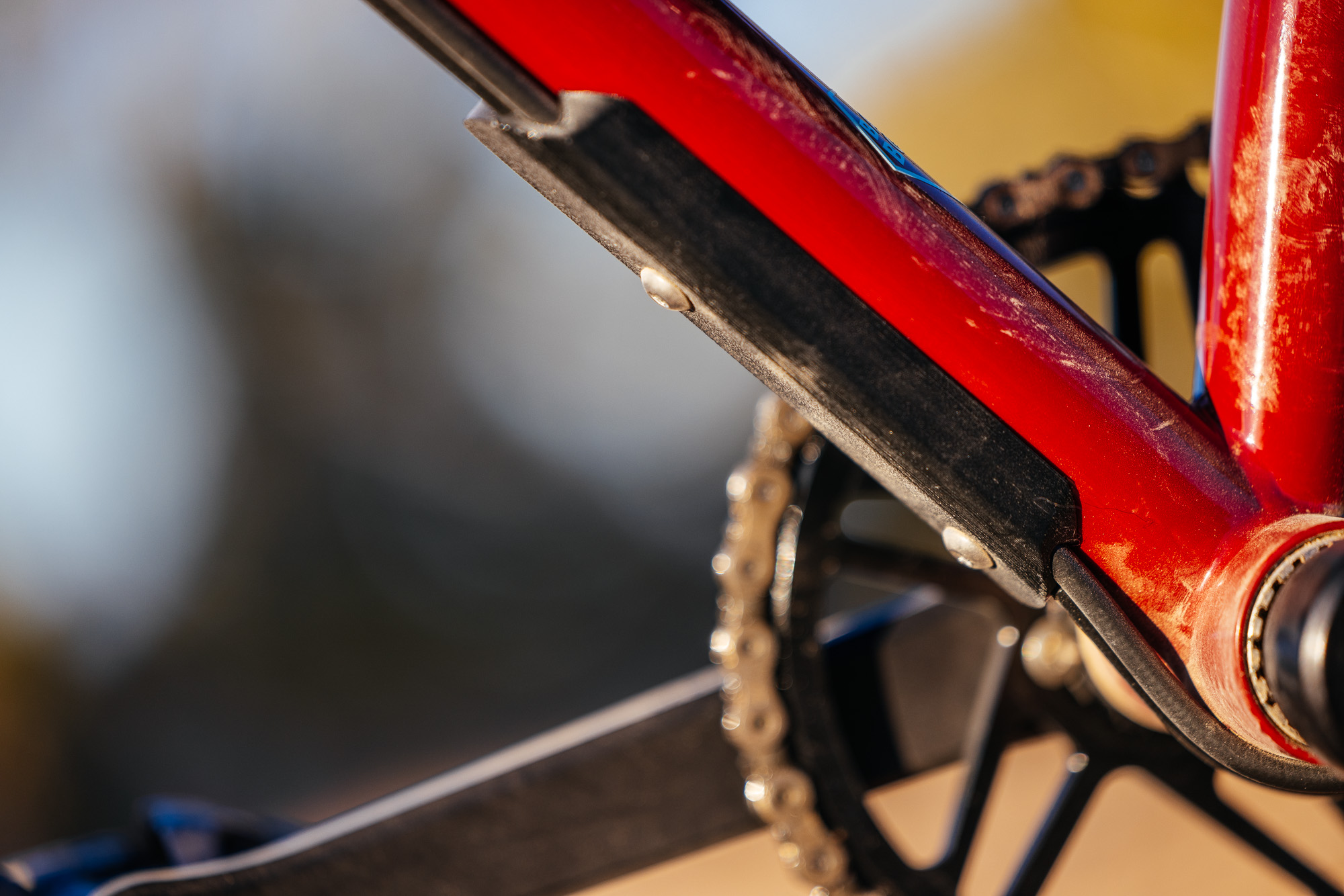
I really like the attention to detail found elsewhere on the frame. The Manzanita “M” motif is carried over to the bolt-on headbadge and dropouts, while the downtube has a cable guide/skid plate just above the bottom bracket. All of the cable guides are 3D printed nylon and they keep the cables tidy for riders who prefer external routing (raises hand).
My Riding Thoughts
I can’t afford to transport each of you to the Southern Rockies to ride a Whippet on my local gravel rides. But I can do my best to describe the sensations felt while riding the bike. These experiences are subjective, but it’s what makes bike reviews so much fun.
Coming from my Meriwether Ponderosa, a proper adventure gravel bike, and having just reviewed the Reeb Sam’s Pants before taking on the Whippet, I’ve spent my “non mountain bike” riding time on both ends of the steel gravel bike experience spectrum.
My Pondie is very tall, with a lot of stack. I can comfortably do an entire ride in the drops if I want. The Sam’s Pants was a more true-to-form gravel road bike. This size 60 cm Whippet is somewhere in between. In this configuration, it is neither a very upright ride, nor a long, stretched-out, aero-tucked experience, either.
First Big Ride
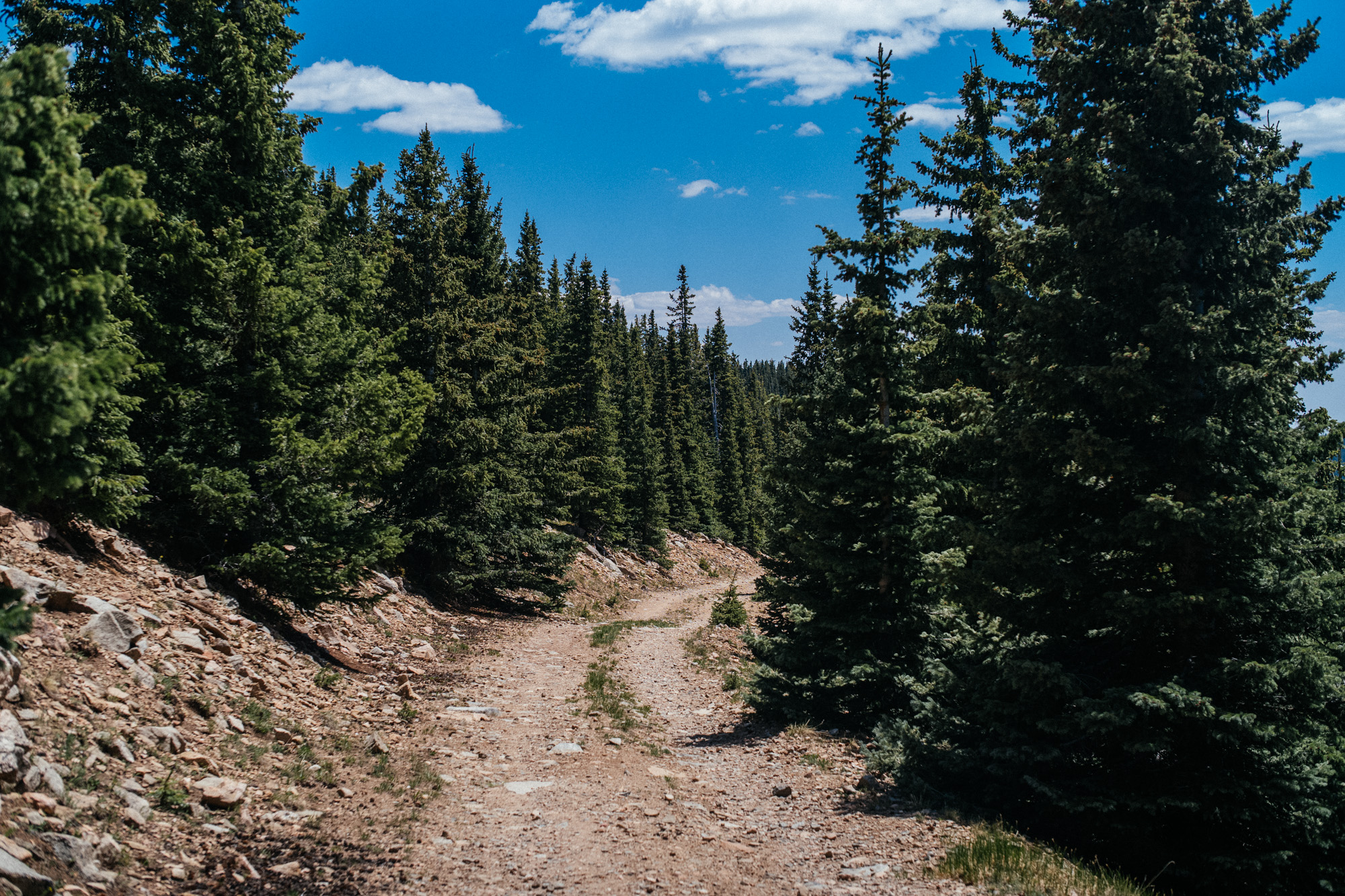
After the fourth ride on the Whippet, I decided to embark on a more adventurous gravel ride, which includes some pretty techy and chunky terrain. We looked at it in our Town to Towers video from last year.
This summer brought a lot of rain, and anticipating snowfall to be on the way sooner than later this year, I squeezed in a ride to the radio towers on the Whippet. Greeted at the summit by cold, brisk winds, tearing across the Southern Rockies, I promptly turned around and pointed the bike downhill, returning on the route that I had just climbed along that morning.
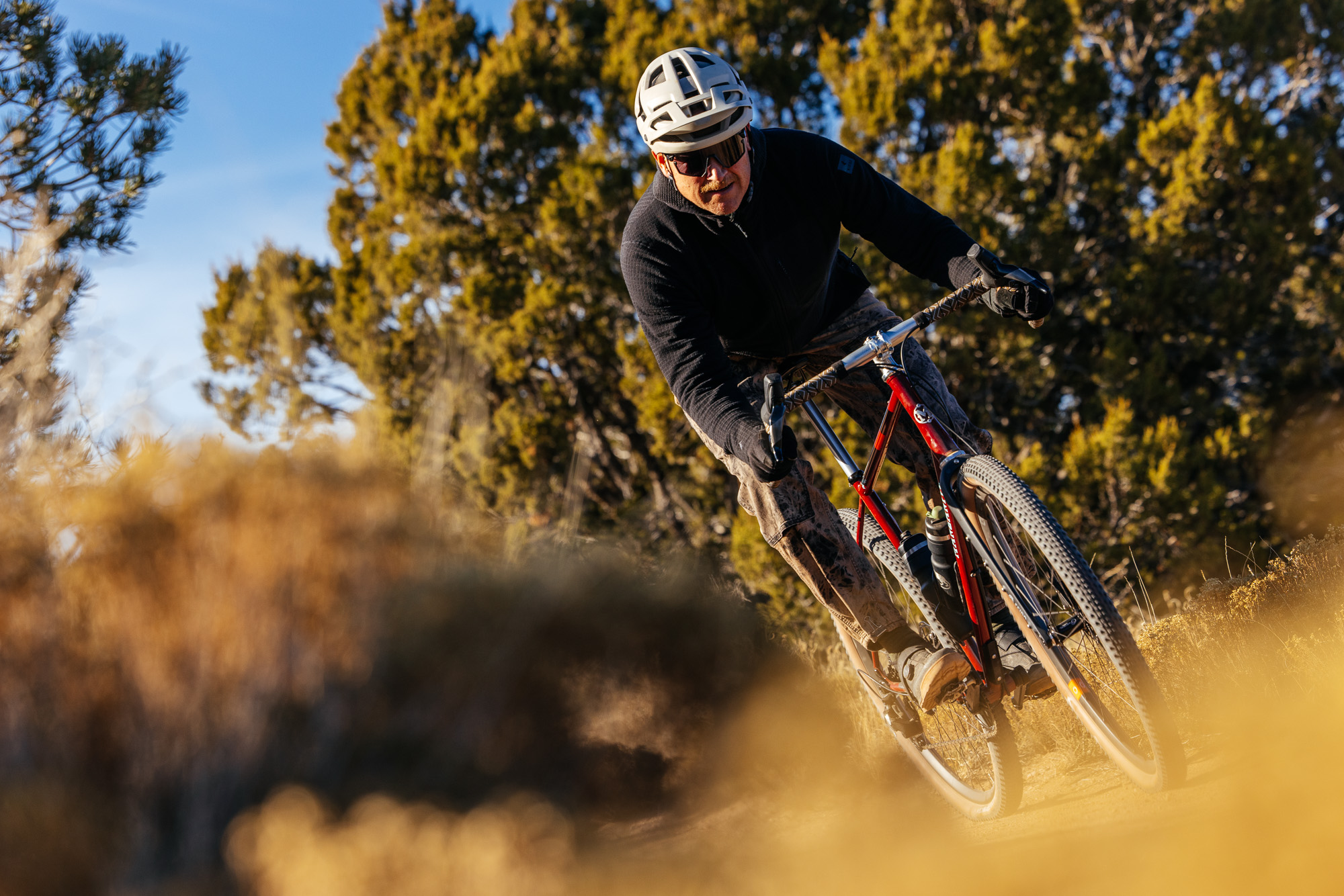
The first five miles of the descent are as steep as the last five miles of the climb. 😉 And they’re a scorcher! Not being able to comfortably fit in the drops during the steepest bits, I reverted to the tops, grasping the SRAM Apex hoods while modulating speed with a single finger around the brake levers. Line selection, traction, and speed control were in my favor. I was so distracted by the wheel-sized holes left over by a healthy monsoon this summer that the fork didn’t bother me at all.
Rather, I was comfortably perched upon the Whippet, glissading around the hairpin turns with ease.
At the bottom of the descent, which I like to use as a testing route for more adventurous drop bar bikes, my opinion greatly shifted on the comfort of the Whippet overall.
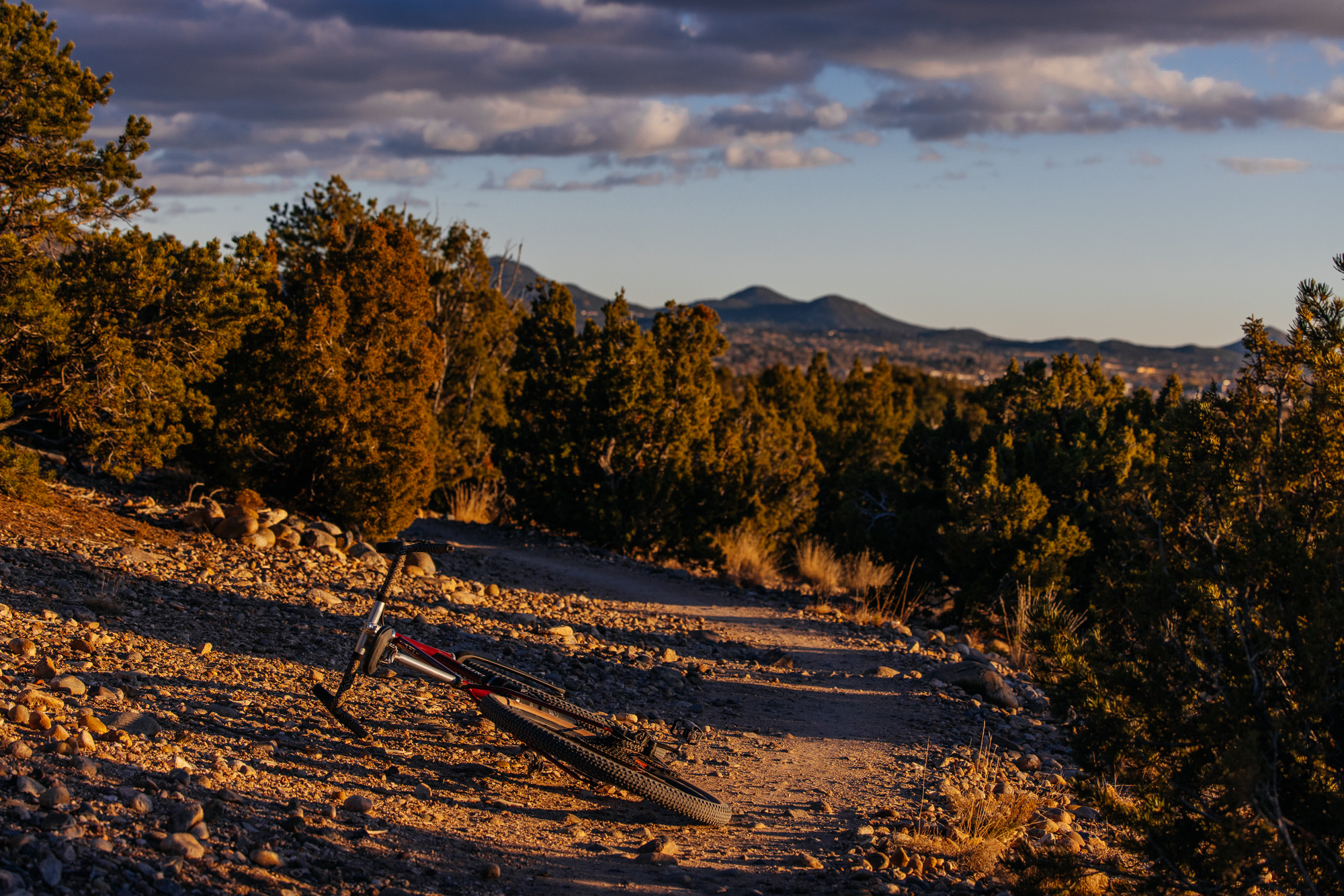
Where I Rode the Whippet
Later, on my more accessible daily gravel rides, which contain some XC singletrack littered with babyhead rocks but lack any real descending, I did feel the stiffness of the carbon fork. Perhaps this is only because I usually ride this route on my gravel bike with a steel fork. Particularly in moments when the trail turns into babyhead rocks, with loose piles at the inside corners. I will say, though, every ride on the Whippet in this terrain ended in multiple PRs.
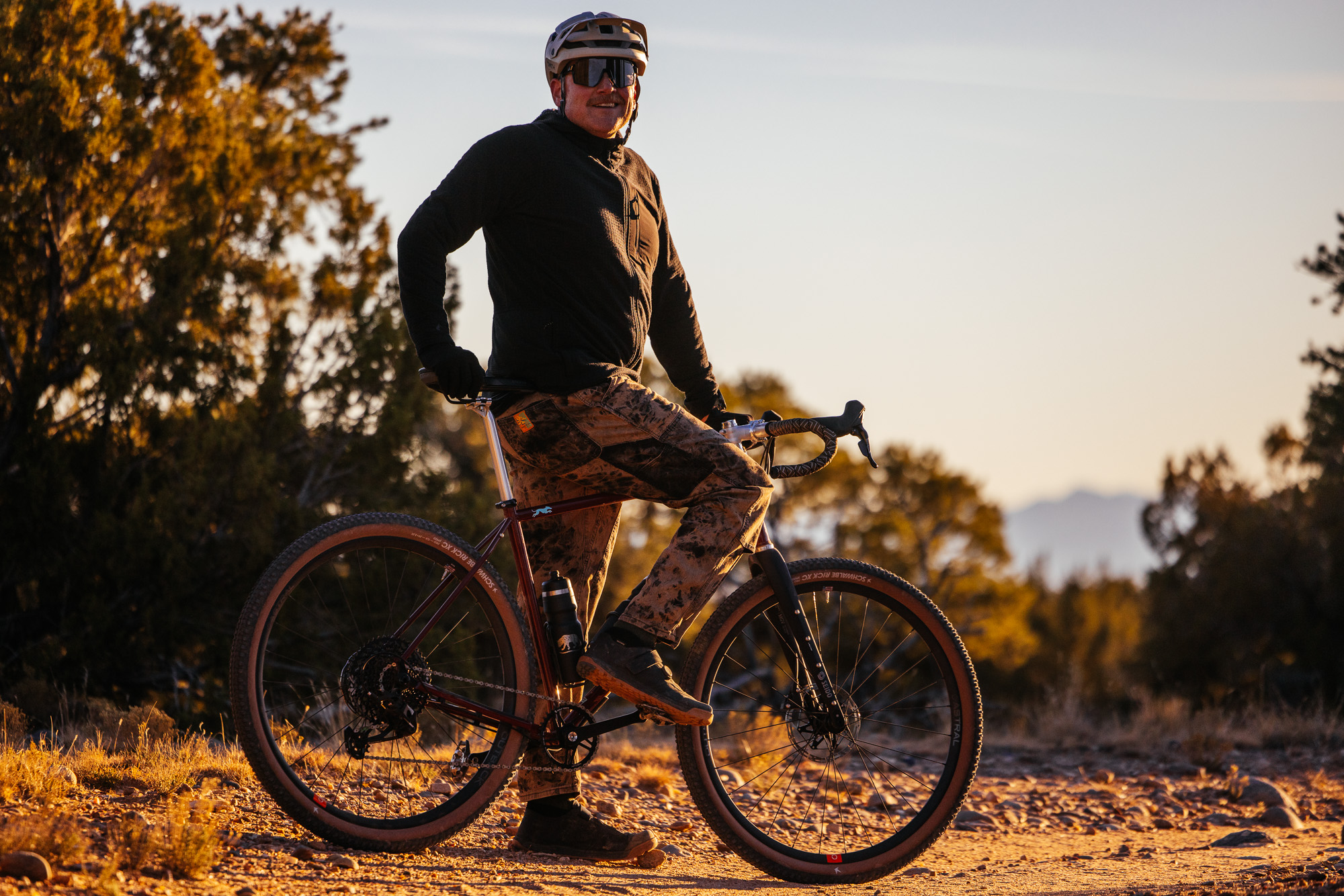
What I did notice, however, on the longer doubletrack descents at higher speeds, the bike tracked quite well. But on singletrack riding, I could really feel the stiffness of the front end. I don’t think most people would notice this sort of thing, but it’s worth noting.
Pedaling across town to our Caja Del Rio, a volcanic tableland just west of town here in Santa Fe, there’s a mix of bike path and country road before you hit the dirt. Unlike my Pacheco climbing experience, which was all climbing (over 18 miles and 5500′ out the gate, in fact!), this ride barely breaks the 1,000′ per 10-mile ratio.
On these rides is where the Whippet came alive.
Feeling Fast
Typically, on group rides, I’m off the back, struggling in the wind as a bigger rider, and more accustomed to MTB cadence, keeping up with 15 to 18 mph average speeds of your typical gravel road riders ain’t my usual cup of tea. When pedaling the same route by myself, I felt more light-footed and confident. Whereas my Ponderosa almost encourages spinning rather than pushing hard, the Whippet favored a higher heart rate. Nestled in the drops, it performed symbiotically as the road conditions in the Caja went from graded to rutted and quickly deteriorated the further back into the National Forest I ventured.
My notes from the day questioned if I was just feeling good and thus had more pep in my stride or if the Whippet’s design had me feeling optimized for the afternoon. It’s a very light bike, so pushing it hard into a slight headwind resulted in a few PRs on the familiar loop. It was one of those days where you question even riding at all, and are reluctant to finish the whole route, only to return home to see you were going much faster than normal.
Miguel’s Build and Thoughts
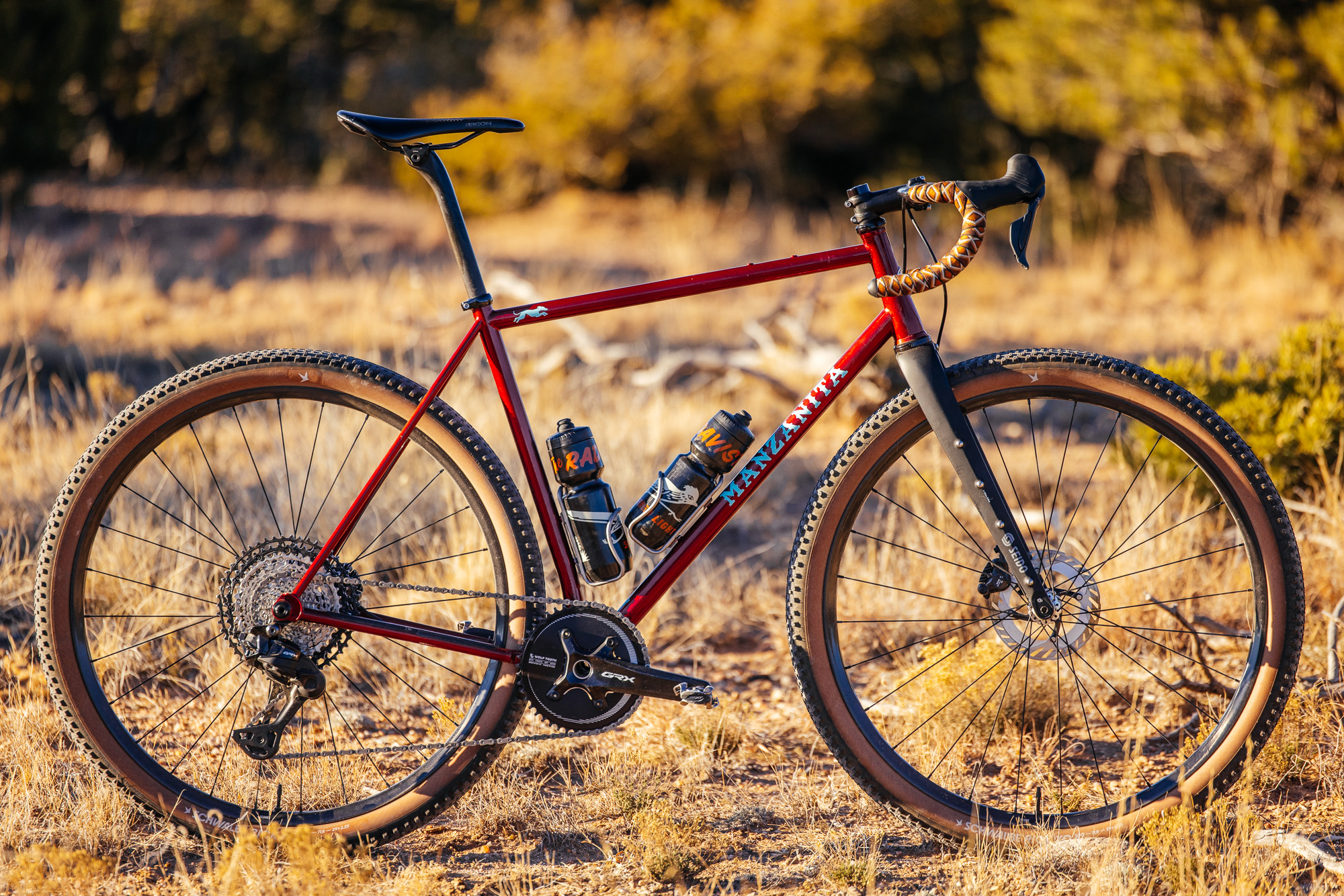
Miguel built his whippet with a very racer-focused kit. We’re both the same height, with similar saddle heights, but looking at the drive side, you can see the differences. Let’s hear what he has to say.
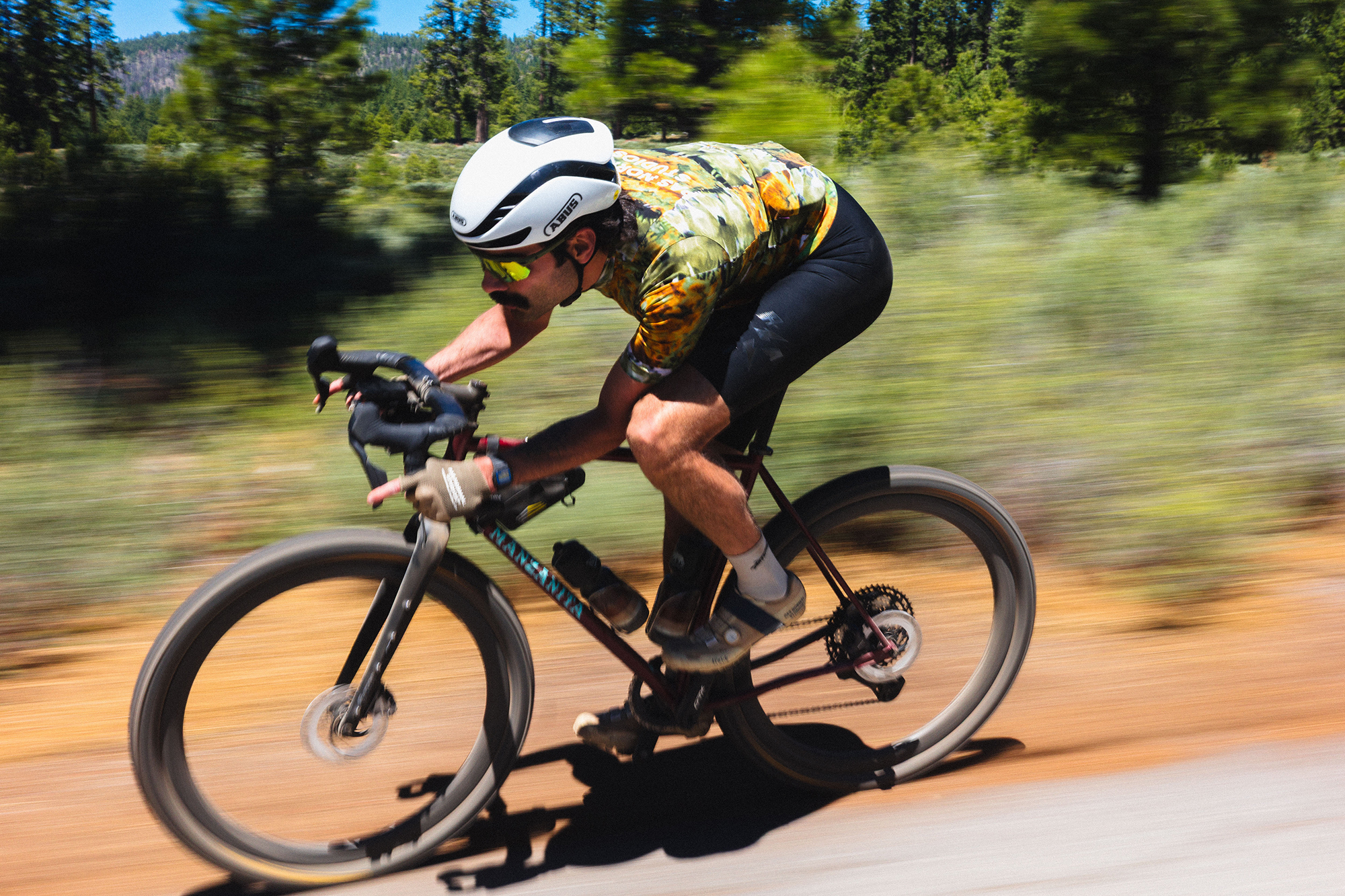
Photo by Tyler Nutter
Miguel’s Manzanita Whippet 2.0
I came around to favoring big tires a lot later than John, which is pretty typical, honestly. When the Race Metal series started, I still believed semi-slick 40 mm tires were the answer to every gravel race. John tried more than once to hand me a bike with full-on monster truck tires, and I kept saying “no thanks.” He even offered me his Ponderosa months before I was willing to admit that maybe, just maybe, he was onto something.
So when I finally confessed – a year later – that big MTB tires might actually be faster for gravel, John just smirked. He didn’t even say “I told you so”; he didn’t have to. I was ready to try it for myself, and luckily Nick from Manzanita was excited about building a fresh Whippet 2.0.
Working With Nick
Once I committed, Nick and I started trading notes about what this next version of the Whippet should look like. I didn’t want much changed, just room for a bigger chainring. Nick had plans of his own: updated dropouts, semi-internal routing, a cleaner overall silhouette. And the timeline was tight. I had Lost and Found on the calendar, and the goal became: finish the bike just in time to ride it there, which, in my opinion, would be the perfect testing ground.
Nick lives in Reno, right near the California border and only an hour from Portola, where Lost and Found takes place. When I flew in before the race, he picked me up, showed me around his workshop, and introduced me to Beasley, his dog, who inspired the Whippet model name. We hung out in his space, he showed me where the frame was born, and even took me on his favorite ride near Reno, and that’s when I found myself riding a bike next to its creator, on the terrain it’s meant to be ridden.
We chatted about the beautiful area and traded notes on the ride feel and how confident it felt from the start. This made the whole project feel even more special.
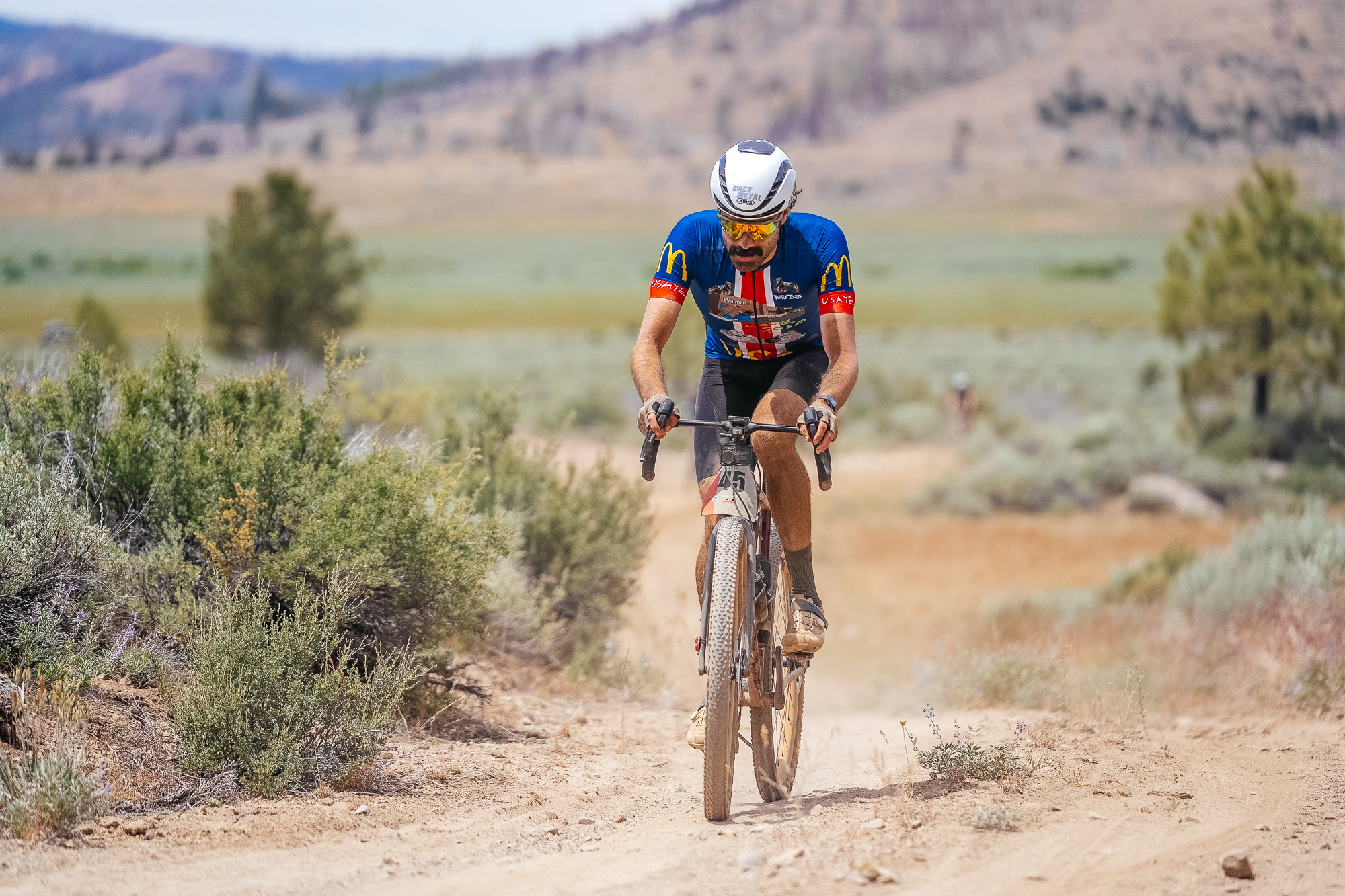
Miguel on the Whippet, photo David N. Braun
Lost and Found: First Ride, Full Send
Lost and Found is easily one of my favorite places to ride in the U.S. Ninety-six miles, 7,600+ feet of climbing, rugged terrain that swings from steep gravel roads to rough, unmaintained doubletrack. It’s the perfect shakeout for a bike like the Whippet.
I was running 2.2” Dubnitals and definitely had some pre-race anxiety about the paved opening climb. But the bike felt lively from the first pedal stroke. And once we hit the rough descents, the Whippet came alive. I started passing people. The grip and stability gave me confidence and speed. On the flats, I could push and hold pace easily, and on the chunder, I found myself picking faster, rockier lines without hesitating.
It felt like the bike was built for this terrain, because it was. Nick knows these roads, and you can feel that in the frame.
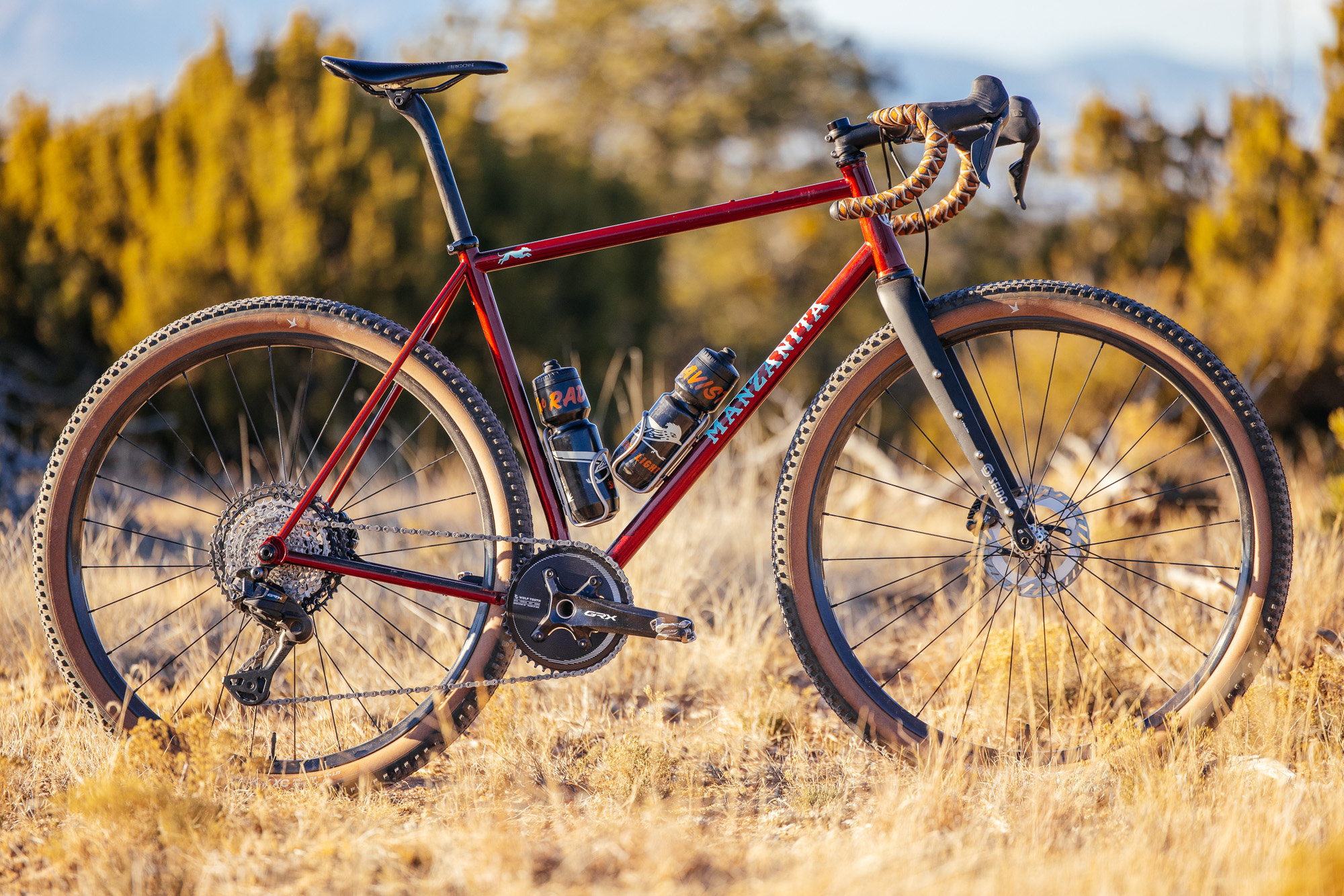
Miguel’s Build
As John said, we have almost identical saddle heights, but our fits couldn’t be more different. He prefers comfort-forward; I go straight for aggressive. That’s why I chose the M6 (close to a 58 cm) and slammed the stem as far as it would go.
Miguel’s Build Spec:
- Shimano GRX 12-speed electronic groupset
- 46t Wolf Tooth aero chainring
- WeAreOne Revive 2.0 wheels
- ENVE aero handlebar
- Kalloy UNO alloy stem
- Schwalbe Rick XC 2.25 tires
- CampAndGoFast bar tape
Back to John: Whippet Good
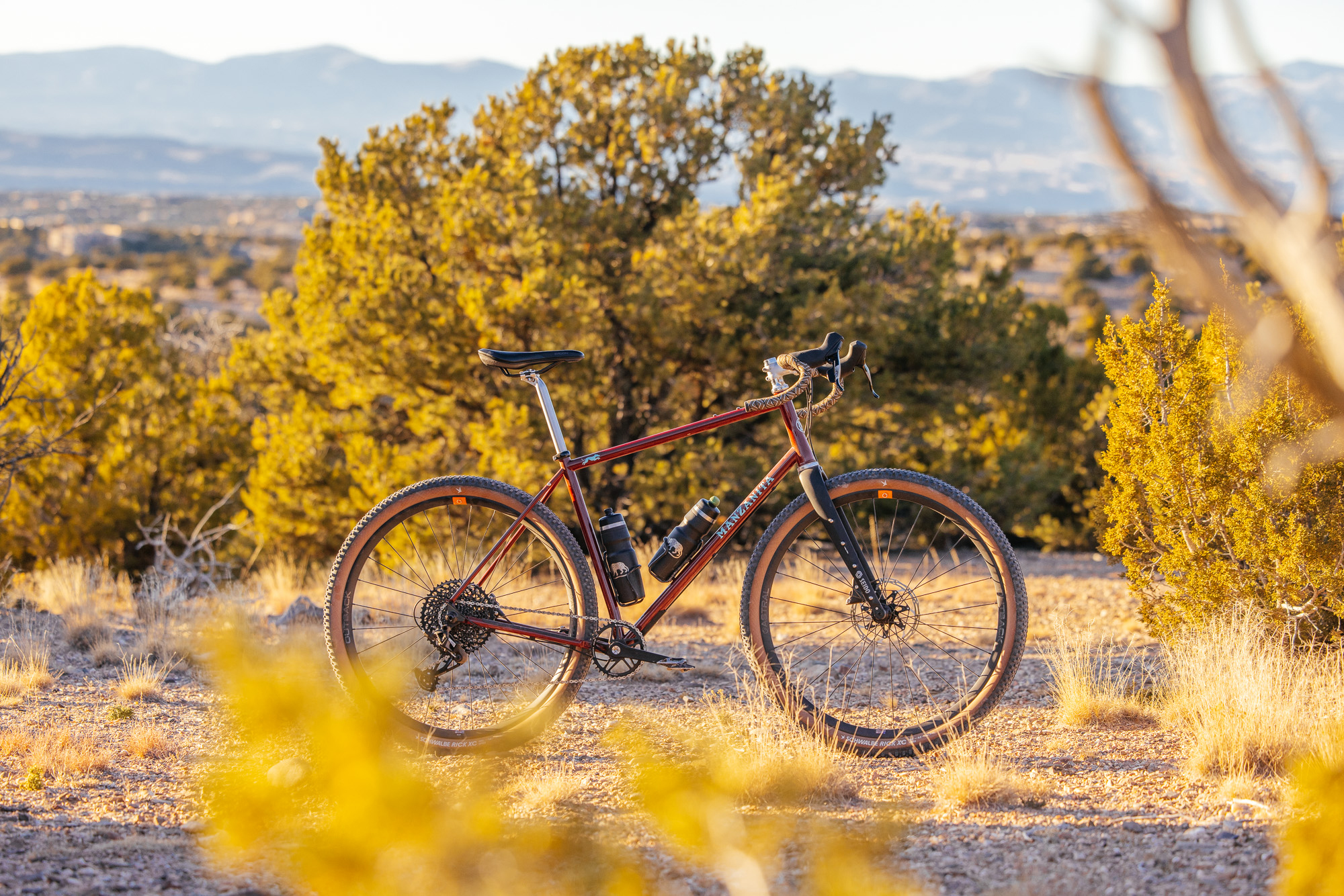
There are numerous bikes that occupy the same space as the Manzanita Cycles Whippet, but I can only count on one hand US-made production gravel bikes that have both the tire clearance and those wonderful, minimal, and elegant thin seatstays. Sure, the carbon fork isn’t my normal cup of tea, but I can understand Nick’s intentions with it. He truly believes that people who want to race want carbon forks, and I can’t argue with that.
This size M7, the largest stock size Manzanita offers, built as shown, with all-aluminum components, weighs only 24 lbs with pedals and bottle cages. Miguel’s more racing setup is 21 lbs.

The tire clearance, modern geometry, light weight, and classy build kit put the Whippet in a class all its own. While I wish the head angle were a bit slacker, that could be because I spend most of my time on a mountain bike.
However, as we’ve seen with other fads fostered by framebuilders, over the next few model years from the big brands, we’ll see even bigger tire clearances rolling out. But I doubt they’ll have the same light-footed balance of the Manzanita Whippet.
Pros
- Impressive tire clearance
- Competitively priced for a frame made in the USA
- Slender seat stays are exquisite
- Extensive production sizing
- Lightweight
- Geometry is very standard issue; familiar
Cons
- Crowded space (steel frame, carbon fork)
- Not in stock (you’ll have to wait for yours to be built)
- Expensive when compared to Taiwanese frames (but also lighter than them, too)
See more at Manzanita Cycles.
Thanks to Miguel for shooting these riding photos!