
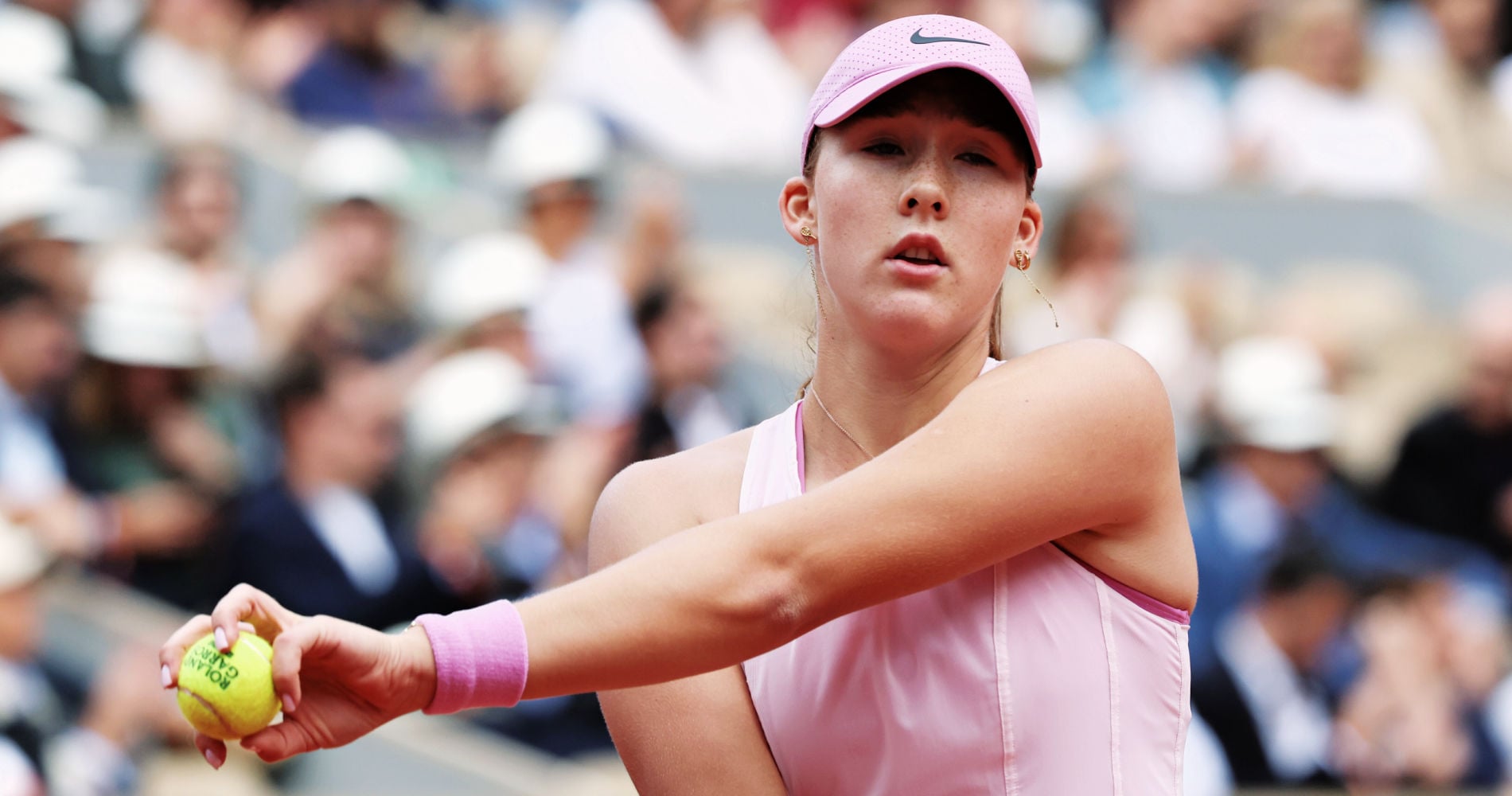
In 2025, Mirra Andreeva lost a match she could not lose. A Roland-Garros quarter-final, the world No. 6 against the world No. 361, Lois Boisson – and a result, 7-6(6) 6-3, that should not have been possible on paper. She was defending semi-final points, the pressure was enormous, and a Paris crowd had swung hard behind the underdog. Andreeva did not so much get outplayed as come apart.
She knew it, too.
“I think everything together combined,” she said that evening. “With pressure, and with pressure from the crowd, and sometimes I also felt not very confident in some actions that I do on court.” Asked when pressure had first crept into a game that used to run on freedom, she traced it precisely: “It all started maybe when I just had to defend a lot of points that I earned from last year.”
A year on, Andreeva is in the final of Roland-Garros agaisnt Maja Chwalinska (Saturday), and the story of how she got there runs straight through that afternoon and out the other side.
Andreeva ‘s emotions: her engine and her hazard
Andreeva has never hidden that her emotions are both her engine and her hazard. The spring of 2026 made it impossible to hide: at Indian Wells, defending the title, she smashed her racket, drew a code violation and left the court swearing at the crowd; in Dubai, she had hit herself with her racket and wept during a quarter-final loss. By her own account she was ashamed of the Indian Wells exit and not proud of how she had handled it — the things, she said, she most needed to work on.
The work has been visible in Paris, and so has its vocabulary. Asked how she stays in the present now, Andreeva does not gesture vaguely at “staying calm.” She itemises. “My psychologist said to imagine the big stop sign that is on the road, that red sign with ‘Stop,’” she said earlier in the fortnight. “So I’ve been trying to imagine that.”
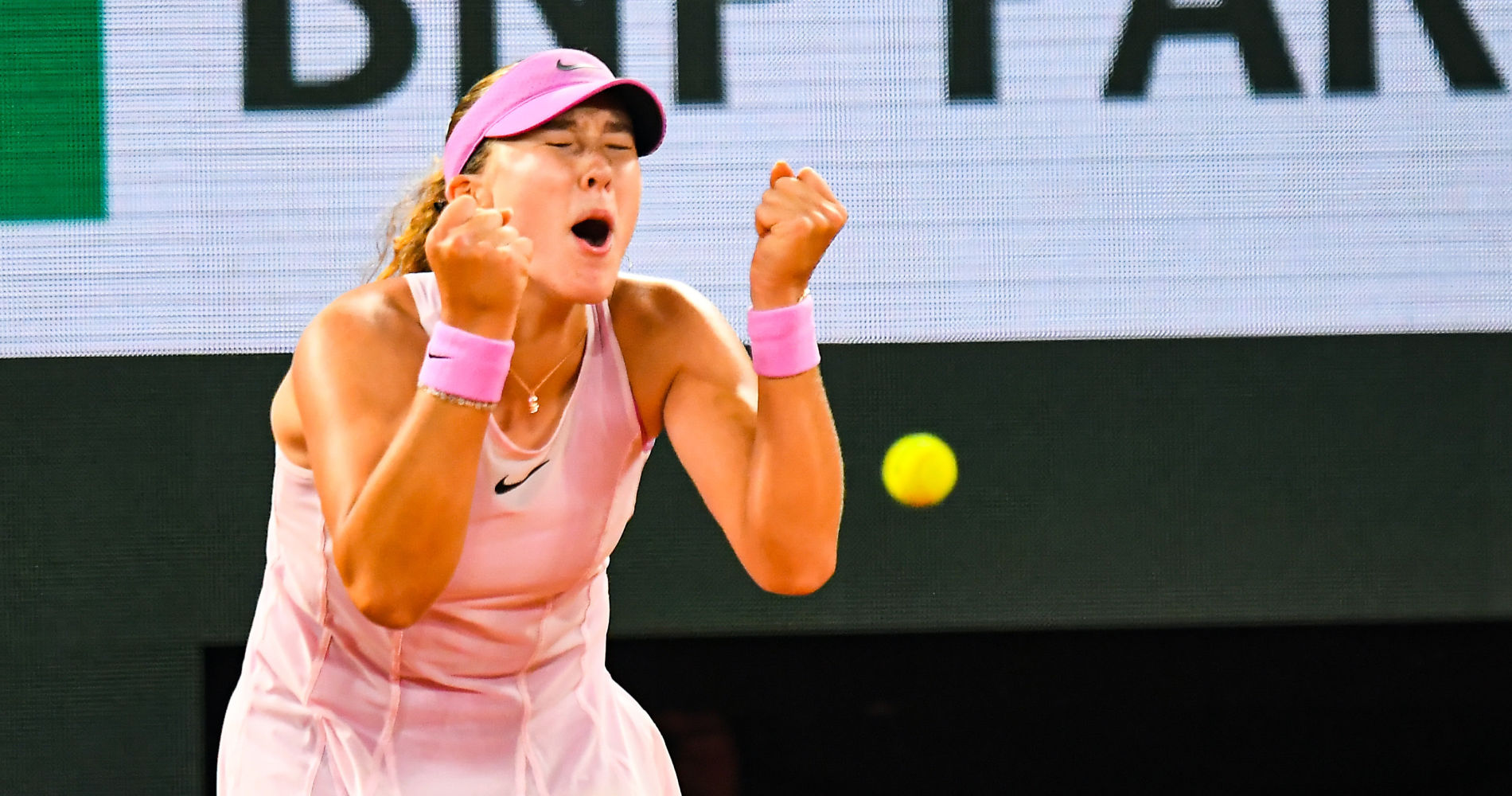
There are others. “Some breathing techniques as well. That helps a lot.” And one that is pure 19-year-old: “When I want to switch my focus, I start to sing a song in my head.”
This is the part that is easy to write up as a tidy redemption – troubled teenager learns to breathe, troubled teenager goes calm, troubled teenager reaches final. Andreeva herself complicated it after her semi-final, and it is the most revealing thing she said all tournament. Looking back at the Madrid final she lost to Marta Kostyuk, she diagnosed not too much emotion but too little. “In the Madrid final I was too calm,” she said. “There weren’t many emotions, and I think that, just for me, it’s important to have emotions. Even if they’re sometimes negative, it’s still useful to let them out.”
Madrid’s experience
She had over-corrected – tried to feel nothing – and it had flattened her game. “I was trying not to react to anything at all, and that probably didn’t play out very well for my game or my result. It was, almost word for word, the lesson she had drawn from the Boisson defeat – don’t react – followed to its joyless conclusion.
She had solved 2025’s problem and walked straight into its opposite. The teenager who once let the emotion run away with her had taught herself to switch it off entirely, and discovered that a player feeling nothing is not the same as a player in control.
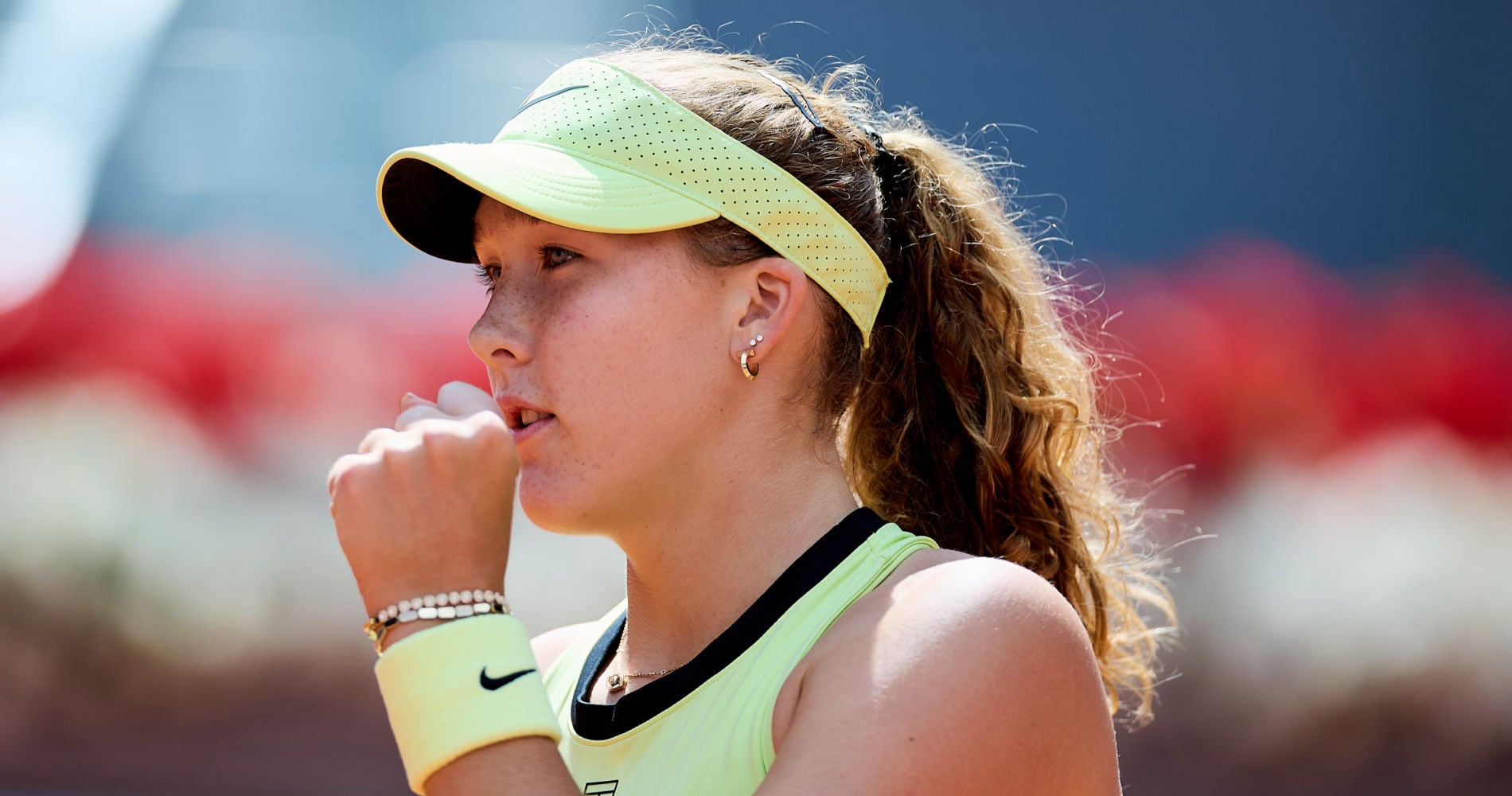
So the lesson she carried out of Madrid was not silence. It was calibration. “This time I tried to change it a little – to be calm when something doesn’t go to plan,” she said, “but if there’s an urge to let the emotions out, then after winning a rally just to shout ‘come on,’ to let out a bit of the nerves, the negativity, and some positivity at the same time.”
Feel it, channel it, don’t drown in it and don’t anaesthetise it either. For a player whose temperament has been the subject of years of outside commentary, it is a strikingly mature self-portrait: not a teenager who stopped feeling, but one learning the dial has a middle.
“impossible to lose for Andreeva”
Patrick Mouratoglou, watching the final approach, is highlighting this asset in Andreeva’s profile. His read is that the match is Andreeva’s to lose in the most literal sense – that the danger is not across the net but within. “On paper, this final is impossible to lose for Andreeva,” he said. “But this is just on paper.” The forehand, the backhand, the serve, the movement, the experience — “everything else, she has”, he said on social media. What she may not be able to control is the occasion. “It’s a Grand Slam final. The emotion will go to the ceiling, literally the ceiling, for anyone. And for someone who is very emotional, it’s a big danger.”
He sees the trap built into her own dominance. Facing a qualifier ranked 114th, a teenager who has been top ten for years and looks destined to win, “this brings the emotion to even another level.” The expectation curdles into obligation. “When you don’t have the right to lose, because that would be a shame, the pressure goes to another level,” Mouratoglou said.
The management of her emotions will be the only key for Andreeva to win. Everything else, she has.
He reaches for a comparison from this very tournament. “She reminds me of Aryna Sabalenka – the mental side is so strong, but the fact that she wants it so bad and that she’s so emotional, her mental can be her biggest enemy. We’ve seen it with Sabalenka here. We’ve seen it with Andreeva several times in the past – matches that are impossible for her to lose, that she ends up losing because she gets so emotional that she destroys herself.” His conclusion is blunt: “The biggest opponent of Andreeva in this final is not [Chwalinska]. It’s Andreeva.”
Pressed on the fact that she has, plainly, looked composed for two weeks, Mouratoglou allowed it – and then drew the line. “Since the start of the tournament, Andreeva looks really cool, in control, emotionally very stable, that’s true,” he said. “But a Grand Slam final is not a normal match.” “The management of her emotions will be the only key for Andreeva to win. Everything else, she has.”