
In “Never Stop,” Samer Abouhamad shares the third chapter in his 74,000-kilometer bikepacking odyssey, covering 20 countries including Tajikistan, Afghanistan, Oman, Saudi Arabia, Jordan, Syria, and Lebanon. Plus, he shares stats from the three-year ride and answers questions on everything from his route choice to how much time he spent alone to thoughts on traveling through the region as a Lebanese American…
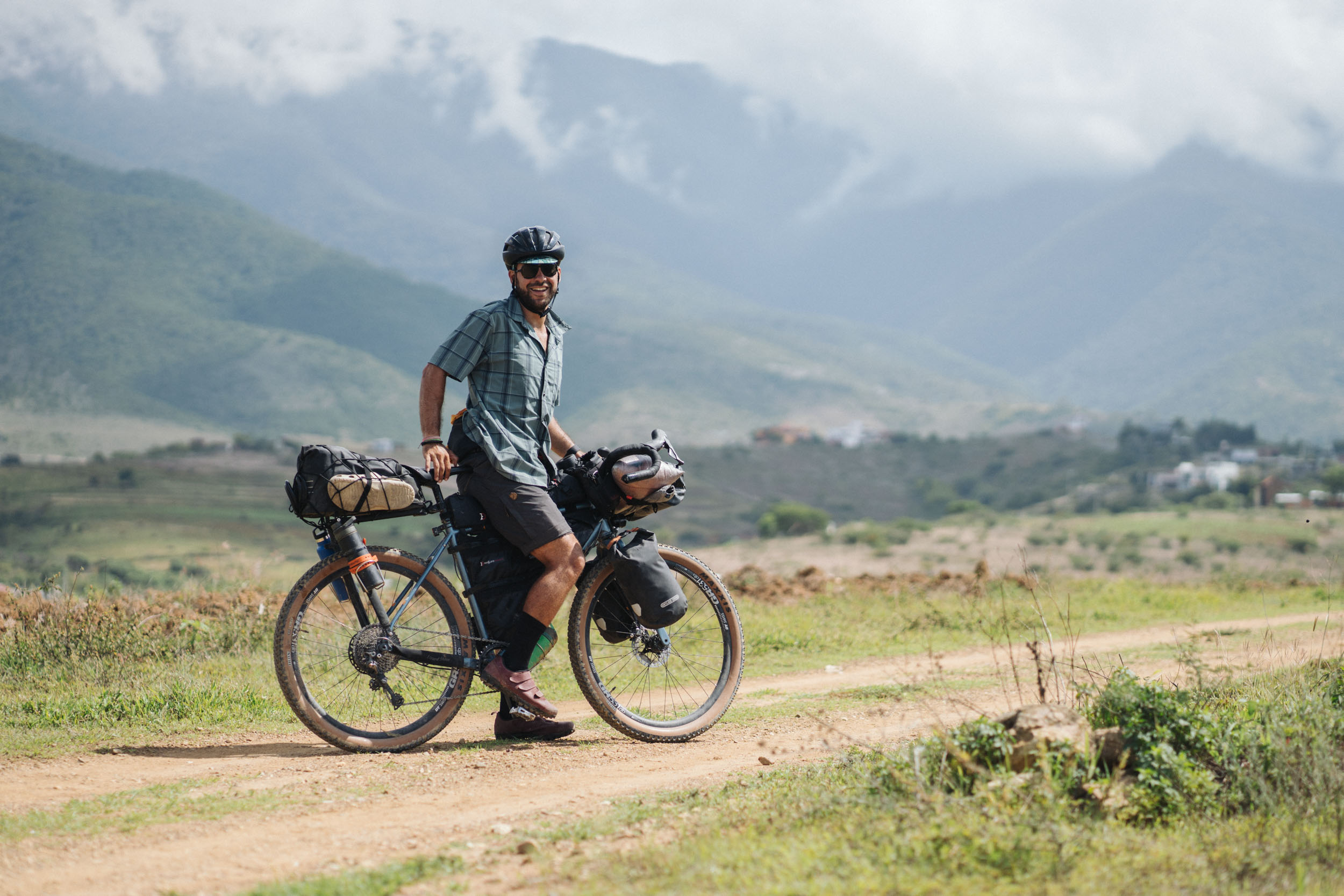
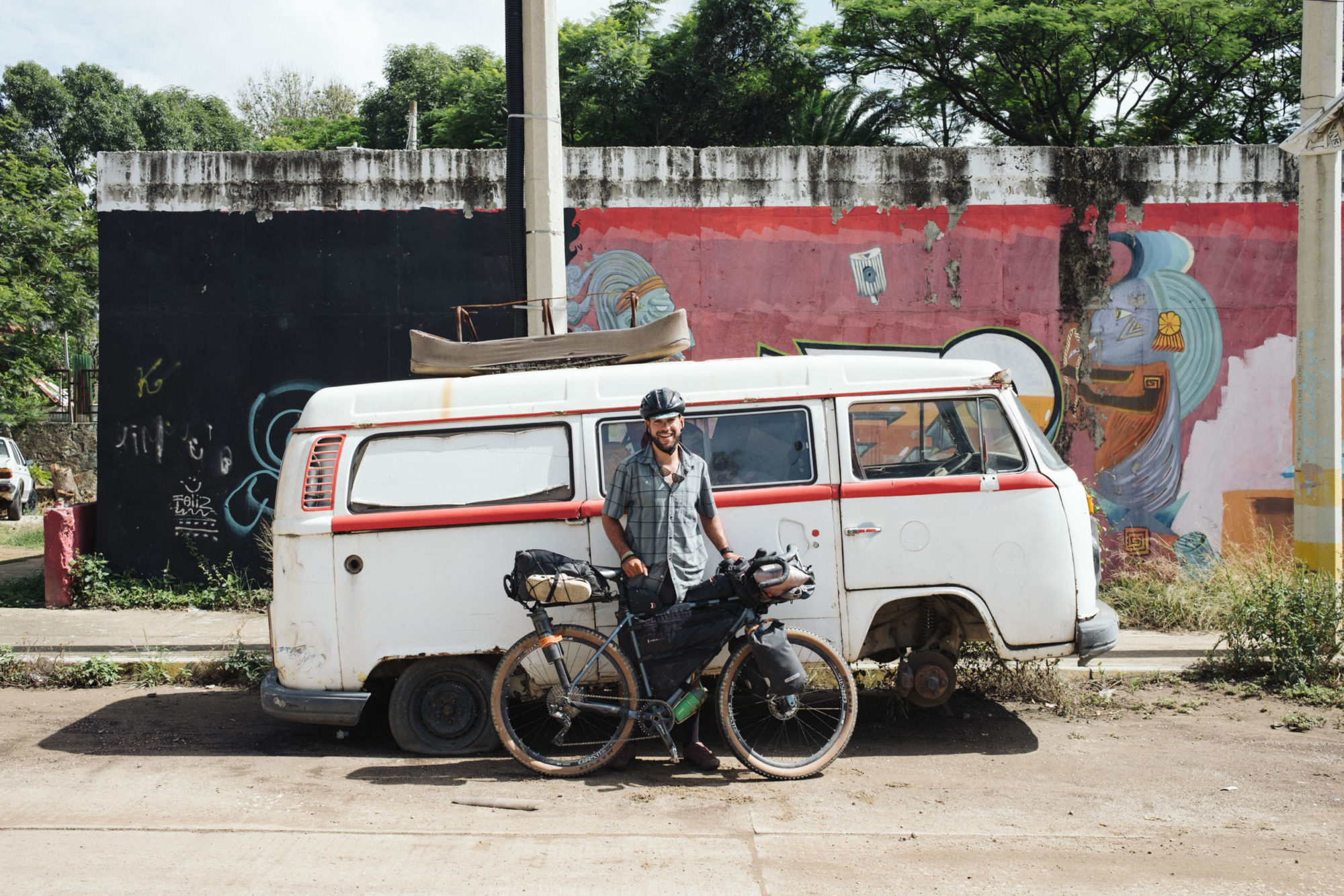
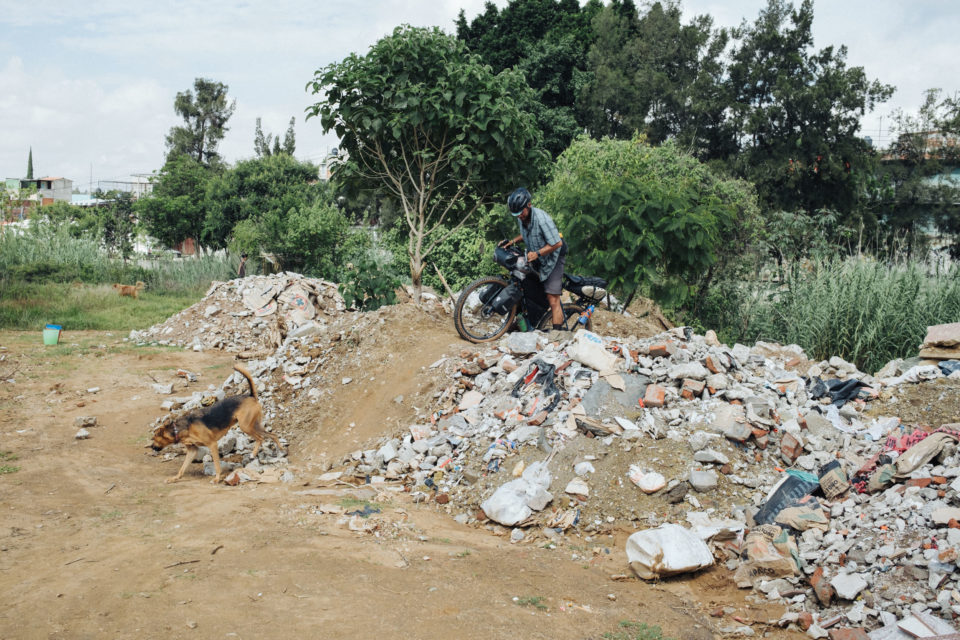
In 2022, Boston-born Samer Abouhamad rolled through Oaxaca, and we ended up hanging out for several days, enjoying day rides into the surrounding valley. These culminated in a Rider and Rig, in which he detailed his setup, compiled a full gear list, and more—including the abandoned puppy we found on our last outing and successfully rehomed!
At the time, Samer was “only” aiming to ride down to Patagonia. Little did we both know that he’d never stop… until he’d ridden all the way around the world! Over the next three years, Samer returned home between each leg of the ride, working as a pedal driver, amongst other jobs, to earn more currency for the road. I followed along with his Instagram posts and reels, which were awash with smiles and hospitality between long desert days in the saddle, or hectic city riding in chaotic Indonesian cities, as Samer jostled for space amongst the frenzy of traffic with local fixie riders.
In this follow-up post, find all the stats he gathered (right down to the number of hours he spent in the saddle), a video on the Melbourne to Beirut segment of his epic journey, an interactive map with his route, and an in-depth interview that explores both his identity as a Lebanese American in a time of turmoil and the nuts and bolts of his trip. Being a Bombtrack production, you can be sure the music’s going to be great too, so put it on the big screen and enjoy!
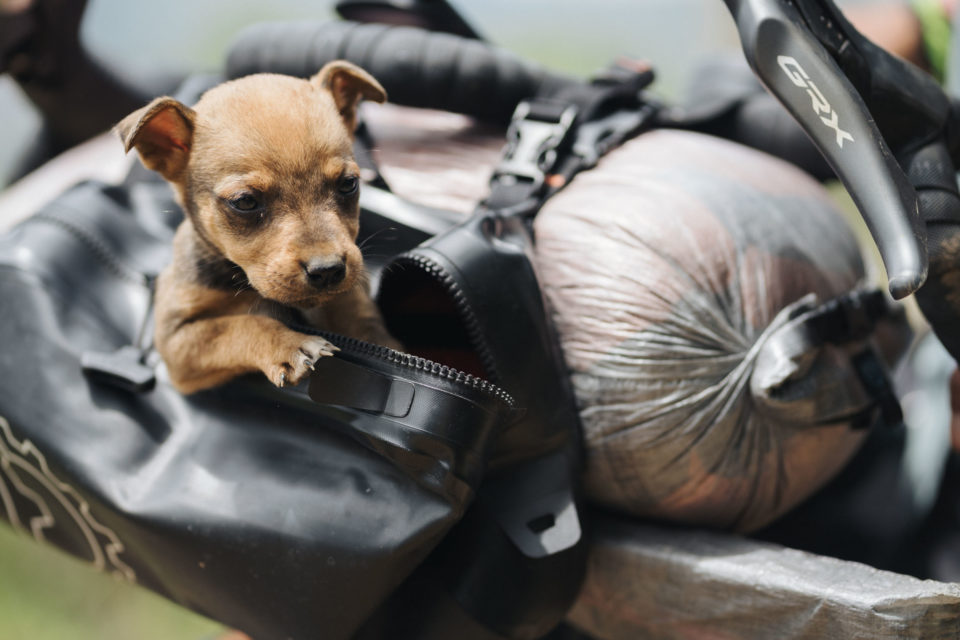
Scenes from Oaxaca, back in 2022. Little did Samer know how far he was really headed!
Samer’s round-the-world ride, by the numbers
- Started in Boston on April 22nd, 2022
- Ended in Beirut on August 10th, 2025
- Total distance: 46,143 miles (74,263 kilometres)
- Total countries: 61
- Total elevation gain: 1,865,748 feet (568,679 metres)
- Total days biked: 649 days
- Total days “on tour”: 911 days
- Average distance/day ridden: 71.1 miles (114 kilometres)
- Total time on the saddle: 3,943 hours
- Longest stretch without a rest day: 19 days in Peru
Melbourne-Beirut Leg
- Stats in the context of the Melbourne-Beirut trip, covered in this video:
- Started in Melbourne on October 18th, 2024
- Finished in Beirut on August 10th, 2025
- Total distance: 15,237 miles (24,666 kilometres)
- Total countries: 20
- Total elevation gain: 447,808 feet (136,492 metres)
- Total days biking: 203 days
- Total days: 297 days, including rest days and extended stops
- Average distance/day: 75.5 miles (121 kilometres)
- Total time in the saddle: 1,300 hours
- Longest stretch without a rest day: 18 days in Indonesia
An Interview with Samer Abouhamad
Hey, Samer! What inspired this epic adventure in the first place? Did it grow out of the kernel of an idea, or was it always on this scale? If I remember rightly from our ride in Oaxaca, initially, your tour was “just” the Americas?
Yes, exactly. The first trip, when I met you in Oaxaca, was supposed to just be a one-year trip from Boston to Patagonia. I got really into biking during COVID as a way to get out of the house and work out, and eventually quit my job to move to Lebanon and volunteer in the rebuilding effort after the August 4th, 2020, port explosion. My original plan of staying three months turned into a year and a half, and by the time I left Lebanon, I had experienced the entire country by bike—every major mountain pass and even a a full lap of the country in three days. My time in Lebanon was when and where I fell in love with biking as a way to see new places. Fast enough to cover ground, but slow enough to take in all your surroundings and interact with locals in a more meaningful way. I wanted that feeling to continue past Lebanon—to discover more horizons and cultures.
After reading Alastair Humphreys’ two books about his round-the-world trip in the early 2000s and then going on my first bikepacking trip on a rental bike in France for two weeks, I bought my Bombtrack Hook Ext in late 2021 and started telling friends and family about my plan to bike to Patagonia. A few months later, in April 2022, I finally left. Fast-forward a year, almost to the day, and I was sitting in a hostel bed in Ushuaia, deciding I couldn’t just return to “normal life” anymore after the year I had just lived. I flew home, worked all summer, lived with my parents to save money, and then set out on my next trip from the North Cape in Norway to Cape Agulhas in South Africa in September 2023. After completing that trip and arriving in Cape Town in April ‘24, the same cycle repeated itself, and I decided in my mind that I would bike the remaining large, untouched places on my map: Australia and Asia. I returned home for another summer of work and began to plan the final leg of what had, at this point, become an around-the-world trip. I thought it would be a full-circle moment for me to end my trip in Lebanon—my parents’ homeland and the place where my love for cycling all began.
How did you break down all the thousands of kilometres and a lifetime of experiences into manageable bites?
I would usually ride for 7-10 days, then rest a day, assuming there was a cool place to take a day off. I would rather keep biking than take a rest day in the middle of nowhere, so sometimes I would just keep my forward progress going until I arrived at the next natural place to take a break. An interesting city could warrant a longer break and more exploration. Off the top of my head, some of my favorite places I spent a week or more in included Mexico City, Medellin, Bangkok, and Almaty.
Most of the riding was on pavement, with gravel or dirt sections being more deliberate side quests rather than the norm. Some of the unpaved segments included riding part of the Trans Ecuador route, the Peru Divide, parts of the European Divide Trail in Scandinavia, and the Altravesur in Spain. I also rode a section of the Route of Caravans in Morocco, the Namib Desert in Namibia, the Mawson Trail and the Oodnadatta Track in Australia, the Ha Giang Loop in Vietnam, and the infamous Pamir Highway in Central Asia.
I like to view my round-the-world trip in three distinct “chapters,” the third of which is the focus of the film:
Chapter 1: Boston – Ushuaia (26,000 kilometers)
Chapter 2: North Cape – Cape Agulhas (23,000 kilometers)
Chapter 3: Melbourne – Beirut (25,000 kilometers)
In this last chapter, I passed through 20 countries: Australia, Indonesia, Singapore, Malaysia, Thailand, Cambodia, Laos, Vietnam, China, Kazakhstan, Kyrgyzstan, Tajikistan, Afghanistan, Pakistan, Oman, UAE, Saudi Arabia, Jordan, Syria, and finally Lebanon, the birthplace of my parents.
Did you ride with anyone along the way? You mentioned your dad was a keen cyclist, too. Were you able to share some miles together?
While I would mostly ride alone, I did end up riding with many different characters along the way when there was a natural fit. I’d say it was 90% alone and a cumulative 10% with a mix of other traveling cyclists. Long days on the road with someone else are a great way to connect and bond in unique ways, learn tricks other bikepackers use, or gain a new perspective on different situations. It is also nice to share moments you would otherwise spend alone! I am still in touch and great friends with all the cyclists I’ve ridden with. On this most recent trip, I was mostly crossing other cyclists heading in the opposite direction, as many touring cyclists head east from Europe. On parts of the Pamir Highway, I crossed 10 cyclists a day going the opposite direction! My dad loves to bike and met me to share some miles in Colorado, Mexico, Bolivia, Namibia, and China.
Can you expand on the idea behind your “Never Stop” mantra?
I think it’s important to have a “macro” vision, but equally as important is executing the “micro” vision every day— i.e., never stopping. If we “never stop” working toward a goal every single day, eventually the sum of those days will lead to meaningful progress. Although it may seem obvious, I think it was something I would use to remind myself when progress was hard to see. We only fail if we quit, so just keep going and never stop.
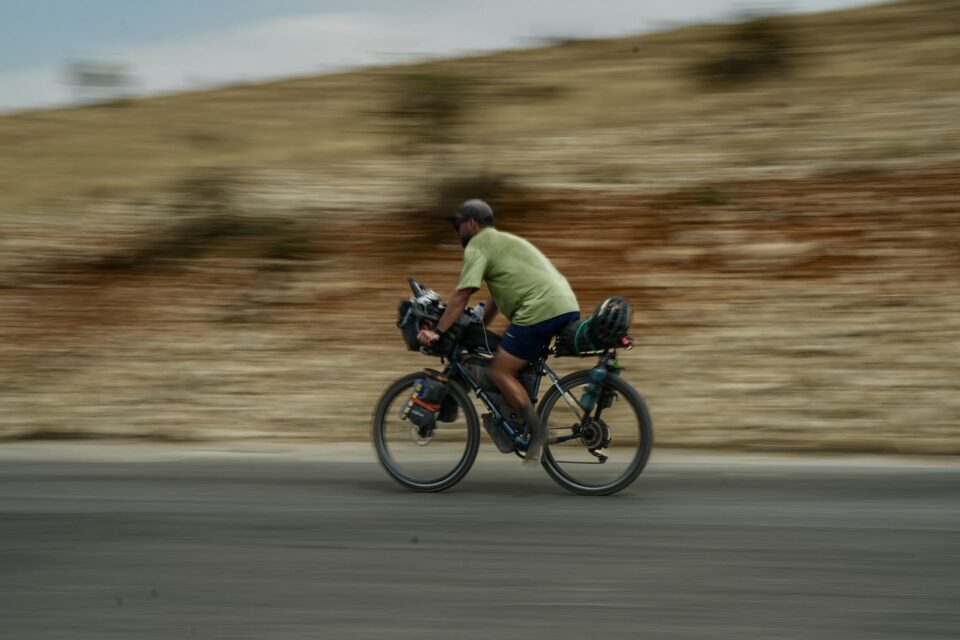

How about the nuts and bolts of route planning? How did you figure out which roads to pick in 74,263 kilometres?
The main factors when planning my routes are the season/weather/time of year I would be in a certain place, and then the geopolitical situations and ability to get visas to certain countries. Another main factor is trying to accomplish the route without taking any public transport/planes or “skipping” any sections if I didn’t have to.
For the beginning of this third leg—detailed in the video—I knew that leaving Australia in October would expose me to the start of summer in the Outback, but this made more sense than leaving Lebanon and heading into Central Asia with winter approaching. For the actual route, I like the idea of biking “across” continents, so the route for Australia naturally led me to biking from south to north across the Outback. I added a few dirt side quests, like the Mawson Trail and the Oodnadatta Track, before joining the Stuart Highway all the way to Darwin, with a pit stop to visit Uluru Rock. Across Asia, it’s actually quite tricky to overland these days, given the geopolitical situation. Due to the Myanmar borders being closed for the past few years, the only way to make it across Asia without taking a plane is going “around” via China.
I was projected to reach China toward the end of winter, so I stalled a bit and spent some time enjoying Southeast Asia to let the winter weather pass. For my route in China, I wanted a taste of Tibetan culture without having to deal with the permitting and expensive guides required to enter the autonomous region of Tibet, so I was able to clip a part of the plateau and visit Langmusi and the Labrang Monastery—both significant places for Tibetan culture, without actually being within the region’s limits. From there, I crossed the vast and mostly empty Xinjiang region and eventually entered Central Asia. Given my two-month visa in China, I had to maintain a steady daily rhythm to cover the country within the allotted time.
After a long break in Almaty, I biked south and joined the Pamir Highway, which led me all the way to Dushanbe. From there, my plan was to go from Afghanistan to Iran, before continuing through the Middle East via Iraq. But when I was in Afghanistan—in June 2025—I had to change my plans after tensions arose and Iran closed its borders. At this point, my choices would have been to backtrack to Uzbekistan and either get a Russian visa, which is a long process, take a plane over the Caspian Sea to Azerbaijan, or continue south to Pakistan, reach the coast at Karachi, and find a plane to Oman. Neither option really excited me. I wasn’t looking forward to biking in the middle of the desert in Oman and Saudi Arabia in the summer, but I hated the idea of backtracking, so I eventually bought a flight over the Gulf of Oman to Muscat. From there, I took the most direct route to Lebanon, eager to finish, see my family, and get out of the desert heat!
How did you handle, mentally, the vast distances you were riding?
I would break down my trip into evolving “checkpoints.” Whether it was a daily checkpoint of just getting to the next roadhouse in the middle of the Outback, or the weekly goal of arriving in a certain city by the end of the week for a rest day, breaking down a big goal into smaller goals helped make the vast distances seem less daunting. Also, if I was ever having a “bad” day, a good night of sleep truly worked wonders, and I would always wake up feeling more positive! Ultimately, I would just listen to my body. If I was feeling good, I would bike. If I wasn’t feeling it, I could just take a break. That is part of the beauty of traveling alone—every decision you make is ultimately yours.
And what about the bike you rode and the gear you used? Any major issues along the way?
The bike and setup didn’t change too much since our original meeting in Oaxaca. I used the same frame—my steel Bombtrack Hook Ext—with Redshift Kitchen Sink handlebars and a suspension stem. My Tailfin rack and cargo pack were with me the whole way as well, along with a Brooks Cambium C17 saddle and Brooks bar tape. Some of the noteworthy upgrades were Redshift aero bars and a suspension seatpost, after South America. Also, adding a Wolftooth adaptor allowed me to run an 11-46 cassette on my GRX derailleur with a 40T chainring. A 1.5 L Tailfin downtube pack replaced a bottle cage, storing my spare tubes and tools, and an AirTag there. I used the same Zpacks Duplex tent and quilt for the entire journey, so I definitely got my money’s worth! I switched from a multi-fuel stove to a Trangia alcohol stove after South America—I wasn’t cooking enough to justify the clunkier Primus multi-fuel stove, and when I did cook, it was only basics like coffee, oatmeal, noodles, and boiling eggs. While my preference is usually to ride tubeless, in Hanoi, Vietnam, I switched to Schwalbe Marathon Tour Plus 27.5 x 2.1—the only tire I was able to find—which was not tubeless compatible. These tires took me all the way to Beirut without a single flat and still have life in them! They’re not the fastest-rolling option, but for a long-distance tourer wanting peace of mind, I was amazed. The bike’s weight without water or food was around 80 pounds (36 kilograms).
I was lucky not to have any major issues along the way, aside from the expected flat tires. I never broke a chain, had to stitch a tire, or anything like that. I snapped a derailleur hanger once in Tijuana after crossing into Mexico, but I was able to find a replacement part pretty easily. Most of my issues revolved around inner tubes or tires. In Argentina, I had to drill a hole in my rim to fit the Schrader inner tubes, which were the only ones I could find. I also had trouble sourcing 27.5″ tires in West Africa after the Sahara, but ended up finding some in Abidjan once I made it there. I wanted to change my transmission in Dushanbe but couldn’t find the right cassette at the limited bike shops there, so I ended up just continuing with what I had.
Can you tell us more about yourself? Where are you from, and what did you do to prepare for the trip, both physically and financially? I know that pedicabbing was part of your training…
I was born and raised in the Boston area to Lebanese parents who immigrated to the US to finish college in the 80s, amid the civil war in Lebanon. I grew up loving sports and playing lots of soccer. After college, I worked in real estate for financial institutions in New York City for four years, and the extent of my biking was using Citi Bikes—NYC’s public ride-sharing system—and going to the occasional spin class. When the pandemic broke out, I was able to save some money by moving home and continuing to work remotely for six months before I quit my job and moved to Lebanon. My savings from my time in the corporate world helped fund my trip.
During my time in Lebanon leading up to it, I was riding 15+ hours a week, which helped me get into bike shape. I also spent a lot of time on BIKEPACKING.com and watching YouTube videos, salivating over the many route options and getting inspired by other people’s trips and bike setups. In the two summers I returned home, I was able to save money and stay in shape by working on a job site during the day and pedicabbing at night. While I didn’t have much time to bike for pleasure, pedicabbing—pulling up to six people on a non-electric bike around Boston, either for tours or rides to concerts or sporting events—helped!
As I watched your progress, I remember thinking how interesting it was that you spoke both French and Arabic, especially as you travelled through West Africa and the Middle East. How did language and your Lebanese identity impact your experiences?
As I mentioned earlier, my parents grew up in Beirut, Lebanon. Lebanon was under French mandate until 1948, so even to this day, there is a level of French influence in Beirut, and many people in the capital still speak French—along with Arabic and English nowadays. My parents were French-educated, and when they settled in Boston, they enrolled me in the nearby international French school, which I attended until 10th grade. French also helped me communicate in most of West and Central Africa—Senegal, Guinea, Ivory Coast, Togo, Benin, Cameroon, RoC, and DRC—which was awesome and helped facilitate some amazing interactions and meetings.
My parents spoke Arabic to me when I was a child, so I was always able to understand it, but it was not until I spent my year and a half actually living in Lebanon that I was able to speak it with more proficiency. Although still not perfect—a Lebanese person would know right away it’s not my first language—it also served me in many parts of my journey, like Morocco, Mauritania in Africa, and then Oman, UAE, Saudi Arabia, Jordan, and Syria, Lebanon. But it also randomly helped in parts of Pakistan or Afghanistan, where I would meet people who had worked in some of the aforementioned countries.
Regarding identity, growing up, I struggled to reconcile it. I was born and raised in the US, but also spent my summers in Lebanon visiting family. I remember after 9/11, there was a slight shift where, at times, I felt like an outsider in the US—my name being “Samer Abouhamad” lent itself to the occasional terrorist joke among friends or sports teams, and although it was meant as a joke, it made me feel isolated at times. But then I would go to Lebanon during the summers and would not be able to speak the language or establish my own connection to the country, so I felt stuck between the two—both, but not fully either. Eventually, through my time living in Lebanon and traveling, I realized I really am both, which is how I would introduce myself when traveling: “Lebanese American.” I was able to establish my own connection to my Lebanese roots and the land by literally biking it, but ultimately I was born and shaped in the US, in Boston—this is my home! Ironically, today, my identity is at a new juxtaposition—the south of Lebanon is currently being invaded and occupied with the support of the US.
It is hard for me, as a citizen of both countries, to reconcile that. Anyway, at the very least, and as I said in the movie, I hope you and any viewer can see the beauty of Lebanon in the parts of the film it is featured in. There aren’t many places in the world where you can surf in the morning, bike up to 10,000 feet, and then ski all in the same day—this is a typical Lebanese cliché, but it’s true—in a country that is smaller than Connecticut. Also, it’s so special for me that I got to finish my bike trip in Lebanon—starting at my home in Boston but ending at my parents’ home in Lebanon, reconciling my two identities as one, but also with the threads of humanity that link us all, no matter where we are in the world.

I know from my own tours that a ride like this is jam-packed with experiences, invariably positive ones. But do any less-than-ideal incidents stand out?
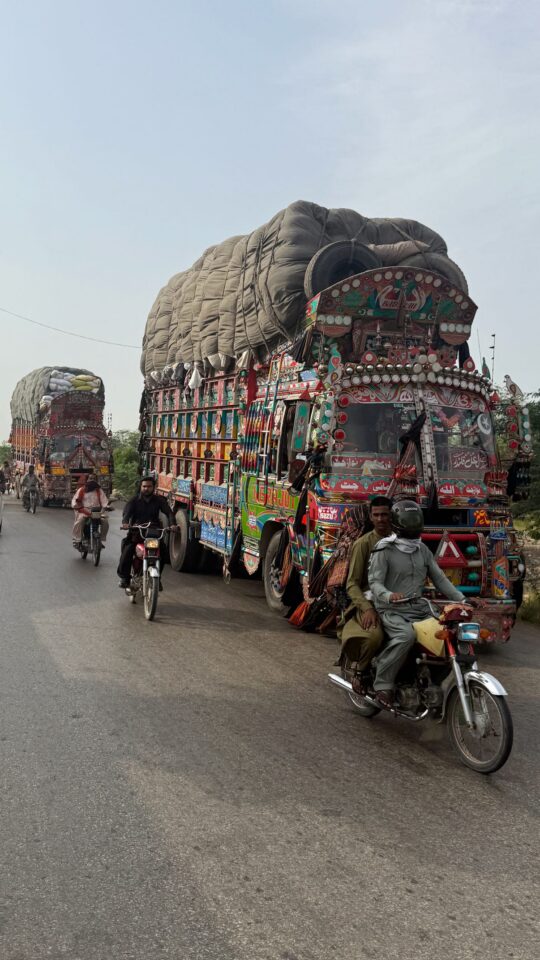
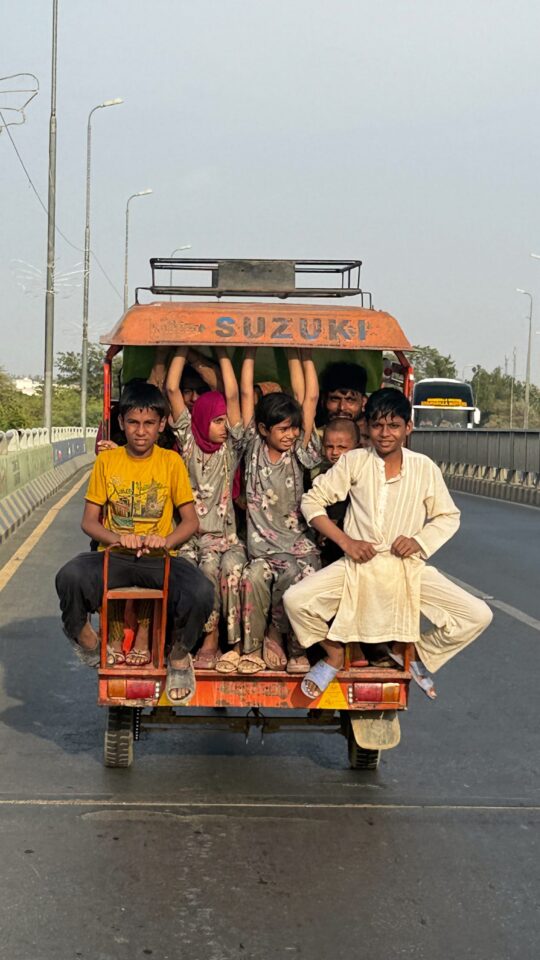
Dealing with police escorts in parts of Pakistan—near Peshawar, and in the Sindh region—was exhausting. Part of the frustration was that whenever I passed a new town, I had to wait for a handoff to a new group of officers, which often required a full-blown photo shoot and slowed my progress. While I understand they were just doing their jobs and were there for my safety, it was frustrating at times because I believe it affected how I interacted with locals and drew unnecessary attention to me. I argued to the officers that their presence actually drew more attention to me than if I had been biking alone and dressed in my local attire.
The biggest challenge I faced was biking through the Gulf countries in the middle of the summer. During the day, temperatures were around 120 degrees, the prevailing winds were against me, and to make matters more complicated, there weren’t many resupplies. So, for this section, I decided the only way to actually do this would be to bike at night, when the wind was usually a bit calmer, and temperatures dropped to around 100 degrees. It was still hot, but much more manageable! I would sleep during the day, often taking refuge in the mosques at gas stations where there was usually some AC or at least a fan. As I got closer to the Jordan border, the Saudi police started following me. This time, it was more welcome because it meant I could store some of my water in their car!
Finally, can you share some uplifting experiences? If there’s one thing that bicycle tours invariably demonstrate, it’s that people are people, and almost all are looking to connect, even if it’s in some small way.
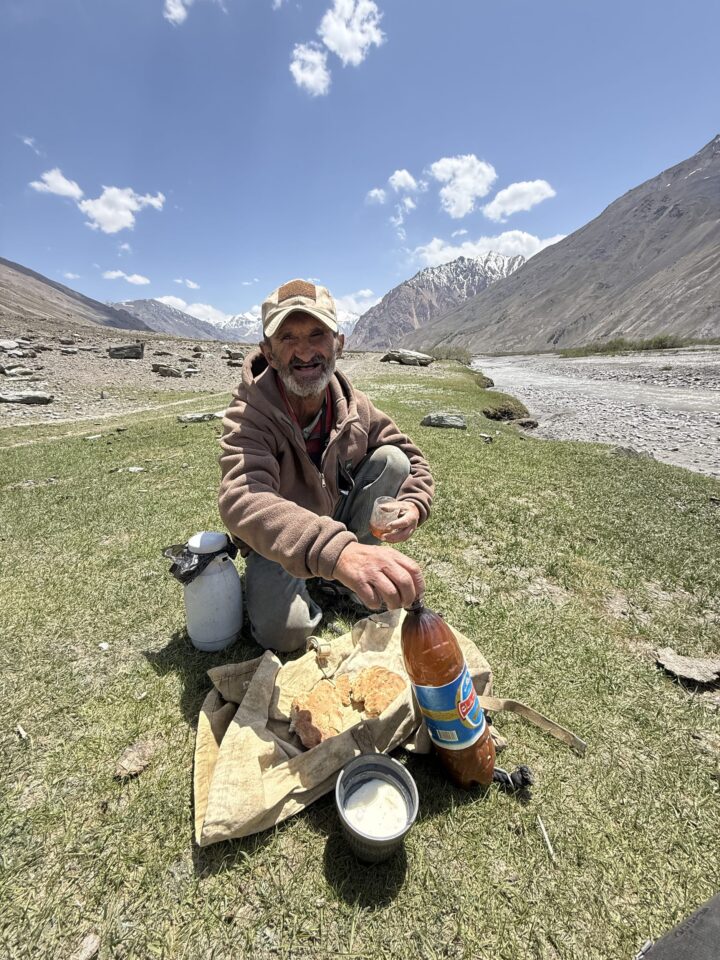
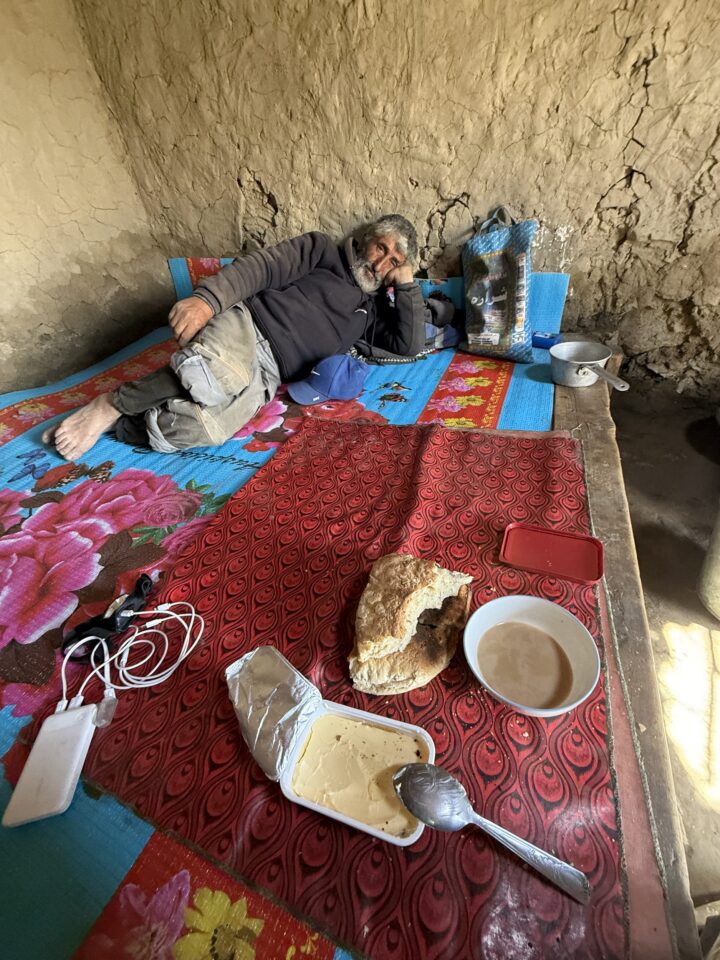
As quickly featured in the movie, on my second morning in the Bartang Valley—a remote valley in the Pamir Mountains—I forgot a backpack with extra food and gear in it at my morning camp. Considering I would have had to backtrack all the miles I had covered that morning, I decided to push on and try to reach the next village with the little food I had left. It wasn’t life-or-death or anything, but it was a bit scary to be in the middle of nowhere with only a can of tuna remaining. As I continued forward that day, I ran into a shepherd riding his donkey. He pulled out his backpack, which had a thermos with tea and a second bottle of fresh cow’s milk, and laid it out on the grass with bread. He was the first person I’d seen in two days. Despite having no common language, we shared a special moment along a river. The food he gave me and the time we shared together gave me enough of a boost—both moral and physical—to keep pushing until I arrived in the small village of Gudara that night, where I found more food. Oftentimes in the most remote places, you’ll find the most kindness. Funnily enough, I was able to describe to someone in the village of Gudara where I had left the bag, and a few days later, when I arrived back on the main road of the Pamir Highway, I was surprised when a car stopped to give me back the bag I had lost!
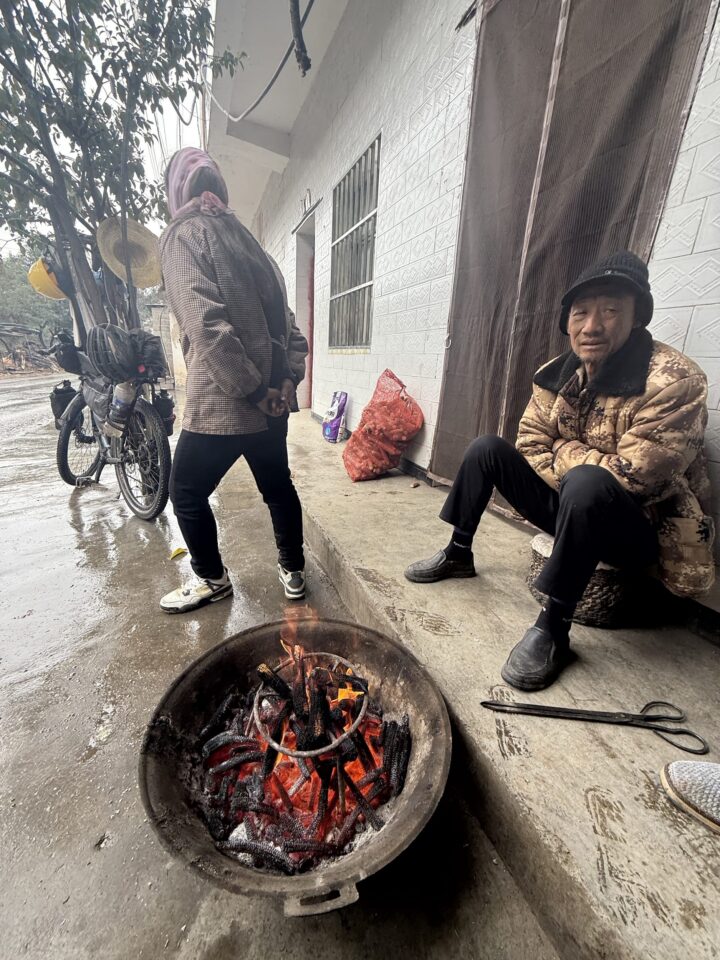
But ultimately, it really is the micro-interactions with strangers every day. Cars in the Outback stopping to give me water and have a chat. Or high-fiving smiling kids on the side of the road in Vietnam. Or the truck drivers in China who gave me fresh tomatoes in the middle of the Gobi Desert. Or my Warmshowers host, who let me stay in his penthouse in Almaty for over a week. Or the shepherds in the Bartang Valley giving me bread and tea. Or the security guard at a car dealership in Syria who let me sleep in his cot when I couldn’t find anywhere else to sleep. There are just too many moments to list them all. I guess one that really stands out for me is in Saudi Arabia. During this desert stretch, a man stopped to give me water as the sun was setting. He ended up inviting me to his “chalet” when I arrived in his town a few days later. He and his cousins treated me like a king—they bought me traditional Saudi garb, got me a haircut, a Moroccan bath, a massage, food, and gave me a room to stay in for a few days. They shared their daily lives with me, rejuvenating me for my final push to Beirut in a moment when I really needed it.

Never Stop, Samer!
To see where Samer heads next, check out his website and follow along at his Instagram, @Samer.Bikes. It’s packed with photos and videos from his 74,000-kilometre journey.
Further Reading
Make sure to dig into these related articles for more info…
Please keep the conversation civil, constructive, and inclusive, or your comment will be removed.