
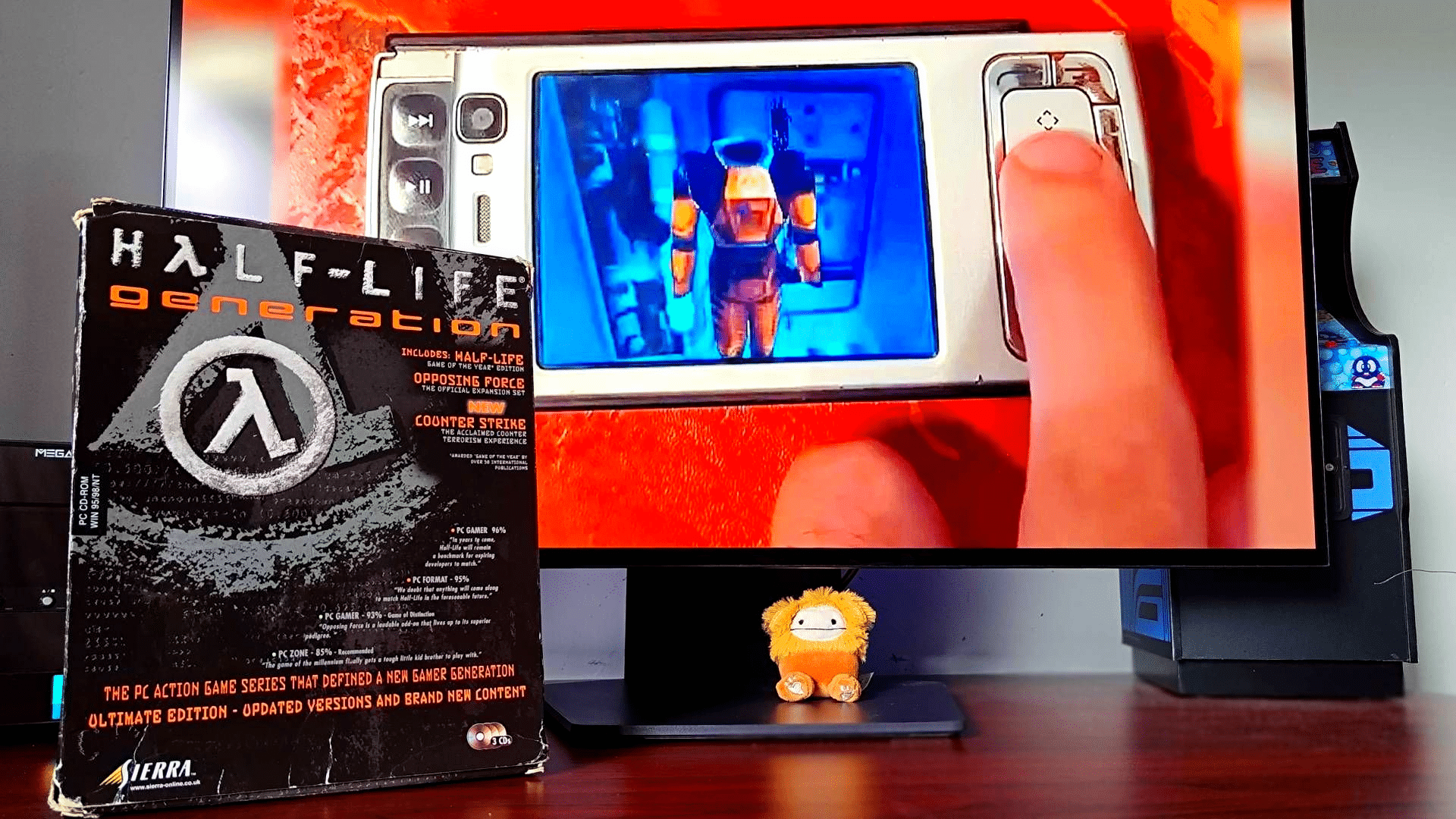
A solo developer has managed to get Half-Life running surprisingly smoothly on the Nokia N95.
Actually, Doom has already earned a reputation for running on just about everyelectronic device—anda few other things. But since they’re apparently running out of ideas here, we might as well turn to other classics.
Argentine developer Dante Leoncini has taken on Half-Life and dug outan old Nokia from 2007from the drawer.
But does it run Half-Life?
For his unusual port, Leoncini is using theNokia N95—a slide-out phone that runs on the Symbian operating system. He’s sharing updates on his project on his X account, among other places:
Still polishing the weapons, plus a few performance and graphical details. But the full controls are already working. You can create a dedicated server and use all weapons. Next steps are LAN/network play with other computersNokia Symbian Valve Steam HalfLife pic.twitter.com/sSACKTIE3H
— Dante D. Leoncini (@dante_leoncini) June 7, 2026
Since the Nokia N95 runs Windows, Leoncini couldn’t simply use an emulated version of the PC version of Half-Life. To port the shooter, the developer used the open-source Xash3D engine, which is compatible with Valve’s retro engine, GoldSrc.
He didn’t have to make any direct modifications to the Nokia itself. When Half-Life was released in 1998, the minimum system requirements were a 133-MHz Pentium processor and 24 MB of RAM—requirements that the Nokia N95 more than meets. It comes—at least on paper—with a dual-core CPU running at 332 MHz and 64 MB of RAM.
Leoncini can now play Half-Lifeat 30 FPS quite smoothlyon the Nokia, even using a mouse and keyboard. In the future, he also plans to integrate Wi-Fi multiplayer and mod support.
ultiplayer and mod support.
By the way, Half-Life isn’t the only game Leoncini has optimized for the Nokia. Just recently, heGTA 3into a retro handheld format and is currently working on Rollercoaster Tycoon 2.
But Leoncini isn’t just passing the time with these projects—he is also pursuing a specific goal. For one thing, he wants to draw attention to the fact that modern technology often has an expiration date and thus contributes to the millions of metric tons of electronic waste generated every year. His goal is to demonstrate just how powerful old hardware can still be.
On the other hand, he views software used for video games and ports as an art form in its own right. Developers, he says, fight hard to get the most out of the hardware.