
This is a hot topic. Ever since the pandemic, the diminishing ball quality has been discussed from the ATP tour to the club level. What are the best tennis balls right now? We want to hear from you.
We all have our personal favorites, but probably also some tennis balls that we absolutely loathe. Let’s try to keep it pretty fair and balanced and focus on the positives, but I do want to hear your thoughts in the comments.
I am currently using the Kuikma Pro from Decathlon a lot and that has been holding up pretty well. But after two hours of hitting against strong players, pretty much every ball is gone. Which means we are running through a can per session. This is to be expected, but some balls seem to struggle to last a full hour even.
Vote for your favorite tennis ball
Below you can vote on your favorite, and read a bit more about what is on the market. Remember, it’s not only which balls you prefer, but which ones actually last. Which brands have maintained quality? Which ones have gone downhill? Which ones feel great straight from opening the can. Which ones take 20 minutes to open up?
Dunlop tennis balls
Dunlop Sport has a long history in tennis and currently supplies the Australian Open and ATP Tour events.
The classic Dunlop Fort ball is known for its consistency and reliable bounce. Compared to Wilson, Dunlop balls often feel slightly heavier and more controlled, with a stable trajectory that appeals to players who prioritize precision over explosiveness.
The Dunlop ATP version is somewhat faster and less prone to fluffing, making it better suited to aggressive play. Overall, Dunlop balls reward clean timing and structured point construction.
In my experience, Dunlop Fort currently lasts the longest; the other two main Dunlop balls seem to fluff up faster. Overall, Dunlop tennis balls come out great out of the can, but fluff up like guinea pigs pretty quickly.
What is your experience with Dunlop tennis balls? I used to be a fan of Fort, but after the pandemic, they seemed to drop in quality. However, recent cans are a bit better again. Dunlop AO and ATP fluff up too fast in my experience.
Wilson tennis balls
The Wilson US Open is an icon in the game and has been around since the late 70s, when it became the official ball of the US Open. It is a solid performer, and the reviews are overall very good for a tennis ball these days. If you play on hard courts, go for the extra duty version.
Wilson Roland Garros does not have the legacy of the American. Wilson took over the RG ball partnership from Babolat in 2020, which had held it for 10 years. The change made some players happy and others not, because the Wilson ball felt heavier off the racquet and had thicker felt. This made the ball more durable over long rallies, but they will get fluffier and heavier over time, making it difficult to hit winners compared to the more lively Babolat ball.
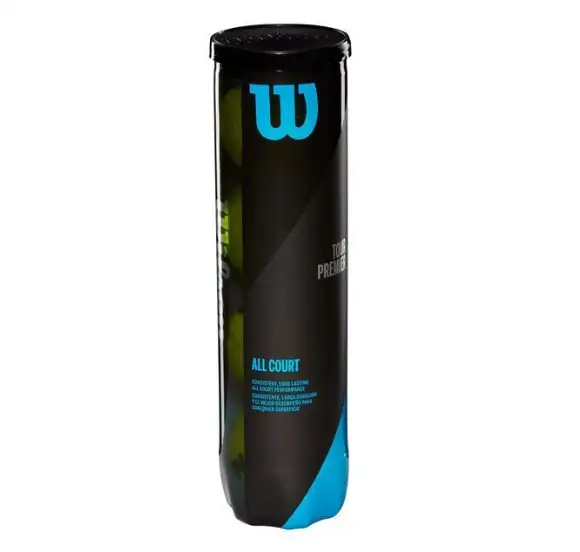
The Wilson balls have, in my experience, been the most consistent after the pandemic. See also our review on the Wilson Tour Premier balls.
Head and Penn tennis balls
Head owns Penn, which dominates the recreational and club market in the United States.
Penn has historically been one of the most influential brands in tennis ball development. It introduced pressurized packaging in the 1920s and played a key role in the adoption of high-visibility yellow balls in the television era.
Performance-wise, Penn Championship balls are affordable and reasonably durable (some would argue this), making them a staple for club play.
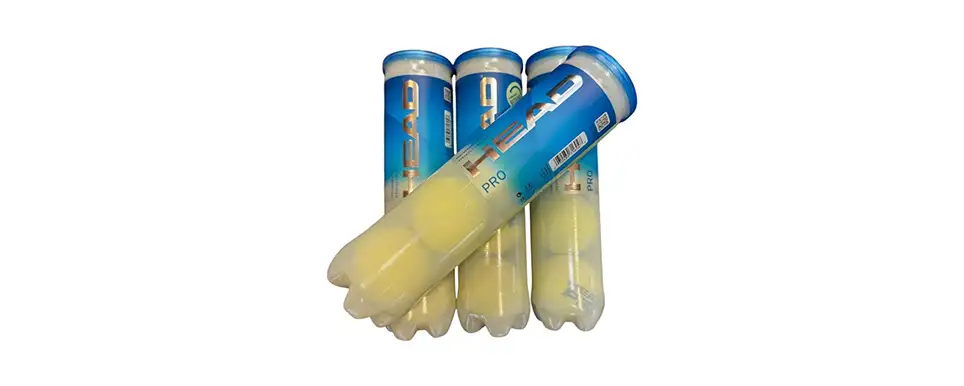
Head-branded balls, such as the Tour XT, offer a softer, more immediately playable feel than many competitors, appealing to players who prefer comfort and control straight out of the can. The issue with the HEAD Tour XT ball post-pandemic is that the felt does not seem to last longer than 45 min of hard hitting. I heard that they are improving the felt and rubber quality and I tested a prototype ball that was good, but I have yet to open a can of HEAD Tour XT after the pandemic that gives me a good vibe in terms of durability.
Babolat tennis balls
Babolat supplied Roland-Garros from 2011 to 2019 and remains known for producing lively, fast-playing balls.
Babolat balls typically feature a thinner felt and a more responsive core, resulting in a higher bounce and quicker speed through the air. They are particularly well-suited to aggressive baseliners who like to take the ball early and flatten out their shots. This is the kind of ball that Medvedev would appreciate.
The trade-off is reduced durability. Compared to Wilson or Dunlop, Babolat balls tend to lose pressure and consistency more quickly, especially in heavy conditions.
Slazenger tennis balls
Slazenger holds the longest-standing partnership in tennis as the official ball supplier of Wimbledon since 1902.
Slazenger balls are designed specifically for grass, with a lower bounce and skidding behavior that complements fast, low-bouncing courts. The felt composition is adapted to maintain performance on slick surfaces while resisting excessive wear.
While less commonly used outside grass, Slazenger remains a symbol of continuity in a sport otherwise defined by constant evolution.
Tecnifibre tennis balls
Tecnifibre balls offer a slightly softer feel than Wilson, combined with decent durability and consistent bounce. They sit somewhere between Wilson and Dunlop in terms of performance, appealing to players who want a premium feel without excessive firmness. Personally, I feel like their liveliness is not as strong as with Babolat balls, but it is not completely dissimilar.
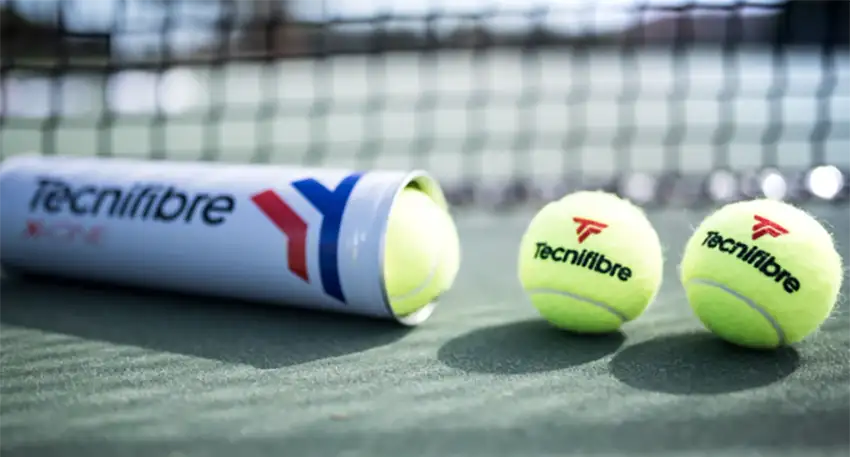
Tecnifibre has steadily increased its presence in professional tournaments and is gaining recognition for its high-quality construction. Availability remains more limited compared to larger brands, but their reputation continues to grow. Below the Tecnifibre X-One balls.
Tretorn tennis balls
Tretorn is one of the oldest names in tennis ball manufacturing, with roots dating back to the early 20th century. While the brand is less visible on the professional tour today, it has carved out a unique niche through innovation rather than sponsorship.
Tretorn is best known for its Micro X balls, which introduced a fundamentally different construction compared to traditional pressurized balls. Instead of relying on internal air pressure, the Micro X uses a core filled with millions of air-filled microcells, creating what is often described as a “hybrid” ball.
This design allows the ball to maintain a consistent bounce over an extremely long period. Unlike standard balls, which begin to lose pressure as soon as the can is opened, Tretorn balls effectively eliminate this issue. In practice, they can retain their playing characteristics for months or even years, with the felt wearing out long before the core performance declines.
In terms of playability, Tretorn balls tend to feel slightly heavier and firmer on contact. They often produce a more pronounced sound at impact and can play marginally faster through the air. While they aim to replicate the feel of pressurized balls, there is still a noticeable difference, particularly for players accustomed to traditional match balls.
Where Tretorn truly excels is durability. The Micro X is widely regarded as one of the longest-lasting tennis balls available, making it a staple for coaches, academies and ball machine users. Its consistent bounce and resistance to environmental conditions also make it particularly effective in cold weather or at high altitude, where standard balls can lose performance quickly.
RS tennis balls
RS Sports was founded by former world No. 4 Robin Söderling, and the brand reflects a player-centric approach to equipment design.
RS balls, particularly the Tour Edition and Black Edition, are known for their balanced performance. They aim to combine the consistency of Wilson with a slightly softer, more playable feel straight out of the can.
In practice, RS balls offer a controlled response with moderate speed and a predictable bounce. They do not stand out in any extreme direction, which is precisely their strength. The goal is neutrality and reliability across different conditions.
Durability is competitive with other premium balls, and they tend to maintain their characteristics reasonably well over extended play.
Diadem tennis balls
Diadem Sports is a relatively young company, but it has been expanding rapidly, particularly in the United States.
The Diadem Premier ball is positioned as a premium offering, designed to compete with Wilson and Dunlop. It features a high-quality woven felt and a responsive core, resulting in a crisp, slightly lively feel.
In play, Diadem balls tend to sit on the faster side of the spectrum, with a clean strike and good initial bounce. They are well suited to aggressive baseliners and players who prefer a ball that does not become overly heavy during rallies.
Durability is solid, though not exceptional compared to the very top-tier balls. However, for a newer brand, Diadem has managed to deliver a product that feels close to established tour standards.
Decathlon (Artengo)
Decathlon, through its in-house brand Artengo (now called Kuikma), has quietly become one of the most widely used tennis ball providers in Europe, particularly at the club and recreational level.
Artengo balls such as the TB920 and TB930 lines (their premium is now called Kuikma Pro, which plays somewhere in between Wilson US Open and Dunlop Fort) have gained a reputation for offering strong performance at a lower price point. They typically provide a medium-soft feel with a fairly lively bounce early on, making them accessible for a wide range of players.
Durability for the Pro model is above-average. We have been using the balls fairly regularly and there is no problem to play with these for two hours of solid hitting.
One notable strength is their consistency across batches, something Decathlon has invested heavily in through centralized production and quality control.
What Actually Makes Balls Play Differently
Across all brands, performance differences come down to three main factors.
Felt composition determines how much clay or moisture the ball absorbs, influencing speed and spin. Thicker felt generally leads to slower, heavier balls that promote longer rallies.
Core pressure and rubber density affect bounce height and liveliness. Higher pressure typically produces a faster, more explosive ball, while lower pressure emphasizes control.
Fluffing rate describes how quickly the felt expands during play. Balls that fluff quickly become slower and harder to hit through, a key factor on clay courts.
Premium balls typically use woven felt, which offers better durability and performance consistency, while cheaper balls rely on needle-punched felt that wears out more quickly.
Historical Perspective and Trivia
Tennis balls were not always the bright yellow objects we recognize today. Until the 1970s, balls were predominantly white or black. The shift to optic yellow was driven by television broadcasting, as it improved visibility for viewers.
The introduction of pressurized cans in the early twentieth century was a major technological breakthrough, allowing balls to maintain consistent performance from the factory to the court.
Today, it is estimated that hundreds of millions of tennis balls are produced annually, making them one of the most consumed pieces of equipment in sport.
Among brands, Slazenger’s partnership with Wimbledon stands as the longest continuous sponsorship in tennis history, while companies like Penn and Wilson have shaped the technical evolution of the ball itself.
Final Thoughts
There is no universally “best” tennis ball. Each brand represents a set of trade-offs between speed, durability, feel and consistency.
At the professional level, these differences can subtly influence tactics and outcomes. At the club level, they can shape the playing experience just as much as racquet or string choice.
Understanding how different balls perform allows players to make more informed choices, and offers insight into one of the sport’s most underrated variables.
We are now keen to understand your experiences with tennis balls. Do you have any favorites? Is there anything you should avoid? Sharing among the tennis nerd community can help other players avoid common mistakes.