
0

0
Read Time:4 Minute, 5 Second
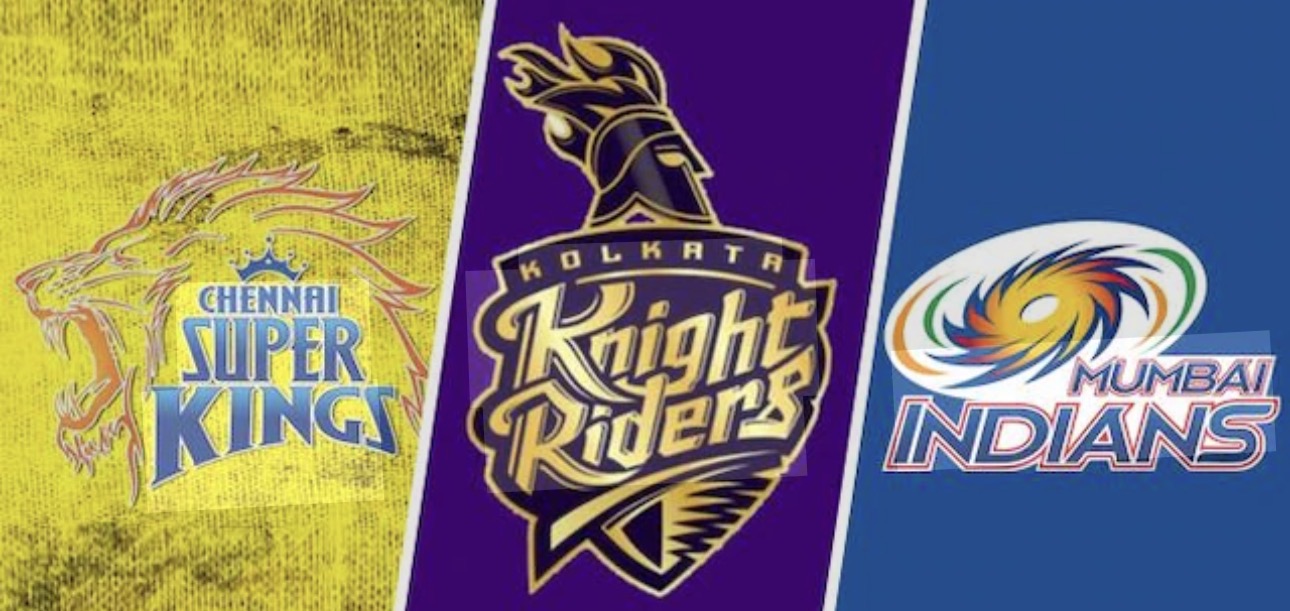
Internal politics, one-dimensional thinking, and an almost paranoid dependence on individuals have contributed to the decline of five-time champions Mumbai Indians and Chennai Super Kings, along with Kolkata Knight Riders, who boast three IPL titles.
Once hailed as benchmarks for nurturing talent and instilling confidence in players, both Mumbai and Chennai set exceptionally high standards in the IPL. Their operational templates were so robust that even management students could study and emulate their methods in professional setups.
However, over the past couple of years, all three champion sides have slipped off the radar, repeatedly making errors in their attempts to fix underlying issues — often compounding problems rather than resolving them.
To start with Mumbai Indians — a franchise once celebrated, much like CSK, for backing its players — the wheels came off when they made the contentious decision to remove their five-time title-winning captain Rohit Sharma from leadership role, even as he was captaining India’s T20 side.
The move to bring back Hardik Pandya and immediately hand him the captaincy only deepened the cracks. It triggered resentment within the dressing room, creating visible fault lines. The team appeared split into factions, with internal discord eroding a culture that had once been its greatest strength. The damage ran so deep that even a powerful management group struggled to restore order.
This was a side once known for ticking every box — dominant opening pairs, a formidable middle order, and a multi-dimensional bowling attack. But the gradual exit of stalwarts like Lasith Malinga and Kieron Pollard left a void that was never adequately filled.
Under Hardik’s leadership, the team has struggled to gel. While they did manage to scrape into the playoffs last season, it felt more like a consolation than a reflection of the dominance once synonymous with Mumbai Indians.
Now, the buzz around Mumbai Indians is already growing louder—they are expected to undergo a major revamp next season in a bid to reclaim their golden days. But that’s far easier said than done. Another five-time champion, CSK, knows this better than anyone.
CSK’s prolonged reluctance to move beyond MS Dhoni is now at the heart of their struggles. A team that revolved almost entirely around one figure is paying the price for not planning a transition in time. While that dependence once worked in their favour, it has now exposed structural weaknesses.
For years, Chennai thrived not on raw pace or flamboyance, but on character. They were a side built for big moments — players who could absorb pressure and deliver in knockout games. Their championship DNA mirrored the resilience of the great Australia national cricket team in their dominant era. With Dhoni orchestrating proceedings from behind — and often in front of — the stumps, CSK appeared almost invincible, regularly making IPL finals.
However, that very over-reliance on Dhoni has led to their gradual decline. Dhoni’s ability to extract the best out of raw talent once made CSK a near-magical unit. But as time caught up and that aura began to fade, so too did the team’s edge. The absence of a strong succession plan has left Chennai grappling with an identity crisis—one that is proving difficult to resolve.
Even Kolkata Knight Riders have largely revolved around Gautam Gambhir—the man who delivered two IPL titles as captain and later added another as mentor to the Shah Rukh Khan co-owned franchise.
In the phase between Gambhir’s playing and mentoring stints, KKR still boasted quality personnel and remained a formidable unit, capable of striking fear into opponents. Much like Mumbai Indians and Chennai Super Kings, they consistently produced match-winners and maintained a strong competitive edge.
However, cracks began to emerge behind the scenes. A stagnant internal management structure, coupled with persistent lobbying and questionable selection biases, hurt the team’s long-term stability. The dressing room, too, seemed fragmented at times, with multiple groups affecting overall balance and cohesion.
The decision to release Shreyas Iyer — a title-winning captain — into the auction proved to be a costly miscalculation. It exposed a flawed sense of overconfidence within the setup. If KKR were truly as strong as they believed, a title-winning side should not have unraveled so quickly after lifting the 2024 IPL trophy.
With teams like Royal Challengers Bangalore and Punjab Kings showing renewed promise, along with the ever-competitive Rajasthan Royals, the message is clear—the T20 format is all about constant evolution.
If you fail to keep pace with the changing demands of the game, the consequences are inevitable. Just ask Mumbai Indians, Chennai Super Kings, and Kolkata Knight Riders — once dominant forces, now grappling with the cost of standing still in a format that never waits. At the end of the day, it’s not just about individual brilliance — it’s the right combination that makes or breaks a season.

Happy
0 %

Sad
0 %

Excited
0 %

Sleepy
0 %

Angry
0 %

Surprise
0 %