
As Roland Garros 2026 approaches, organisers are now finishing the last details for the big event. What makes the French Open truly unique? Of course the iconic red surface that has created legends. But is it actually normal clay?
The Recipe for this Iconic Surface in Tennis
What we call “red clay” at Roland Garros is actually an intricate five-layer cake of materials:
From bottom to top:
- Large stones (the foundation)
- About 1 foot of crushed gravel
- 4 inches of crushed coal residue (called “clinker”)
- 3 inches of porous white limestone
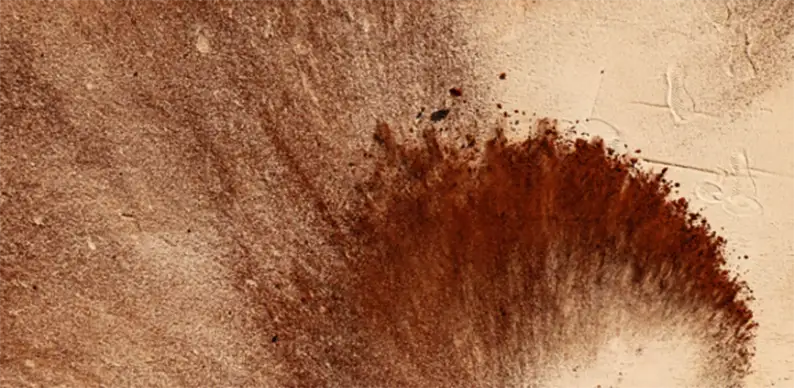
- Just 1-2 millimeters of crushed red brick powder on top
Yes, the “clay” you’re watching on TV is literally crushed house bricks. About 1.1 tons of them per court. With 20 courts at Roland Garros, that’s over 20 tons of pulverized bricks for the tournament.
Our preparation continues ? pic.twitter.com/opodhhB4b4
— Roland-Garros (@rolandgarros) April 22, 2026
For the past 50 years, a company called Supersol has been crushing defective bricks year-round to create Roland Garros’s signature red powder. They use a special machine to grind thousands of reject bricks into the fine dust that gets shipped directly to Paris.
Why not real clay?
You might wonder: why not use actual clay?
Simple: drainage.
Natural clay courts were used for tennis in the early 1900s. After even short rain showers, courts would be unplayable for 2-3 days. When Roland Garros was constructed in 1928, this limestone/crushed brick combination (originally developed in Britain) was revolutionary. It played and looked like clay but drained beautifully.
The solution was so good that true natural clay courts have essentially been close to obsolete for nearly a century. Almost every “clay” court you see today uses some variation of this system.
The Daily Grind
Bruno Slastan, who led the 162-person groundcrew since 1989 (and showed up to work in Iron Maiden t-shirts, because apparently that’s the official uniform of clay court perfection), used to oversee an elaborate daily ritual:
During matches:
- Courts are swept between games
- Surface is watered at set breaks to prevent dust from blowing (you won’t see this for every match now though)
- Lines are cleaned constantly
After play:
- Courts get a thorough drenching
- Covered with green tarpaulins for the night
- Next morning: raking
- Calcium chloride powder is spread across the surface
The philosophy? “To become a good court man, you need five years.”
The Red Dirt Effect
This unique surface fundamentally changes tennis:
Slows down the ball: Power hitters lose their advantage and spin becomes more important. Nadal, one of the clay GOAT’s, won 14 French Opens not by overpowering opponents but by mastering the physics of red brick dust.
Higher bounces: Especially for topspin shots. The gritty texture grips the ball differently than hard courts or grass.
Extended rallies: Points last longer. Matches become physical wars of attrition.
Easier on joints: The surface is more forgiving on players backs, hips, knees and ankles. But the longer rallies make it brutally demanding. That’s partly why the 2025 Sincaraz final was so impressive to watch.
The Champions It’s Broken
The French Open’s unique surface has humbled some of the best players ever:
- John McEnroe went 82-3 in 1984 (perhaps the greatest single season in tennis history) but never won Roland Garros
- Pete Sampras never lifted the Coupe des Mousquetaires despite 14 Grand Slams
- Roger Federer won just once despite being arguably the most talented player ever
- Jimmy Connors, Boris Becker, Stefan Edberg – all multiple Slam champions who couldn’t conquer the red dirt
With Rafa it was different. Fourteen titles. A 112-4 record that borders on the supernatural.
Roland Garros 2026 runs May 18 – June 7 (including qualifiers). The tournament will feature wearable technology for the first time at a Grand Slam, allowing players to track biometric data during matches. But the courts? Those will be the same crushed bricks that have been humbling champions since 1928.