
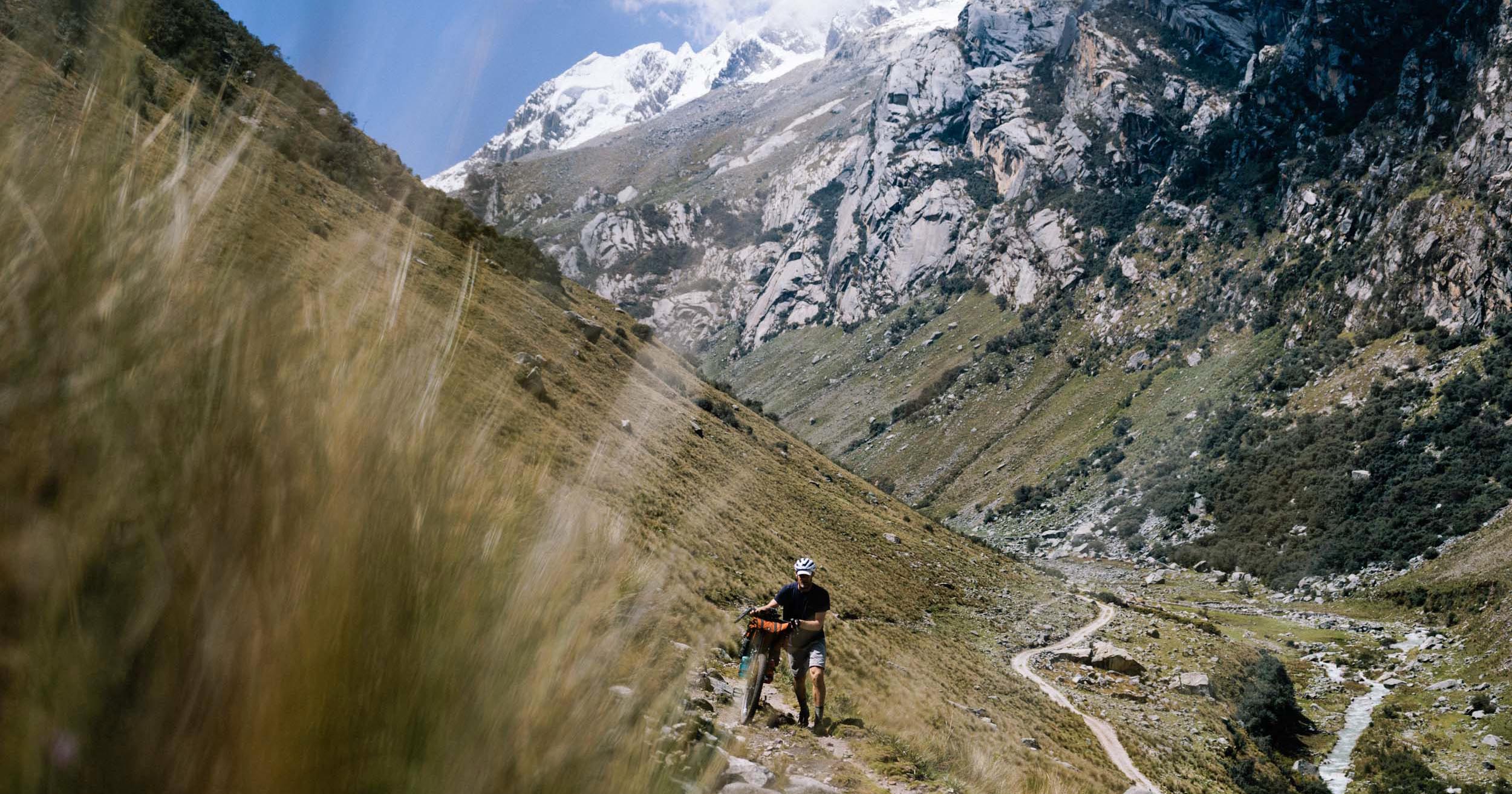
Hike-a-bikes have a habit of embedding themselves deep in our memories. Returning to Peru’s Cordillera Blanca after a long hiatus, Cass re-rides a “leisurely” overnight route with a “modest” hike-a-bike, or so he described it in his blog at the time. Will he think the same, almost 15 years later? Find out here and see other acclimatization day-ride routes for those headed off to tackle the Peru Great Divide…
“Quebrada Forays: Leisurely Hike-a-Bikes in the Cordillera Blanca” was my working title for the post. It’s a nod to cycling and hiking guidebooks from the 1990s—the kind you find, well-thumbed and faded, on the bookshelves of a traveller’s hostel or tucked away in a holiday cottage. I enjoy their understated turn of phrase. In a media landscape of soundbite thumbnails and Instagram scrolls, the unrushed written word feels refreshing, labours of love complete with hand-drawn maps that convey as much about the author’s take on life as the trails they’re describing. One example is Jeremy Ashcroft’s Mountain bike guide, “The Lake District, the Howgills & the Yorkshire Dales.” It highlights the more technical cols in the area, like Walnar Scar, Black Sail, and Skiddaw, which often required regular dismounts and at times lengthy bike pushes to complete. These outings, as it happens, aren’t so very different from the quebrada forays documented here…
Two-wheeled visitors to Peru’s Cordillera Blanca are—quite rightly—drawn to the area’s premier bikepacking route. The Huascarán Circuit circumnavigates the Nevado Huascarán, the highest peak in the range at 6,768 metres, and, for that matter, in Peru. Or, for those with the time and tenacity, they gather in Huaraz, its largest town, to spend a few days acclimatising and preparing themselves for the epic 1,600-kilometre Peru Great Divide.


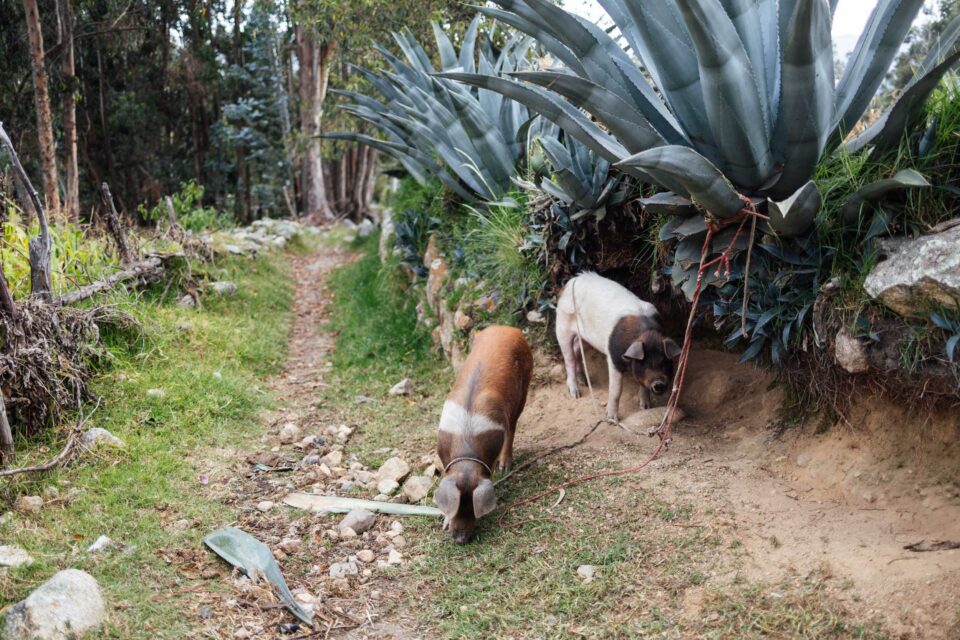
Runaway piglets and exhausted mums is an endearing sight in Peruvian villages, as is greener grass if you could only reach it.
However, less known to many are the area’s numerous quebradas, each a narrow valley carved raw by a series of glaciers in times past, sometimes a hundred metres or more deep. A glance at a map will reveal half a dozen of them with a short ride from Huaraz, extending into the Cordillera Blanca like fingers on a hand. As I discovered when I first rode through Peru in 2012, each quebrada offers a passage into a whimsical world of giant boulders, lupines, alpine lakes, and towering glaciers, far removed from the cacophony of car horns and South American street hubbub that are so close by. At the time, I was technically on a transcontinental journey and had a direction to ride. South. But I became obsessed by them, riding as many of these quebrada forays as I could, cataloguing them all on the blog that I devoutly kept at the time.
As I soon realised, most were out-and-backs, to be enjoyed either as a challenging day ride or halved into more leisurely overnighters. Some were more rideable than others, and on occasion, I’d even stash my bike behind a boulder, don my running shoes, and scamper around like a fell runner. But Quebrada Rajucolta was a welcome anomaly, because it could be connected to the base of neighbouring Quebrada Shalop via a steep hike-a-bike and a rambunctious high pampa trail. I’m not sure how I first came across it—either by poring over one of the beautiful topo maps of the Cordillera Blanca that you could find in traveller’s cafes, or perhaps nudged in that direction by Julio Olaza, the godfather of mountain biking in the area. I bet Julio suggested it as a big day ride, and I translated it into two. My steed at the time? Fully rigid, just like my bike now. A trusty Surly Ogre and some prototype bikepacking bags that had been made for me by Porcelain Rocket, which is definitely dating me—and goes some ways to accounting for my hazy memory.

Yet another perfect spot to lay a bike down on the ground and take a photo.
On my very first visit to Huaraz all those years ago, just a handful of blogs, paper maps, and a dog-eared Lonely Planet guidebook were my sources of beta. Nowadays, there’s a wealth of resources online, from Strava heat maps to GPX files galore, and this site of course too. There are also more like-minded riders to share these adventures with. I met Chris, hailing from the UK via Australia, in the comments section of the Peru Great Divide. He’d arrived a couple of days prior and was keen to acclimatise before beginning his journey south. We struck it off straight away, in part thanks to a shared goal of exploring less-travelled roads and a willingness to portage our bikes, which, we noted, were both made from titanium and sported plump tyres. Such qualities, both ours and our steeds’, made a return to Quebrada Rajucolta an ideal undertaking—I’d get to take a trip down memory lane, and Chris could use it as a chance to test gear, acclimatise, and get up close to the Cordillera Blanca, Peru’s most majestic mountain range.

Button up! The shoulder season in the Peruvian Andes can conjure up matte black skies and pelting hail at a moment’s notice.
The Quebrada Rajucolta Overnighter begins with a steep climb, switchbacking towards a viewpoint above the city, from which the full concrete sprawl of Huaraz can be fully appreciated. It then connects, via an introductory hike-a-bike, to a primitive dirt road that continues this climb, albeit more gently, all the way to the rocky portal of the quebrada itself. The distance from Huaraz is extremely short, especially as the condor flies. But that doesn’t mean it’s easy. We plodded slowly along, adjusting to the weight of our bikes and the elevation, taking regular pauses to catch our breath as each metre accrued. Bidding buenas tardes to a lady walking a goat on a leash, we clambered over ancient and storied stone walls where stone and straw roof huts—chosas—were defended by scraggly dogs with a frenzied zeal that belied their size.
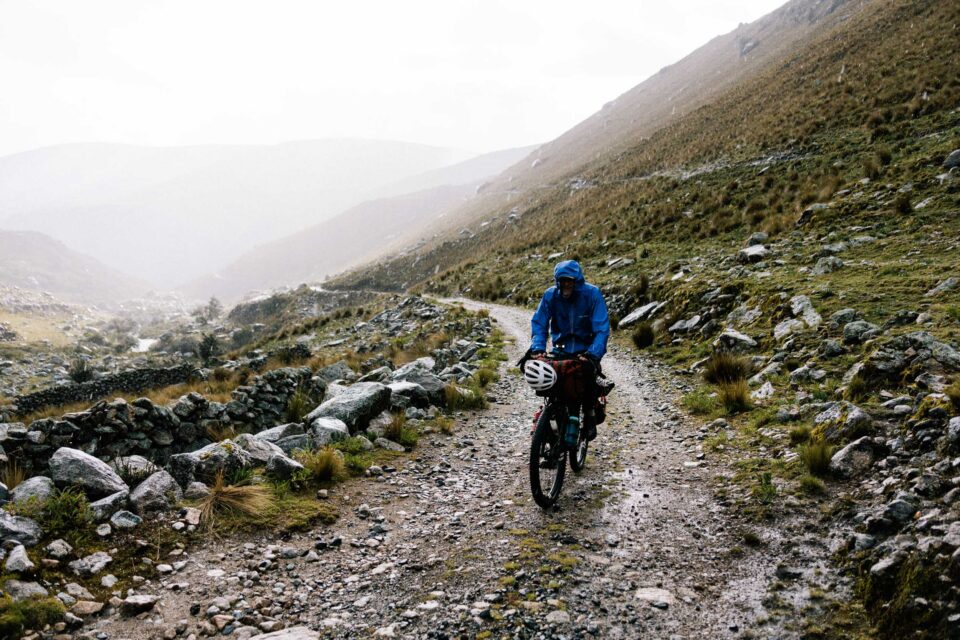

A classic rock clamber, best enjoyed in the rain.
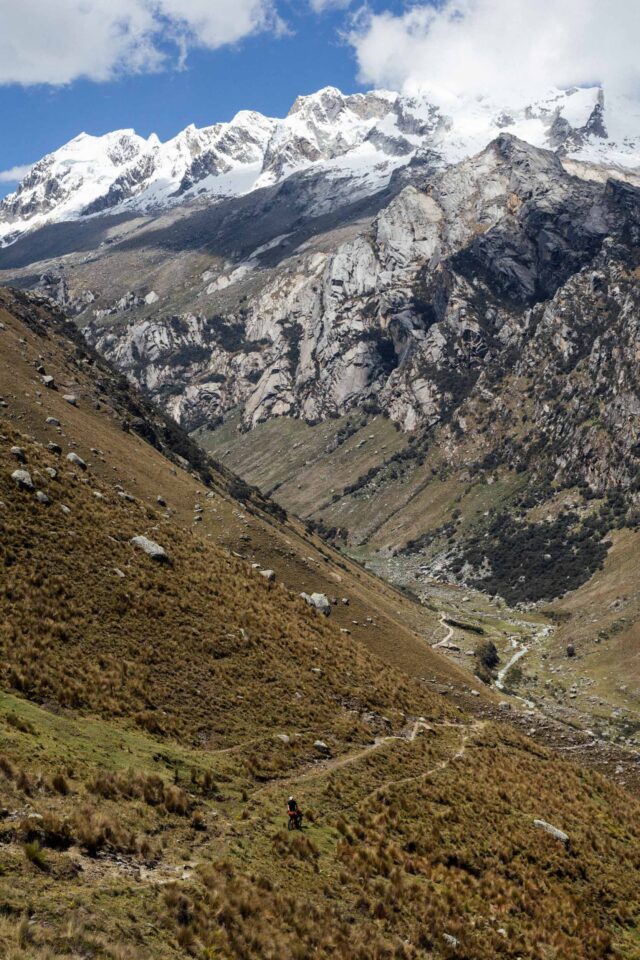
If we’d have got an early start, we might have pitched our tents before the afternoon rains caught up with us. But we didn’t, as gear faffing and morning chores—scooping up fresh bread from the market, small and delicious discs of Pan de Piso—and sourcing a fist-sized chunk of matured Queso Andino from the clucking, cackling cheese ladies—meant we were pelted by hail instead. Into the quebrada we rode, under an ink black sky that made this initial foray especially dramatic. Soon Huantsán appeared in frame, a spectacular, four-peaked snowy massif that rises to an elevation of 6,369 metres, draped in glaciers that appeared and disappeared from view, shrouded by a thick band of ominous cloud. The steep-sided avenue of rock in which we found ourselves was marked by deep gouges and pronounced scars, presumably left by rocks and boulders dragged along by glaciers during the last ice age. But the main question we asked ourselves was what kind of view we wanted. Should we cycle deeper into the quebrada for a sense of full, neck-craning grandeur, or should we hang back for a more contextual vista? We settled on a spot by the river that afforded a bit of both, along with the company of a dozen lupine-munching cows.
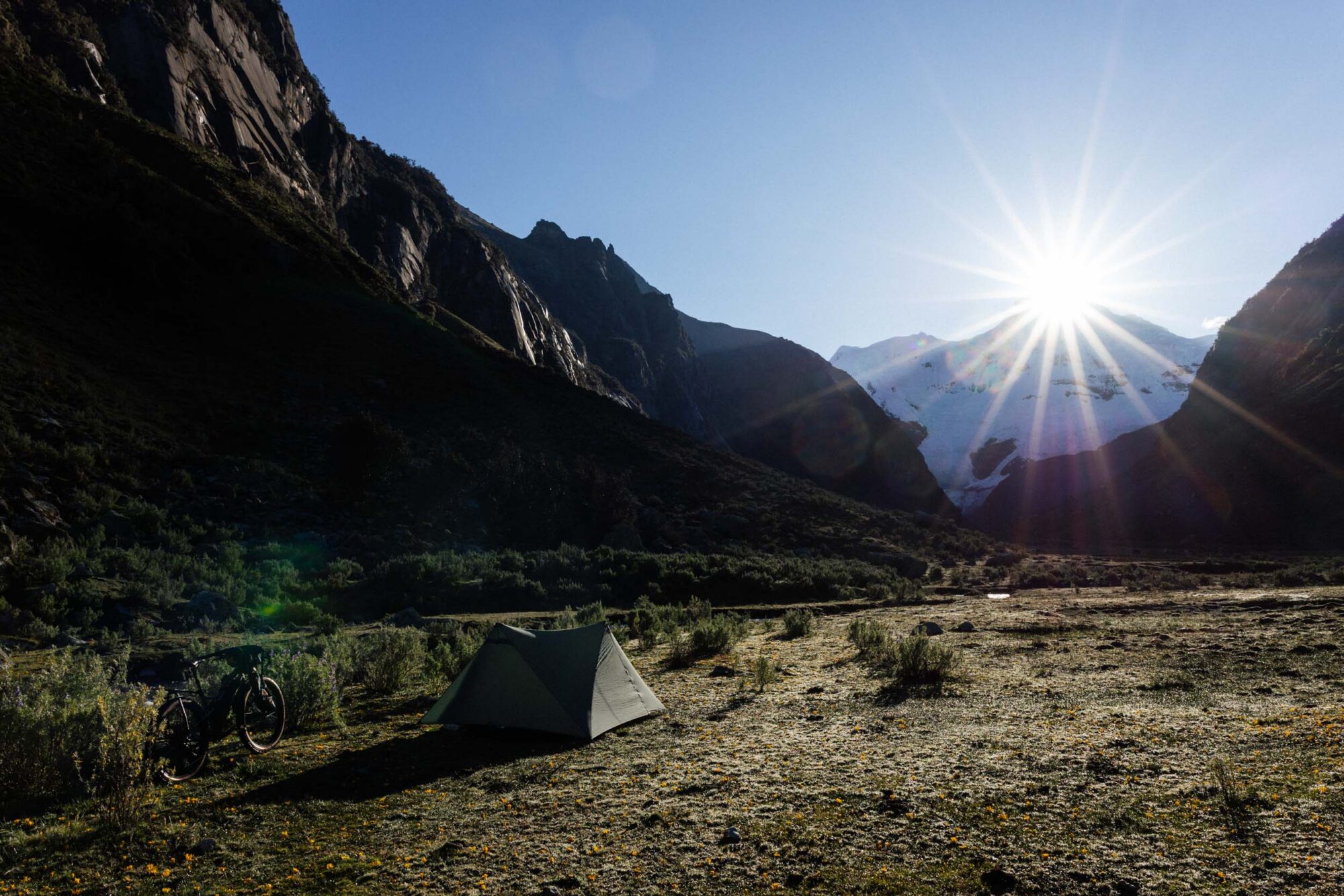
Okay, okay. Just one more game of Grandma’s Footsteps.
At 4,100 metres, the night was cold, and our morning didn’t get going until the sun finally popped over the mountain tops, which it did in a triumphant starburst of light that threw our world into immediate warmth, at least as soon as it clipped our tents. To one side, water cascaded down the mountainside, and to the other, the rockface shone bright. Add a cup of coffee that steamed in the cool air and the scene was complete. Despite our best efforts to shoo our bovine neighbours away, they became ever more fascinated by our presence, creeping up on us when we were packing and our backs were turned, like they were playing a game of Grandma’s Footsteps.
Day two of our foray involved venturing deeper into the quebrada, all the way to the head of the valley, where our necks did indeed need to be craned almost horizontally to take in the full height of the glacier wall. During my initial investigative trip back in 1992, I’d met Hector, an employee of the hydroelectric plant there. He invited me in for piping-hot tea and a bowl of brightly coloured jello_jelly to the Brits—which happens to be a Peruvian favourite. No such luck this time, sadly, though I’m happy to report that the view was as spectacular as I remember it, and in case you’re wondering, the same can be said for Peruvian jello, too. It’s as colourful as I recall and just as popular too, often featuring as a flamboyant, wobbly finale on the cheap lunchtime specials advertised in Huaraz.


Carry the lesson, not the baggage… particularly when you’re expecting even a modest hike-a-bike.
Like a modern-day scribe, I’d transferred the route directions from my old blog onto a Ride With GPS map in anticipation of this trip. Although our newfangled GPX file meant there was no longer any trail divining required, I enjoyed playing along with my notes nonetheless. “Backtrack out of the park, keeping an eye out for the well-defined trail to the north, which leaves from a little west of the entrance gate. After a 45-minute hike, reach a stretch of beautiful pampa, which in turn feeds into a freeform descent to Janku.” It was also interesting to read the somewhat nonchalant tone I’d used at the time to describe the testing push that awaited immediately ahead, assuring any of my readers at the time that it was “relatively mild.” To be fair, it is modest, but only relative to Peru, and I probably could have made that clearer.
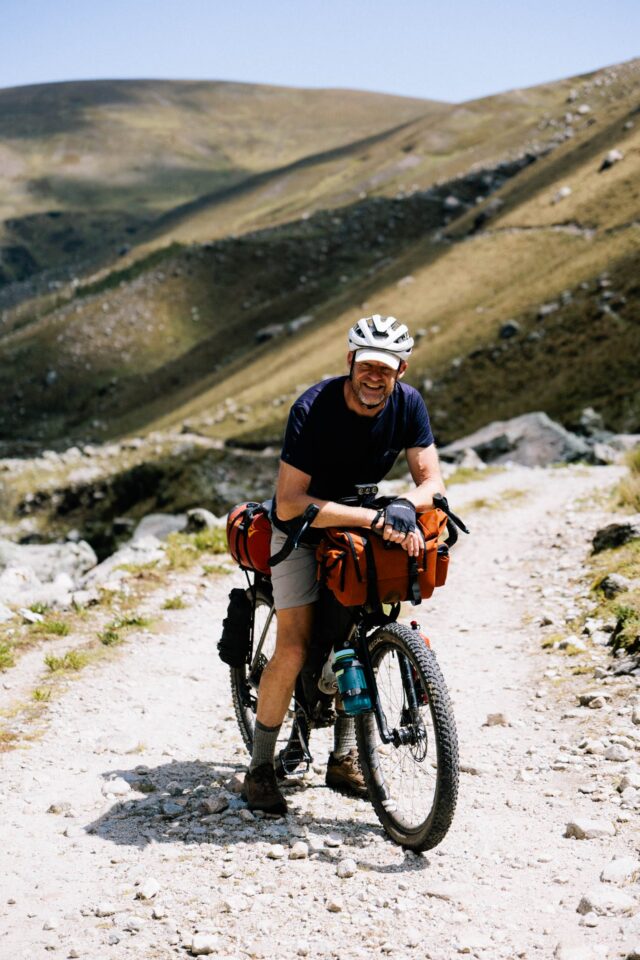


Squint your eyes, and Chris could be 30 years younger, standing in the Lake District.
Re-riding a hike-a-bike made me reflect on how we describe them. I’ve no doubt that rider age, state of mind, bike weight, and, in the case of Peru, acclimatisation, can all play significant roles in how such efforts play out and the way we remember them. Perhaps it was three-quarters of an hour back then; though if my younger self claimed as much, I’m not sure that I’d believe him now. Either way, let’s not fall out over the minutiae of minutes. Whilst our hike-a-bike was admittedly longer than I described it, at least it was mostly pushing and involved only a few protracted bike clambers. Finally, once we’d made it to the top, a loose trail pointed us towards a magnificent ridgeline affording panoramic views, all the more appreciated after our efforts.
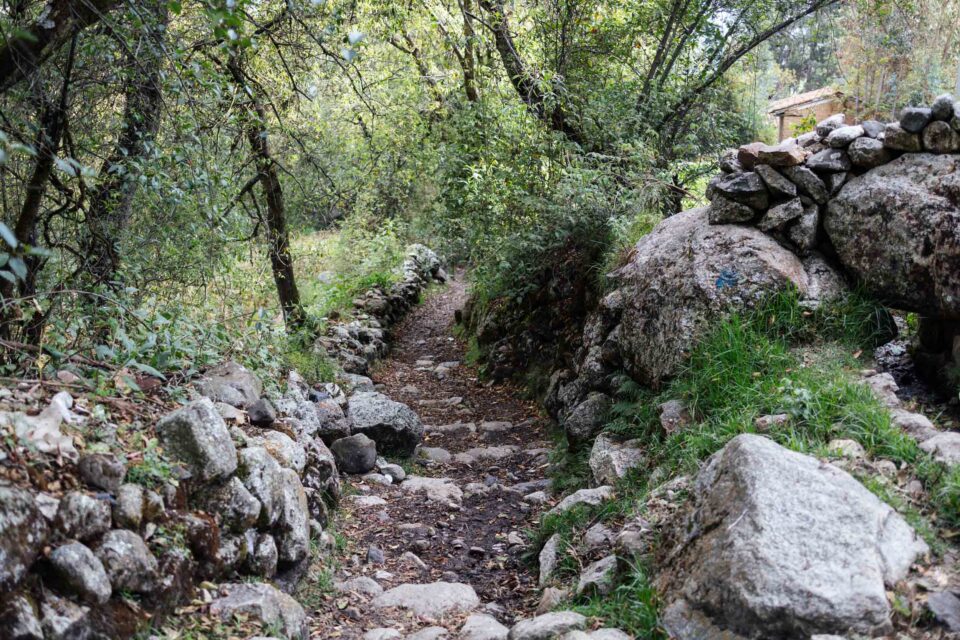
Here, low-slung, pre-Incan stone walls and animal enclosures, in which every tiny rock and giant boulder appeared perfectly placed, both as “objet d’art” and in their practical use. They reminded us, in a conceptual way, of the UK’s Lake District. Not only are the Lakes home to some of the earliest mountain biking in the land, but they’re also, as it happens, infamous for their bike-pushes over similarly rugged and tussocky cols. Our morning bike push reminded Chris of one such crossing. Apparently, his buddy Dave, there, back in the 1990s, clearly exasperated at having ridden for all of five minutes in three hours, slipped, got to his feet, and, like a discus thrower, hurled his bike off into the grass in frustration. Chris chuckled warmly at the memory, like it was yesterday, even if it was actually decades ago, when bright yellow Specialized Rockhoppers and paint-speckled Muddy Foxes roamed the land. For further historical context, it was also an era when Tioga Farmer Johns was the name of my favourite tyre. Shod on 26-inch rims, they claimed to measure a gargantuan 1.95 inches wide, which, as the original marketing spiel of the day promised, were intended “to provide floatation over dirt and rocks,” complete with a photo of John Tomac dressed up as a farmer. What would the Cass and Chris of 30 years ago think of the wheels and tyres we are running now, let alone that we’d flown across the world to push our bikes some more?
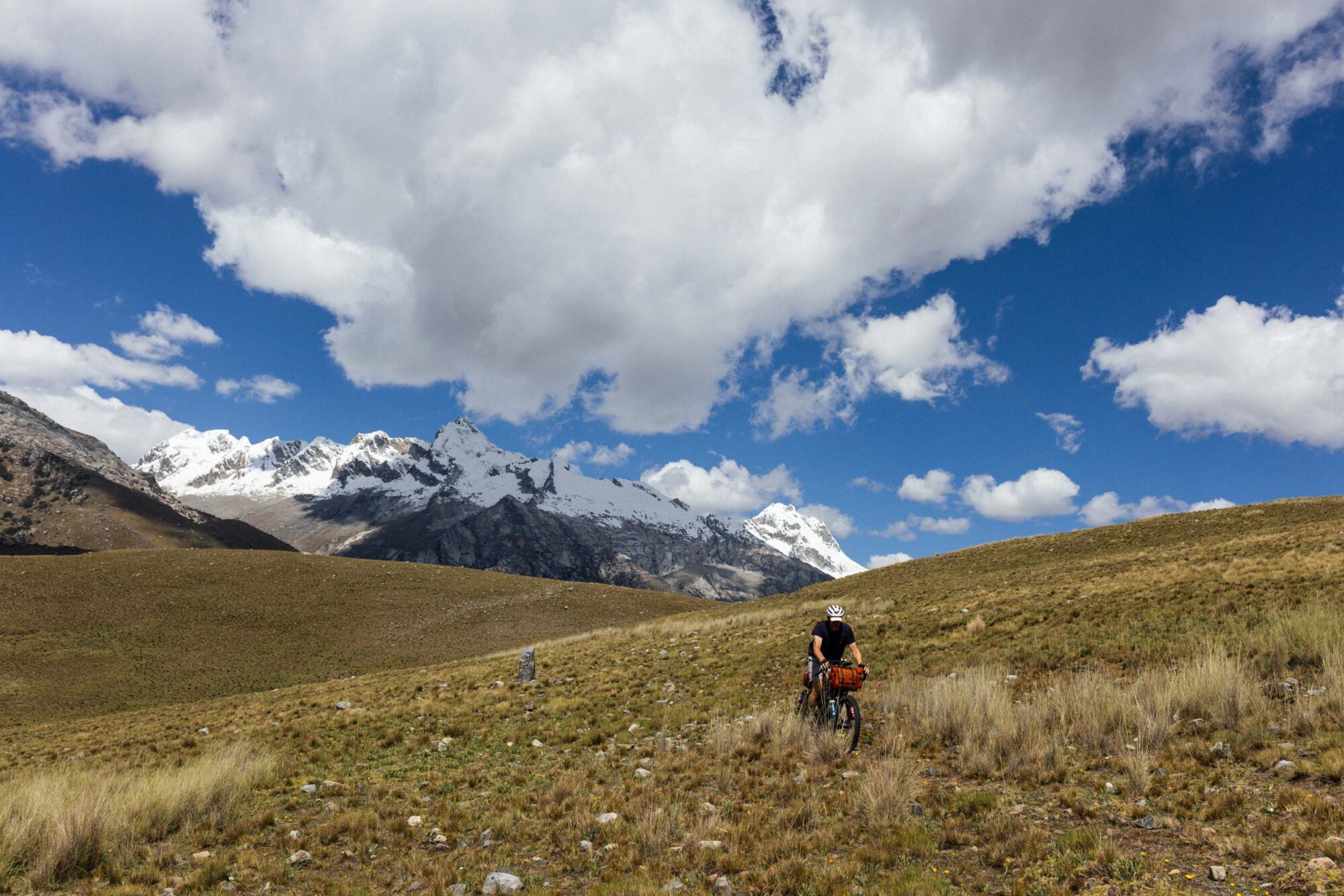

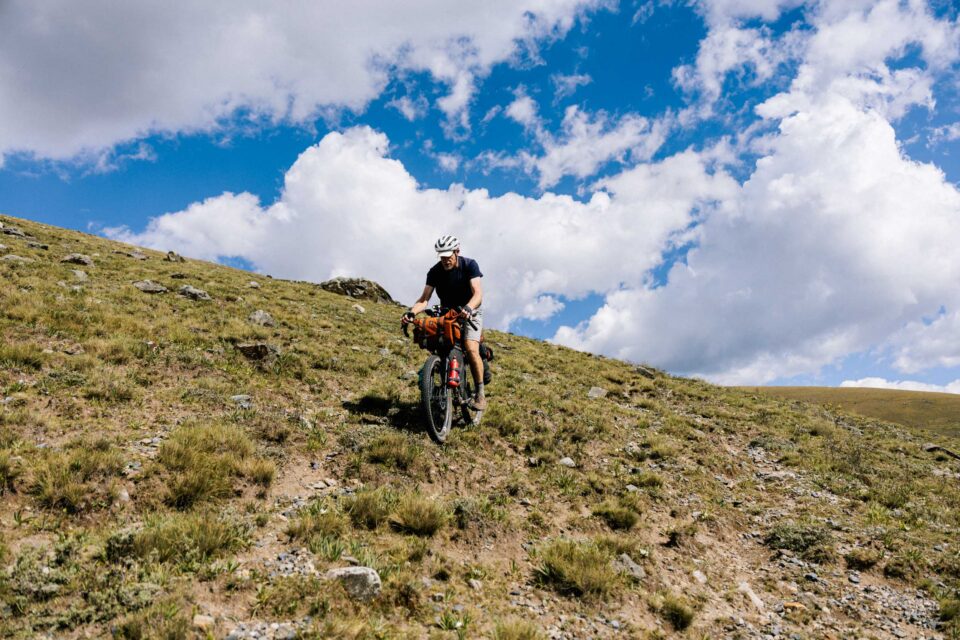
Hike-a-bikes embed themselves in our minds for time eternal. But is the juice worth the squeeze for you?
Onwards we pushed, glad to be pedalling again. According to my blog notes, the spot we’d chosen for our afternoon coffee outside and a round of Andean cheese butties was also the location where I’d double-checked my paper map with a lady tending sheep. It reminded me how, despite adoring my GPS, I do miss the need to confirm directions as an excuse to strike up conversations. And from there, it was “mostly readable” singletrack, to quote from my blog once more, bar one steep and awkward descent to Janku, which I must have forgotten to mention.

My rig. Not as light as some but not as heavy as others.
From idyllic Janku, where strong women in vividly coloured shawls—llicllas—and tall felt hats worked the land, we traced a connecting trail to the head of Quebrada Shalop, Rajucolta’s neighbour to the north. We didn’t have the time or energy for another exploratory foray, so we pushed onwards to the junction of Pitec. Aside from being an access point to a number of day-hikes into these quebradas, as favoured by hikers readying themselves for the Huayhuash and other multi-day yomps, Pitec lies at the head of a fun singletrack flurry that funnels mountain bikers straight into town, via a descent of over a thousand metres. It’s a local classic that runs the pre-Incan gauntlet, whipping through corridors of neatly stacked boulders and rocks, complete with water crossings, adobe dwellings, errant piglets, and donkey traffic jams. It was the route I’d taken last time I’d ridden this loop, but Chris and I were both hungry and tired, so we decided to loop further around on a mellower dirt doubletrack, past the access point for yet another quebrada, this one called Llamac. It was a good decision, as the toils of acclimatisation and our heavy bikes had taken it out of us both. Better to coast down and enjoy the late afternoon light, we agreed.
Peruvian hounds have a mixed reputation amongst bikepackers. They strike fear into the hearts of some and are petted by others.
As we plummeted down from the mountains and abruptly re-entered the city’s noisy atmosphere—outracing a couple of crazy-eyed dogs that took up chase—it took a moment to absorb how much we’d packed into an adventure so very close to Huaraz. Despite its diminutive size, Quebrada Rajucolta remains just as memorable an outing now as it was a decade ago. In the intervening years, my hair may have turned grey and my beard white, but I’m glad to report that my spirit appears to have largely remained the same. Have (Rigid) Bike. Will Ride (or Carry).
No matter how I may describe you in the past, present, or future, thank you, Peru, for being as beautiful, warm-hearted, and welcoming as I remember you.

Quebrada Rajucolta Overnighter
Here’s the route as we rode it. Note that you don’t have to commit to the first mini hike-a-bike. You can ride around it by routing via the settlement of Macashka. And even, in its simplest form, you can just ride in and out of Quebrada Rajucolta the same way, if you’re averse to hike-a-bikes but still want to camp in a glorious area.
Yet more quebradas
As I’ve mentioned, Huaraz promises a wealth of quebrada forays for the curious and unhurried all-terrain bikepacker, especially those who aren’t averse to the odd dismount and bike push. As noisy as this sprawling mountain town can be, it makes a great base for both micro and macro adventures alike. If you’re looking for company to share a foray, check out El Tambo hostel, a gathering point for both through riders on South American epics and visitors honing in on the Cordillera Blanca alike.
Later in the same trip to Peru, I joined forces with Kyla from Alaska, and we ventured into Quebrada Shalop in search of more views and prime camping. Other quebradas I’ve mapped in the past include Ishinca and Quilquayhuanca. Each has its own charm and merit. Some involve more biking… and others more hiking. If you find yourself in Huaraz in preparation for the Peru Great Divide, venturing out into one of them makes for a great shakedown loop—a perfect micro adventure to your macro ride!


Quebrada Shalop, a variation on the boulder, piglet, and white-capped massif theme.
Day rides out of Huaraz
For those looking to boost their red blood cell counts, here are a couple of day rides in the area. Combine the first with the Quebrada Rajucolta Overnighter as a way of dropping back into town via singletrack. The second offers an overview of the Cordillera Blanca and its quebradas, as seen from the Cordillera Negra, on the other side of the valley.
There’s a fee to pay for access in the Huáscaran National Park, depending on how many days you plan to be there. It’s S/30 for the day ($9), S/60 ($18) for three, and a month’s pass costs S/150, which is about $44. As I was there for a few weeks, I invested in a month’s pass and wandered in and out.

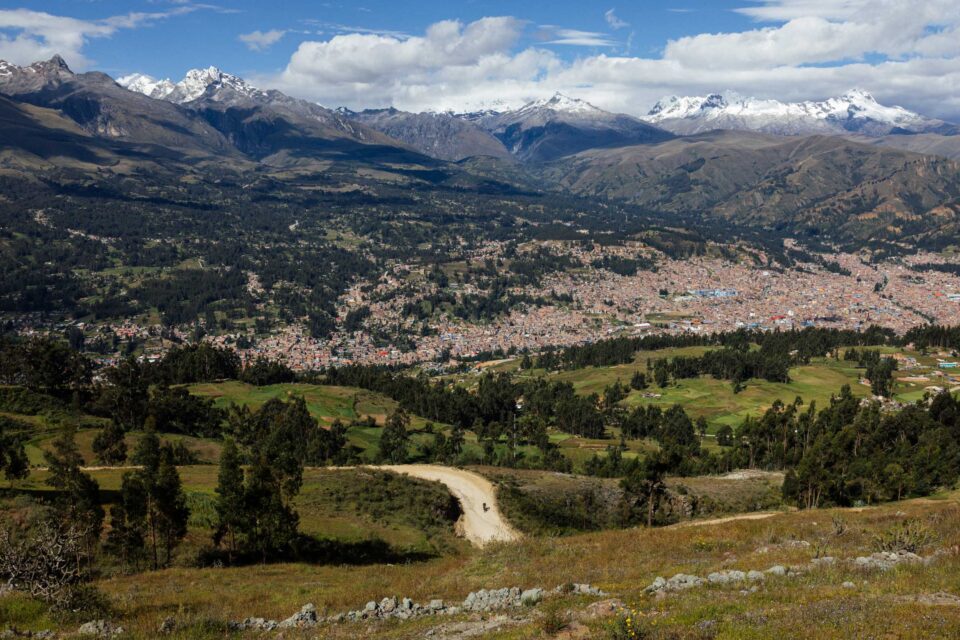
The Cordillera Blanca’s multitude of quebradas on full display, as seen from the Cordillera Negra.
Chris channelling his ‘90s self, on a bike that was probably unimaginable at the time.
You can find other ride ideas in the Pikes’ Peru’s Cordilleras Blanca & Huayhuash: The Hiking & Biking Guide, to which I contributed the mountain biking chapter, or within the pages of Wikiloc.
Further Reading
Make sure to dig into these related articles for more info…
Please keep the conversation civil, constructive, and inclusive, or your comment will be removed.