
Don’t let its whimsical model name fool you. The Raaw Jibb LT might sound like a toy, but it’s the kind of toy that would be wrought in the forges of Isengard. It works best you play rough. Travis explains how he learned to match this bike’s freak. The safety word is mid-stroke support.
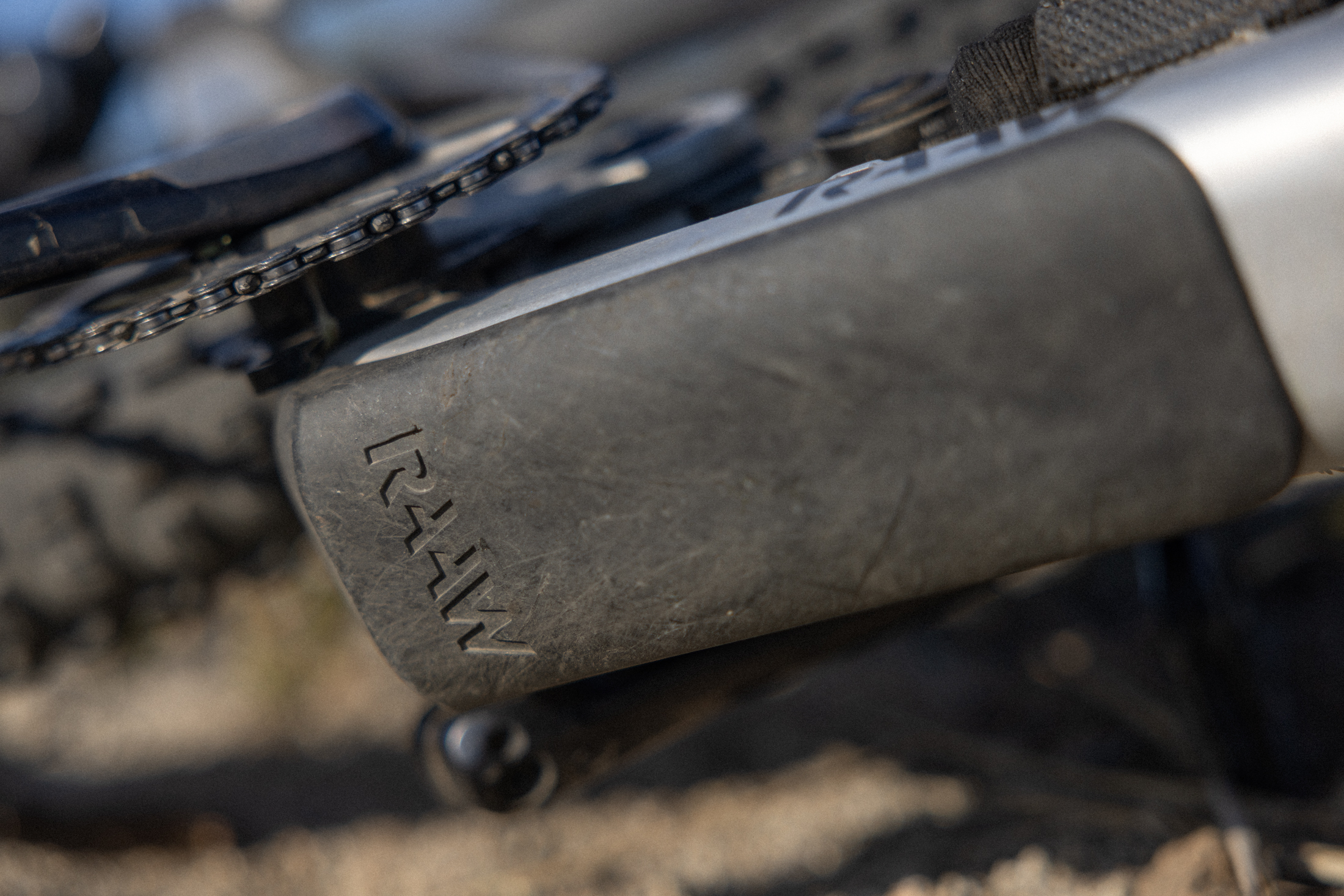
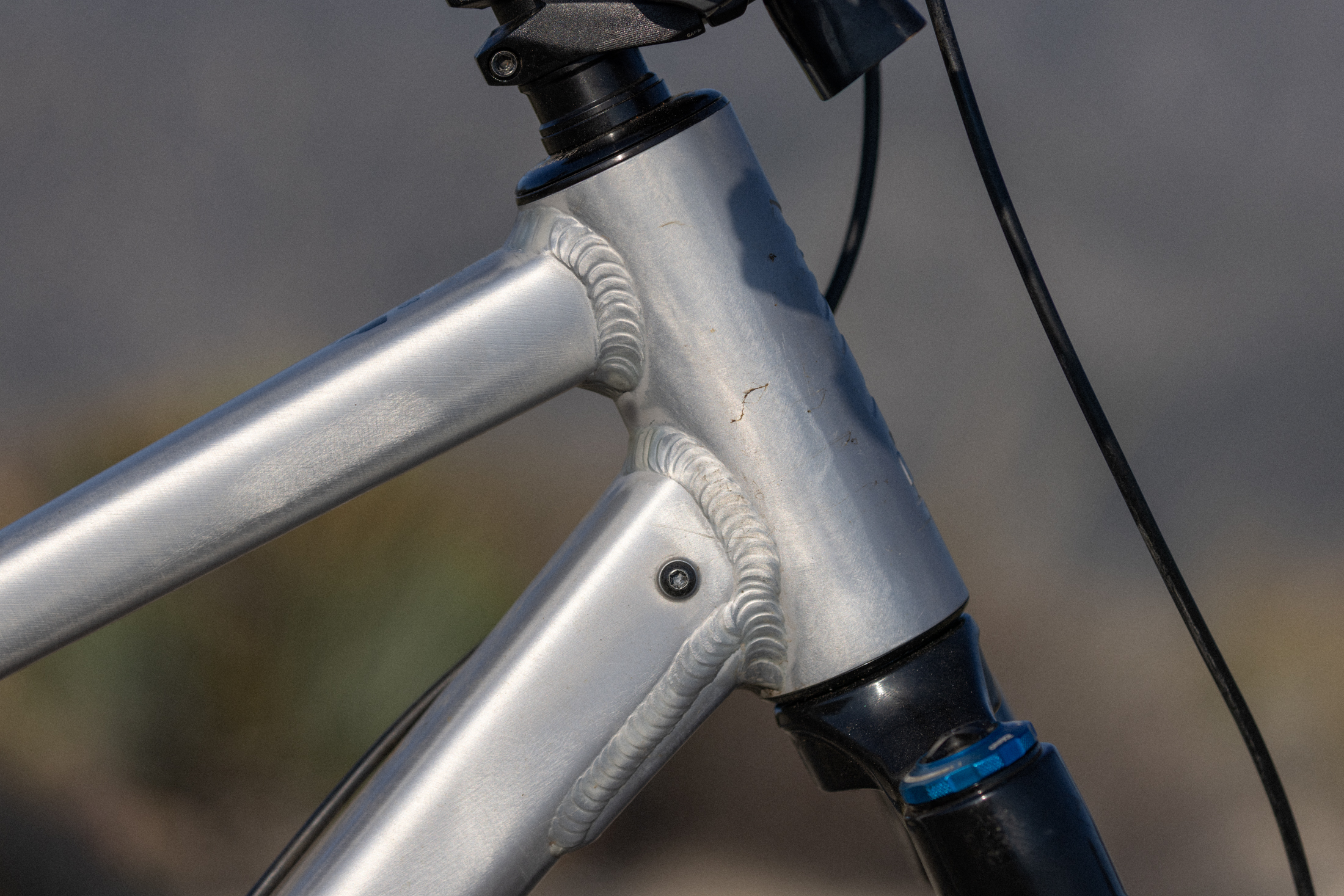
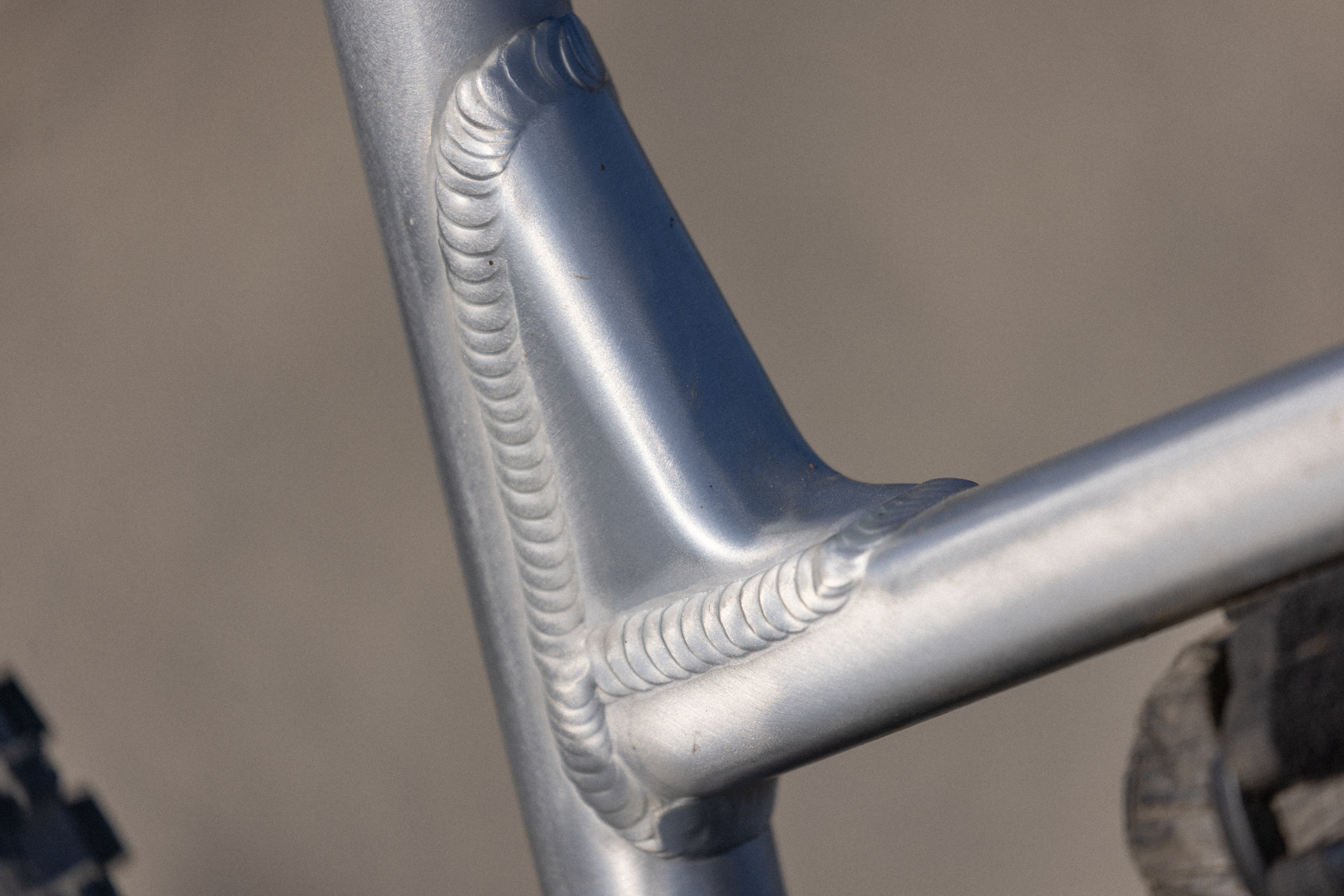
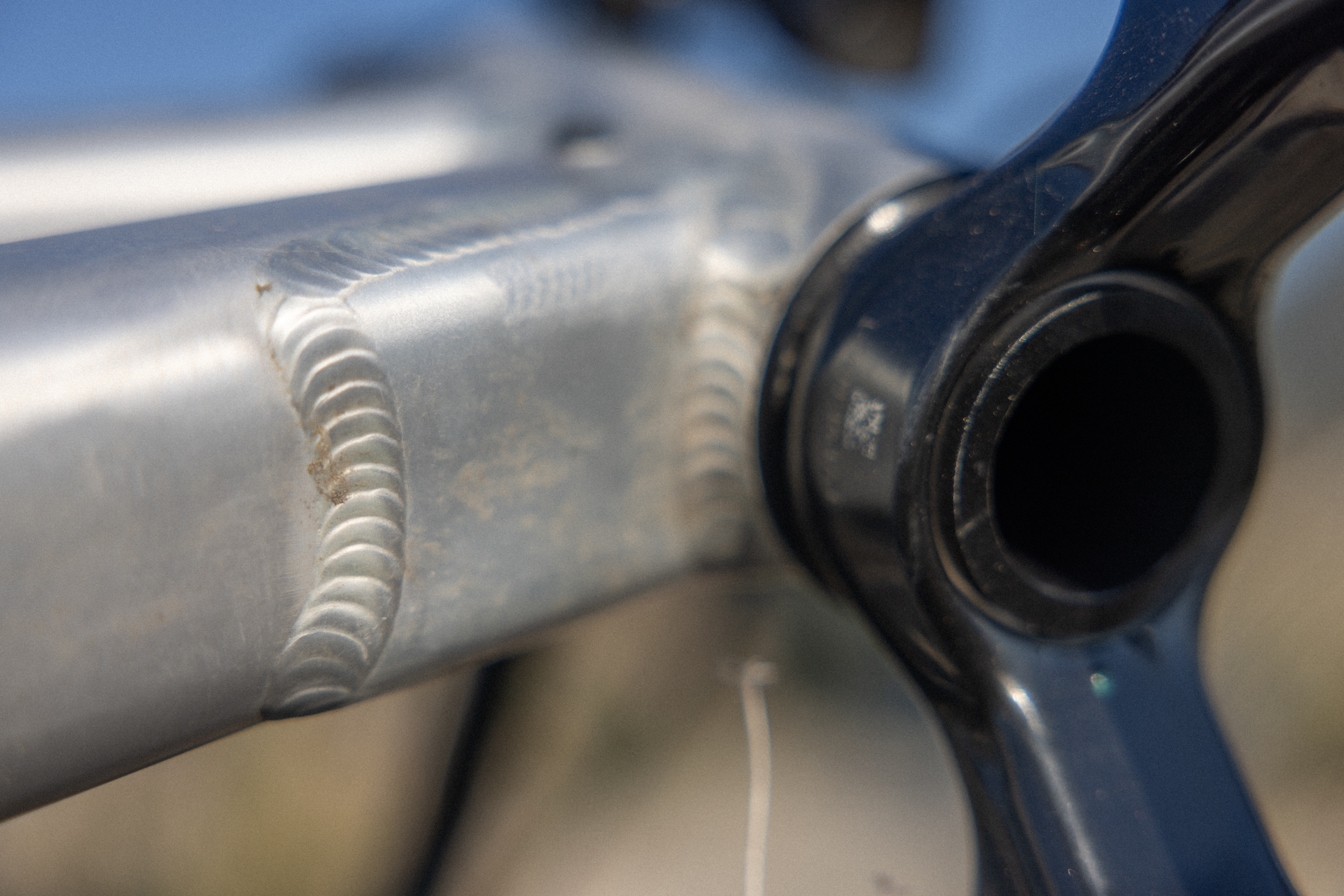
Raaw mountain bikes are a little intimidating. They seem impenetrably stoic, like the mountains themselves. The frames are understated brutalist machines with no need for complex linkages, superfluous gussets, or ostentatious hydroforming. Their pivot bearings are enormous, their cable routing is external, and their tubes are aluminum. And these aren’t artisanal creations of an independent builder. Although the brand is headquartered in the German city of Haßloch, their frames are made by a sustainability-focused third-party manufacturer in Taiwan. Raaw’s only gimmick is that they don’t have a gimmick. And the Jibb LT V2.2 is no exception.
Raaw Jibb LT V2.2 Quick Hits
- 141mm rear travel, 160mm front
- 29” or mixed-wheel configurations available
- 6066 aluminum frame
- Modular dropouts for adjusting chainstay length
- Modular shock mount for adjusting leverage curve, BB height, and head angle
- $3,320 for frame and Fox Float X2 shock (tested)
- Import duties apply outside of EU
- 36.5 lbs (XXL w/o pedals)
This attracts a certain type of rider. The two Raaw owners I’ve met are as unpretentious as the bikes they ride. They’re highly capable, but they don’t make a big deal out of it. They’re beyond that. And to be honest, they’re beyond me. As I tried and failed to keep up with them on their respective local trails, I witnessed their high bar for speed and style. That they other reason Raaw intimidates me. I came into this review wondering if I could meet the Jibb LT on its level. Sometimes, a bike is optimized around terrain I seldom ride and speeds I seldom reach. When that’s a 170mm-travel enduro rig, it’s simply the wrong bike for my trails. But if I can’t find the limits of a 141mm plaything with the quirky name, “Jibb,” that’s something else entirely…
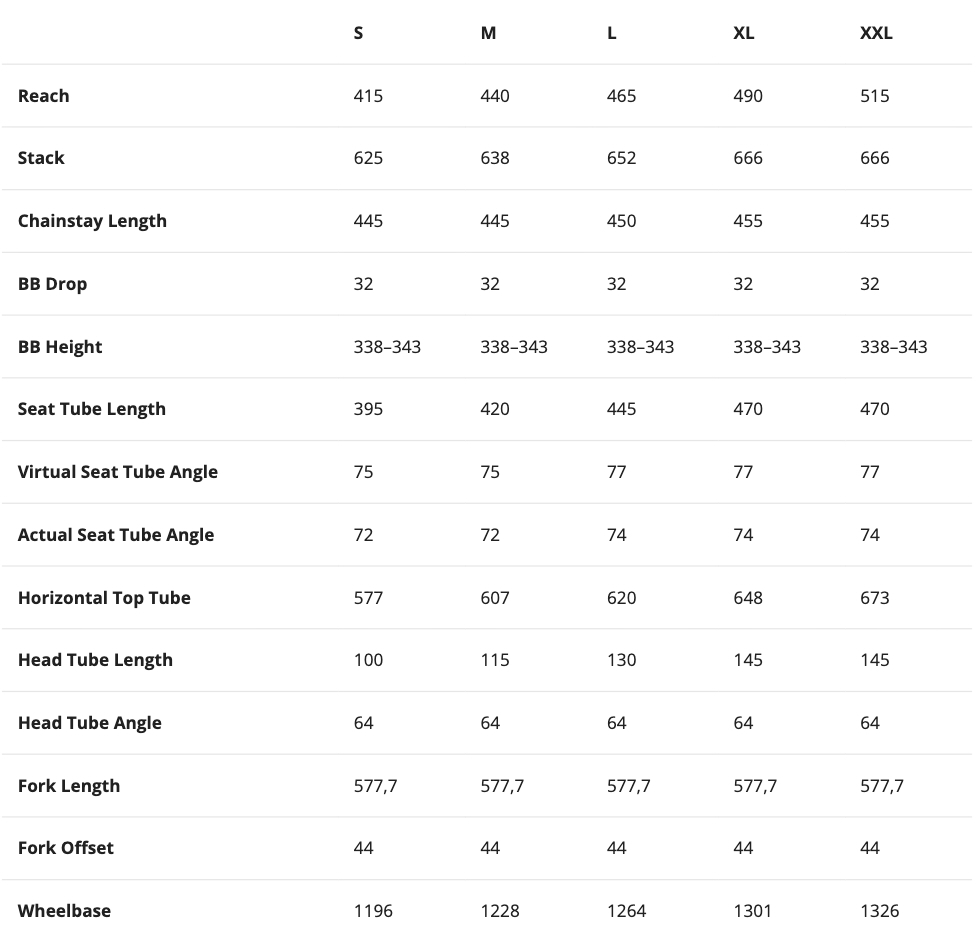
Raaw Jibb LT V2.2 Geometry and Design
It takes a lot for any geometry number to turn heads in 2026. It’s notable that Raaw steepens their seat-tube angles in larger sizes, but few of the other measurements stand out on their own. At least, not in their default settings. Raaw frames feature multiple independent adjustments that can nudge a bike in multiple directions.
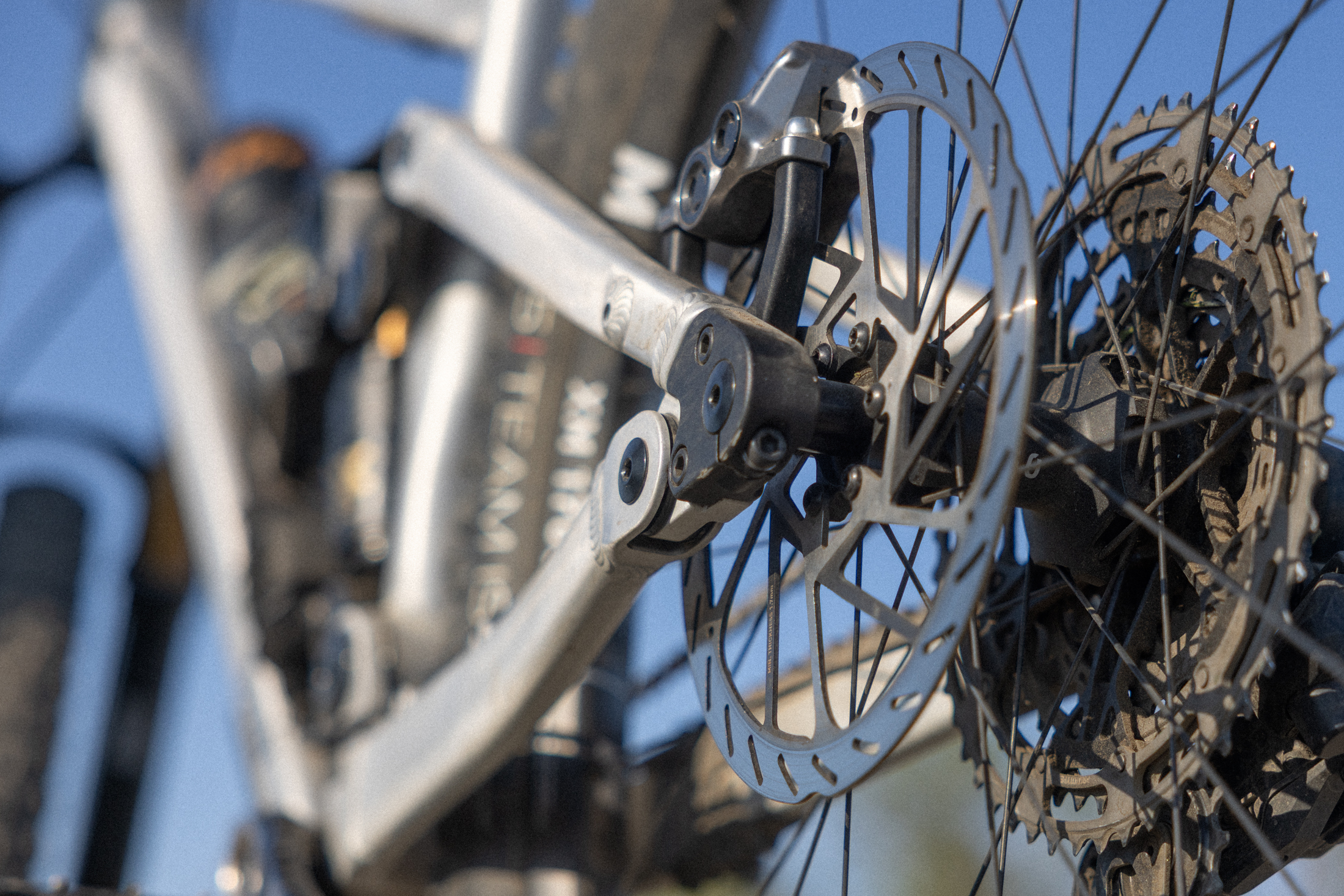
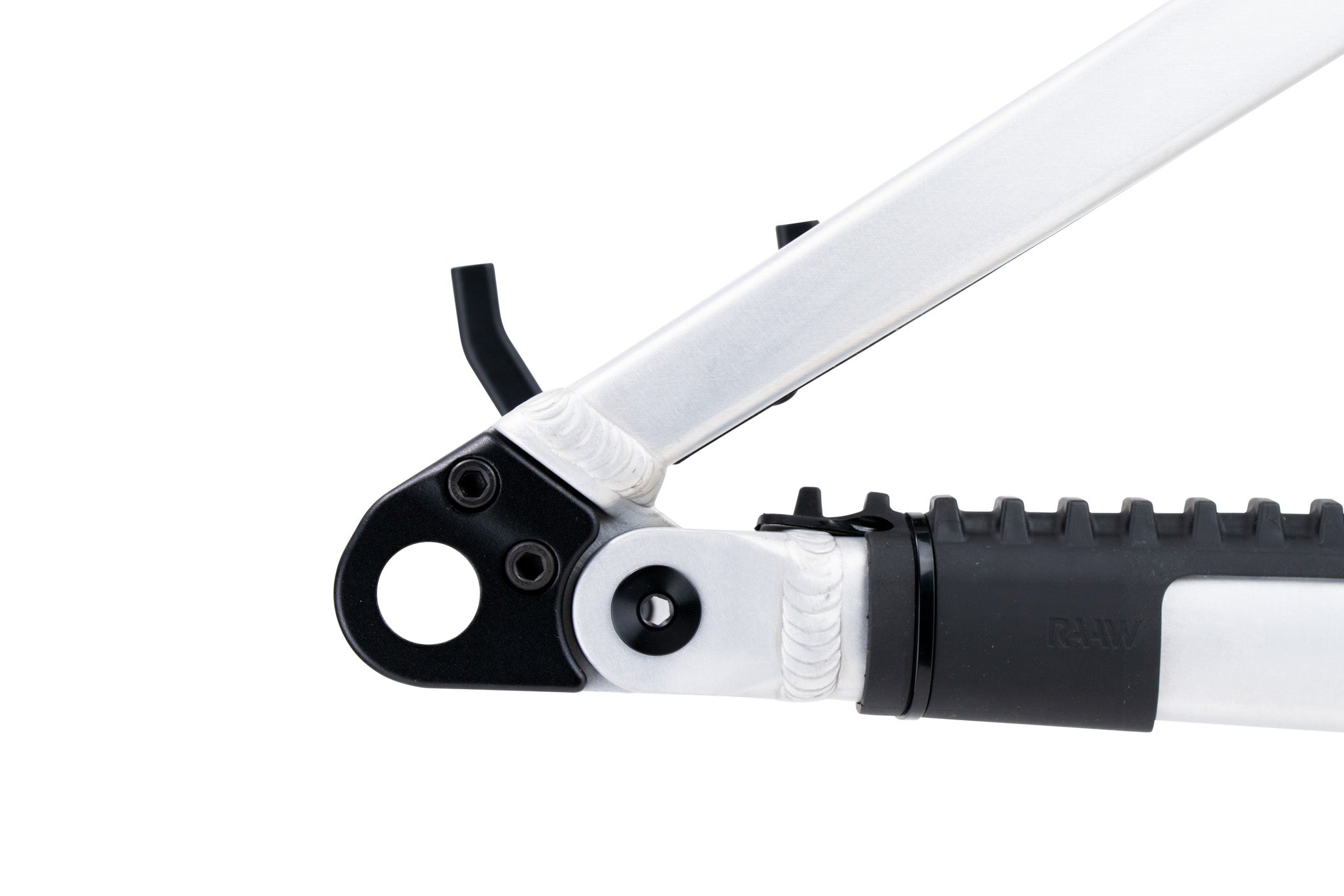
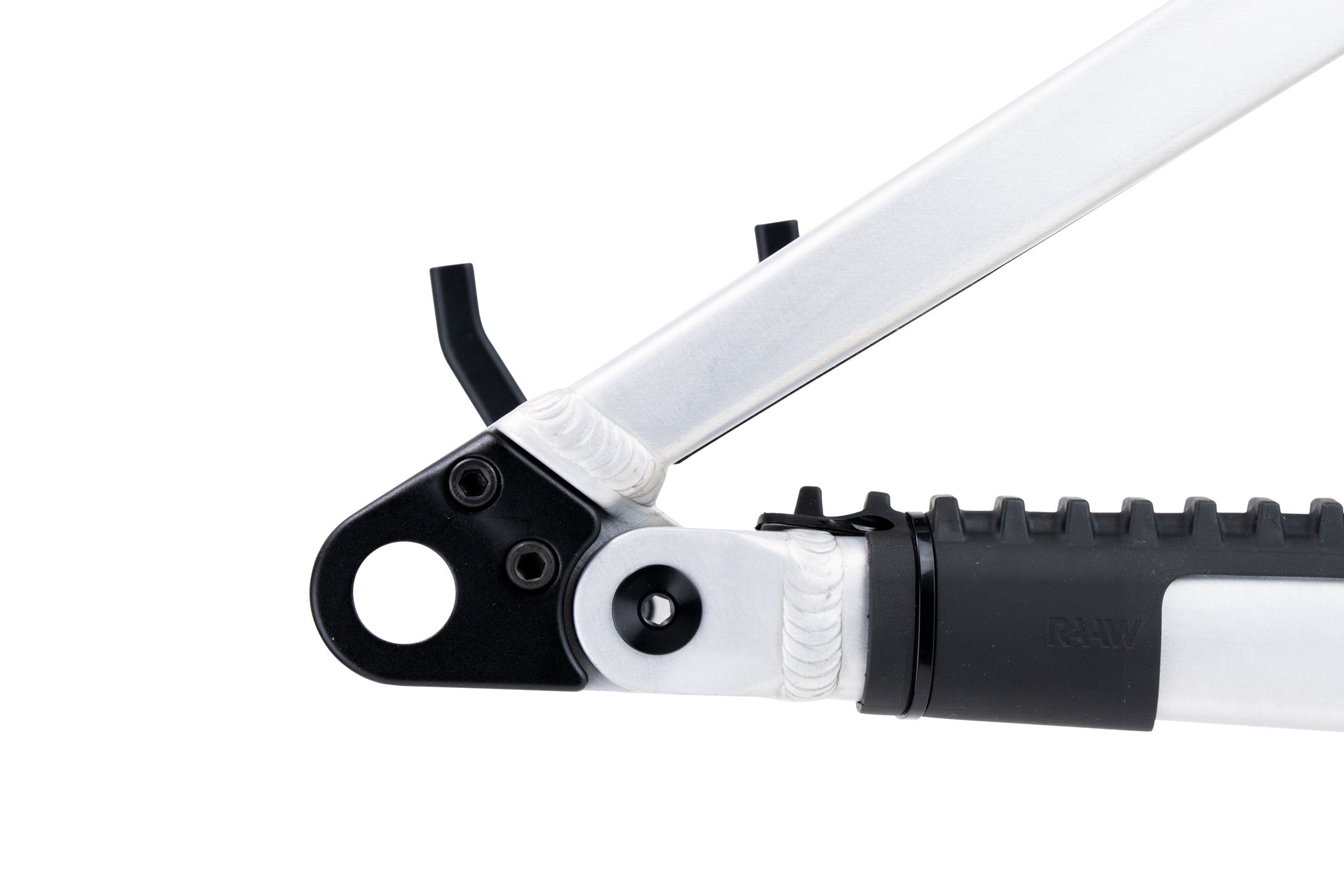
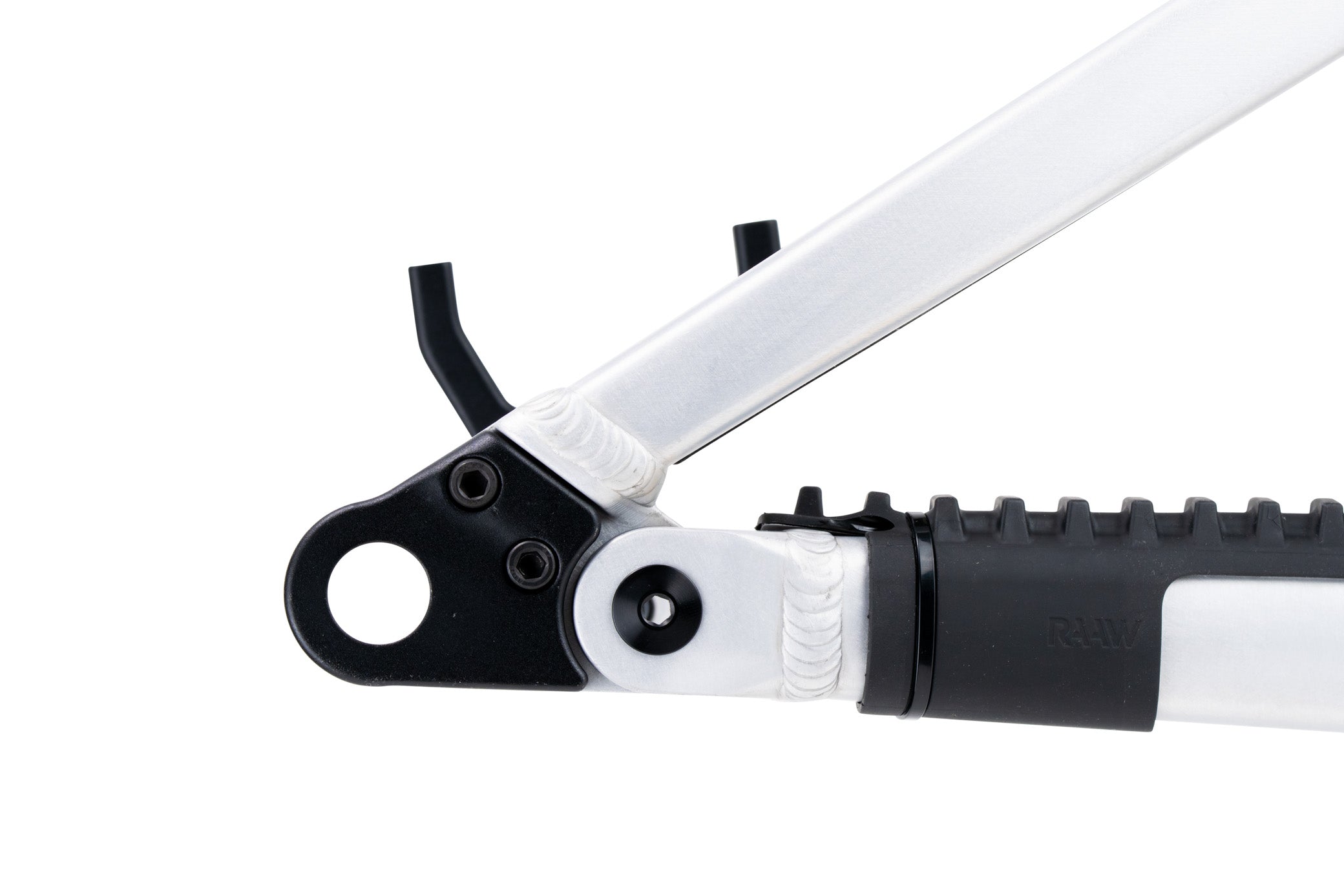
My XXL test bike boasts 455mm chainstays and a 1,326mm wheelbase. But Raaw’s new modular dropouts make it possible to shorten or lengthen that by 5mm, with the dedicated 200mm brake-caliper mount notched to accommodate all three settings. On that note, owners of previous-generation Raaw Jibb and Madonna models can retrofit their frames to the new dropouts with an aftermarket seatstay kit. That gets them adjustability, UDH compatibility, and the old-school overkill of an axle pinch bolt.
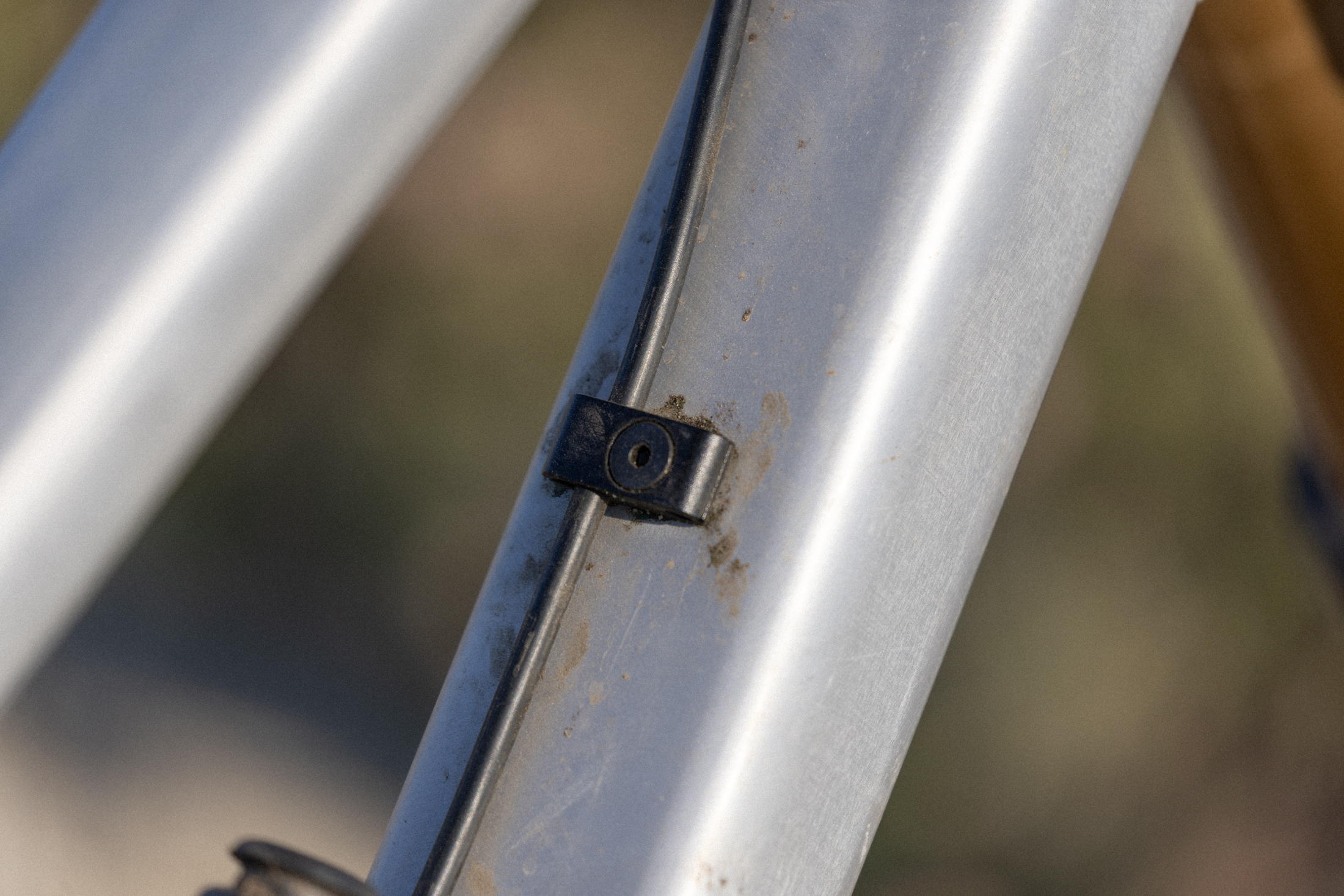
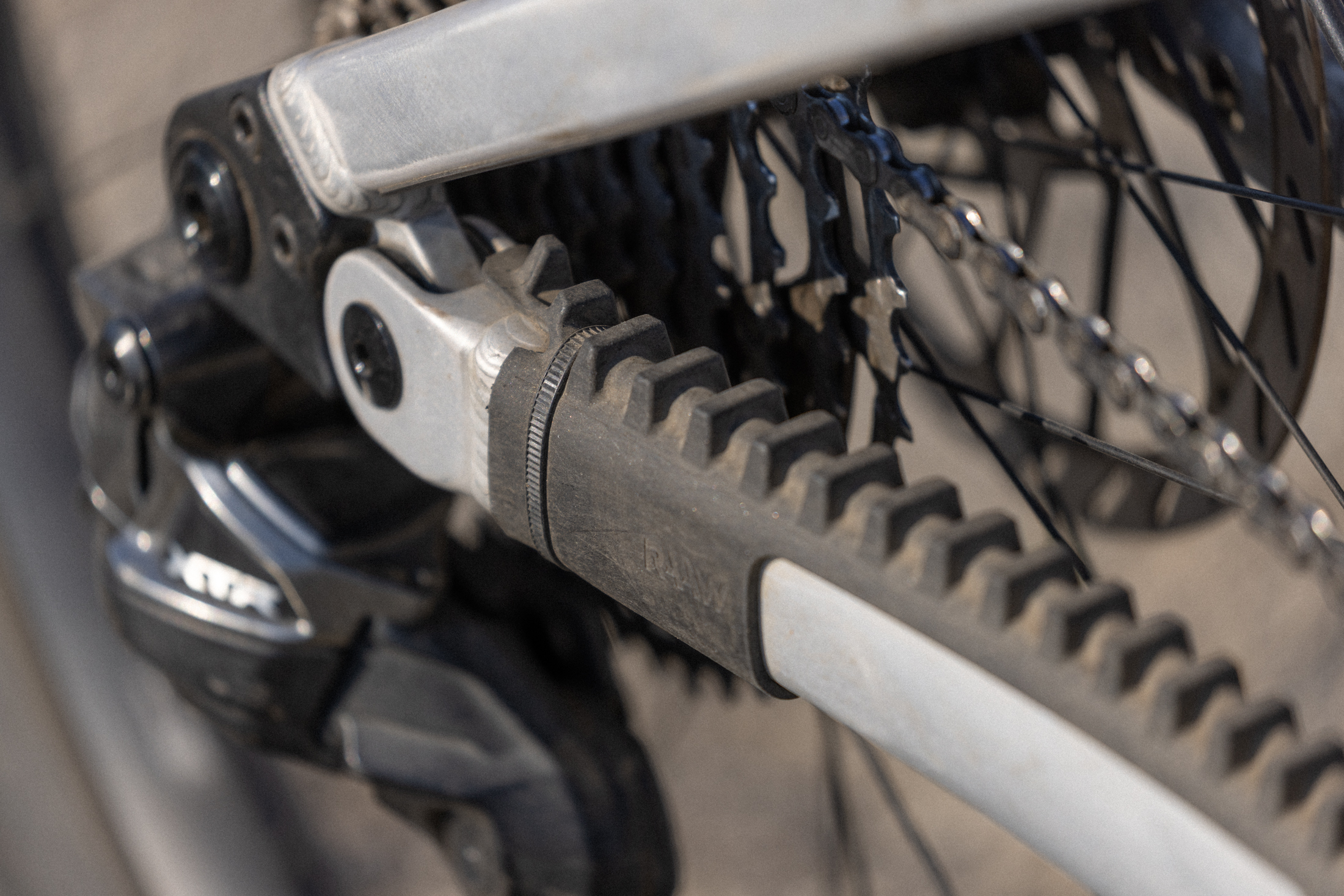
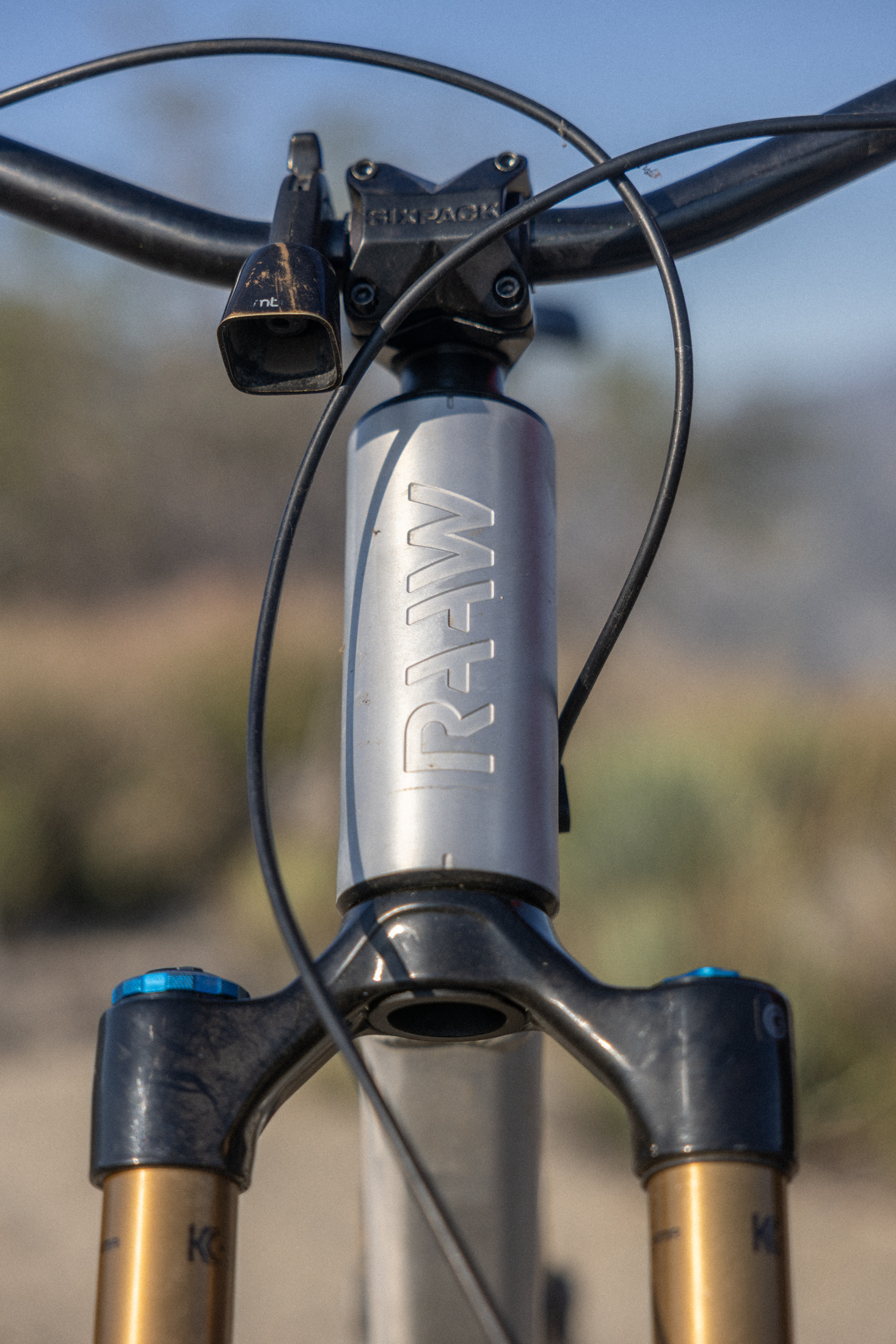
Raaw took a similarly classic approach to the rest of the frame. They fully commit to external routing, running the rear shift cable outside and on top of the well armored chainstay, which makes for a smooth transition into the derailleur. Then there’s the non-tapered 1.5” (56mm id) head tube. Although there are angle-adjust headsets for the more common variety of 56/44mm tapered head tubes, straight 56/56 setups also have reach-adjustment options. Plus, it helps complete Raaw’s boxy, overbuilt aesthetic.
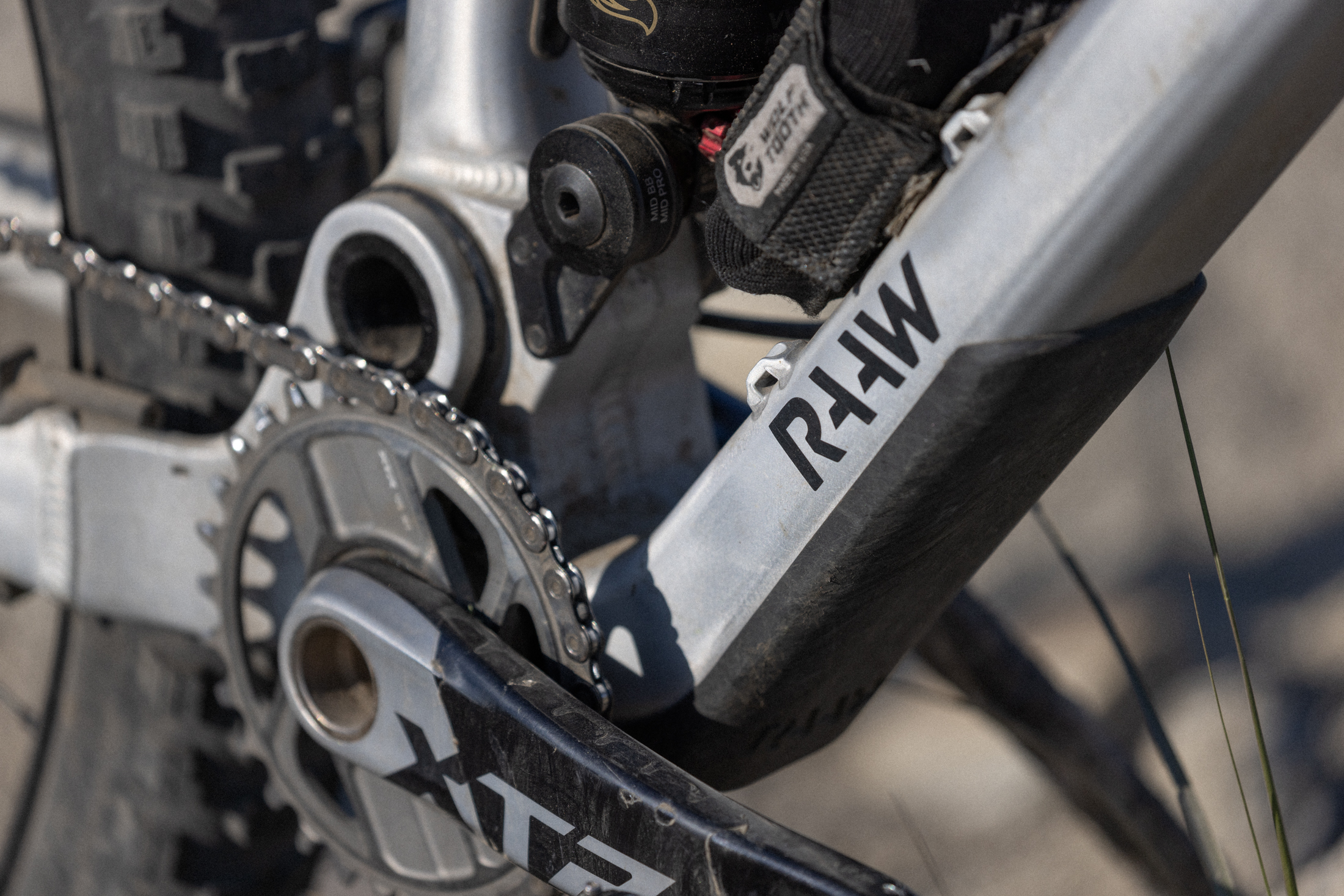
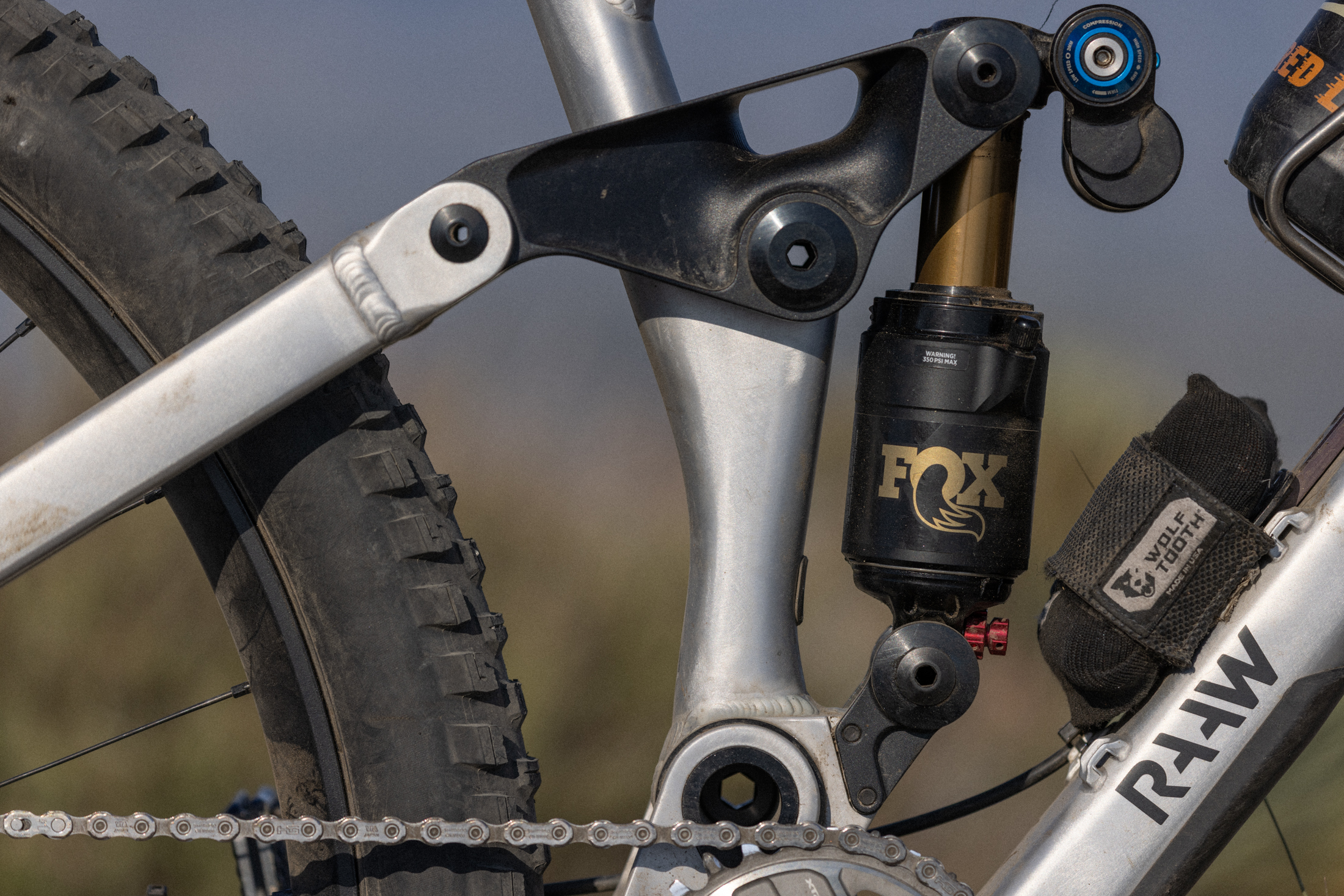
Also overbuilt is the lower shock mount. Instead of rocking it on a simple bushing, Raaw integrated 28mm bearings into the mount itself. And that lower mount is modular, which is a whole thing. There are ten different lower shock mounts available for the Raaw Jibb LT. One is for running a 27.5” rear wheel, but the other nine offer various combinations of frame heights and leverage rates. It’s like a more robust, less convenient version of Rocky Mountain’s Ride 9 system. Raaw offers a service where European customers can rent a box of all the lower mounts and all the dropouts before committing to a setup, but it’s not an option for non-EU buyers.
Speaking of non-EU buyers, keep in mind you’ll be paying taxes and import duties on top of the price listed at checkout. And if you’re a US buyer, I don’t need to tell you that’s a moving target. At the time of writing this, Raaw’s online explainer estimates you’ll pay a 10% fee on top of the standard 3.9% for a frame or rolling chassis, plus your local sales tax. All of which is up to you to navigate. It’s probably simplest to start with a frame and rear shock and source the rest locally. Although exact numbers fluctuate with currency values, a Jibb LT frame is priced at around $2,760 plus between $280 to $670 depending on shock choice. With import fees and without sales tax, that’s in the $3,400 to $3,800 range, plus a flat shipping fee of $115 to the US. It’s not cheap, but it’s less than you might pay for some boutique carbon full-suspension frames.
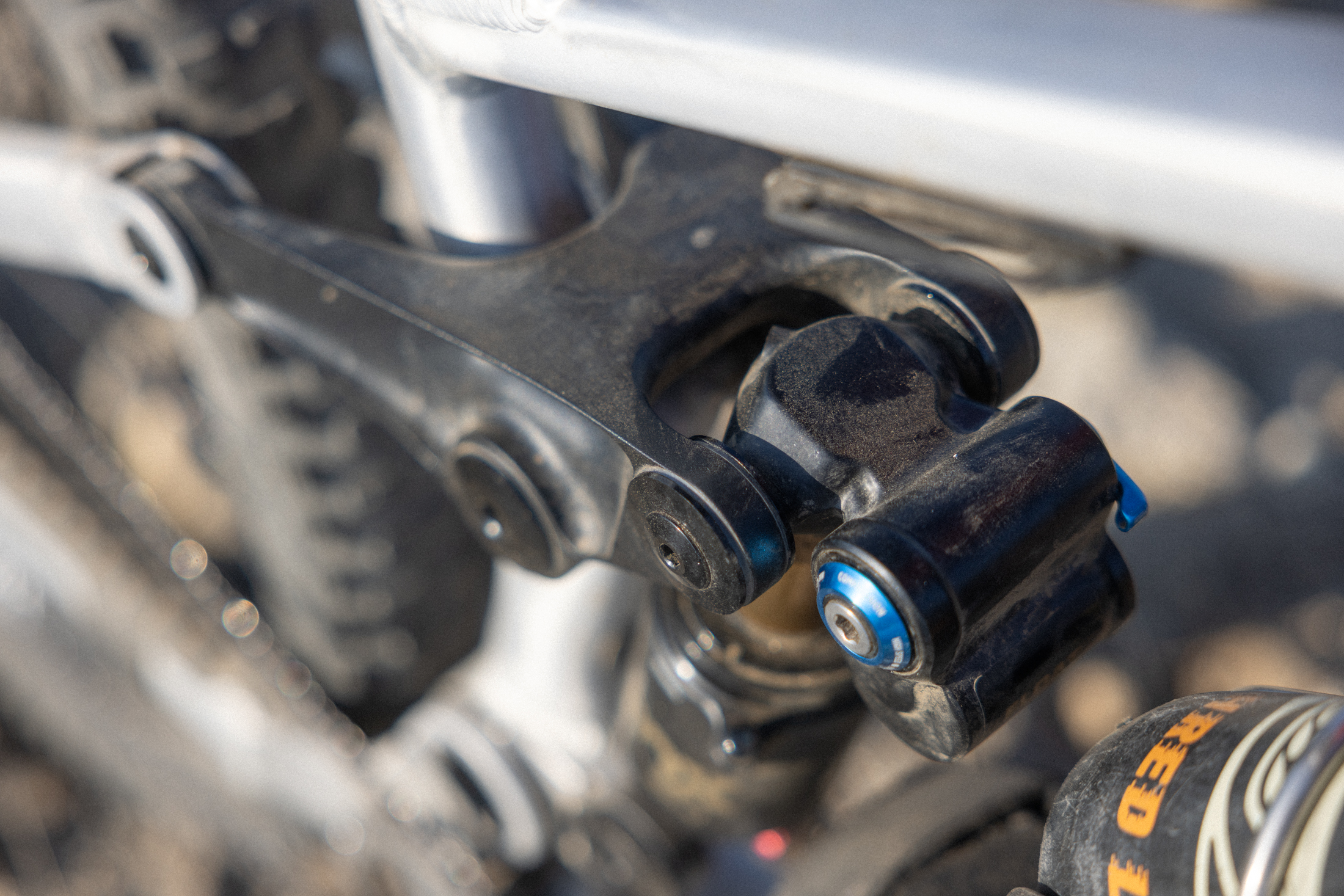
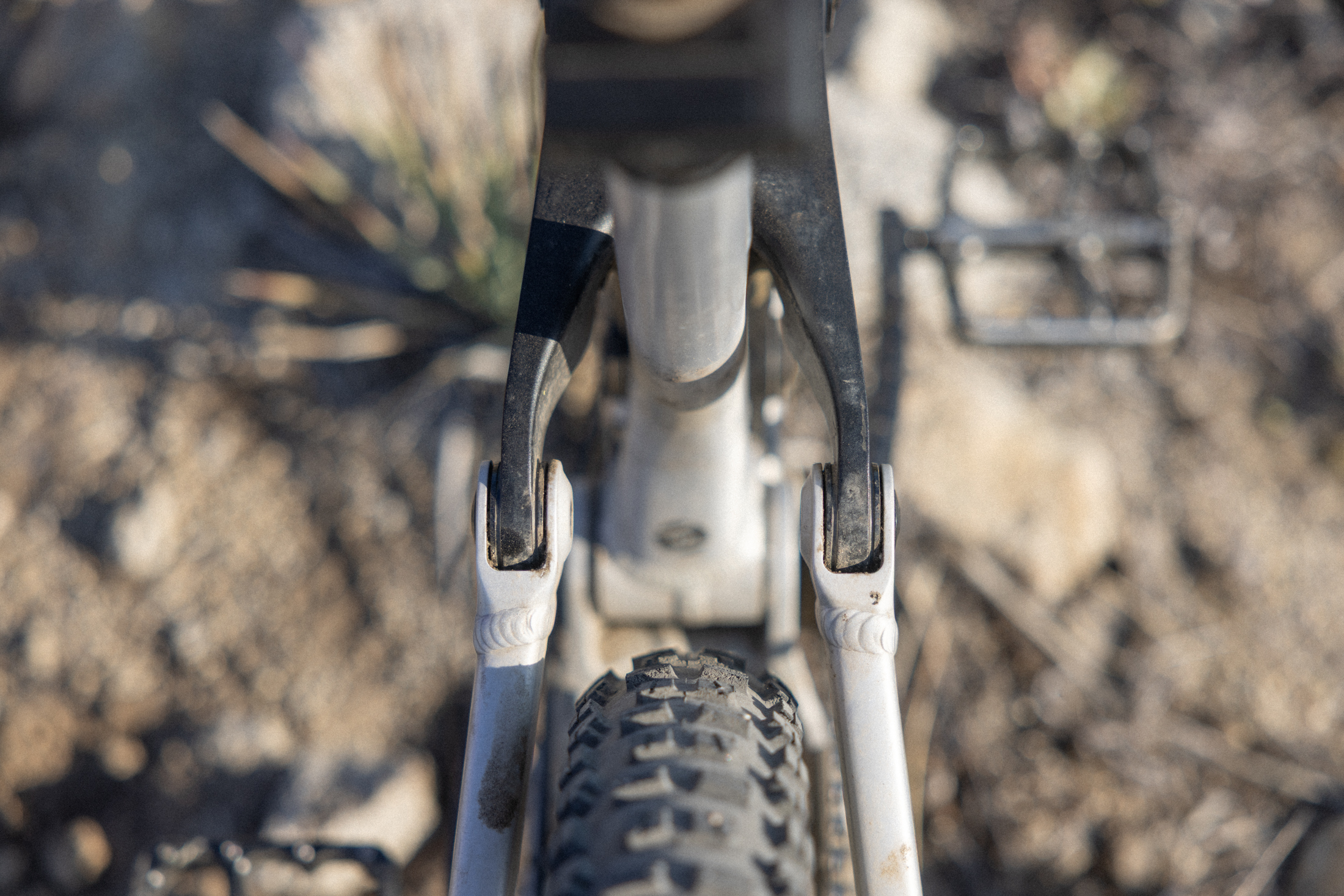
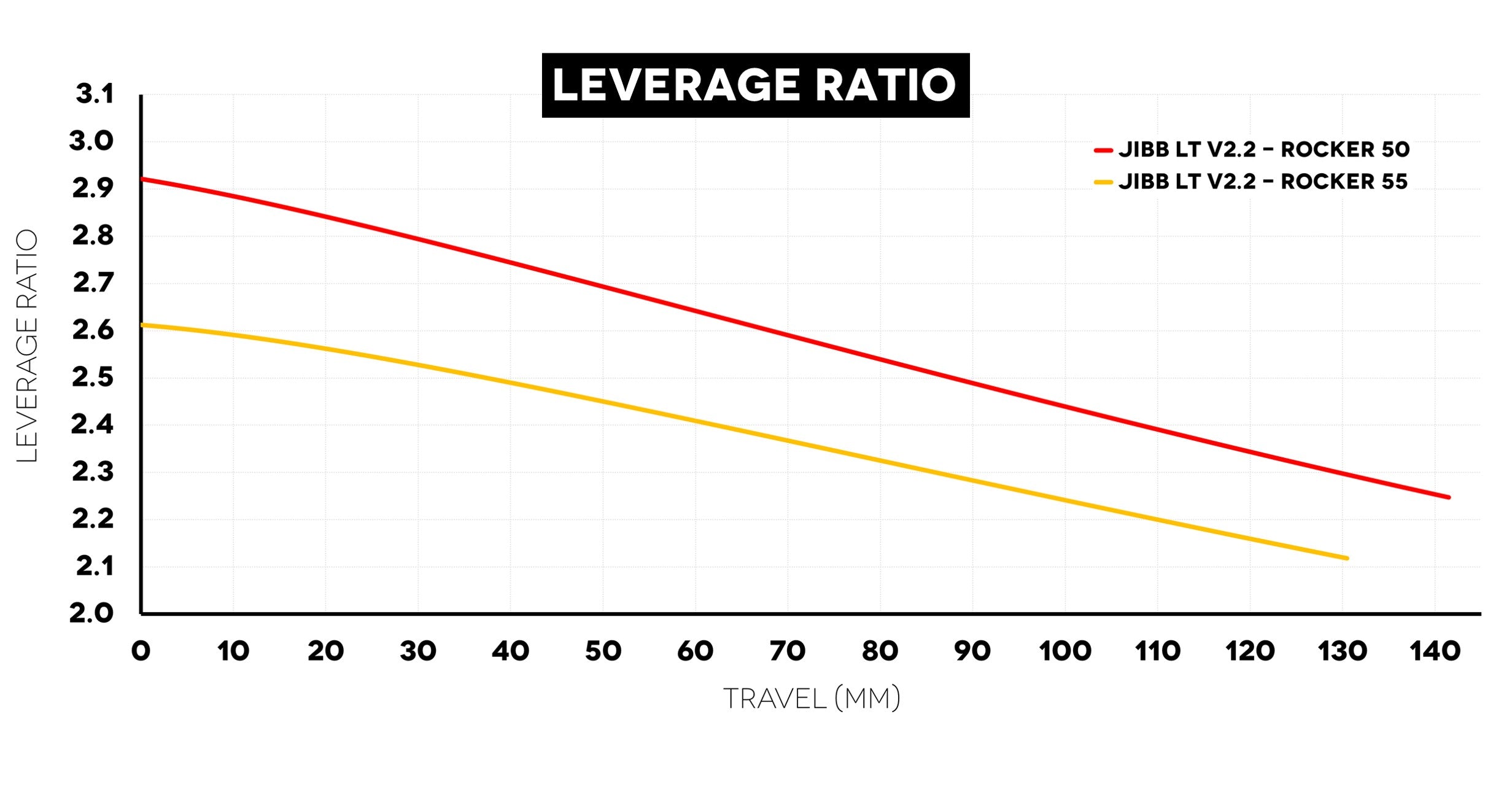
But the Jibb LT is kinda incomparable. As if all these customization options weren’t enough, RAAW also offers some of their frames with a rocker link designed specifically for riders over 220 lbs (100 kg). It reduces the rear travel but lowers the leverage ratio for less load on the shock and wider setup options. Shocks are rarely designed with heavyweight riders in mind, so it’s commendable that Raaw took this step to preserve their intended ride quality. But I’m well under that threshold, so I stuck with the stock rocker link. And I only experienced the middle-height, middle-progression setup, but boy was it an experience.
Raaw Jibb LT V2.2 Ride Impressions: Climbing
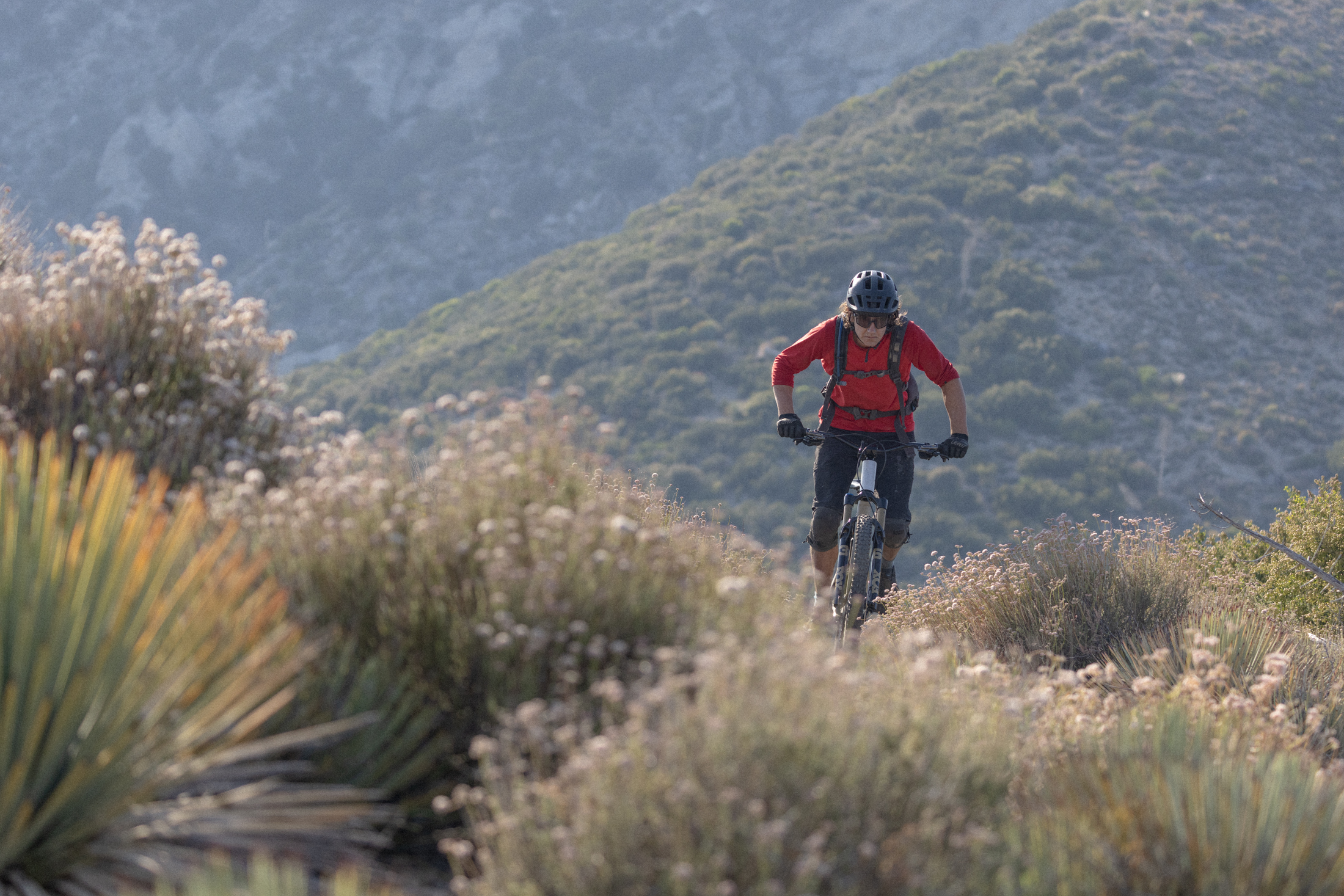
I was struck by how still the rear suspension remained while pedaling uphill. I’m accustomed to firmer, shorter-travel bikes, but the Jibb LT’s support still impressed me. It’s not anywhere near as floaty as most 140mm platforms I’ve tried. That remained true across various shock setups, but I’ll cover that part later. Even after lowering pressure, reducing volume, and lightening low-speed compression, the rear travel never wallowed and rarely bobbed.
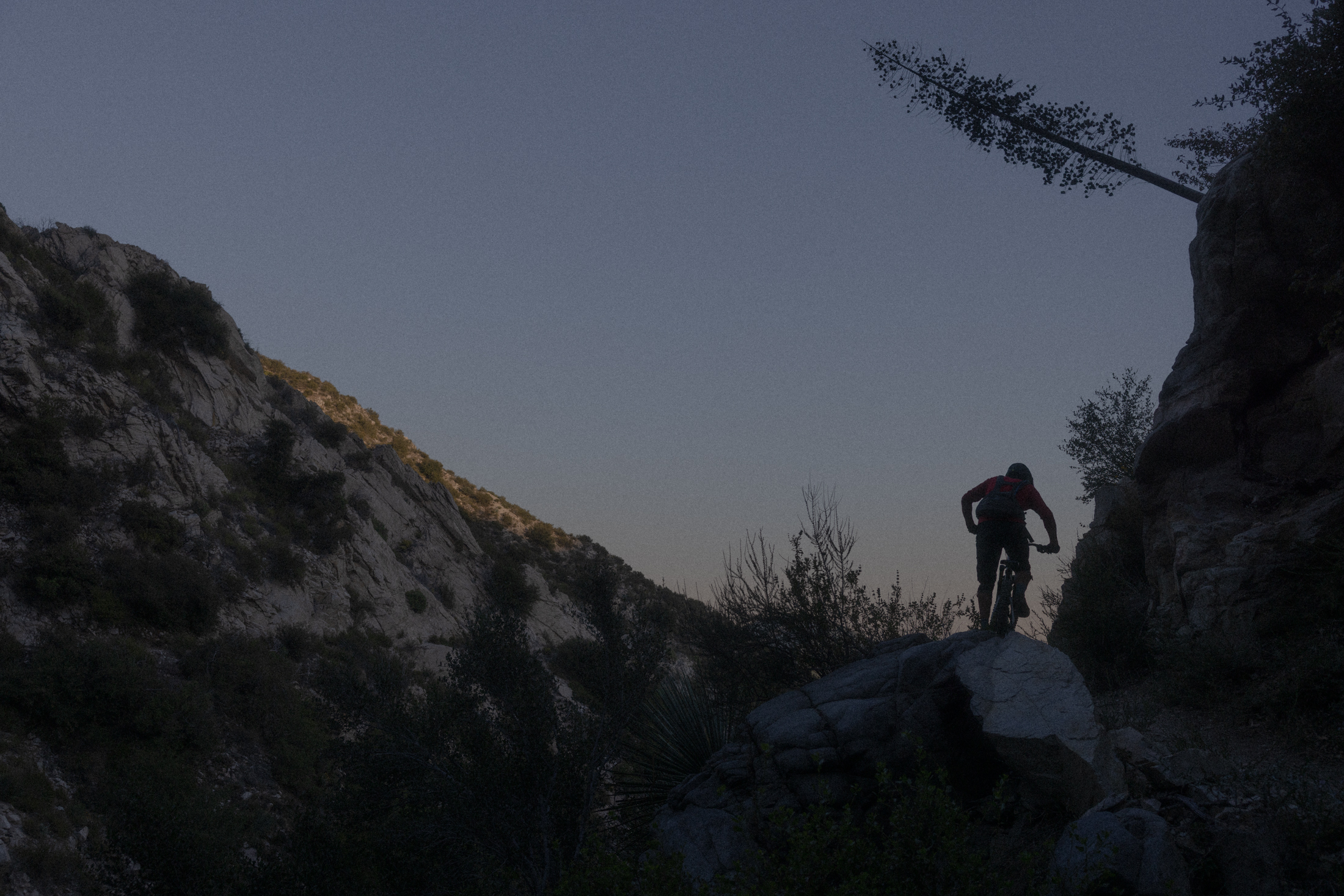
Some of that credit goes to the Fox Float X2 shock. Raaw offers the Jibb V2.2 with one of five current shock options, and I had thought the trail-oriented Float X would be more relevant to The Radavist’s trail-oriented audience. But Ruben Torenbeek, Raaw’s CEO, strongly recommended the gravity-focused X2. After a recent redesign, turns out it’s not the fragile marshmallow it once was. I had an easy time finding an appropriate balance of support and sensitivity, though this linkage really seems to favor support.
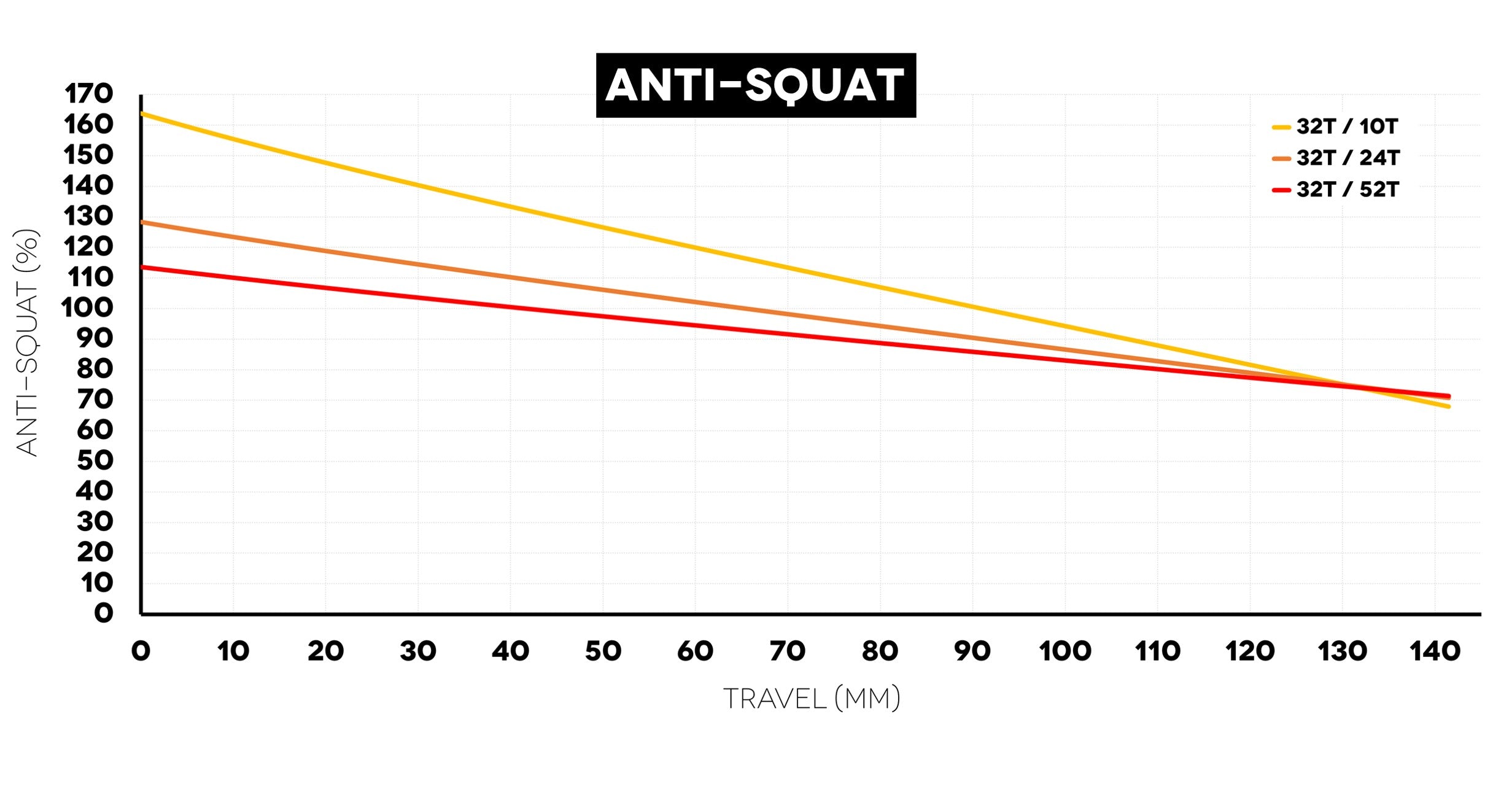
It’s dangerous to infer too much from an anti-squat chart, but the Jibb LT’s claim of moderate yet consistent drivetrain interference tracked with my experience. When mashing up shelfy, steep sections, the suspension didn’t yield any more than when spinning across a gradual fire road. That meant it wasn’t very supple on technical climbs, but it was very determined.
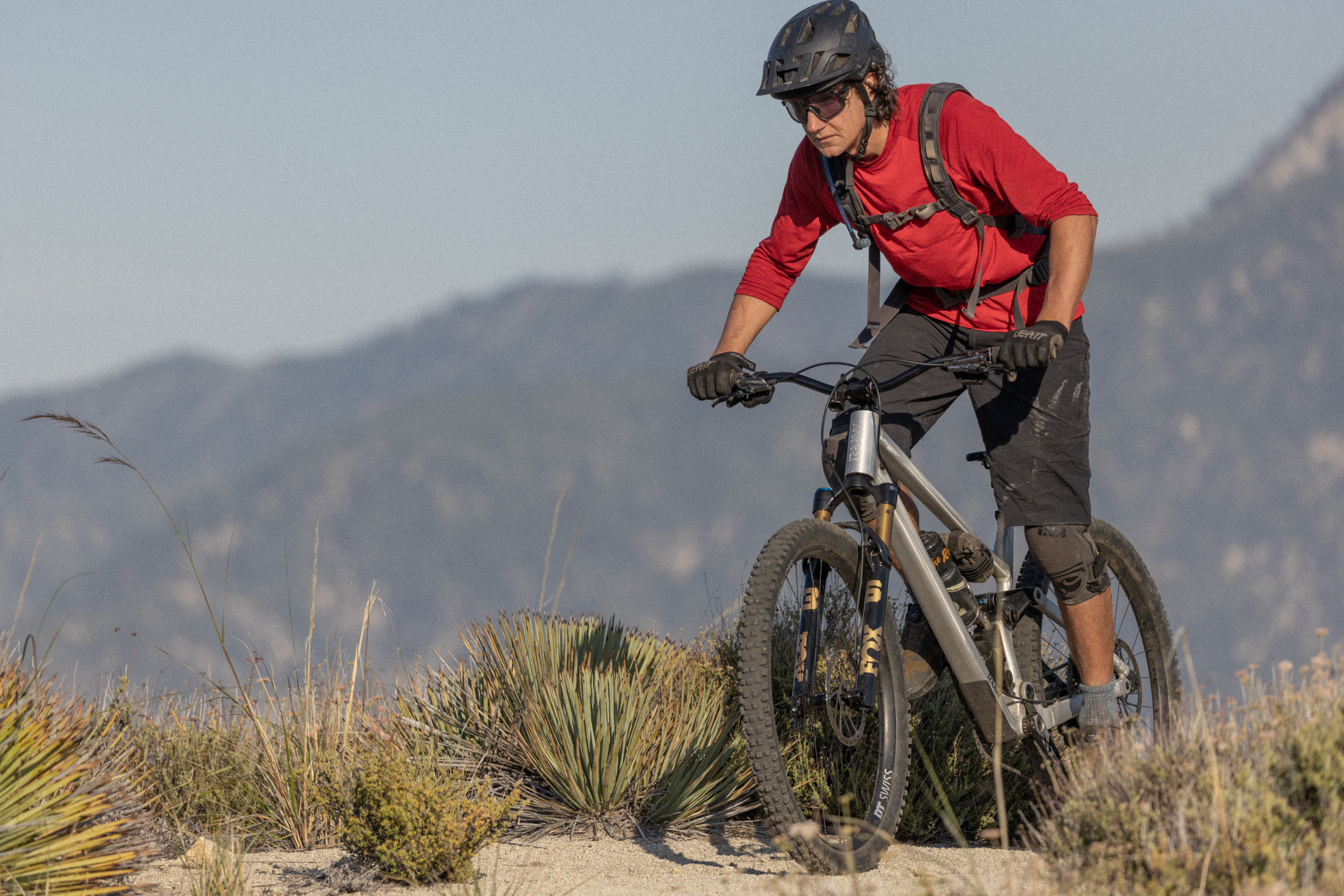
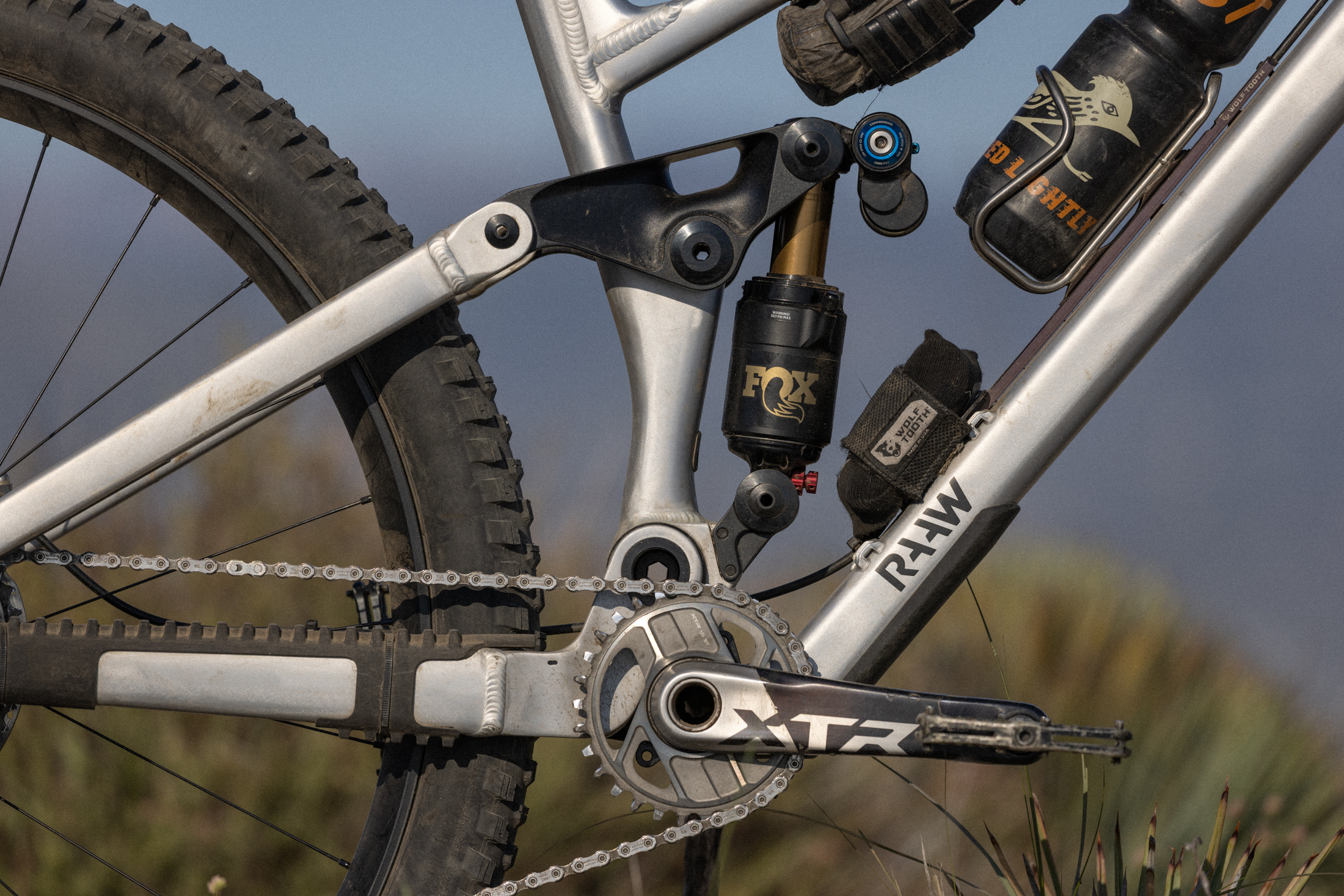
To put it more directly, it felt firm no matter how much force I put into it. And I’d chalk that up to a slightly less nebulous metric; the leverage curve. My test bike’s mid-progressivity shock mount meant I wasn’t dropping through the early part of the travel before finding something to push against. Throughout my wide range of suspension setups, there was always an invisible layer of support that wasn’t easy to pierce without something sharp. That’s where the stillness came from, and it made head-down, high-effort suffer sessions remarkably rewarding, especially for a bike primarily designed to work with gravity, not against it.
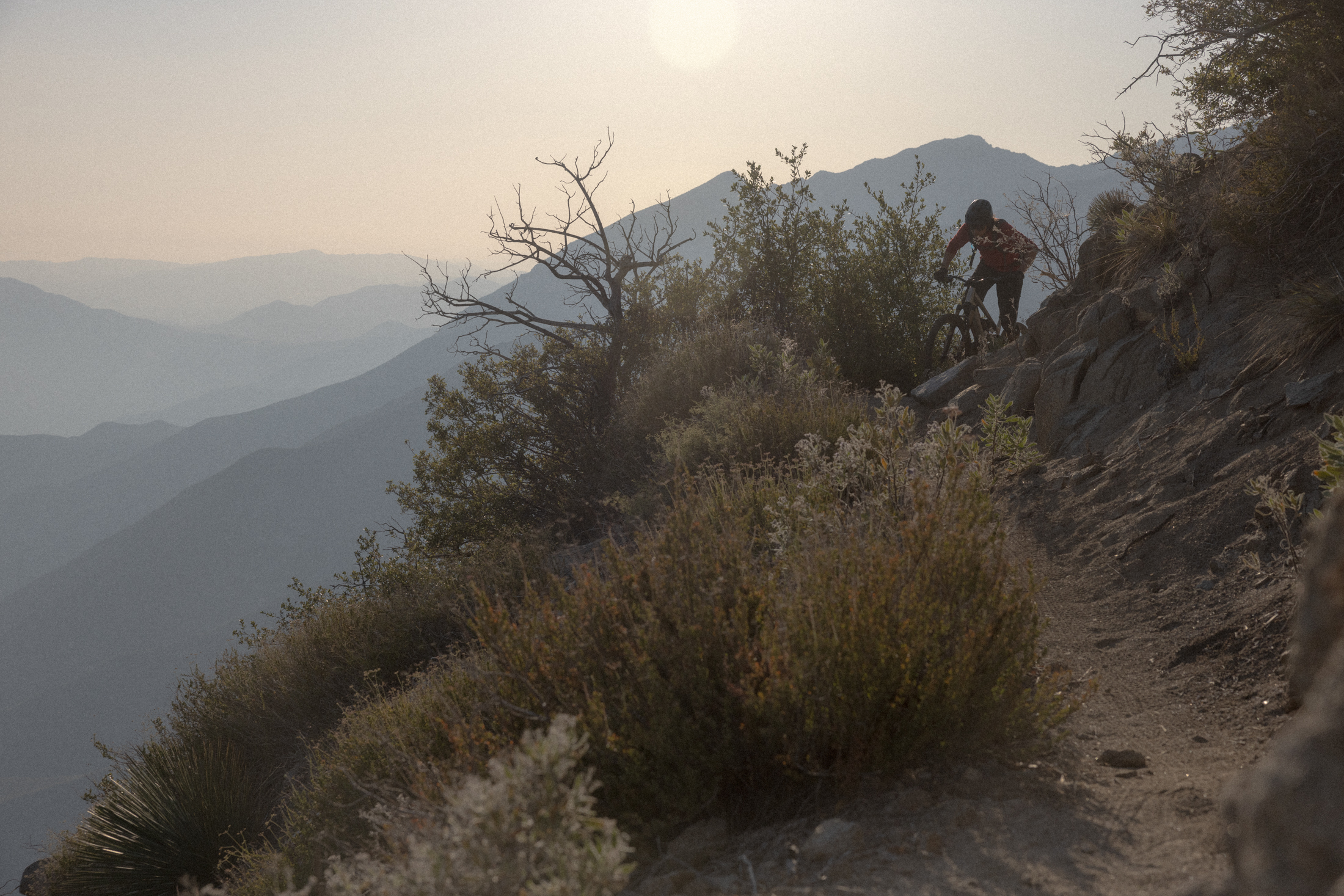
The geometry played an interesting role here. As best as I could measure, my saddle center was 197mm behind the bottom bracket when up at 820mm. According to my ti-82 calculator, that puts the effective angle at about 76°. Not slack, but not progressive. It’s got a classic feel where the seated fit is in harmony with the rest of the fit. It caters to riders who follow John’s philosophy of bike sizing, which says top-tube length matters. Optimal front/rear weight distribution makes for more ergonomic, more powerful pedaling. That happens to clash with my philosophy, which says a cramped cockpit is fine as long as it puts more of your weight directly on top of your pedals. Good news for both camps is that the Jibb LT’s stack is moderately high. Though I felt a bit stretched out compared to my personal bike, the bars are at a comfy height for climbing and an even more comfy height for descending.
Raaw Jibb LT Ride Impressions: Descending
The 140+mm platform has become the default do-it-all bike. Perennial staples like the Trek Fuel EX, Specialized Stumpjumper, and Canyon Spectral have flocked to the peak of the bell curve. But the Jibb LT kinda straddles the bell curve. On one end, there’s the supportive rear suspension that gives the Jibb its name and barely puts it in the 140+ category. But on the other end is a long wheelbase and a 160mm fork. That’s the vibe this bike leads with when you first point it downhill.
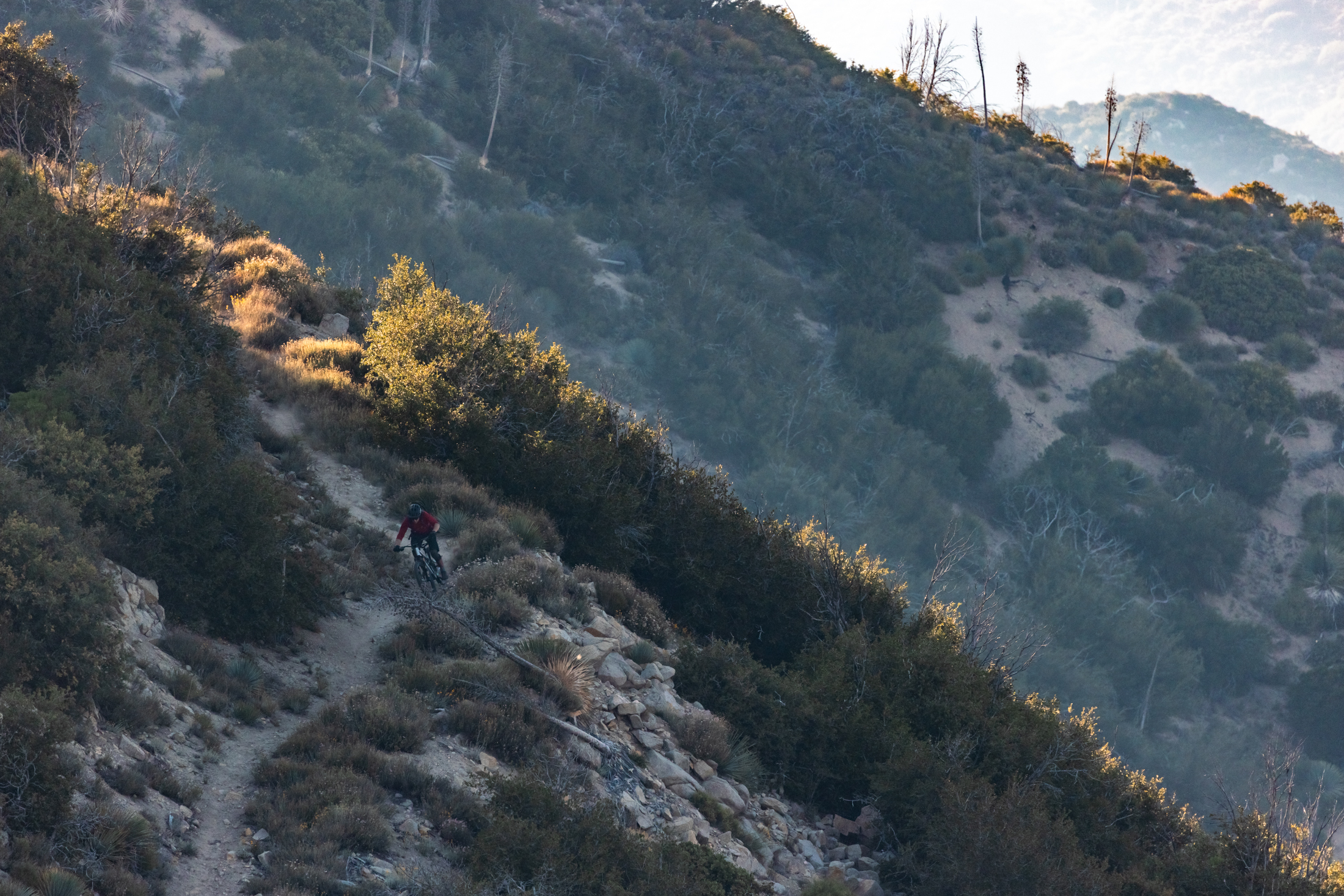
The Jibb LT has the posture and presence of a longer-travel bike, which I’ll admit was a surprise. A fun-focused model like this might justifiably be a little twitchy at speed. But it responds to input with remarkable calmness. And I appreciated having a calm bike as summer again tightens its grip on southern California. My trails haven’t seen rain for a month, leaving them a dry parfait of rocks, sand, and more rocks. So, I have to ride accordingly. Even if the Jibb LT were twitchy, there wouldn’t be enough traction to make the most of it. So, a stable-steering trail bike like this is ideal. Good traction is entirely optional for good times.
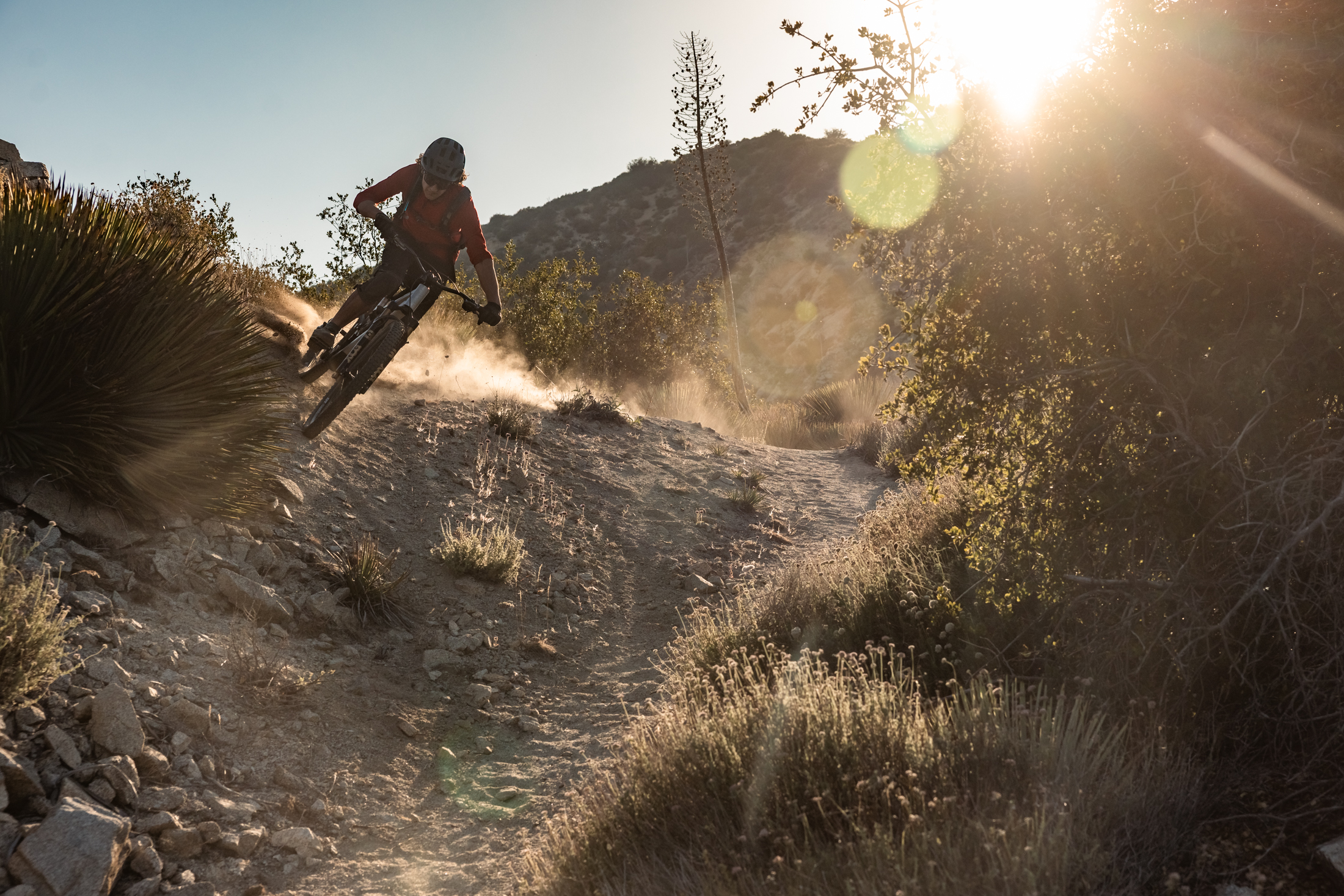
That manifested itself in ways you’d expect on a long-wheelbase bike, where it resists oversteering and holds its line. But it also drifts with remarkable predictability. I don’t mean it skids around switchbacks. I mean gracefully handles off-camber bends that usually warrant throwing your inside foot out, just in case. This happened frequently enough that I’m dedicating a paragraph to it. The Jibb LT would get loose around these types of corners while still remaining composed. There’s a wide margin of error before a loss of traction becomes a loss of control. I performed fewer just-in-case foot-outs, and trusted more turns.
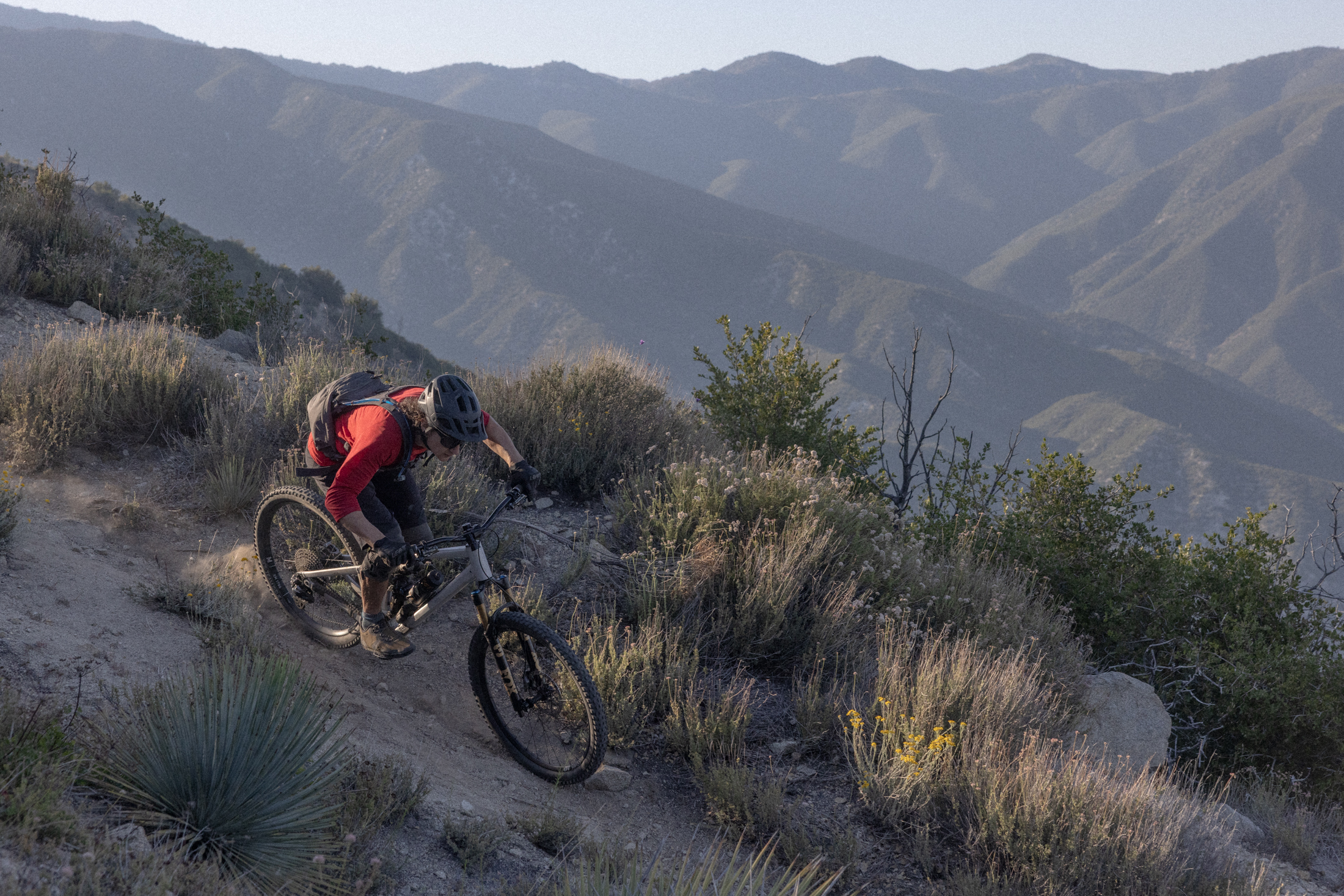
This had a bit to do with the Jibb LT’s riding position. It’s amazing what an extra 10mm of fork travel can do, especially when modern dampers prevent it from disappearing the moment load is shifted forward during steeps and stops. It helped me keep my weight balanced between the wheels, and added some enduro-adjacent plushness. It also provides a unique contrast to the rear suspension, which isn’t all that plush. At least, not by the traditional definition.
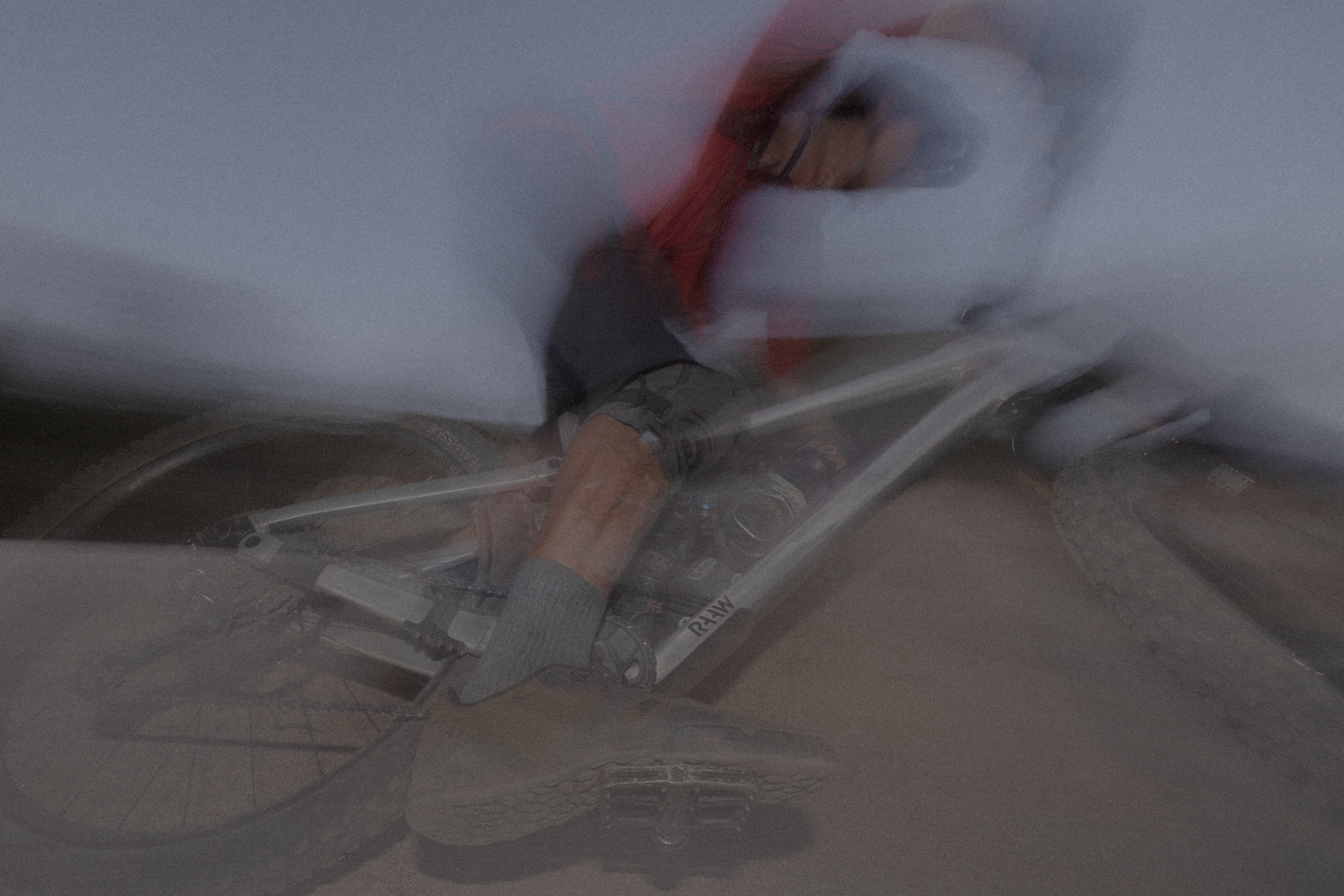
The bike’s back half felt as firm on the descents as it did on the climbs. It doesn’t have a pillow-top-mattress feel, where a deep initial softness would partially but suddenly firm up in the middle of the stroke. It’s more like a professional wrestling mat, or so I’m told. There’s just enough initial give to soften a landing, but it isn’t deep enough to turn those rock and sand parfaits into vanilla soft-serve … unless I hit them really hard.
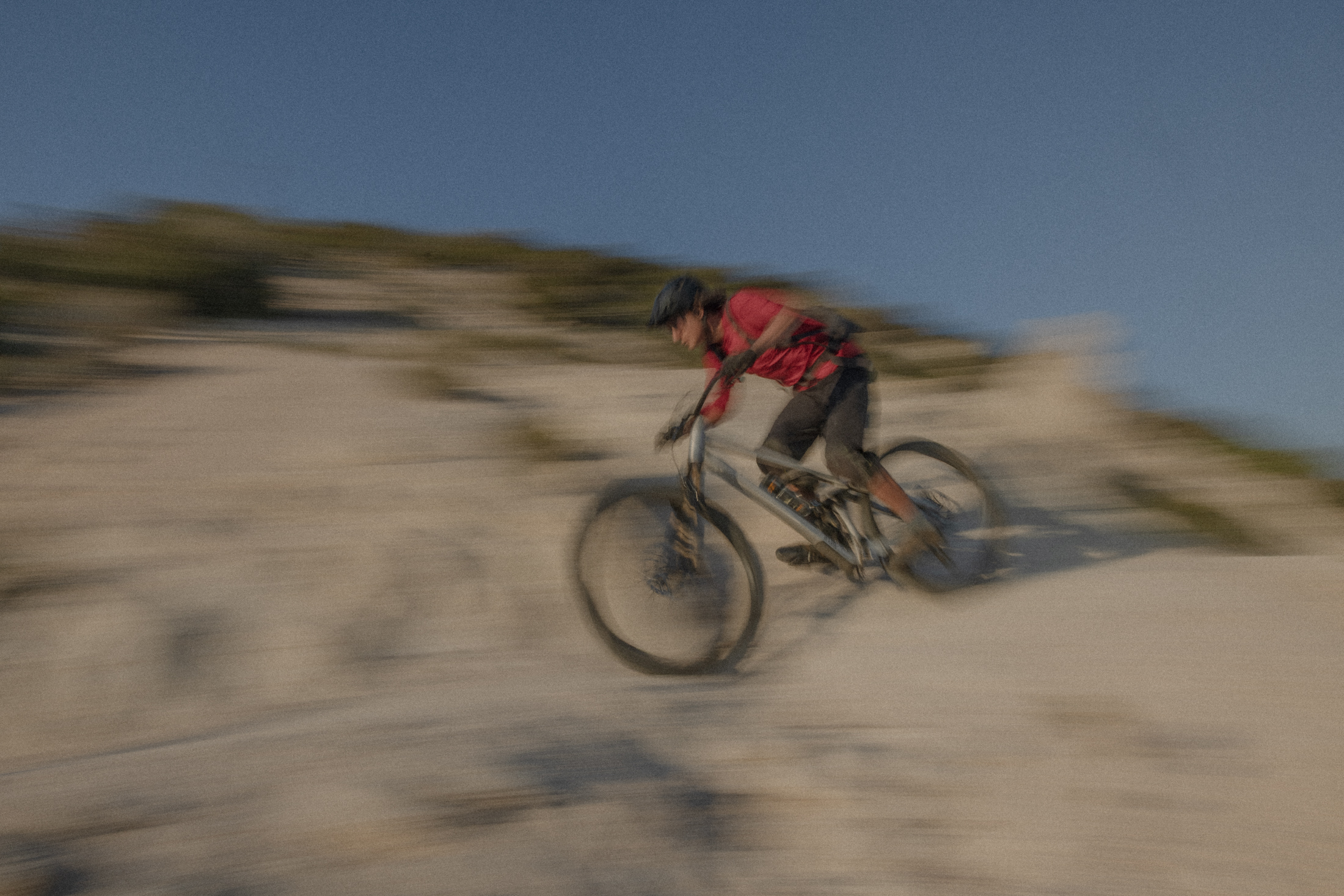
I tried running lower air-spring pressure to make those mid-sized bumps buttery smooth, but that deepened the suspension sag and compromised its character. Then, I realized I probably shouldn’t judge the Jibb LT the same way I’d judge a mainstream 140mm bike. Maybe I was right that it’s meant for shredders, but maybe I was wrong that I couldn’t measure up. The more time I spent on this bike, the more its long front travel and longer wheelbase would open doors to higher speeds and faster lines.
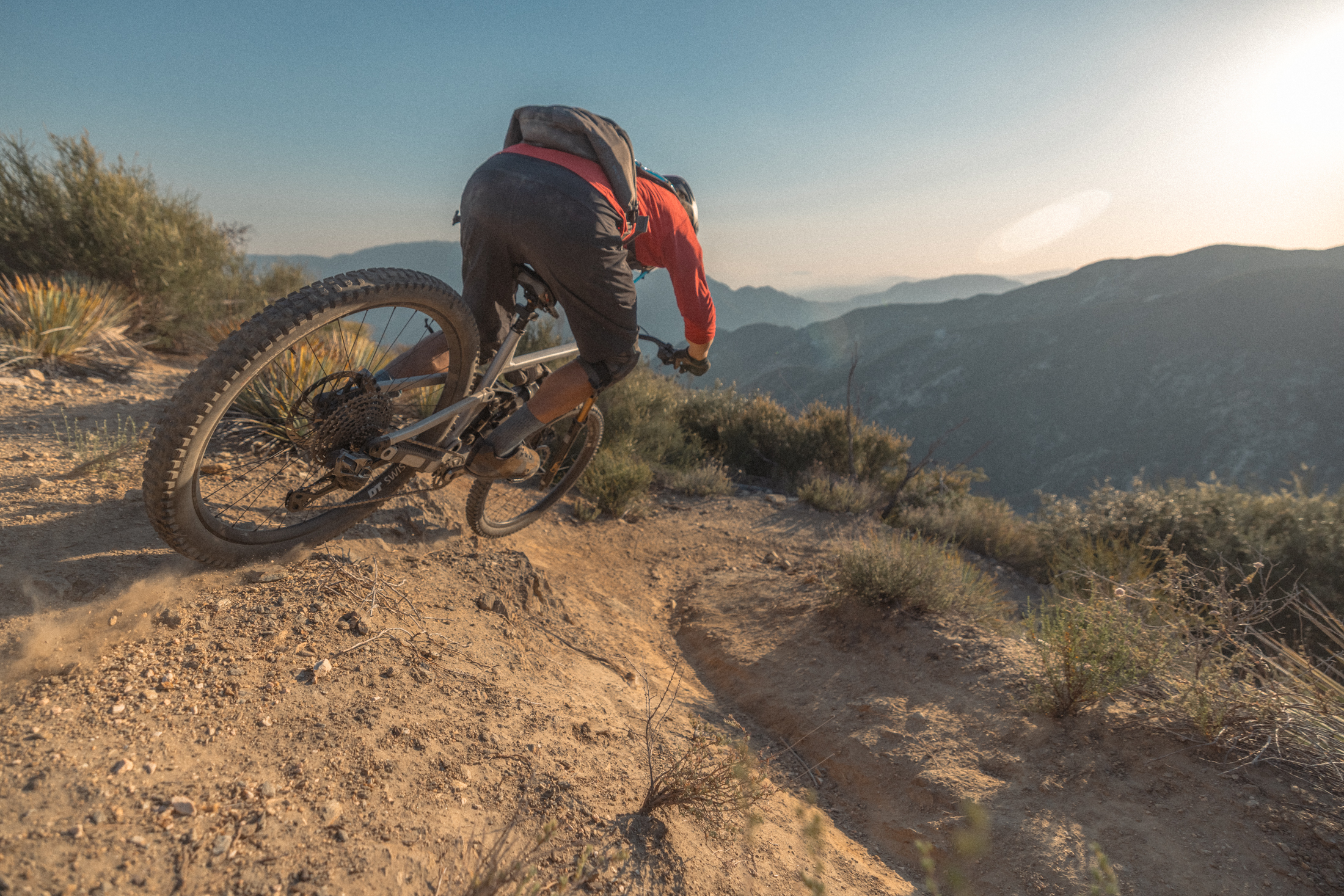
Eventually, I kinda split the difference by maxing out the volume spacers and only slightly dropping my pressure. That helped deepen the small-bump sensitivity without increasing bottom-outs, though it’s not the same as changing a leverage curve. If I were to spend more time on the Jibb LT, I’d opt for one of the progressive lower-link mounts. But in the scenarios where the default setting worked, it really worked. High-speed rock sections would make use of all available travel, as the bike maintained both its predictability and its mid-stroke support. A more progressive configuration may have improved initial suppleness, but such a businesslike approach wouldn’t be quite as fun to play with. It’s a fair trade, for the right trader.

The 130mm rear-travel, 140mm front-travel Propain Hugene I just rode involved a similar compromise between plush and poppy. But on that travel tier, the speeds—and thus the stakes— are lower. The Hugene is for riders with a focus on style, and who either don’t need or don’t want something with nearly enduro-level ambitions. The Jibb LT, on the other hand, is ready to go anywhere. And who knows, maybe you are, too. You won’t know until you try.
TL;DR
It’s not the ultra-supple long-travel trail bike the mainstream brands are making these days. It prioritizes supportive suspension in the service of expressive, stylish riding. If you want to use all the travel, you’ve got to go fast and hit hard. But the forgiving geometry and long fork make that style of riding more accessible than you may think.
Pros:
- Rare mix of capability and flickability
- Unique geometry and kinematics adjustment options
- Overbuilt in all the right ways
- Responsive, efficient climber
- Neutral, familiar seated position
- Wide range of custom builds, including several rear shock options
Cons:
- Not as naturally plush as some 140mm bikes
- Geometry and kinematics adjustment requires additional parts
- Must be imported outside the EU
- Heavy, but who cares?
See more at Raaw