
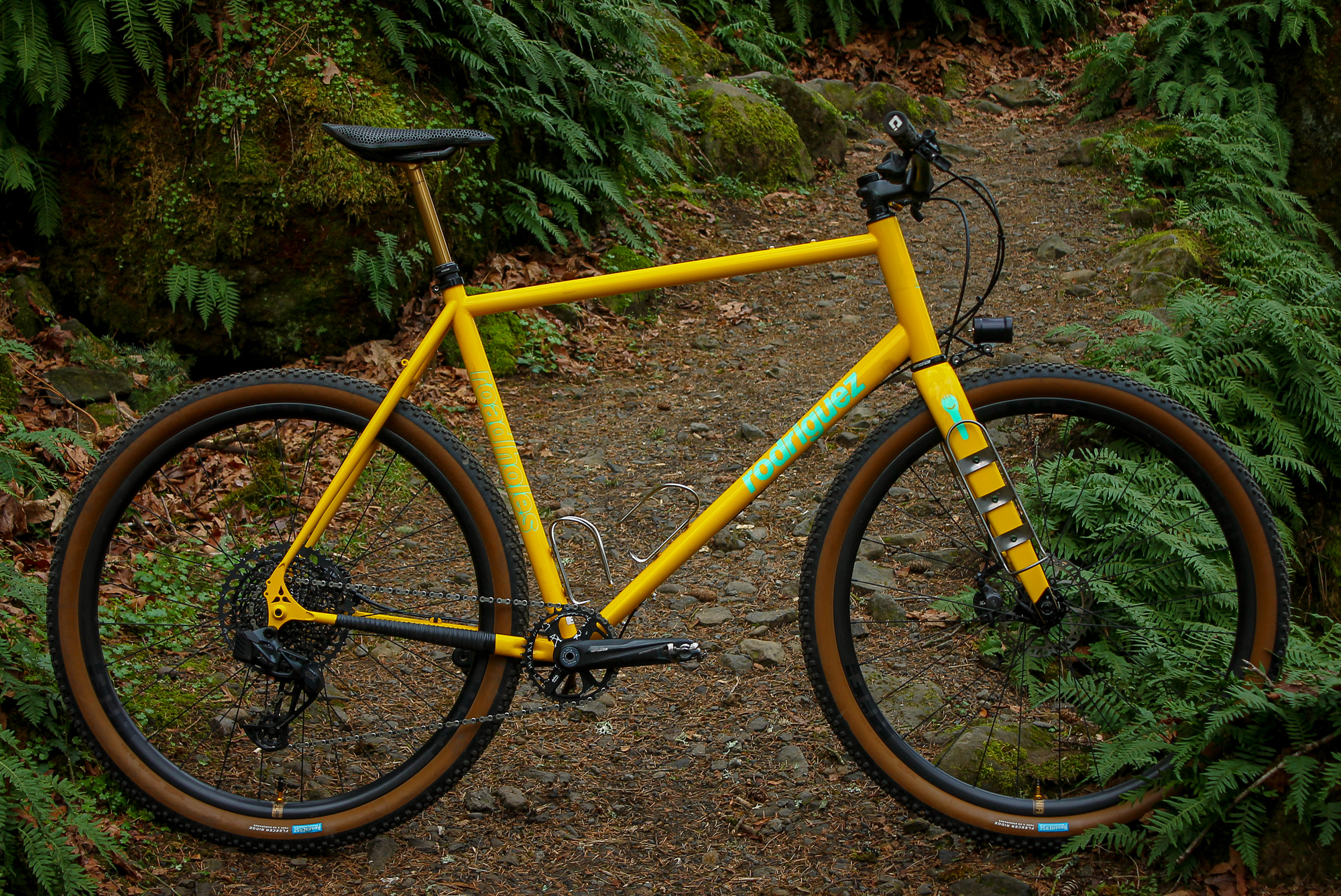
Ron Lewis (Our Mother the Mountain) worked closely with Alder Threlkeld of Seattle’s Rodriguez Cycles to design a flat bar all-terrain go-anywhere bike made specifically to travel light along a not-yet-finalized route: the Cascade Volcanic Arc, an epic multi-day backcountry touring route that stretches from Portland, OR to Bellingham along the backbone of the Central Washington Cascades. This is not a bike review, but rather the origin story of a unique bicycle made for a unique purpose. Let’s start...
How do you tell the story of a custom bike? To be honest, there’s not much to gain in formally reviewing one-off custom builds. The lifecycle is a closed loop, created for an audience of one. Without available production models for consideration, one risks fetishizing objects never intended for replication.
So let’s not do that.
Instead, let’s tell a different story – one about collaborating with friends to solve a problem: to create a bike that doesn’t exist to ride a route that doesn’t quite exist. Yet.
Here’s the expanded pitch: design a custom touring bike for a fit-challenged rider (myself) around the dynamic range of a longform route I am currently developing. The forthcoming CVA, or Cascades Volcanic Arc, will stitch together the Washington Cascades from south to north, from the Columbia River Gorge to the Salish Coast. All told, I’ve ridden about half of it – various sections at various times, but never all together and more importantly, rarely on the same bike.
To set this plan in motion, I teamed up with my pal Alder Threlkeld of Rodriguez Bikes in Seattle to scheme up the ideal platform for this terrain. Alder knows my riding style well and has spent years exploring these particular corners of the Cascades, so he immediately locked in on the assignment. Beyond that, he brings a no-frills, bare-knuckled riding style and a knack for inventive builds which I have long admired. Guided by those sensibilities, the high-level brief was simple: a workhorse over a show pony – utility-first, wide-ranging, and tuned to Cascadia’s mix of familiar trails, adventure standards, and unknown backcountry lines yet to be scouted.
Route as Rationale
So let’s talk about the route. The Cascades Volcanic Arc (CVA) is (going to be) a 600-mile modular adventure route stretching from Portland to Bellingham via the spine of the Washington Cascades. I say modular because there are several legs which will have optional A or B lines depending on riders’ preference, timing, and general appetite. The endeavor is equal parts back- and frontcountry, traversing a mix of remote singletrack, National Forest gravel, and a fair amount of pavement. Currently in development, the CVA will be the Washington continuity of the existing OCVA 400. Picking up where the OCVA leaves off, the CVA will explore the full slate of Washington’s dynamic ecology from ice age fluvial terraforms and volcanic high country to arid shrub steppe to coastal rainforest. This dynamic range – fast transport miles to technical trail – will be the template guiding the build.
Like the OCVA, the Washington tier is also designed around three modes of travel: lightweight fastpack touring, more open-ended bikepacking, and Amtrak transit accessibility at either end. But just to be clear, fastpacking mode is our directive with this build. This version means riders who like to push big miles can travel light between areas with services and accommodations without necessarily carrying a full load; gateway communities like Carson, Packwood, Roslyn, Chelan, Twisp/Winthrop, and ultimately Bellingham. But the crown jewels and real draw are the iconic backcountry trail corridors like Ape Canyon and Skookum Flats in the Gifford Pinchot, Mission Ridge to Devil’s Gulch in the Okanogan, and Thompson Ridge in the Methow Valley.
Full-Spectrum Sensibilities
In considering the ideal platform for this spread of terrain, the approach was to solve for the extremes, then pull back. This would (hopefully) ensure that backcountry trail tech isn’t egregiously underbiked but also avoid bogging down over extended stretches of pavement and gravel, of which there are many. As I write this, there exist few tidy terms for this rarefied space where bike and terrain are perfectly matched. I propose we call it bestbiking. So what does this actually look like in this case?
I was envisioning something brawny and hardtail-adjacent for trail-heavy lines like Strawberry Ridge north of St Helens, yet light and fast-rolling to cover long paved stretches like SR20 through the North Cascades – but decidedly not a drop-bar gravel bike. Capital-S singletrack of this caliber needs to be savored, not merely endured, so competent handling, agility, and comfort in the backcountry are absolutely paramount. For me, this means wide flat bars, robust footprint, ample dropper (at least 30.9 and 150mm), and some degree of forgiving flex as the starting point. To my mind, this puts us squarely in ATB territory: hardtail DNA, but pulled back a few notches. Something leaner. Something meaner. A few steps beyond progressive gravel but not quite XC.
A Legacy Builder
Obviously, splitting the difference between gravel and XC is hardly unique. It’s the same target the entire endurance-adventure world is chasing. But within that overlap are infinite variations –sensibilities, priorities, terrain, and riders. So even in well-worn territory, there’s still fresh ground amid the details. This is where the evolutionary gold gets rolled. Plenty of folks land here, but because this one was on me to figure out, I did what any forward-thinking sensemaker would do: I sketched out the broad strokes then handed my dilemma to someone else.
This is where Alder comes in.
Alder Threlkeld is part owner, part creative director (my words, not his) of Rodriguez Bicycles, a long-running Seattle fabrication shop that has designed and built their own slate of production and custom bikes since 1973. For a deeper dive on Rodriguez’s backstory, check out Katie Sox’s 2023 shop visit! Having spent years in Seattle, I always appreciated Rodriguez’s timeworn shop appeal and historical willingness to get weird. Tandems, triples, S&S couplers, long bikes, tall bikes, tiny bikes, folding bikes – you get the idea. Fulfillment of highly-specific visions has been Rodriguez’s calling card for 53 years. But here’s the catch: I wanted a modern flatbar ATB, and they are primarily a drop-bar shop. The calculated gamble was this: my mountain bike yearnings would be tempered somewhat and nudged directly into the pocket by Alder’s lean, hard-charging design sensibilities. What could go wrong?
Fit-Forward Fabrication
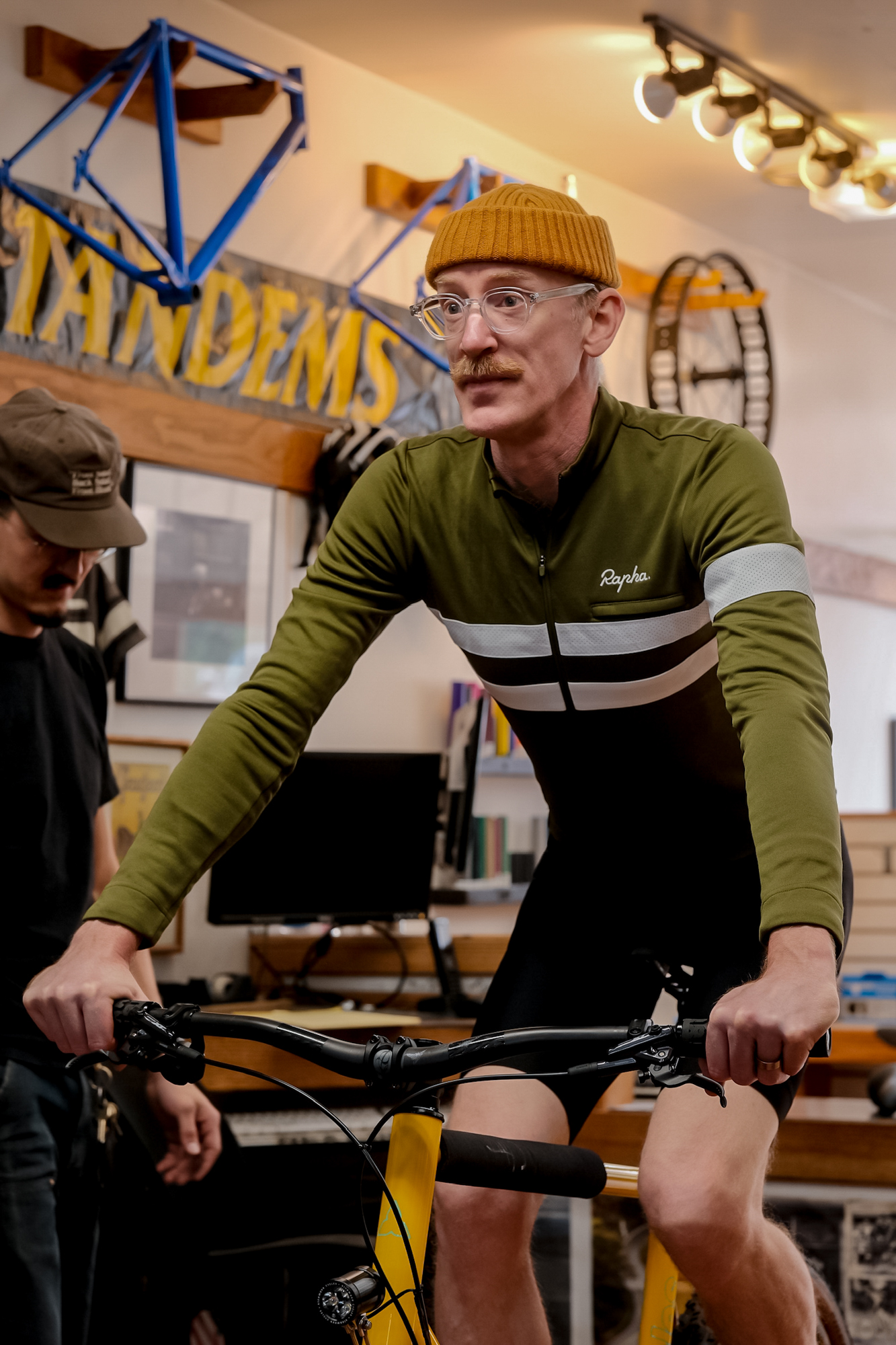
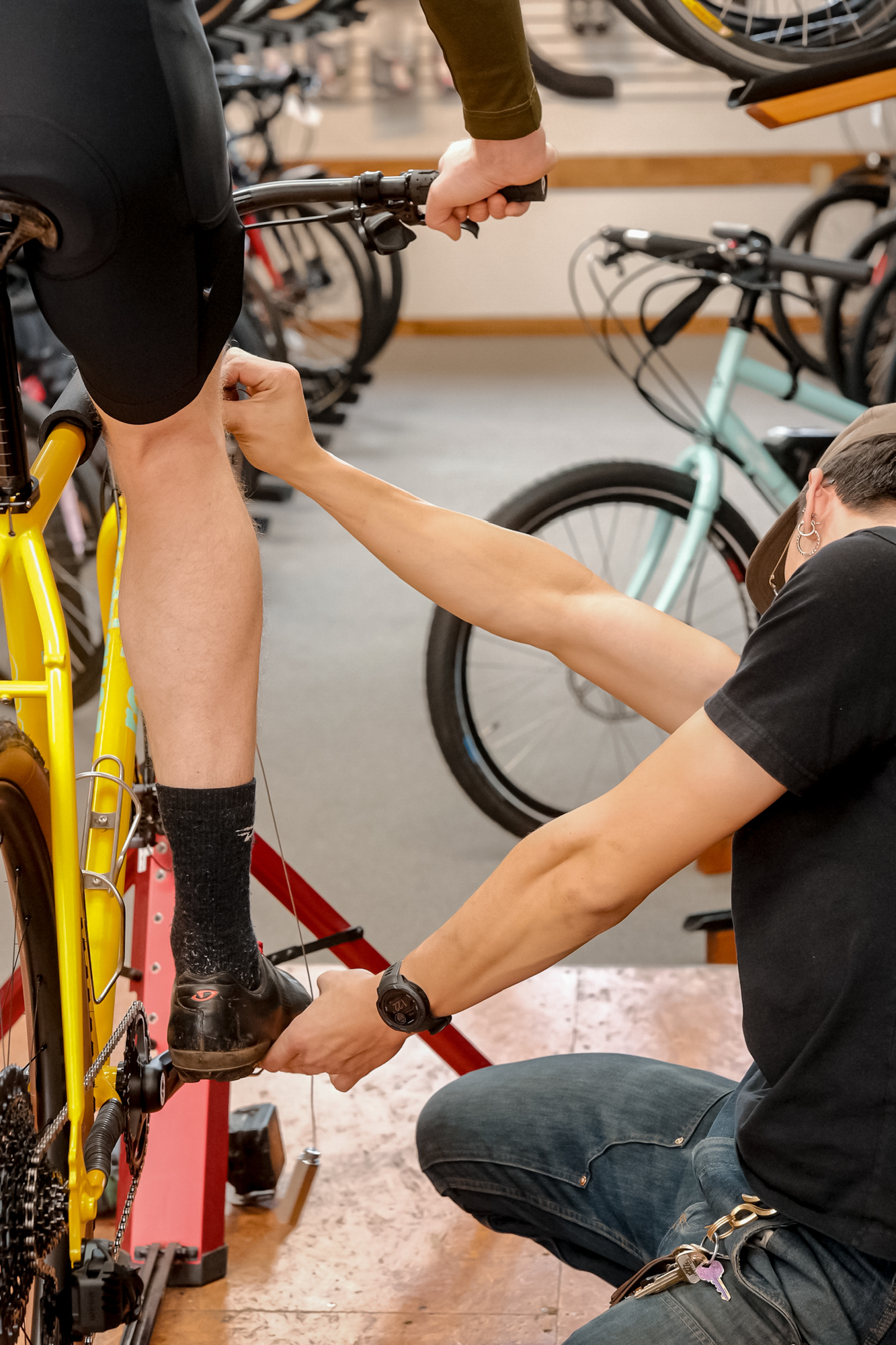
After chatting with Alder about the shape and scope of the CVA project, we kicked things off with a preliminary bike fit. Rodriguez uses a proprietary system they call NEXT-fit. I found the process curiously high-minded yet low-tech, involving a cryptic array of homemade fit tools and software designed in-house – like something from the vaults of Sheldon Brown. Once baseline numbers were established, fine-grained fit was dialed in while discussing factors that would need to be considered: handling character, reach considerations, bar and bag setup, loaded weight, and tech specs like tire size, crank length, chainring diameter, and most importantly, color.
First I should back up and explain two things: I’ve never had a proper bike fit and I’m very tall. Like 6’4″ and giraffe-shaped, with an NBA-grade wingspan. So as you might imagine, fit has been a lifelong challenge. Any bike off the shelf is typically optimized around 56cm, so up at my size, production geometry can get pretty skewed. I’m accustomed to compromised reach and stack height, so the idea of balanced proportionality and something that fits right out of the gate felt like a reprieve; a glimmer of hope after years of making-do.
Key Considerations
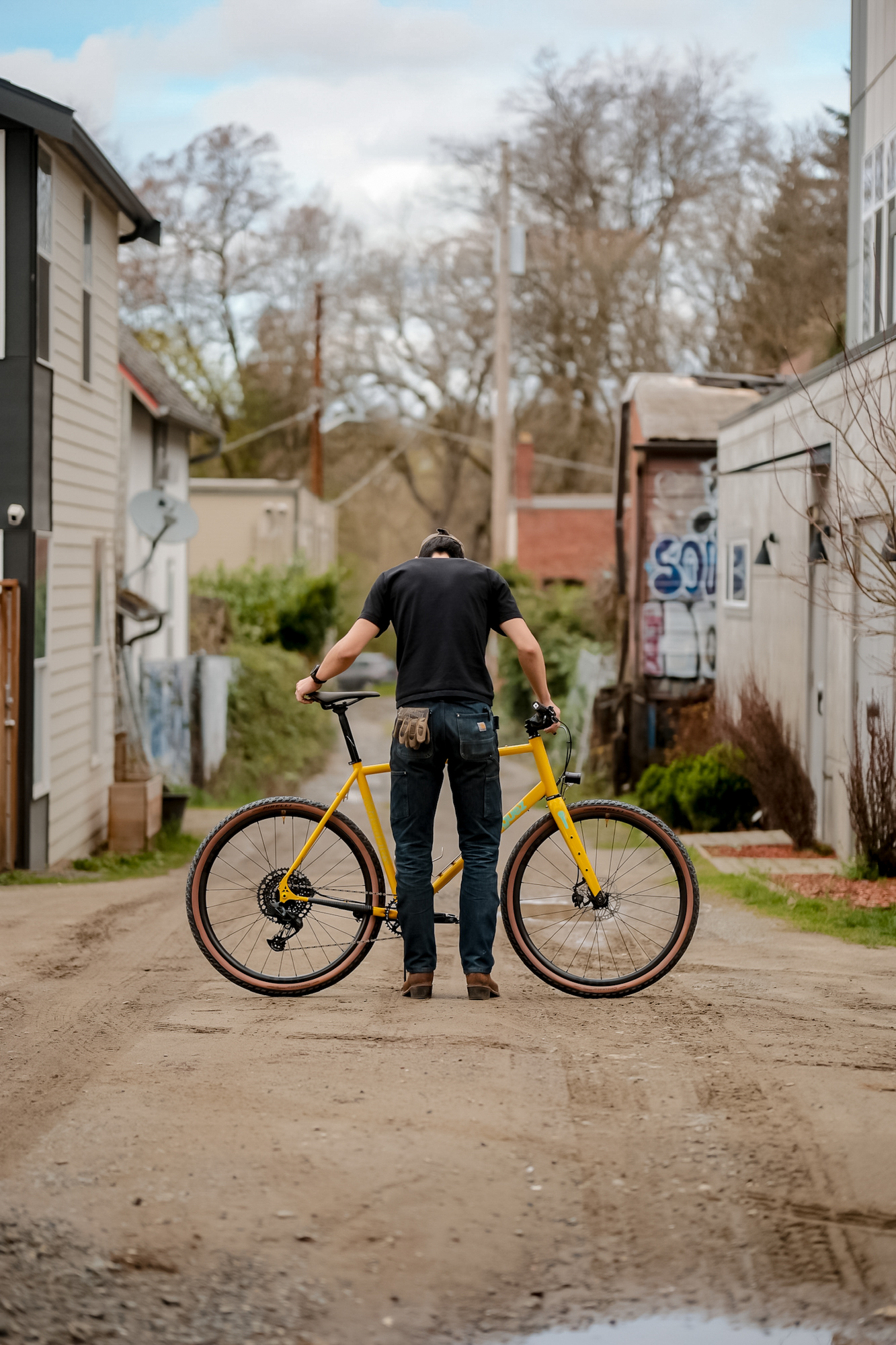
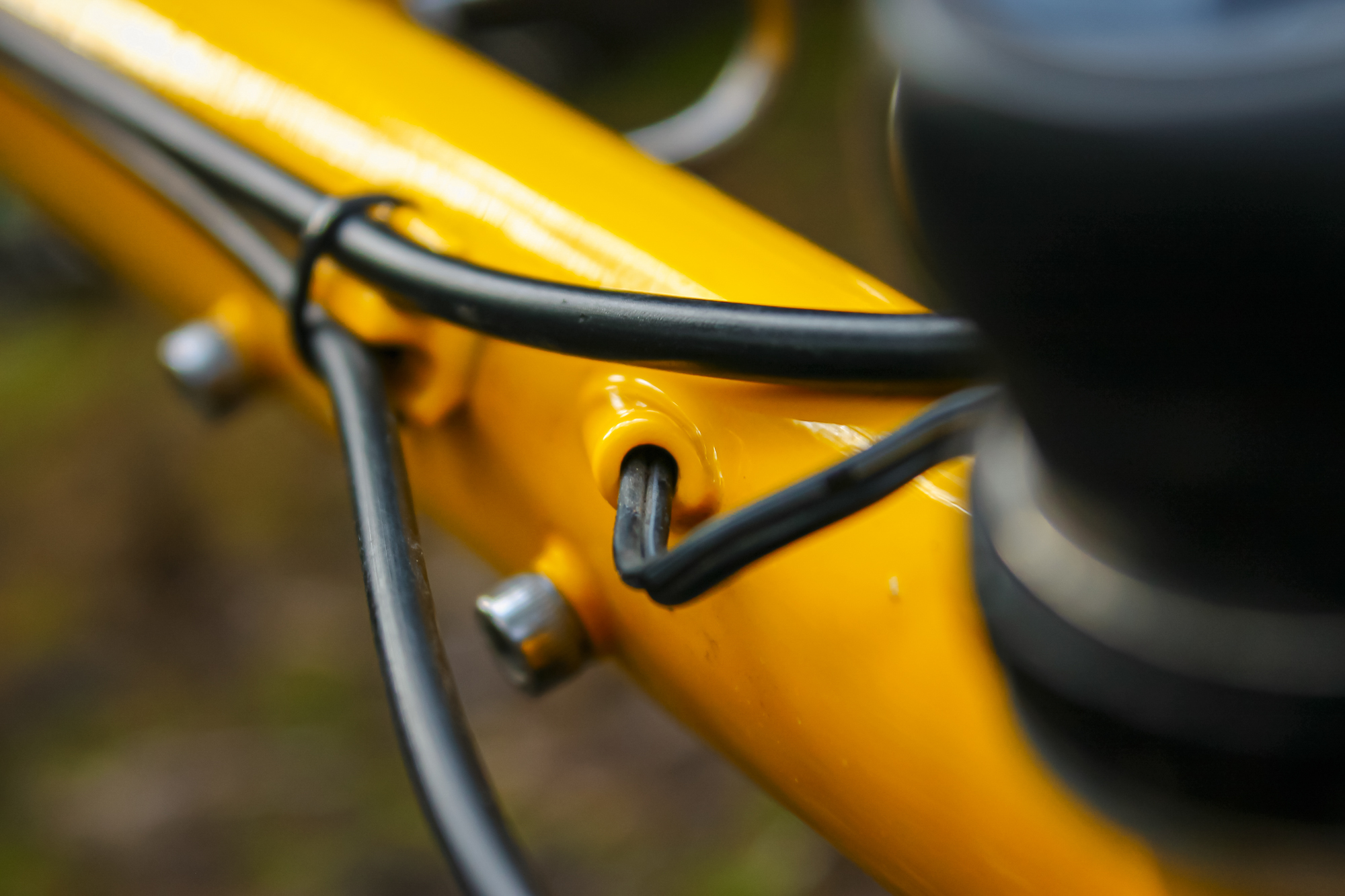
From the ground up, we based everything around a 700 x 55mm footprint – or 2.1” if you prefer, which is really the minimum I would consider for rocky, rutted trails and a spread of backcountry unknowns we might encounter. We decided against suspension correction and Boost spacing to keep the fork rigid, wheels and chainline gravel-optimized for efficiency. 600 miles is a lot of pedaling, so our mantra here was when in doubt – keep it light and quick. Framewise, I also wanted to factor in dynamo wiring from the get-go to avoid headaches down the line. This would be the only internal routing involved, all else would run externally, including the dropper cable which would cut into the seat tube at the base. All fairly standard stuff, but I very much appreciate the ability to consider and refine these details a la carte with someone who knows my riding style and preferences.
Build Basics
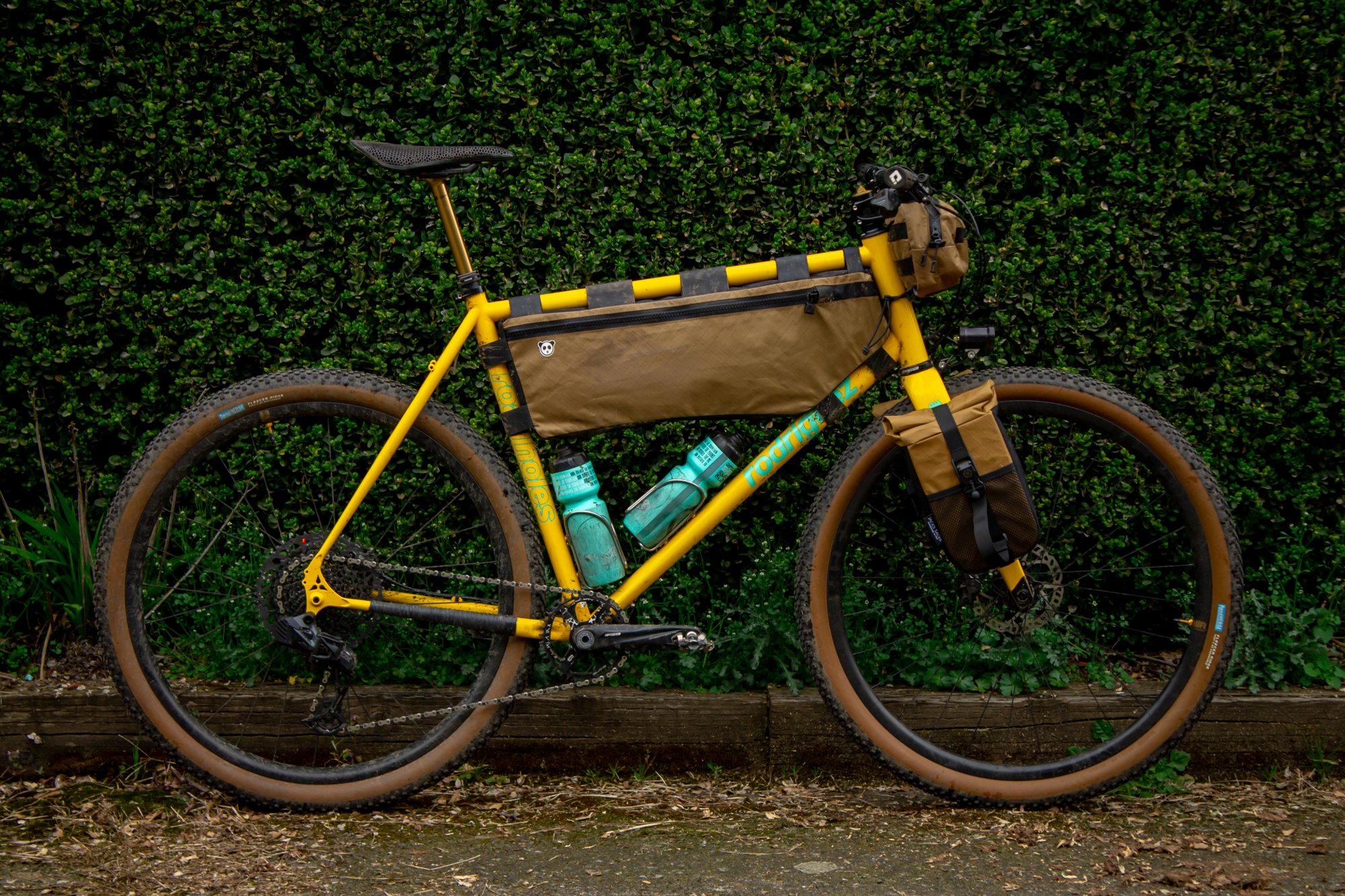
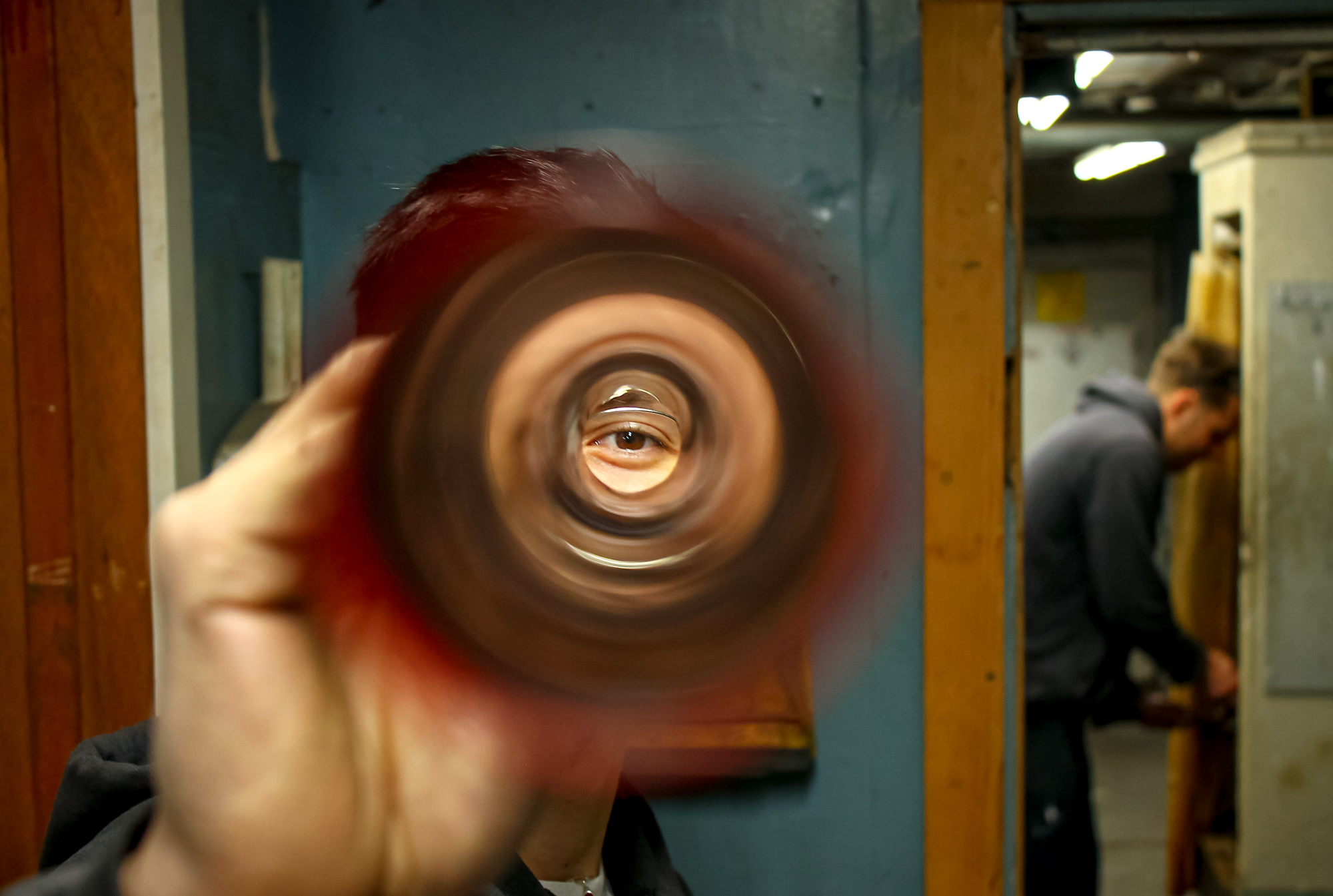
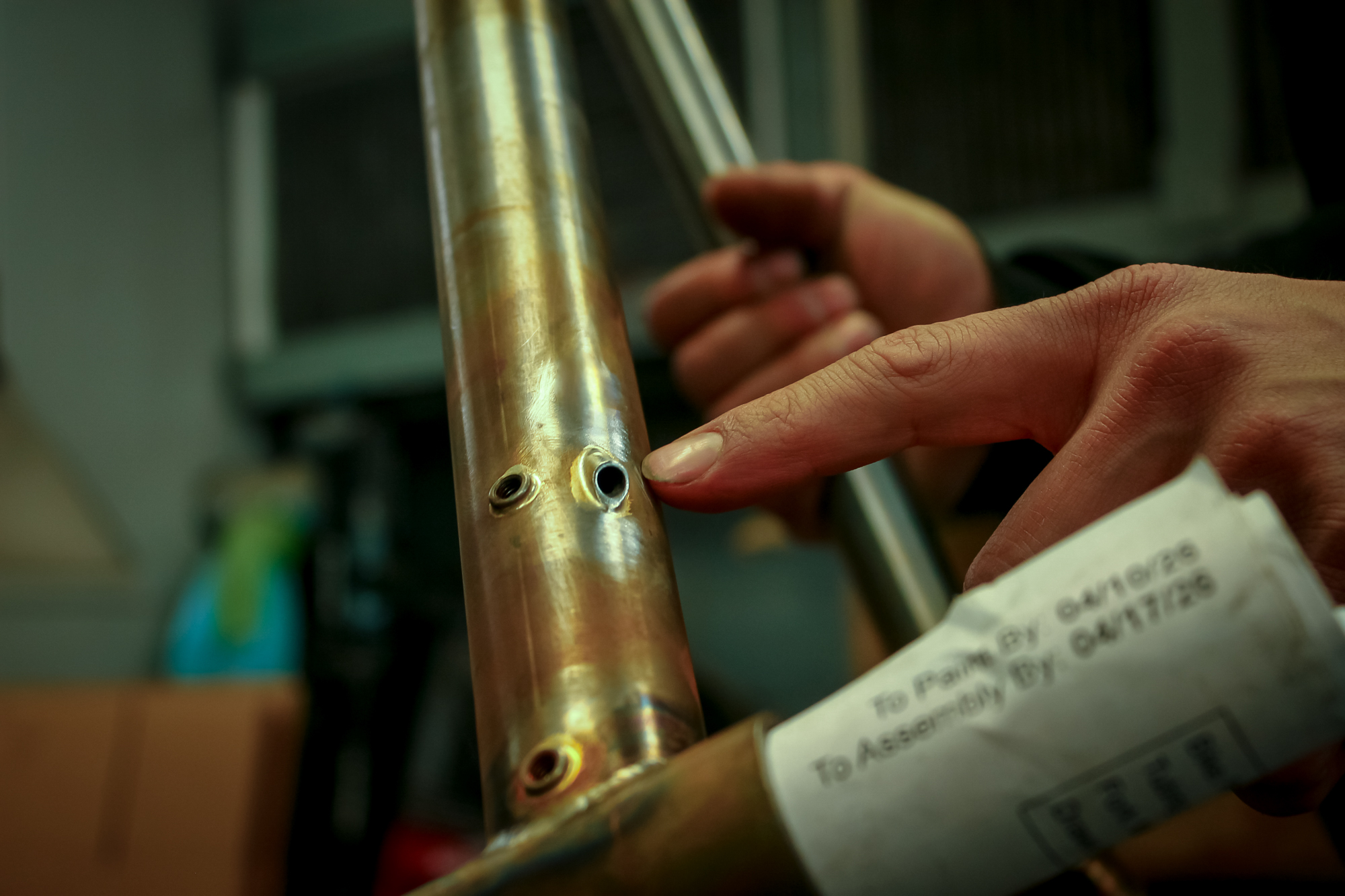
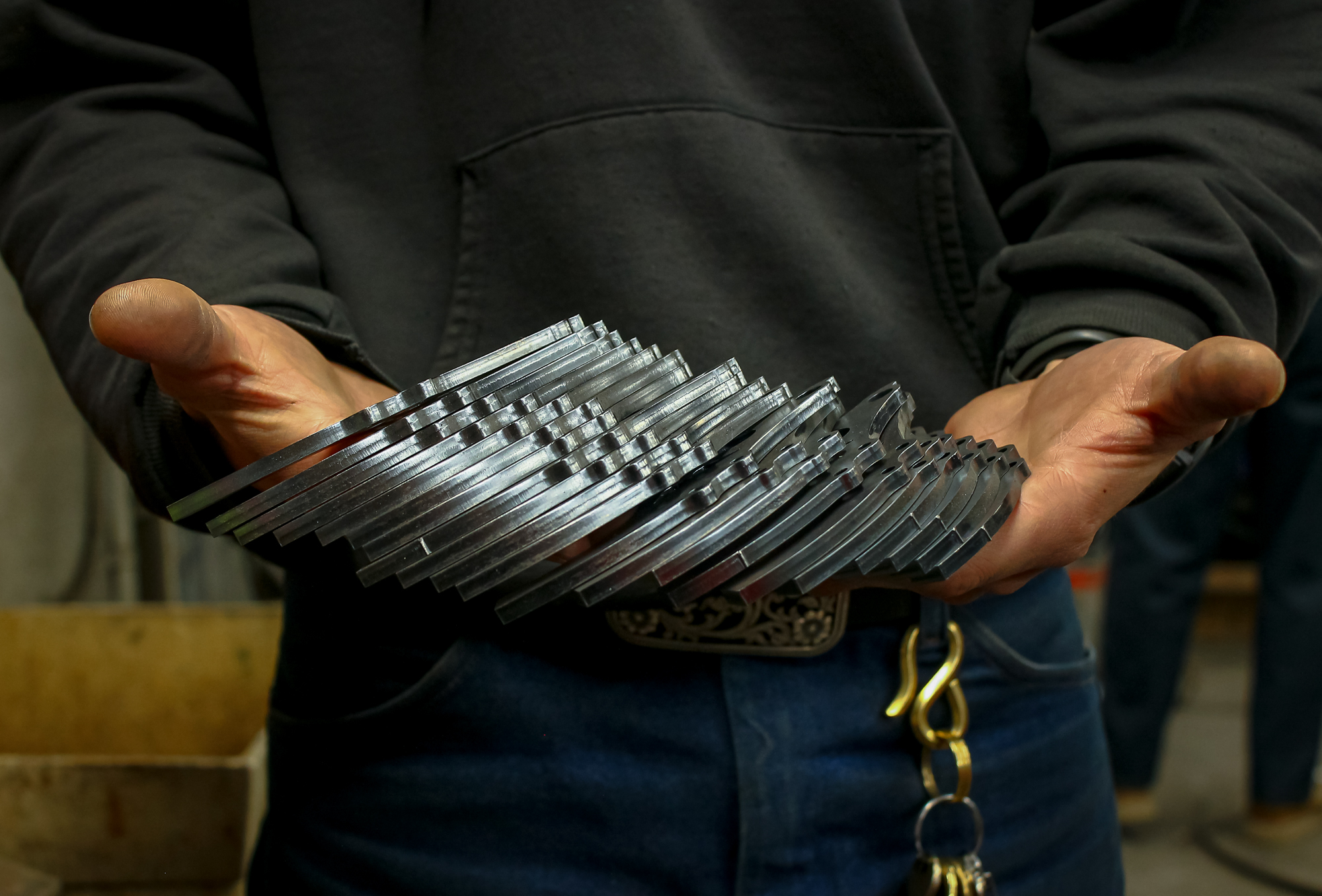
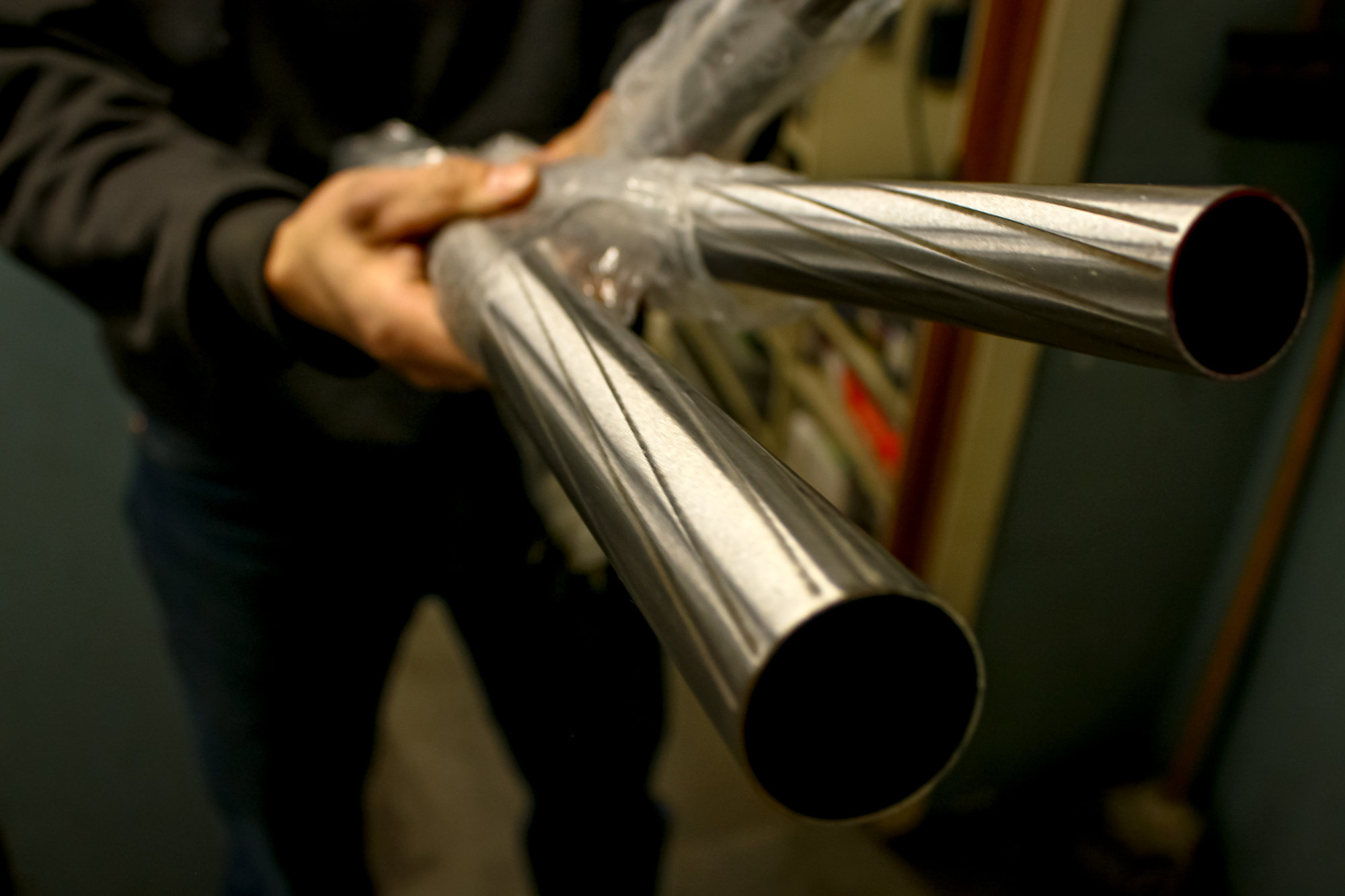
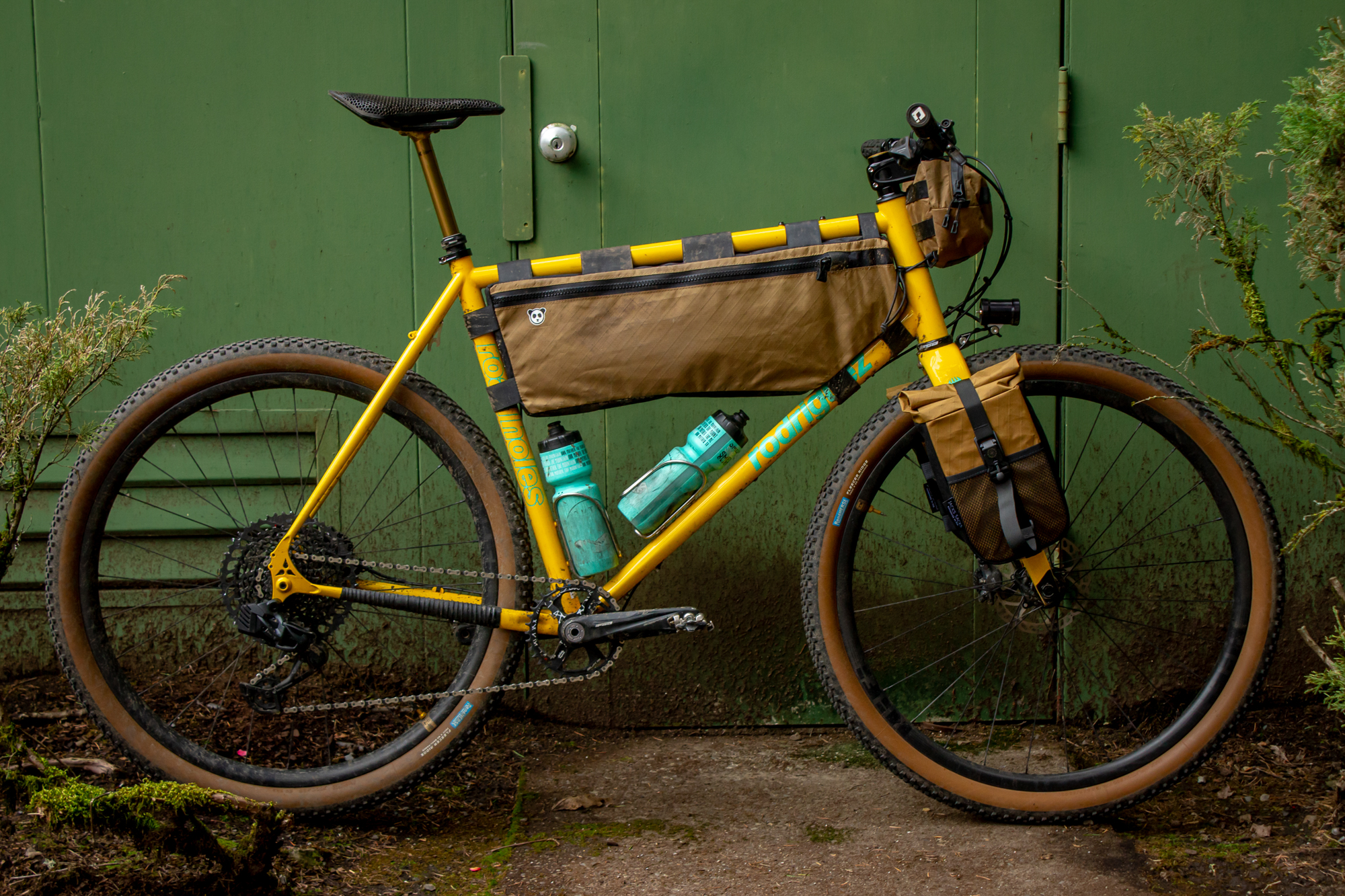
The frame itself was TIG welded using Velospec HS tubing, which replaced True Temper when it phased out in 2017. Velospec is an air-hardened tubeset chosen here for its welded joint strength and beefy off-road character. Structurally, the idea is simple: sturdy down low, light, forgiving, and flexy up top. The build features a large front triangle intended to accommodate my long reach and maximize cargo space. This also keeps two full-size bottles accessible in the standard position, with cages sitting low and snug. To offset the long front end (which at my size is considerable), the downtube was diametrically upsized and pinched at both ends; vertically up top to enhance stiffness and horizontally at the bottom bracket to mitigate lateral sway. Jargon translation: bike feels solid – pedals smooth.
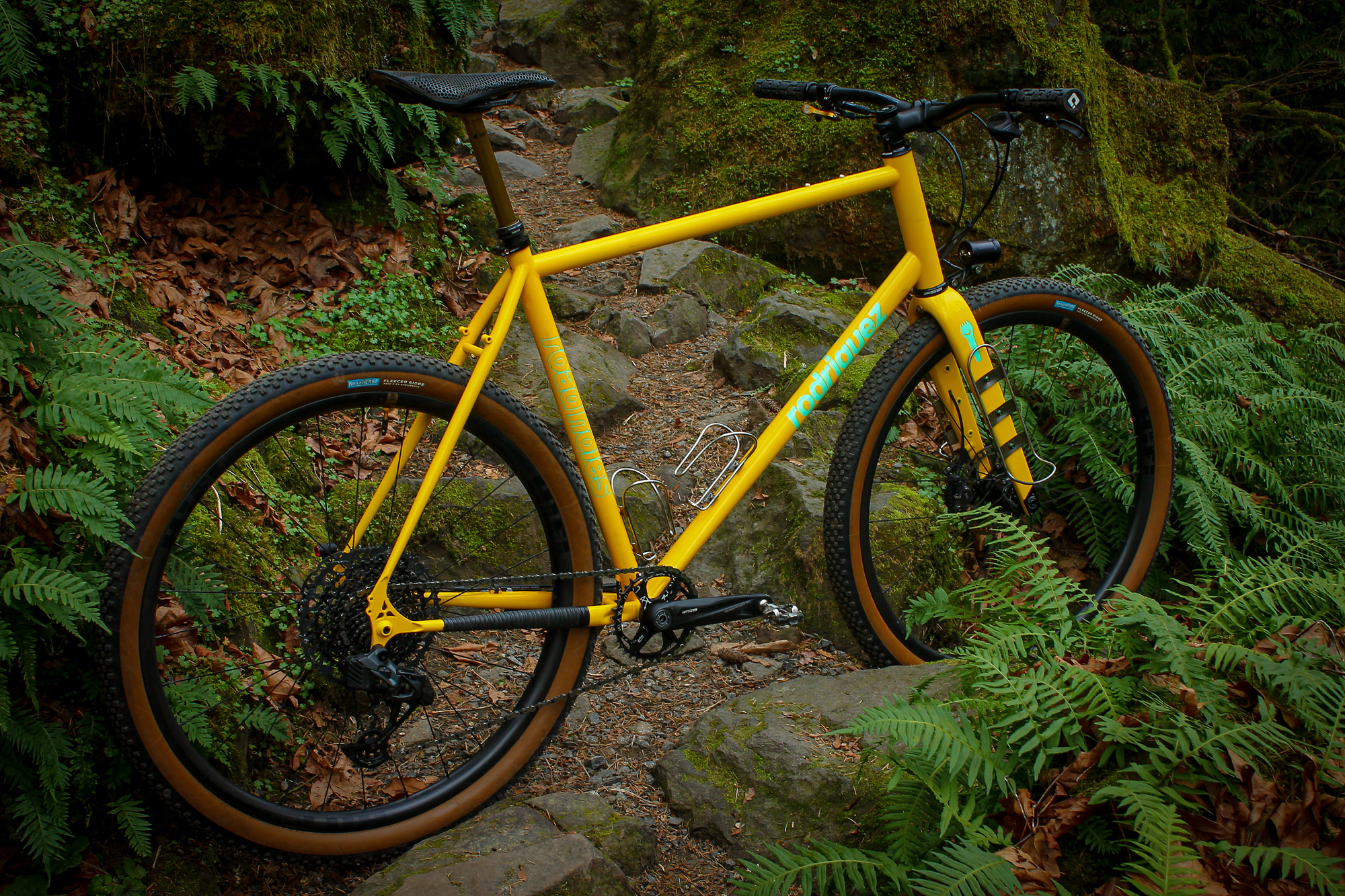
And this, folks, encapsulates the understated beauty of custom bicycles. So often it’s in the things you don’t see, like tandem chainstays for foundational heft, lighter, thinner top tubes and seat stays which flex at speed to take the edge off rough terrain, seat tubes tapered and shimmed to run a 30.9 dropper, precisely scaled for little-to-no exposed post. This is the kind of stuff you won’t get off the shelf. And remember that NBA reach I mentioned? Much of that is absorbed by a lengthy top tube (663mm) combined with a short stem (65mm) – which nails that hardtail handling and riding position I was looking for. Blessed be!
Ride Character and Geometric Inflection
The most compelling argument for custom is the pursuit of a bike that doesn’t yet exist, and I do feel like we closed the deal. To be clear, I wasn’t chasing preconceived geometry, but I will say the finished build resolved into a delightfully coherent and snappy whole. Easing into the first ride, the bike felt altogether natural, my movements uncannily fluid as if guided by a harmonious current. Magical would be the closest adjective. Is this what proper fit feels like and I’m just the last to find out? It’s an oversimplification, but it just feels right. At times I’m not sure I want to understand the mechanics at work or look too deeply at it, lest I break the spell.
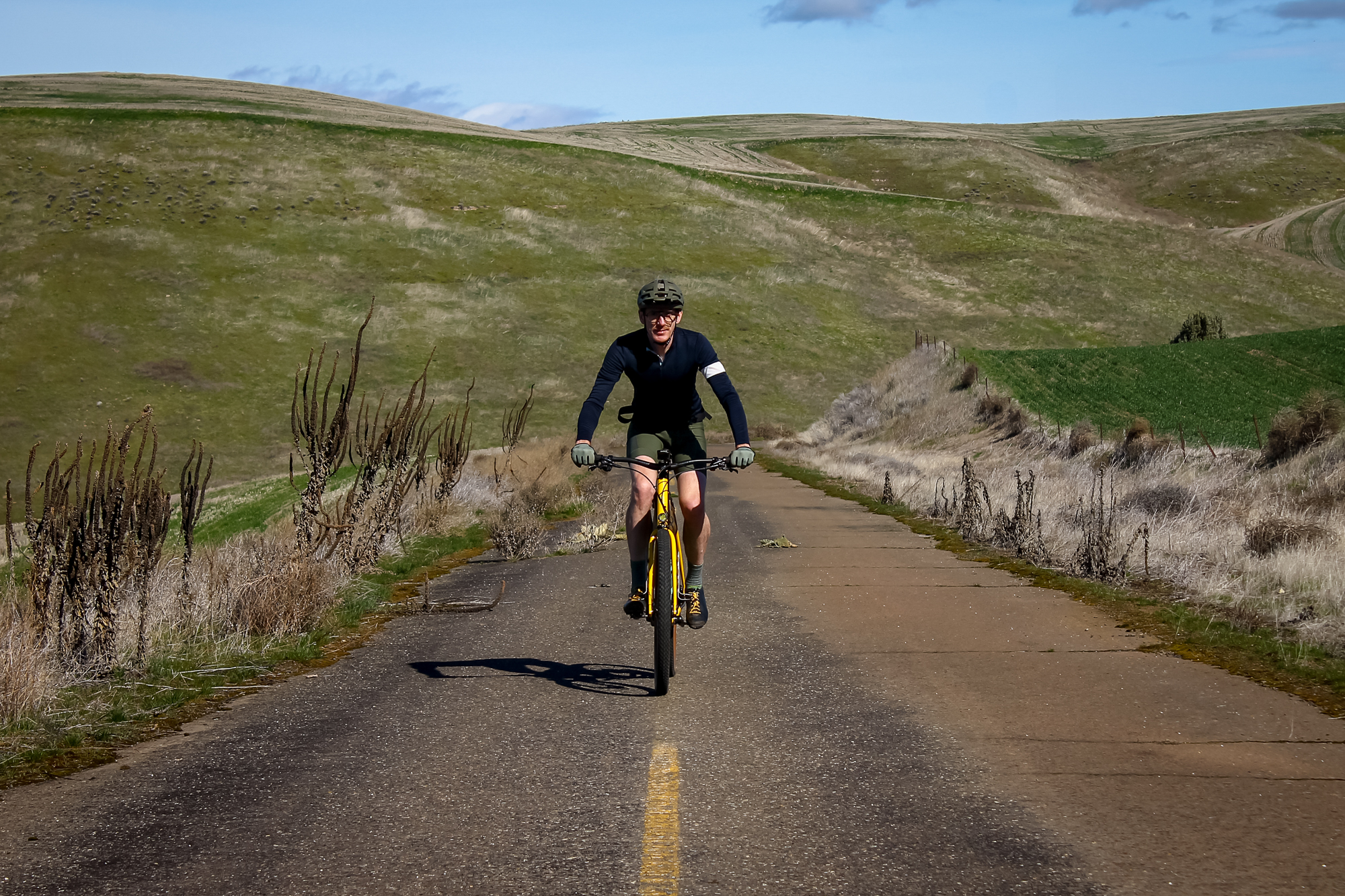
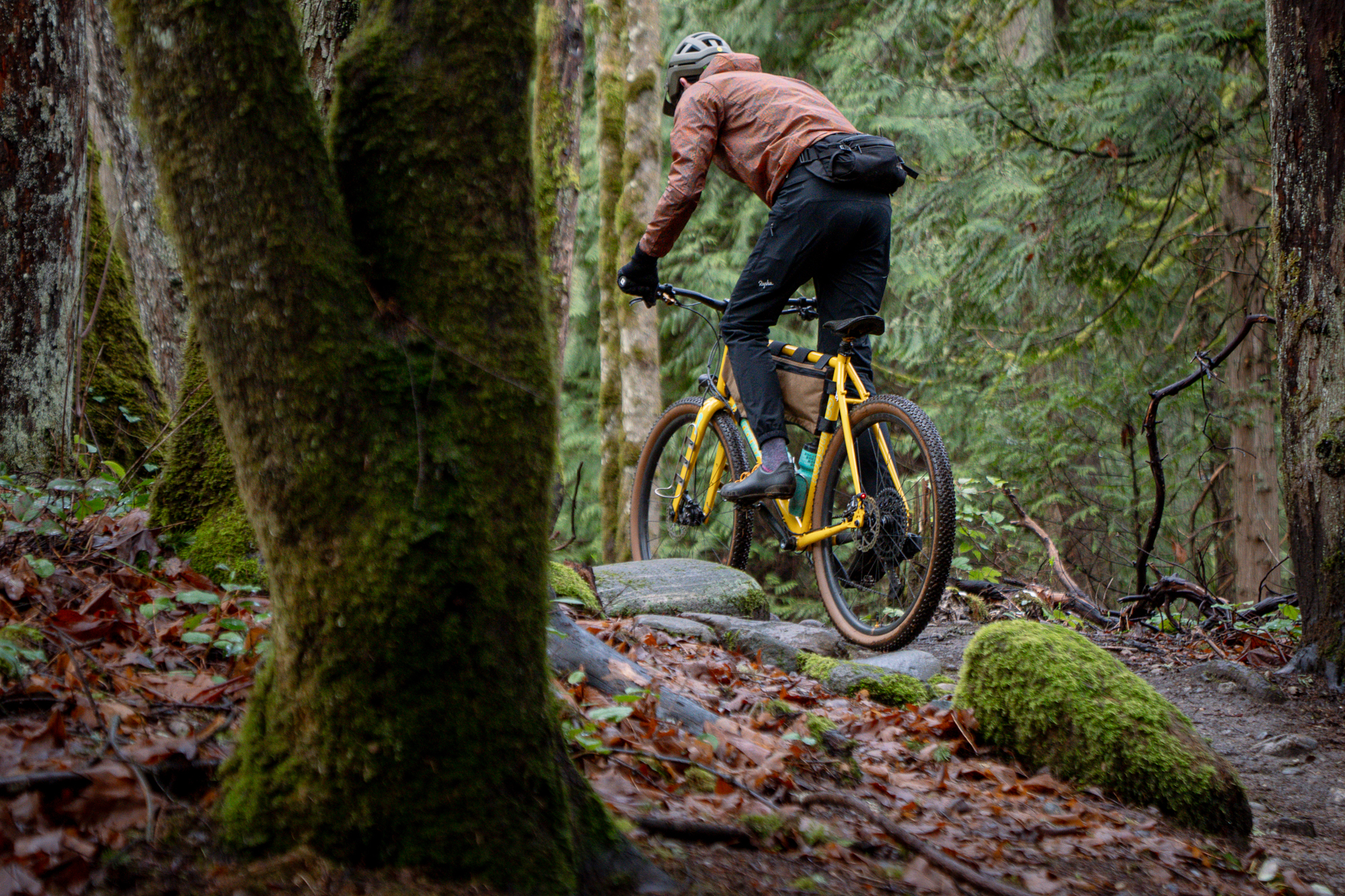
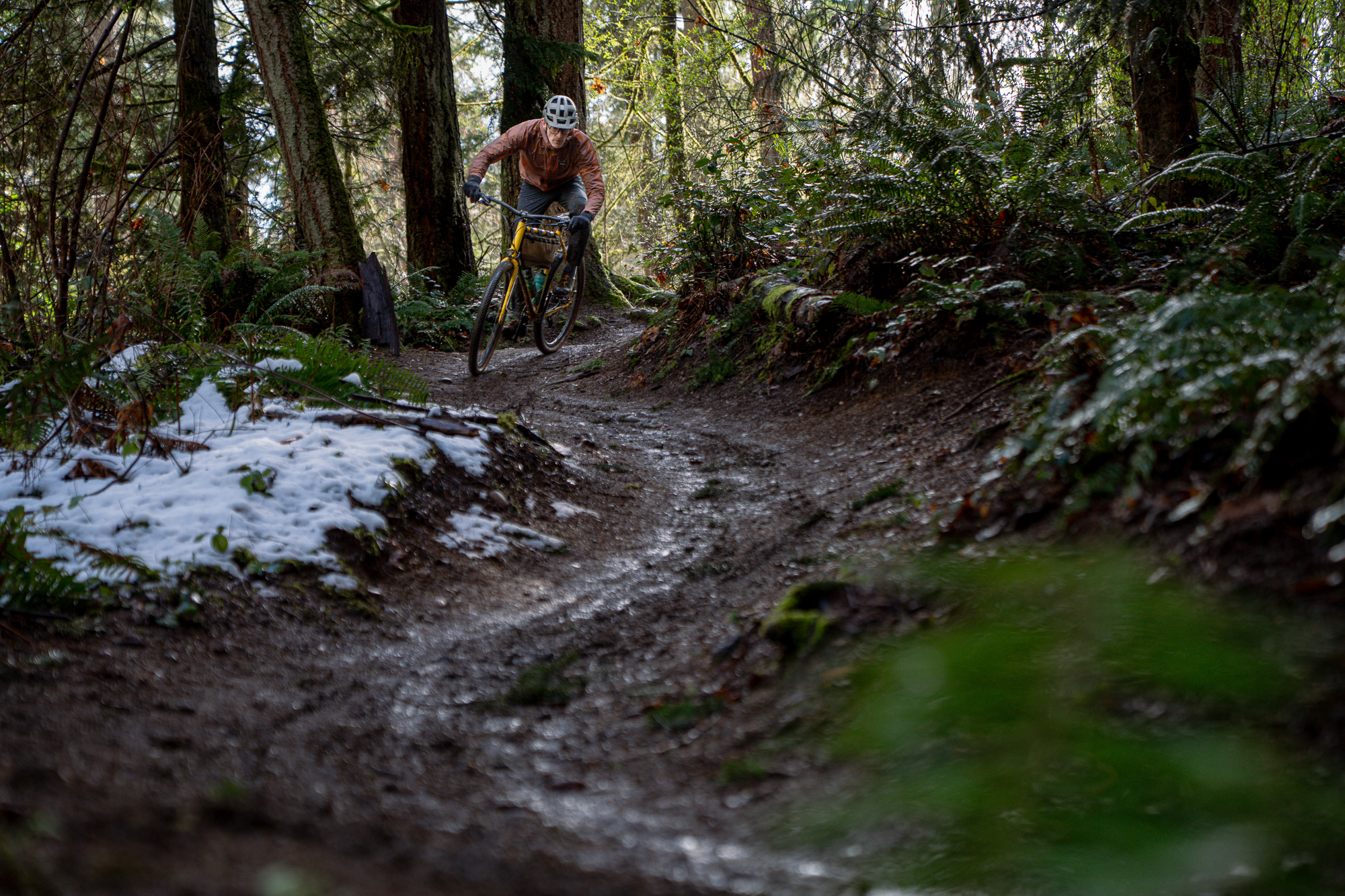
The riding position is similar to my hardtail, but steeper up front and roadishly peppy at 26 lbs on the nose – a kind of lean, nano-weight XC. Almost in a gravel bikes are just 90’s mountain bikes kind of way, but not quite. The distinction here is more specifically minimalist ATB through a fast-gravel lens. The angles here are assertive: spry, crisp, and clean with a HTA of 72.5° with a 72° seat tube that somehow rides perfectly behind the beat; a thoughtful balance of precise tracking and buttery follow-through. As I had hoped, Alder’s instincts had pulled the outcome ever-so-slightly back from heavyweight burl into the realm of lively zest with just enough tooth to get loose.
The Long Haul
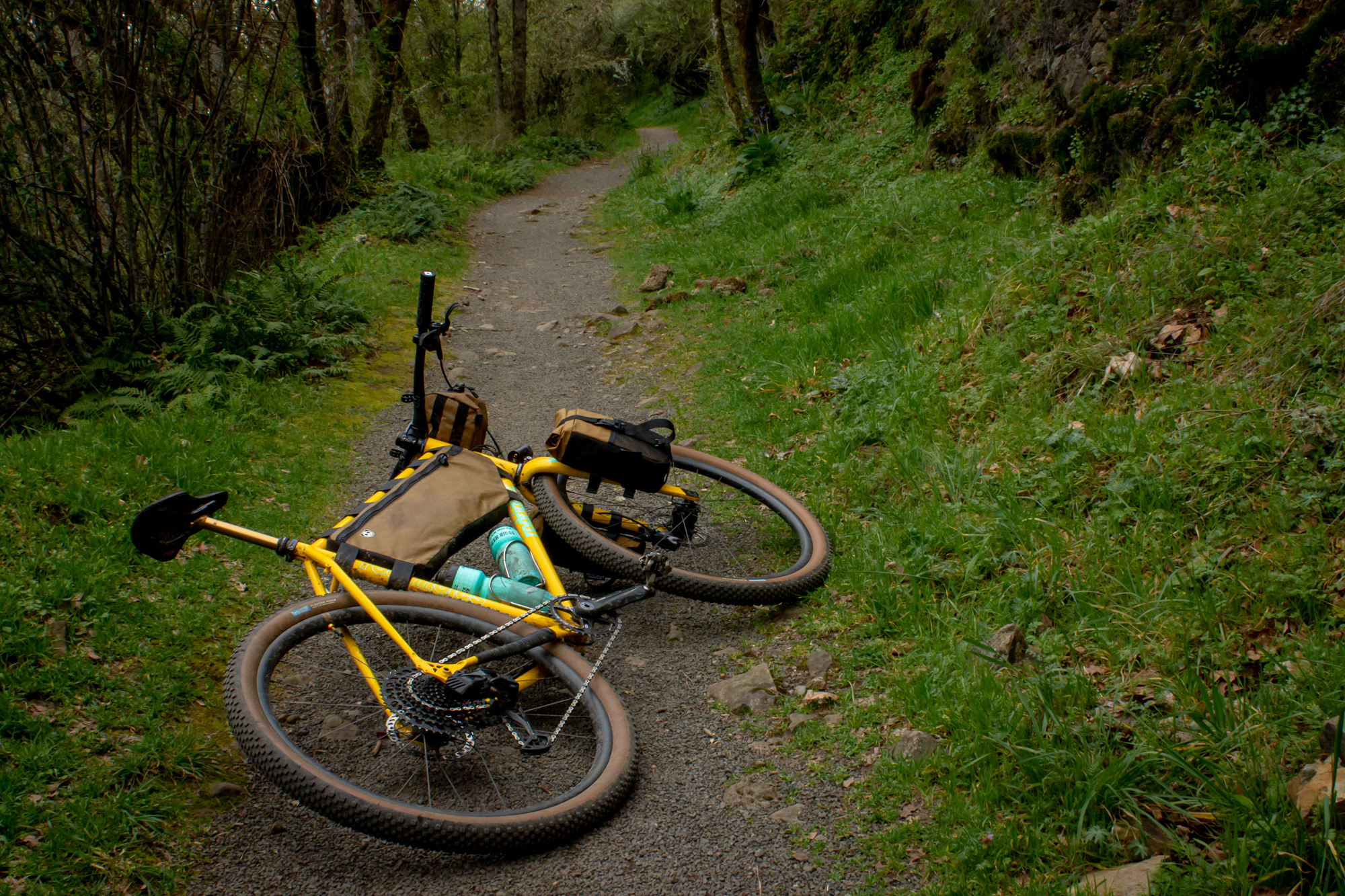
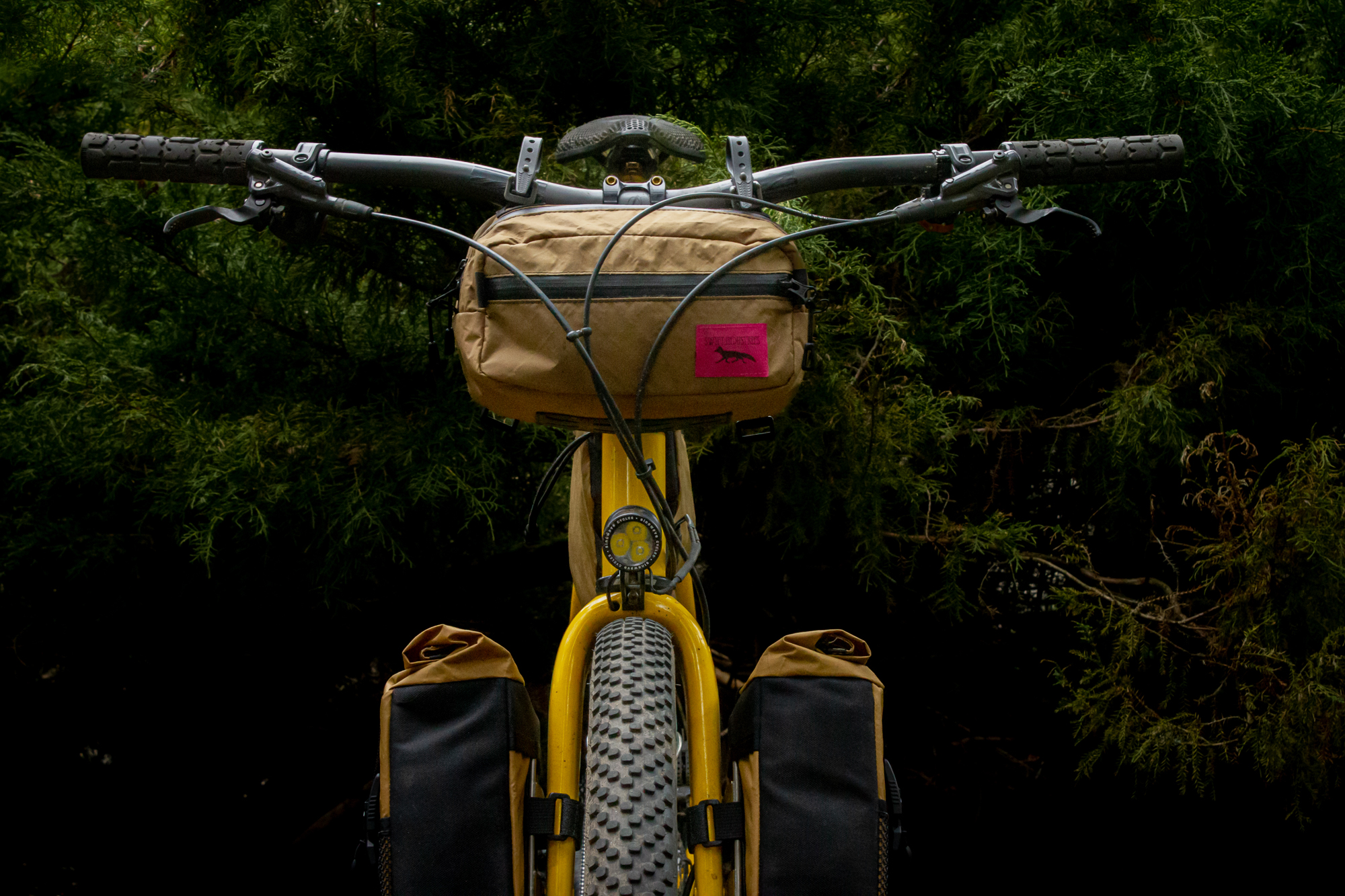
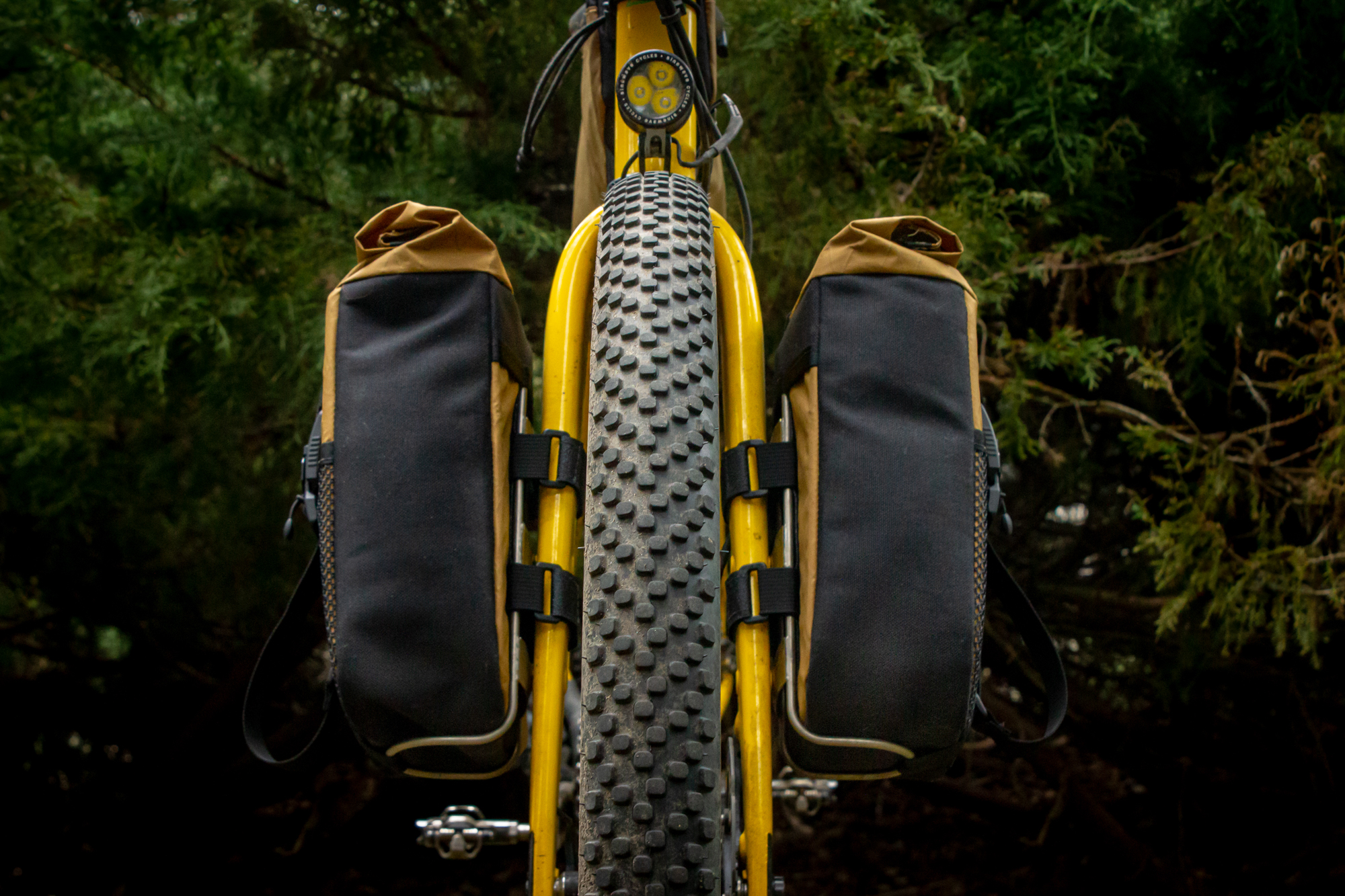
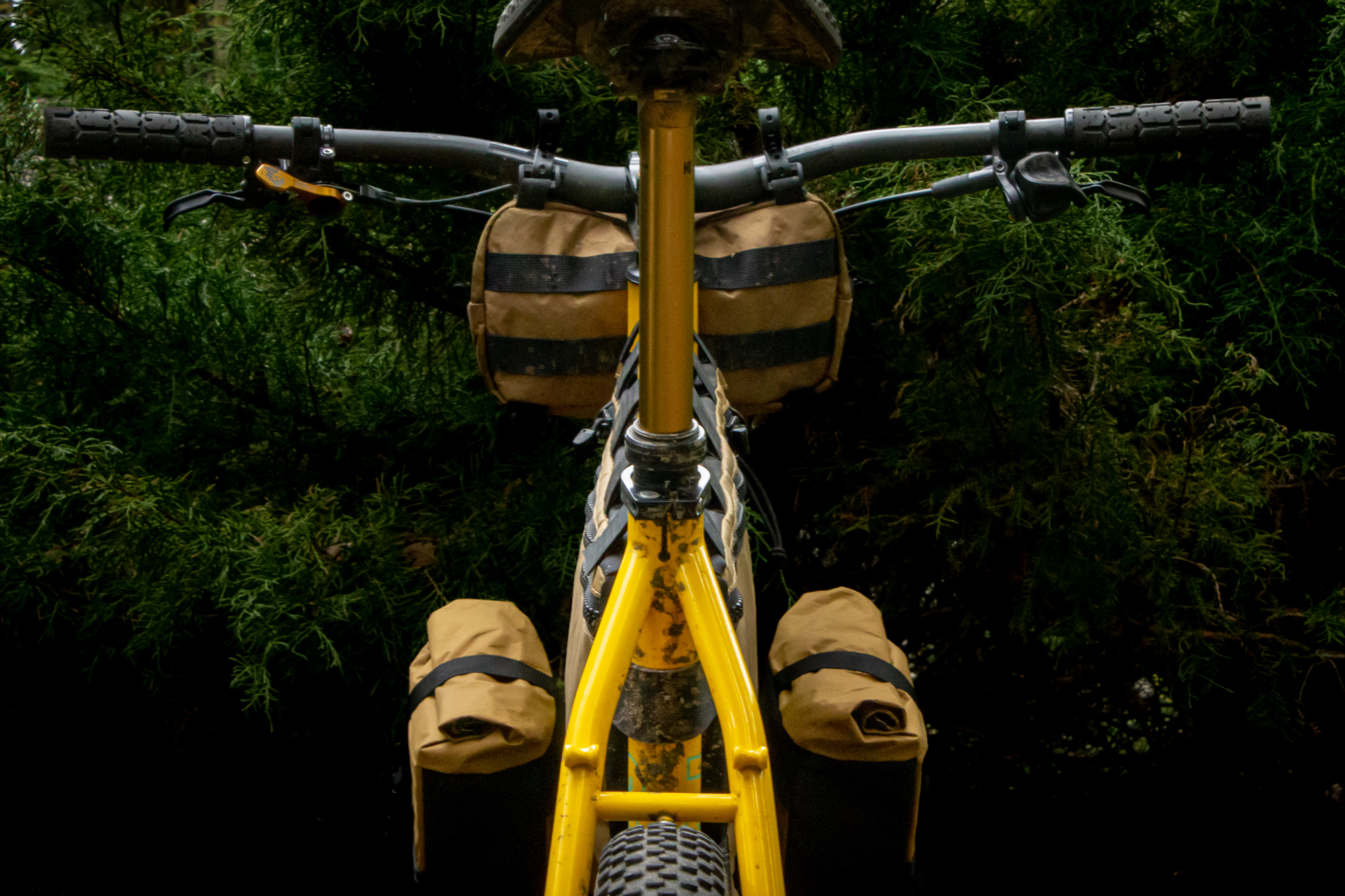
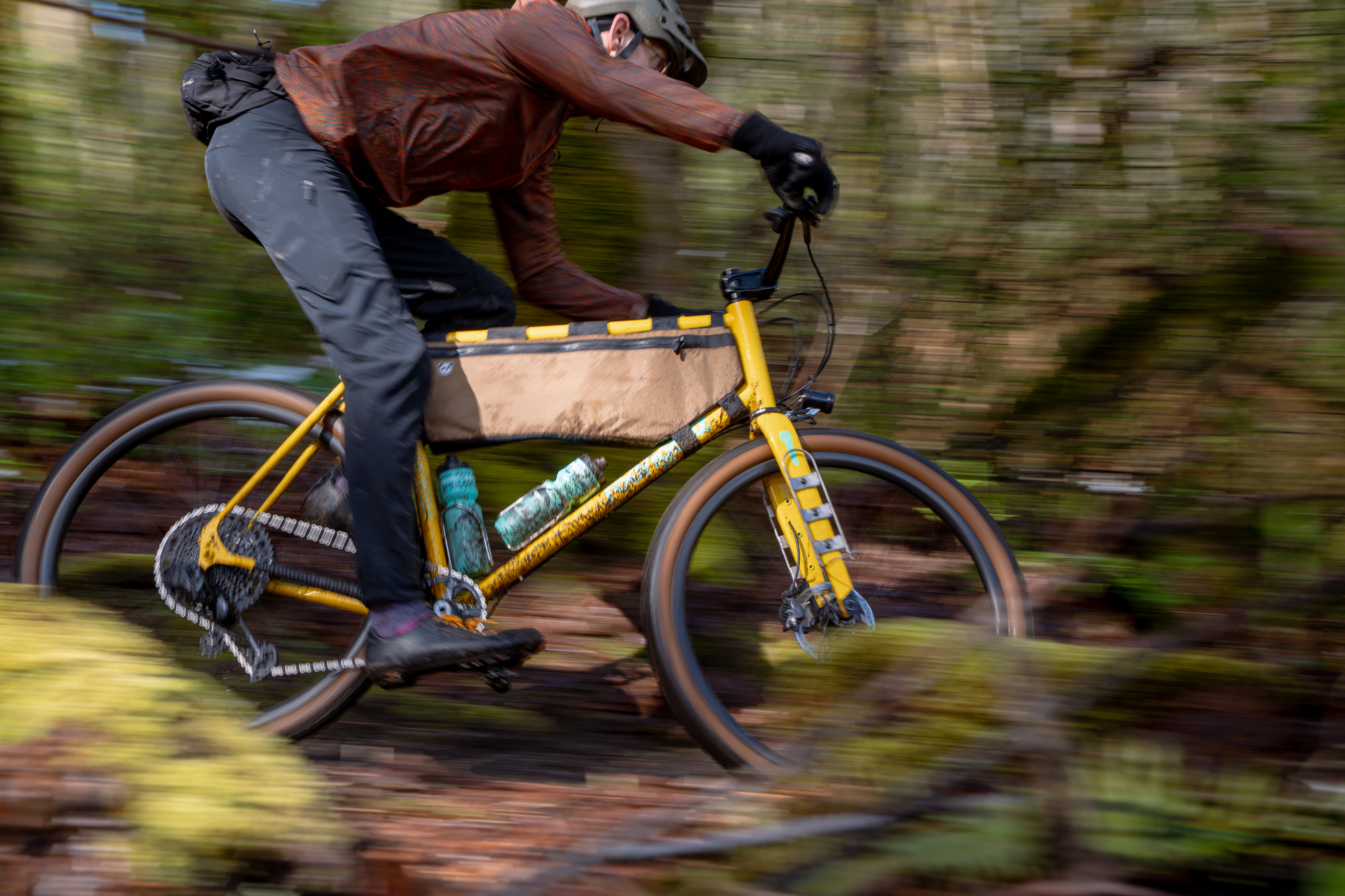
Fastpacking mode employs a fairly minimal luggage layout: the massive front triangle dictates custom cargo dimensions – a half-framebag from Rogue Panda, which in reality ends up more in the 3/4 range. It’s big…like really big, which is ideal where every last bit of volume counts. As I mentioned earlier, this approach allows water access from standard – albeit slightly lower – bottle cage positions with a third below the downtube should the need arise. A pair of well-structured Fork Sacks from RVA’s Jack’s Sacks keeps bulkier weight down low. This generation of Fork Sacks integrates King Ti Manything Cages, whose versatility I prefer to the Old Man Mountain FLiP system version currently offered. The spread is rounded out with Swift Industries compact bar and (sometimes) saddle bags for soft goods, gloves, and light layers. Basic, light, easy, and waterproof enough for my purposes.
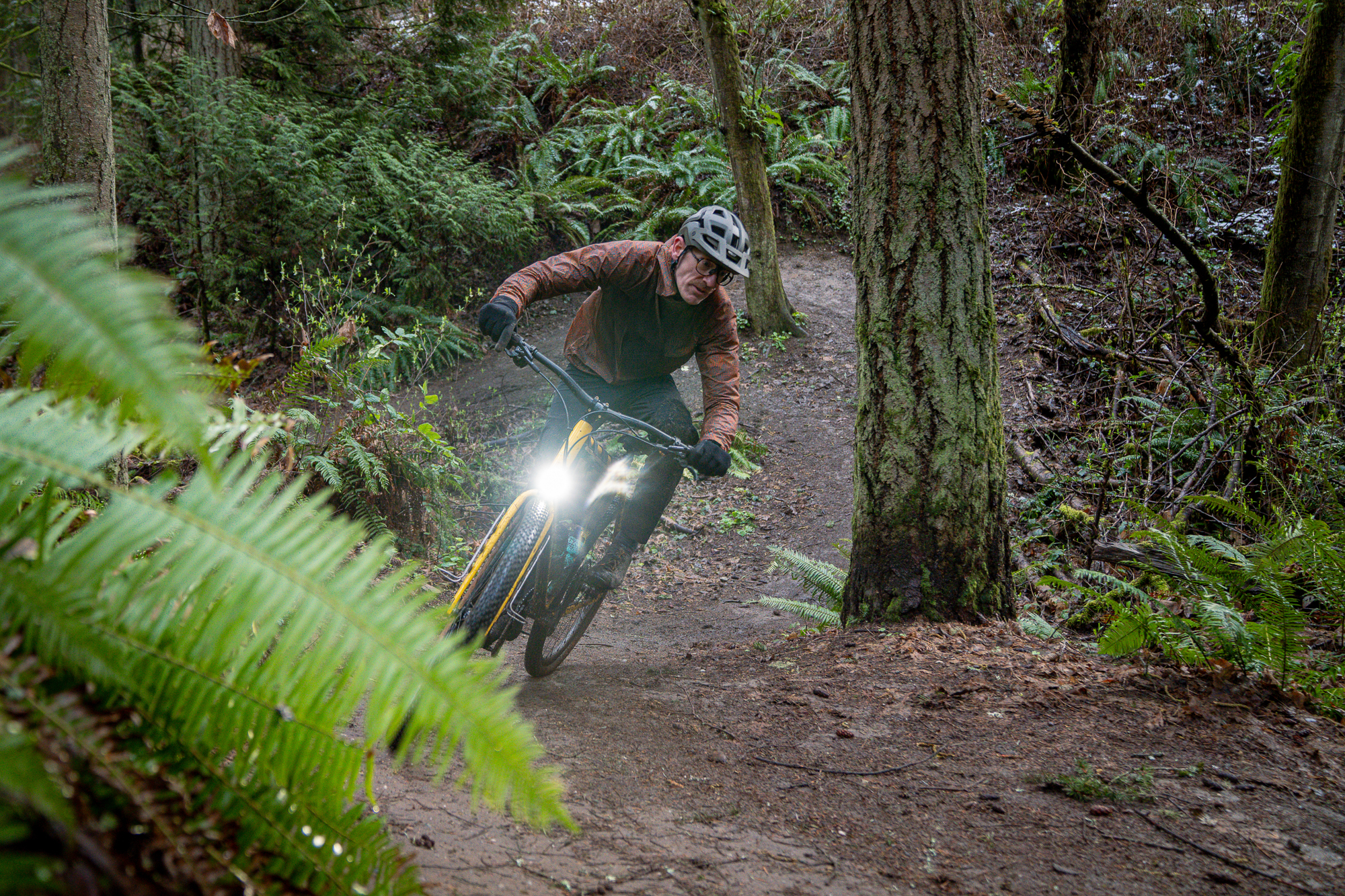
The CVA is calibrated for a light load. And while its long-haul character is still growing on me, one thing is certain: this bike wants to move. While bigger, beefier bikes can feel sluggy and lumbering with cargo weight, the CVA retains the snap and agility of a relatively lightweight XC. This spring-loaded ride feeling inspires more rowdy trail ripping than is (possibly) recommended for a not-mountain bike. But when spontaneous joy is conjured, who am I to resist? My ample-sized frame bag allows me to forego saddle baggage much of the time. This alleviates saddle sway and gives a solid bump in maneuverability, which is obviously great. Also it’s hard to overstate the freedom of an unburdened dropper on the trails. All good things in all good time.
Visual Identity
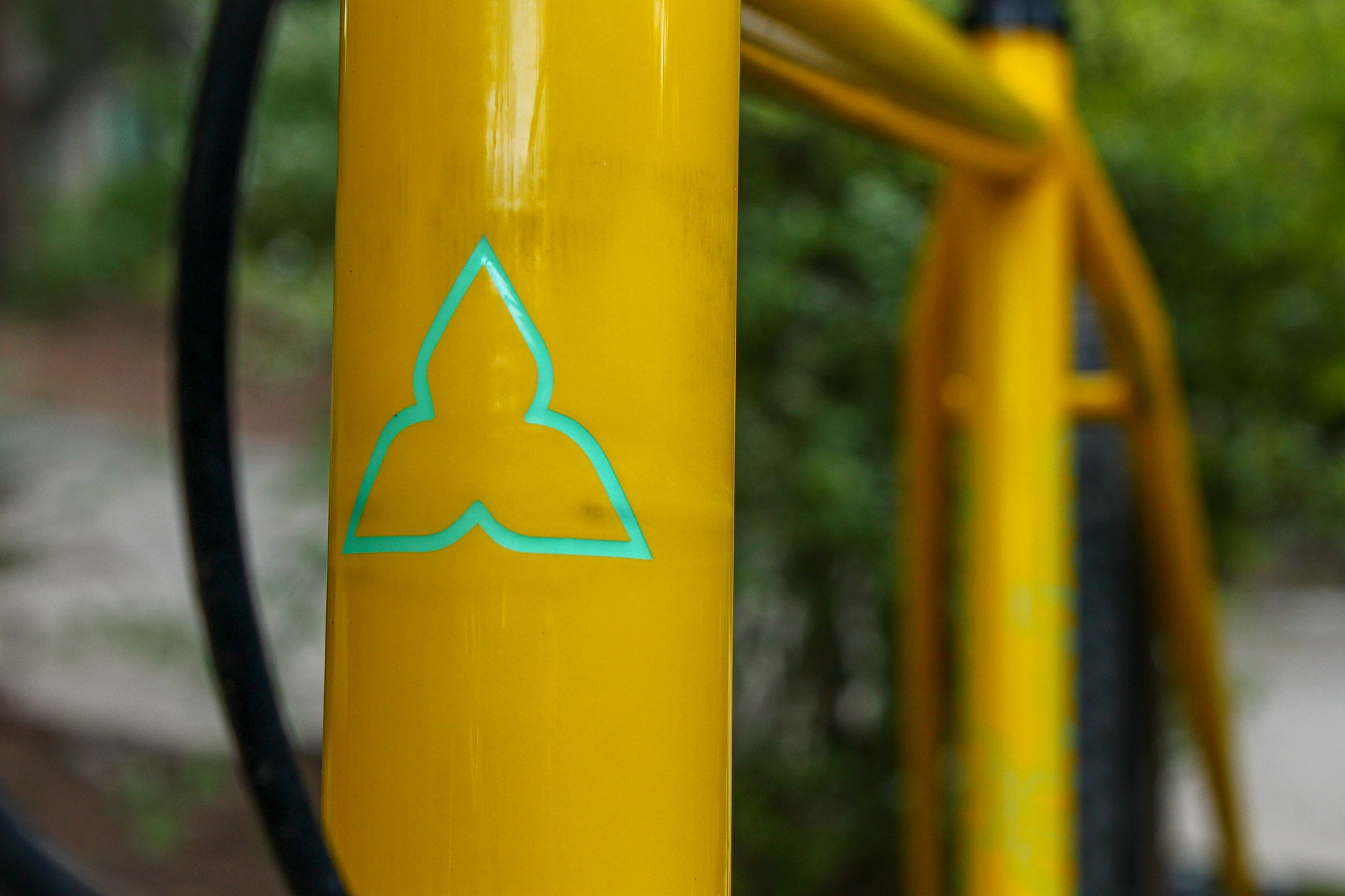
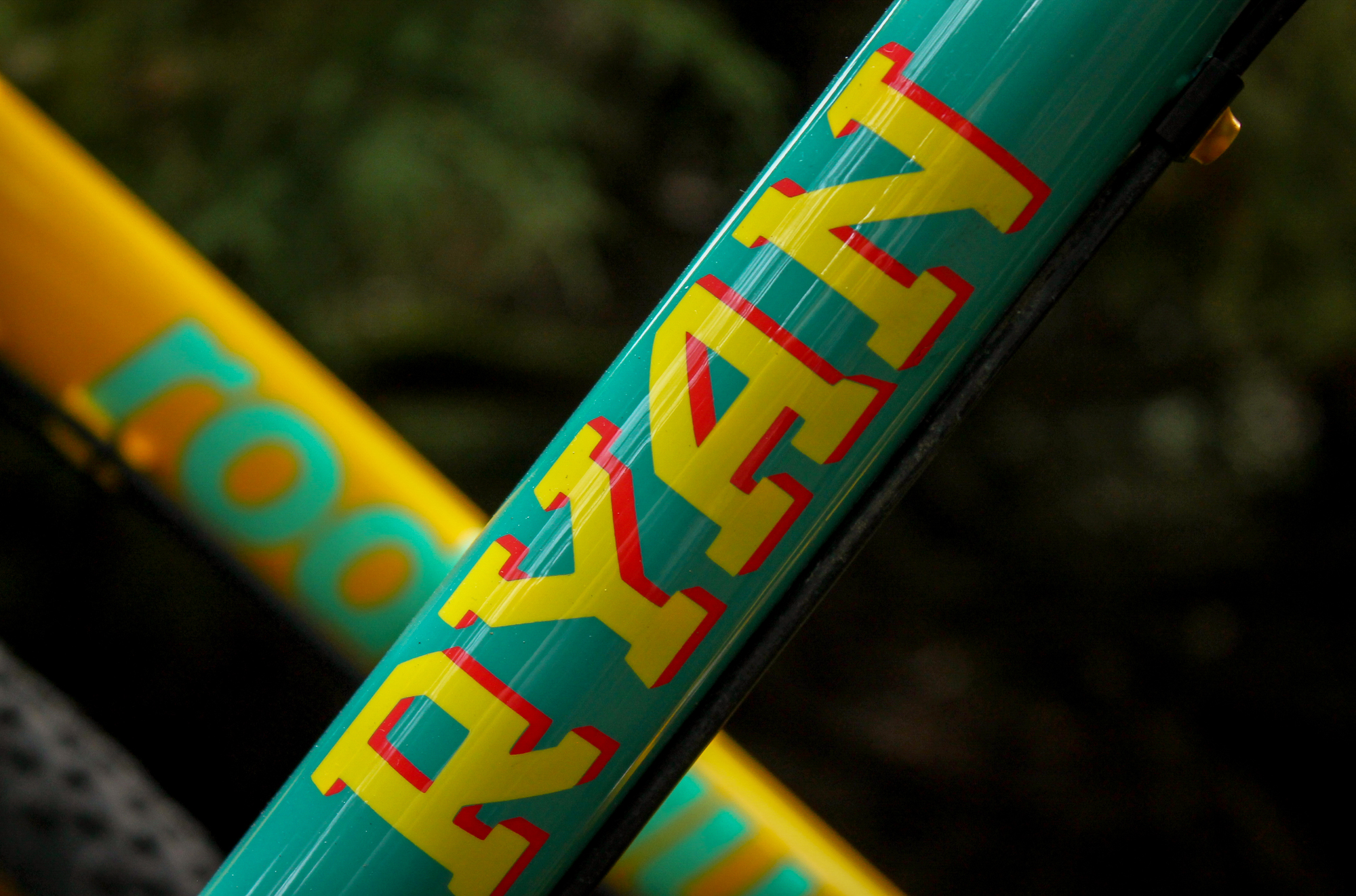
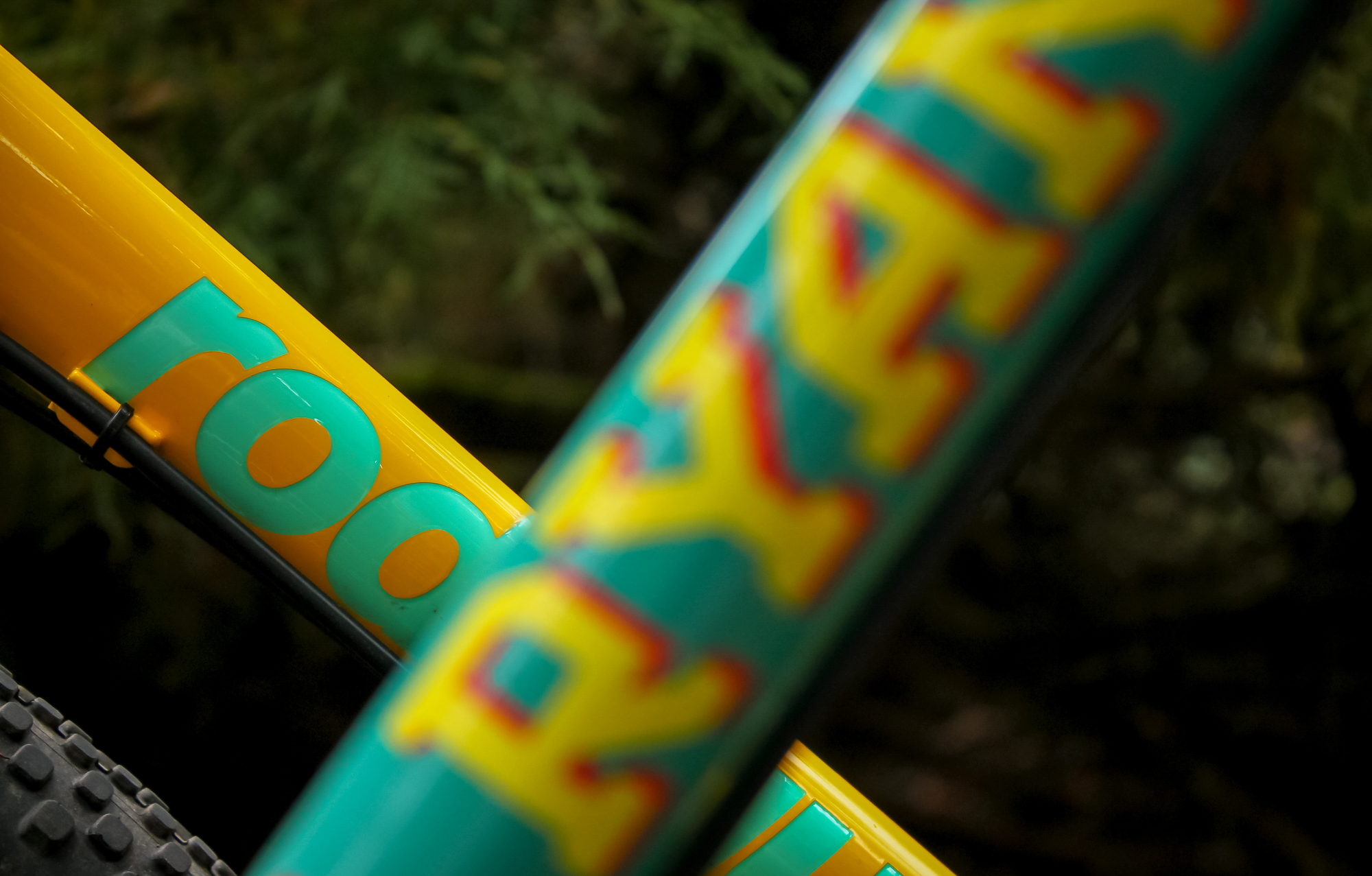
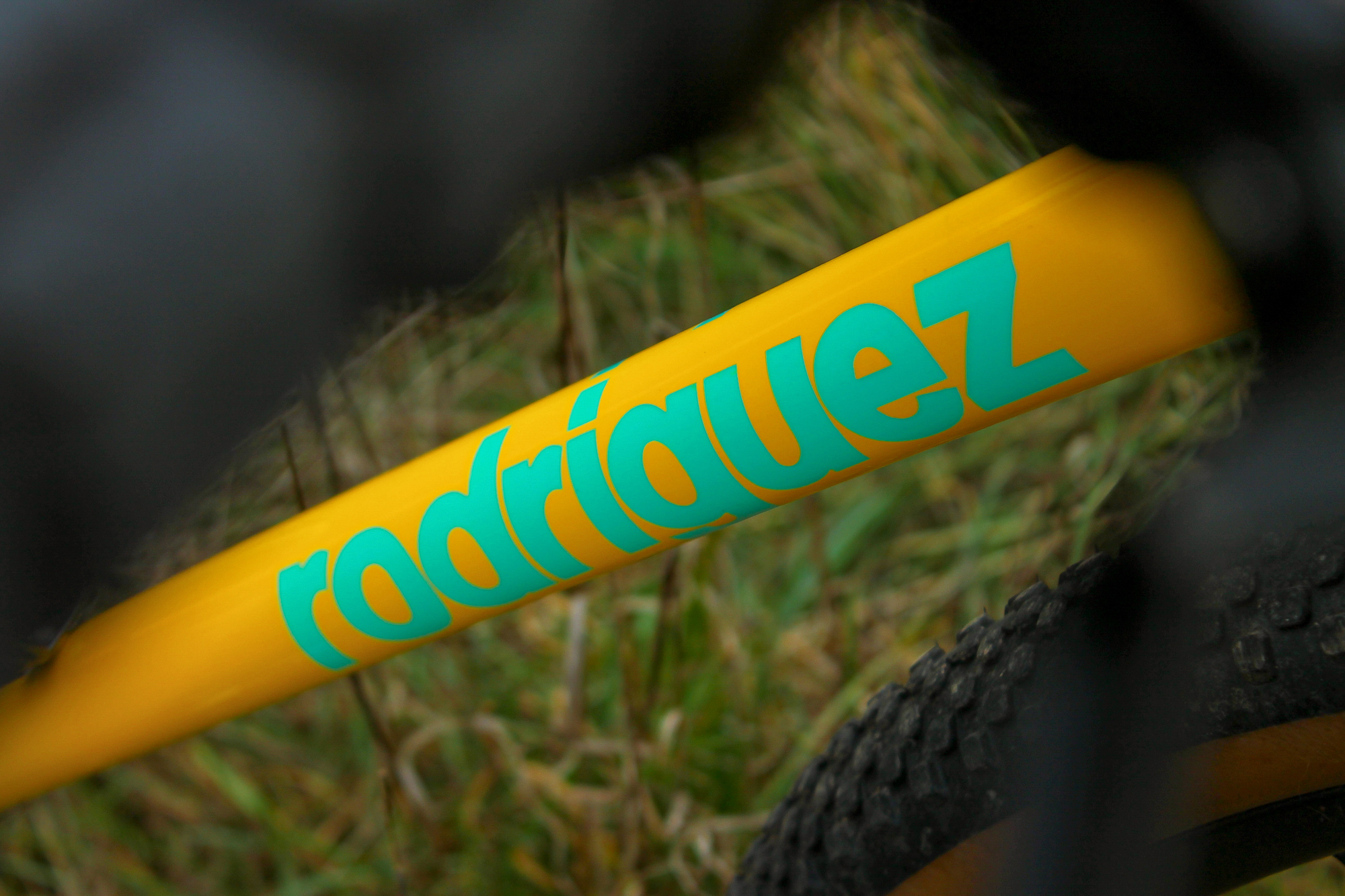
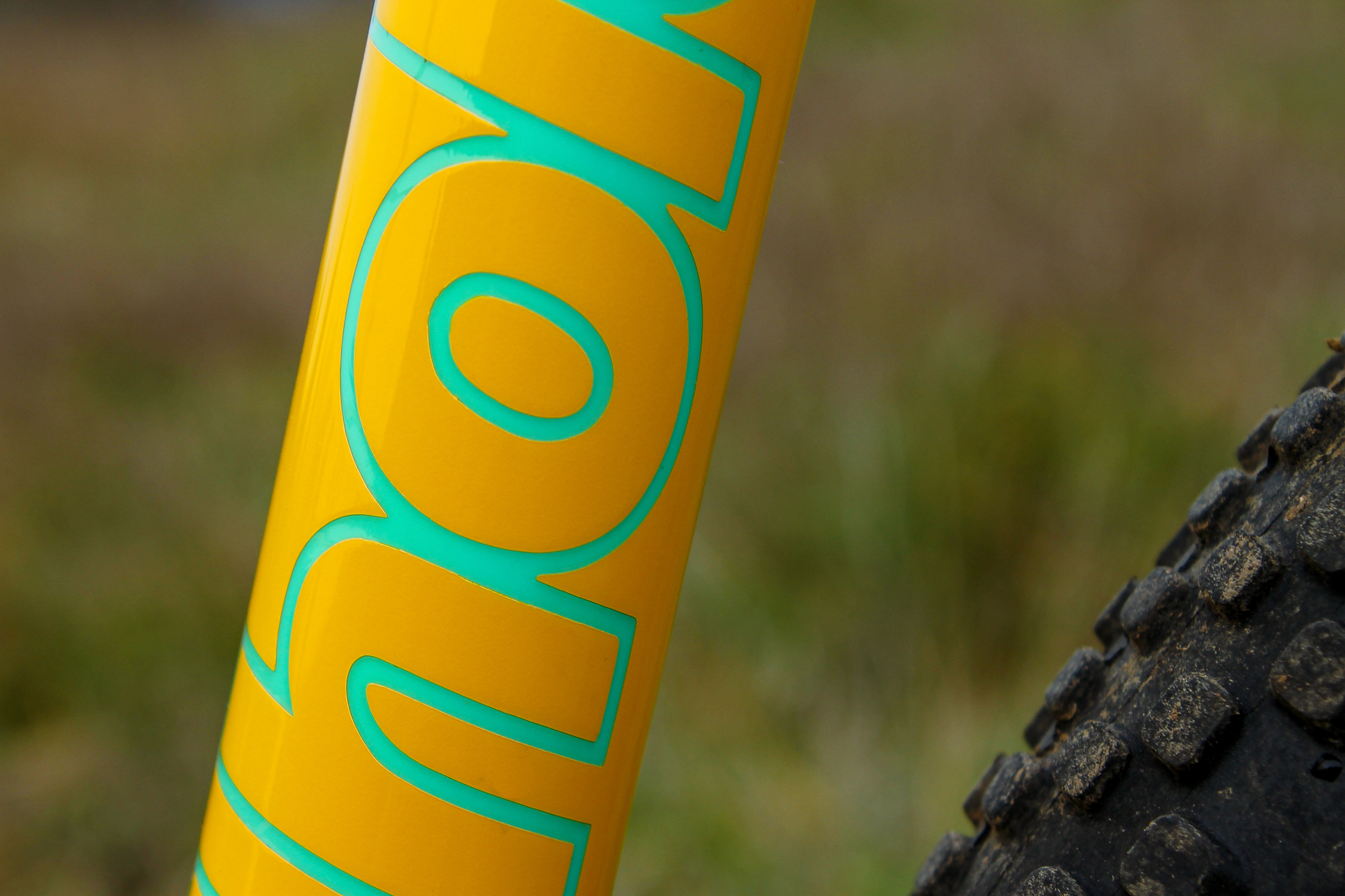
Aesthetically, I wanted to reference the colorway of another bike of mine, my beloved Chad Smeltzer – Ira Ryan 27.5 adventure hardtail, but not directly. Instead, my idea was to reverse the chromatics such that the two bikes became companion pieces; similar but different, but distinctly related. We flipped the design so the hardtail’s yellow text pops became the CVA’s base color, relegating the former’s minty base to the latter’s logos and headbadge shining through as a stealthy undercoat. This gives the offset logos a subtle depth and beguiling physical drop-shadow up close. Streamlining further, we pulled back to two colors from the Ira’s three, which very much suits the overall economy of the build. The result is a rich, creamy, jellybean palette finished in a high-gloss candy hardshell.
1000 Mile Check-In
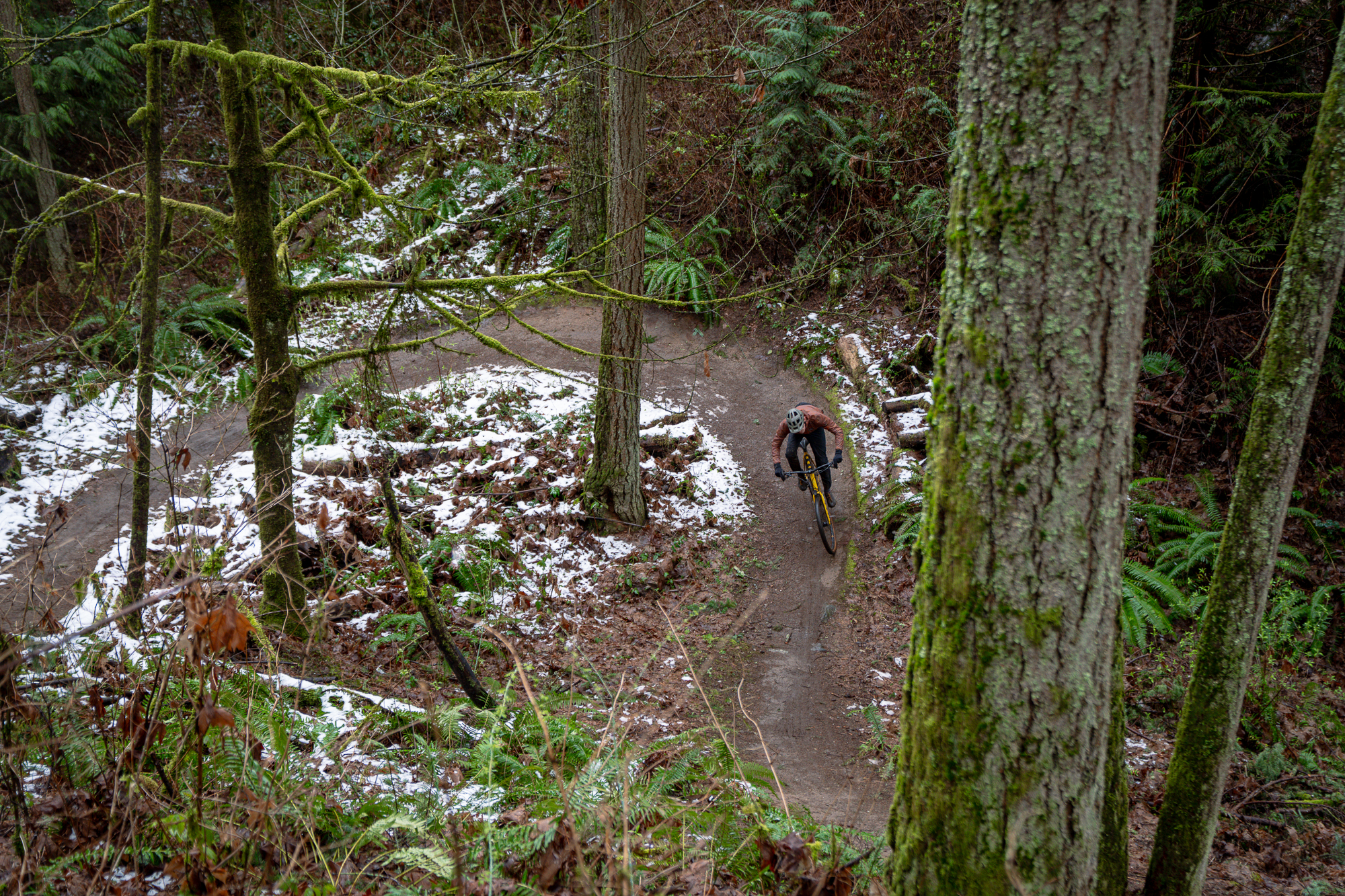
Having spent some meaningful time with the bike over the past year, I put the Rodriguez to work up and down the Cascades from backcountry circumnavigations of Mt. Hood to Puget Sound island-hopping to exploring slabs, steeps, and singletrack in Bellingham, the Teanaway, and beyond. I have really come to value this bike’s dynamic range and balance of micro and macro character – the way it is technically capable but clearly biased toward thru-riding. And at the end of the day, that was the whole idea: to create something eager to rip raw backcountry but with determined eyes on the bigger prize.
Field Notes
- As it relates to fit, I am extremely glad I stuck with wide 800mm riser bars. This build uses a set of older gen Ibis carbon 31.8 bars similar to Enve M9’s but with a hair more backsweep. The fit, for my elongated reach, lands in a nice sweet spot. Paired with a rigid fork, they buffer the chop and flex just enough to keep the hands and wrists happy.
- The long front end complements this cockpit flex with a structural forgiveness that only really becomes apparent at speed. This progressive compliance is really nice and something I could never have predicted. Yes, I said progressive compliance. I’m sorry.
- I did swap out the road stem for a burlier ENVE alloy 65mm zero-rise MTB stem. This accomplishes three things: it reduces the reach by 5mm with the same amount of cockpit rise, relaxing the fit ever so slightly. It also stiffens up the front end, whose flex was starting to feel noodly on hard-charging descents. So far, so great!
- Now that I’ve spent some time with it, a beefy dropper is absolutely integral to the off-road handling character of this bike. 30.9 means it is lighter than a 31.6 but can bear a little cargo weight, and 150mm travel means there is enough room to throw some lively shapes. Unloaded, the bike is surprisingly playful – so much so that I can’t resist the occasional skatepark lap, where some slight BMX-coding emerges.
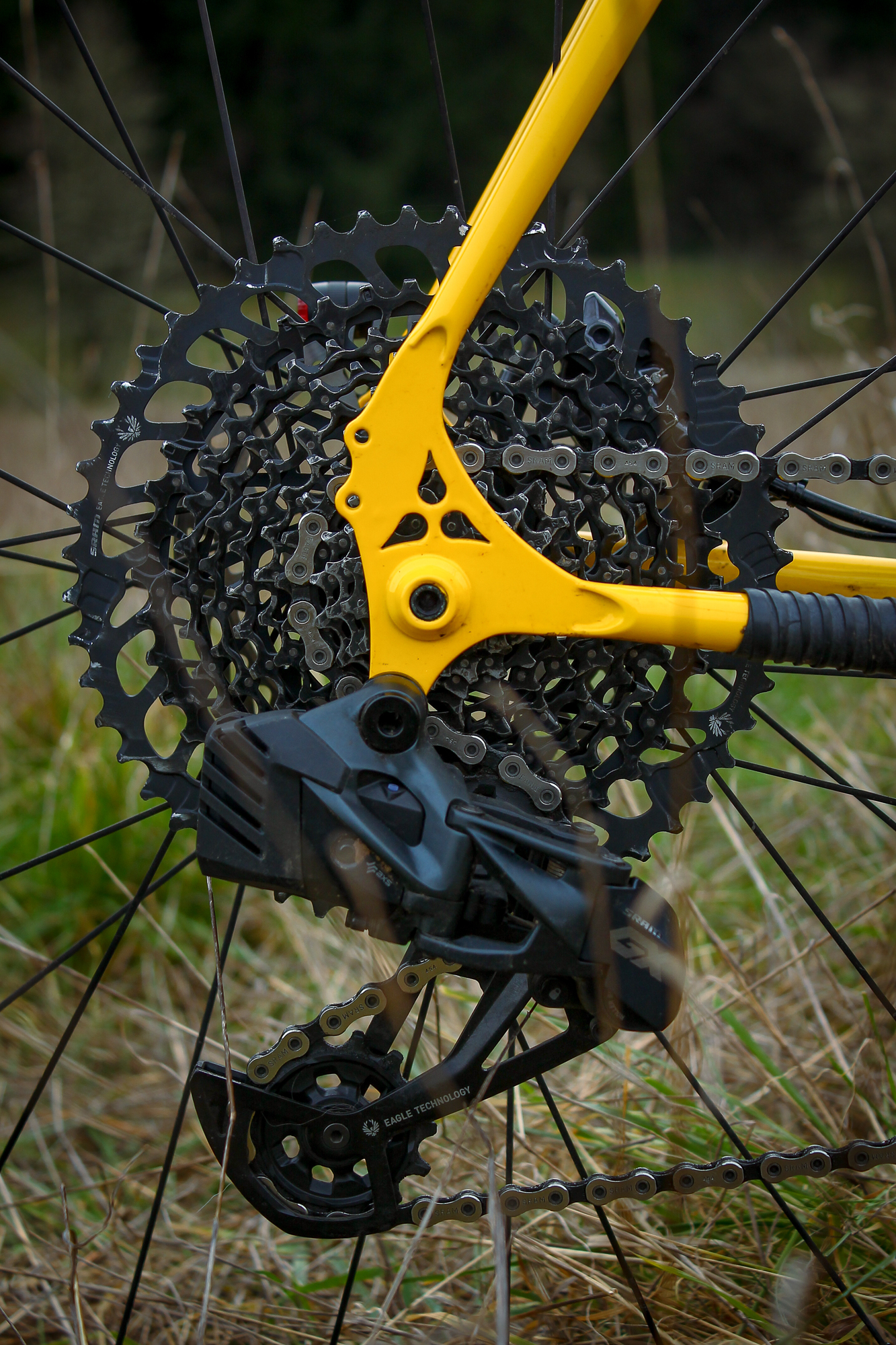
- Though I initially considered UDH/Transmission, we ultimately went au naturale with AXS GX on a conventional hanger because I’m not 1000% committed to AXS here and would like the option to cable-enable per my devotion to Shimano XT at some future point. I am really loving the clean lines of Rodriguez’s bespoke brazed-in, die-cut dropout architecture and how this carries through into the chain and seat stays. Elegant brazing, uncluttered design with no pressure to buy into to a drivetrain ecosystem I don’t currently need.
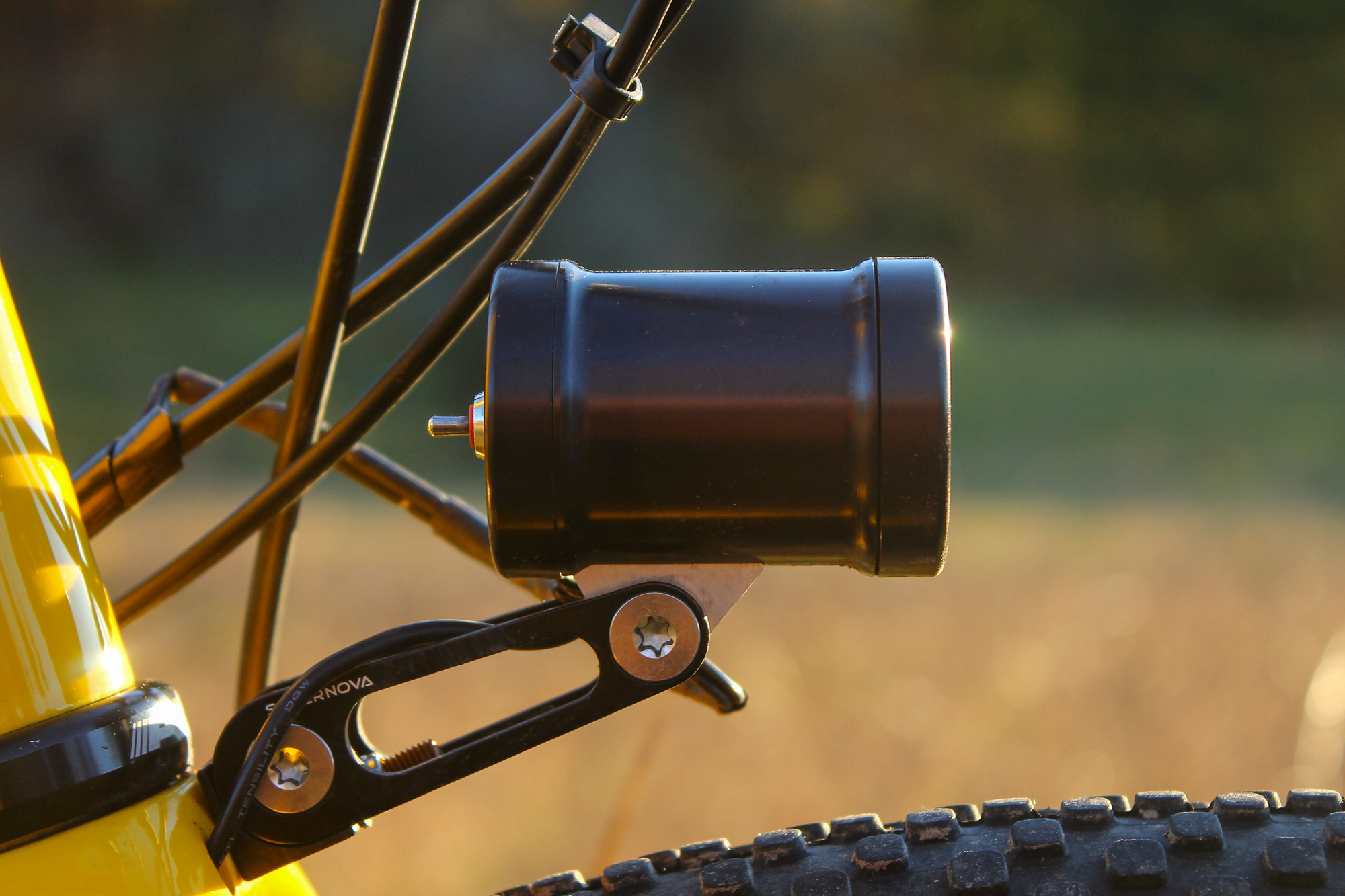
- After a thousand miles, I very much appreciate the tidy internal dynamo wiring of both the Rodeo Spork 3.0 and the frame. I am glad we factored it in. A careless fall sheared the initial wiring early on, so reinforcing the exposed headlamp section and having the rest run internally minimizes the potential for mishaps in the wild.
- The jury is still out on the gearing. It is currently set up with a 36t ring on a 10x52t cassette and it is mostly fine, but the steep, sustained grades of the Gifford and Okanogan really need something lower. Where that compromise lands between 32t – 34t remains to be seen, but prioritizing riding over pushing is key, so 32t may be the magic number.
- 55c is a threshold beyond which ridefeel starts to develop a float-factor. It’s a sensation I call the Magic Footprint whereby chatter and tread is pneumatically softened into a nice, stable muted hum. This is boilerplate for mountain bikes but trickier to achieve with the narrower internal width of gravel wheels. But like I say, above 55c or 2.1” and particularly when stretching gravel tires onto wider 30mm rims, it happens more readily. All of this to say – it is wonderful and feels like enlightened riding and this build absolutely nails it.
The Groundtruth
The intention was always to present this story with the complete CVA route guide as a companion, but as of this writing, I have been sidelined for eight weeks recovering from a shoulder dislocation. This follows an unexpected surgery last fall, which shelved my carefully-laid plans to scout and document the route’s remaining unknowns. Sometimes life revokes your adventure pass, and that can be disappointing. It helps to acknowledge that the ability to get out and ride is always a gift – nothing is a given. So for now, we wait, anticipating the high country’s reopening in spring. The upper reaches won’t be reliably clear until July, which leaves a meaty itinerary on the table for the upcoming season, so there is plenty more to come on this!
Words/detail photos: Ron Lewis
Riding Shots: Jeff Street
Fit photos: Connor Azzarello