
Every year, we publish our Scientific Guide to Choosing Gravel Tires. It is a summary of our and others’ research into what makes tires fast, grippy and reliable—and not an advertorial for Rene Herse tires. (We figure that our tires speak for themselves…) It is consistently one of our most popular posts.
Science doesn’t stand still. That’s why we annually revamp this guide with the newest findings. Every year, I’m struck by how much less controversial our recommendations are becoming. Just two years ago, we still heard a lot of talk about “too much tire” for a given course. Now many pros are racing on cross-country mountain bike tires—not because mountain bike tires are inherently faster, but because they are wider than most gravel tires. (At Rene Herse Cycles, we’ve been offering 55 mm / 2.2″ all-road and gravel tires for more than a decade…)
Is it really that easy? Just slap on the widest tires that’ll fit your bike and go riding or racing? Well, not quite…
So how do you choose the right width, tread pattern, casing, pressure, etc.? It can seem overwhelming, but in reality it’s simpler than many cyclists think. We’ve distilled the science down to six main points. With this information, you can make informed choices based on your riding style, terrain and preferences. That’s what this guide is about.
We’ve been testing tires under real-world conditions for 20 years now—longer than just about anybody else. With two PhDs between us here on the Rene Herse team, plus our close collaboration with the engineering department at Cal Poly Pomona, you could say that science is in our blood. In fact, our research came first: We only started making tires when the industry showed no interest in our research. Back then, nobody wanted to make wide, supple, ultra-fast tires—so we did it ourselves.
When we started our research in 2006, road racers were on 20 or 23 mm tires and inflated them to 125 psi (9 bar) or more. Gravel was still in its infancy, and riders debated whether 25 or 28 mm was the optimum tire size for ‘gravel grinding.’ All this made sense at the time, because that’s what testing on steel drums showed: Pressure seems to matter more than anything else. And to get high pressure, you need narrow tires.
At first, the results of our real-road testing, with a rider on the bike, were met with disbelief. Wide tires can be fast as narrow rubber? High pressure isn’t needed for speed? That was the opposite of what everybody thought they ‘knew’ back then…
Today, these results are accepted in the mainstream. Pro road racers now ride wider tires than the ‘gravel grinders’ did back then—28 and even 30 mm have become the new standard for road bikes. Modern gravel bikes have clearance for at least 45 mm tires. We’ve come a long way, and Rene Herse Cycles is proud to have been at the forefront of this revolution from the beginning.

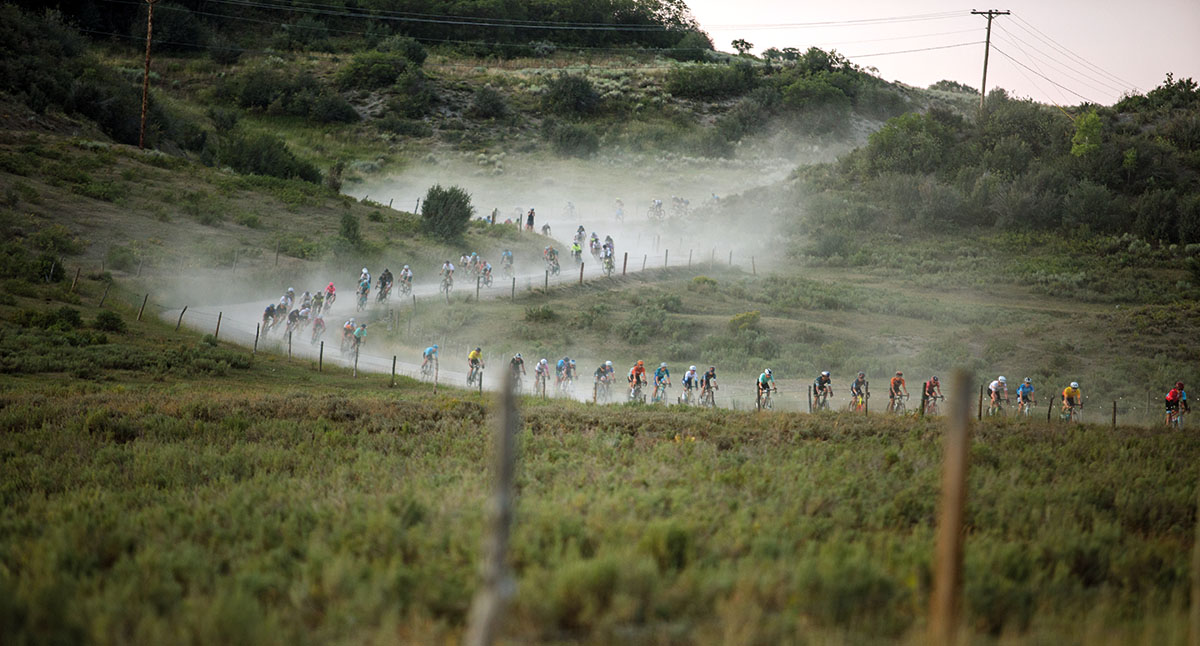
Testing alone can’t tell you everything. It needs to be proven in the real world, where the rubber meets the (gravel) road. That’s why we work with top racers—Brennan Wertz (above), Jenna Rinehart, Ted King and others—as well as bikepackers—Meaghan Hackinen, Sofiane Sehili and Adrien Liechti. They are an important part of our R&D. In racing, there’s no hiding and no excuses. If the science works for them, then—and only then—can we have confidence in our results.
Before we go into details, here’s a quick summary:
- Start with the widest tire that fits your bike.
- Use the most supple casing you can get away with, given the terrain and your riding style.
- Tread pattern is much less important than most riders think.
- Wheel size doesn’t affect speed on gravel. There are other reasons to choose 700C, 650B, or maybe even the new 32″, but wheel diameter does not change how fast your bike rolls.
- Adjust tire pressure to fine-tune how your bike feels. When in doubt, run lower pressures.
- Choose tires that give you confidence. During your race or adventure, don’t think about your tires, but focus on your ride.
Some of these findings may still seem unfamiliar. A lot of this has only recently been accepted by the mainstream. That means there are still a few myths out there. It’ll take some time until everybody is on board. That’s OK—our job as scientists is not to report on the status quo, but to move our knowledge forward: to confirm what we know, but also revise our understanding where it’s incorrect.
After hundreds of tests with different methodologies, there isn’t much doubt about what makes tires fast. The riders who work with us have won the biggest races, showing that all this really works in the field, too—and not just in carefully controlled tests.
Let’s look at the factors that affect tire performance, one by one:
Tire Width
That’s probably the biggest question riders have when choosing tires for an event. In the past, racers often told us: “I don’t want too much tire for that course.” There was a misconception that the fastest tire was the narrowest tire you could get away with. On smooth gravel, some riders can ride 35 mm tires, and perhaps even win races on them. But this doesn’t mean that narrow tires are the fastest choice.
Once you know that vibrations cause suspension losses, you realize that vibrations actually consume power and slow you down. Wider tires can run at lower pressures, which means they transmit fewer vibrations. That makes them faster on rough ground. Even on smooth surfaces, wide tires aren’t slower than narrow rubber—as long as you’re running supple high-performance tires.
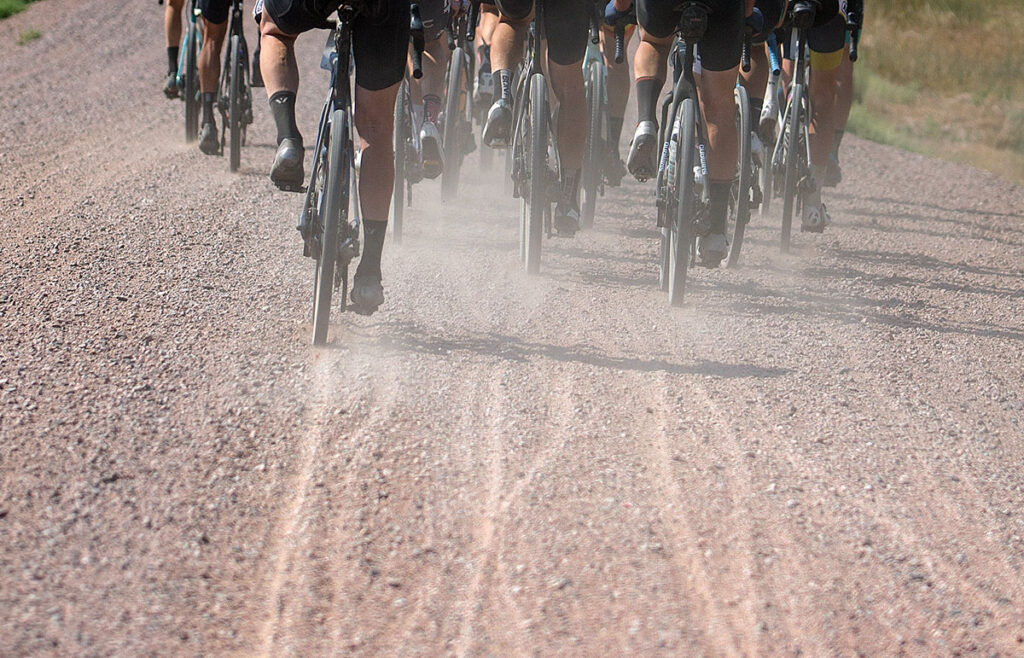
Another factor is flotation: Wider tires displace less gravel. That’s why they roll faster over loose surfaces. If your bike sinks into the road surface, displacing that material takes energy. There is no free energy: Energy lost anywhere in the system slows down your bike. How much energy is lost when tires sink into gravel? Quite a bit: You’ve probably seen runaway truck ramps on mountain passes. They use loose gravel to stop semi-trucks that are careening out of control after their brakes fail. A 50-ton truck barreling downhill at 80+ mph has a lot of momentum, and yet the ramps aren’t very long. You lose a lot of energy very quickly when your tires sink deep into loose gravel.
Ideally, your tires leave no tracks in the gravel. If you are gouging a deep furrow, you are moving a lot of material—and losing a lot of speed. If you have a power meter, check what happens when the road surface changes from pavement to gravel. If you have to increase your power by more than 10% to maintain the same speed, you’re probably running tires that are too narrow and/or too hard.
Grip is as important as speed. Wide tires have a larger contact patch. Plus their lower pressure allows them to conform better to the gravel surface, which improves grip (and confidence) even further. Pro racer Ted King, the ‘King of Gravel,’ put it this way: “Perhaps best yet, a wider tire provides more traction on dirt and gravel, without compromising speed.”
Many racers worry about the air resistance of wide tires. The aero penalty is much smaller than most people believe. We’ve tested this in the wind tunnel and in roll-down tests: Even a 6 mm wider tire does not increase wind resistance significantly. As long as your tires are narrower than your bike’s down tube, there’s no reason to worry about wind resistance. (You can read more about aero of gravel bikes in the links at the end of this article.)
The weight penalty of wide tires is small compared to the benefits in speed and grip/traction.
How wide is too wide? A big advantage of wider tires is that you can run lower pressures. You want a soft tire that absorbs vibrations and bumps, rather than jostling bike and rider (and causing suspension losses). But if your tires get too soft for efficient power transfer—if your bike bounces with each pedal stroke—then you’ve probably gone too wide. And at some point, the tires get too wide to fit between high-performance cranks. That’s the reason gravel bikes generally are maxing out at 55-58 mm. Mountain bike cranks are wider, but most riders’ pedaling efficiency suffers with a wide Q factor.
Summary: When in doubt, run wider tires. On most gravel surfaces, they are faster. They aren’t slower on smooth surfaces, either.
Casing
The biggest factor for tire speed is the suppleness of the casing. This is something many big tire companies don’t like to talk about, because supple casings are expensive. Supple casings are made from fine, high-quality threads, and those cost a lot more than coarse fabrics—and they need to be handled with much more care. Many big factories aren’t equipped to work with these delicate raw materials. (In the finished tire, the threads are encased in rubber that protects them.)
Here’s why supple casings roll so much faster:
- Supple tires require less energy to flex. As the tire rolls, it flattens at the bottom. Flexing the tire requires energy—think squeezing a tennis ball. With a supple casing, you’re not squeezing a tennis ball, but a foam ball. Much easier. When somebody talks about hysteretic losses, that’s what they are talking about.
- Supple tires transmit fewer vibrations. This reduces suspension losses—less energy lost, more speed.
- Less vibration also means more comfort. Being uncomfortable reduces the power you can put out, especially over long distances.
- Supple casings offer better traction, since they conform more closely to the gravel (or road) surface. That means you can carry more speed.
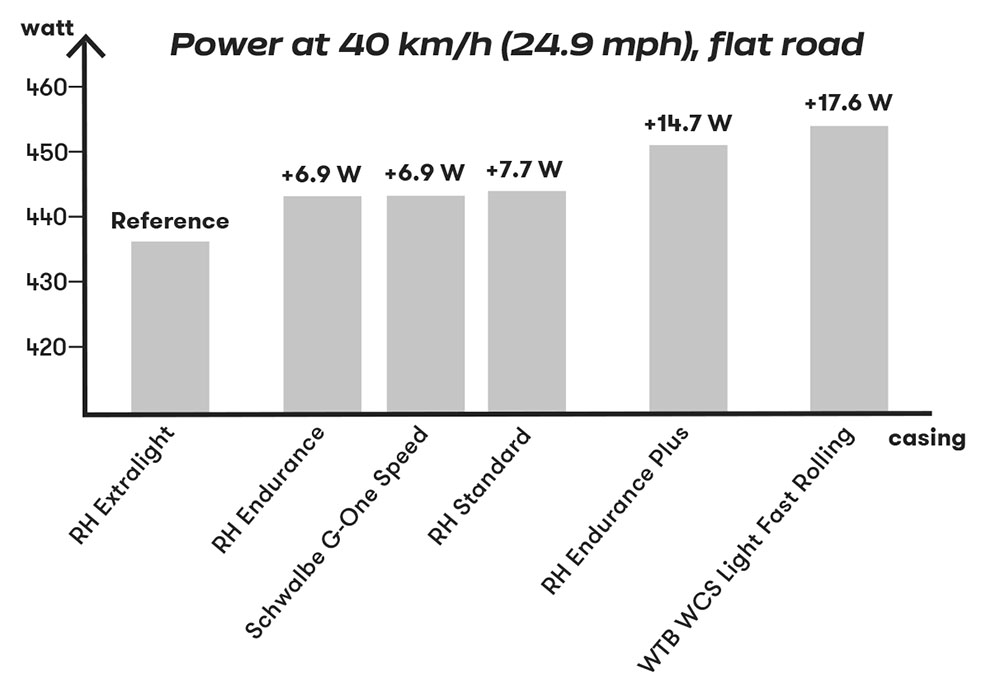
How much difference do supple tires make? The graph above is based on our real-road testing of various tires. Between the fastest and slowest of these gravel tires, there’s a difference of 17.6 watts. (All differences except the 3 grouped tires are statistically significant.) More than 17 watts is a big difference! Over the 200-mile Unbound, that translates to 15 minutes for the fastest riders, and even more for slower ones.
You can see how the most supple casing rolls fastest. As you add puncture protection, you lose suppleness and speed. Fortunately, there’s a way to mitigate that: With high-end (and very expensive) raw materials, we can create tires that offer much better puncture protection without losing much speed. Rene Herse Endurance casings use the same ultra-fine threads as our Extralights, but the threads are pushed closer together to create a denser, stronger weave. A high-tech, cut-resistant layer runs from bead to bead. The result: Our Endurance tires roll as fast as the fastest casings from other makers, but offer better puncture resistance.
Generally, we recommend the Endurance casing for most gravel racing. As Ted King put it, “To win, you first have to finish.” When you’re riding in a big pack, you can’t see where you’re going, and you’ll hit big rocks. We’re proud to say that our Endurance tires have an excellent track record at the toughest of all gravel races, Unbound. Just ask Ted King, Lauren de Crescenzo or Lael Wilcox—none of them have had any flats in many runs over the sharp rocks of the Flint Hills of Kansas. Last year, our Fleecer Ridge Endurance tires won all three Mountain Races (Altas, Hellenic, Silk Road), the world’s biggest bikepacking races. (Of course, there is also an element of luck, and we can’t guarantee you won’t flat on Rene Herse tires.)
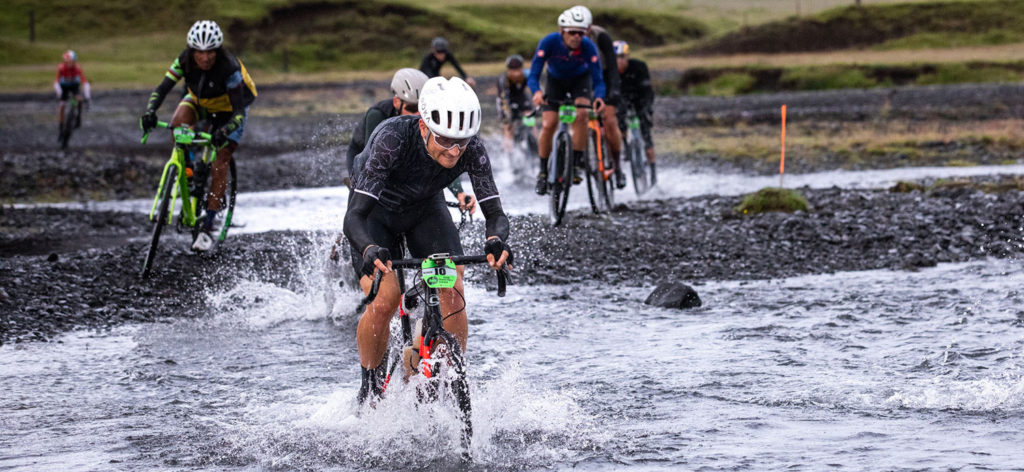
The Endurance Plus casing is even tougher, yet it rolls faster than most OEM tires that come stock on gravel bikes (which have only very limited puncture protection). The Endurance Plus is ideal for riders who tend to be hard on their tires, and for truly rough races, like The Rift in Iceland (above) with its sharp volcanic rocks and many water crossings where you can’t see what your tires are rolling over. (Yes, that race has also been won on Rene Herse tires.)
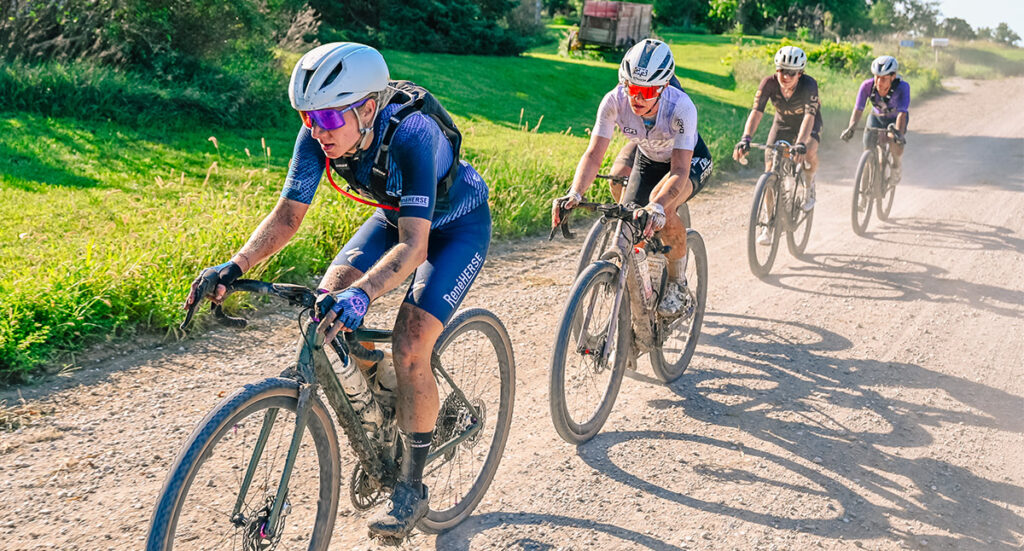
For relatively smooth courses, the Extralight casing offers amazing speed. Jenna Rinehart commented: “The ride quality is amazing, and now I don’t want to ride anything else. Of course, some courses require a tougher casing, but for the smoother gravel roads we have here in Minnesota and the Upper Midwest, the Extralight casing is perfect—provided you run a wide-enough tire that allows you to keep the pressure low (which is better for many reasons). I raced the Extralights at Gravel Nationals (above)…”
The Extralight casing is also great for rides in small groups and solo, where you can pick the best line and avoid the biggest rocks. I’ve ridden and raced on Extralights for over a decade now, without problems. In fact, I’ve ridden Unbound XL—350 miles across the Flint Hills of Kansas, much of it at night—on Extralights, without a single flat or other tire issue.
On the other hand, if you get a lot of flats, we recommend using the Endurance casing instead. What about the Standard casing? It’s a great option for riders who don’t need the ultimate speed of the Extralight, nor the extreme toughness of the Endurance, but are looking for a more economical option.
Everybody’s style (and weight) is different. The most suitable casing also depends on the terrain, of course. Generally, the wider your tires, the lower your pressure, and the less likely you’ll damage a tire. Why? A soft tire just deflects rather than pushing back against the rock that wants to cut the sidewall.
Summary: Supple casings make the biggest difference in speed, but there’s a trade-off in durability. High-quality casings are more durable and faster.
Tread pattern
Tire treads are easy to see, and riders tend to focus on them. Many tire companies offer a large variety of tread patterns for every imaginable condition. It’s an easy way to sell more tires. Do we really need bring a quiver of tires to each event, so we can change tires if last year’s hardpack has been replaced by a new spread of loose gravel, or if it rains and there might be mud?
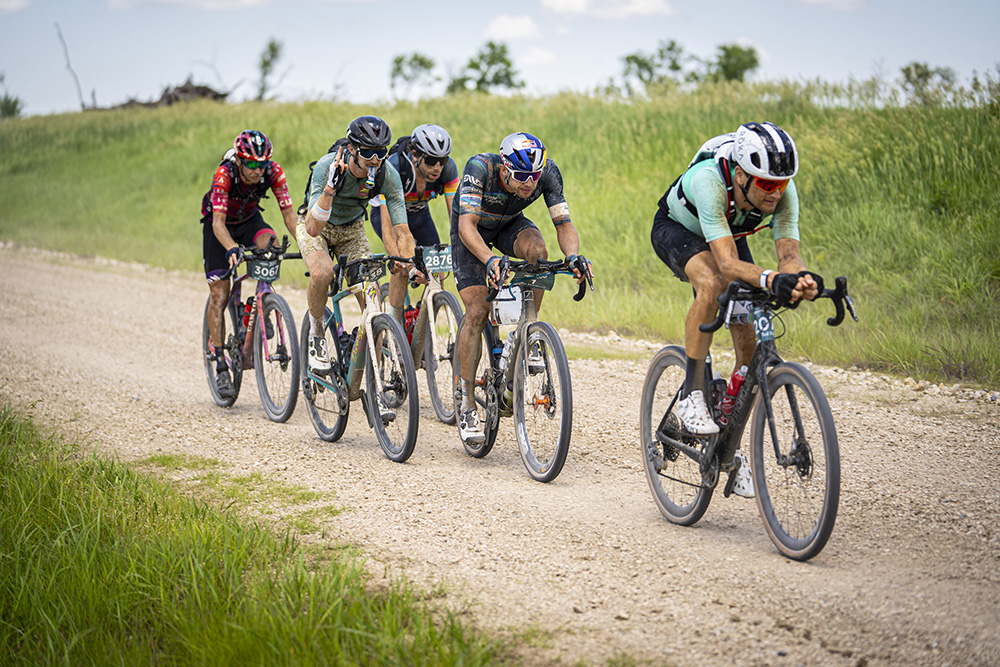
Rene Herse would also love to sell you multiple sets of tires, but the honest answer is: On most gravel surfaces, tread makes very little difference. Your bike slides because surface rocks slide on the rocks below them. The grip of your tires on the uppermost rock layer makes little difference. Ever since Ted King (above at Unbound) and Lauren de Crescenzo started racing on Rene Herse slicks, this knowledge have been gaining traction (pun intended). Ted reminisced: “I rode the Rene Herse 700×44 Snoqualmie Pass in my first Mid South way back in 2019 and feel like I was the only person out there on slicks then. It’s really cool to see wide slicks catch on. To get more grip, run wider tires that have a larger contact patch.”
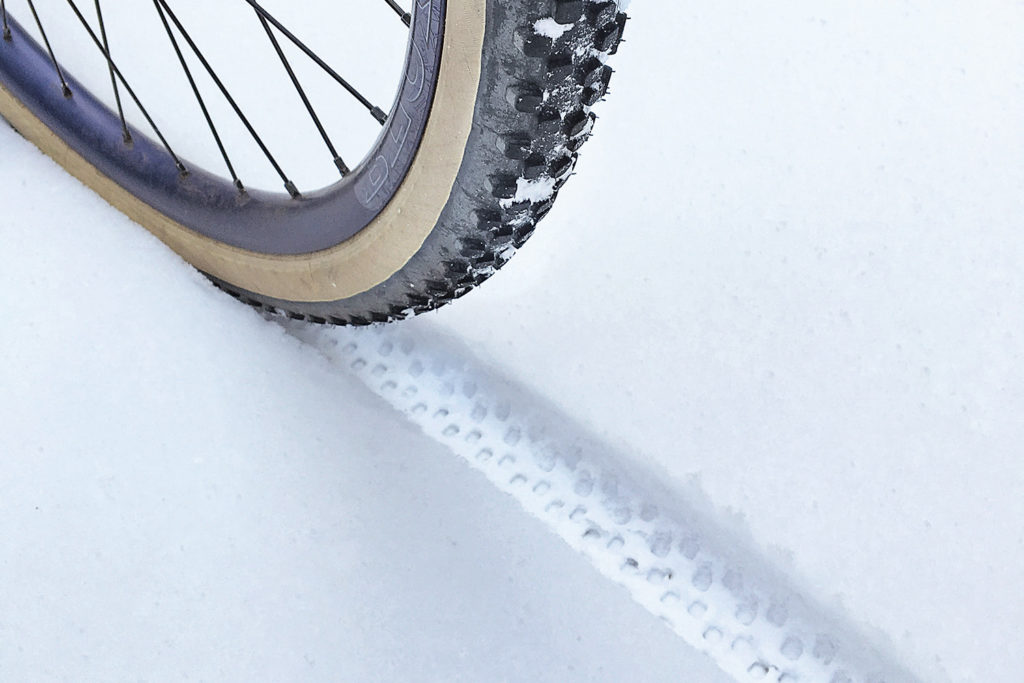
Knobs work when they have something to push against. In mud and snow, knobbies greatly improve traction. As a rule of thumb, knobs work when you can see the imprint of the tire tread on the surface (above). The knobs should be spaced far apart, so the tire doesn’t clog up with mud or snow.
Many gravel tires have very small knobs. Intuitively, that may make sense—you don’t want ‘too much tire’—but that’s not how it works: Small knobs squirm and flex more, which costs more energy. Small knobs are actually slower than large knobs. And small knobs are usually too densely spaced to improve traction on loose surfaces.
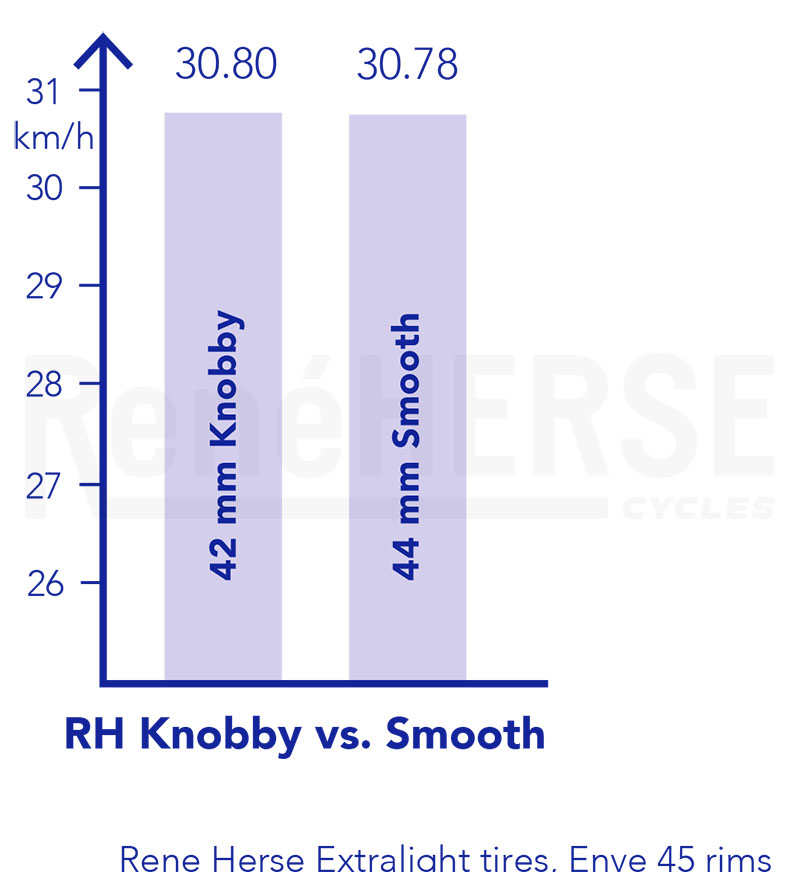
Can you make a knobby that isn’t slow? That’s the question we asked ourselves. To get there, we’ve used a radically different approach from other tire makers. Most knobby tires are designed by adding knobs to the surface of a smooth tire. We went the other way: We started with a slick tire. Using computer modeling, we then cut away some of the tread until only knobs remain—but with enough material remaining to preserve the grip and speed of the original slicks when you’re riding on hardpack or pavement. That’s the secret behind Rene Herse dual-purpose knobbies. On pavement, they roll and corner like slicks. On loose surfaces, mud and snow, the big knobs offer superior grip. The data supports this: Even on pavement and hard surfaces (above), there is no measurable difference in speed between our dual-purpose knobbies and our smooth all-road tires—at least at power outputs up to 400 watts.
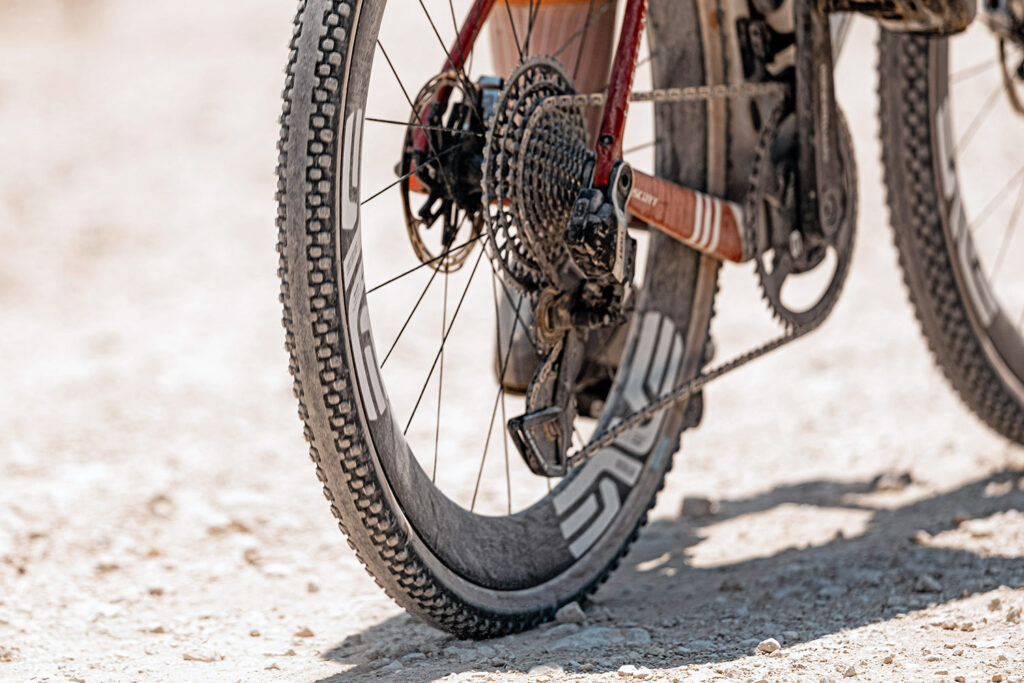
What about fast-paced rides? Or races with many attacks that require high power outputs? At that point, even the big knobs of our dual-purpose knobbies squirm a little and lose some of their ultra-low rolling resistance. For those rides, we’ve developed our semi-slicks. Unlike other semi-slicks, which tend to be neither particularly fast, nor particularly grippy, we’ve created a totally new type of semi-slick. The first row of side knobs is anchored on the center tread, making them stiffer. Less flex means better power transfer and lower rolling resistance. We kept the big side knobs that work so well on our knobbies. The radius of the tread is significantly larger than that of the casing, so the tire corners like a much wider tire.
Jenna Rinehart summed up the new semi-slicks: “At first, you think that such big side knobs can’t roll fast, and then you look at your numbers and also how you’re doing at the races in a pack of top-level women, and you realize that appearances can be deceiving. These tires are really fast!”
To summarize thread patterns:
- Rene Herse slicks: ideal for pavement, hardpack, dry gravel.
- Rene Herse dual-purpose knobbies: for rides where you may encounter mud, snow or loose gravel. You won’t lose speed on the paved portions of the ride, and you’re ready for anything the course may throw at you.
- Rene Herse semi-slicks: great on all surfaces, especially for fast-paced rides and races where you still need the traction of knobs.
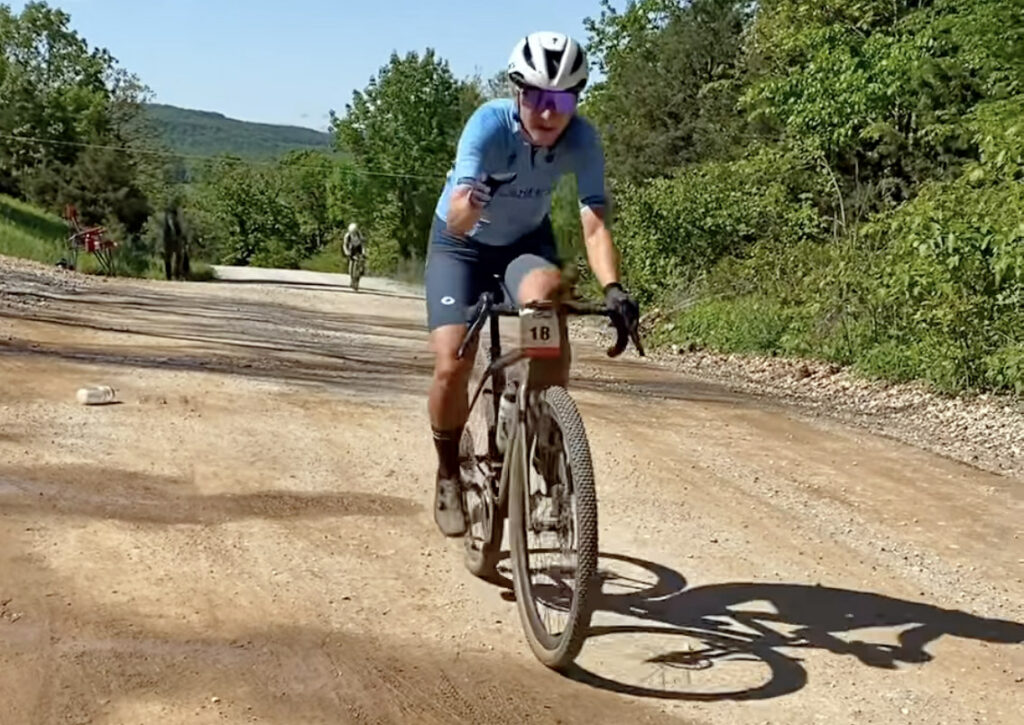
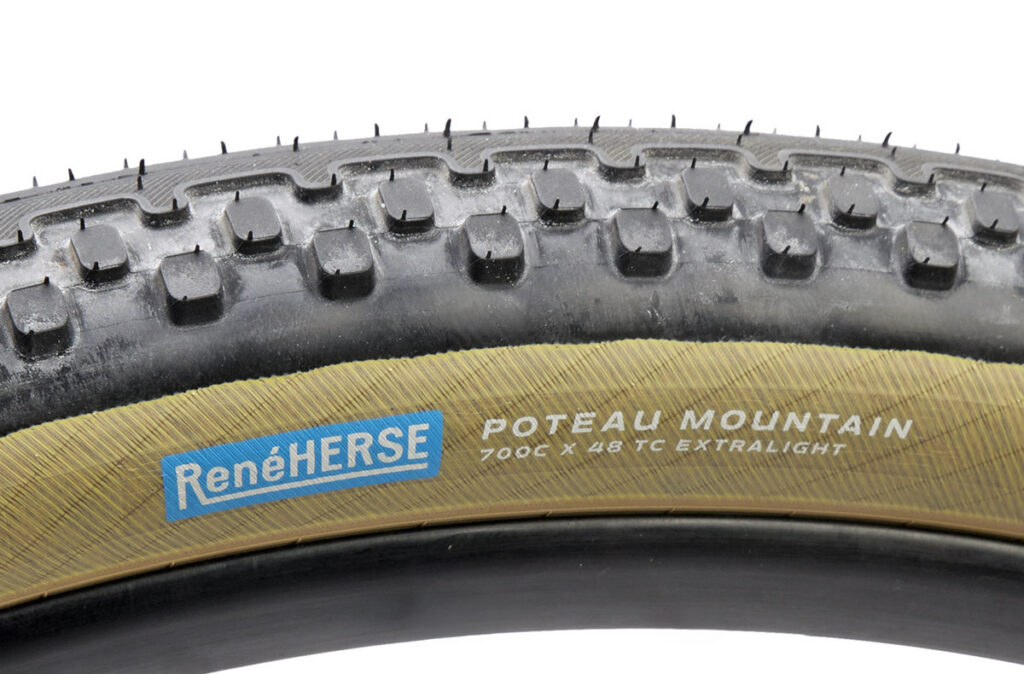
Should you run different tread patterns front-to-rear? Mountain bikers often use a more aggressive tire with knobs on the front, and a relatively smooth tire on the rear. This combination makes sense at low speed in technical terrain, where the front tire turns more sharply and needs more traction. If your gravel course includes technical singletrack, it may make sense to run a more aggressive tire on the front. That’s what Jenna Rinehart did when she won this year’s UCI Highlands Gravel Classic (above): She ran a 48 mm Oracle Ridge knobby on the front and a 48 mm Poteau Mountain semi-slick on the rear.
Summary: On dry gravel, tread patterns make no difference in grip. You can run smooth tires, but you also don’t give up speed if you run Rene Herse semi-slicks or dual-purpose knobbies. For rides that may encounter mud or snow, run knobbies or semi-slicks with large, widely spaced knobs.
Tubeless or Tubes?
Probably about 90% of gravel racers run their tires tubeless. That makes sense: No worries about pinch flats, and small punctures seal themselves, while bigger cuts usually can be (at least temporarily) fixed with a plug (or several.)
However, there’s a place for tubes in gravel, too. In fact, I’ve run tubes in Unbound XL (above) and for all my FKTs. Why? TPU Tubes roll significantly faster, since there’s no liquid sealant sloshing around inside the tires. At 30 km/h (19 mph), you’re saving 6.8 watts. If your tires are wide enough—and you’re not attacking the roughest sections in a huge peloton—pinch flats are not a concern. And even though sidewall cuts require a tire boot to fix, they are also less likely to happen, since the tube reinforces the tire, and there is less stress on the casing as a result.
Summary: Tubeless is the obvious choice, but if pinch flats aren’t a concern, TPU tubes are a viable (and faster) option.
Tire Pressure
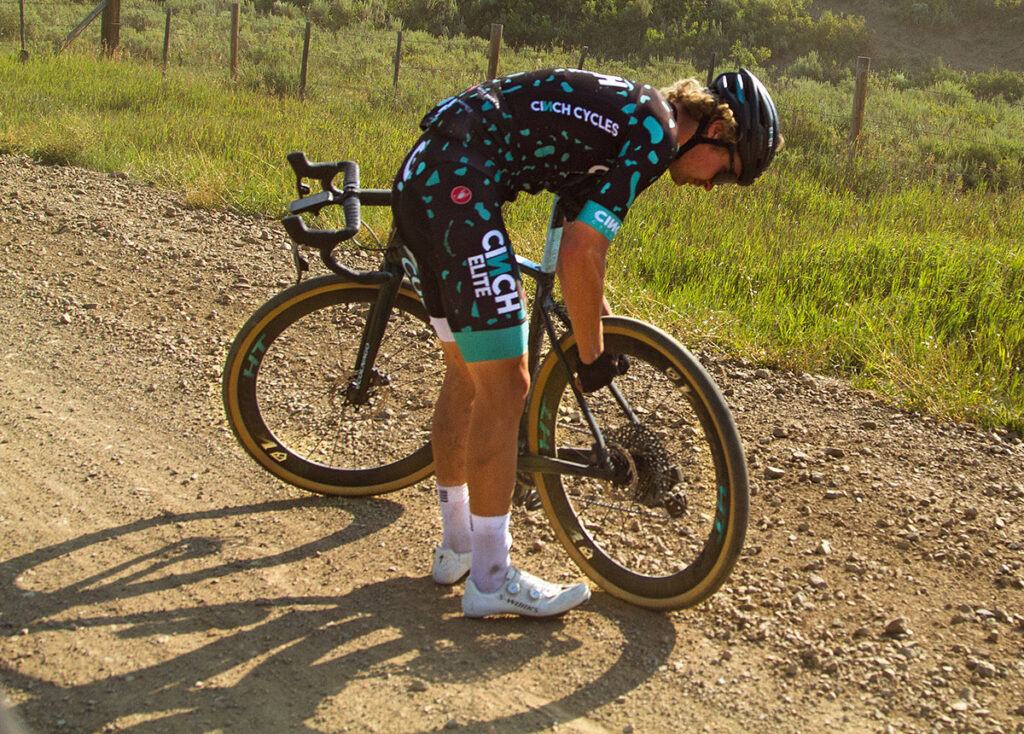
Tire pressure is extremely important. It’s one of the easiest factors to change—and one of the most difficult to get right. For many pros, tire pressure is a closely guarded secret, because getting it just right gives them an advantage over the competition.
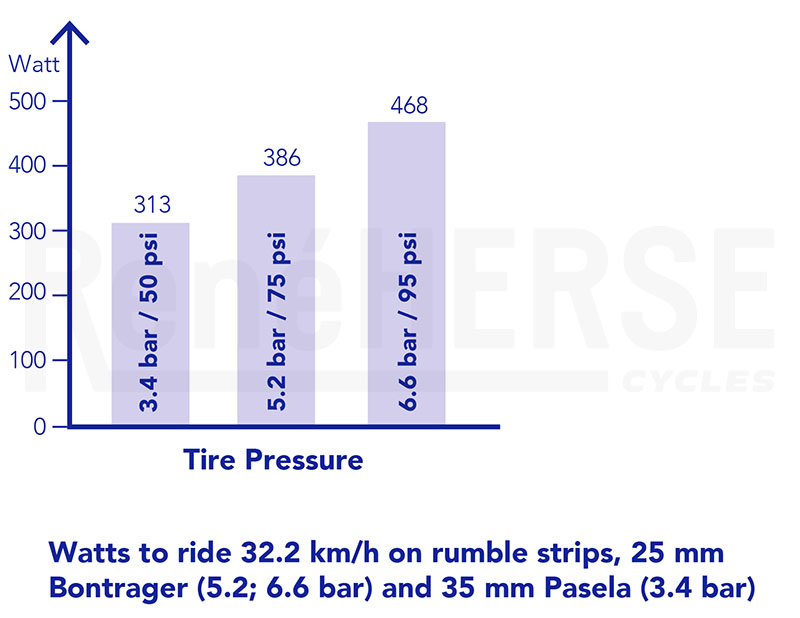
The basic physics are simple enough: On rough roads, lower pressure has less resistance. That’s because softer tires transmit fewer vibrations. It’s as simple as that.
The effect is quite significant: On really rough surfaces (rumble strips), too-high pressure can cost you 150+ watts (above). Compare that to aero wheels, which save up to 2 watts (according to Zipp for their ultra-wide and aero-optimized 303 XPLR wheels). We’re not saying that you shouldn’t buy aero wheels, but you definitely should spend some time figuring out the right tire pressure. (Side note: We ran these tests before we made our own tires, that’s the reason for the very ‘non-racing’ tires. There simply weren’t any wide high-performance tires back then.)
Lower pressure also improves traction, because it enlarges the tire’s contact patch and helps the tread to conform to the surface.
How do you determine the perfect tire pressure? There are many tire pressure calculators, and the recommendations can vary a lot. That’s because most of these calculators are based on ‘educated guesswork,’ as one engineer put it, rather than actual science. The Rene Herse Tire Pressure Calculator uses data from our real-road rolling resistance measurements and a large study of how tires flex under different rider weights. That means it gives consistent results over the entire range of tire widths and rider weights.
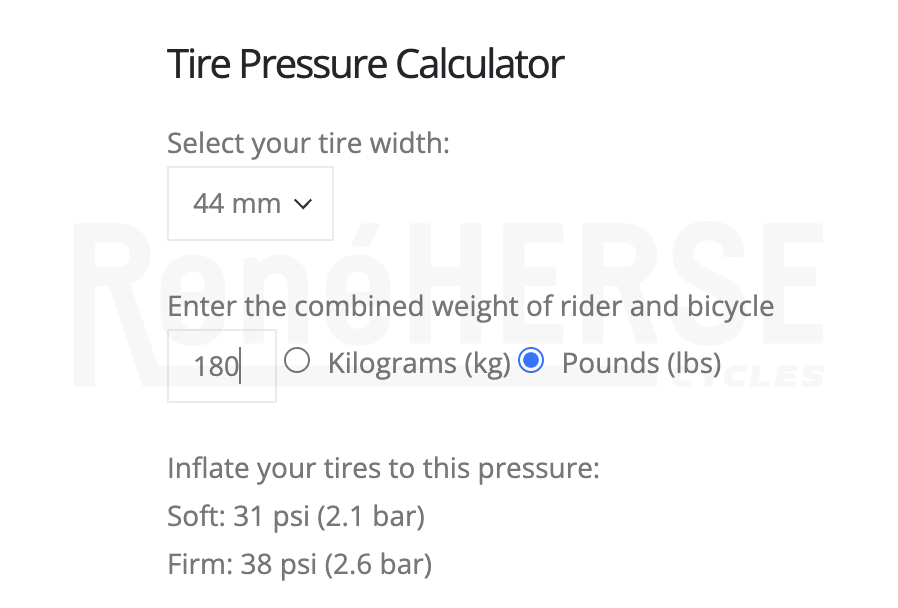
For gravel, start with the ‘soft’ pressure. From there, experiment with different pressures to see how hard or soft a tire you need on your bike to put down the most power. That’s highly personal and not something any software can calculate.
Stronger riders often prefer (slightly) higher pressure. If your tires flex excessively during sprints and out-of-the-saddle climbs, it’s hard to put down power. (That’s like ‘suspension bob’ on mountain bikes.) Riders who prefer constant efforts can often ride lower pressure. If you’re planning a time trial for an FKT, you can run significantly less air in your tires. Your tire pressure also depends on the terrain: You don’t want to bottom out and risk damaging your tires and rims.
The optimum tire pressure is very personal. Experiment to figure out what works for your weight, your power output, your riding style, and your terrain.
Summary: Lower pressure rolls faster on rough terrain, but just as important is the feel of your bike. Tune your tire pressure so your bike works best with your pedal stroke.
Wheel Size
After many years when wheel size wasn’t a topic, it has suddenly come to the fore again: The bike industry is pushing 32″ wheels. Many riders worry that they’ll be outclassed on their current bikes, if other racers switch to the new monster wheels. It seems like a no-brainer: Bigger wheels roll better over road irregularities, don’t they?
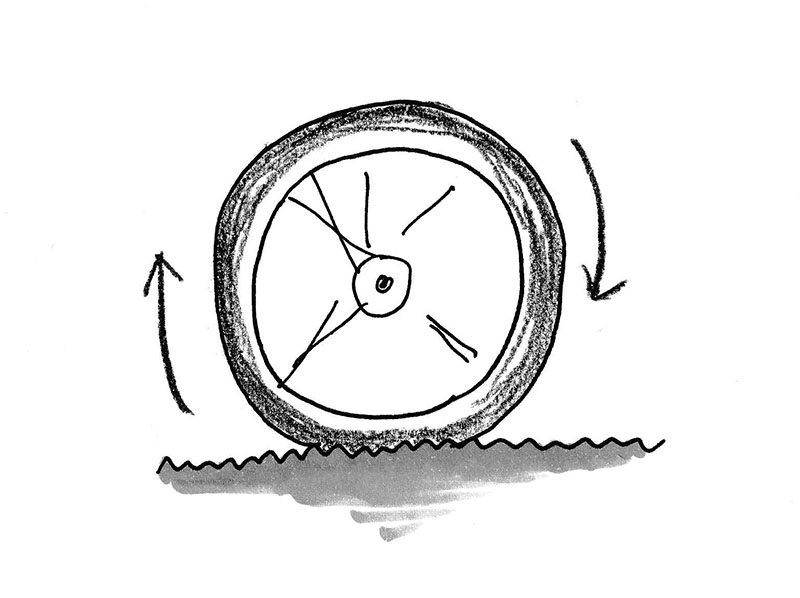
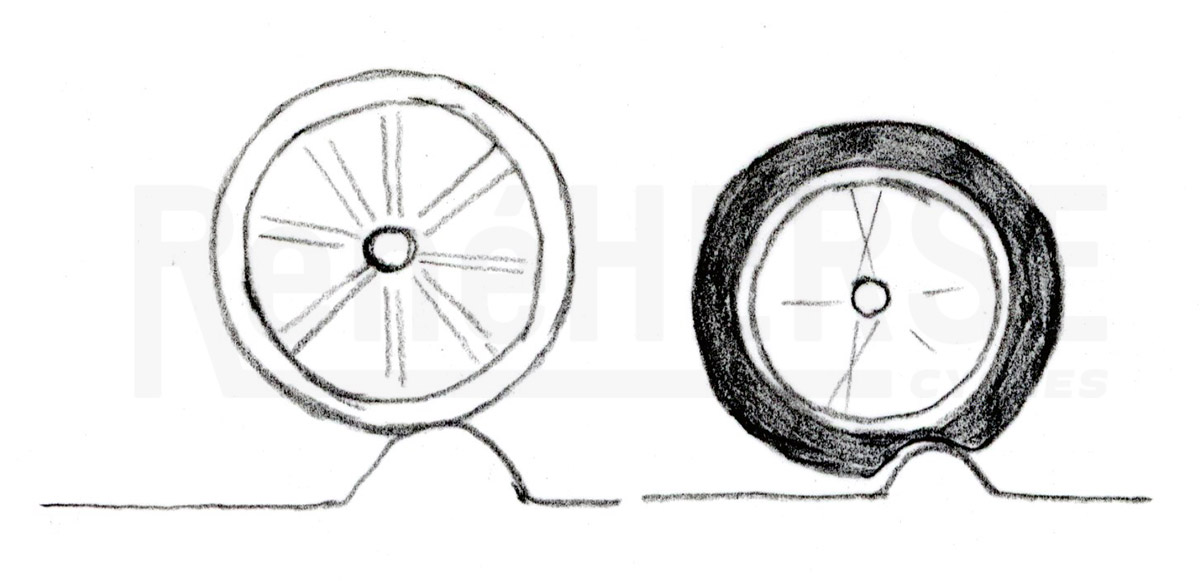
This would be true if the wheels were solid discs (left). But we run pneumatic tires (with air in them) for a reason: They absorb irregularities without lifting the bike (right). That’s the ‘secret’ of a bicycle’s speed. That’s why we put up with the hassles of air in our tires in the first place. Basically, a pneumatic tire is flat at the bottom, and its diameter doesn’t make a difference when it comes to rolling over surface irregularities. (Large obstacles like those encountered in mountain biking may be a different matter—we’re talking about gravel tires here.)
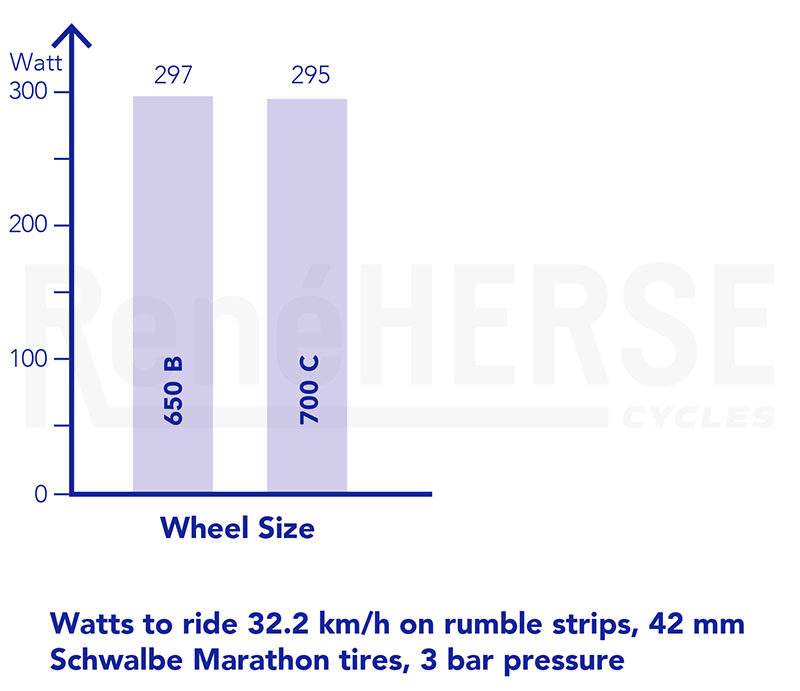
That’s not just theory: Our testing found that the most common wheel sizes, 650B and 700C, roll at the same speed over bumpy terrain (above). We tested this on highway rumble strips. (Rumble strips are grooves cut into the edge of the pavement to alert sleepy drivers who are drifting off the road.)
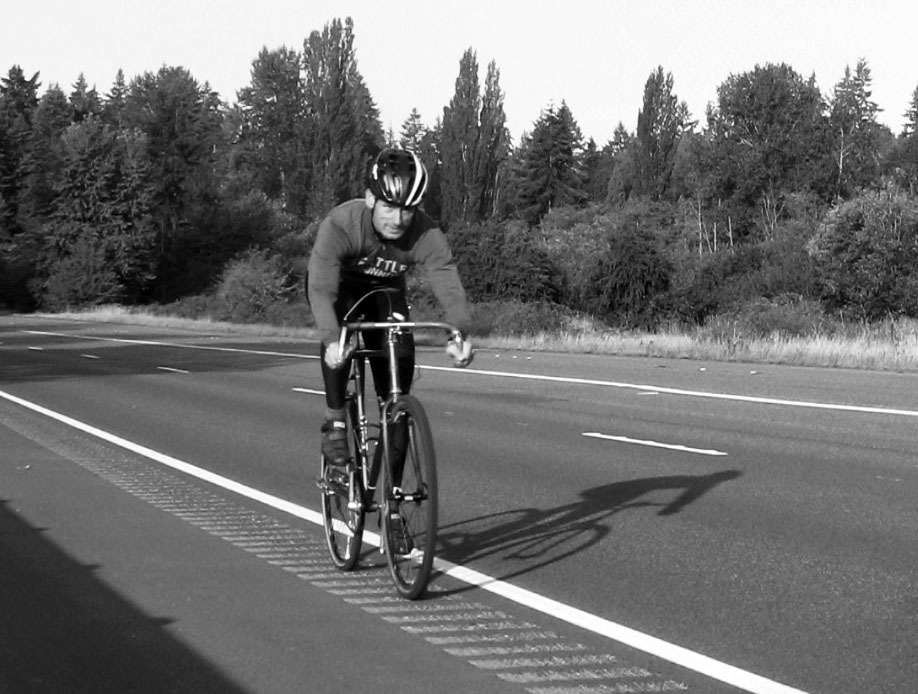
If larger wheels had an advantage, it would show on these rumble strips: During our tests, our bike wheels hit 15 mm-tall (0.6 in) bumps 60 times per second. That’s as extreme as it gets!
Even under these extreme conditions, larger wheels offer no advantage. (We ran the same tires and the same pressure for both wheel sizes, of course. The tiny differences in the data above are not statistically significant.) For more details on the 32″ wheel debate, check out the links at the bottom of this post.
Summary: Don’t sweat wheel size. It makes no appreciable difference for your speed on gravel.
Confidence
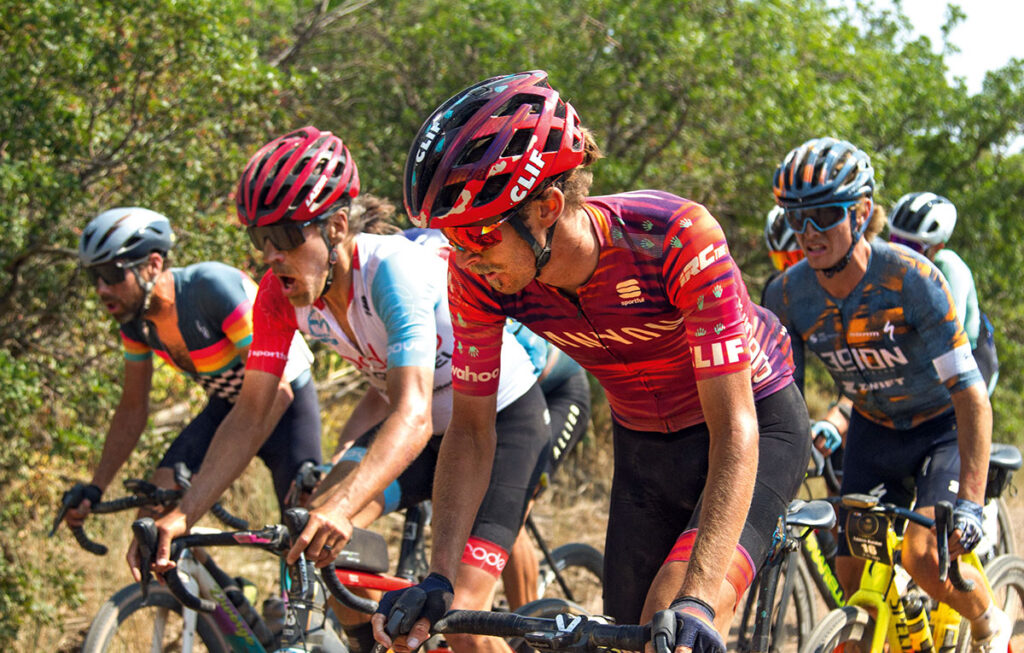
All the science in the world doesn’t mean much if you have doubts about your bike. When you are at the limit and digging deep, you need full confidence in your equipment. That’s why Ted King’s strategy is simple: “I look at the tires other racers use at an event and go up one size.” That way, Ted doesn’t need to worry that the theory overlooks some crucial factor, and that he’ll be outgunned because he made the wrong tire choice.
If you ride on Extralight casings and then constantly worry about sidewall cuts, you should run Endurance casings instead. On the other hand, knowing that you are on faster tires can give you the confidence to dig deep and stay with a group, or even attack. That’s something only you can decide!
Summary: More than anything else, make sure you are comfortable with your tire choice.
Conclusion
In practice, it makes sense to start by minimizing resistances. Then dial in the feel of the bike based on your needs and wants. Here is a summary of this strategy:
- Start with the widest tire that fits on your bike.
- Use the most supple casing you can get away with, given the terrain and your riding style.
- Don’t worry about tread patterns. When in doubt, choose a dual-purpose knobby or Rene Herse semi-slicks.
- Optimize your tire pressure to suit the terrain and your riding style. When in doubt, run lower pressures.
- Once your race or adventure starts, don’t think about your bike. Focus on the ride!
Viewed like that, it’s really quite simple. And that’s the beauty of cycling (and science): It doesn’t need to be complicated.
More Information: