
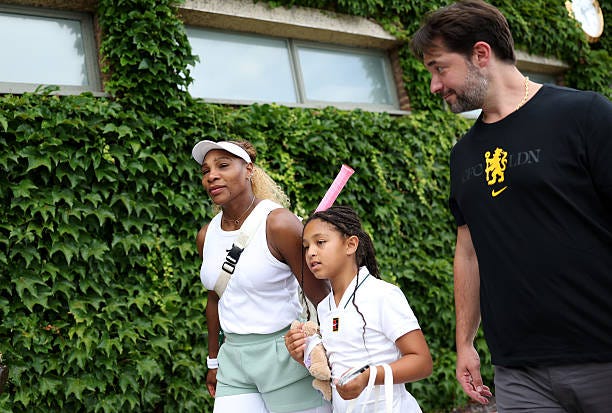
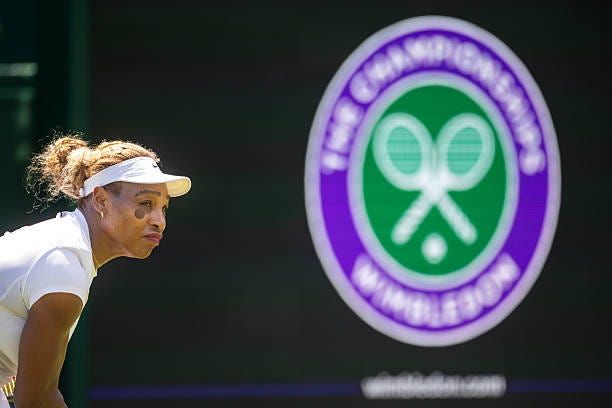
WIMBLEDON — It felt like old tennis times at Wimbledon, tracking the draw to see whom Serena Williams would face in her opening round on Centre Court.
But these are not the same times. Williams was not a top seed or even a seed at all. She was an unranked floater – we’ll see how dangerous — at age 44, with no singles matches to her name since Ajla Tomljanovic respectfully ushered her into evolution in a taut and thunderous three-setter at the US Open in September 2022.
Nearly four years later, Williams, to my surprise and not just my surprise, is back. She is at Wimbledon with two young children in tow, and with, in her own words, “nothing left to prove”.
That should be true and might even be true. Williams has won 23 major singles titles and 16 major doubles titles, dominating in her early twenties and again in her mid thirties and becoming part of global culture on a first-name basis.
But with Serena, it is seldom easy to grasp the agenda in full. She likes holding her cards close to her chest, enjoys springing surprises (see her first pregnancy announcement), and it is hard to imagine that she is coming back only to relish the ride on the grandest stages and the sensation of ball meeting string.
This, however, is what she said on Sunday in a sometimes strange one -foot-in, one-foot-out news conference: “I think in general my expectations are definitely different for the first time in my career. I feel like my feelings are just – not that I never enjoyed it before, or else I wouldn’t be here today – but I feel like I’m really going to enjoy being out there.”
That would be a major shift in mindset. Winning has always mattered a great deal to Williams, and, in her mind, she did leave the game in 2022 with unfinished business. She wanted that 24th major singles title to match Margaret Court’s different-era record. More than that, she wanted a major title as a mom and talked openly about that quest. She came very close when she returned from childbirth: reaching back-to-back Wimbledon and US Open finals in 2018 and 2019. She lost to four different opponents: Angelique Kerber, Naomi Osaka, Simona Halep and, most unexpectedly, Bianca Andreescu. The matches unfolded (and unraveled) in different ways, but the bottom line is that Williams did not win a set in any of them.
That hurt, all the more to a supreme, hard-wired competitor. Perhaps she wanted that latest major a bit too much, which helps explain the edginess, the fraught body language and the unforced errors. The physical element was also a factor. She kept running out of steam at the end of tournaments in a way she had not in her youth. The additional, post-maternity weight that she felt she was carrying was an issue for her. But it was also about the opposition and the evolution of women’s tennis. Williams’s power, which helped make her a generational talent, was still there, but there were newcomers, like Osaka, who could match it and plenty more counterpunchers, like Kerber and Halep, who could deal with it.
That trend has only deepened, as a walking tour of Wimbledon’s outside courts on Monday quickly reconfirmed. Even players in the Grand Slam hinterlands were crushing the ball compared to early 21st century standards. The pace and athleticism of the women’s game has accelerated, partly because of the Williams sisters.
Returning to play valedictory doubles with older sister Venus, now 46, is easier for an outsider to understand. It’s a symbolic move for siblings whose careers have been linked from the start. Doubles also has been a great showcase and outlet for superstars of the past.
Martina Navratilova is the gold standard when it comes to tennis comebacks past the age of 40. After more than four years out of competition, she returned at age 43 and played almost exclusively doubles, winning consistently on tour with a variety of partners and taking three more Grand Slam mixed doubles titles. The last came at age 49 with Bob Bryan at the 2006 US Open in what turned out to be her last tour-level match.
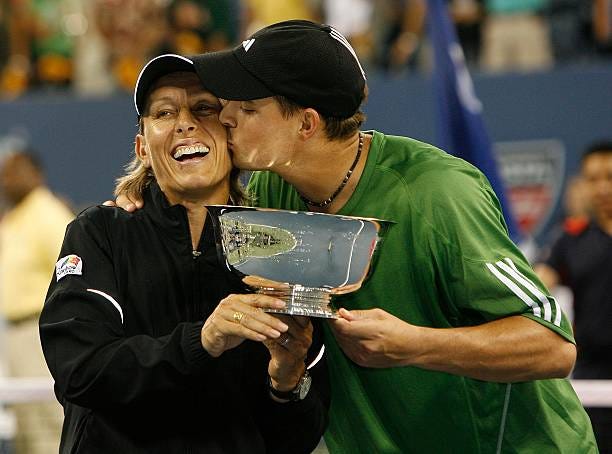
But Navratilova played doubles worldwide throughout that extended comeback to build back up to her success. It would certainly be a boon to tennis (and to doubles) if Serena would do the same, but would she have that kind of interest, commitment and staying power?
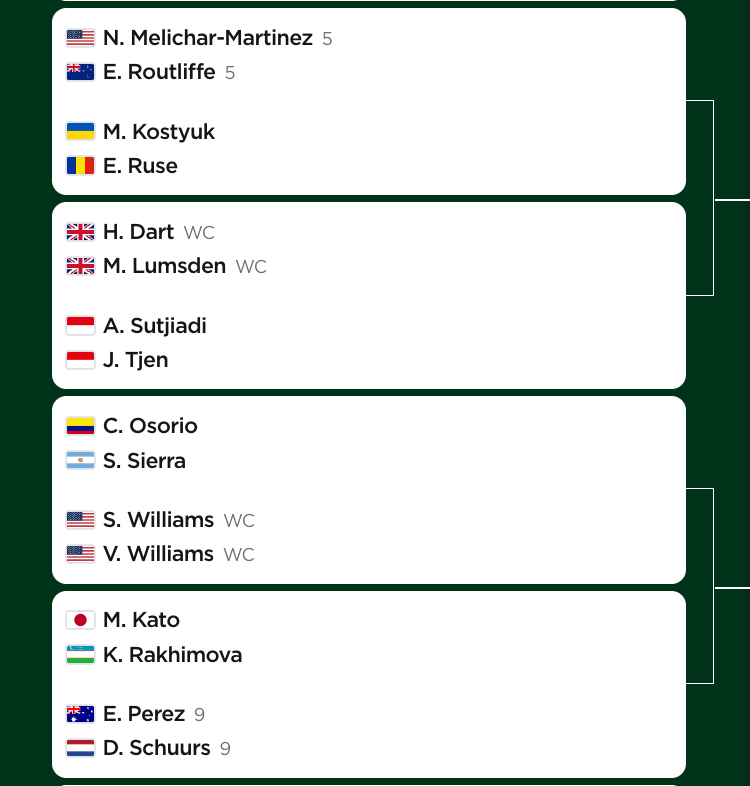
She and Venus won’t have it easy despite their 14 major doubles titles. They did not win a round when they last played together at the 2022 US Open. Their eighth of the draw at this Wimbledon, where they received a wild card, includes No. 9 seeds Ellen Perez and Demi Schuurs and No. 5 seeds Nicole Melichar-Martinez and Erin Routliffe, who has played Serena with other partners twice in this brief comeback.
But singles is another challenge altogether in terms of court coverage, rhythm and consistency. Serena has dropped significant weight through the use, she says, of weight-loss drugs that, for now at least, are still allowed by the World Anti-Doping Agency. She looked fit and quick off the mark in her doubles matches at Queen’s Club and in Berlin.
Could this version of Serena win some singles matches on tour? Absolutely. She’s an exceptional champion and an outlier. It just likely won’t be many.
Venus, then 45, beat world No. 35 Peyton Stearns in the first round of the Washington Open last year but has lost 10 straight singles matches since then.
Navratilova beat Catalina Castaño 6-0, 6-1 in her opening round at Wimbledon at age 47 in 2006, then lost in the next round to Gisela Dulko in Navratilova’s final Grand Slam singles match.
It is unclear whether singles at Wimbledon was a genuine part of the Serena comeback plan, just as it’s unclear how much singles (or doubles) she will play going forward.
“I had until Monday to decide,” she said of her singles wildcard. “I think it was like Sunday. I just wasn’t sure up until then. Honestly, I’m not even sure, but we’ll see.”
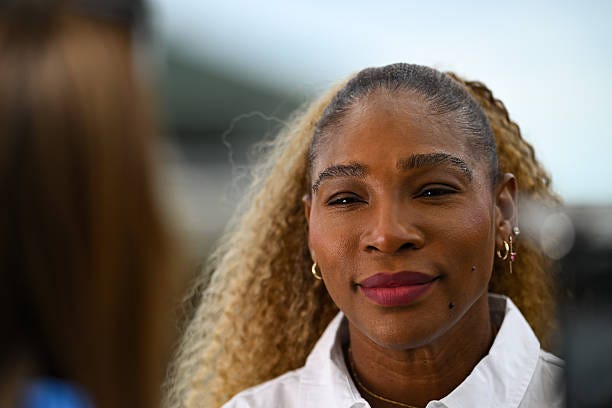
If Serena can move well and shake off the rust and the nerves, you have to like her chances in round one against Maya Joint on Tuesday. Joint, a young Australian raised in the United States, won a grasscourt title at Eastbourne last year and is a slight oddsmakers’ favorite on Tuesday, but she has struggled to win against anyone this season.
Williams will also have, one presumes, thunderous support on Centre Court, where she has infinitely more experience than the 20-year-old Joint. But it could quickly get much tougher if Serena gets through that opening match. The intense rising star Alexandra Eala and defending champion Iga Swiatek loom as potential opponents in the next two rounds.
Is Serena going to win that elusive 24th major singles title now or later? Based on tennis precedent and her own “pre-evolutionary” results in 2021 and 2022, it’s an absolute longshot. But what might be an acceptable consolation prize is to create some better parting memories at Wimbledon.
In her last two appearances, she went out, painfully, in the first round. In 2021, she retired 34 minutes into the first set against Aliaksandra Sasnovich because of a right hamstring injury that was aggravated by slipping on the grass. The following year, in her first singles match on tour since the Sasnovich setback, Williams was beaten in three sets in the opening round by Harmony Tan, a pace-shifting, spin-mixing Frenchwoman ranked just 115th.
Afterward, Serena was asked if she would be at peace if this turned out to be her final Wimbledon memory?
“Obviously not,” she said. “You know me. Definitely not. But today I gave all I could do, you know, today. Maybe tomorrow I could have gave more. Maybe a week ago I could have gave more. But today was what I could do. At some point you have to be able to be OK with that. And that’s all I can do. I can’t change time or anything.”
No, but you can let quite a bit more time go by and then take another swing, take another shot, particularly if Wimbledon is going to fling open the gates of the grassy place where you are already a seven-time singles champ (and a member).
“Well, I thought it’s not every day Wimbledon holds a wild card for someone,” she said. “I can name probably a handful of people. I happened to be one of those people. I thought I should really take this opportunity. Who knows if I’ll ever make it here again….I was like, ‘What’s wrong with me, Serena? What are you thinking? Are you nuts? Like you really should do this.’ People live to be an athlete. I have this great opportunity to showcase what I do, what I do best, I suppose. I think ultimately, I was like, that is pretty cool, so I should do it.”
Time to find out if Serena’s expectations and reality are truly aligned.
CC
P.S. I’m back at Wimbledon for the fortnight. I would be happy to sign my books for anyone who can track me down and look forward to meeting more of you on the grounds at the AELTC.