
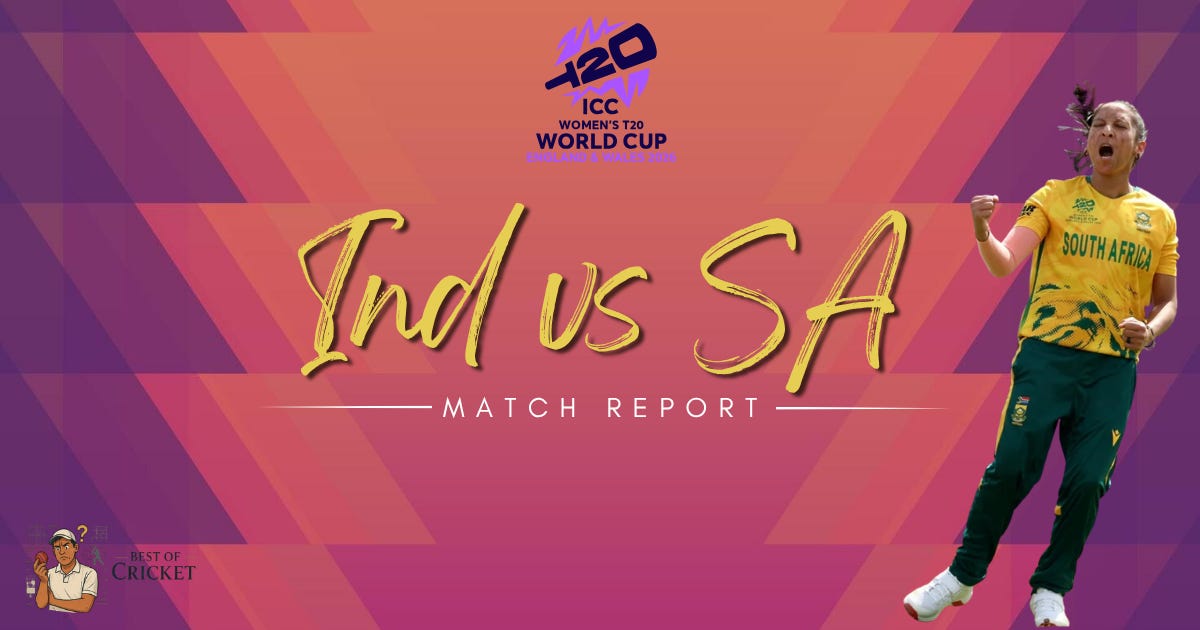
The last time India and South Africa played a World Cup match, Deepti Sharma and Harmanpreet Kaur applied the final touches to a historic night. This was a historic afternoon too—Harmanpreet became the first ever cricketer, any gender, to play 200 T20 internationals—and it was Deepti in the centre of the frame again.
When Deepti Sharma walked in, India had lost 4 wickets for 53 in seven overs, after an early burst of boundaries in the powerplay. With Harmanpreet by her side, Deepti set about repairing India’s batting effort. Their partnership of 33 was the best of the innings—also reflecting how consistently incisive South Africa’s bowling was. After Shafali Varma’s blistering 15-ball 31, Deepti’s 29 was India’s most substantial batting effort. Every time India found some stability, about to press the accelerator pedal, South Africa struck a blow.
The true stars of the innings were South Africa’s two experienced seamers, Shabnim Ismail and Marizanne Kapp, finishing with near identical figures of 2-27 and 2-28 from their four. Ismail, remember, did not play the ODI World Cup last winter. Here, she was irresistible, bowling with pace, edge, and as Shafali found out, some steep bounce.
Was 158 enough? Well, here’s something: since 2020, India had never lost a T20 World Cup game while defending more than 130.
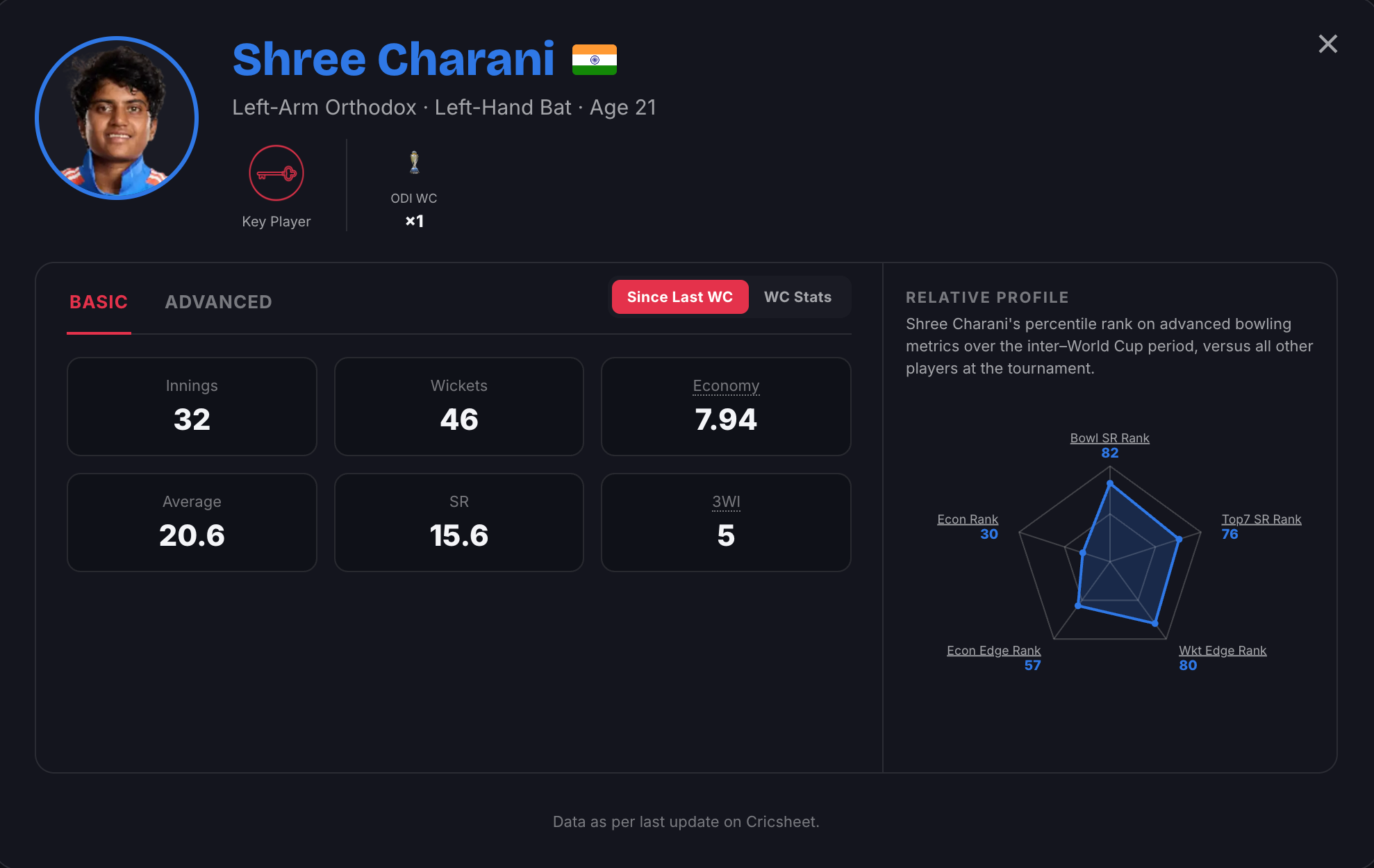
Staying in the shadow of the historic night of 2nd November, 2025, Harmanpreet threw the ball to the player of the final, Shafali Verma, to start off the South Africa innings. Shafali, as these things go, conceded just nine runs off her two overs. And, guess what? Shree Charani dismissed Laura Wolvaardt and Annerie Dercksen in four deliveries after Shafali’s second, the pressures of a miserly powerplay catching up with South Africa’s batters.
So it was left to Marizanne Kapp—the 36-year old spine of this team, one of the best all-rounders in the world for years, through two consecutive T20 World Cup final and four consecutive Women’s Premier League final losses. If anyone could shepherd a successful chase from this position, it was her.
Kapp and Tazmin Brits picked up 66 runs between the 10th and 15th overs, bringing South Africa right back into the chase—eight wickets in hand, required run-rate well within control. Kapp’s strokeplay to reach her half-century was some of the best manoeuvering of the field you’d hope to watch in this tournament.
Then, Kapp took down Deepti Sharma in the penultimate over, and that was the game.
Radha Yadav helped South Africa’s cause by dropping two catches—the one off Marizanne Kapp, a sitter—but to zoom in too far on those would be to discredit the batting performance of Kapp and Brits.
-
🛫 India get off to a flyer: In the last World Cup cycle, India have struck at 7.5 runs per over in their first three overs. Today, they got stuck into Shabnim Ismail and Marizanne Kapp, plundering 30 in the first three.
-
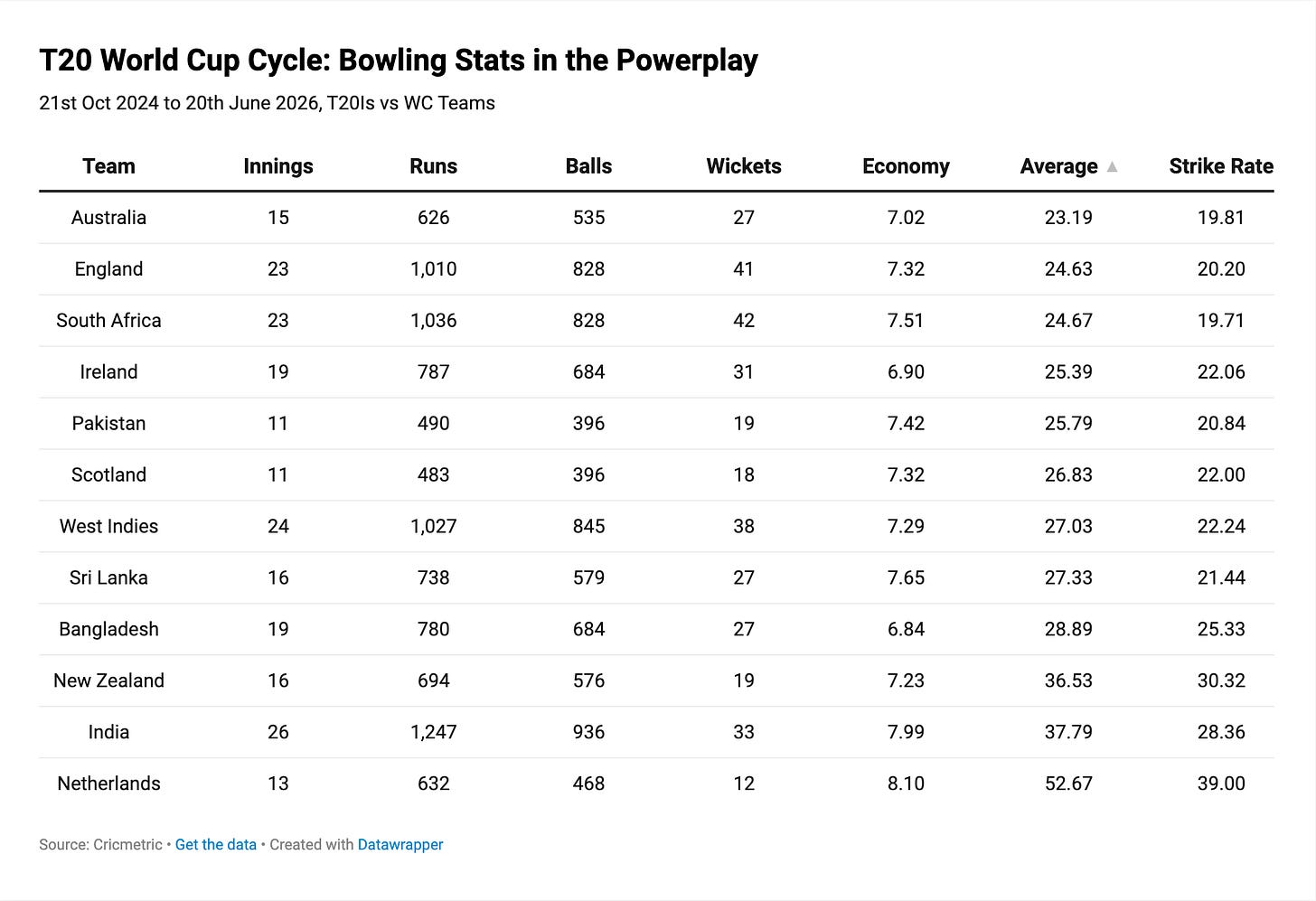
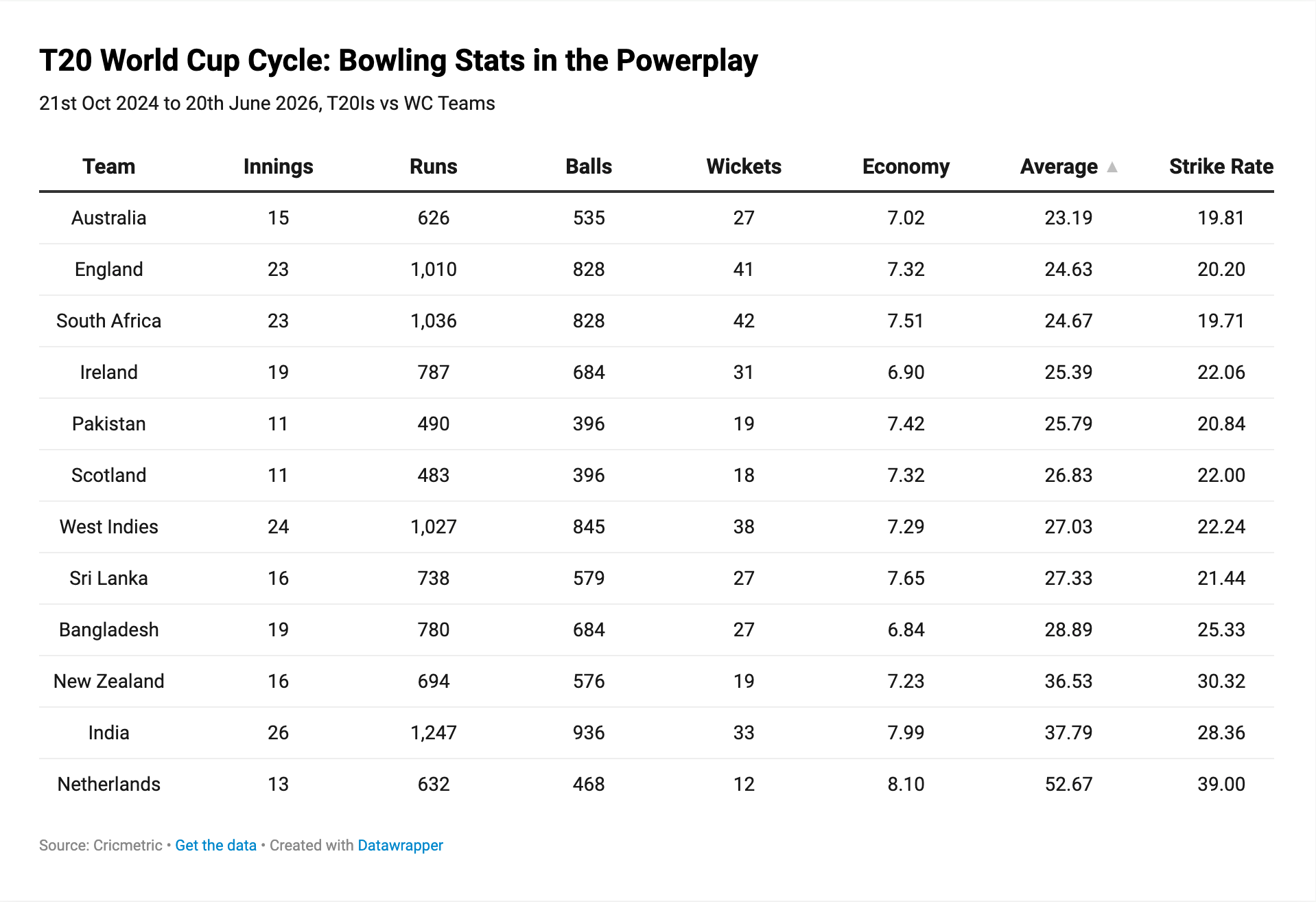
💥 India turn the powerplay tide, the other way: In the same cycle, India have been the second-worst amongst all teams at the World Cup for bowling average in the powerplay. Between their first two matches of this World Cup, they picked up just two wickets in the powerplay. Today, they picked two wickets and had South Africa reeling at 25/2 at the end of the powerplay.
-
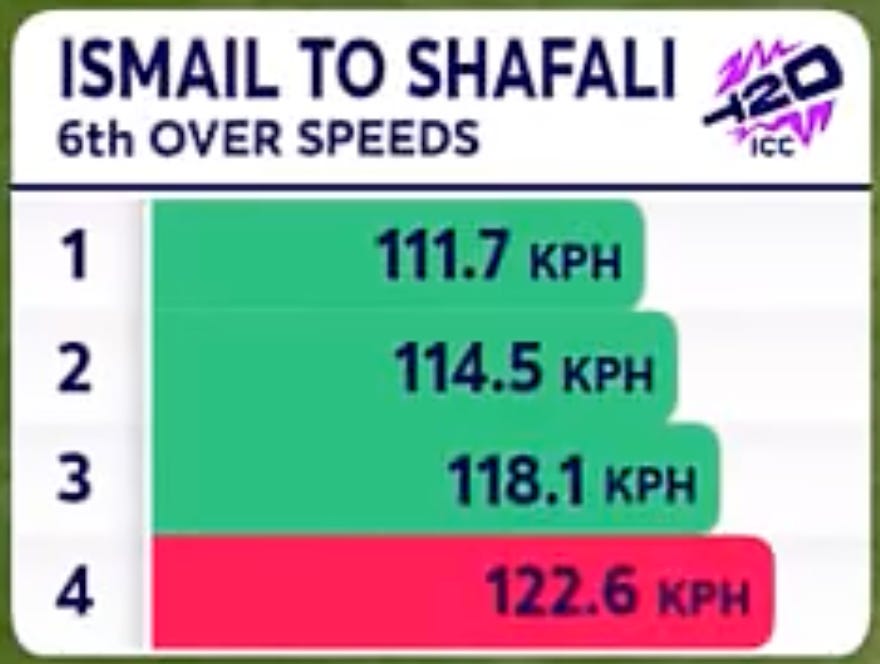
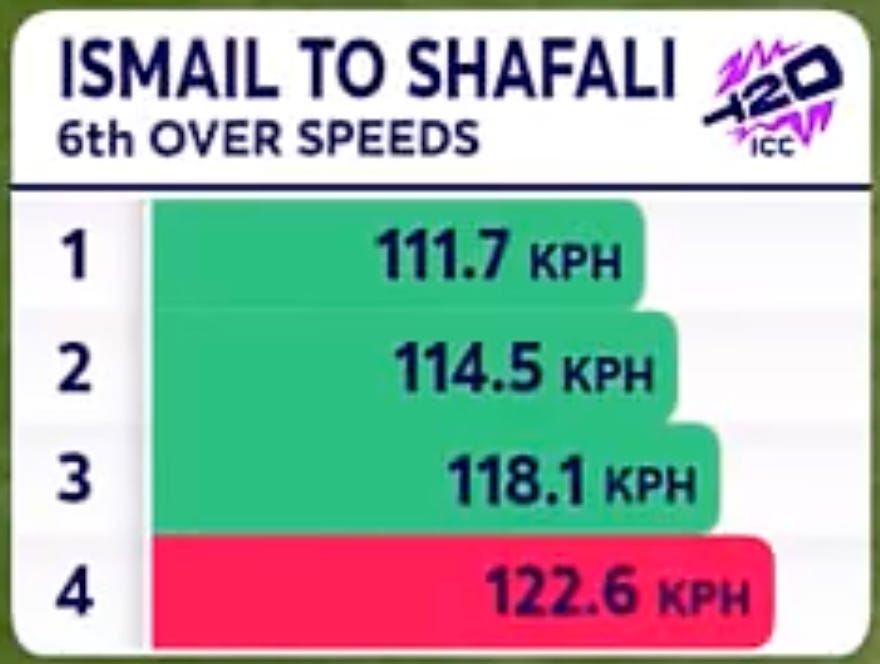
🔥 Shabnim Ismail brings the fire: The pace progression in the over of Shafali Verma’s wicket was the kind of stuff we’ve come to expect from Shabnim Ismail, and yet, every time, we’re left wondering how she keeps doing it at her age. The ball that got Shafali was the fastest yet of the tournament.
Since 2020, India hadn’t lost a T20 World Cup match while defending more than 130. After sending back Laura Wolvaardt and having South Africa reeling at 25/2 at the end of their powerplay, India would’ve thought that run would go on for longer. Then they ran into Marizanne Kapp.