

Thanks to more than ten years testing products for Cyclist, tech editor Sam has plenty to say when it comes to new bikes and gear. Tech Talk is Sam’s fortnightly newsletter, with a focus that hops between his thoughts on the latest kit to be featured by Cyclist and wider tech trends that people are talking about, or should be talking about. Click here to get Tech Talk directly to your inbox.
I was so ready to hate the new Specialized Crux. As a fan of riding bikes just for the inherent joy of the activity, rather than for competition, and as a serial tinkerer as well, I could be heard telling anyone that came to me for gravel bike buying advice in the last few months (my boss, one mate and my dad) to get in and snap up the old Crux while they could.
Rumour had it a new one was on the way and it would change plenty of what I loved about the old design. Someone actually even listened to me: Cyclist editor Pete Muir is now the proud owner of a Crux 4 Comp.
With regards to the scale of the changes, I can say I was right. The Crux 5 launched last week and the platform’s classic-looking round tubing has mostly bitten the dust (get it, cos gravel), as has its external cable routing.
What I hadn’t considered, however, was that the changes might not necessarily be bad. Turns out some are just different, and others are downright great. Sorry Pete, maybe take what I say with a pinch of salt next time.
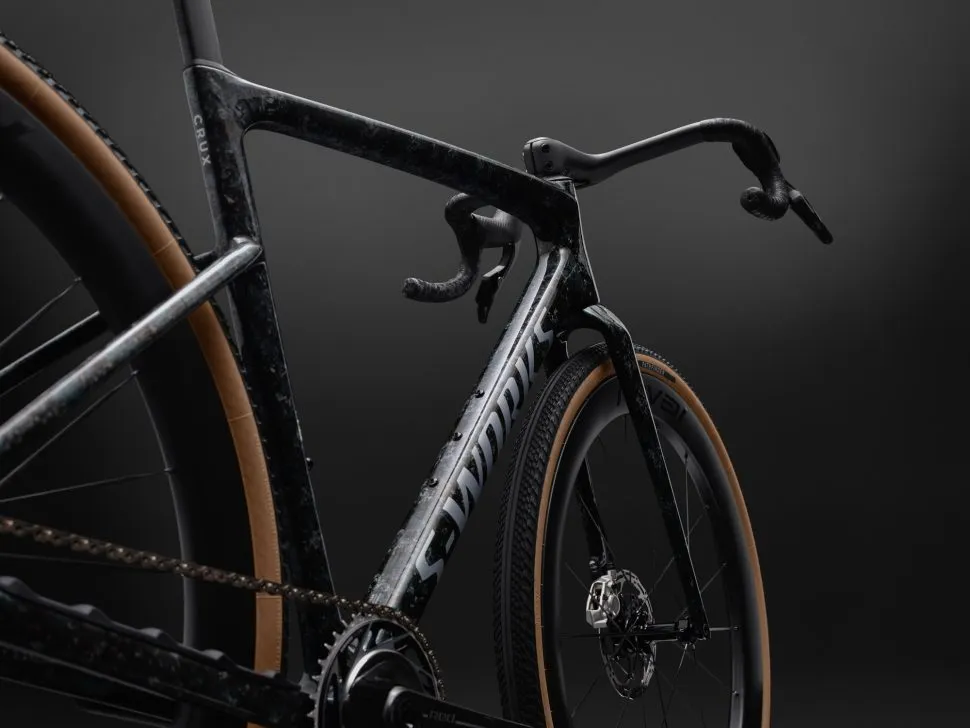
The cables might route through the upper headset bearing now (grrrrr) but you can at least modify the front end thanks to versatile headset spacers and a conventional steerer tube (yay).
Specialized hasn’t plunged fully down the aero rabbit hole like I was concerned it would, and like rivals have, either.
I can take or leave the claimed 15 watts at 45kmh nudge in aero efficiency because that’s barely relevant to the speeds I ride at, but importantly that has been achieved with the addition of only 60-odd grams over the previous frame, suggesting it’ll still be as brilliantly lively to ride thanks to the retention of a good balance of light weight and stiffness.

Equally important is that these changes have still kept it as a handsome looking thing – to me it’s nicely reminiscent of a Tarmac SL7, which was a bike I adored and think still epitomises a golden age of all-round racers that we’ve moved away from in the past couple of years (the Tarmac SL8 and it’s gawky Speed Sniffer can stay the hell away from me).
While I’m on the subject of the Tarmac, to me the success of the new Crux does put the SL9, which is all but officially confirmed as being on the way, in an awkward position. OK, for road racers there’s still a clear-cut case for it – it’ll likely be a touch faster, lighter and nimbler than the new Crux – but I can’t look past the Crux as a bike to do it all. It’ll be almost as fast as the Tarmac on the road, but will be more comfortable, with more accessible geometry and the ability to take on so many more riding surfaces with its 55mm tyre clearance.
For normal riders, I’d pick the Crux over the Tarmac every day of the week. Then again, as editor Pete would no doubt attest, I could be talking nonsense, so I’m looking forward to seeing what the SL9 brings to the table.
The rumour mill
Tech tip-offfs from your man in the know

A particularly brutal edition of Unbound was completed last weekend and if you squinted through the generous splattering of peanut butter mud, what looks like a new Giant Revolt may be on the way.
The changes look to move the bike more towards the racing end of the scale – the geometry looks longer and lower and the tube shapes look more aggressively aero profiled. The design also looks simpler – no adjustable dropouts at the rear this time and the mounting points look pared back as well. A dropped driveside chainstay suggests impressive tyre clearance, supported by what look like new Cadex gravel wheels too.
Tech tidbits
A couple of small product launch highlights from the past week or two
Superlight Hunt wheels
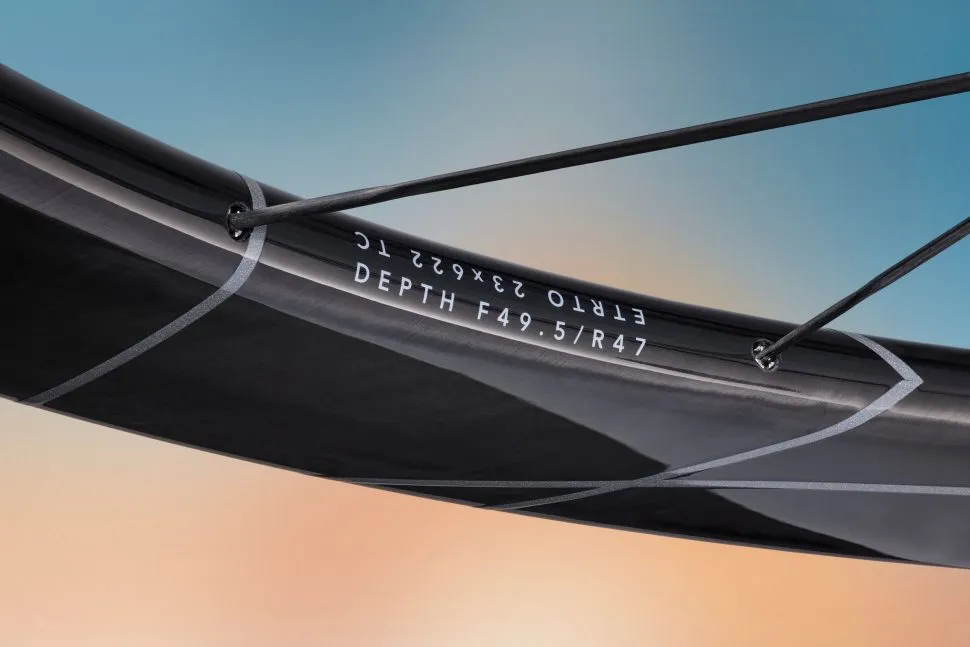
Hunt follows the recent release of its 5AM all-round race wheels with the launch of the 4AM, a shallower but lighter version of the same staggered depth design.
In the carbon-spoked option, claimed weight is just 1,156g, despite the rims still being solidly mid-depth rather than shallow. The front is deeper at 49.5mm, with the rear at 47mm. The front is wider too, to encourage smooth airflow over a clean tyre-rim transition, and uses Hunt’s low-density structural polymer to get that width without adding too much rim weight.
Despite apparently market-leading performance, pricing remains at Hunt’s typically competitive levels. The steel spokes/steel bearings version is £1,659, carbon spokes/steel bearings is £1,959 and the carbon spokes/CeramicSpeed bearing version is £2,449.
Wolf Tooth’s new tool is a small-parts godsend
Despite being fundamentally simple machines, standards and parts across different bikes are frustratingly proprietary and choosing new stuff when small parts such as bearings wear out can be a tricky process.
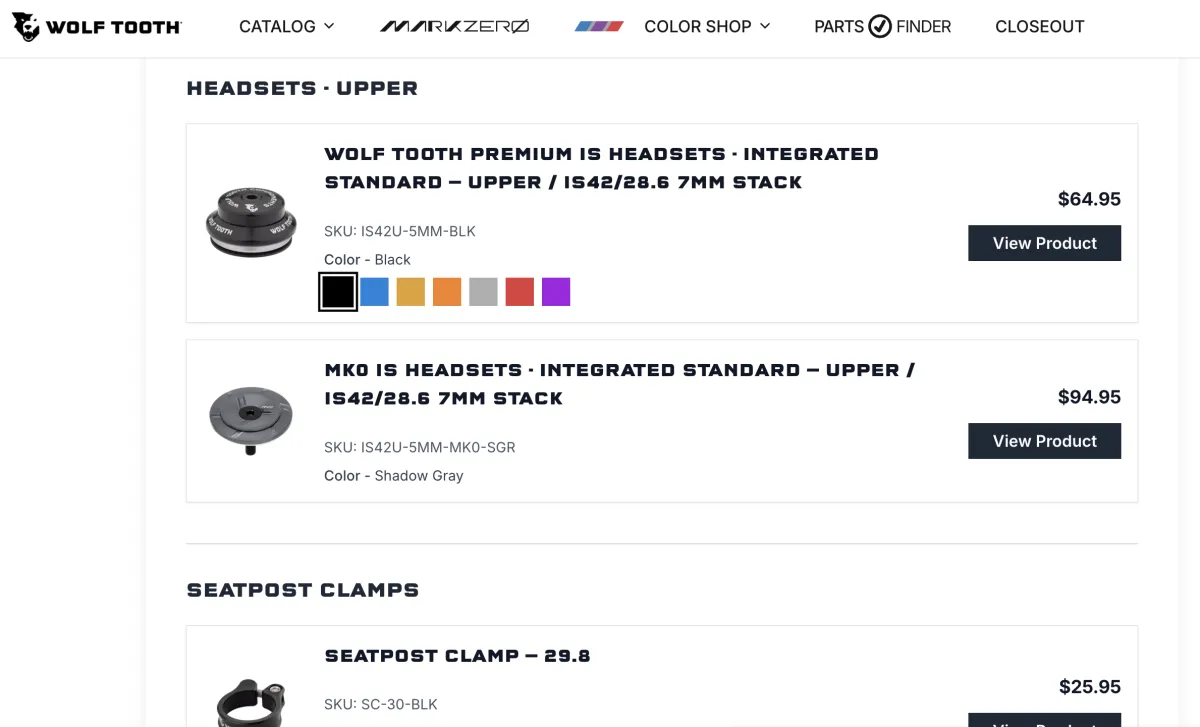
WolfTooth aims to smooth that process with its new bike parts finder: all the user needs to do is enter their bike’s make, model and year and the finder will pull out the WolfTooth parts that fit that bike.
It’s by no means exhaustive just yet but is still impressively broad, so chances are it’ll be able to shed some light on what the dimensions of that grindy lower headset bearing of yours is. Be sure to do WolfTooth a solid and buy the part from it directly though – a nice way to repay the favour.