
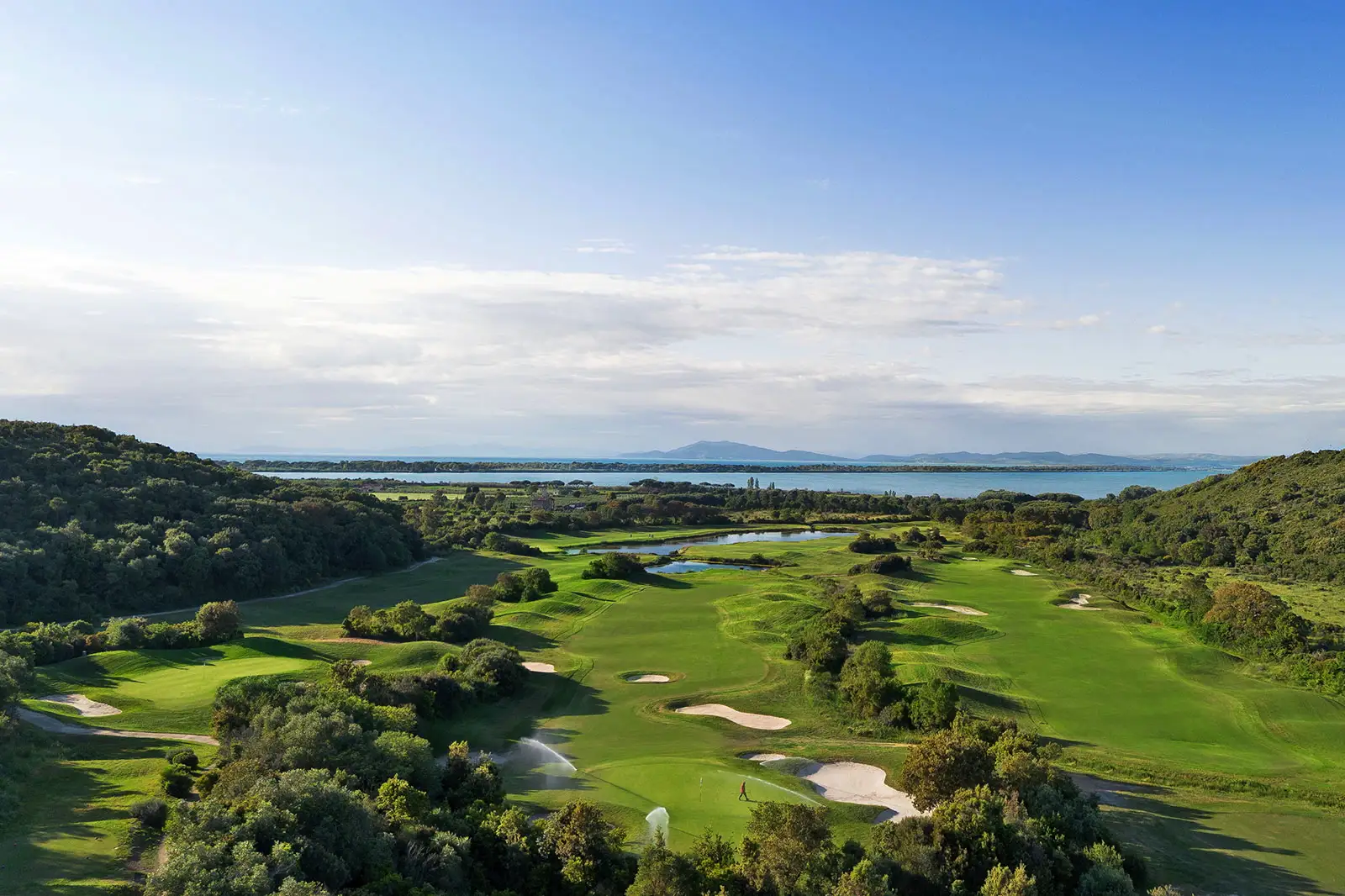
There is a particular kind of golf that only Tuscany can offer — a round where the scenery competes so fiercely with the game itself that you might find yourself pausing on the fairway, putter in hand, just to stare. Cypress trees rise like green sentinels against a burnt-sienna sky. Rolling vineyards border the rough. A medieval hilltop village watches from a distance as your ball arcs over an ancient olive grove. It is, in every sense, golf as it was never strictly designed to be played: part sport, part pilgrimage.
Italy has more than 400 golf courses spread across its regions, but Tuscany — with its roughly 30 clubs — occupies a singular position in the European golf imagination. The courses here are not merely set in beautiful countryside; they are inseparable from it. Architects have worked not to impose a design on the land but to draw it out, threading fairways between stone farmhouses, negotiating with lakes, hills, and forests that existed long before the first tee was ever planted. The result is a collection of courses unlike anywhere else in the world.
A Region Written in Landscapes
Tuscany is divided into ten provinces — Florence, Siena, Pisa, Arezzo, Grosseto, Livorno, Lucca, Massa Carrara, Pistoia, and Prato — and each one brings its own texture to the region’s golf. Florence’s northern parkland courses sit within easy reach of the Chianti wine country, carrying nearly a century of heritage in their soil. Further south, in the wild coastal Maremma, courses open onto sea views and scrubland, far removed from the tourist crowds of the city.
It is precisely this diversity — from the manicured elegance of a Florentine country club to the untamed drama of a cliff-side coastal layout — that makes Tuscany so compelling for the travelling golfer. You are never simply playing one kind of course; you are exploring a region that has been shaped by Etruscans, Romans, Medici, and Renaissance artists, all of whom left their mark on the very landscape through which you walk.
Le Pavoniere: The Grand Dame of Tuscan Golf
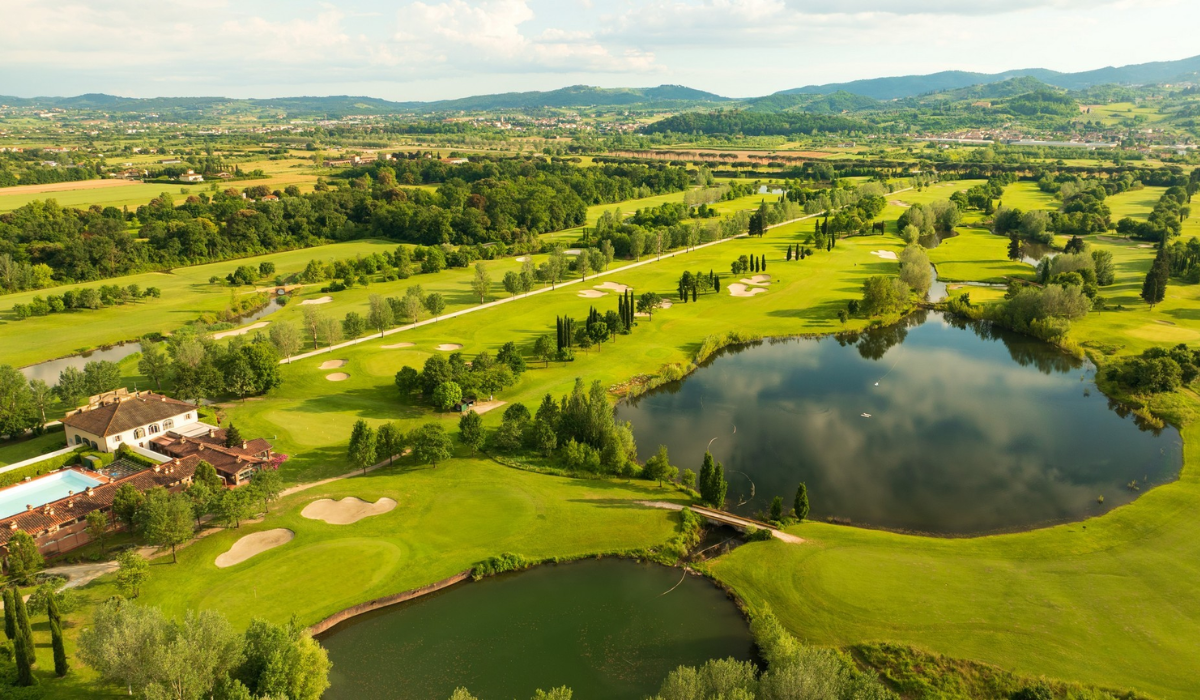
Located just 15 kilometres west of Florence, near Prato, Le Pavoniere Golf & Country Club holds a special place in Tuscan golf history. Set within the grounds of a historic residence that once belonged to the Medicis, the club carries a quiet aristocratic confidence that is entirely in keeping with its surroundings.
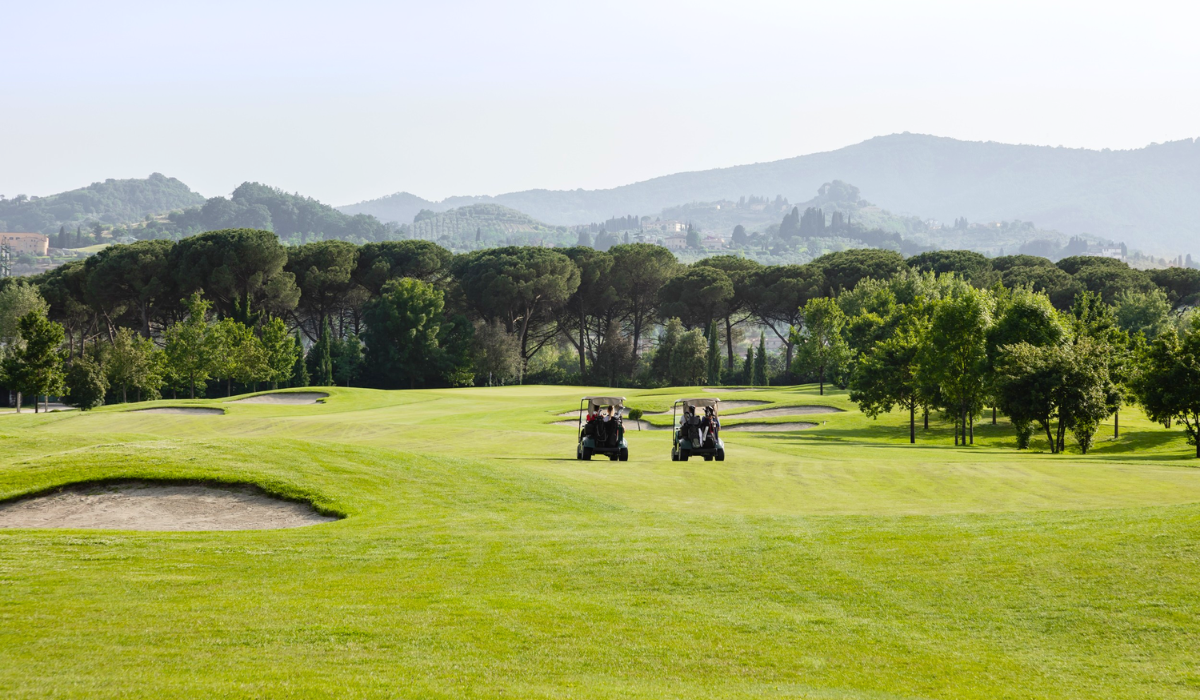
The course was designed by Arnold Palmer, who placed 14 holes across flat terrain threaded with lakes and streams, crossed by small bridges and walls painted in warm Tuscan ochres and oranges. It is, in the American tradition, a water-rich layout with undulating greens and wide, sweeping fairways — but here the context transforms it. Those signature Tuscan cypress trees frame every hole, and the old Medici farmland gives it a depth that a purely modern course could never replicate.
Recent visitor reviews praise Le Pavoniere for its excellent drainage — one of the few courses in the area to stay open and in strong condition after periods of heavy rain — as well as its notably friendly staff and the quality of its post-round pasta. For golfers based in Florence, it remains one of the most rewarding and accessible courses in the region.
Castelfalfi: Where the Mountain Meets the Middle Ages
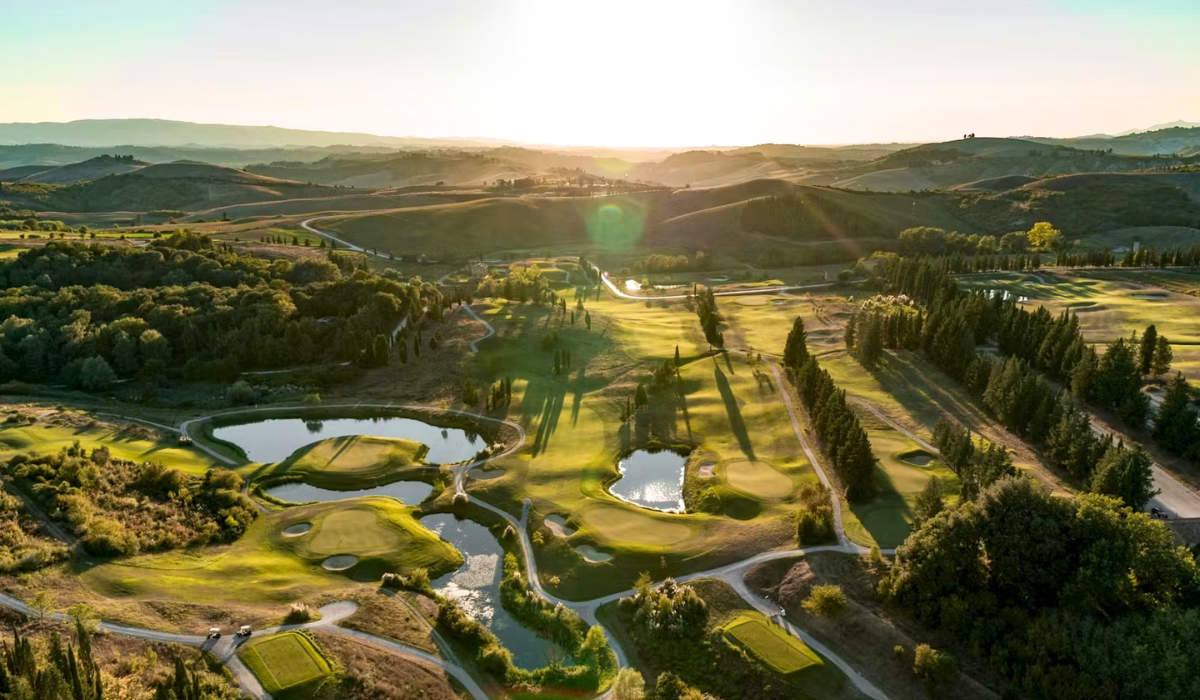
If Le Pavoniere is Tuscany’s most elegant course, Golf Club Castelfalfi is its most dramatic. Situated on a 2,700-acre estate less than an hour’s drive from Volterra — the ancient walled Etruscan city that commands the hills of central Tuscany — Castelfalfi is an experience that challenges the very idea of a golf resort.
The estate itself contains a medieval village, a castello dating to the Middle Ages, vineyards, olive groves, and forests. Golf here is not an add-on to a holiday; it is woven into the fabric of a living, working landscape. The original 18 holes were designed by Pier Luigi Mancinelli and opened in 1991, but two decades later, the course was comprehensively redesigned by award-winning architects Rainer Preißmann and Dr Wilfried Moroder, who transformed it into a 27-hole facility comprising the championship Mountain Course and the 9-hole Lake Course.
Today, Castelfalfi stretches across more than 9,400 metres of fairways, making it the largest golf course in Tuscany. The Mountain Course, at 6,351 metres and par 72, is among the most technically demanding layouts in Italy, with steep elevation changes and water hazards that punish imprecision. The signature 9th hole, a par three played downhill with a 40-metre drop between tee and green, is the kind of hole that photographers dream about. The 18th, played down to a half-island green with the medieval Borgo rising above in the background, is scarcely less memorable.
Castelfalfi has earned a GEO Certified™ eco-label for its sustainability practices — rainwater harvesting, eco-friendly turf management, and a deep commitment to preserving the Tuscan countryside that defines it. And as of January 2025, the resort has begun an exciting new chapter: a redesign led by renowned American architect Tom Fazio, which promises to elevate the course still further while preserving its signature 27-hole layout. For those planning a Tuscany golf trip in the coming years, Castelfalfi is shaping up to be one of the must-visit destinations in all of Europe.
Argentario: Italy’s Only PGA National Course
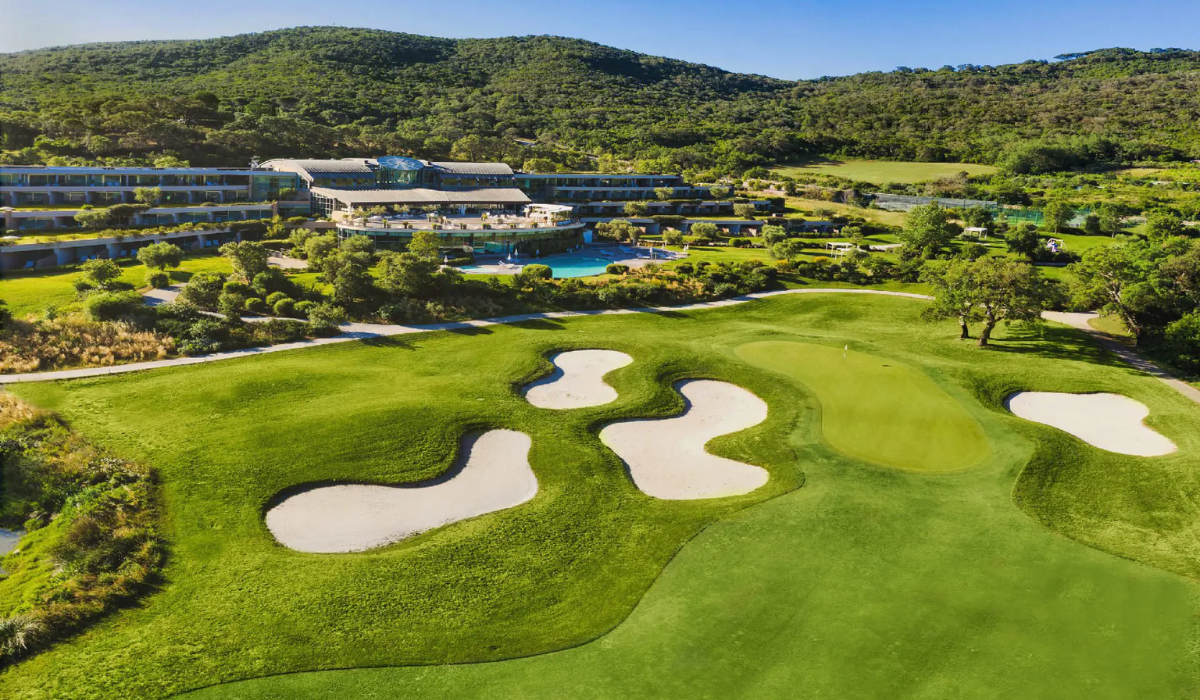
In the southern reaches of Tuscany, where the Maremma coast runs down towards Rome and the island silhouettes of the Tuscan Archipelago emerge from the Tyrrhenian Sea, lies one of Italy’s most prestigious golfing addresses. The Argentario Golf & Wellness Resort near Porto Ercole opened its course in 2006, and in 2019 earned PGA National status — the only course in Italy to hold that distinction.
Argentario’s 18-hole layout covers 6,295 metres at par 71, threading through ancient Mediterranean scrubland and olive groves with occasional sea views that serve as perhaps the most distracting backdrop in Italian golf. The course holds an “Agri Cert” certification for bio eco-compatibility, using only natural products in its maintenance — fitting for a layout set in a protected natural area just five minutes from the Duna Feniglia Nature Reserve.
In 2025, Argentario reached another landmark: it hosted the 82nd edition of the Italian Open on the DP World Tour, from 26 to 29 June, marking the first time the prestigious event had been held at the resort. The Italian Open, which dates back to 1925 and has been won over the decades by names including Bernhard Langer and Francesco Molinari, brought the world’s best European Tour professionals to one of Tuscany’s most naturally beautiful corners. For visiting golfers, the chance to play the same 18 holes that challenged the DP World Tour field is not a small thing.
Beyond the course itself, the resort’s Club House evokes the spirit of a classic Anglo-Saxon golf club — candlelight, leather armchairs, Mediterranean cuisine — reinterpreted through a distinctly Italian lens. The Dama Dama fine-dining restaurant and the Espace Wellness Center round out an experience that rewards both the golfer seeking championship conditions and the traveller seeking la dolce vita.
Terme di Saturnia: Golf Above an Ancient Hot Spring
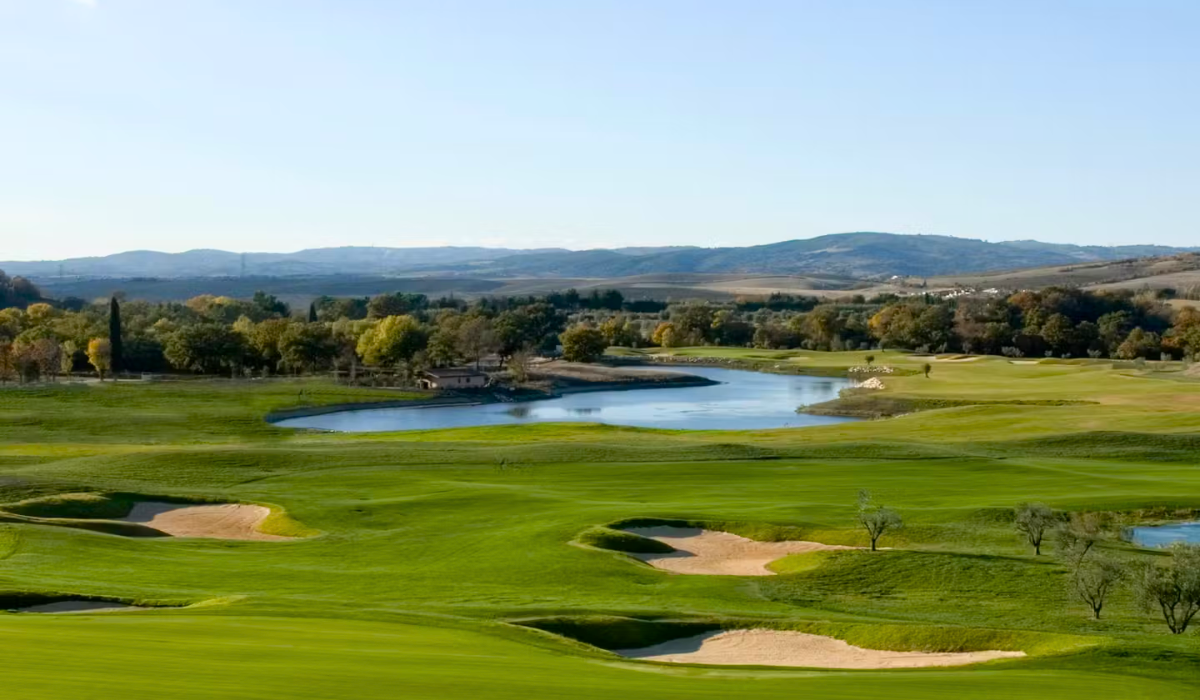
No article about Tuscan golf would be complete without addressing what must be one of the most singular resort experiences in the world. Terme di Saturnia Spa & Golf Resort, set in the heart of the Maremma at the foot of the medieval hilltop town of Saturnia, is built around a natural thermal spring that predates the Etruscan era.
Legend holds that Saturn, God of the Harvest, struck a volcanic crater with a thunderbolt, sending warm, mineral-rich waters rushing across the valley — and the spring has been flowing ever since, at a constant temperature of 37.5°C and at a rate of 500 litres per second. Generations of bathers, from Roman legionnaires to modern wellness seekers, have immersed themselves in those healing waters.
The golf here, designed by architect Ronald Fream, is a GEO-certified, par 72, 18-hole championship course laid across 70 hectares and extending 6,316 metres. It rolls through the Tuscan hills with a careful respect for the natural landscape, offering players the unusual psychological gift of knowing that a thermal spa awaits them at the end of every round. The practice area is extensive, with 43 driving range bays and manicured putting greens.
Within its 120 hectares, the resort houses 124 rooms and suites, a spa and beauty clinic with 53 treatment rooms, and two restaurants — the fine-dining 1919 Restaurant and the Trattoria La Stellata — both serving cuisine rooted in the strong, seasonal flavours of Maremma. Terme di Saturnia is, in the most literal sense, a place that regenerates.
Bellosguardo: A New Voice in Tuscan Golf
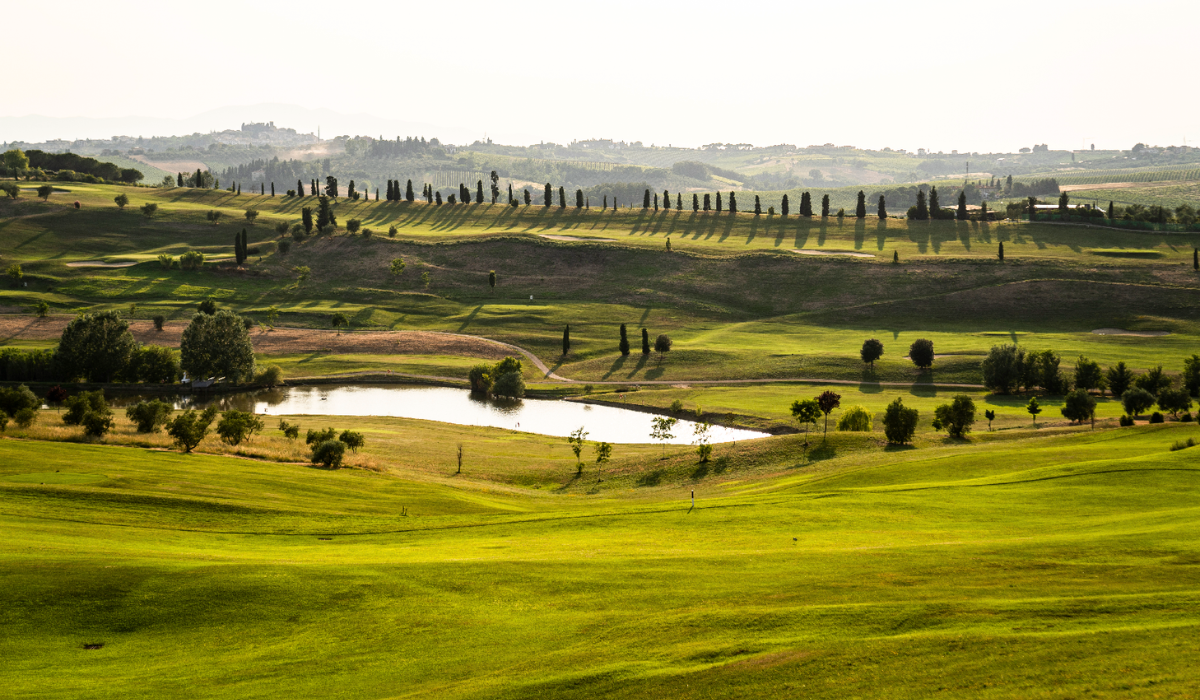
For those willing to venture off the beaten itinerary, Bellosguardo Golf Club near Vinci — the birthplace of Leonardo da Vinci — represents one of the most interesting newer arrivals in Tuscan golf. The 9-hole course, which can also be played as 18, spans an extraordinary 5,800 metres across the hills overlooking the town, offering views over the very countryside that inspired one of history’s greatest minds.
Recent visitors have praised the condition of the greens as exceptional, the fairways solid, and the atmosphere unhurried — the kind of place where you might find yourself playing alone on a Wednesday afternoon with nothing but olive trees and Leonardo’s hills for company. The club’s restaurant serves traditional Tuscan dishes alongside the estate’s own olive oil and wine, and at green fees beginning around €35 for nine holes, it represents remarkable value within the premium Tuscan golf landscape.
Punta Ala and the Coastal Maremma
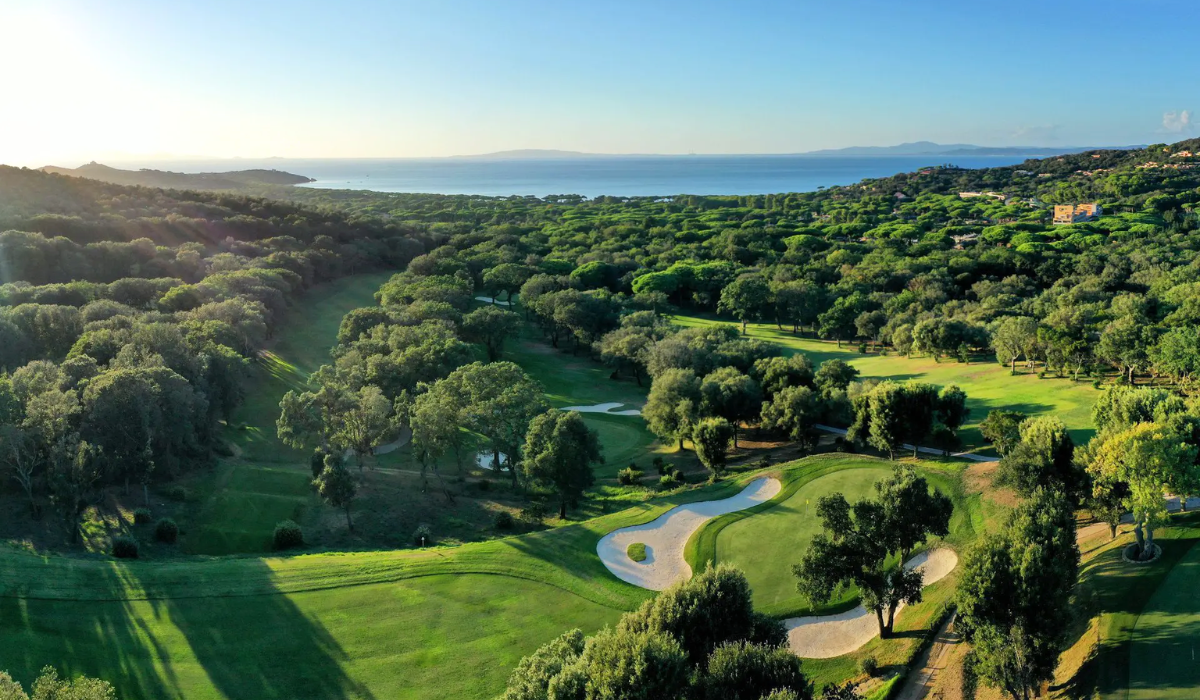
The Golf Club Punta Ala, situated on the southern Tuscan coast near Follonica in the Maremma region, offers a different register entirely. Set against views of the Tyrrhenian Sea and the island of Giglio, with the natural Mediterranean macchia — the dense, aromatic scrubland that carpets the Maremma coast — framing every hole, it is one of Tuscany’s most visually striking seaside courses.
The Maremma as a whole is worth understanding as a distinct golfing destination within Tuscany. Historically one of Italy’s wildest and least inhabited regions, it is characterised by long beaches, thermal springs, Etruscan archaeological sites, and hilltop towns that seem to belong to another century. Argentario, Saturnia, and Punta Ala all sit within this territory, creating a loosely connected golf circuit through some of southern Tuscany’s most evocative countryside.
When to Go
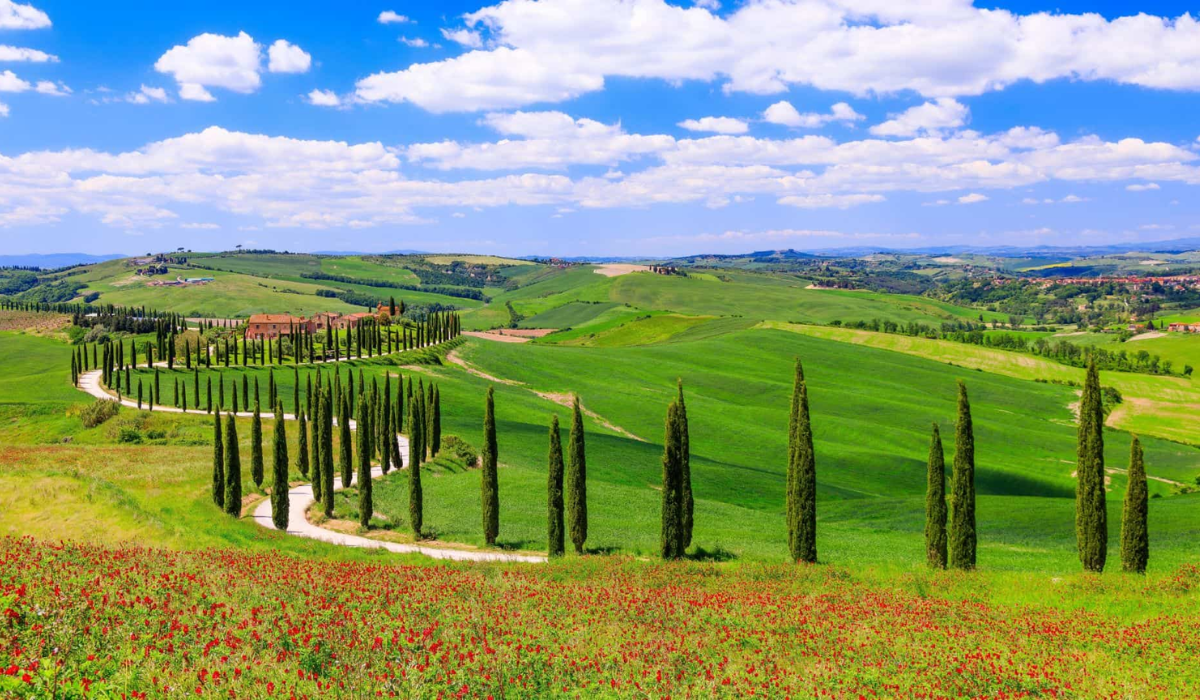
Tuscany is one of those regions where timing genuinely matters — not because it is ever truly inhospitable to golf, but because certain months transform the experience into something otherworldly.
Spring, particularly April and May, is broadly considered ideal. The countryside blooms with wildflowers, poppy fields roll across the Val d’Orcia, and courses that absorbed winter rains play lush and long. Morning dew can linger until mid-morning, so later tee times often provide better ball roll. The light in late April and May in Tuscany is the light that Renaissance painters spent their careers trying to capture.
Autumn, particularly September and October, rivals spring for conditions and surpasses it for atmosphere. The grape harvest fills the Chianti region with festivals and the scent of crushed grapes; white truffles appear in markets from October; the hills turn amber and ochre in ways that feel deliberately composed. Course conditions are typically at their best after summer’s stress has lifted. September temperatures hover between 18°C and 25°C — warm enough for short sleeves, mild enough for 18 holes without suffering.
Summer is entirely playable, particularly on coastal courses where sea breezes moderate the heat, but July and August on inland courses can reach 30°C or above, making early morning tee times a necessity rather than a preference. Winter, while quieter, remains viable on many courses, with some closing briefly in January for maintenance.
Beyond the Fairways
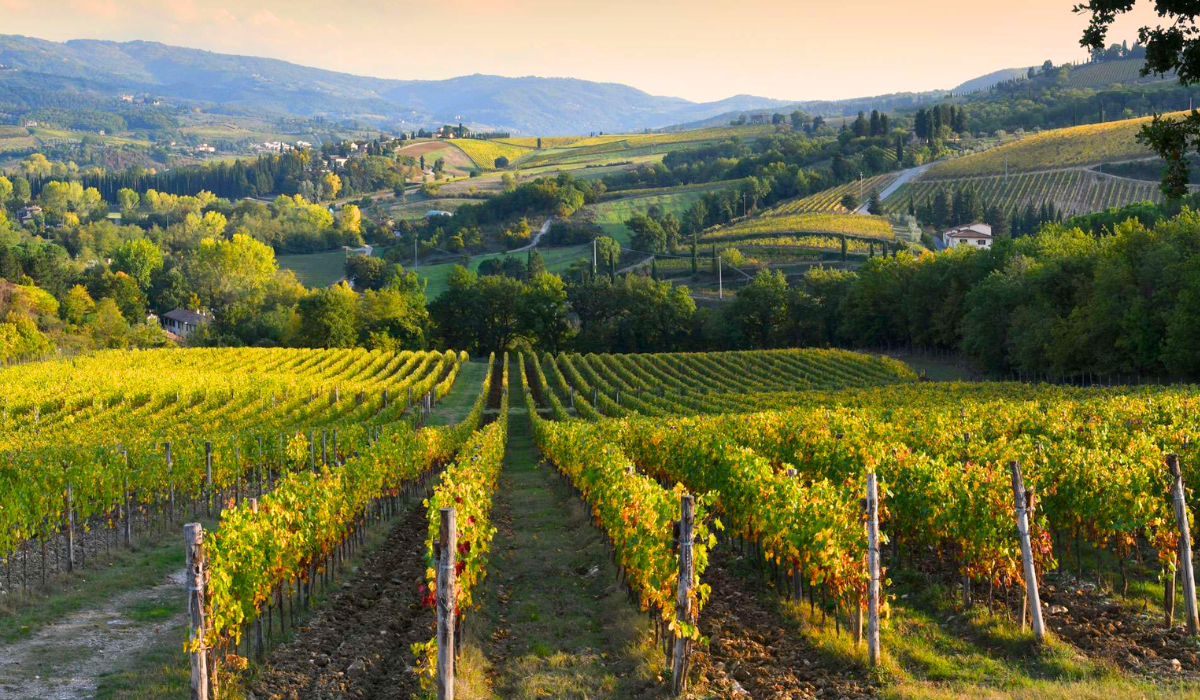
Part of what makes a Tuscan golf holiday so enduring in the memory is everything that happens between rounds. The region’s cultural density is extraordinary: within easy reach of virtually any course, you will find medieval hill towns, Etruscan necropolises, world-class wine estates open for tasting, Renaissance frescoes in village churches that nobody else is visiting, and trattorias where the pasta has been made by the same family for three generations.
Florence, Siena, San Gimignano, and Montepulciano reward extended visits. The Chianti wine road between Florence and Siena is one of Europe’s great scenic drives, passing through vineyards that produce the Sangiovese-based reds that pair so naturally with the hearty, unfussy cooking of the region — bistecca alla Fiorentina, ribollita, pappardelle with wild boar ragù.
For those staying near Saturnia or the southern Maremma, the thermal pools at Bagno Vignoni and the open-air hot springs at Cascate del Mulino near Saturnia itself offer a kind of post-round recovery that no cold plunge pool can match. And the Argentario coast — with its two ancient towns of Porto Ercole and Porto Santo Stefano facing each other across a lagoon — has a melancholy, out-of-season beauty even in the depths of winter.
Planning Your Tuscany Golf Trip
For visiting golfers, Tuscany’s infrastructure is well-developed. Florence’s Peretola Airport handles domestic and short-haul European connections, while Pisa’s Galileo Galilei Airport is the region’s principal international gateway. For southern courses like Argentario and Saturnia, Rome’s Fiumicino Airport, roughly 90 minutes by road, is often more convenient.
A handicap certificate or card is required at most clubs, and advance booking is strongly recommended, particularly during spring and autumn peak seasons. Many properties offer golf package deals that bundle accommodation, green fees, and dining into single rates — typically offering meaningful value over booking each element separately.
The Toscana Resort Castelfalfi, Argentario Golf & Wellness Resort, and Terme di Saturnia all operate as full golf resorts with on-site accommodation, making them natural bases from which to explore surrounding courses on multi-day visits. For those preferring to stay in Florence or Siena and drive to courses, the majority of northern and central Tuscany’s clubs are reachable within an hour, making day trips straightforwardly practical.
Golf in Rome: Where History Meets Championship Fairways
The Best 36-Hole Golf Resorts Around the World