
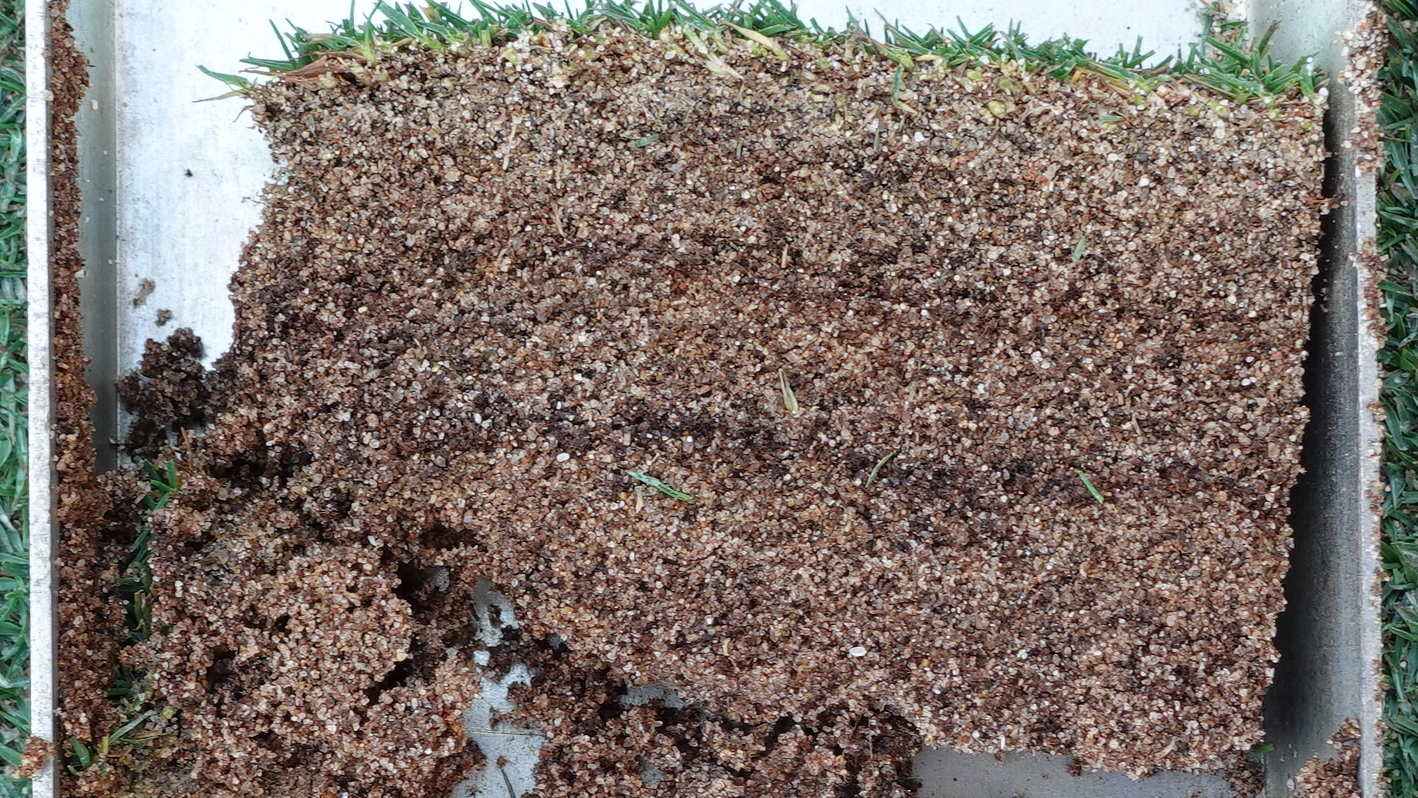
I’ve looked at soil organic matter (SOM) and OM246 test results for putting greens of different species. In the top 5 cm (that’s about 2 inches), there will be some SOM and there will also be undecomposed material. When the undecomposed material forms a layer above the soil it is called “thatch;” when mixed with soil (or sand) this material is called “mat.” OM246 tests don’t remove thatch or mat, but SOM tests do. Therefore, the difference between the two test results can be taken to be the material that comprises the mat.
I took recent data from multiple species from multiple courses, and fit a model to find probability intervals for the species means.
My data show that bermudagrass and korai (Zoysia) greens tend to have more of this undecomposed material, and bentgrass and fescue greens tend to have less. I find it interesting to look at this value. I have seen:
- the thatch-mat organic material go down by up to 2% (20 g/kg) in one year in response to cultivation and sand topdressing
- increase by almost 1% in one year as a green is grown-in
- decrease by 1% over a three year period through careful management of the growth rate while adding sand at rates less than half standard recommendations
OM246 test results provide much of this information too, but by looking at this additional value, we are able to isolate our focus onto the material that makes up the thatch-mat. This can then be monitored for change over time, or in comparison to what is normal for greens of the same species.
