
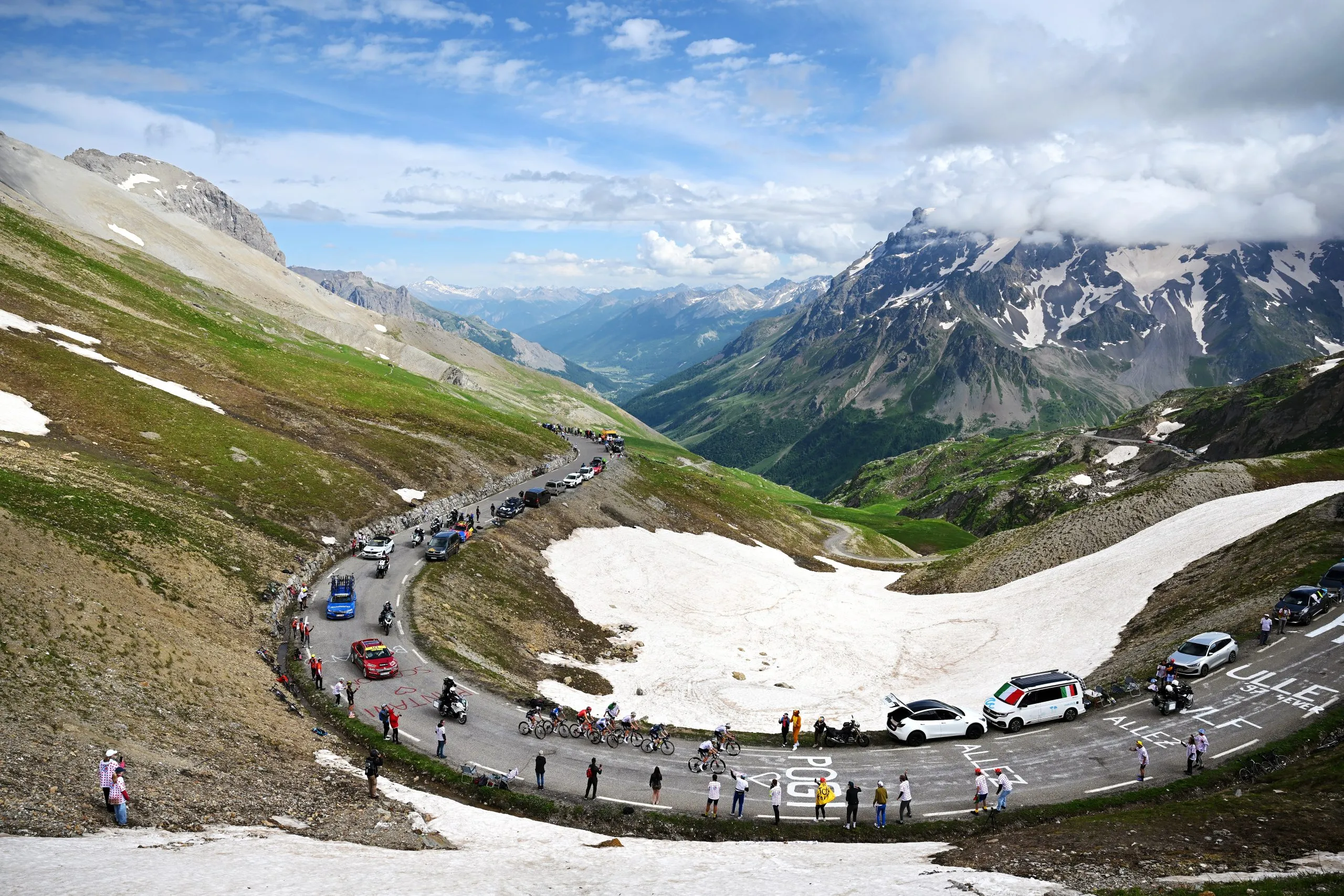
The Tour de France might be 21 whole days of racing totalling more than 3,000km, but in reality, the winner of the yellow jersey is decided on just a handful of mountain passes.
The 2026 race will have the peloton travelling through the Pyrenees, Massif Central, Vosges, Jura and Alps mountain ranges, with several attritional stages clustering some of France’s hardest climbs in order to separate the good from the great from the GOAT.
We’ev skimmed through this year’s route – which you can get a full preview of here – to look at the 11 climbs that are set to make or break general classification hopes.
Stage 6, Thursday 9th July: Col d’Aspin and the Col du Tourmalet
After dipping a toe into the Pyrenees as early as Stage 3, the race dives in for the first proper mountain day on Stage 6, which takes them from Pau to Gavarnie-Gèdre over 186.2km, which a backloaded trio of big climbs, two of which make this list.
Col d’Aspin (12km, 6.5%)
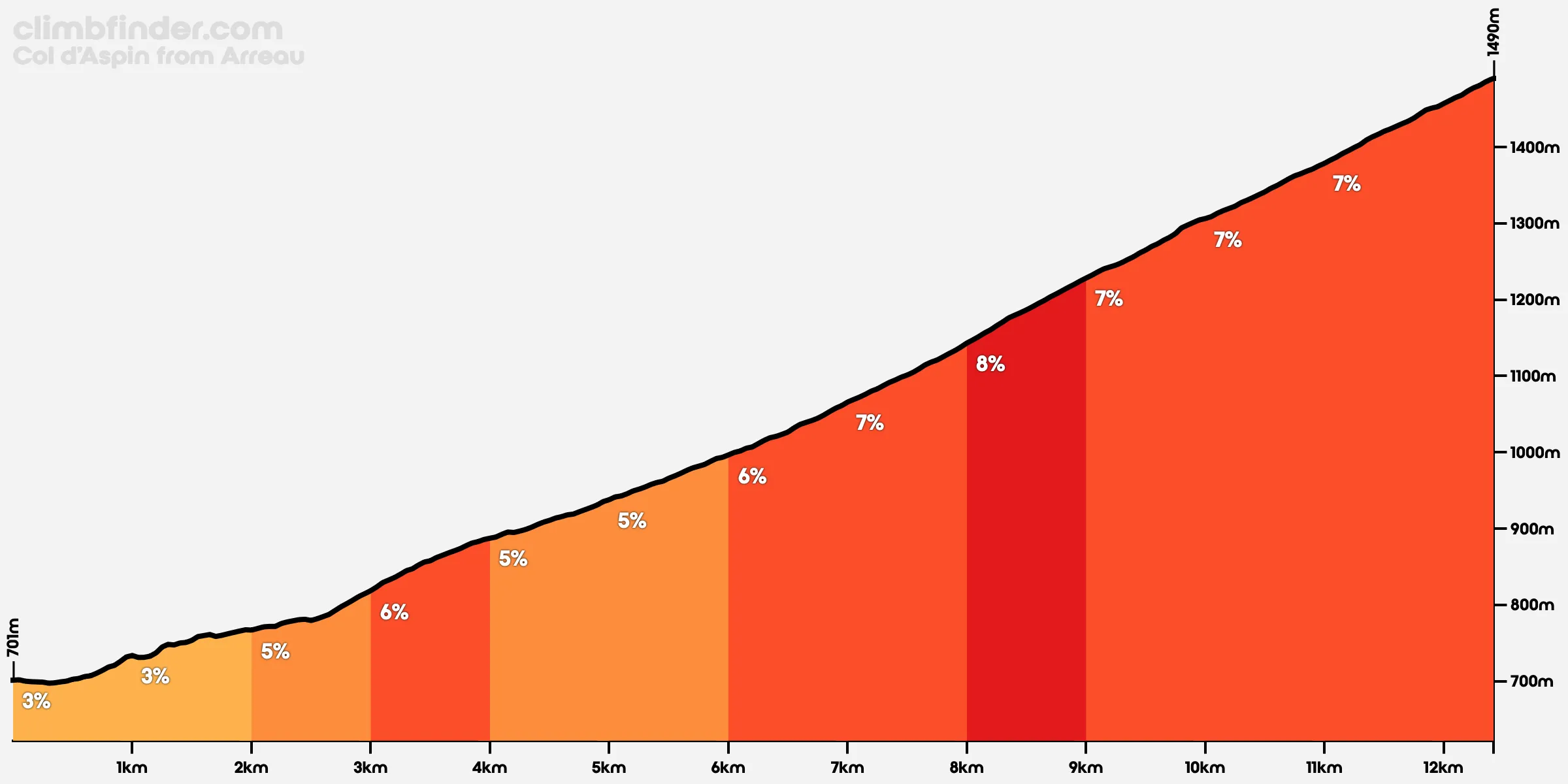
The Col d’Aspin is one of the most-used climbs in the Tour de France with 36 ascents to its name so far, the last one being in 2025 on the stage to Superbagnères. That day it came after the Tourmalet, but the pair come in reverse this year, taking on both climbs from the opposite direction. So after about 100km of this stage, the 12km ascent from Arreau will kick off the 2026 mountains, and with – hopefully – only small time gaps between the favourites, the speed will be high.
Col du Tourmalet (17.1km, 7.3%)
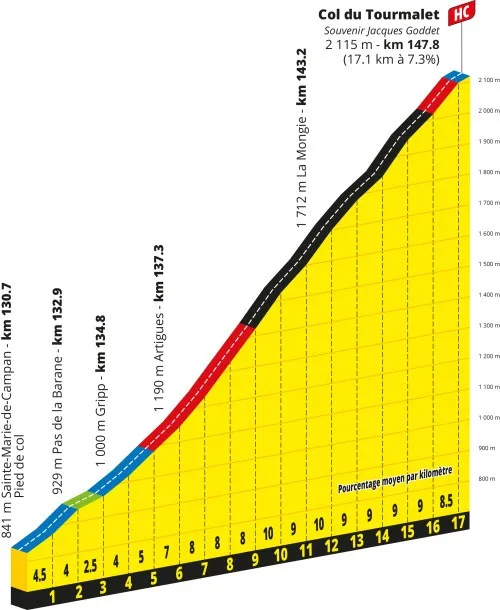
The Tour loves the Aspin, but the Col du Tourmalet is its favourite child, welcoming riders on 62 different stages, the first in 1910 while still unpaved. That’s partly why each time the first rider over its summit receives the Souvenir Jacques Goddet (named after the Tour’s second race director) and €5,000.
While the race normally climbs from Luz-Saint-Saveur, this year it’s the eastern ascent from Sainte-Marie-de-Campan, which is ever-so-slightly shorter at 17.1km but still with a gnarly 7.3% average gradient and a final 10km that sticks around 9%.
With the Aspin used to get the blood pumping, the Tourmalet’s mean slopes will decimate the peloton. While it’s not the final climb on this stage, the ascent up to Gavarnie-Gèdre averages just 3.7%, so if any gaps are made there they’ll be from the attrition of these two brutes.
Stage 14: Grand Ballon, Ballon d’Alsace and Col du Haag
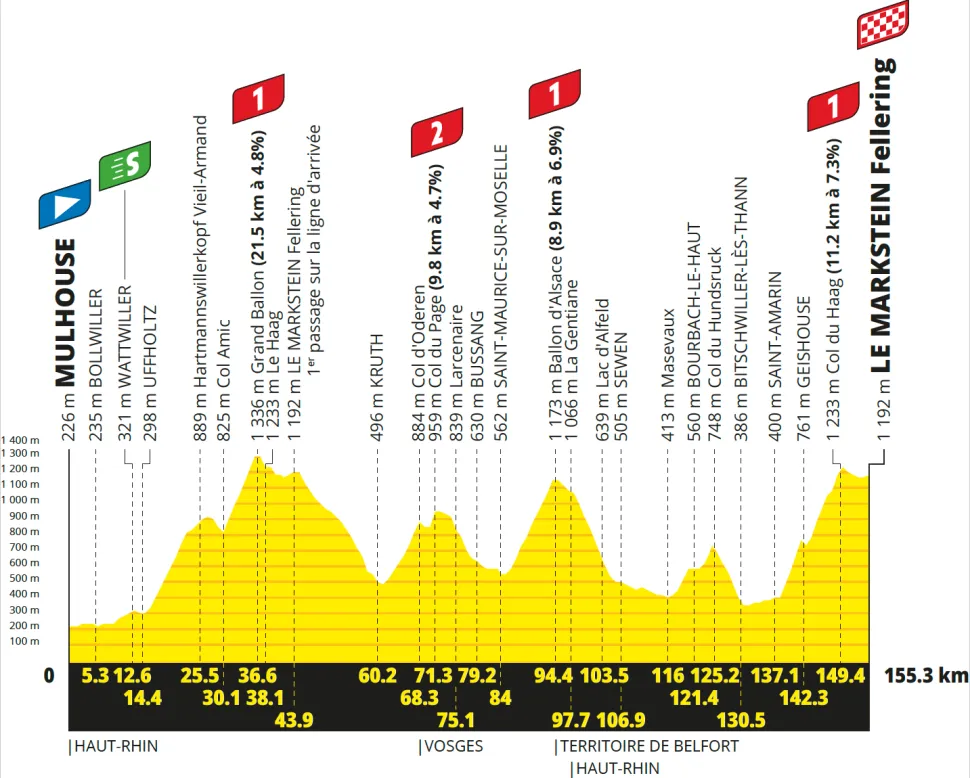
Three Vosges beasts headline Stage 14, which is one of the shortest days in the race at just over 155km but packs one heck of a punch with the Grand Ballon (21.5km, 4.8%), Ballon d’Alsace (8.9km, 6.9%) and Col du Haag (11.2km, 7.3%).
Grand Ballon (21.5km, 4.8%)
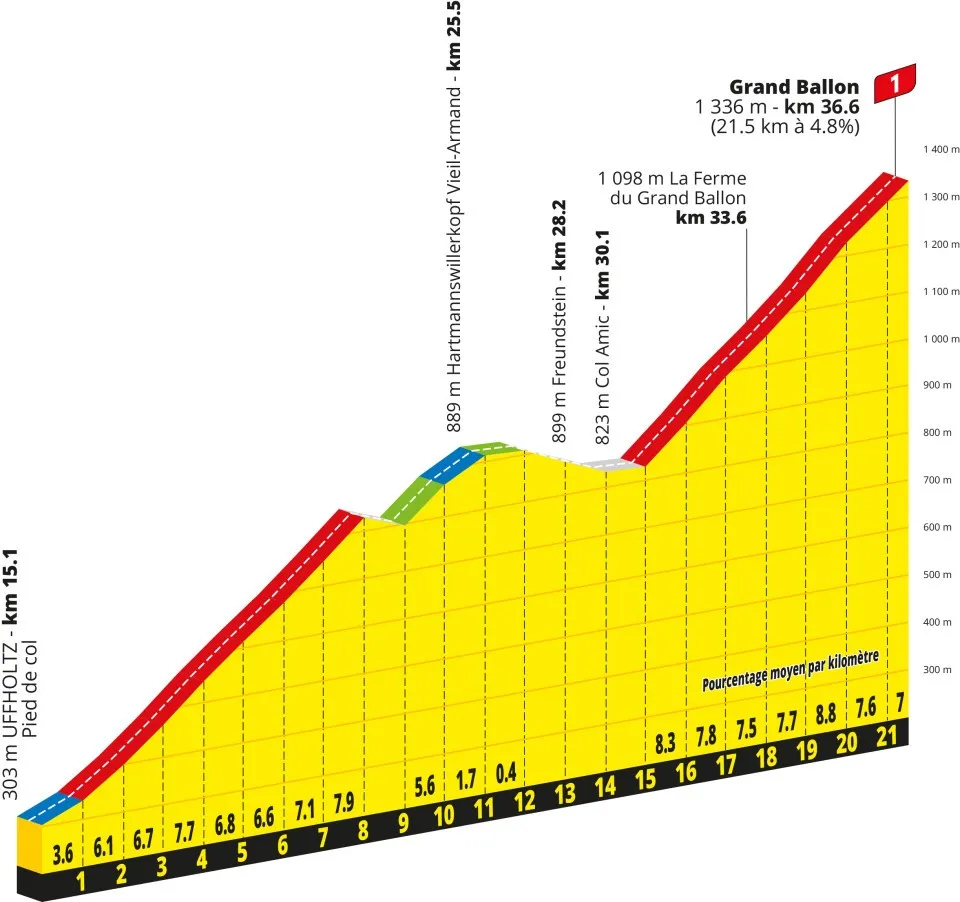
This isn’t just any old ballon. No, the Grand Ballon is the second-longest climb of the 2026 Tour at 21.5km, though in truth it’s more of a two-parter thanks to a 7km plateau in the middle, but that also means its 4.8% average gradient is deceptive. In fact, the first uphill stretch is 8km at around 7%, and the final 6.7km hovers closer to 8%. And all that comes almost straight out of the gate on the stage, so anyone on an off day will be suffering faster than you can say Hartmannswillerkopf.
Ballon d’Alsace (8.9km, 6.9%)
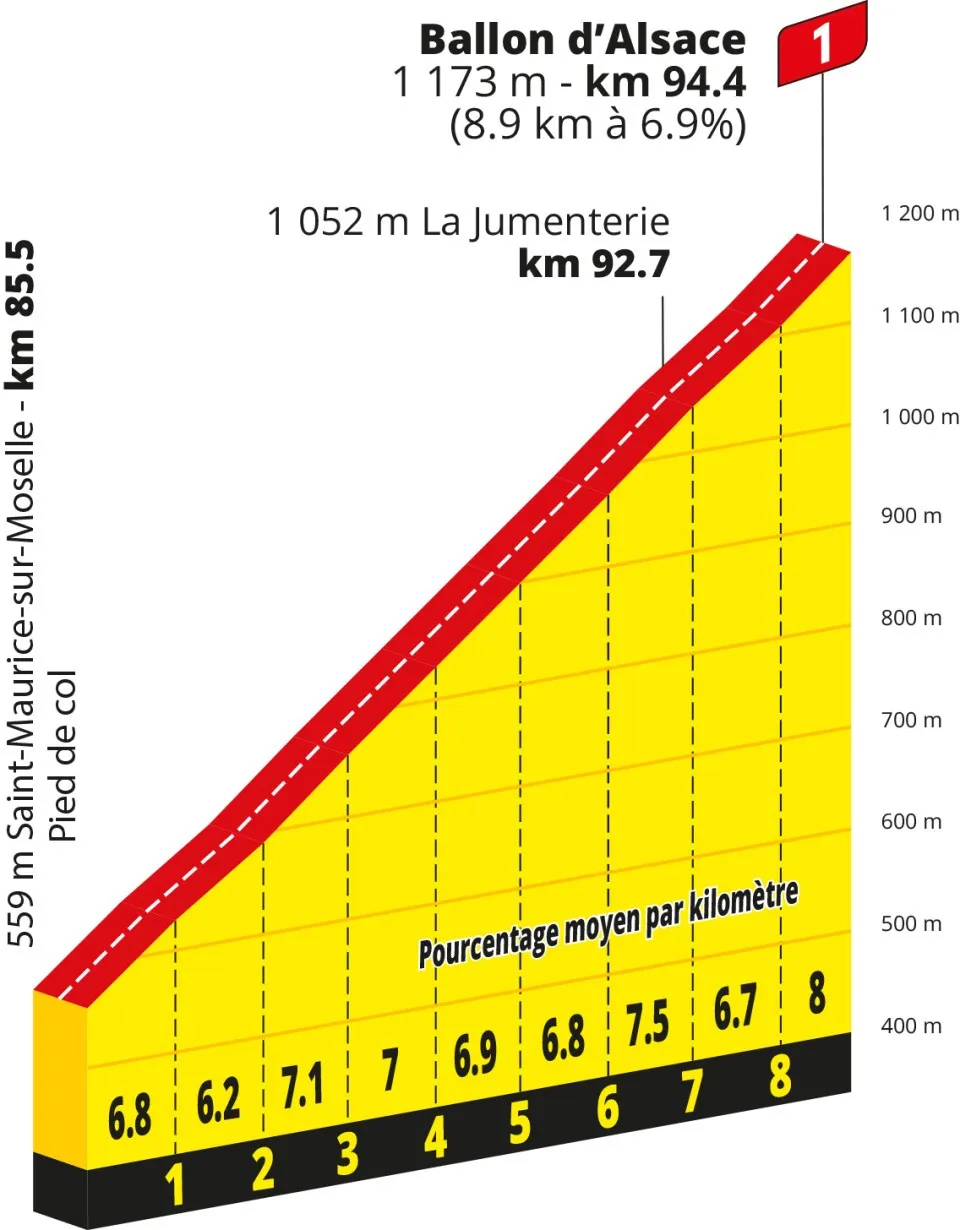
It’s one ballon after another in this Tour, because later that day the peloton will take on the Ballon d’Alsace for the second time in two days, with a test run the day prior on an overall much lighter parcours. There’s no hiding on this climb, with a very consistent gradient sticking around 6.9% until the summit.
Col du Haag (11.2km, 7.3%)
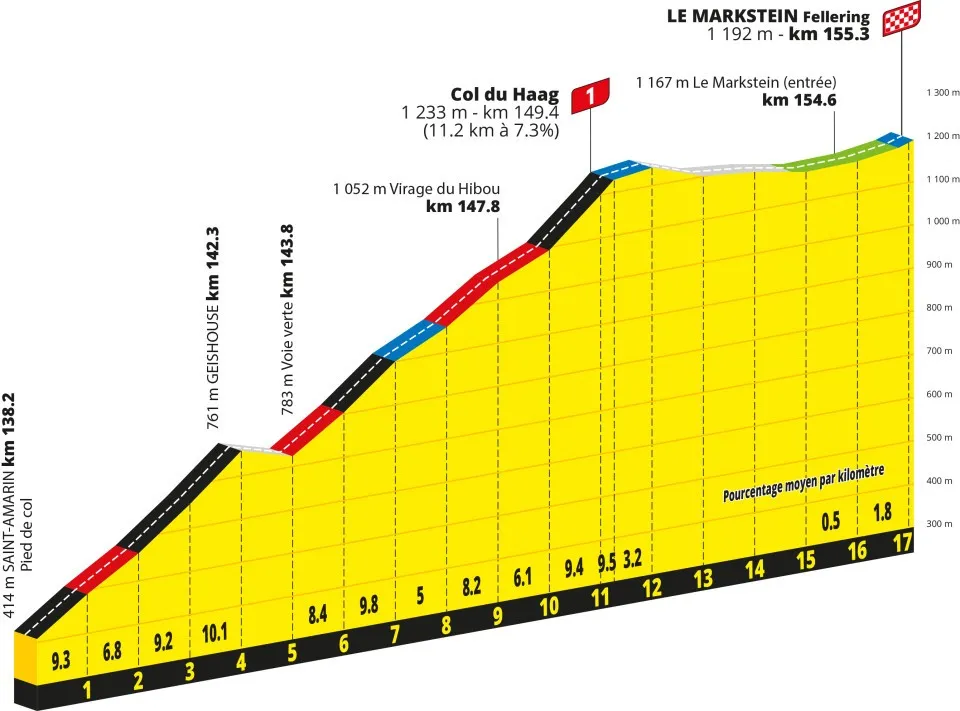
The last climb of that stage comes in the form of the Col du Haag, an 11.2km slog that hits a maximum gradient of 10.1% in the opening 4km, but tips back towards 10% right at the end to set up a potential stage-sealing attack. With a flat-ish 5km to the finish line waiting after the summit, any time gains will need to be on the slopes of the Haag.
Stage 15: Plateau de Solaison
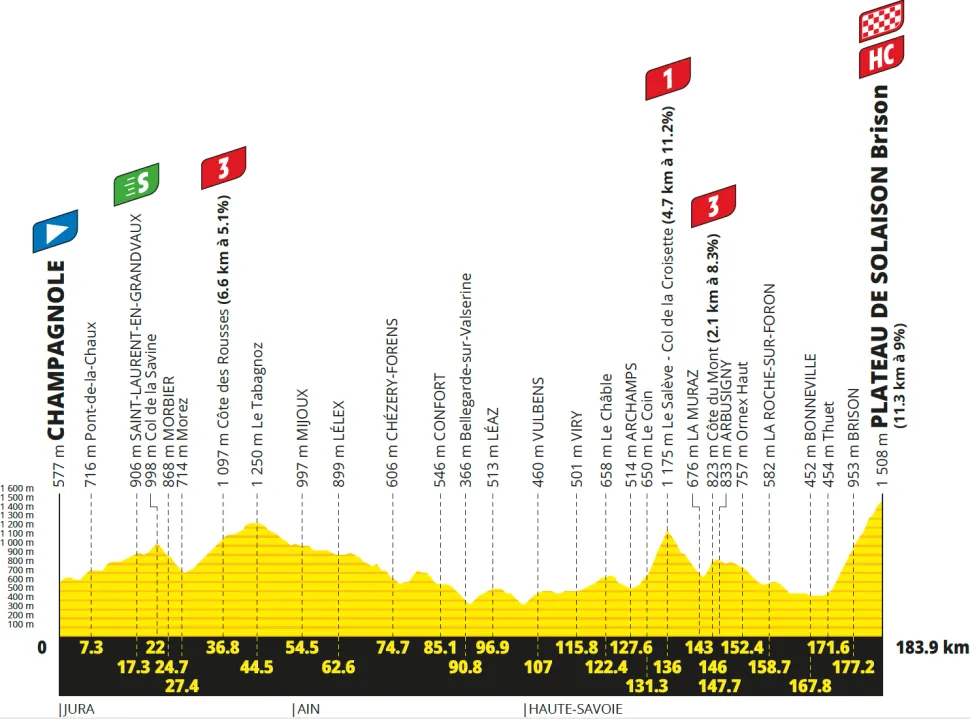
Stage 15 sees the first HC summit finish of the race in the Plateau de Solaison, which is nestled close to the borders of Switzerland and Italy.
Plateau de Solaison (11.3km, 9.1%)
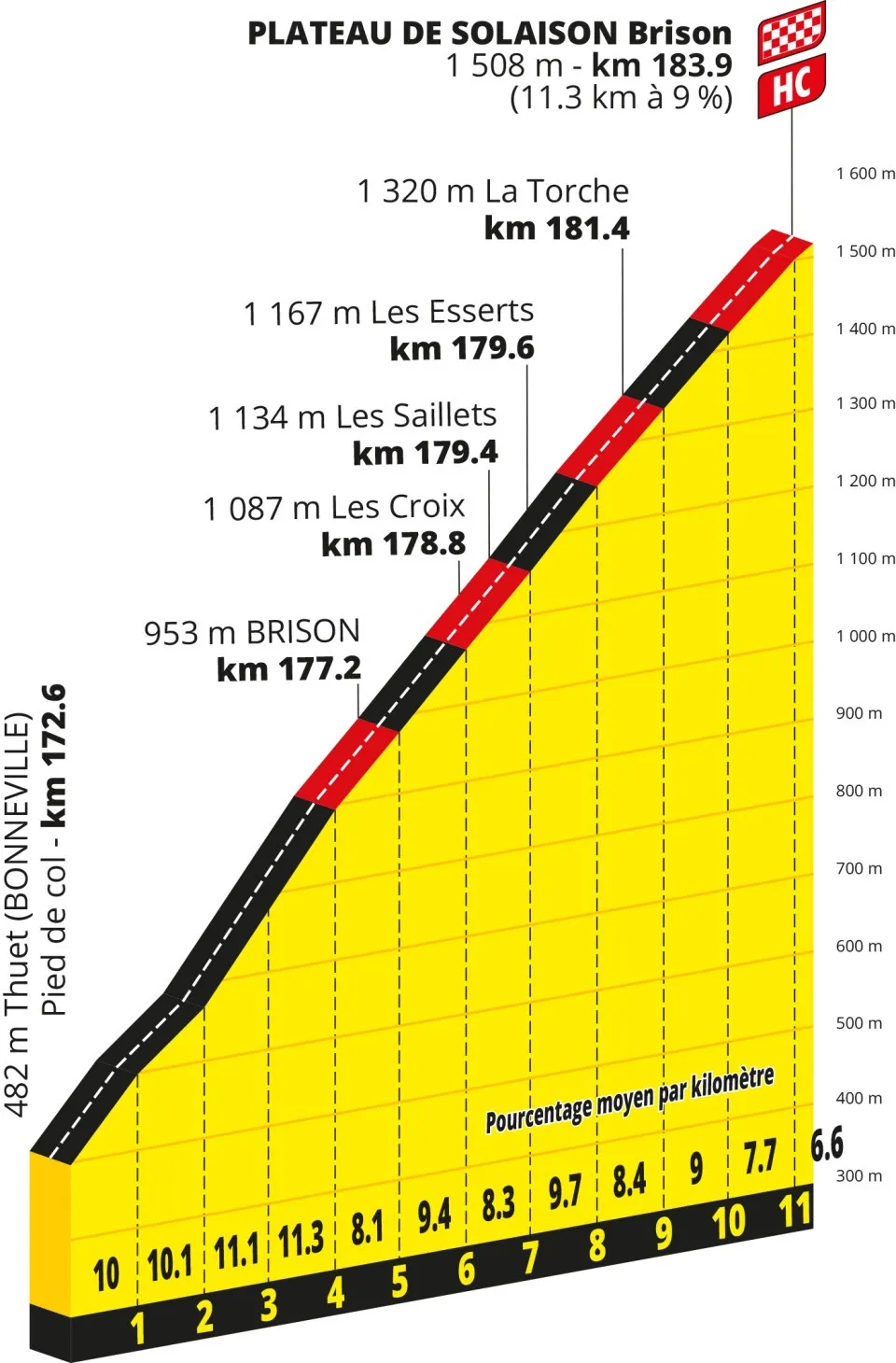
The Plateau de Solaison is approached via Thuet and features double-figure gradients in the first half, hitting a maximum 11% approaching the 3.5km mark where the hairpins are most condensed.
This will be the climb’s debut in the Tour having previously been deployed at the Tour Auvergne-Rhône-Alpes a trio of times, including the final stage of this year’s edition when Isaac del Toro trounced the field on his way to the overall victory.
This might be a day for Valentin Paret-Peintre considering he’s from the Haute-Savoie region and he’s stated his intentions of the polka dot jersey. Well, he can get in the breakaway only to be cruelly robbed of the stage by Tadej Pogačar.
Stage 19: Alpe d’Huez
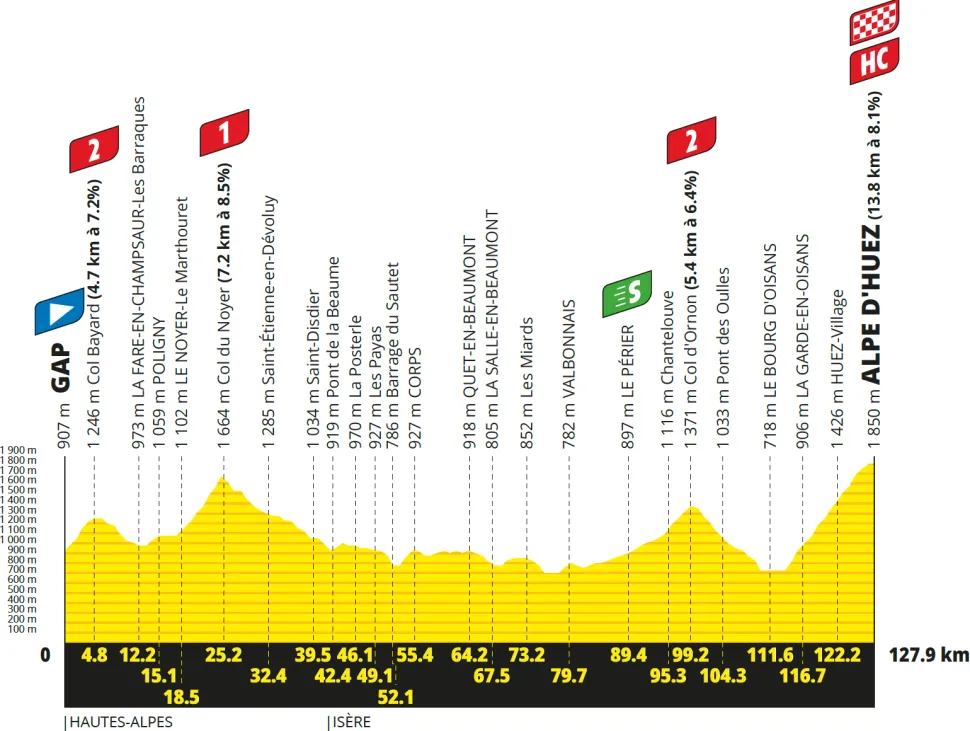
This day is all about Alpe d’Huez and is the shortest non-TT stage apart from the final day in Paris.
Alpe d’Huez (13.8km, 8.1%)
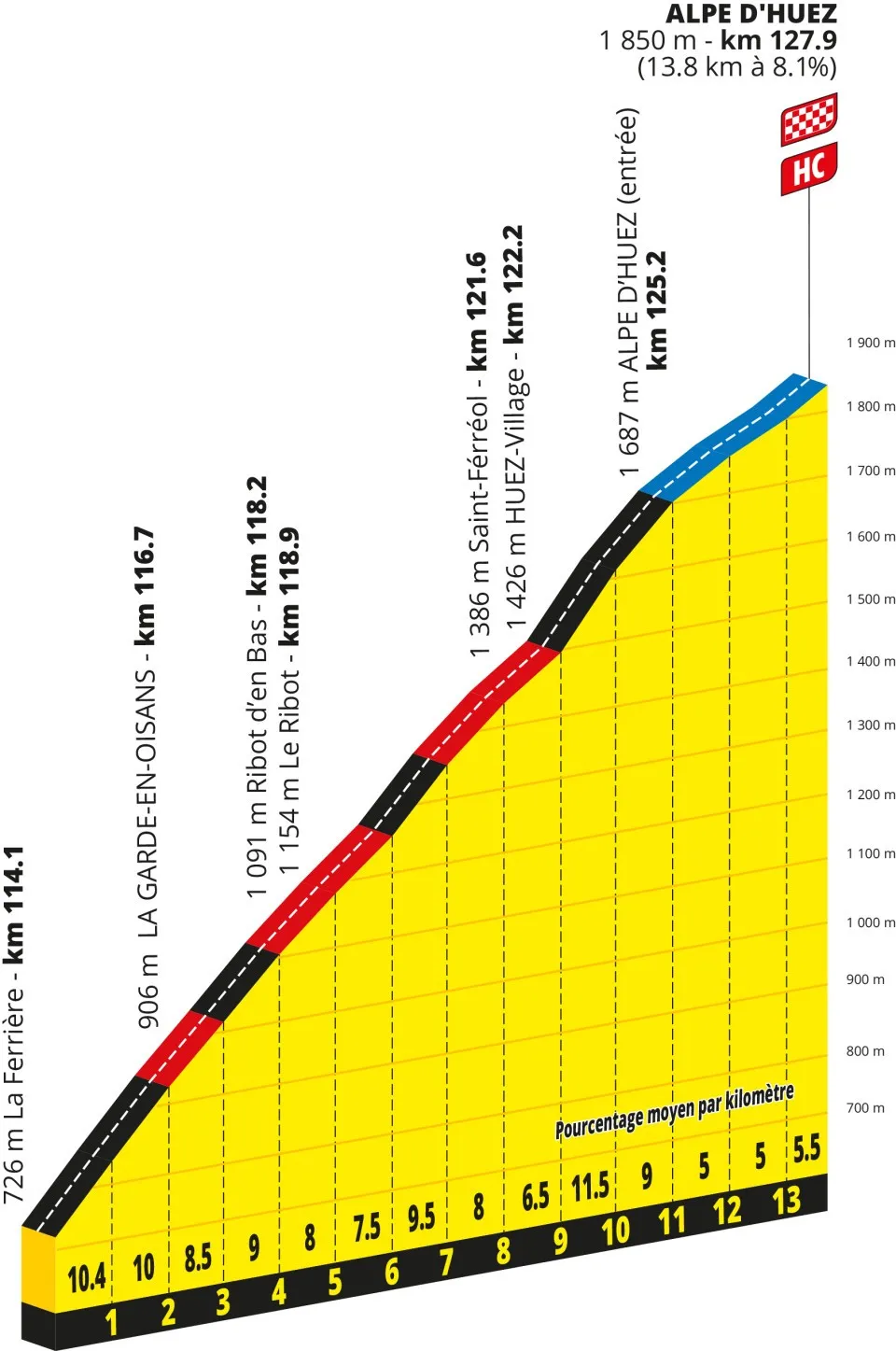
One of the most iconic climbs in cycling, Alpe d’Huez is being used for back-to-back finishes in 2026. Stage 19 is the only time the peloton will take on the legendary climb in its entirety, with 21 bends over 13.8km and an average gradient of 8.1%.
In theory this should be another legendary day in the rich history of Alpe d’Huez. With the length of the stage and relatively light parcours coming before it, there is a very high chance that Marco Pantani’s long-standing record gets broken. However, the following day brings this year’s queen stage, so riders will need to have something left in their legs for one final showdown…
Stage 20: Col de la Croix de Fer, Col du Galibier, Col de Sarenne and the last bit of Alpe d’Huez again
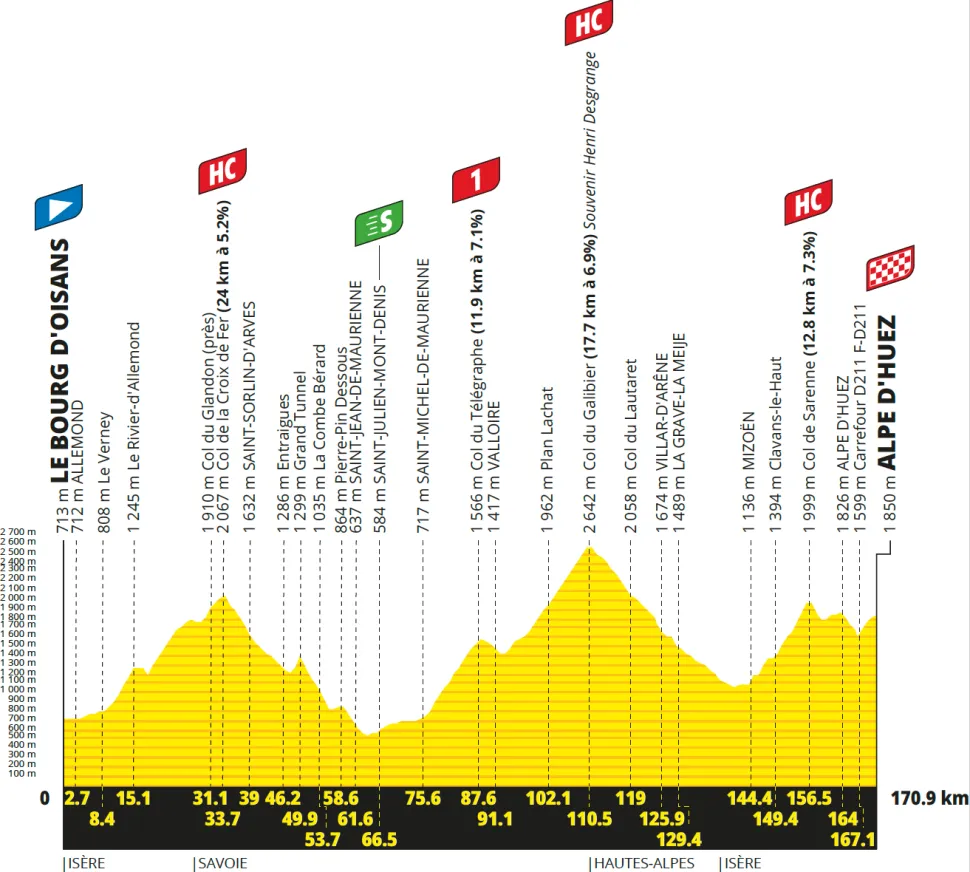
An absolute corker of a penultimate day and an absolute brute on a L’Étape du Tour route. This stage has the most elevation of any in the 2026 edition, packing in almost 5,500m of climbing from Le Bourg d’Oisans at the foot of Alpe d’Huez, round a loop of three of the areas hardest climbs to finish with the final 3.7km of Alpe d’Huez again. This is almost a backwards version of Tom Pidcock’s 2022 Alpe d’Huez stage win, which began ascending the Galibier via the Lautaret, descending via the Télégraphe and climbing the Croix de Fer from Saint-Jean-de-Maurienne before finishing on Alpe d’Huez.
Col de la Croix de Fer (24km, 5.2%)
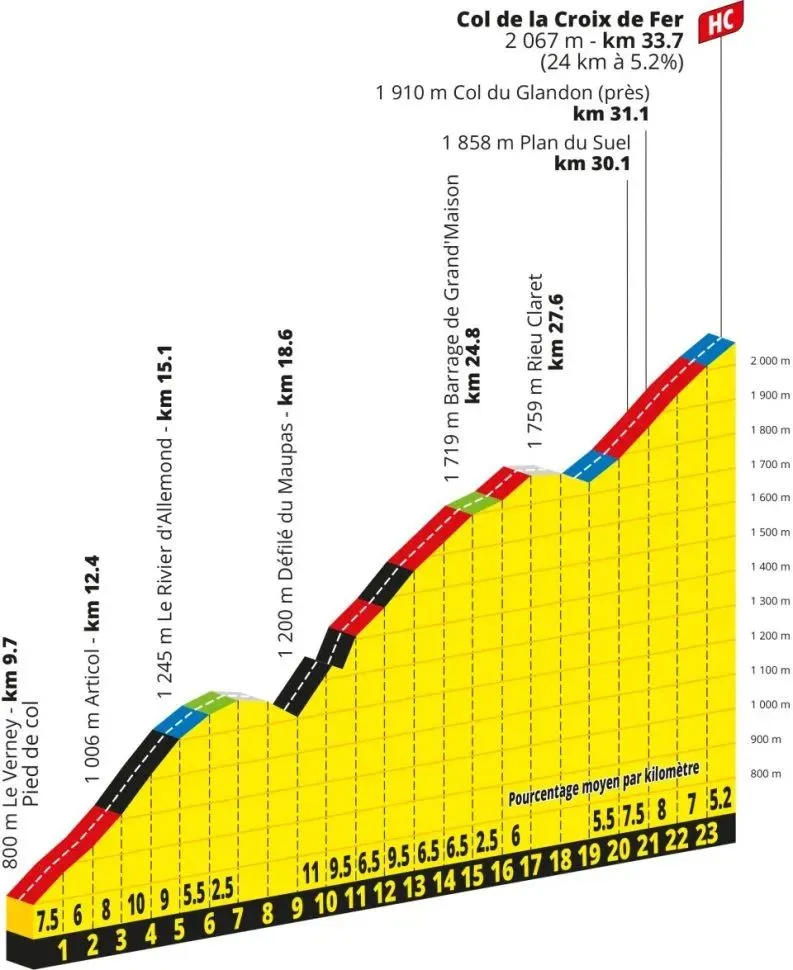
The this side of the Col de la Croix de Fer is a climb in three parts, and none of them are easy. The middle section is the hardest though, with the 7km stretch consistently flirting with double figure gradients. This is the longest climb in the race at 24km in total, just snatching the crown from the Grand Ballon, though it hides a pair of 2km downhill sections.
Col du Télégraphe (11.9km, 7.1%) and Col du Galibier (17.7km, 6.9%)
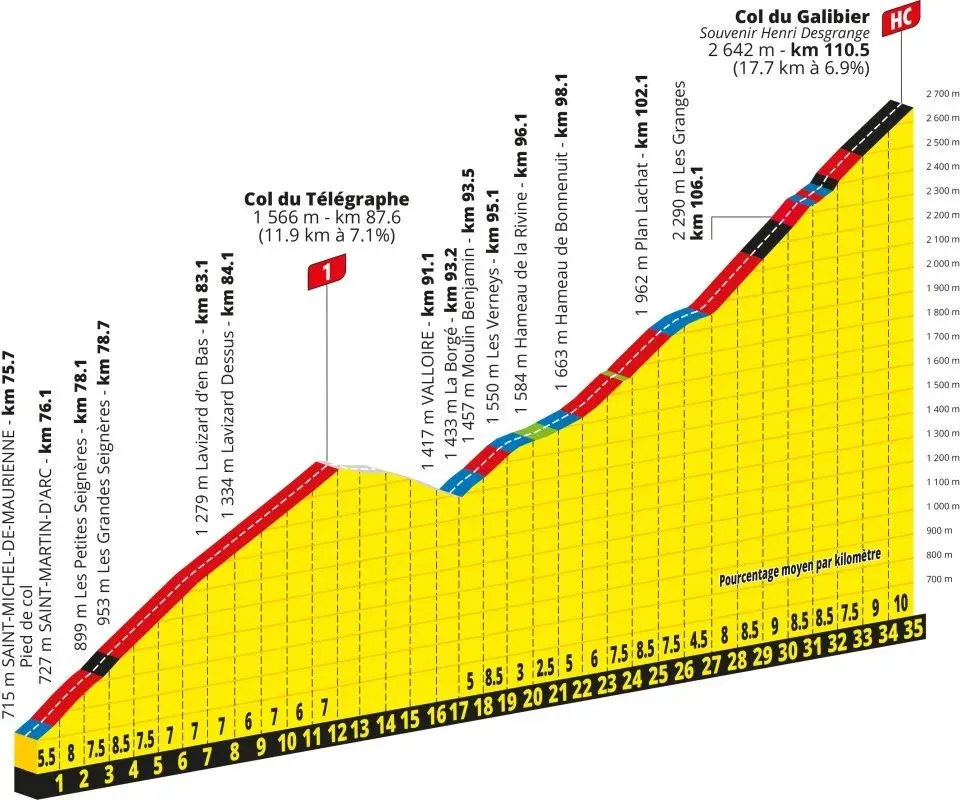
The Col du Télégraphe serves to tee-up the Col du Galibier but is a killer in itself with its 7% gradient and no relenting for 12km.
After a quick 5km to catch their breath, the peloton head upwards once more on the mammoth Col du Galibier, another one of the Tour’s greatest icons. The real damage of the day will be done on this climb as the mountain train/s put the pressure down and any tired legs will be gasping for breath as the altitude shoots up to over 2,600m and the gradient gets steeper as the summit approaches,
This first rider over the summit of the Galibier receives the Souvenir Henri Desgrange – named after the race’s first director and awarded each year on the Tour’s highest point – and gets €5,000.
Col de Sarenne (12.8km, 7.3%)
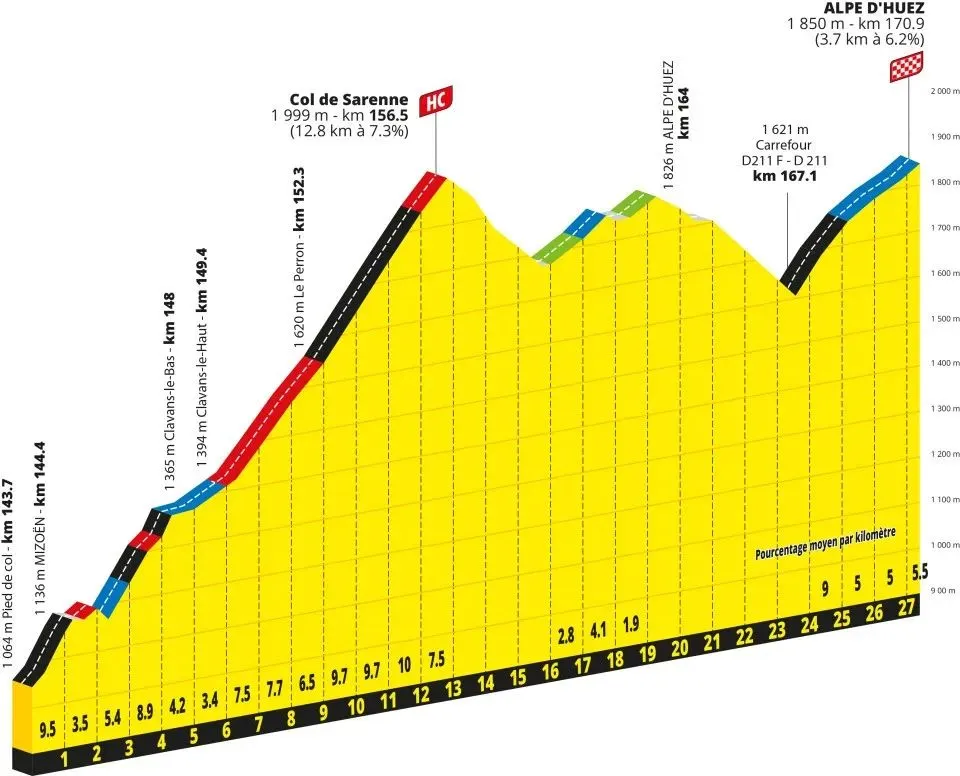
The final full mountain climb of the 2026 Tour de France is the Col de Sarenne, the backdoor to Alpe d’Huez, which has been controversially used as a descent before but makes its debut as an ascent with a fresly laid surface.
A couple of moments of respite make the 7.5% total gradient deceptive as most of the climbing hovers around 10%, with the second half of the climb especially intimidating given the amount of pain already inflicted on this stage. But if the Sarenne somehow isn’t decisive, there’s still one more bonus climb to contend with…
Alpe d’Huez (3.7km, 6.2%)
This is our ‘ish’ climb. It’s not the full Alpe d’Huez, it’s not categorised, but it is the final 3.7km of Alpe d’Huez and it is the final nail in this year’s Tour.
While it’s not the full shabang, this is the last chance for anybody not in contention in Paris, which these days is anybody not named Tadej Pogačar, who’ll probably be solo on this climb too. On the off chance there is still racing to be done here, the opening kilometre at 9% should light the fuse for any final attacks before the final 3km stick around 5% and the the winner takes their final bow on the Alpe.
For more of our Tour de France coverage, visit our hub page.