
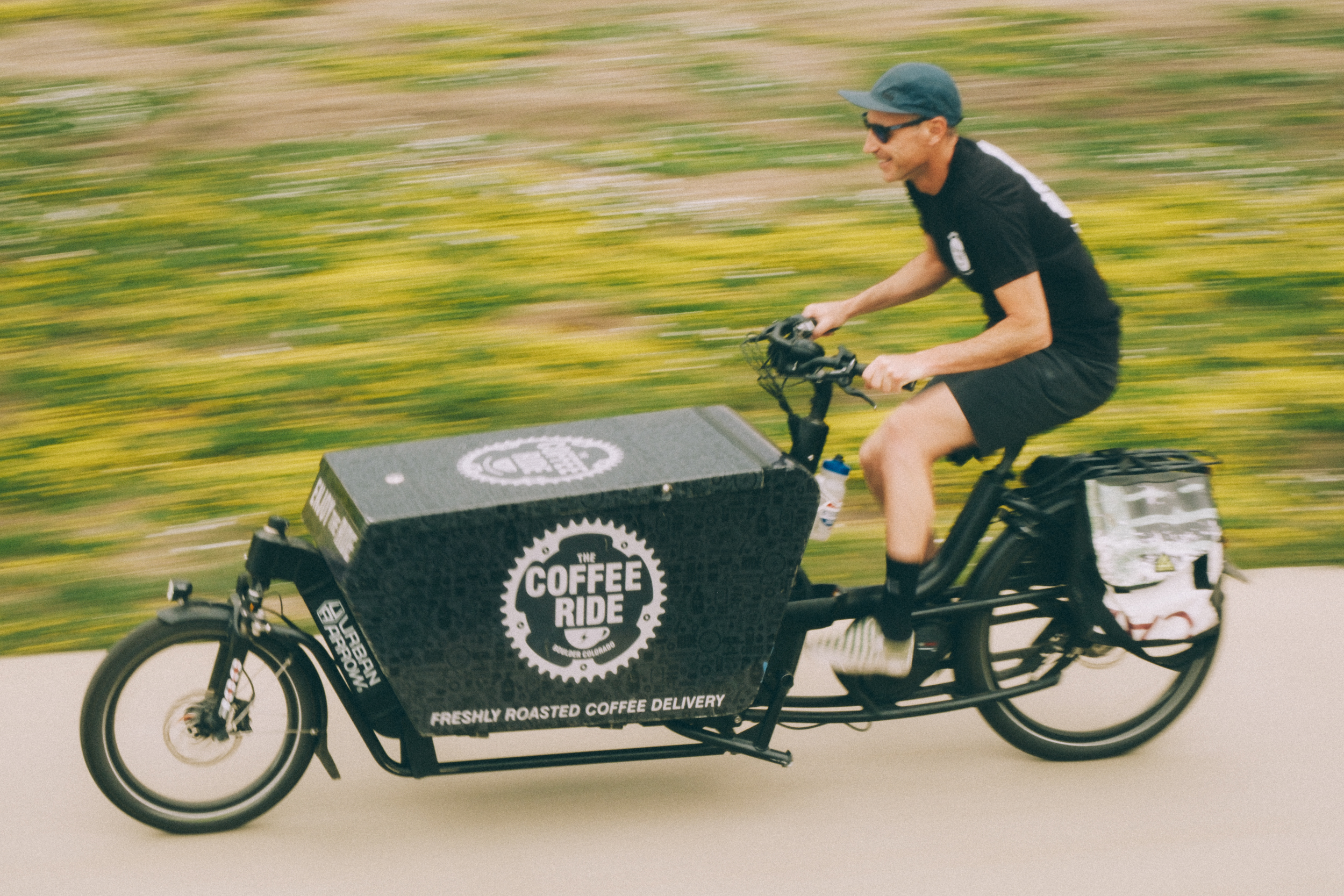
The Coffee Ride has ridden over 30,000 miles delivering coffee by bike. Since founding the business in 2014, owner Josh Crane has continued to push the envelope for using the business as a tool do to good, coffee is just the vehicle. Read on for Hailey Moore‘s shop visit to The Coffee Ride and an in-depth look at a small business that’s never content to coast.
“Coffee’s not really my passion,” said Josh Crane on a recent breezy spring morning, the sky turbid with a thin cloud layer, Boulder’s distinctive Flatirons in view. This was surprising to hear given that we were drinking cortados at a picnic table outside of the coffee roasting headquarters and café space for the company that Crane founded and operates.
“I love coffee,” Crane continued. “But I’m passionate about bikes and all these other things. [Coffee] is just the vehicle, right? So that’s why I feel like I’ve never burnt out on it.”
In talking with Crane, it sounded like he’d had plenty of opportunities to burn out on coffee since he started The Coffee Ride, his coffee roasting company, in 2014. But after more than a decade-long trajectory, punctuated by the extreme ups and downs familiar to any small-business owner, TCR seems to have found its sweet spot, and Crane—who practically vibrates with the energy of someone who drinks a lot of coffee—seems to have more ambition now than ever for what the business can be.
Crane was born and raised in Milwaukee but said he had always felt the pull of the mountains (“ I don’t know how I grew up in Wisconsin.”). After getting his business degree, Crane finally made the move out to Colorado in the mid 2000s, cobbling together side gigs in Breckenridge so that he could spend his free time snowboarding and mountain biking. He later made the move down to Boulder to work in a hospital’s lab and take a crack at getting into med school.
Crane describes his motivation to study medicine as trying to find a career that epitomized the balance of doing something “smart and good.” But, while working at the lab and taking a few prerequisite courses, Crane said that one of the doctors on staff talked him out of pursuing the grueling path.
(Single) Origins
A lifelong cyclist, while regrouping following his abandoned med school plans, Crane landed a job at The Pro’s Closet, heading the photography department, in the company’s early days. On paper, working in cycling for a cyclist should be a dream job, but Crane recalls that, at some point, the corporate nature of the work clouded his rose-tinted lenses—his bike commute to and from the office, versus his time spent on the clock, was always the best part of his day. In an attempt to enliven the corporate vibes, Crane took up the mantle of being the company’s unofficial self-described “positivity personnel.” He helped initiate weekly staff group rides and, along with another employee, Jacob, who had a family connection at Spy House Coffee in Minneapolis, started an informal morning coffee meet-up in the company’s break room.
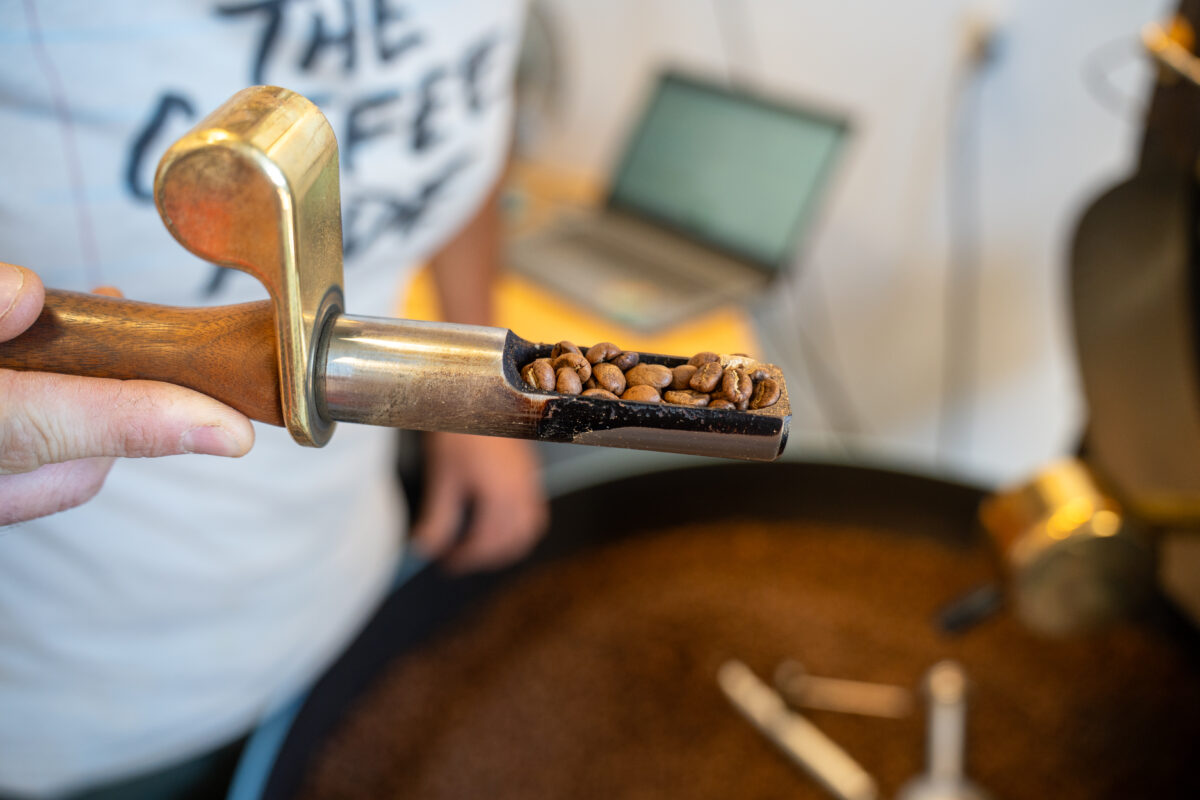
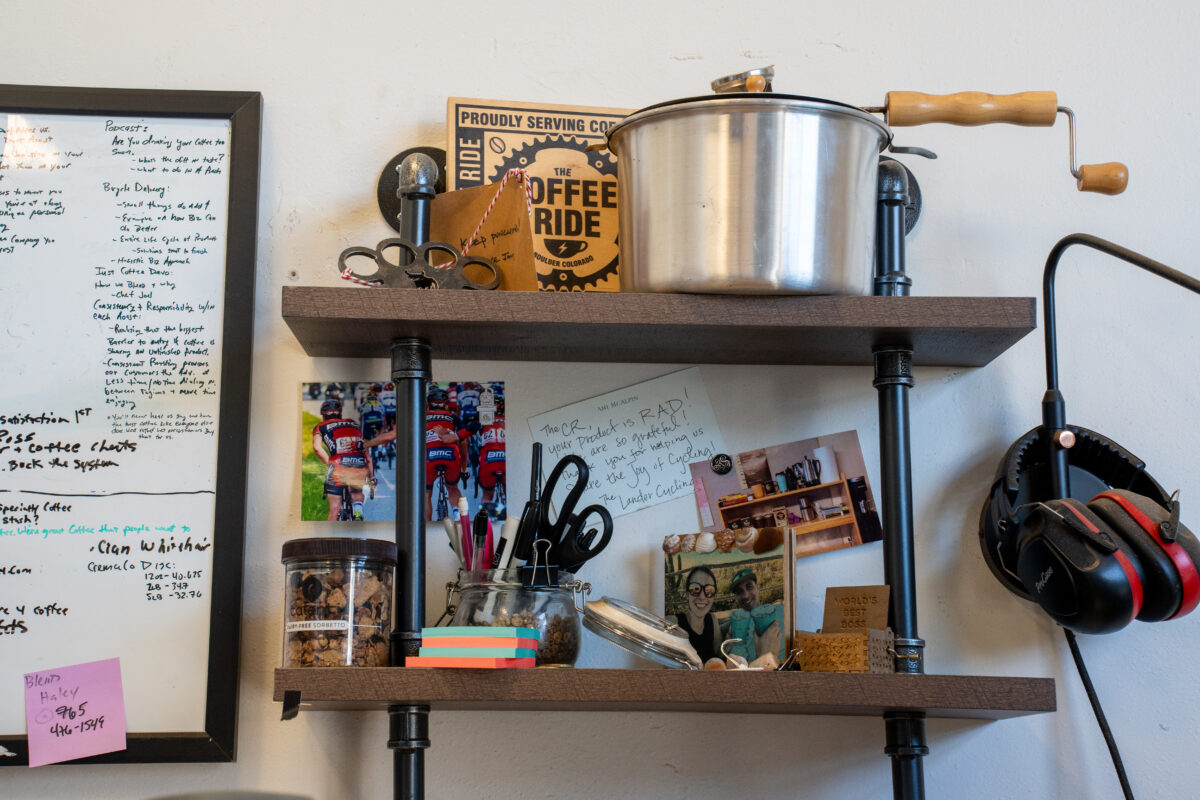
By this time in the early 2010s, coffee was well into its third-wave era; glass beakers and pour-over cones that looked like matériel filched from the chemistry lab became de rigueur café equipment, and bags of whole roasted beans advertised their contents as tasting like everything—toasted almonds, jasmine tea, dark chocolate, burnt toast, green apple, bourbon—but coffee. Crane had started developing his own single-origin tastes during his long days of studying for the MCATs and credits the soft white-noise thrum of a coffee shop as being one of the few settings in which he could harness his distractible focus. By the time he was working at The Pro’s Closet, he had taken up home roasting as a hobby, ordering small batches of green coffee and using a stove-top popcorn popper to experiment with different roast profiles.
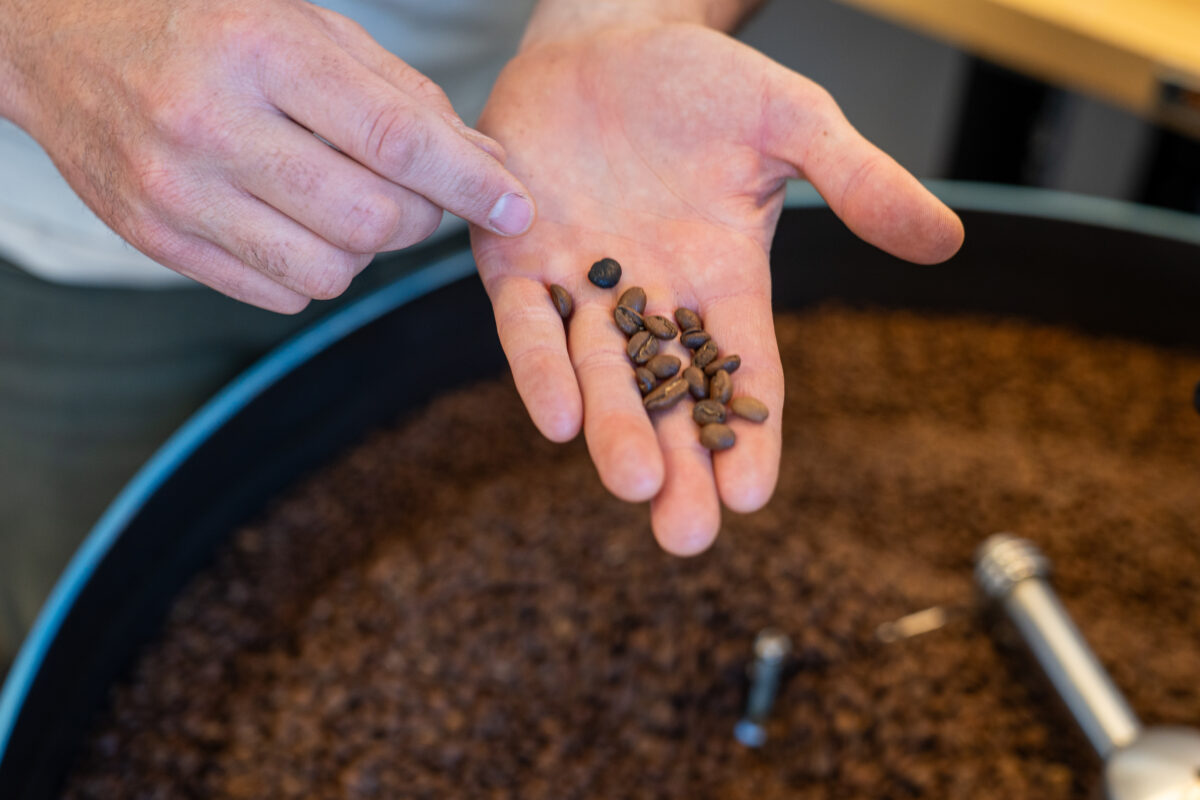
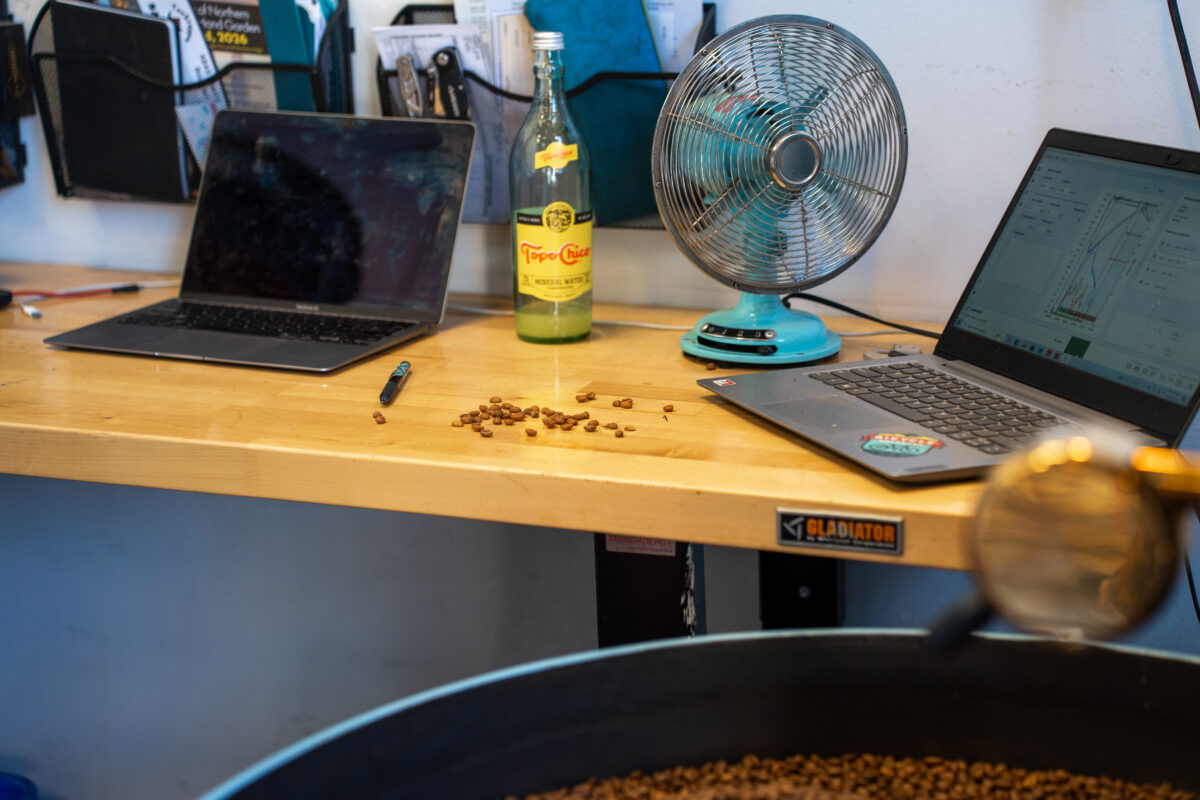
Every morning at The Pro’s Closet, Crane and Jacob would brew up a Chemex or two of Spyhouse beans or Crane’s own test roasts and nerd out before the start of the work day. Word began filtering out that there was free pour-over coffee to be had and gradually the small gathering grew.
“I started bringing in stuff and using Jacob and other people as a kind of focus group on how I was doing,” said Crane, going on to describe the way the sessions expanded organically. “It was so cool because [at first] one other person would show up. And then another person would show up [the next day], and then we’d have, like, five people. And then before you knew it was, like, 15 people in the morning. We were showing up 20 minutes early to work when we were showing up 10 minutes late before.”
Witnessing this shift in the attitude of his co-workers made something click for Crane; suddenly people weren’t “pissed to come to work […] they were psyched.” How could such a small act—the communal, yet relatively trivial, widely shared ritual of drinking coffee—have such an outsized impact? It was a change that Crane decided he wanted to try to effect on a larger scale.
Big-Time Baby Steps
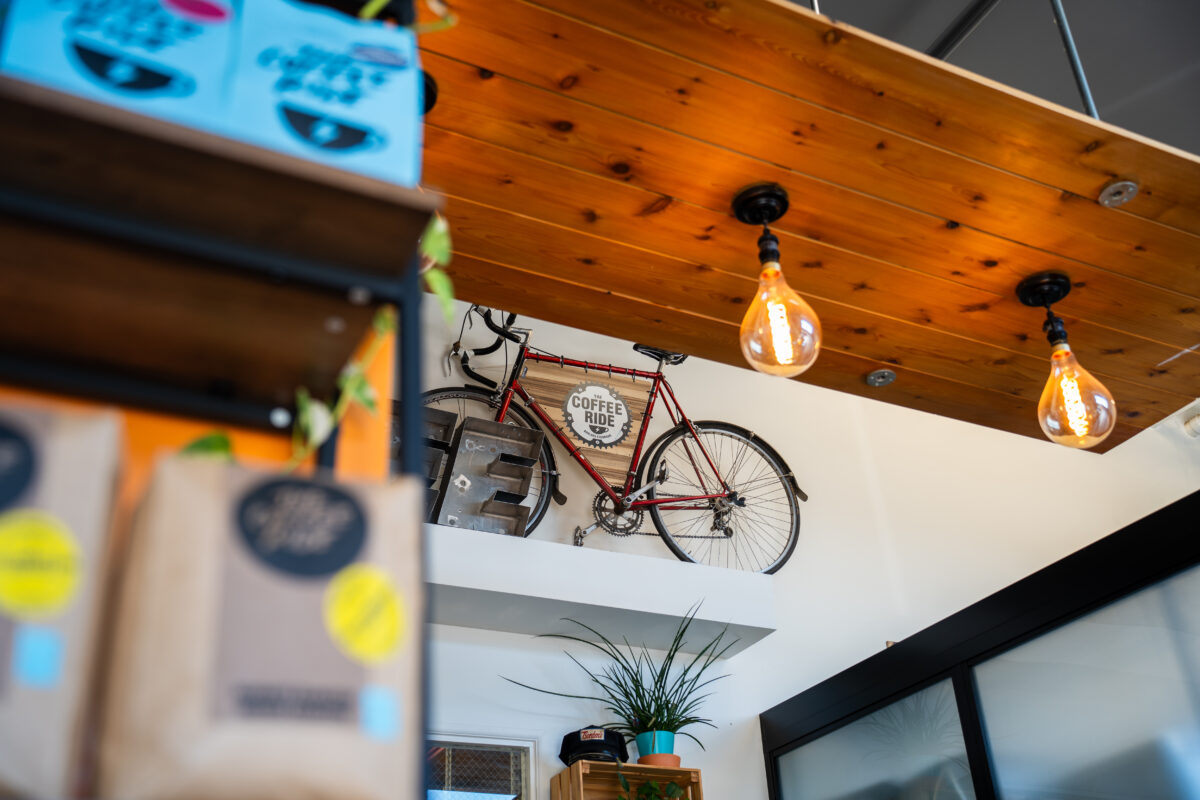
Crane describes turning his home-roasting hobby into an actual business as happening by way of “big-time baby steps.” He knew from the beginning that he wanted to incorporate riding bikes into the business and decided that he would do all local deliveries by bike (shipping beans was not initially part of TCR’s model). While there was certainly an environmental-impact component to Crane’s idea for bike delivery, there was also a more personal, community focused motivator. Crane’s grandfather worked as a milkman for Borden in Wisconsin and, while Crane is clear-eyed about the social inequities that plagued the mid 20th century, he also holds onto that symbol of American traditionalism as a romantic idyll.
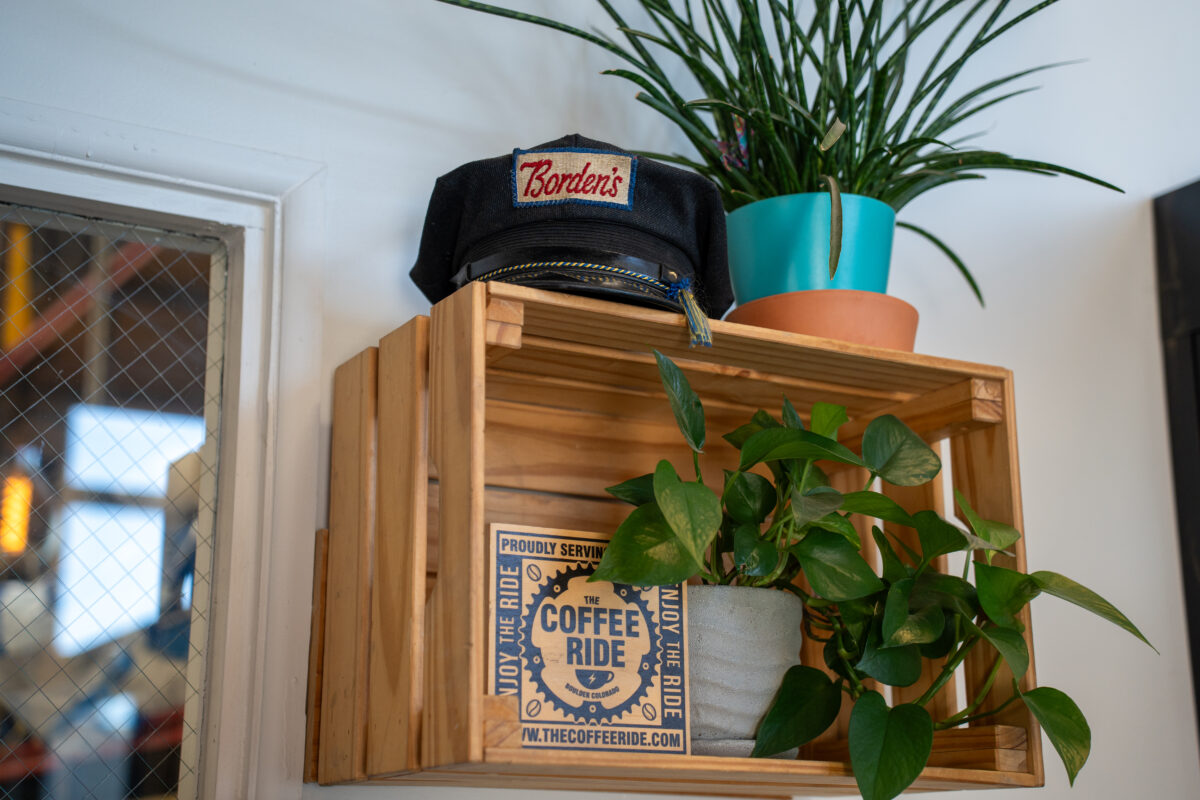
“Everybody knew Jerry the Milkman,” said Crane. “Even though you never saw him, you knew you had this local person that was high-quality everything.” His grandfather’s milkman hat sits proudly on display in The Coffee Ride’s café space today.
At first, Crane scaled up his roasting operations with a commercial machine in his garage, which he paid for after selling his car (and downgrading to a beater $800 Toyota Forerunner to get around when he wasn’t riding). In the garage, he roasted under the cover of night, plying his neighbors with fresh coffee in exchange for their willful ignorance about his code violations. He “launched” The Coffee Ride by distributing 5,000 paper flyers with his first website by bike to homes and businesses around the city. On Friday mornings, he posted up with free samples on the bike path near his former place of employment, the hospital.
When he started gaining more traction, Crane was able to move into an industrial space shared—serendipitously—with Collin Schaafsma, the framebuilder behind Matter Cycles. When Collin moved out, Brian De Groodt of Dispatch Cycling Components moved in; when Brian moved out, Conney Carpenter used the space as an art studio.
Crane points to countless acts of kindness or happenstance during this period from 2014 to 2020, when he moved The Coffee Ride to its current location, that kept the business, and his morale, afloat: Collin letting him roast in their shared space rent-free; making connections during his early morning free-sample setups on the bike path; landing Avery Brewing as a whole-sale client to provide the coffee for their beer. And while he will be the first to acknowledge the help that The Coffee Ride has received along the way and to call “bullshit” on people who claim “I built this business by myself,” Crane also committed, hard, to the grind, juggling part-time jobs while moonlighting as a business owner and coffee roaster for years.
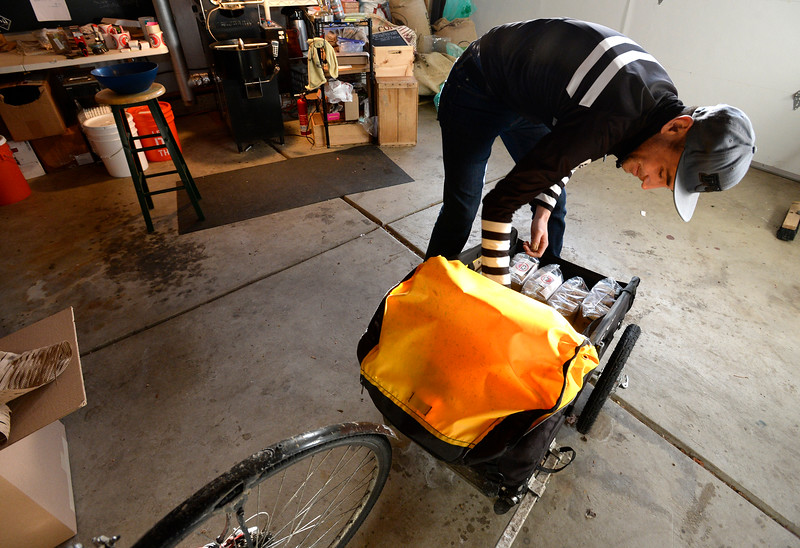
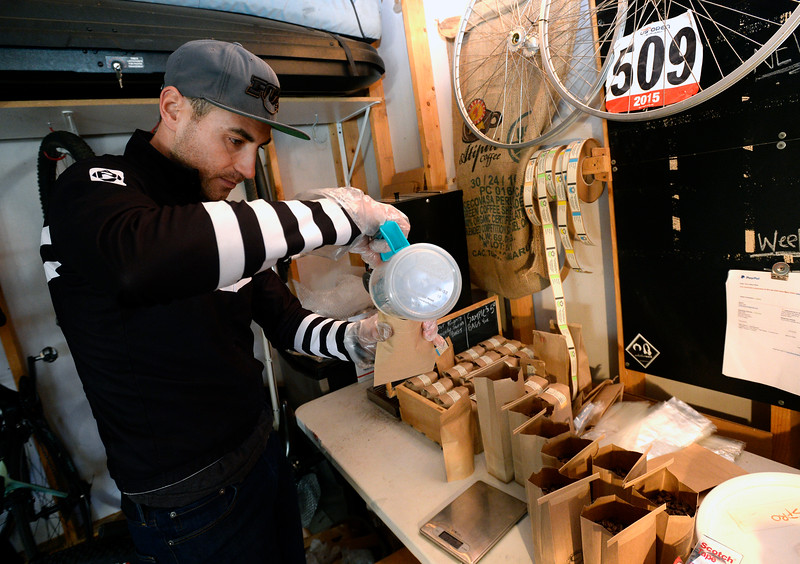
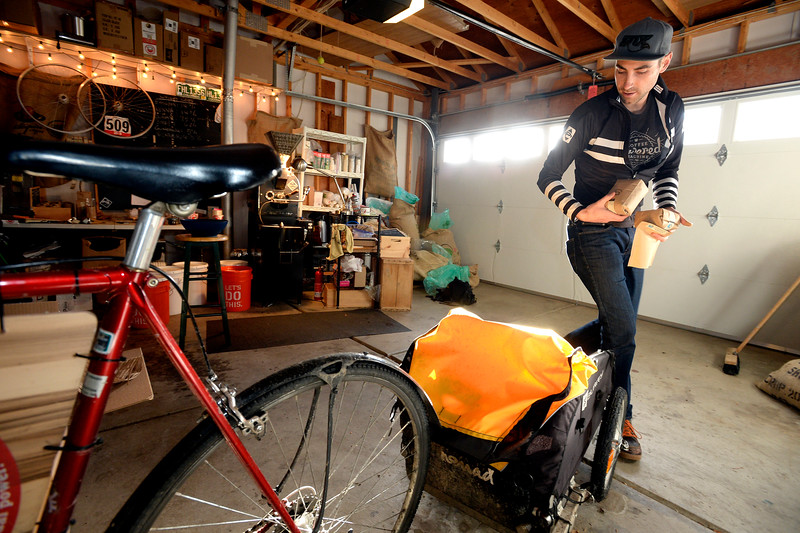
The garage days. Courtesy of The Coffee Ride
“I was working the front desk at the Boulder Rock Club, because that shift was like from 3 p.m. to 11 p.m. And then I’d come home, roast coffee for three hours, and then go deliver the next morning before I had to go to work—I was [also] working at Panache Cycle Wear, in their warehouse. So I’d go do deliveries and then go over there. And that was, like, literally for five years, that was my life … It was like every single opportunity. It was just constant.”
Crane told me that his dad, who had also been a small-business owner, had always maintained that you don’t go full time with your business until it can pay you what your old job was paying—Crane took this to heart. Eventually, when he was bringing in enough to have his be the sole name on the rental-space lease, he committed to The Coffee Ride full-time. Not long after, he moved the roasting operations from North Boulder to the shop’s now central location on 49th Street. The year was 2020.
AC and BC: Before and After COVID
It’s stark the way we can mark time in terms of “A.C.” and “B.C.”—the biblical imprint that COVID has left on modern history. Small business owners felt the effects of this before and after acutely and when Crane talks about the pandemic, the trauma of it still feels close to the surface.
When the pandemic struck, The Coffee Ride had expanded its ordering process to include shipping and, in addition to one-off single-pound bag orders, much of its business was based on recurring subscriptions. Crane uses serious words like “trust” and “commitment” when he talks about The Coffee Ride’s relationship with its subscribers, but the early rockiness of the pandemic took a wrecking ball to TCR’s diligently built foundation of auto-renewing customers.
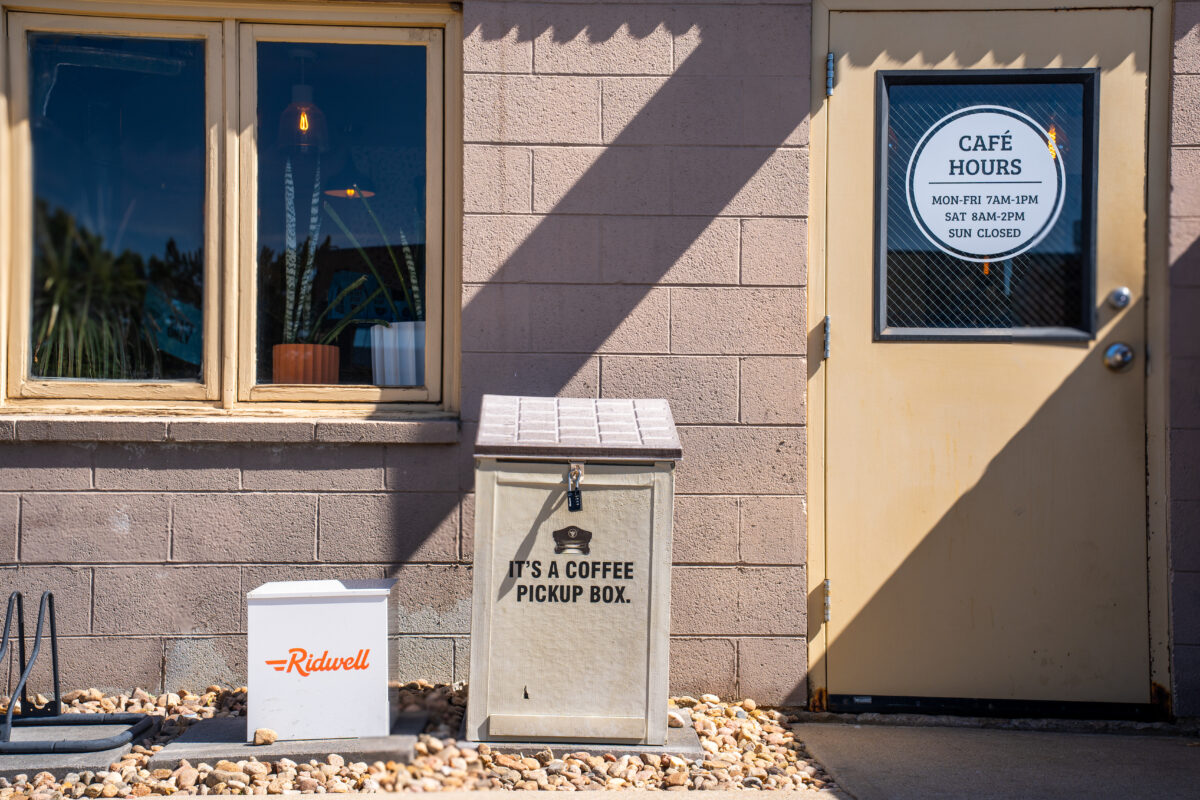
“We had like 250 subscribers at that time that we were shipping coffee to,” remembers Crane. “And the postal service was losing packages, places were shut down. I got like 150 emails overnight from subscribers [who hadn’t received their coffee], that we had worked for like six years to get, all cancel. The only thing that supported the business was the local Boulder community.”
While COVID’s blow to The Coffee Ride’s books was severe, an unexpected flip side to the pandemic’s restrictions was the way it deepened Crane’s connection with the community he’d initially built the business to serve. Crane’s weekly Thursday delivery ride, a route that usually took him about two and a half hours, started taking as long as eight hours to complete. His customers wanted their coffee, but they also wanted to talk.
“We normally deliver coffee to front doorsteps, unnoticed (folks refer to us as coffee ninjas), but all our local customers were suddenly at home,” explained Crane. “Not only were they home, but they were also starved and deprived of human contact. I met customers for the first time in over five years […] I’ve always felt that coffee is a great connector for people, and this was an incredible experience to provide them with the added conversation they so obviously desired.”
The Coffee Ride Café: Building a Door to Open
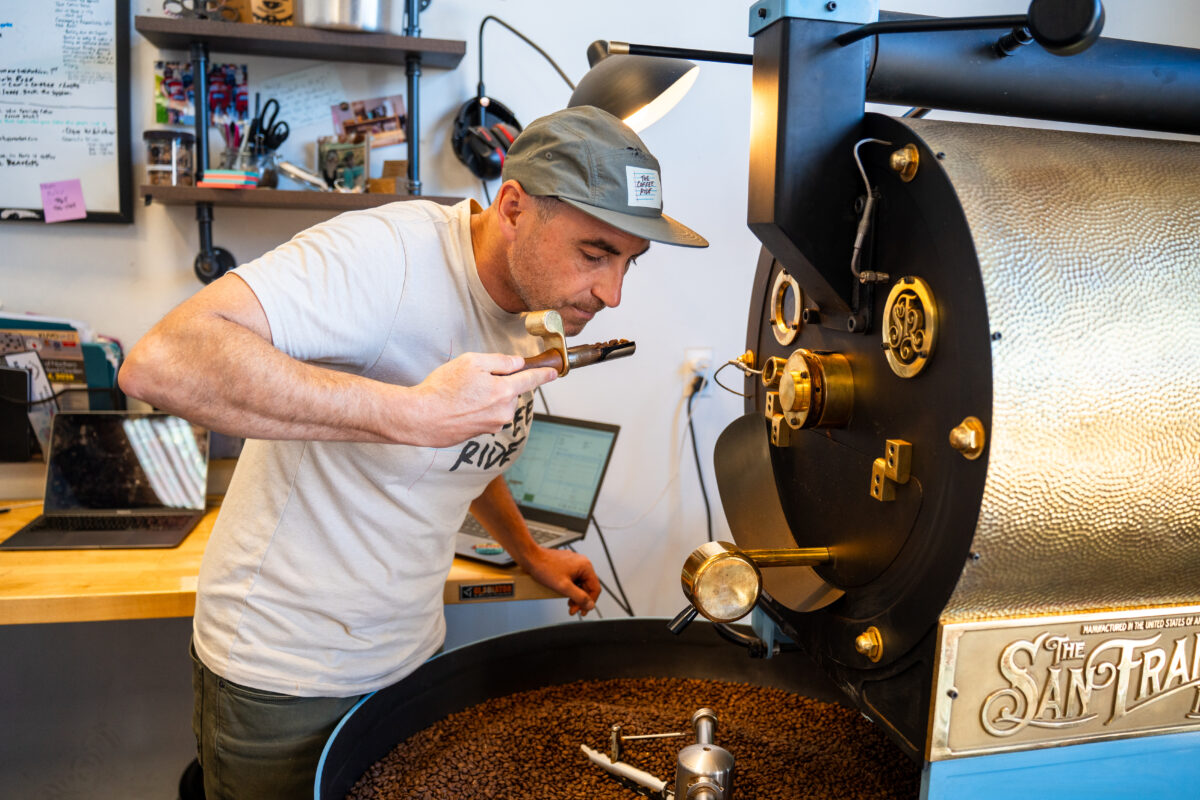
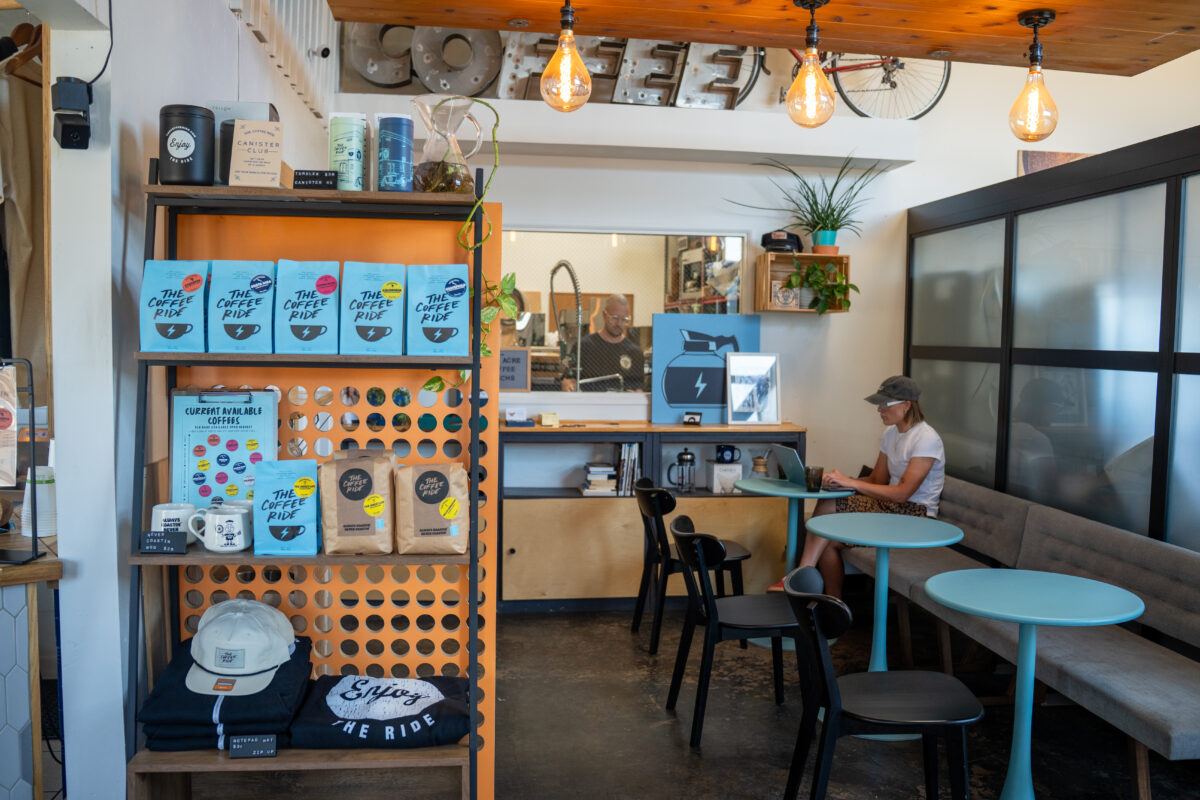
The uncertainty of the pandemic—that cliché term so often used to describe the arrested nature of that time—stretched on for The Coffee Ride and the world. But gradually Crane felt like the business was recouping, recovering, and turning the corner. In part, this was aided by bringing on Sunny Gilbert, a former cyclocross racer and two-time singlespeed national champ, to take over the organization of the weekly delivery. And whether consciously or not, Crane’s own delivery experience and the countless conversations he had with the local community during lockdown seems to have shaped the business’s next move. In 2023, The Coffee Ride opened its café, a bright, inviting space separated by only a sliding glass door from its roasting equipment. To Crane, that literal closeness between the means and the end feels important.
To run the café and other daily operations, Crane hired Joel Gilmore, a trained chef and the entrepreneur behind the recycled-banner-turned-bike-wallet project, Revelo. Recalling Crane’s twin “do something smart and good” motivators to pursue med school, if the café was furthering The Coffee Ride’s mission to do good with coffee by creating a community gathering space and a home base for group rides, hiring Gilmore was a smart move on Crane’s part to achieve the former.
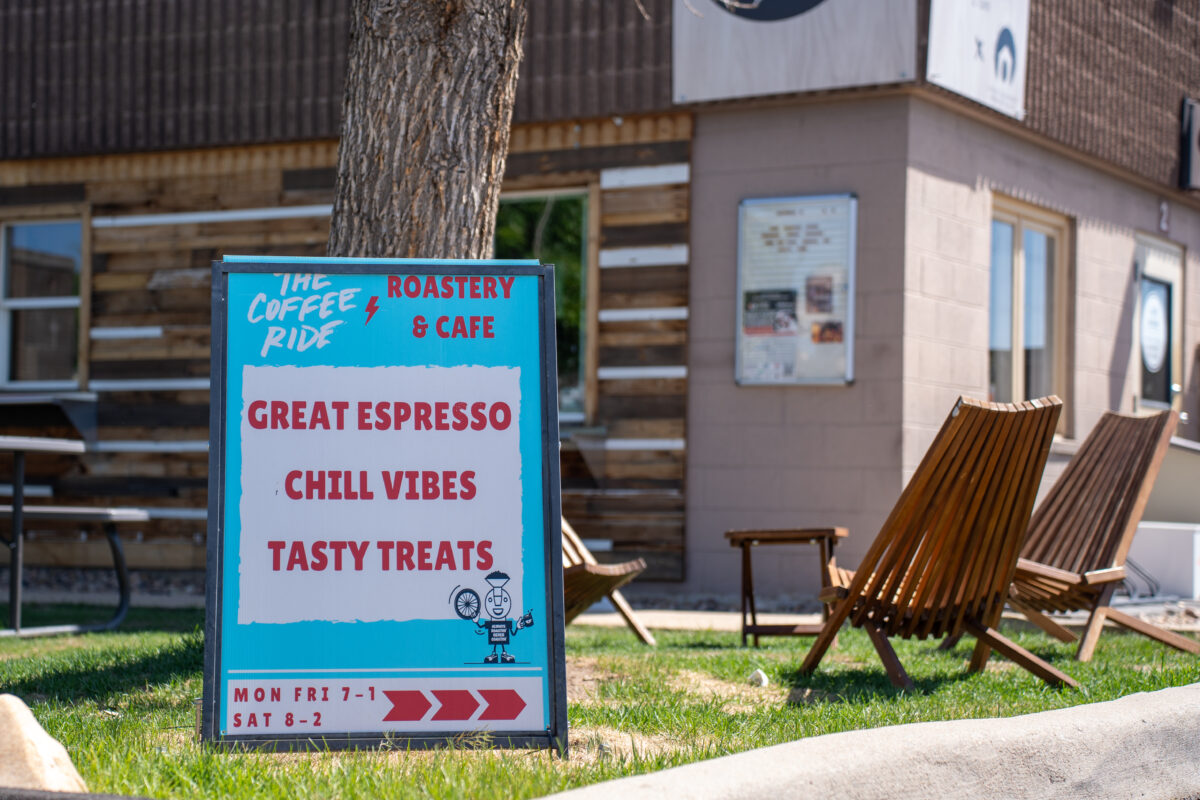
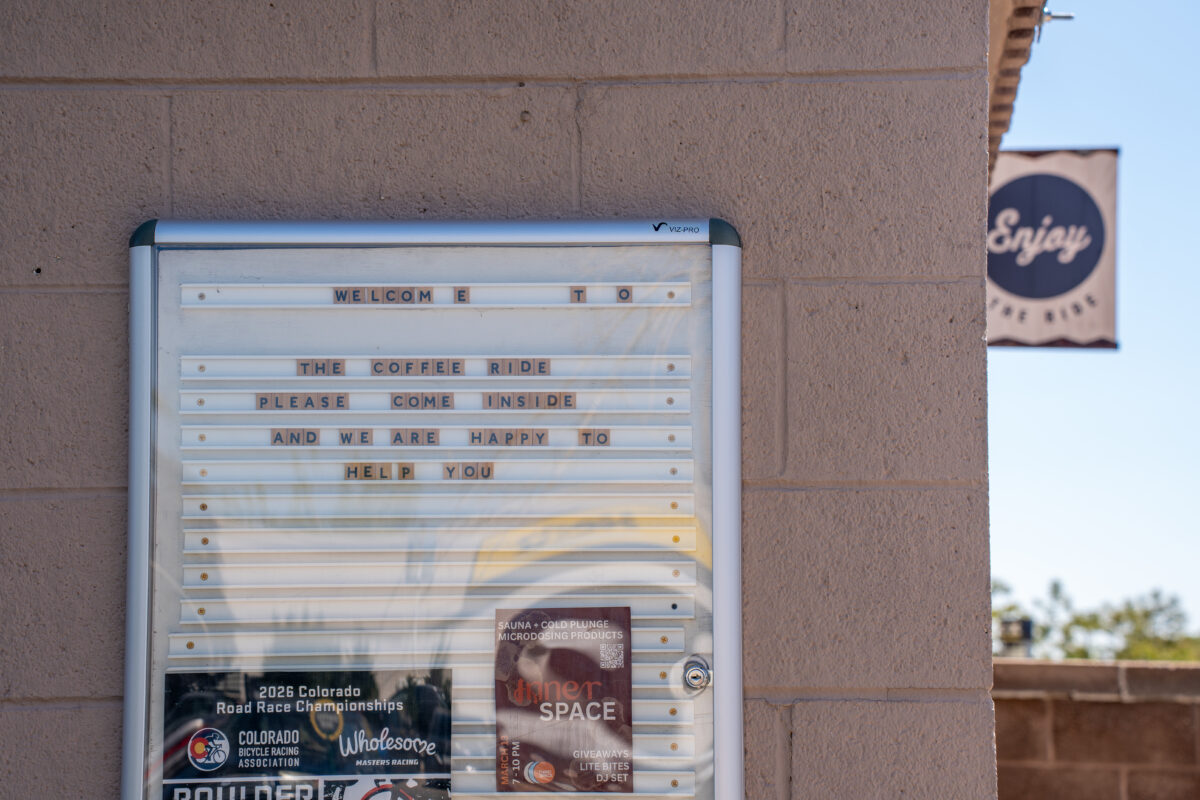
With Gilmore at the helm of the café—crafting from-scratch syrups and a spread of daily pastries—Crane has had more freedom to imagine and manifest The Coffee Ride’s next chapter. The Coffee Ride’s form of distribution—largely by bike—has always been tied to the business’s intent and tracking the way that order fulfillment and distribution has shifted over time feels reflective of the business as a whole.
“I had never, ever wanted to ship coffee. That was a goal at the beginning,” said Crane, going on to cite the illogic he saw in the example of another local roaster that roasted its coffee in Boulder, then sent the product to a distribution center in Denver, only to have the product shipped back to grocery stores in Boulder. By initially committing to a distribution radius that could be served by bike (TCR’s currently weekend delivery route ranges from 40 to 60 miles), Crane felt that The Coffee Ride could be a proof-of-concept for “a better way to do business,” a more intentional way. Today, Crane thinks there is more value in sharing The Coffee Ride’s story—and hopefully letting it set an example—with coffee-drinkers everywhere.
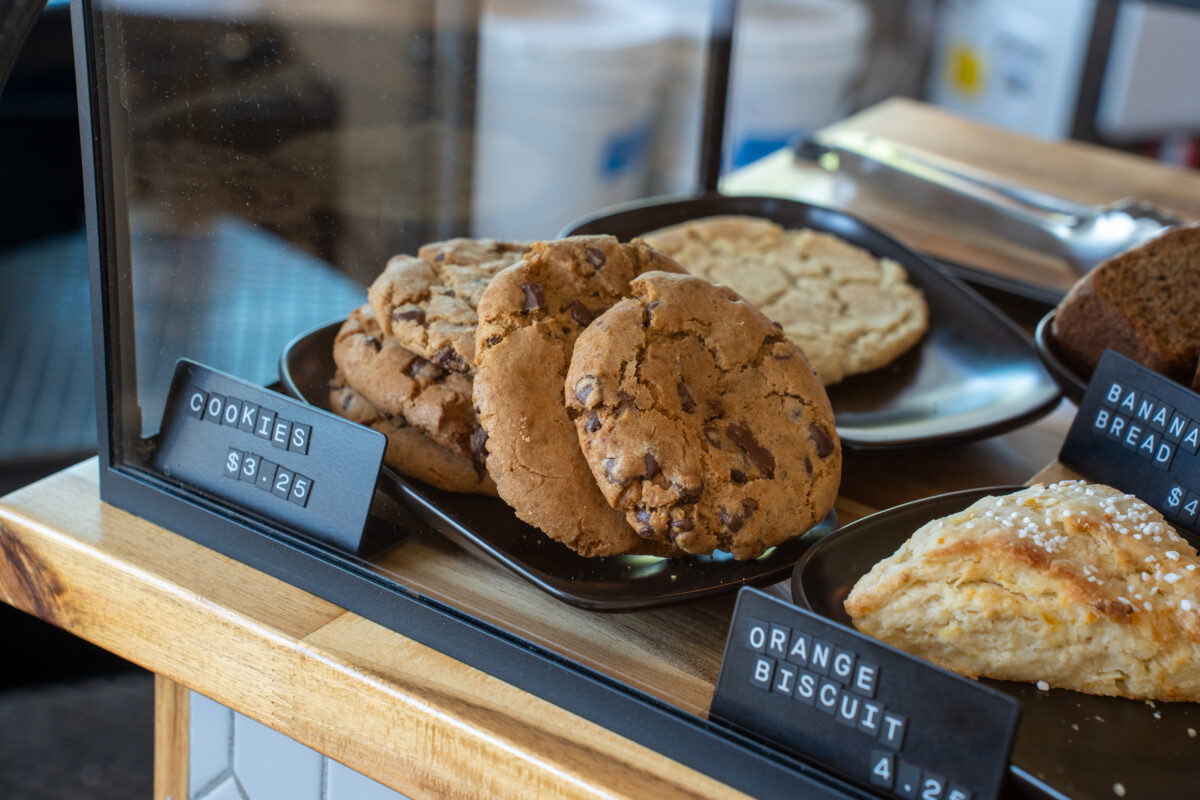
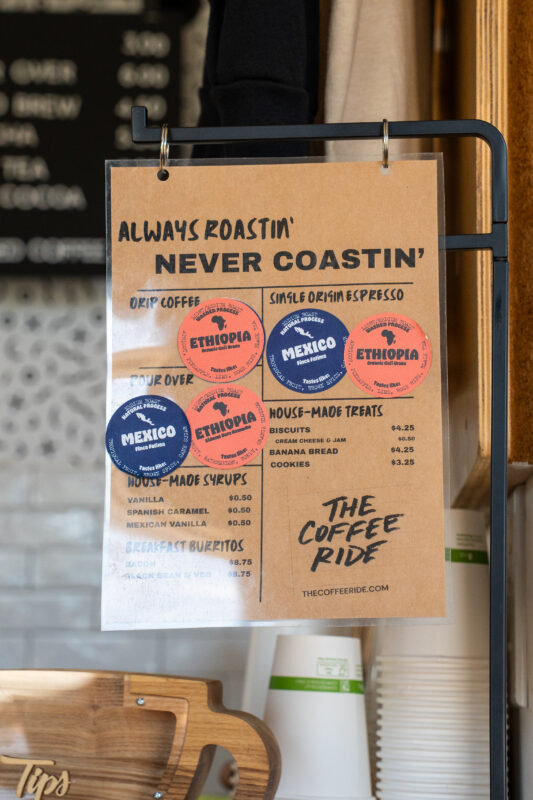
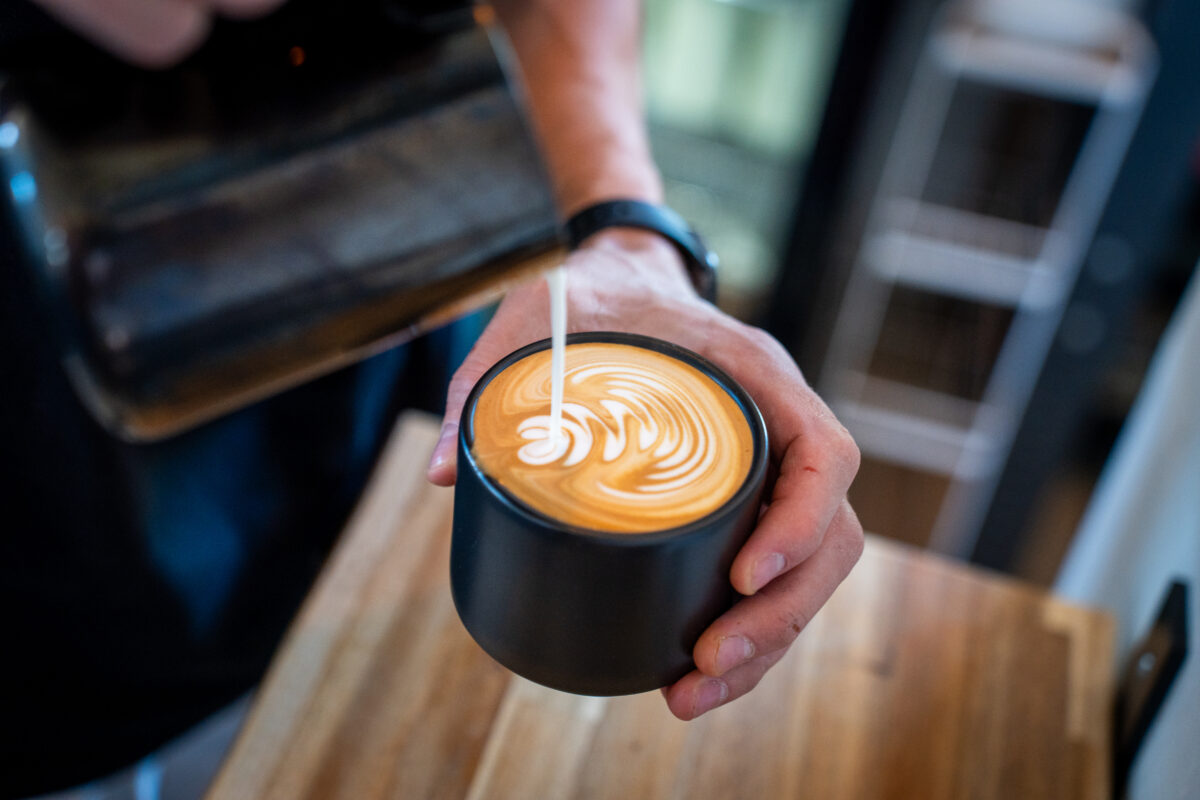
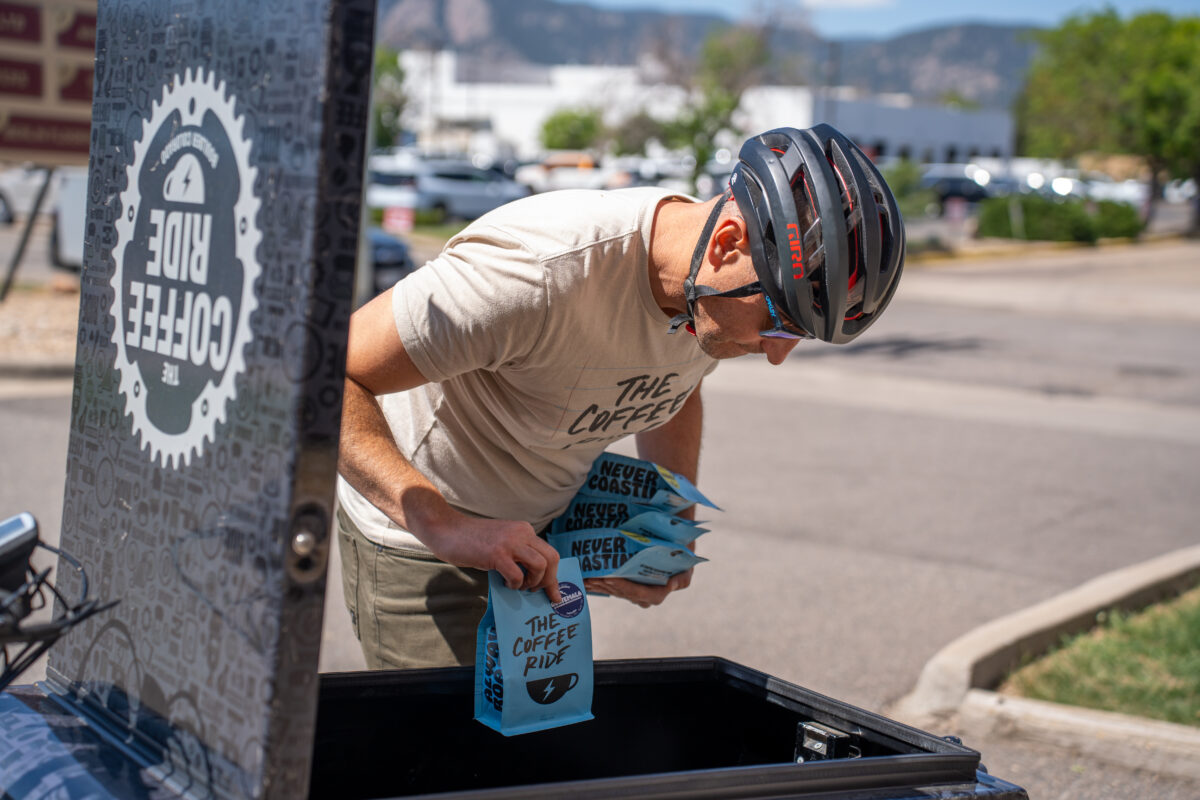
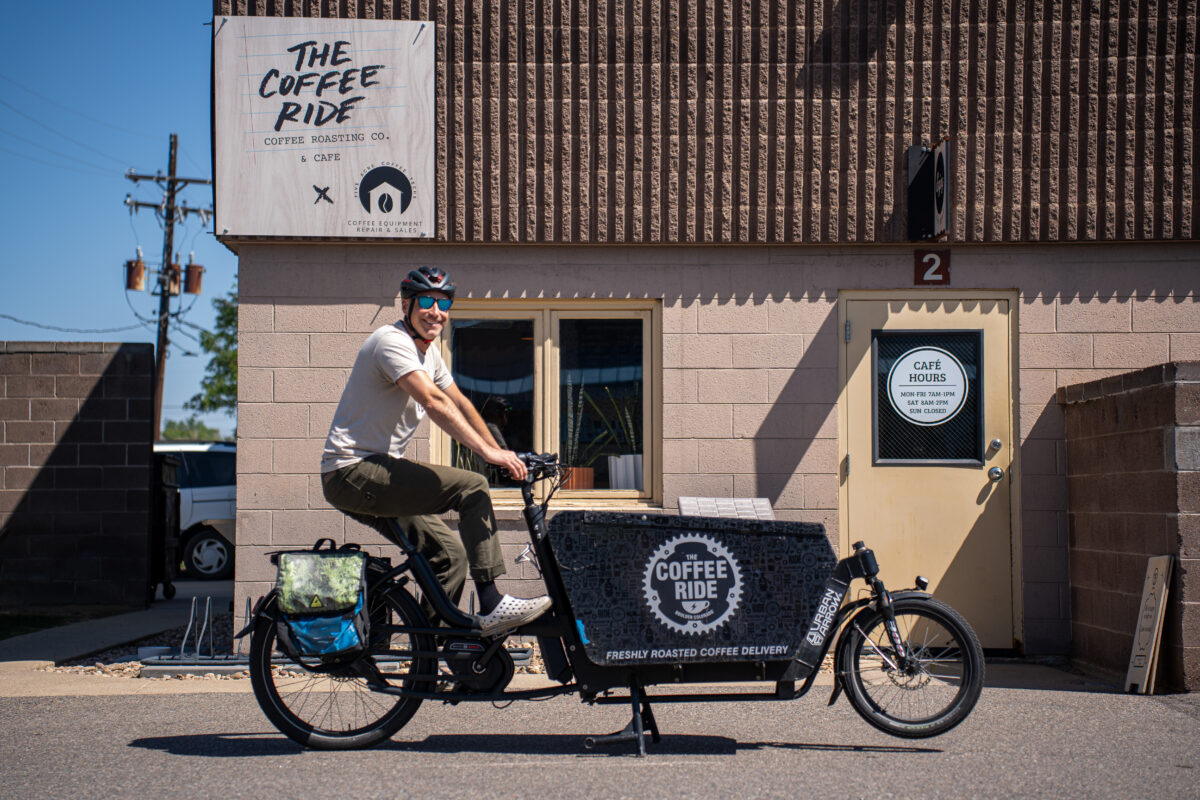
“Twelve years into this business, we’ve ridden over 30,000 miles just on our Thursday deliveries,” said Crane “That’s a significant number that gets people thinking.” The majority of those miles were ridden by Crane, in the years when The Coffee Ride was a solo enterprise, but in recent years, the business has acquired a fleet of e-bikes and has a pool of rotating delivery riders to help with the weekly task.
Still, when asked if he sees any of these changes as a compromise of values, Crane held up his hands like two sides of a scale, “We can all do it better, you know? Everybody thinks, like, ‘Oh, well, I’m gonna commute [only] by bike. The only way to solve all the world’s problems is to become a vegan.’ Everybody thinks that it’s black and white, and there’s gray. There’s a big, big, gray area in between.”
Doing Good With Coffee Going Forward
A new area of impact in which Crane has been able to put more recent focus, since hiring Gilmore to run the café and being less involved in the organization of the weekly deliveries, has been The Coffee Ride’s philanthropic partnerships. In addition to creating signature blends for organizations like World Bicycle Relief, Colorado Public Radio, and LoveYourBrain Foundation (a TBI-focused non-profit), The Coffee Ride has also offered affiliate links to third-party beneficiaries, a move that, Crane explains, gives the customer more choices while still donating a percentage of sales.
Whether customers are ordering their beans from out of state or getting them delivered to their doorstep by The Coffee Ride’s fleet of delivery riders, whether they pre-grind their coffee and load up a Mr. Coffee maker the night before, or they are hand-grinding and making a morning pour over, Crane speaks about being part of his customers routine with a kind of reverence.
“There’s something humbling about producing a product that puts you in somebody’s home, that is a very intimate setting, “ said Crane. “That was like coffee growing up […] It was always coffee and the radio in the morning, […] that same passionate ritual.” He told me it was because of his mom that coffee became tied with intentionality. Every week, she would go to Beans and Barely, a health-food store and fixture of the Milwaukee for over five decades, to pick up a bag of fresh-roasted, local coffee, picking up a box of morning buns on the weekends.
“Even on the days where, you know, everybody was waking up early to go do the thing, the coffee was always intentional,” said Crane. “And that’s our thing here, too.”