
This installment of our Dust-Up opinion column is about the environmental impact of bicycles, sustainability, consumerism, restraint, choosing difficulty over efficiency, and why that choice might matter more than we want to admit. Paul Kalifatidi casts his opinions from his other hobby, fly fishing, to ruffle some feathers and ask hard-hitting questions like, “If I buy bladed spokes, do they save me enough watts that I have to purchase one less Snickers?”
I was listening to an episode of one of my favorite fly-fishing podcasts, The Drakecast, specifically episode #54: The Baiter & The Swinger. In it, host Elliott Adler interviews two fishermen with divergent views and methods for catching fish. By the end of the episode, I had this thought bouncing around the inside of my size small head: Is my bicycle killing the fish?
To entertain this fishy metaphor, I need to explain a few things.
A Two Party System
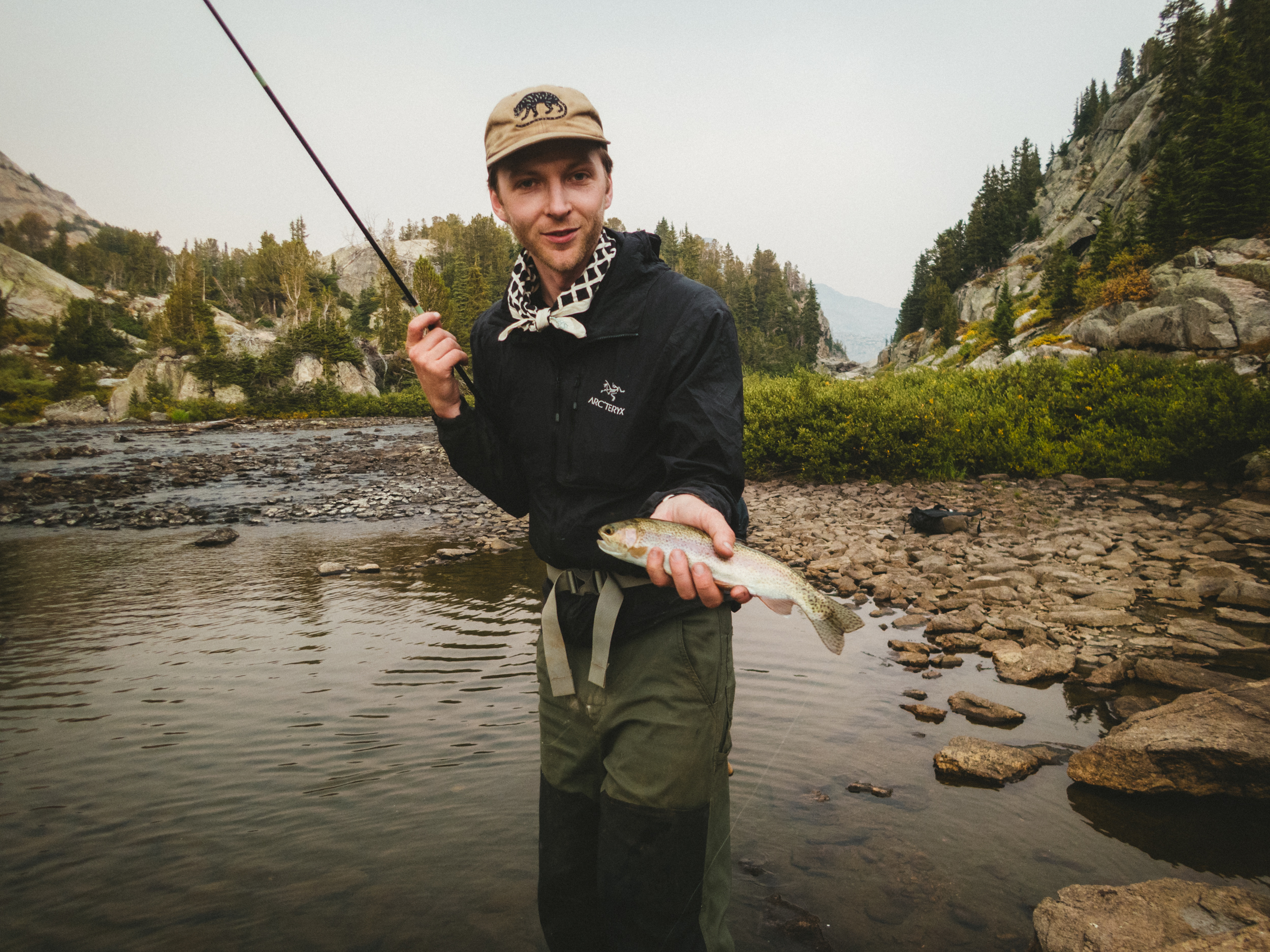
The population of recreational catch-and-release anglers can be described with a Venn diagram. In one circle (the much larger one) are the “gear” or “traditional” fishermen, who use weighted lures and bait to catch fish. In the other circle (significantly smaller) are the “fly” fishermen, who use weighted lines to cast featherweight flies made of artificial fiber, animal fur, and bird plumage to entice predatory fish. The gear fisherman is significantly more successful at catching their quarry than the fly fisherman. The fly fisherman is significantly more successful at catching every branch and bush within a stone’s throw. Fly fishing is frequently promoted as being more sustainable. Gear fishing is far more efficient.
There’s no ignoring the data: fly fishing is far less productive when it comes to putting fish in the net than fishing with traditional gear like bait and weighted lures. The process of presenting the fly is less consistent and far more difficult than getting a flashy spinning lure or a wad of eggs in front of a fish. There exists a significant rift between these two groups; the overlapping part of the Venn diagram is tiny – like a size 20 dry fly kind of tiny. Rarely does an angler choose to participate in both disciplines.
In this podcast episode, one of the fishermen is a “gear” fisherman and one is a “fly” fisherman. Much of the episode discusses the sustainability of both disciplines, and I highly recommend a listen if you enjoy shivering in rivers. If you’re wondering how this pertains to the sustainability of the bike industry, please be patient. Bikes are coming.
Sustainability of Catch-And-Release
The elephant in the room with catch-and-release fishing is the impact it has on hooked fish. Catch-and-release is largely seen as more sustainable than catching fish for consumption, but it has its dark sides too. Objectively, it stresses and injures fish.
The mortality rate of modern fishing equipment and techniques – both fly fishing and traditional gear – is around 4% across all methods of angling. This means that we can expect roughly four fish out of every hundred caught to not survive the experience. My degree in Conservation Biology necessitates that I cite my source, a study done by The Massachusetts Department of Fish and Wildlife. This number is highly variable, and fishermen can make choices that greatly affect the outcome. Using appropriately strong gear to reduce fight time and minimizing handling are two ways to increase a fish’s chance of survival. Showing some humility and responsibility by not excessively posing with the fish for the sake of an Instagram photo is one of the best ways to ensure its health.
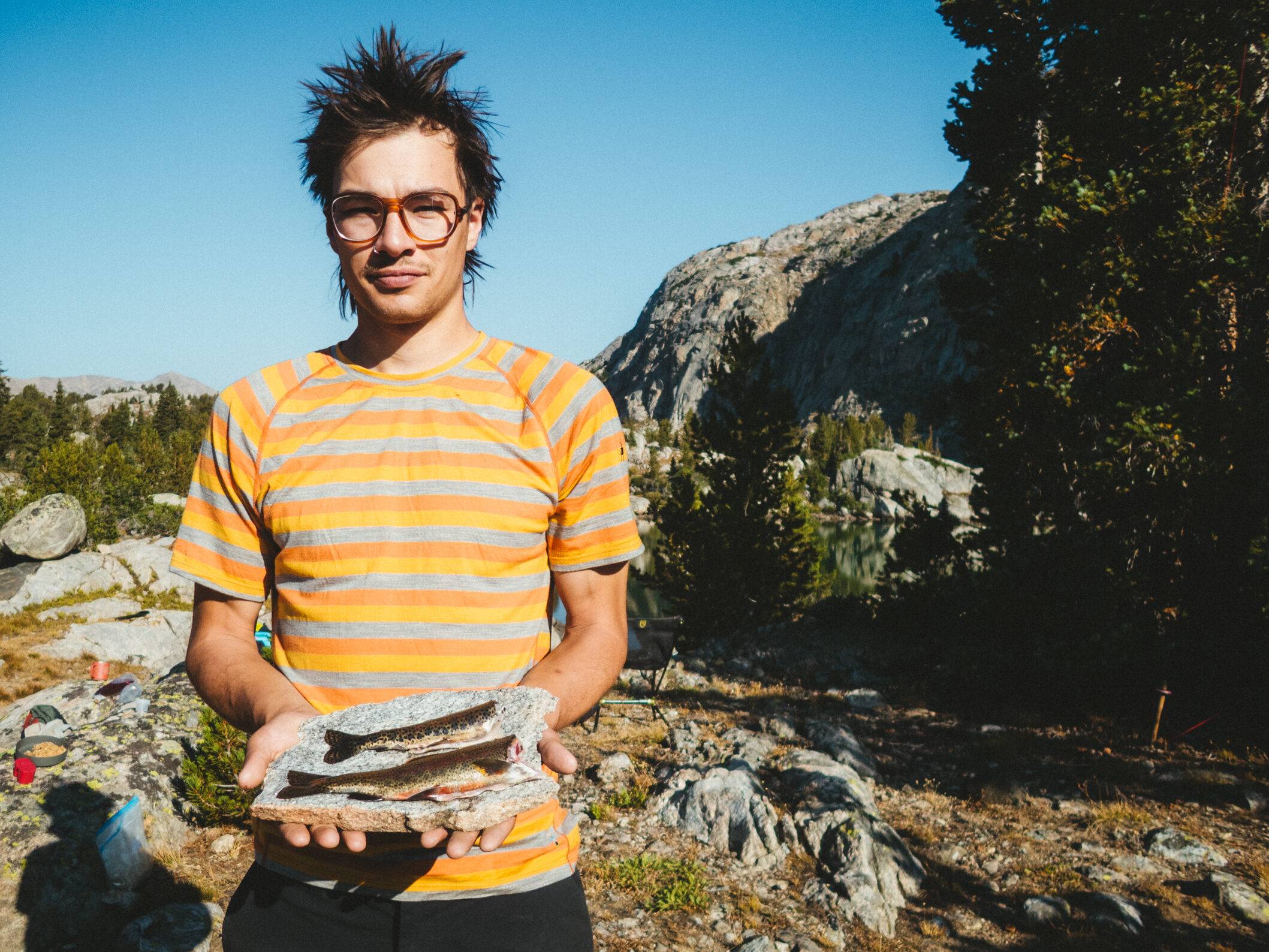
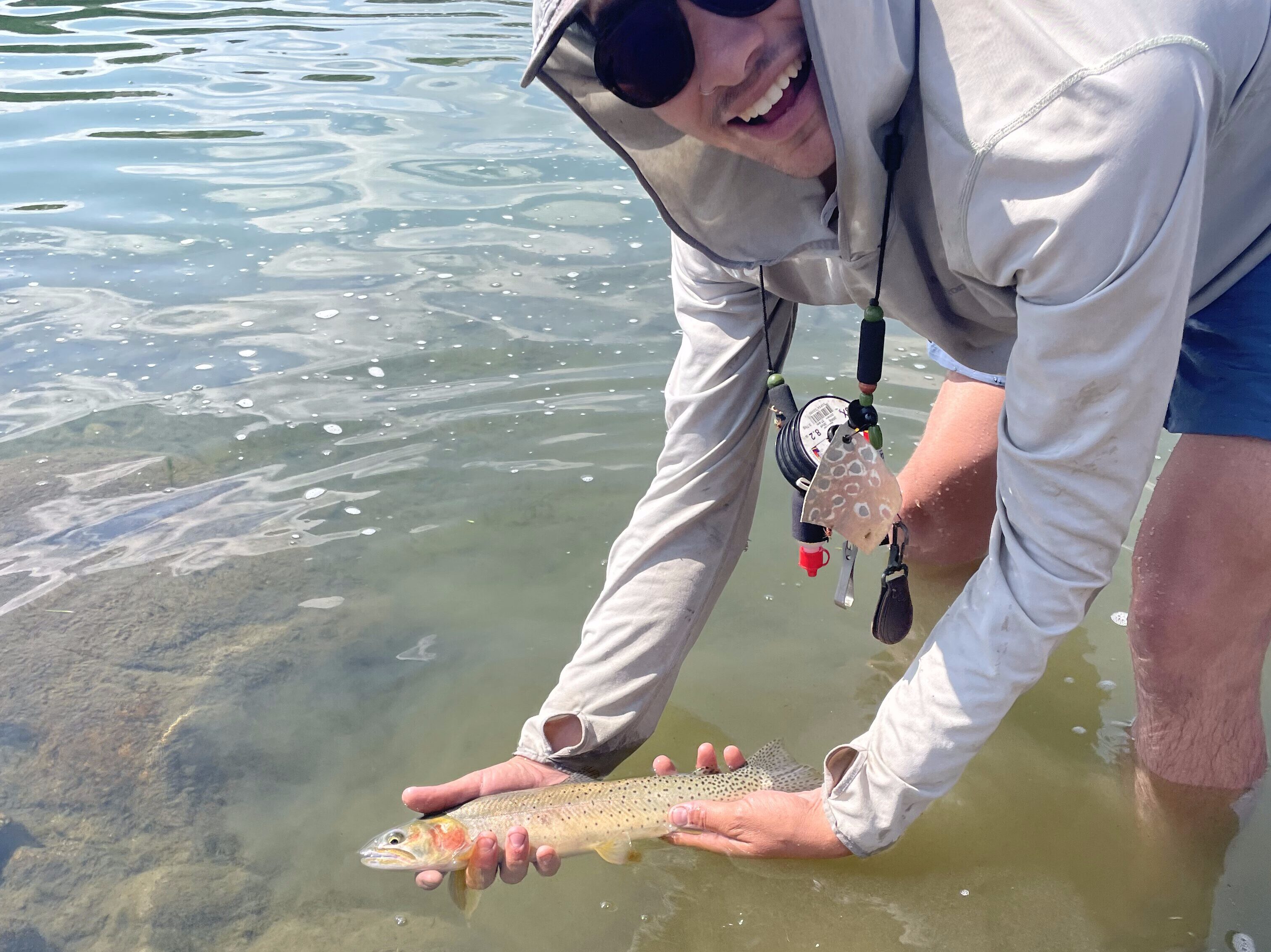
Image left: for lunch, invasive Oncorhynchus mykiss (rainbow trout) caught in a high alpine lake in Wyoming
Image right: the same lake is home to native Oncorhynchus clarkii bouvieri (Yellowstone cutthroat trout)
The Tragedy of the Commons
I want to share a lesson on sustainability pulled from my own undergraduate education: the Tragedy of the Commons. A shared pasture, the commons, can support many farmers if each exercises restraint. But when one farmer maximizes personal gain and grazes more cattle than is sustainable, the resource collapses and its value is lost to all. If one fisherman catches and releases 300 steelhead while another catches and releases 30, the impact is not equal. Efficiency, when left unchecked, will wear the resource beyond a point where it can be enjoyed.
Both camps of fishermen, gear and fly, will say that their goal is to catch fish. Here’s the uncomfortable math: if mortality rates are the same across methods, then the group catching more fish is killing more fish. Part of the reason I love fly fishing is just how difficult it is. Ask any angler that participates in both methodologies, and they will agree that generally, fly fishing is far less productive and far more frustrating. That’s not to say that fly fishermen are incapable of abusing the shared resource. I know many who have bragged about catching 30 fish in a day. I urge those who are adept at hooking fish on the fly to show more humility and call it good when every other cast is a fish to the net. Please fish sustainably.
Is our goal simply to put fish in the net, or, more holistically, to spend time outside doing something creative and challenging? Are we choosing – selfishly – to catch as many fish as possible, thereby having a greater impact on the fishery? Do we have a responsibility to choose the harder method?
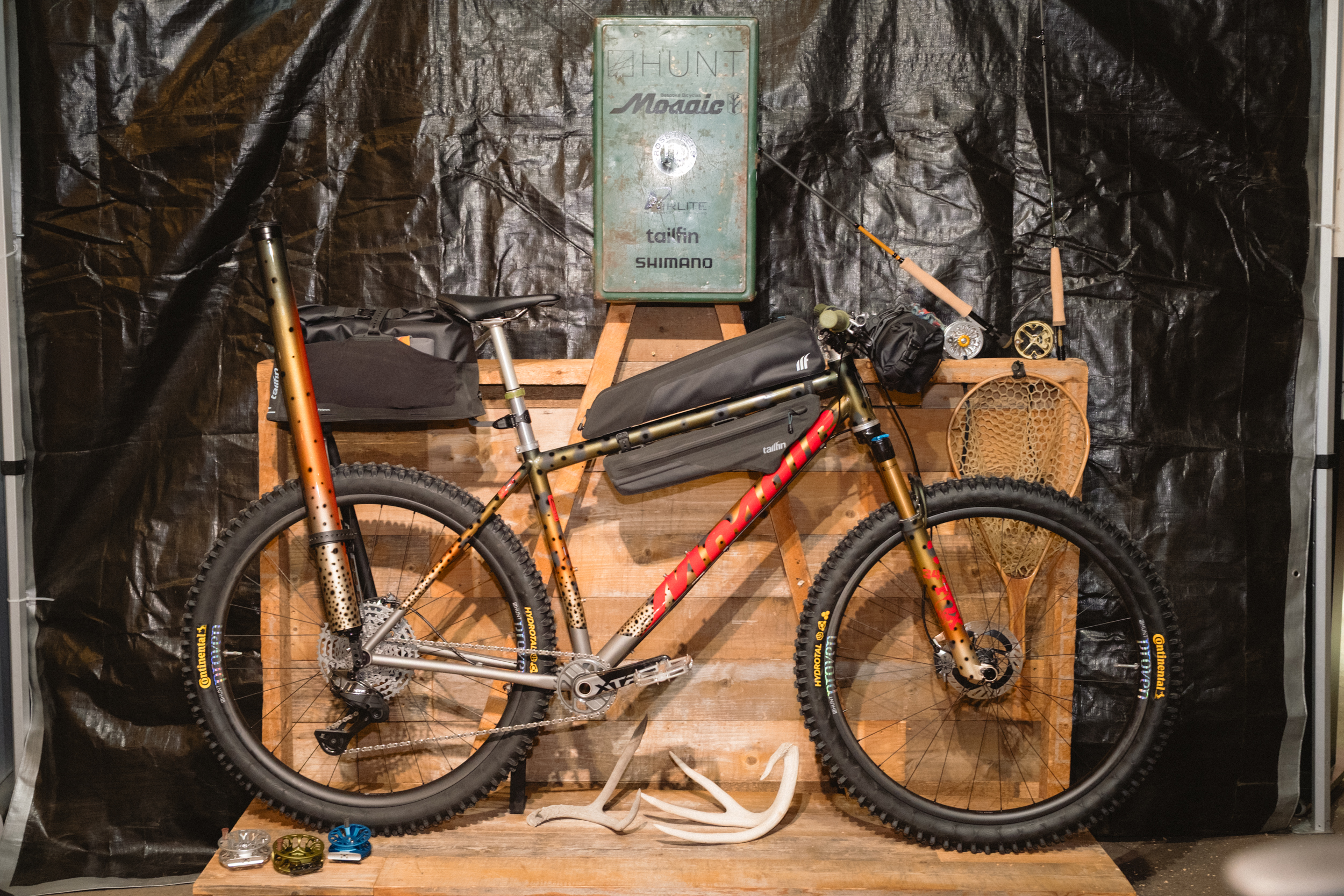
One of my favorite bikes from MADE 2026: the Trail Trout, from Mosaic Bikes, Hunt Wheels, and Ross Reels.
Can We Steer the Bike Industry Towards Greater Sustainability?
This is, most often, but sometimes, and importantly so, loosely, a bike blog… so let’s get into it.
Do I have a duty to reject industry trends and say that my experience on a bike is good enough? I do not need more gears, more speed, or more technology. Are we participating in consumption with an honest and humble understanding of our impact? Our industry is inherently consumeristic, but are we doing enough to negate our impact?
I’m only 27; I have time before I become a senile old man yelling at innovation and the momentum of human engineering. Still, I find myself asking uncomfortable questions about the cumulative impact of the small things on my bikes. What’s the environmental cost of DOT fluid versus galvanized shift cables? Do bladed spokes save me enough energy, and by wild extension, my need to eat one less snack, to justify their production? How many broken rims on my hardtail equal the environmental impact of producing the shock, hardware, and fluids of a full suspension bike? Does commuting exclusively by bicycle negate the effect the chemicals in my truck’s eroding tires have on the fish?
These questions border on absurd – but absurdity is often where ethical debate and intrinsic inquiry begin.
My argument is not that technology is inherently bad, nor that progress should stop. It’s that choosing to use this technology for self-serving purposes, without the ethical friction of internal debate or the humility to decline, causes harm. There is nuance here: we have explored it, we will continue to discuss it, and we will continue to find discomfort in our consumption.
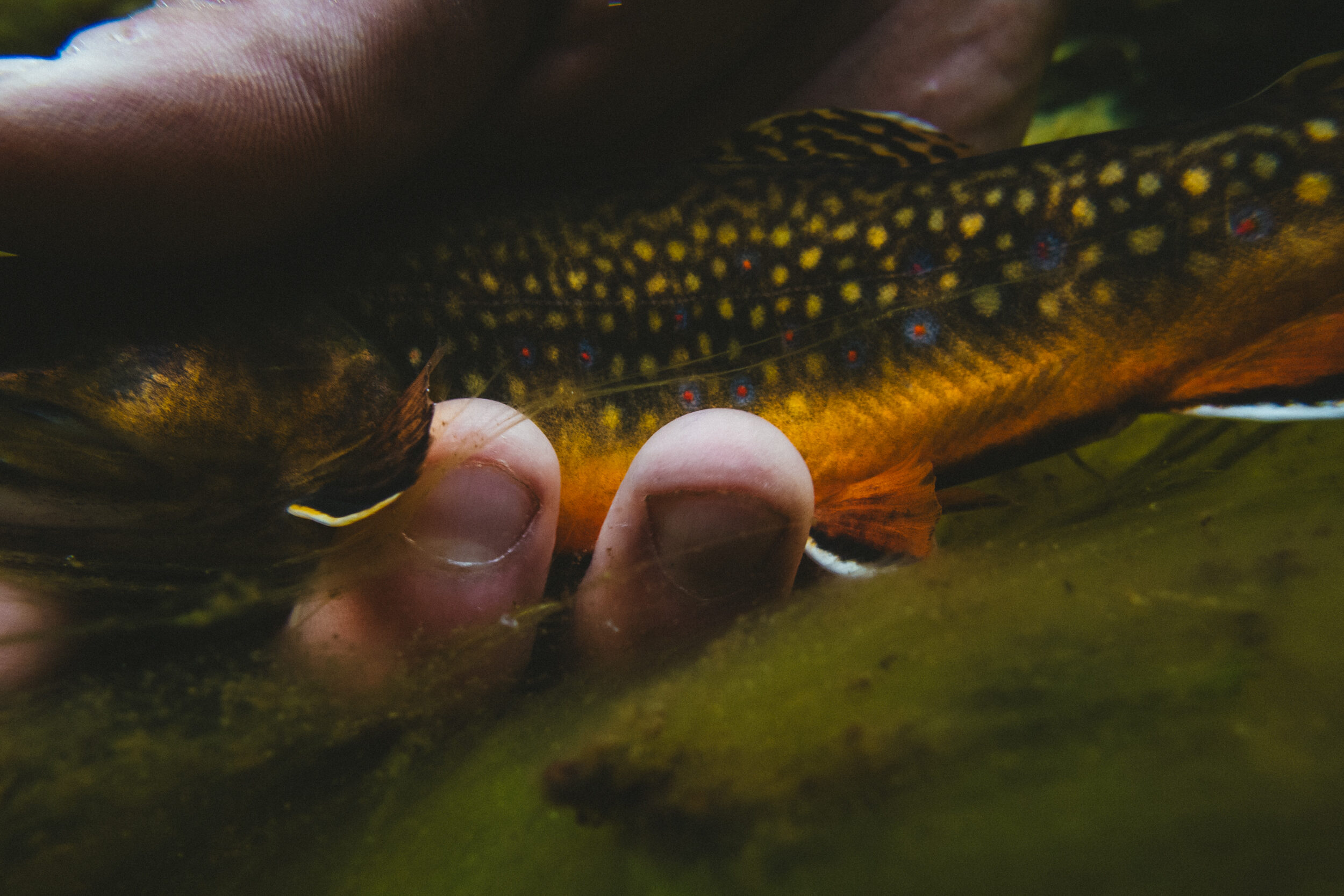
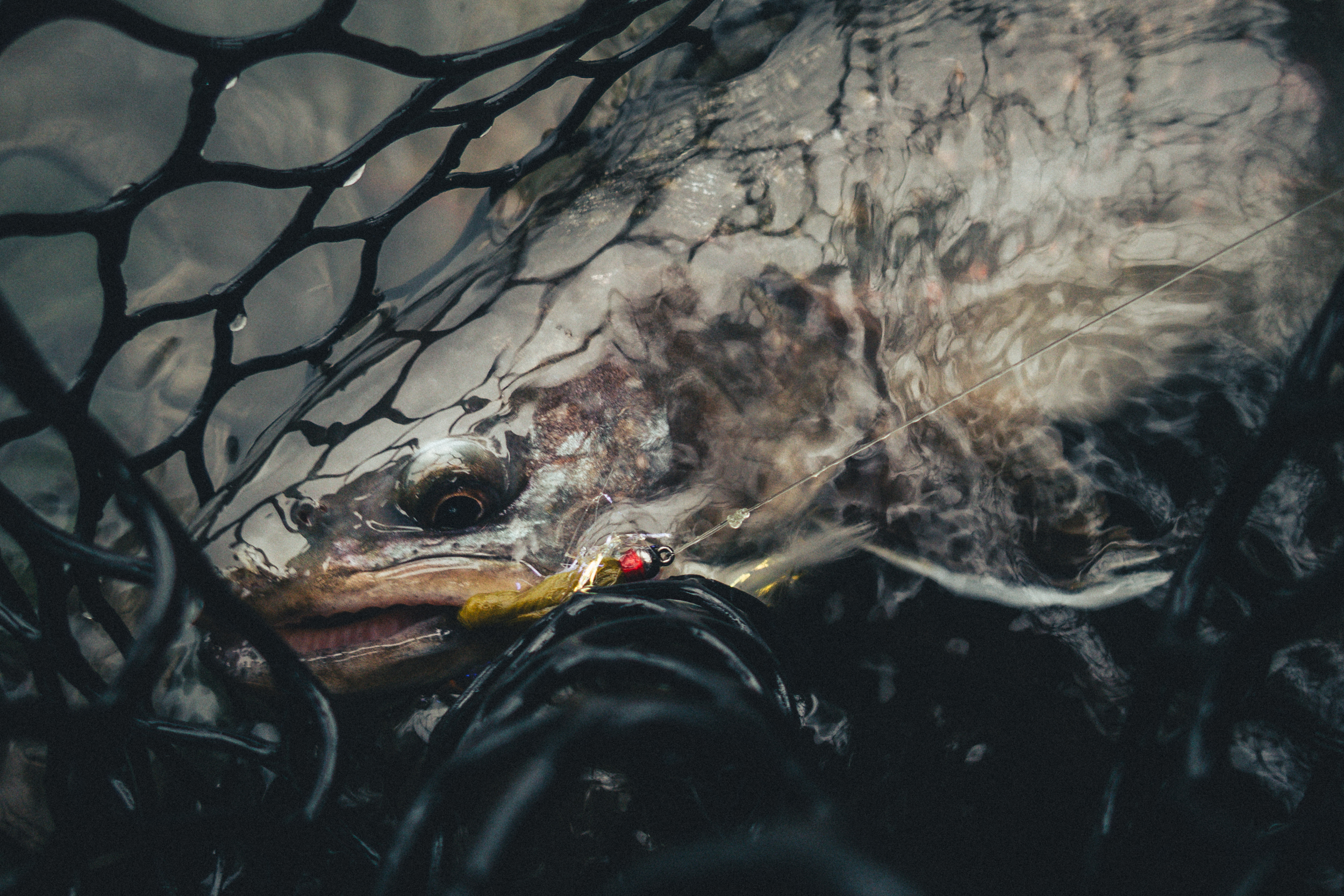
Image left: Salvelinus fontinalis (brook trout) must be the prettiest fish that swims in North America
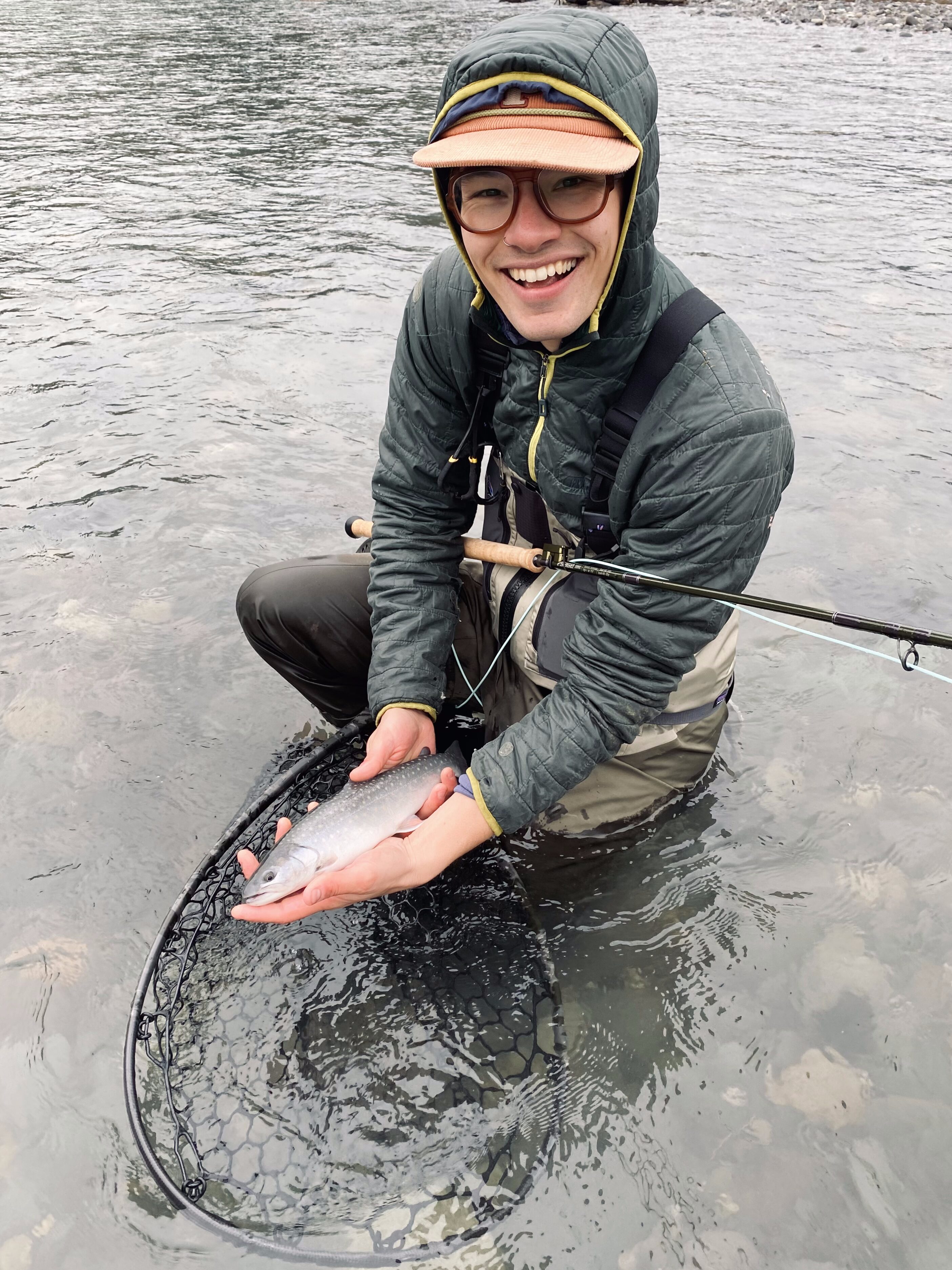
Image right: Salvelinus confluentus (bull trout) caught in a coastal Washington river
I’m Inside It and Uneasy
Yes, I’m completely aware that I’ve built an argument that one could sled on. Slippery slopes make for engaging discourse, and I want to entertain this conversation about consumption. Honestly, I do. If our goal were to have the least impact on the population of steelhead in a river, we wouldn’t attempt to catch them at all. One of my favorite regulations is one from some Canadian rivers: if a fisherman lands x-amount of fish then they must be done fishing for the day. This policy helps reduce the pressure that these rivers receive from fishermen.
There’s no user group more invested in the conservation, habitat protection, and sustainability of fish and their ecosystems more than fishermen. Likewise, there is no user group more invested in the sustainability of the bike industry than cyclists. I’m speaking of each group as a whole. Yes, there are players in each group unconcerned with their impact, but collectively, we can have great effect.
If our goal were to choose the most sustainable form of outdoor recreation with the smallest possible environmental footprint, we’d choose to walk through a plain of durable surfaces in the nude. Yet, here we are: clothed, geared and equipped with hooks, shovels, and tires. One could argue I’m writing this to justify my lifestyle choices. I’d argue I’m writing this to scrutinize them. Please realize that I am not preaching from outside the system – I am inside it and uneasy. Every time I hook a fish, I question the ethics of my decision. Every time I buy something new, I question the effect of my decision.
And yes, I will acknowledge that all of my musings seem a bit silly when our government insists on killing people and burning down the world. I’m not saying that riding bikes is killing fish; in fact, I think the more we can ride bikes, the better it is for the fish. I’m simply stating that consumeristic bike industry tendencies are negating the sustainability of the most energy-efficient transportation tool ever created. Cumulatively, it all adds up.

I Love My Roomba, and I Hate That
My belief – one that has only strengthened over time and is shared by many at this publication – is that the constant arms race of technology in bicycles is unsustainable and a losing battle for the planet. On a larger level, I believe that the proliferation of excessive technology into our daily lives is a net loss for the world. My scrutiny extends to many things: smart watches, electronic drivetrains, e-MTBs, Roombas, battery-operated pocket pumps, electronic bike bells, digital floor pumps… the list goes on.
This piece was somewhat inspired by my father mentioning that a pocket-sized battery-powered air compressor is better for him than a hand pump. When he told me this in a matter-of-fact tone, I scoffed. For most use cases, I don’t understand the need. A device like that requires vastly more resources to produce than something like the Wolf Tooth EnCase hand pump I carry – essentially just metal tubes and o-rings. I’ll concede that battery-powered pumps can seat tubeless tires. When my floor pump won’t do the job, I use the portable compressor I use to fill my truck tires or slip into my friend’s shop to use the compressor. For most people, these devices are a matter of convenience, not necessity. And convenience, when multiplied at scale, is rarely sustainable.

Electrification of the Bicycle
Functionally, a wireless derailleur and a cable-actuated derailleur perform the same task. The difference is that the wireless version contains a battery, a motor, circuit boards, and an entirely new failure mode: the electronic mystery. I have an electronic derailleur sitting in my parts bin that simply doesn’t work. The difference in riding experience between a cable-actuated drivetrain and an electronic one is marginal at best. But there is validity to the systems, as explained to me by an anonymous source. No longer is cable routing and maintenance of said cables a variable in the drivetrain performance. Now, warranty departments might be spending more time working on improving their product as opposed to concluding that a kinked cable was the source of the shifting symptoms for the derailleur mailed to them.
I cringe when I hear the argument that people choose e-MTBs because they want to ride further or squeeze in more laps. Beyond the measurable weight of a battery and motor, they carry invisible mass: habitat destruction, labor exploitation, and pollution associated with lithium-ion battery production. The bicycle is not free of this darkness either, but it is a bit less taxing when it comes to material sources. This is also not an argument against accessibility. Their widespread adoption was never altruism – it was profit. And yes, If demand didn’t exist at this scale, motors would remain expensive, rare, or limited in application. Accessibility is a silver lining, but silver linings are just that: a thin plating over an ugly framework.
Why Do I Ride
E-MTBs undeniably provide transformative access for riders with disabilities. They can also be wonderful tools for carrying trailbuilding or firefighting equipment deep into the backcountry without relying on roads. There is some sustainable use here, but only if we have the humility and restraint to find that balance.
My issue is not in the existence of the e-MTB, but its normalization as a default upgrade by fit, able-bodied riders chasing a thrill. I am in complete support of replacing a car with an e-bike meant for commuting, grocery getting, and child hauling. It’s the e-MTBs on the back of a truck that I have a hard time understanding.
I ride bicycles because I crave a challenge, to exercise, and to breathe hard. The satisfaction of a perfect handlebar-drag-corner is only felt because I fucked-it-up the five times previous. I want to case a root so that I can experience the satisfaction of clearing it the next time. Part of riding bikes is flatting, failing to fix it, and walking home. Sometimes, you don’t have the time or energy to go on an epic ride. Can we not ride the four miles to the trailhead? Aren’t we there to ride bikes?
Difficulty, inconvenience, and limitation are not flaws of the experience – they are what give it meaning. Overcoming, learning, improving, and being able to ride past where you once had to call it quits is part of the process. Enjoy the hardline when you are ready for it. I worry that we are losing that. Where did our collective appetite for physical adversity go?


We All Live Downstream
I encourage you to take this saying to heart: We all live downstream. It was introduced to me by a bumper sticker on my friend’s truck. That day, I had a lapse of judgement and almost drowned in a river where I may have floated into Puget Sound. The irony that the truck I then parked behind presented me with this ideological shaking was not lost on me. Everything we do floats downstream. Both in the actual sense of a meandering river, but also, in a less measurable daily-life kind of way. In a river, everything we do washes downstream. Good or bad, what happens in the headwaters affects the lower reaches. I have made choices since then to live a little differently.

Restraint and Sustainability
When it comes to fishing, I have chosen to flatten the barb on each and every one of my hooks. I make sure that I leave the riverside with more trash in hand than fish caught – like the random e-bike battery I found on the shoulder of the road where I turned off to fish this past weekend. I have chosen to take a deliberate attempt at reducing my efficiency and increasing my effort. These are my rules for myself, however arbitrary, frustrating, restraining, and egotistical they might seem.
With regards to bikes, I have similar self-defined and self-enforced rules, like: no driving to the trailhead unless I’m carpooling with a few and no commuting in the truck for a trip where a bike would suffice. I’ll learn to solder and try to repair that derailleur. I shop for groceries via bike because throwing away food that you carried up a hill feels heavier.
Altruism Can Be Selfish Too
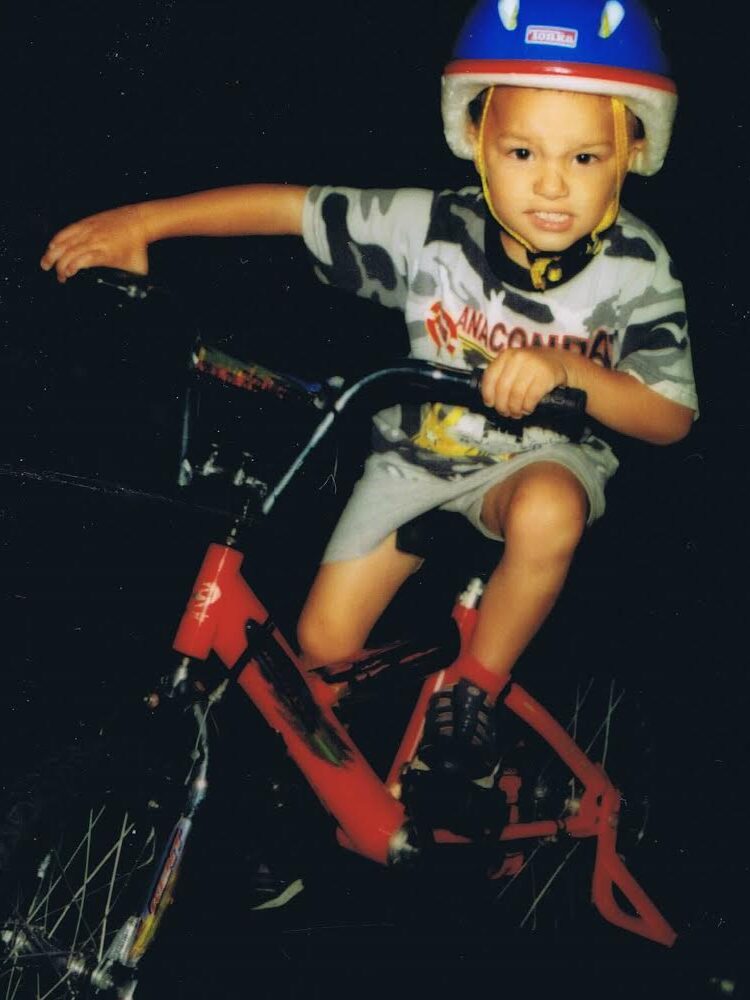
I question if this is still enough to satisfy the child I used to be who insisted he could save the world? I cried when I wrote that previous sentence. I’ve been drafting, rewriting, and rethinking this piece for months. And yet, that sentence cracked me wide open on a random Monday while sitting at the climbing gym. I desperately want every natural wonder, a perfectly hopped root, and a brilliant flash of silver deep in an eddy, to exist in the same wild ways for those that come after me, but also to exist for me. It is simultaneously altruistic and selfish.
Are my silly rules I’ve set for myself making any difference? In the grand scheme of the world, unlikely. But, in the measurable constraints of my own path through the world: Yes. Less trash is less trash, even when somebody kindly replaces it the next day.
I’m fully aware that the bikes in my shed wear electronic drivetrains, carbon wheels, hydraulic brakes, and bladed spokes. Is my possession of these novelties a direct contradiction of everything I’ve written thus far? Perhaps, and yes. So, going forward: restraint.
How am I choosing to engage with the fishery? Do I have the fortitude to refuse the newest and coolest? As cyclists, do we owe each other and everyone else, who, perhaps begrudgingly at times, shares the road with us, greater restraint?

How do we temper our desire for more – more fish, more laps, more technology – before the commons we love are diminished beyond recognition? Restraint, after all, isn’t defined by its purity – it’s measured in its effect and intention.
Recreate sustainably. Keep them wet. Shred lightly.
We all live downstream.