
As fuel prices climb and a possible new energy crisis ripples across Europe, a coalition of cycling and mobility organizations is making a clear, urgent case: the fastest path to energy independence may be as simple as getting more people on bikes.
A newly released manifesto from the European Cyclists’ Federation (ECF) and its partners lays out a 10-point plan to dramatically scale up cycling across the continent—positioning it not as a niche lifestyle choice, but as critical infrastructure in a time of crisis. Titled “Achieving energy independence and affordable transport for all,” the document argues that shifting everyday trips from cars to bicycles could deliver immediate economic relief while tackling long-term energy vulnerability.
“Europe cannot use fossil fuel subsidies as a way out of energy dependence,” said ECF CEO Laurianne Krid. “We need solutions that reduce fossil fuel use at source. Cycling is one of the fastest, cheapest and most effective tools we have.”
Why Cycling—and Why Now?
The timing is no coincidence. Europe’s transport system remains deeply reliant on imported oil, leaving it exposed to geopolitical shocks and volatile pricing. Short-term fixes like fuel tax cuts may ease pressure temporarily, but they do little to address the underlying issue: demand.
Cycling, by contrast, is extraordinarily efficient. According to the manifesto, a single kilometre travelled by bike uses up to 27 times less energy than the same trip by car. And with roughly 100 million short car trips made daily across Europe—many under 10 kilometres—the opportunity for rapid change is enormous.
Even small behavioural shifts could have meaningful impact. Replacing just 10 kilometres of daily driving with cycling could save households up to €500 annually in fuel and maintenance costs, while also reducing strain on energy systems.
As Paul Walsh, CEO of Cycling Industries Europe, puts it: “Cycling as part of a sustainable modal shift is not a niche alternative—it is a strategic asset for Europe’s energy security, competitiveness, and resilience.”
Five Changes Cities Can Make Right Now
The manifesto emphasizes that meaningful progress doesn’t require waiting decades. Many solutions are proven, relatively low-cost, and can be implemented quickly:
- Reallocate road space to create temporary or permanent “resilience bike lanes”
- Lower urban speed limits to 30 km/h, improving safety and reducing fuel consumption
- Offer financial incentives for bike purchases, e-bikes, and repairs
- Expand car-free days in cities and neighbourhoods
- Improve bike access on public transit and promote cycling tourism
Many of these ideas saw rapid adoption during the COVID-19 pandemic, when cities across Europe installed pop-up bike lanes and reimagined streets almost overnight. The manifesto argues that those lessons should now be institutionalized, not rolled back.
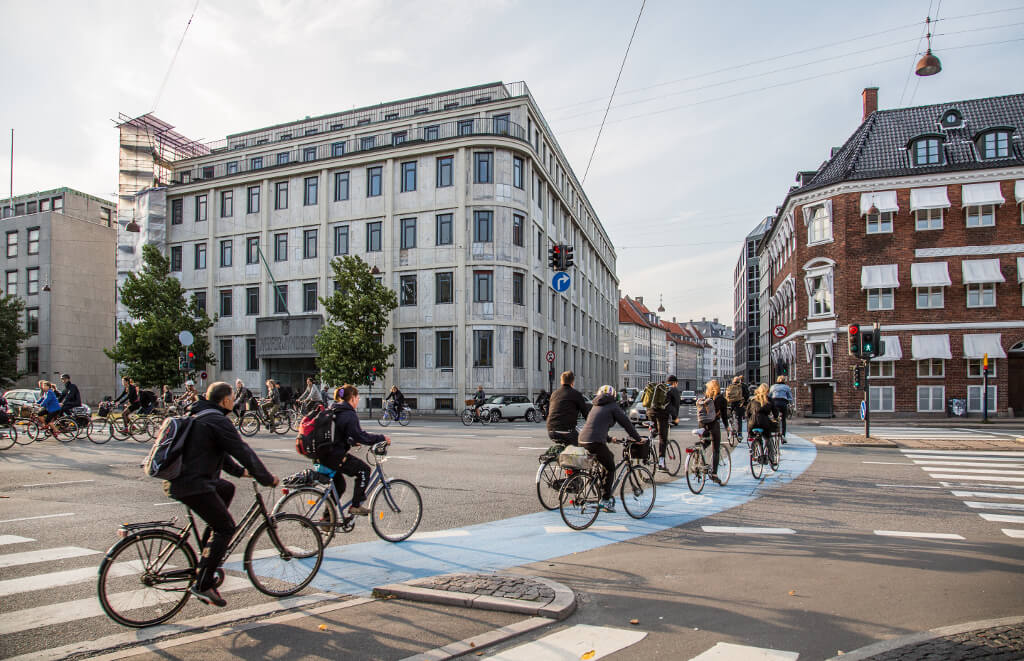
The best kind of traffic in Copenhagen
Building for the Long Term
Alongside immediate actions, the coalition calls for structural reforms to lock in gains and scale impact:
- Dedicate at least 10% of transport budgets to active mobility
- Expand bike-leasing programs through tax incentives
- Build connected, high-quality cycling networks
- Roll out bike-to-school initiatives
- Strengthen government capacity for active transportation planning
One standout example comes from Germany, where favourable tax treatment has helped put more than 2.2 million company-leased bikes on the road—demonstrating how policy can rapidly accelerate adoption.
A Missed Opportunity—and a Way Forward
While the European Commission’s recent communication on affordable energy does acknowledge cycling—highlighting infrastructure investments, purchase incentives, and support for bike-sharing—the manifesto’s authors argue it doesn’t go far enough. In particular, they point to the omission of company bike-leasing incentives, which have proven highly effective in reducing car dependence.
Still, the direction of travel is clear. As cities grapple with rising costs, congestion, and climate pressures, cycling offers a rare triple win: it’s fast to deploy, affordable for users, and dramatically less energy-intensive than driving.
The Bigger Picture
Beyond energy savings, the benefits ripple outward. More cycling means cleaner air, healthier populations, quieter streets, and more equitable access to transportation. It’s a systems-level shift hiding in plain sight.
“With the right political will, millions of short car trips can be replaced quickly,” Krid said. “Every journey shifted to cycling helps reduce fuel demand and frees up energy for essential sectors.”
For a continent searching for resilience in uncertain times, the humble bicycle is emerging as a powerful, practical tool—not just for getting around, but for redefining how cities move.