
1. Kettle Valley Rail Trail – British Columbia
Length: 492 km (part of The Great Trail)
Surface: Gravel, dirt, some paved sections
Best for: Bikepacking and panoramic mountain scenery
Arguably Canada’s most iconic rail trail, the Kettle Valley Rail Trail (KVR) is a sprawling epic that traverses some of British Columbia’s most stunning and varied terrain. Once part of the historic Kettle Valley Railway—completed in 1915 to connect the southern Interior—the trail now spans from Hope to Castlegar, offering hundreds of kilometres of gravel riding, rustic trestles, and high-elevation passes.
The most famous segment, through Myra Canyon near Kelowna, showcases 18 wooden trestles and two tunnels clinging to the cliffside—an engineering marvel and a cyclist’s dream. But beyond the canyon, riders can venture through sun-drenched Okanagan vineyards, rugged Similkameen valleys, and tranquil Kootenay lakeshores.
The trail is remote in sections, with minimal services, so bikepackers should come prepared. Still, the experience—soaring views, starry campsites, ghost towns, and a constant connection to history—makes it one of Canada’s most memorable cycling routes.
Pro tip: Ride in late spring or early fall to avoid wildfire smoke and heatwaves.
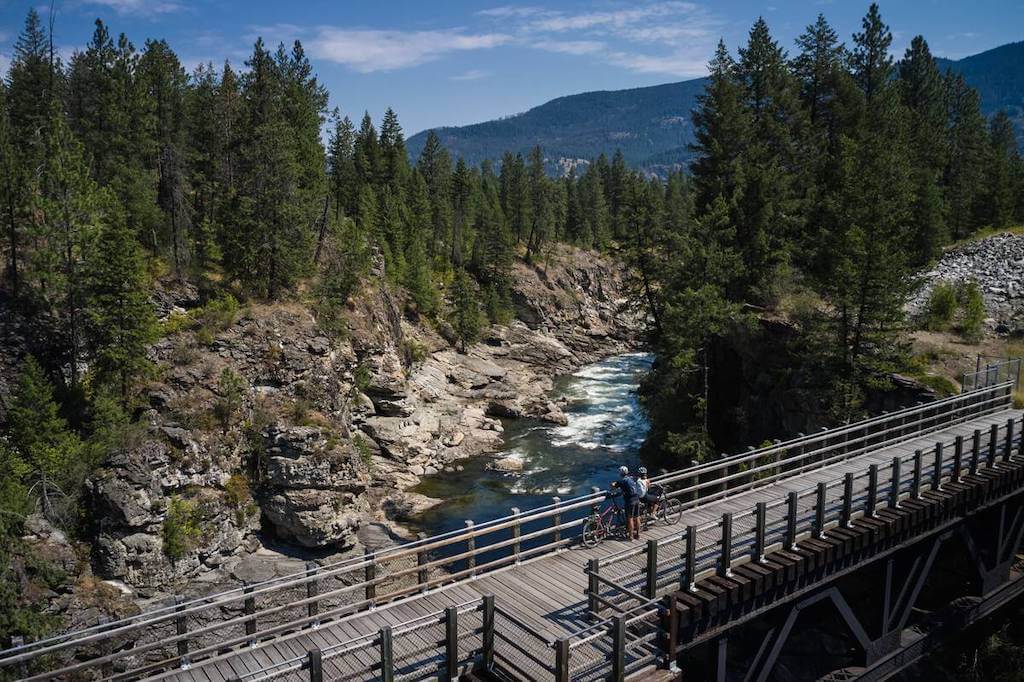
Biking on a trestle bridge on the Kettle Valley Trail in Christina Lake
2. Galloping Goose Trail – British Columbia
Length: 55 km
Surface: Paved and crushed limestone/gravel
Best for: Urban getaways and leisurely touring
Starting right in the heart of downtown Victoria, the Galloping Goose Trail lets cyclists transition from city bustle to quiet in a matter of minutes. Following a former Canadian National Railway corridor, this multi-use trail stretches 55 km from the capital all the way to Sooke, winding past lakes, estuaries, farmland, and cedar groves.
Ideal for hybrid bikes or touring setups, the trail is mostly flat and well-maintained, making it one of the most accessible long-ish rides on Vancouver Island. Ride past Sooke Potholes Provincial Park, stop for coffee in Metchosin, or simply pedal into nature for a few hours. The Galloping Goose also connects to the Lochside Trail, offering additional routes north toward the Swartz Bay ferry terminal.
This trail isn’t just a local commuter route—it’s an easy and accessible gateway to some picturesque backroads and parks, with regular rest stops, trail signage, and food options along the way.
Pro tip: Combine this with the Lochside Trail for a ~90 km loop with overnight options.
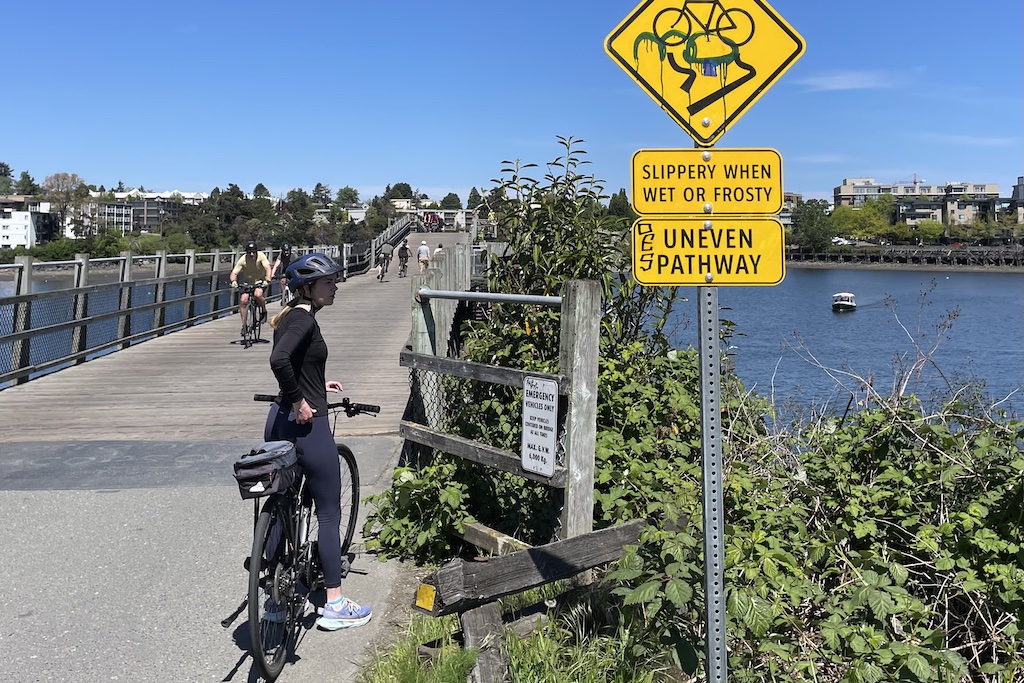
Galloping Goose Trail in Victoria is a popular tourism corridor for cyclists
3. Cowichan Valley Trail – British Columbia
Length: 122 km (part of The Great Trail)
Surface: Gravel
Best for: Vineyard hopping and historic trestle bridge rides
Running through the forested heart of southern Vancouver Island, the Cowichan Valley Trail is a scenic, car-free dream linking Shawnigan Lake to Lake Cowichan, Duncan, and Chemainus. This trail weaves through the ancestral territory of the Coast Salish peoples, past moss-draped maples and quiet lakes, following the footprint of the former CN Rail line.
One of the trail’s major highlights is the Kinsol Trestle, one of the tallest wooden railway trestles in the world. At 44 metres high and 187 metres long, this restored masterpiece is worth the ride on its own. But keep going and you’ll find charming small towns, boutique wineries, and uncrowded waterfront stops.
Though the trail is part of the Great Trail network, it feels much more local and intimate than some of BC’s better-known routes. It’s a perfect balance of natural beauty, rustic rail history, and cultural experiences—plus, there are plenty of delicious places to stop for a glass of Pinot Noir.
Pro tip: Take a weekend to explore the area’s wine and cider scene—bike racks are common, and most vineyards welcome cyclists.
4. Iron Horse Trail – Alberta
Length: 300+ km
Surface: Gravel, some sand
Best for: Rural adventurers and prairie fans
Northern Alberta’s Iron Horse Trail may not have the mountain views of BC’s routes, but what it offers instead is solitude, authenticity, and a glimpse into Canada’s railway and Métis heritage. Running 300 km from Waskatenau to Cold Lake, the trail cuts across boreal forest, muskeg, and open farmland, often under huge prairie skies.
The route follows a former CN rail line and includes stopovers in small towns like Smoky Lake, Elk Point, and Bonnyville. You’ll find quiet lakeside beaches, rustic camping, and even grain elevators—reminders of Canada’s agrarian roots.
For cyclists, this trail is ideal for bikepacking or multi-day gravel touring. While the trail can be sandy in spots, it’s mostly rideable with a gravel or mountain bike. Local tourism groups offer shuttle options and accommodations catering to trail users.
Pro tip: Pack bear spray, bug spray, and plenty of water—this is wild Alberta, and services are few and far between.
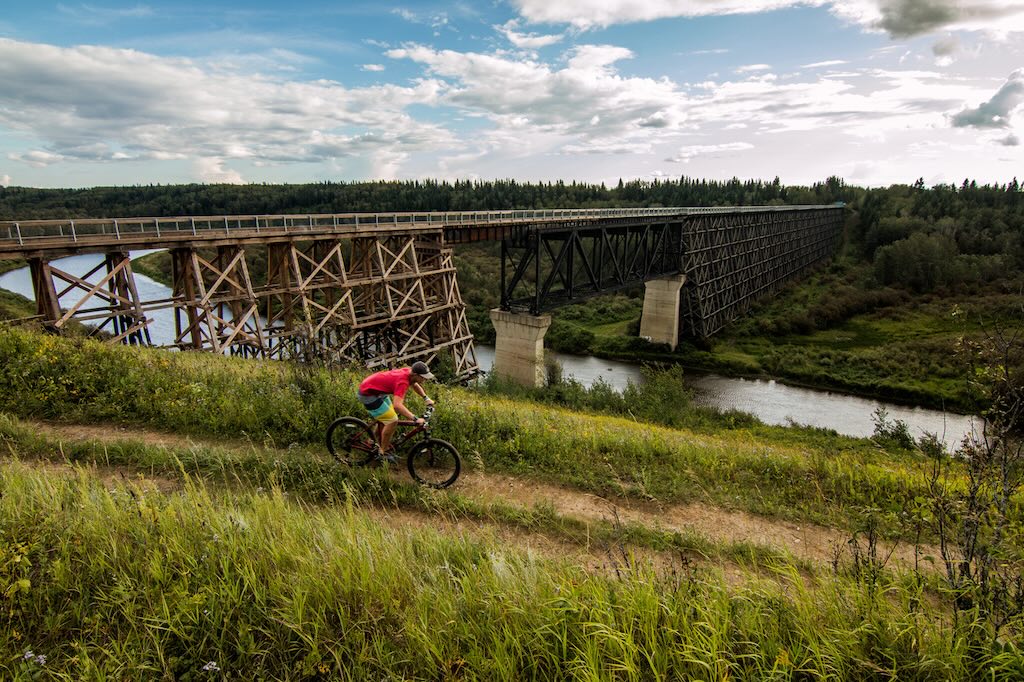
Cyclist with the Beaver River Trestle bridge in the background (photo: Brandon Born)
5. Elora Cataract Trailway – Ontario
Length: 47 km
Surface: Gravel and limestone
Best for: Family day trips and small-town charm
Tucked into southern Ontario’s picturesque countryside, the Elora Cataract Trailway is a linear rail trail connecting the villages of Elora and Cataract (near Forks of the Credit). It’s an easygoing route perfect for families, new cyclists, or anyone who enjoys farm views and the sound of gravel under tire.
The trail passes through charming towns like Fergus, with its Scottish roots and stone architecture, and runs alongside the Grand River in places. Keep an eye out for herons, wild turkeys, and even foxes. It’s also a great trail for fall rides—rolling farmland and hardwood forests blaze with colour in October.
You won’t find a ton of services directly on the trail, but the towns it passes through have plenty of cafés, patios, and bike shops. It’s also a good jumping-off point for exploring Elora Gorge or the trails of the Grand River Conservation Area.
Pro tip: Begin your ride in Elora and treat yourself to post-ride poutine at the local brewery.