
Summary
The southpaw stance is one of the most disruptive and misunderstood positions in combat sports. Defined by a right-foot-forward, left-hand-rear alignment, the southpaw flips the geometry of every exchange, forcing orthodox opponents to adjust their timing, footwork, and defensive instincts in real time. This guide breaks down the southpaw stance across three disciplines, boxing, Muay Thai, and MMA, covering the key techniques, tactical advantages, common vulnerabilities, and specific training methods that make the stance effective at every level. Whether you are a natural left-hander looking to sharpen your tools, an orthodox fighter adding southpaw to your arsenal, or a coach trying to prepare your athletes for the mirror matchup, this article gives you the technical detail you need. As Muay Thai World Champion and Evolve MMA instructor Chaowalit Jocky Gym explains, “A good southpaw does not just stand differently, he thinks differently. Every angle, every entry, every counter starts from a position your opponent has not prepared for.”
Key Takeaways
- The southpaw stance mirrors orthodox, but the effect goes far beyond positioning. It reshapes the angles of every strike, takedown, and defensive exchange, creating openings that most fighters are not trained to handle.
- The straight left hand and rear left kick are the stance’s signature weapons. Both travel directly into the gaps created by an orthodox opponent’s guard, making them high-percentage attacks when set up correctly.
- Foot positioning is the hidden battle in every southpaw vs. orthodox fight. Whichever fighter places their lead foot outside the other’s gains the dominant angle for offense; this detail alone can decide rounds.
- The southpaw stance carries real vulnerabilities. The open-side body kick in Muay Thai and the right cross in boxing are constant threats that southpaw fighters must drill against specifically.
- Stance switching multiplies the southpaw’s value. Fighters who can shift between orthodox and southpaw mid-exchange keep opponents guessing and open up combination possibilities that a single stance cannot provide.
- You do not need to be left-handed to fight a southpaw. Many elite fighters adopt the stance strategically, and consistent training in southpaw footwork and striking builds the comfort needed to use it effectively.
The southpaw stance places the right foot and right hand forward, with the left foot and left hand positioned at the rear. This makes the left hand the primary power weapon and the left leg the rear kicking leg, while the right side controls range, manages distance, and sets up attacks. It is the direct opposite of the orthodox stance, where the left side leads, and the right side generates power.
The term “southpaw” originated outside of combat sports; it was first used in baseball to describe left-handed pitchers, but in fighting, it has become shorthand for a stance that creates immediate discomfort for the majority of opponents. While left-handed fighters naturally gravitate toward the southpaw position, many right-handed fighters have learned it strategically, switching into it mid-fight to change rhythm and create openings that did not exist a moment earlier.
What makes the southpaw truly distinct is how it changes the geometry of fighting. Every punch, kick, and movement pattern is reversed. A jab comes from an unexpected direction. A rear power strike cuts straight into the centerline of an orthodox fighter’s guard. Footwork angles flip entirely, meaning the defensive habits an orthodox fighter has spent years building are suddenly less reliable. This is why southpaws are often described as awkward, not because the stance itself is unusual, but because it forces opponents to fight against patterns they rarely encounter.
The Southpaw Stance In Boxing
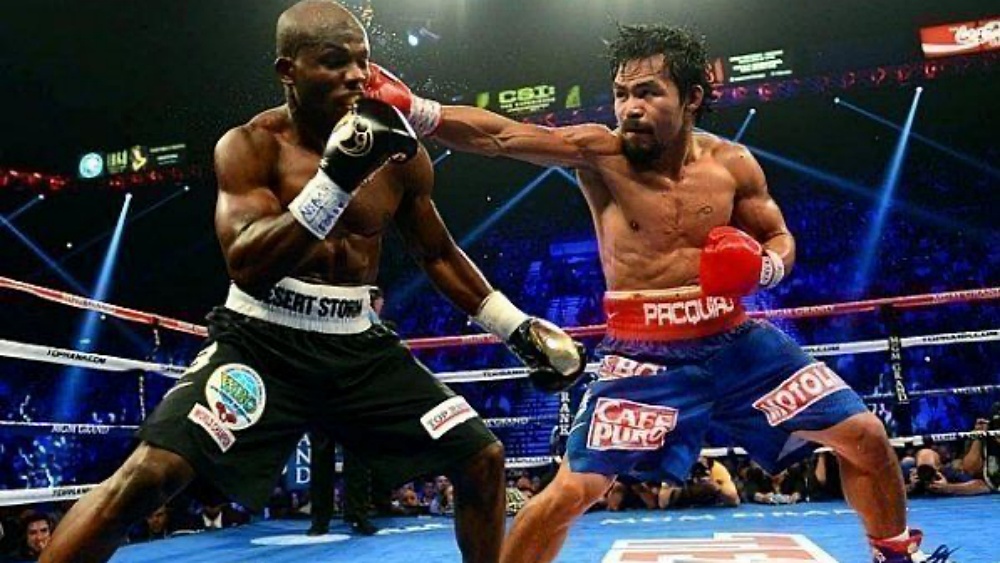
Boxing is where the southpaw’s disruptive reputation was built. Fighters like Manny Pacquiao, Pernell Whitaker, Marvin Hagler, and Vasyl Lomachenko have demonstrated how the stance can neutralize even the most prepared orthodox opponents when wielded with precision.
1) The Straight Left Hand
The signature weapon of the southpaw boxer is the straight left hand. Against an orthodox opponent, this punch fires directly through the gap between the opponent’s lead shoulder and rear hand. Because the stances are mirrored, both fighters’ rear hands travel down the centerline simultaneously, but the southpaw’s left cross often arrives first when paired with proper foot placement. The key mechanic is driving from the rear left foot, rotating the hips fully, and extending the left hand straight — not looping- through the target. When the punch is thrown correctly, the opponent’s lead shoulder provides almost no obstruction.
2) The Lead Right Hook
The lead right hook is the southpaw’s second most dangerous tool in boxing. Because orthodox fighters are conditioned to watch for left-hand power, the right hook curving around their guard can land cleanly before they register the threat. This punch works best when thrown tight, elbow at roughly ninety degrees, fist turning over at impact, and when set up by a jab or feint that draws the opponent’s attention to the center.
3) Footwork And The Lead Foot Battle
In every southpaw vs. orthodox exchange, foot positioning is the silent contest that determines who has the advantage. The principle is simple: whichever fighter places their lead foot to the outside of the other’s lead foot controls the angle. For the southpaw, getting the right foot outside the orthodox fighter’s left foot creates a clear lane for the straight left hand and takes away the opponent’s rear cross. Conversely, losing this foot battle exposes the southpaw to the orthodox fighter’s power side. Elite southpaw boxers circle to their right constantly, keeping their lead foot in the dominant position while moving away from the opponent’s strongest weapon.
4) Vulnerabilities In Boxing
The open stance matchup means the orthodox fighter’s right cross has a direct path to the southpaw’s chin, just as the southpaw’s left cross threatens the orthodox fighter. Southpaw boxers who neglect the lead-foot battle or become flat-footed give orthodox opponents clean opportunities to land their most powerful punch. Defensive responsibility in southpaw boxing is constant; you cannot rely on positioning alone.
The Southpaw Stance In Muay Thai
In Muay Thai, the southpaw stance takes on additional dimensions because the art uses eight points of contact. The stance does not just change punching angles; it reshapes the entire kicking, clinch, and elbow game.
1) The Rear Left Body Kick
The most feared weapon from the southpaw stance in Muay Thai is the rear left body kick. Against an orthodox opponent, this kick targets the open right side of the torso, an area that is difficult to protect without dropping the guard and exposing the head. The mechanics involve stepping the right foot slightly offline to create the angle, rotating the hips fully through the target, and striking with the shin rather than the foot. Over the course of a fight, repeated left body kicks degrade an opponent’s ability to breathe, move, and throw with power. Fighters like Saenchai and Tawanchai PK Saenchai have built careers around the devastating effectiveness of this single technique.
2) Elbows And Knees From Southpaw
The southpaw stance creates unusual entry angles for elbows and knees. From the clinch, a southpaw fighter can lock a collar tie with the right hand while generating sharp upward knees from the left side — a trajectory that orthodox opponents are less practiced at defending. Lead right elbows become especially dangerous because they arrive from the outside of an orthodox fighter’s vision, cutting across the temple or eyebrow line before the opponent recognizes the attack.
3) Stance Switching In Muay Thai
Thai legends like Saenchai popularized seamless stance switching long before it became fashionable in Western combat sports. By flowing between orthodox and southpaw mid-combination, a fighter can launch attacks from entirely different angles within a single exchange. A common sequence is throwing a right kick from orthodox, landing in southpaw, and immediately firing the left body kick — giving the opponent two power kicks from opposite directions with almost no recovery time between them. At gyms like Evolve MMA in Singapore, where instruction comes from multiple World Champion Muay Thai coaches, training in both stances is treated as a fundamental skill rather than an advanced add-on.
4) Vulnerabilities In Muay Thai
The orthodox right body kick aimed at the southpaw’s open left side is the primary threat. Because the southpaw’s left leg is positioned at the rear, the front of the body is naturally more exposed to right-side attacks. Southpaw nak muays need to develop sharp kick-checking reflexes and learn to counter immediately after blocking — turning a defensive moment into an offensive opportunity rather than simply absorbing damage.
The Southpaw Stance In MMA
Mixed martial arts adds grappling, cage work, and takedowns to the equation, giving the southpaw stance additional layers of tactical value beyond pure striking.
1) Striking From Southpaw In MMA
The left cross remains the centerpiece of southpaw striking in MMA. Conor McGregor built his early UFC career on the precision of his left hand, timing it against orthodox opponents who could not solve the angle. Anderson Silva used southpaw striking to dismantle opponents with counters, waiting for them to commit before firing back from the mirrored stance. The principles are the same as in boxing; the straight left travels the centerline, the lead right hook catches opponents looking inside, but in MMA, these strikes are amplified by the threat of kicks and takedowns that force opponents to widen their defensive attention.
2) Takedown Angles From Southpaw
One of the most underappreciated advantages of the southpaw stance in MMA is how it changes takedown entries. A southpaw fighter shooting a single leg from the lead right side attacks an angle that orthodox fighters rarely drill against. The opponent’s typical sprawl timing is slightly off because the entry comes from a mirrored direction. Double legs from a southpaw also benefit from the angle; the southpaw can penetrate to the opponent’s hips from their open side, making it harder to stuff the shot with a strong hip sprawl.
3) Cage Pressure And Control
Southpaw fighters can use the stance to cut off the cage effectively by circling to their right and pressuring the orthodox opponent toward the fence on their weak side. This limits the opponent’s escape options and creates opportunities for both striking and clinch entries along the cage.
4) Vulnerabilities In MMA
The same open-stance risks from boxing and Muay Thai apply in MMA, with the added danger of takedowns. An orthodox wrestler who wins the lead-foot battle can shoot directly into a southpaw’s hips from the power side. Southpaw MMA fighters need to maintain strong takedown defense awareness while managing the striking angles that make the stance effective, a balance that requires significant mat time to develop.
Strengths And Weaknesses Of The Southpaw Stance
The southpaw stance thrives on unfamiliarity and angle control. Its greatest strength is structural: the rear left hand and rear left kick both travel directly into the gaps created by an orthodox opponent’s guard, giving the southpaw high-percentage weapons that are difficult to take away completely. The rarity of the stance means most opponents have significantly less experience dealing with it, which translates into slower reaction times and more openings.
The weaknesses are real but manageable. Losing the lead-foot battle exposes the southpaw to the opponent’s most dangerous weapons. The open side of the body requires specific defensive preparation, whether the threat is a right cross in boxing or a right body kick in Muay Thai. The stance also demands strong conditioning to maintain the lateral movement that keeps the advantage intact — a southpaw who becomes stationary loses the geometric edge that makes the position effective.
Training The Southpaw Stance
Developing proficiency in southpaw requires structured, deliberate practice, not just occasionally standing in the mirrored position during sparring.
Footwork is the foundation. Dedicated rounds of circling to the right, maintaining the lead-foot advantage, and pivoting off the lead right foot build the balance and spatial awareness that southpaw fighting demands. Shadow work in southpaw, throwing combinations, checking kicks, and moving in all directions, develops comfort before any contact training begins.
Pad work should isolate the stance’s core weapons. The straight left hand, the lead right hook, and the rear left body kick should each get focused rounds where the fighter works on timing, power generation, and proper hip rotation. A coach calling combinations that mix these tools with defensive movements builds the automatic responses that translate to live fighting.
Sparring rounds dedicated entirely to southpaws are essential. Even naturally orthodox fighters benefit from spending entire sessions in the mirrored stance. The initial awkwardness fades with repetition, and what replaces it is a genuine second fighting position that can be deployed at will.
Defensive drilling deserves equal attention. Southpaw fighters must specifically prepare for the orthodox right cross and right body kick — the two attacks most likely to exploit the stance’s open side. Blocking, parrying, and countering these specific attacks should be a regular part of training, not an afterthought.
“The best southpaw fighters are not the ones with the most power; they are the ones who have trained their footwork until it is second nature. When your feet know where to go without thinking, your hands and kicks will find the target on their own.” — Chaowalit Jocky Gym, Muay Thai World Champion & Instructor at Evolve MMA
Frequently Asked Questions About The Southpaw Stance
Q: What Does Southpaw Mean In Fighting?
A: Southpaw refers to a stance where the right foot and right hand are forward, with the left side positioned at the rear as the power side. It is the mirror image of the orthodox stance.
Q: Is The Southpaw Stance Only For Left-Handed Fighters?
A: No. While many left-handed fighters adopt southpaw naturally, right-handed fighters can and do use it for tactical advantage. With consistent training, any fighter can develop comfort and effectiveness in the stance.
Q: Why Is It Harder To Fight Against A Southpaw?
A: Most fighters spend the majority of their training facing orthodox opponents. The southpaw reverses all the familiar angles, timings, and defensive patterns, creating an unfamiliarity that slows reaction times and opens up opportunities for the southpaw fighter.
Q: What Is The Most Important Technique From The Southpaw Stance?
A: In boxing, the straight left hand is the primary weapon. In Muay Thai, the rear left body kick is equally or more important. In MMA, both are dangerous, and the added threat of takedowns from mirrored angles increases the stance’s overall value.
Q: Can I Switch Between Orthodox And Southpaw During A Fight?
A: Yes. Stance switching is a common tactic at the highest levels of boxing, Muay Thai, and MMA. It keeps opponents guessing and creates combination opportunities that a single stance cannot provide. However, it requires dedicated training to execute without leaving yourself off-balance during transitions.
Q: What Is The Biggest Weakness Of The Southpaw Stance?
A: The open side of the body is the primary vulnerability. In boxing, the orthodox right cross has a clear path to the chin. In Muay Thai, the right body kick targets the exposed torso. Southpaw fighters must train specific defensive responses to these attacks.
Q: How Do I Start Training In The Southpaw Stance?
A: Begin with shadowboxing and footwork drills in the mirrored position. Focus on balance, circling to the right, and throwing basic combinations. Progress to pad work, then dedicate sparring rounds entirely to southpaw. Consistency is more important than intensity — regular practice builds the comfort needed to fight effectively from the stance.
Q: Does The Southpaw Stance Work In Self-Defense Situations?
A: Yes. The same advantages that apply in competitive fighting, unfamiliar angles, direct lines for the rear hand, and disrupted timing, apply in self-defense contexts. However, the stance is most effective when backed by proper training in striking fundamentals.
You may also like:
The Ultimate Guide To The Muay Thai Clinch