Published May 15, 2026 02:49AM
Welcome to Velo’s China Cycle coverage, where we share our favorite things we’ve found at the 2026 show. Bikes, components, accessories, and more: if we think it’s cool, you’ll see it. See the rest of our China Cycle coverage.
I’m going to pull back the curtain and just be honest: Chinese cycling products are the single biggest thing driving tech interest from readers right now. Thirty-two-inch wheels are maybe a distant second. For now, though, that subject is mostly just a curiosity. Chinese tech is a true paradigm shift.
The reason is simple. People love an underdog that challenges the establishment. Traditional Western brands are the establishment, and there is a growing narrative that their prices are out of control and out of step with the tech being offered. Riders feel like they are paying a premium just for a decal without getting a return on their investment. Chinese brands don’t have that legacy name to upcharge for, and the lower price tags have everyone’s attention.
Since my job is to cover what riders actually care about, I jumped on a plane and navigated the logistical hurdles of getting to Shanghai. Here is what I actually saw on the ground, and how the reality differs from the prevailing narratives.
Is the Massive Scale of China Cycle the Only Metric That Matters?
The official name is simply China Cycle — without the word “show” — and the constant refrain on the floor is just how huge it is. The footprint is bigger than Eurobike back when I attended a few years ago at its peak strength. It’s so big that while I normally hit 10,000 steps traversing Sea Otter, I logged 20,000 steps on my first day in Shanghai. It’s so big there’s an internal tram just to ferry attendees from the entry building to the far side of the venue. Simply put, it’s massive.
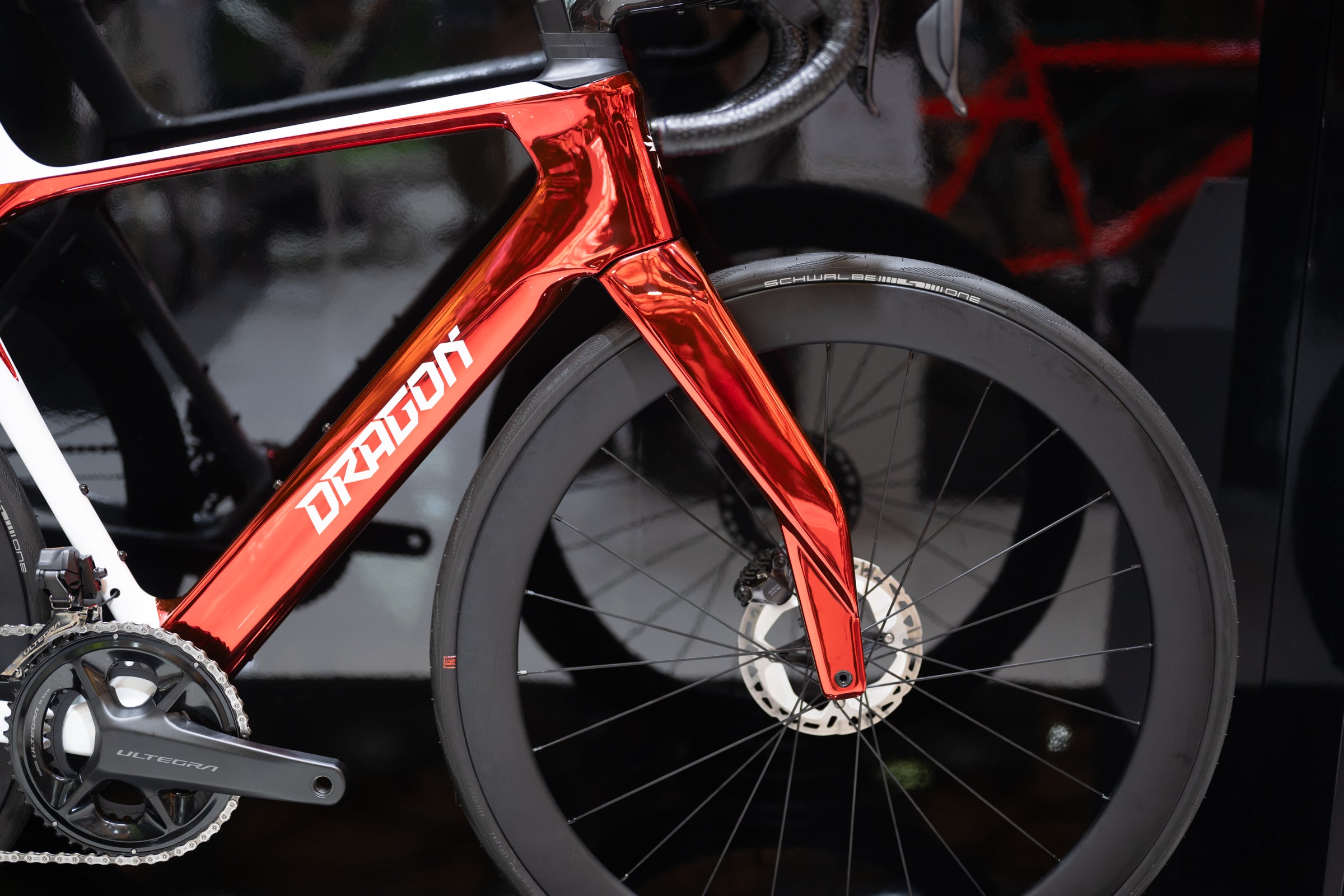
Size isn’t the real story, though. The vast majority of what is on display at China Cycle isn’t all that interesting to those of us who care about performance road and gravel gear. As a counterpoint, Sea Otter is much smaller physically, but it is incredibly concentrated. You might walk less in California, but nearly every single booth you pass is completely relevant to the performance market, right down to the apparel, tools, and nutrition.
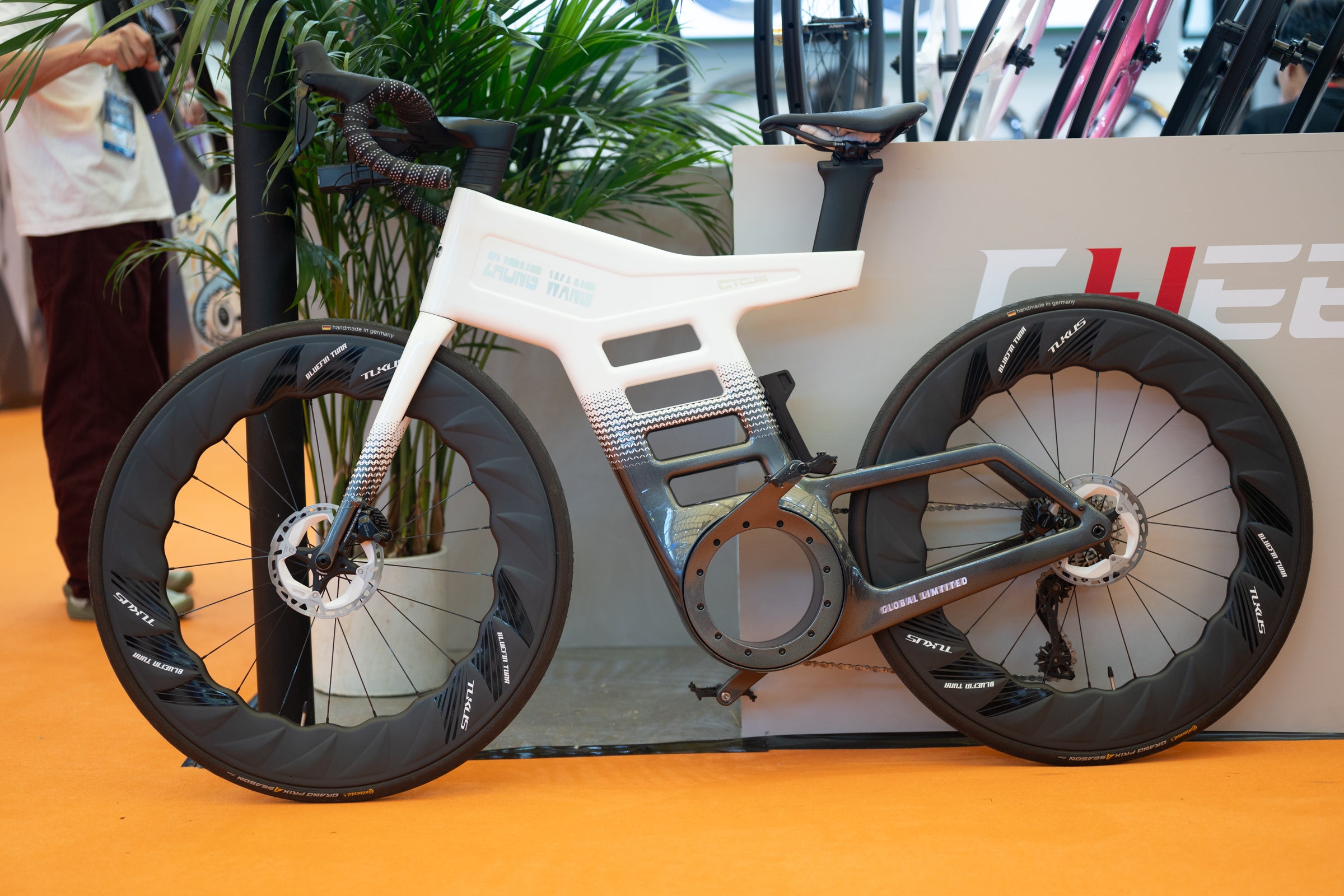
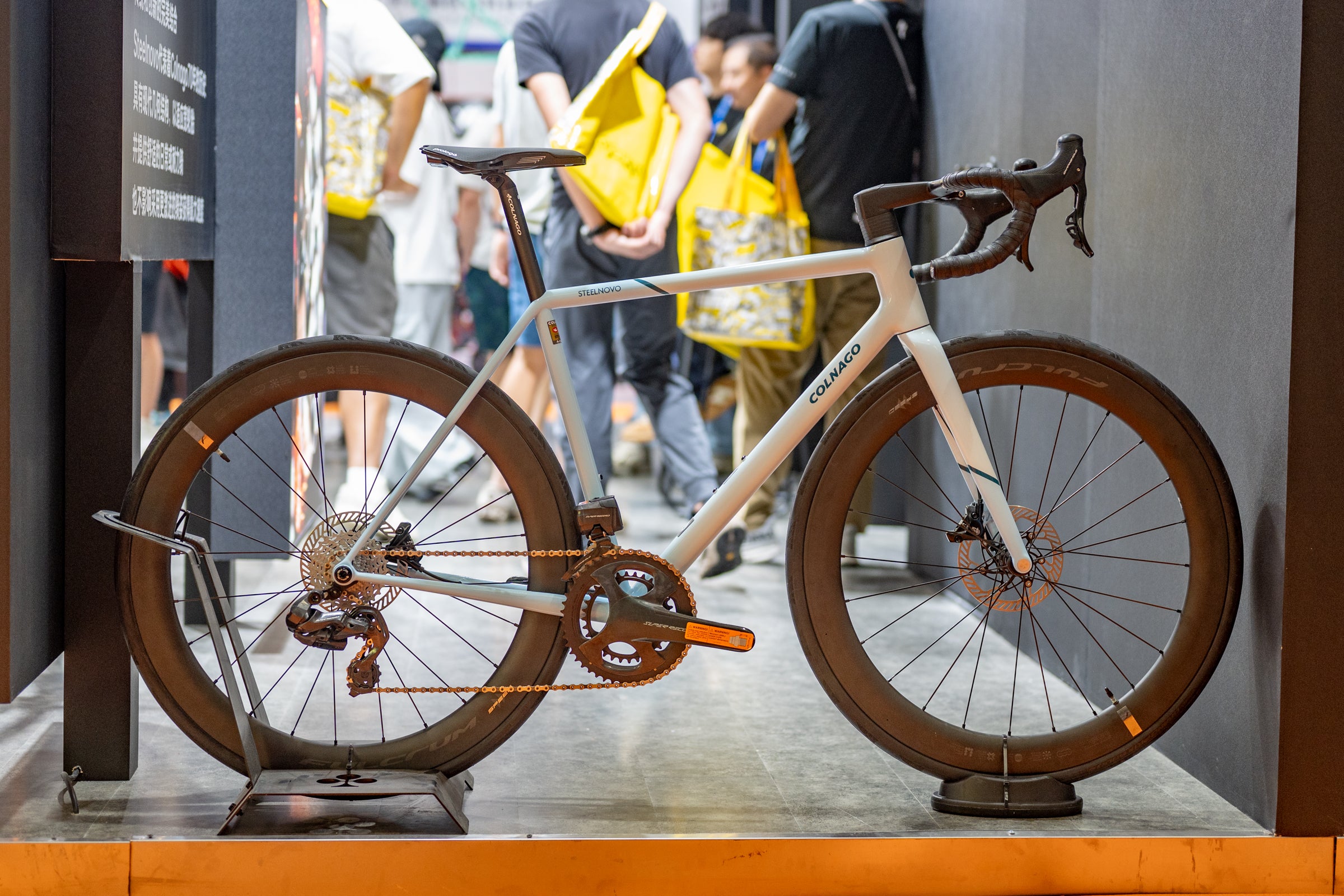
If you distill China Cycle down to the components we actually care about, the footprint is probably not much bigger than Sea Otter. There is one hall packed with interesting domestic bike and wheel brands, and another hall dedicated to international legacy brands — like Colnago — who view mainland China as a massive new market for luxury prestige. The rest of the halls could disappear and Velo readers wouldn’t even notice, though there is certainly dedicated space for mountain bikes and e-bikes that serve their respective audiences.
Does Chinese Bike Quality Actually Match Western Standards?
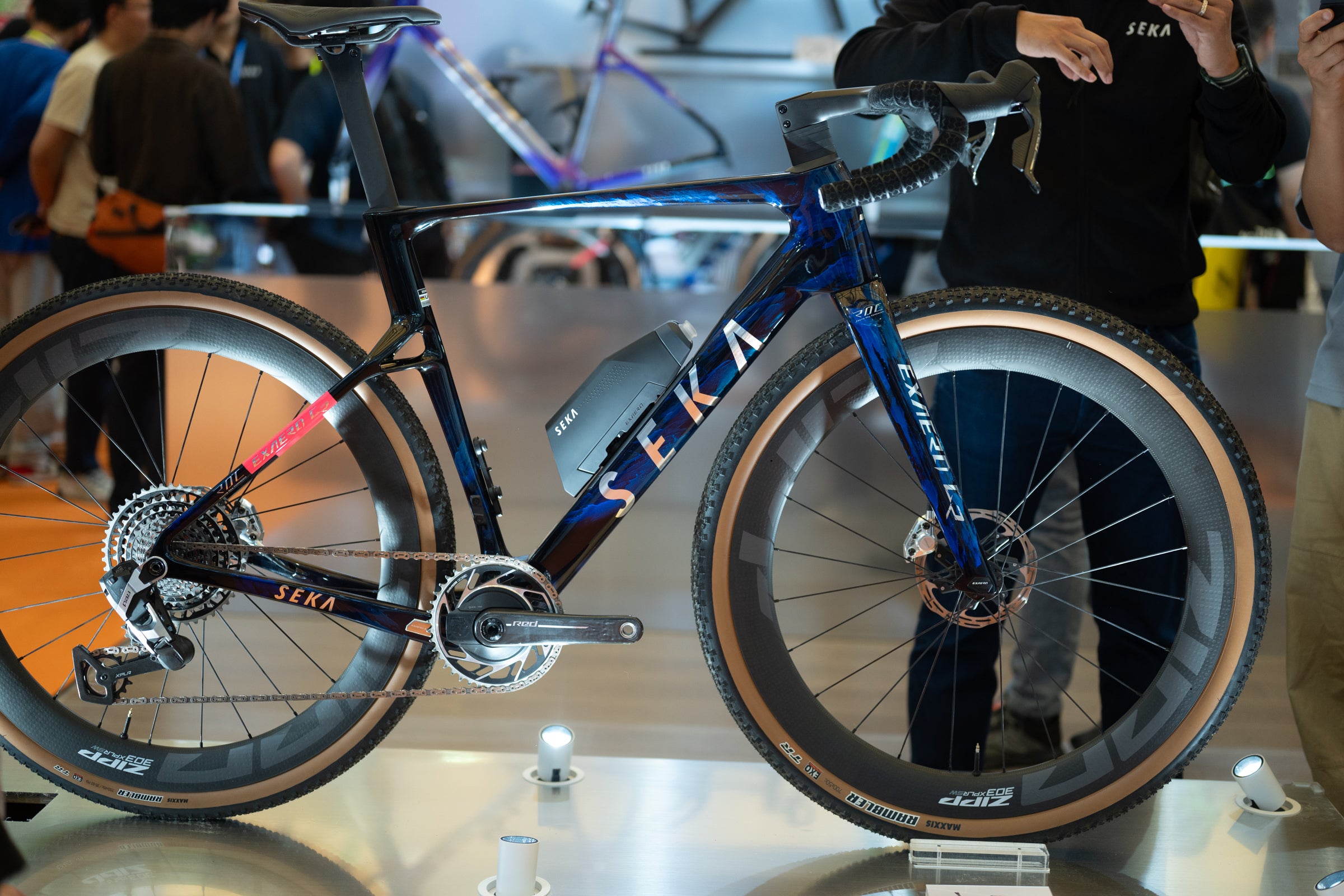
Yes, absolutely — and people know it at this point. The old narrative was that Chinese products were poor quality and you got what you paid for. It’s a reputation not helped by AliExpress-style mystery components, but at China Cycle, that’s just not the reality. No one looks at the prominent Chinese brands, some of which sponsor WorldTour teams, and seriously questions the quality.
These are the factories making the bikes everyone already buys, but now they are making their own products. At this point, American consumers understand this. They know this isn’t some second-rate copy of a copy. The gear you buy from the known Chinese brands rivals the best of the best.
Despite that, Chinese brands continue to use price as their primary differentiator. When we write about Chinese bikes, it’s never solely because a brand is selling the absolute best product on the market. Instead, the story is that the products are excellent and cost thousands less. I share some of the blame as someone who writes those headlines, but the Chinese brands are actively inviting that comparison.
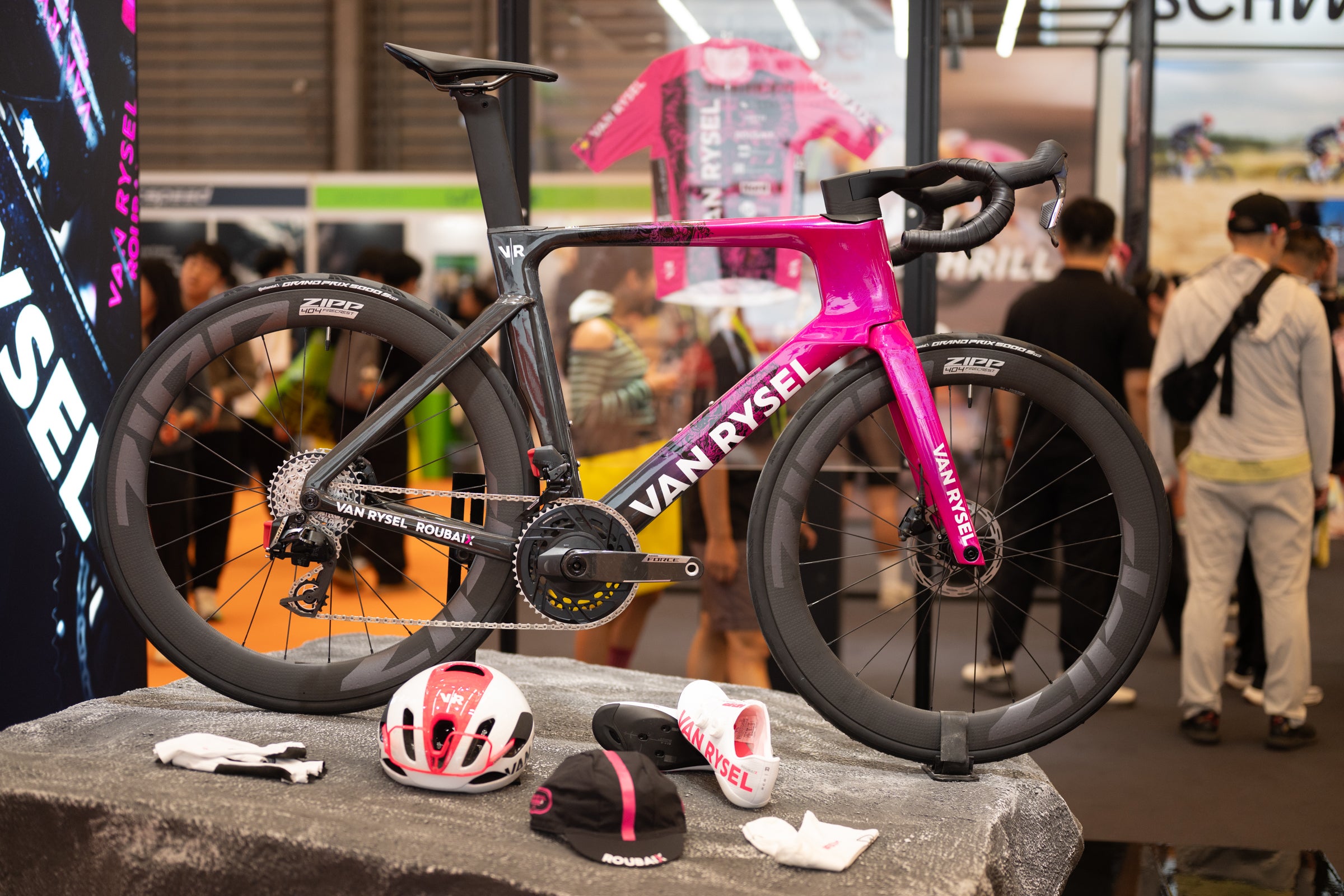
When I talk to the reps on the ground, they understand exactly what their chosen pricing model is doing. It’s no accident that these products are priced so aggressively. A Western brand will typically look at what the market is willing to bear and price a product accordingly. Chinese brands are playing a completely different game.
That is still a long-term problem, though. A singular focus on price will eventually be a losing game. A Western brand understands the psychology of pricing in a different way. It knows that price equals perception, and severely undercutting the market devalues the brand name. As a consumer, you might hate hearing that, but it’s well-documented and real, regardless of how you feel about it.
The Chinese brands understand this too, but as I said, they are playing a different game. The Chinese cycling industry has a distinct plan, even if a major hurdle remains for these brands to clear.
How Does a Lack of Storytelling Hold Chinese Bike Brands Back?
Telling a compelling story is the difference between a mass-market success and a niche product. If you hated the idea that undercutting price devalues a brand name, you are likely going to hate this concept even more. Regardless of how you feel, it’s true.
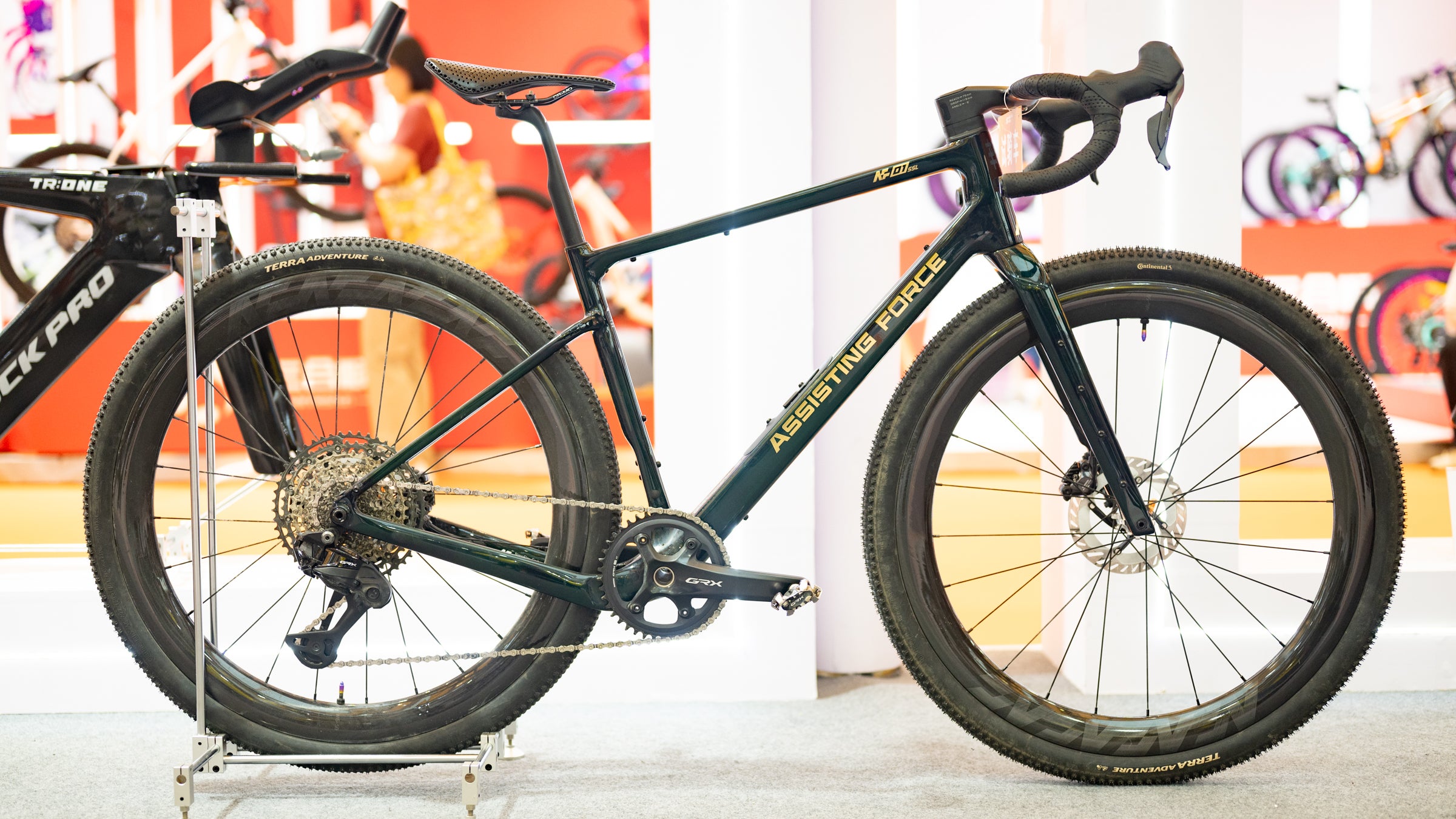
Chinese bike brands do not understand how to tell a story, nor do those brands seem to grasp how much that story matters for sales. Walk up to a booth at China Cycle and ask about a product, and you’ll never hear that it’s the fastest wheel you can buy. You also won’t hear how a frame is nearly the lightest on the market, but also soaks up bumps at a specific resonance frequency — or whatever engineered buzzword a marketing department has cooked up this year to help you ride faster for longer.
You might counter by saying none of that marketing speak is true anyway. It doesn’t matter.
Western brands understand how to sell the sizzle. This is a basic marketing tenet, and it’s not about lying. Selling the sizzle is about understanding your consumer and building a product with a unique selling proposition targeted specifically at them. It identifies a problem and solves it in a meaningful way.
When Specialized builds the Aethos, the engineers understand the consumer. Each decision along the way is made with that rider in mind. Then, at the end of the process, the marketing team is tasked with explaining why those decisions were made in a way that resonates. If you hate the Aethos 2 because it’s too tall and almost an endurance bike, that’s fine. Specialized has the Tarmac for you; the Aethos is designed for someone else.
Chinese brands aren’t there yet. These are factories that understand technology, not consumer psychology. When you find a new bike at a China Cycle booth, the representative will tell you the specs and the price. There is no contextual story about why it matters, how it compares to other products, or why it is special. That lack of narrative makes it hard for a broader audience to understand the value proposition. You might be an enthusiast who already gets it, but that leaves a lot of buyers out and consigns the products to a niche market. Coincidentally, that is exactly how Chinese products are currently selling. Enthusiasts love it but there’s a bigger market out there.
Are Legacy Brands Delusional About the Rising Threat of Chinese Tech?
As I toured a factory in China during a ceremonial opening, I ran into the Chairman of Cinelli. He’s charismatic and a talker, and we chatted about exactly what this article is covering: Where is the Chinese market headed, and how should a Western brand respond? I told him it seemed obvious that a Chinese manufacturer would raise prices over time. What he told me, though — and I’ve heard this from others in the industry — is that it’s very difficult to raise prices. Instead, it’s much easier to start high and bring prices down.
That is a comforting thought for the establishment, but it misses a fundamental piece of the puzzle. It won’t keep a legacy brand safe for one simple reason: The Chinese factories making these bikes already possess superior technology and production capabilities. Right now, they are struggling to tell a compelling story, but the foundation is already there. It is easy to build a marketing apparatus when you already have an exceptional product. That is the major lesson from China Cycle.
At the big opening-night industry event, the China Bicycle Association shared that its theme for the year is moving from “size to strength.” All the pieces are in place for exactly that move. All it’s going to take is a better understanding of consumer psychology. That is the easy part.
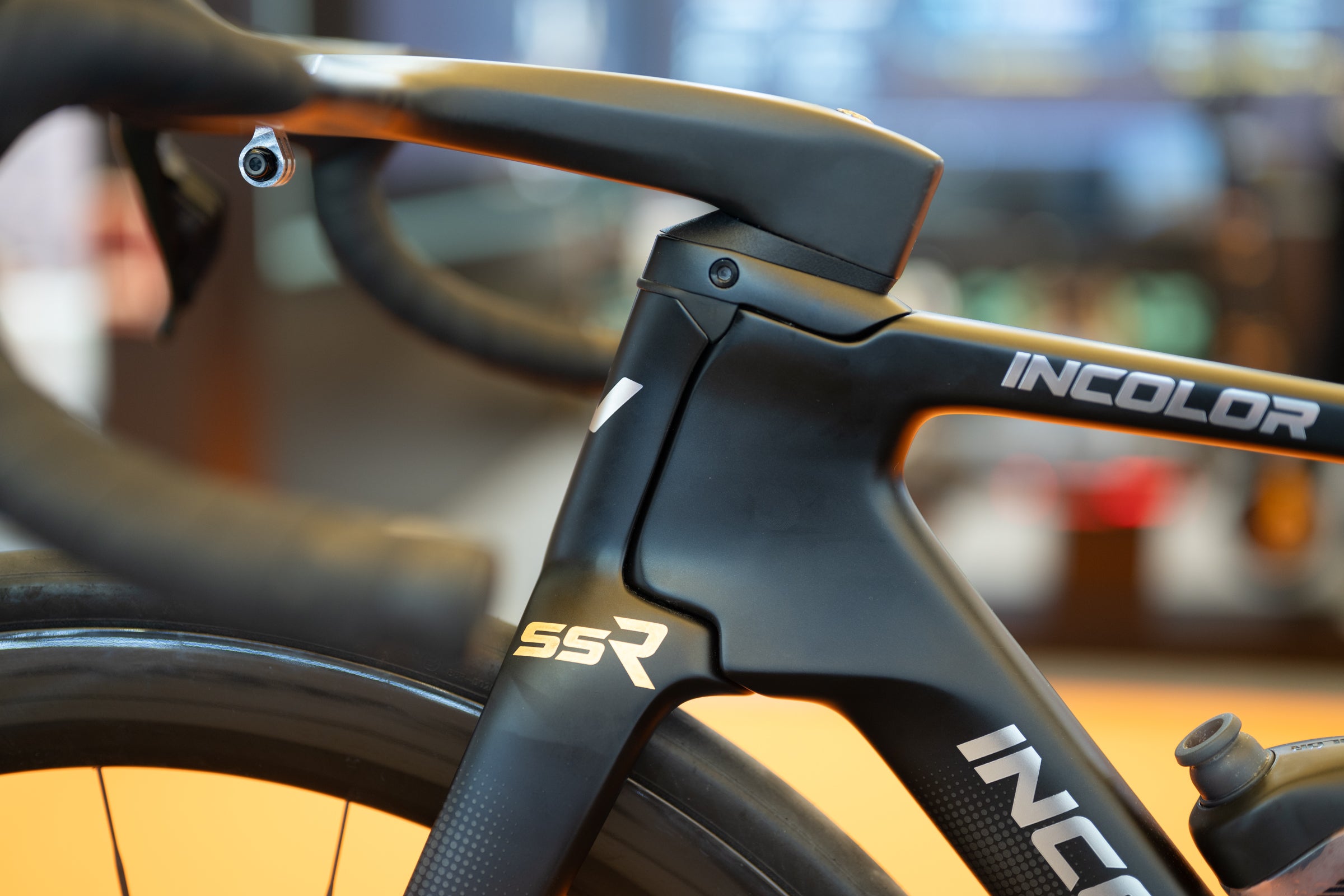
Still, I don’t think the long-term outlook is all doom and gloom for the Western market. There will certainly be more competition, and it’s going to be high-end, high-technology competition. There will be no hiding behind a legacy decal. It will take real innovation to compete, or it will take rock-bottom prices. A brand that charges a premium without offering a genuinely compelling product is simply going to lose.
In the end, consumers will benefit, but I also think we are in a golden era for the enthusiast right now. Chinese brands will raise prices over time because that’s the exact path other industries have followed in Western markets. The products are already great, so when that inevitable price hike happens, you won’t be getting more for your money.
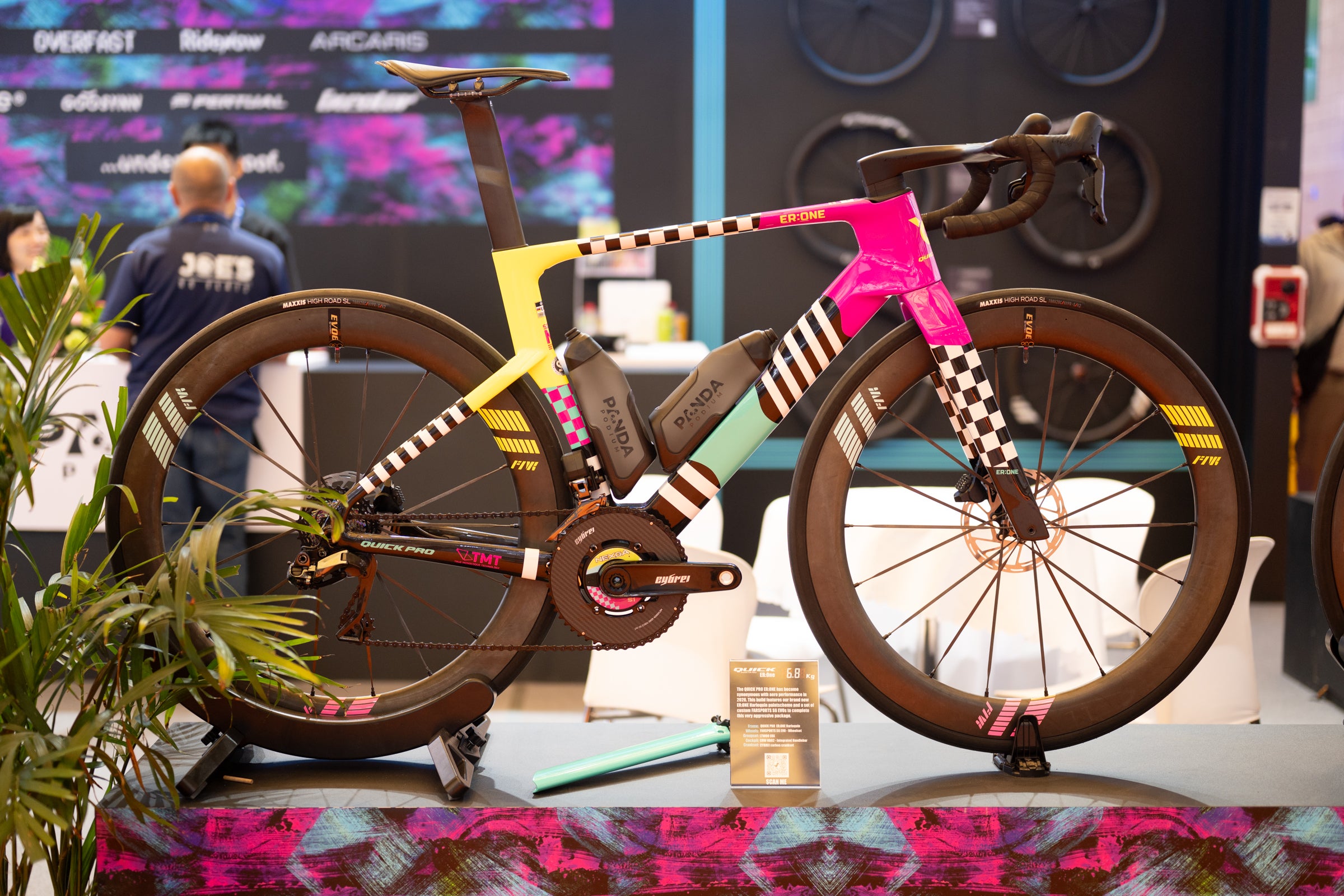
I have a friend who went out and bought a Quick Pro ER:One this year and built it with Super Record 13. That was a smart move. In the future, that exact bike will show up in a U.S. store being sold as a fully built bike with marketing behind it. You won’t have to hunt for it on a direct-to-consumer site, but it will cost more.