

James Breese | Performance System Architect
All clinical standards and performance engineering at Cricket Matters are overseen by James Breese — Level 5 Sports & Clinical Therapist (LCSP Assoc. Member: 9390), ECB Coach, S&C Coach, and Sports Nutrition Coach. Our system integrates clinical biomechanics, strength & conditioning, and metabolic nutrition — supporting athlete safety and performance under repeated load.
Why cricketers get back pain is one of the most misunderstood questions in sport. I was reminded of this while working with a young female cricketer — strong player, ambitious, sidelined for years by persistent back pain.
Persistent back pain had taken her out of the game completely.
She’d tried everything: stretching, rehab, rest, massage, core work, endless doctors and medical professionals. She’d even been through every scan imaginable, all of which came back clear.
Structurally, she was fine. Functionally, she wasn’t.
The moment she moved, pain showed up. So we ran a complete SFMA assessment, and it lit up with dysfunction.
Her thoracic rotation was limited. One shoulder sat noticeably forward. Her foot and ankle couldn’t rotate — not just dorsiflexion, but lateral and medial rotation too, with almost no inversion or eversion control.
Then we looked at her breathing. Completely off. High chest, shallow, no diaphragmatic movement, no rib expansion, no ability to relax. Everything about her system read as tension and compensation.
On paper, she had a healthy spine. In reality, her body wasn’t working as a single unit. The back wasn’t the problem — it was simply the victim. The real issue was how she was organised to move.
The back wasn’t the problem — it was simply the victim.
That’s when I started looking through a different lens — the Spiral Line and Oblique Slings.
Two myofascial systems that link the body head to toe, guiding how we rotate, stabilise, and transfer force. Once I started testing and working with those lines, everything began to fall into place.
The Hidden Rotational System Inside Every Cricketer
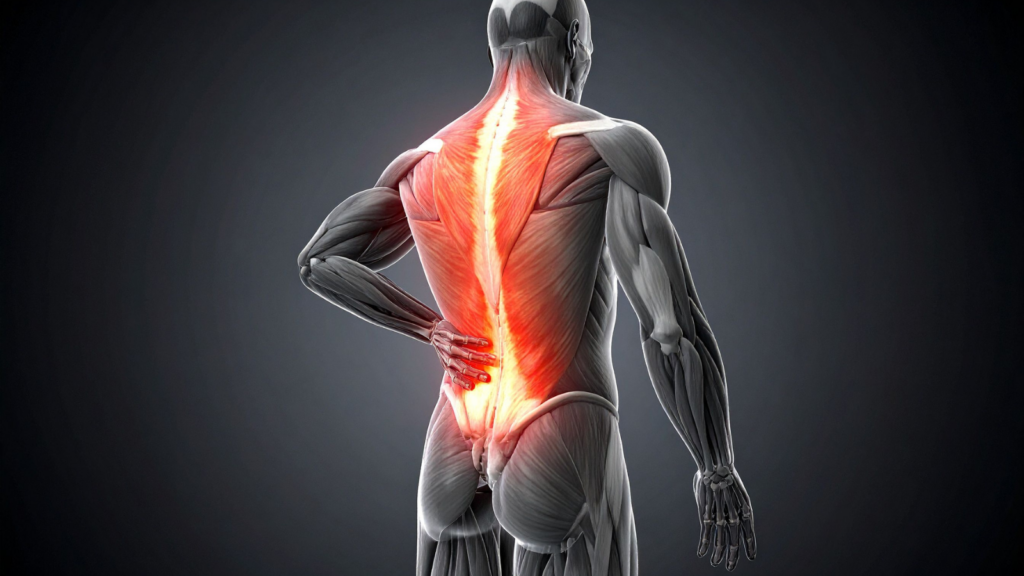
For years, coaches have talked about “core strength” as if it’s the answer to every cricketer’s back pain and power problem. But what if we’ve been looking in the wrong place?
The core isn’t just your abs. It’s a network — a system of connections that runs through your entire body, linking how you breathe, stand, rotate, and generate force. It’s what lets you bowl at pace, play powerful shots, and stay balanced over long innings.
This system doesn’t move in straight lines. It moves in spirals. And that’s where things get interesting.
The core isn’t just your abs. It’s a system that runs through your entire body.
Meet the spiral line — your body’s built-in corkscrew
Every cricketer knows what it feels like to rotate — pulling the ball for six over square leg, bowling, throwing at the stumps. What most don’t realise is that rotation isn’t just about your hips or shoulders. It’s about how your entire body connects.
The Spiral Line, first described in Thomas Myers’ Anatomy Trains, is one of the body’s hidden systems that makes this possible.
Think of it as a wrap-around band that runs diagonally through you — from your foot, up your leg, across your torso, to the opposite shoulder, then back down the other side. It’s your body’s built-in corkscrew.
Its job is simple: keep you balanced and stable while you twist, turn, and transfer force. When the Spiral Line is working well, energy flows smoothly through the whole body — from the ground up. Movement feels coordinated and powerful.
But when one link in that chain tightens or weakens — an ankle that won’t move, a hip that doesn’t rotate, a shoulder that sits forward — the system compensates. Those compensations almost always end up in the lumbar spine.
Where the Spiral Line guides your body’s rotation, the Oblique Slings drive it — together they make rotation work.
The oblique slings — the power straps of the core
If the Spiral Line is your body’s corkscrew, the oblique slings are the power straps that drive it. They’re the muscles and fascia that connect your hips to your opposite shoulders — forming two diagonal lines of strength across your body.
The front oblique sling runs from your right shoulder to your left hip (and vice versa). It links your external oblique, internal oblique, and adductors — the muscles on the inside of your thigh. Its job is to stabilise and control rotation through your core.
The back oblique sling runs from your latissimus dorsi (that big sweeping muscle in your back) across to your opposite glute. Together they act like a loaded elastic band — stretching, storing, and then releasing energy every time you rotate.
In cricket, these slings are constantly at work. Every time you load your back leg and pull over cow corner, or get into the delivery stride, force travels through that chain: back leg → hip → core → shoulder → bat or ball.
When the slings are strong, coordinated, and well-timed, the movement feels fluid and explosive. You rotate efficiently, your spine stays stable, and power transfers seamlessly from the lower body to the upper.
But when they’re weak, tight, or out of sync, something else has to take over — and that’s usually the quadratus lumborum (QL), the deep stabiliser on either side of your lower back. It’s the muscle that tries to hold everything together when the slings stop doing their job.
Over time, the QL becomes overworked, tight, and irritable — what I like to call a grumpy QL. It stiffens up, limits rotation even more, and feeds a cycle of tension and pain through the lumbar spine.
That’s why so many cricketers feel a dull, one-sided ache after bowling or batting for long periods, or worse, go into full muscle spasm. It’s not a sign of weakness — it’s a sign of compensation.
The fix isn’t more core work or another back stretch. It’s reconnecting the slings so the body can share the load again — letting the QL calm down and the spine move as it should.
How Does This All Link to Back Pain in Cricketers

Back pain doesn’t just appear out of nowhere. It’s the build-up of a movement system that’s been compensating for too long. In cricket, even the slightest imbalance has an impact. The body keeps finding ways to move — until one day, something gives.
Most cricketers assume their back pain is a strength issue, a flexibility issue, or simply “getting older”. In reality, it’s rarely about the back itself. It’s about how the whole chain above and below it is working.
The problem isn’t the back — it’s the chain
By the time most cricketers feel pain in their lower back, the real issue has been brewing elsewhere for months. Pain is rarely the problem — it’s the symptom.
When the Spiral Line and Oblique Slings stop working together, the body loses its natural ability to share load and manage rotation. The lumbar spine — designed for stability, not excessive movement — steps in to do more than it should.
That’s when things start to unravel.
A few common patterns show up again and again:
- Tight ankles mean you can’t load the hips properly, so the lower back over-rotates to make up for lost ground.
- Weak glutes or obliques break the power chain between the lower and upper body, forcing the spine to act like a bridge.
- A stiff thoracic spine stops the ribcage from turning, so the lumbar spine twists instead.
Each one on its own might seem small, but together they stack into a pattern. The spine isn’t broken. It’s just doing someone else’s job.
The spine isn’t broken. It’s just doing someone else’s job.
Typical signs you’re out of balance
Once you know what to look for, the signs are easy to spot. You finish a session feeling tight and achy in the lower back, especially after bowling or a long innings — the kind of tension that stretching never quite clears.
Your hips or knees feel off, your shoulders or neck tighten up after batting, your calves or ankles feel heavy and stiff. It’s all connected.
Dig a little deeper and you start to see the pattern. When the Spiral Line and Oblique Slings stop doing their job, the smaller muscles along that chain start stepping in.
The sartorius, TFL, and deep hip flexors begin taking over, trying to create rotation that should be coming from your core. The calves tighten to stabilise what the hips can’t control. Higher up, the rhomboids, levator scapulae, and neck muscles lock down to keep the shoulders stable.
It’s a clever short-term fix — the body finding a way to keep you moving — but it’s not efficient. These muscles were never meant to handle that load. Over time, the hips stiffen, the knees feel compressed, and the shoulders round forward. The lower back picks up the slack, doing work it was never designed to do.
These are all signs the body’s rotation chain is out of balance. The Spiral Line isn’t winding and unwinding smoothly. The slings aren’t firing in sequence. And once again, the spine is left holding the load.
Until that connection is restored — from the feet through the hips, ribs, and shoulders — the pattern won’t change. You can stretch, strengthen, and mobilise as much as you like, but the cause will still be there, waiting.
Rebuilding the Chain — What We Worked On
When she first came in, the goal wasn’t to get her bowling again — it was to get her body back online. Years of compensation had left her stuck in a high-tension state: ribs flared, diaphragm locked, spine braced, muscles up the chain all fighting for control. The first step was to unwind that pattern and let her system breathe.
We started with breathing — always the foundation. She was trapped in a shallow, chest-dominant pattern, breathing up instead of out. No expansion through the ribs. No movement through the diaphragm. Everything was tight.
So we brought in the RAIL system — Release, Activate, Integrate, Load — a framework I learned from Dr Perry Nickelston’s clinical work and have adapted into the Cricket Matters screen-and-rebuild pathway.
Releasing the spiral line
Before we could rebuild anything, we had to release the entire Spiral Line — both sides. We worked from the ground up:
- Feet and calves first, easing tension through the peroneals and tibialis anterior.
- Up through the lateral quads, IT band, and TFL, into the obliques and ribs, where the restrictions were holding her rotation hostage.
- Then into the rhomboids, levator scapulae, and neck, which had been doing far too much of the breathing and stabilising work for the diaphragm and core.
Everything was tight, coiled, reactive. So we took a slow, deliberate approach — release, breathe, reassess.
To reinforce the new awareness, I used RockTape strategically: one strip across the diaphragm, another spiralling around the torso, looping towards the QL and glute med.
The tape acted like a road map, helping her feel the spiral and retrain her sense of where she was tight. With each session, the breathing got smoother, the ribs started to move, and the nervous system began to calm.
Integrating the breath and core
Once the tissues started to let go, we moved to integration. Breathing on its own is powerful, but unless the body learns to stabilise in these new positions, the old patterns creep back.
We used Active Straight Leg Raise (ASLR) resets to wake up the deep core — teaching the obliques, diaphragm, and pelvic floor to coordinate again. These drills reconnected the lower and upper halves of the body, helping her find that cross-body tension she’d lost.
Everything we did revolved around sequencing — breathing, activating, controlling. No heavy load. No aggressive stretching. Just precise movement with awareness and intent.
As the sessions progressed, her movement became smoother. The tension in the spine dropped away. The hips started to open. She moved like an athlete again, not someone trapped in protective mode.
What comes next
The next phase will be about building strength back into these new patterns — using controlled load to seal in the changes. Once her body can breathe and move freely, we’ll progress into rotational strength work — half-kneeling chops, cable presses, single-leg stability drills — to integrate power through the slings.
None of that works without a solid foundation. You can’t load dysfunction. You have to earn the right to rotate. And that starts with breathing, awareness, and rebuilding the chain from the ground up.
You can’t load dysfunction. You have to earn the right to rotate.
What Cricketers Can Learn from This
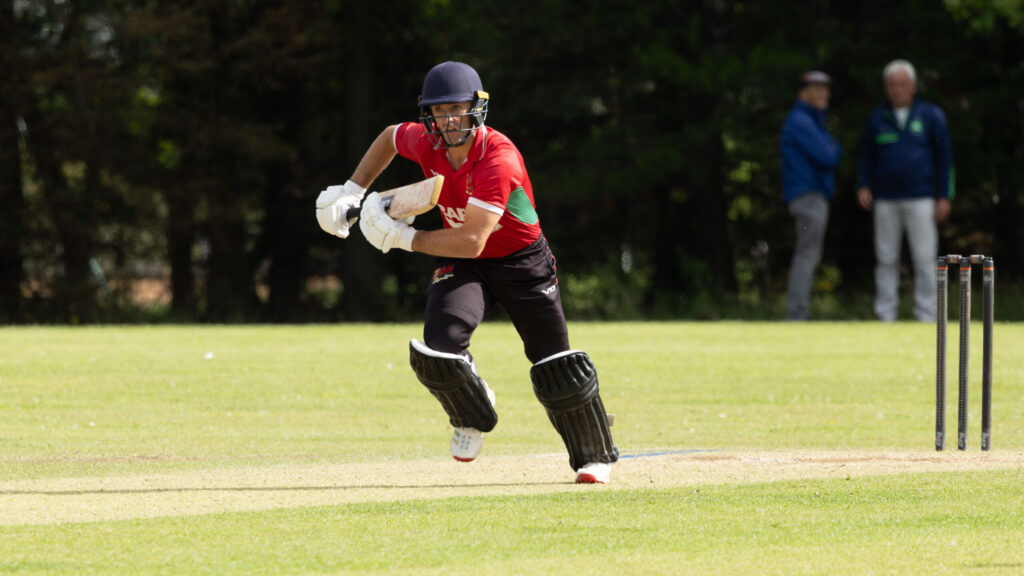
For most players, pain is just an accepted part of the game — a natural consequence of getting older, training harder, or playing too much. The truth is that pain is rarely the source of the real problem. It’s usually just the body’s way of saying something else isn’t doing its job.
Pain doesn’t always mean the problem is there
Back pain is often just the tip of the iceberg. The real issue usually sits above or below it.
A tight ankle changes how the hip loads. A stiff ribcage limits rotation and forces the lower back to move more than it should. Weak or fatigued obliques hand stabilising duties over to the QL, which then becomes overworked, tight, and sore.
So when a cricketer’s back starts to ache, the spine itself isn’t necessarily broken — it’s compensating. It’s filling in for something else that’s stopped working.
That’s why movement quality matters more than brute strength. You can build a strong core, but if it doesn’t know when to fire or how to coordinate with the rest of the body, it’s just strength sitting on dysfunction.
Cricket doesn’t reward stiffness — it rewards flow, rhythm, and timing.
Train the spirals, not just the six-pack
Most cricketers still train the core as if the body moves in straight lines. Planks, crunches, sit-ups — they build endurance, but not integration. Cricket isn’t played in straight lines; it’s a sport of rotation, torque, and diagonal movement.
The best athletes move like coil springs, not robots. They wind up, store energy, and release it seamlessly through the entire kinetic chain. They don’t brace against movement — they breathe through it. That’s what separates effortless power from forced power.
Training the Spiral Lines and Oblique Slings is how you build that kind of movement intelligence. It teaches the body to connect — from your feet through your hips, into your core, and out through your shoulders. Once that connection returns, things shift. You move lighter. Faster. Stronger. With less effort and more control.
And it starts with restoring that coil — the ability to rotate and counter-rotate freely while breathing under load.
Simple ways to start
Before you reach for exercises, start by listening to your body. Awareness is the entry point. Notice where you’re tight, where your movement stops, where you’re holding unnecessary tension.
Check your QL, inner thighs, and calves — especially along the sides. These areas often tighten when the spiral lines aren’t doing their job. If they’re tender or reactive, that’s a signal the system’s out of sync.
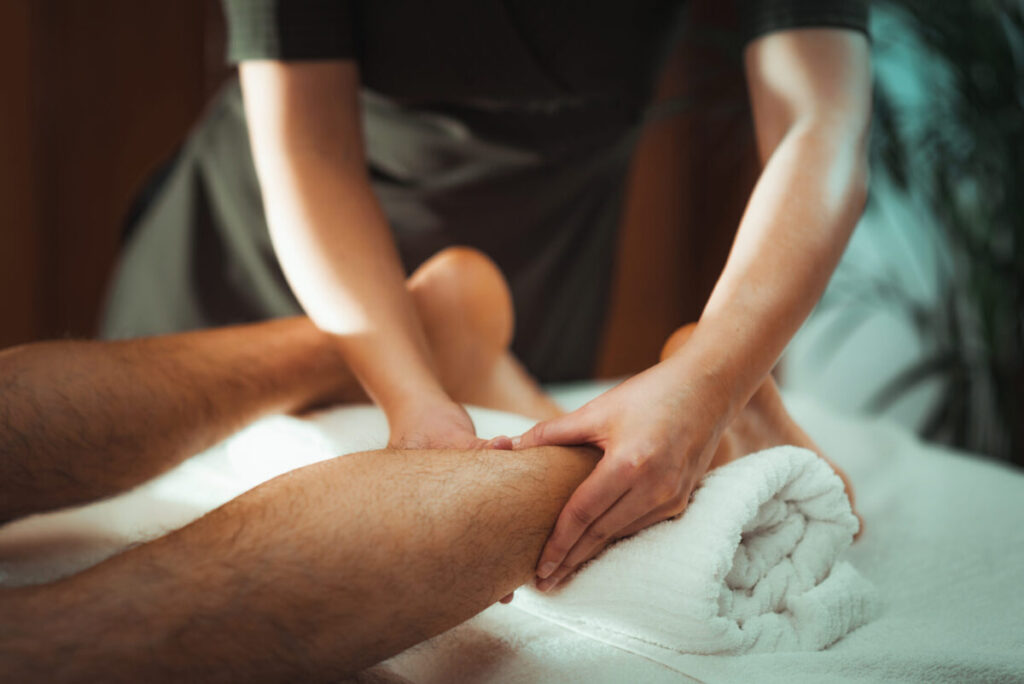
You can begin with gentle self-release using a ball or stick, but the deeper work belongs in clinic. Working with a sports massage therapist who understands how to release the Spiral Line safely is what unlocks the real change.
Once those restrictions are cleared, the body is ready to relearn how to move — and the work that comes next depends on what the screen shows.
Here’s how that work breaks down once we’ve assessed where your chain is breaking:
- If the screen shows cross-body coordination as the weakest link, half-kneeling chops and lifts are where we start.
- If trunk control is the gap, Pallof presses with rotation come first.
- If hip-to-shoulder linkage is the issue, single-leg RDL with opposite-arm reach goes in.
- If breathing-shoulder integration is the limiter, serratus wall slides or bear crawls take priority.
These aren’t a routine to follow. They’re an illustration of the toolkit — the specific drill depends on the specific finding. The screen tells us which one matters most for you.
Key Takeaways
Back pain in cricket isn’t random — and it’s rarely about the back itself. It’s a signal from your body that something else in the chain isn’t doing its job.
What we found with this young cricketer is the same pattern I see again and again: the Spiral Line and Oblique Slings — the body’s natural rotational systems — stop working as a team.
When they tighten, weaken, or lose coordination, smaller muscles step in to stabilise. The QL, hips, and calves overwork. The spine compensates. Pain becomes the outcome, not the cause.
The fix isn’t more stretching or planks — it’s restoring connection. When you release the Spiral Line, retrain the slings, and rebuild breathing and sequencing, the body starts to move as one again. That’s when things shift.
Here’s what to remember
- Pain is feedback, not failure. It tells you where load is being misplaced.
- Movement quality always beats brute strength. You can’t out-train dysfunction.
- Breathing drives everything. Without it, the slings can’t stabilise.
- The best cricketers move like coil springs — winding, loading, and releasing power through the Spiral Line with ease.
Once these systems are reconnected, you stop fighting your body. Rotation feels natural, and the power you generate starts from the ground — not your back.
If this sounds familiar — persistent stiffness, one-sided pain, a body that’s lost its rhythm — the next move isn’t another guess at what’s wrong. It’s a free 20-minute clarity call. We talk, you describe what’s going on, I tell you what I’d want to screen.
If you coach or parent a junior cricketer (11–17, fast-bowler bias), the Junior Back Pain Guide we ship Monday walks through this same diagnostic-reframe for that age group. Free, parent-direct register, home-screen tool.
Evidence Corner: What the Research Says
Back pain in cricketers is rarely about the spine itself — it’s a reflection of how load travels (or fails to travel) through the body’s rotational chain. The research that follows supports this position: movement dysfunction, myofascial imbalances, and breathing inefficiency create compensations that overwork the lumbar spine. The fix is restoring how the body connects and rotates — not simply strengthening the back.
What It Does Well
- Cricket back pain is movement-driven, not primarily structural: most spinal imaging in cricketers shows no major pathology, supporting the position that pain often stems from functional issues in rotation and load transfer rather than tissue damage (Crewe et al., 2013).
- Junior fast bowlers carry markedly elevated rates of lumbar bone stress injury, tracking the loading side of the bowling action (Engstrom & Walker, 2007; Keylock et al., 2022).
- The kinetic chain links rotation and stability: efficient rotational movement depends on synchronised force transfer through feet, hips, trunk, and shoulders, and when one segment fails, the lumbar spine compensates (Sciascia & Cromwell, 2012).
- Myofascial systems like the Spiral Line and Oblique Slings explain these connections: fascial lines act as continuous tension networks that transmit load and control rotation (Myers, 2014; Wilke et al., 2016).
- Breathing patterns influence spinal mechanics: dysfunctional breathing, especially upper-chest dominance, increases trunk stiffness and impairs rotational control (Wirth et al., 2014).
- Mind-body interventions integrating breath, movement, and proprioception (such as Qigong) reduce pain and disability in chronic non-specific low-back populations on par with conventional strengthening exercise (Sotiropoulos, Plavoukou & Georgoudis, 2025).
Where It Falls Short
- Limited cricket-specific fascial research: most evidence for Spiral Line and Oblique Sling function comes from general sports or rehabilitation literature rather than cricket populations specifically.
- Variability in manual therapy outcomes: myofascial release and taping methods show benefit for movement awareness but require skilled, individualised application, and outcomes vary considerably (Beardsley & Škarabot, 2015).
- Mechanistic uncertainty: the precise neuromyofascial mechanisms behind clinical improvements remain under study — the what is clearer than the why.
What This Means for Cricketers
Most cricket-related back pain originates outside the spine — in how force travels through the kinetic and fascial chains. When the Spiral Line and Oblique Slings lose coordination, the body shifts from efficient coil-and-release rotation to bracing and compensation. The most effective fix isn’t more “core work” — it’s retraining breathing, mobility, and integrated cross-body sequencing to restore the body’s natural rotation system.
Key Research References
- Engstrom, C. M., & Walker, D. G. (2007). Pars interarticularis stress lesions in the lumbar spine of cricket fast bowlers. Medicine & Science in Sports & Exercise, 39(1), 28–33. doi: 10.1249/01.mss.0000241642.82725.ac.
- Crewe, H., Campbell, A., Elliott, B., & Alderson, J. (2013). Lumbo-pelvic loading during fast bowling in adolescent cricketers: the influence of bowling speed and technique. Journal of Sports Sciences, 31(10), 1082–1090. doi: 10.1080/02640414.2012.762601.
- Keylock, L., Alway, P., Felton, P., McCaig, S., Brooke-Wavell, K., King, M., & Peirce, N. (2022). Lumbar bone stress injuries and risk factors in adolescent cricket fast bowlers. Journal of Sports Sciences, 40(12), 1336–1342. doi: 10.1080/02640414.2022.2080161.
- Sciascia, A., & Cromwell, R. (2012). Kinetic chain rehabilitation: a theoretical framework. Rehabilitation Research and Practice, 2012, 853037. doi: 10.1155/2012/853037.
- Myers, T. W. (2014). Anatomy Trains: Myofascial Meridians for Manual and Movement Therapists (4th ed.). Elsevier.
- Wilke, J., Krause, F., Vogt, L., & Banzer, W. (2016). What is evidence-based about myofascial chains: A systematic review. Archives of Physical Medicine and Rehabilitation, 97(3), 454–461. doi: 10.1016/j.apmr.2015.07.023.
- Wirth, B., Amstalden, M., Perk, M., Boutellier, U., & Humphreys, B. K. (2014). Respiratory dysfunction in patients with chronic neck pain — influence of thoracic spine and chest mobility. Manual Therapy, 19(5), 440–444. doi: 10.1016/j.math.2014.04.011.
- Sotiropoulos, S., Plavoukou, T., & Georgoudis, G. (2025). Qigong Versus Usual Exercise in the Treatment of Chronic Nonspecific Low Back Pain as an Add-On to a Standardized Physiotherapy Program. Cureus, 17(3), e81492. doi: 10.7759/cureus.81492.
- Beardsley, C., & Škarabot, J. (2015). Effects of self-myofascial release: A systematic review. Journal of Bodywork and Movement Therapies, 19(4), 747–758. doi: 10.1016/j.jbmt.2015.08.007.
Bottom Line for Cricketers
Back pain isn’t always a back problem — it’s a movement problem.
When your body’s rotational chain reconnects from feet to hips to shoulders, the spine can finally do its real job: stay stable while the rest of you moves freely.
FAQ
Why does my back hurt when I play cricket?
Cricket is a rotational sport, and the repeated twisting, side-bending, and extension involved in bowling, batting, and throwing place high loads on the trunk. When areas like the ankles, hips, or ribcage become stiff, or when the oblique slings lose timing and coordination, the lumbar spine is forced to compensate. Over time, this leads to strain and pain. Common patterns in cricketers: limited front-foot mechanics, poor thoracic rotation, overactive quadratus lumborum (QL), and tight adductors or calves trying to stabilise what the core and hips should be controlling. Back pain in this case is rarely the problem itself — it’s a symptom of a wider movement imbalance through the kinetic chain.
How long does a thrown-out back take to heal in cricket?
For most mild strains or spasms, recovery can begin within three to seven days and take two to six weeks to regain full confidence and strength, assuming proper rest, gentle movement, and good sleep. More severe or recurrent strains may take six to twelve weeks. The key to faster recovery is to keep moving within pain-free limits rather than staying still. Gentle walking, diaphragmatic breathing, controlled thoracic rotation, and reintroducing hip and ankle motion all help restore balance. Returning to bowling or batting should only happen once pain-free movement and smooth rotation have returned.
What does a strained back feel like in cricketers?
A strained back often feels like a sudden grab or spasm during or after a delivery stride, a forceful shot, or an awkward twist. The initial sharp pain is usually followed by stiffness, reduced rotation, and difficulty bending or extending. When the quadratus lumborum is involved, the discomfort tends to sit deep on one side, just above the pelvis, and can flare up when planting the front foot, twisting, or reaching overhead. This kind of strain doesn’t necessarily mean structural damage — it usually signals that the body’s rotational system has lost balance or coordination.
What is the fastest way to heal a back strain for cricketers?
The fastest way to recover from a back strain is to restore natural movement as early as possible without forcing it. Gentle walking, relaxed breathing, and slow hip-hinge practice help reduce muscle guarding and reintroduce motion safely. Avoid complete rest — staying still for long periods can delay healing and increase stiffness. For cricketers, it’s also essential to restore rotation gradually through the hips, thorax, and ankles before returning to bowling or batting. Simple work like gentle trunk rotations, single-leg balance drills, and light stability prepares the body for full-speed movement later.