
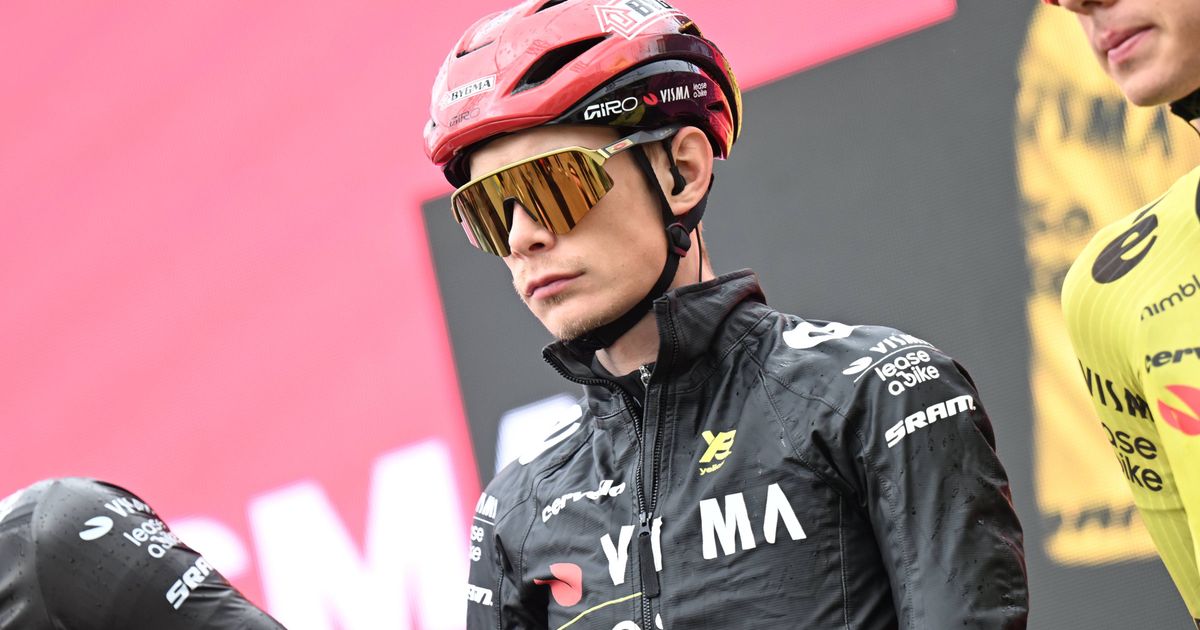
“Vingegaard? It is a disappointment, even if there is no panic in the general classification or over a possible overall victory,” Gilbert said.
Gilbert warns mountain weakness would be far more costly
Gilbert’s concern was not that Vingegaard had lost the Giro in the time trial. It was that a similar off-day in the mountains would carry far greater consequences. “But he cannot afford to have a day like that in the mountains,” he warned. “If he has a weakness like that on a 10 or 15 kilometre climb, it can be counted in minutes.”
That is the heart of the issue. Stage 10 was a flat, power-heavy time trial that Vingegaard himself admitted was not his speciality. But the Giro still has decisive mountain stages ahead, where any real physical dip would be harder to disguise and far more dangerous for his overall ambitions.
Vingegaard remains the favourite, but the certainty around him has softened. He has already won both summit finishes at this Giro, yet several analysts have now questioned whether he looks quite as dominant as expected.
Jonas Vingegaard in action during the stage 10 individual time trial at the 2026 Giro d’Italia
“The way he rode today is not normal”
French icon and multiple Tour de France stage winner Jacky Durand also rejected the idea that Vingegaard was simply managing his effort. “Was it management? I don’t believe that,” Durand said. “In the final kilometre, I watched Vingegaard. If that is him managing, he pulls a pretty big grimace.”
Gilbert went further, suggesting the visual signs were not those of a rider simply riding within himself. “It is his worst time trial since he became Vingegaard, since he won the Tour,” Gilbert said. “We hope he is not coming down with an illness. There is talk of a virus at this Giro.”
He then pointed to Vingegaard’s body language on the bike as a reason for concern. “In any case, the way he rode today is not normal,” Gilbert added. “His head carriage is low, you can see he is struggling to breathe, those are signs that do not lie. We saw he was not having a good day. He was sweating a lot.”
Those comments add a sharper tone to the post-stage debate. Others have framed Vingegaard’s ride as a product of the course, with the long, flat time trial favouring bigger, more powerful riders. Gilbert did not dismiss that completely, but his concern centred on how Vingegaard looked while losing time.
Course issue or warning sign?
Vingegaard’s own explanation after the stage was straightforward. He described the time trial as “terrible” and said a long, flat test was not his speciality. That argument carries weight. The route was better suited to riders with greater absolute power, and Ganna’s winning performance was on another level entirely.
But Gilbert and Durand clearly see a question that will only be answered in the coming days. Was this simply a bad course for Vingegaard, or was it evidence that he is not at his best in this Giro?
The comparison with his previous time trial level adds to the debate. Even on flat terrain, Vingegaard has produced stronger Grand Tour performances against the clock in the past. His Stage 10 ride did not match the expectations attached to a rider of his standing.
Giro still within reach
For now, the general classification remains favourable. Eulalio is still in pink, but only by 27 seconds. Thymen Arensman has moved up to third overall after finishing second on the stage, but he remains 1:30 behind Vingegaard.
The road ahead also suits Vingegaard far more than the time trial to Massa. If he responds in the mountains, Stage 10 may quickly become a strange but survivable off-day.
If he shows the same signs when the Giro climbs again, Gilbert’s warning will look much more significant. One difficult time trial has not changed the favourite. It has, however, changed the questions around him.