
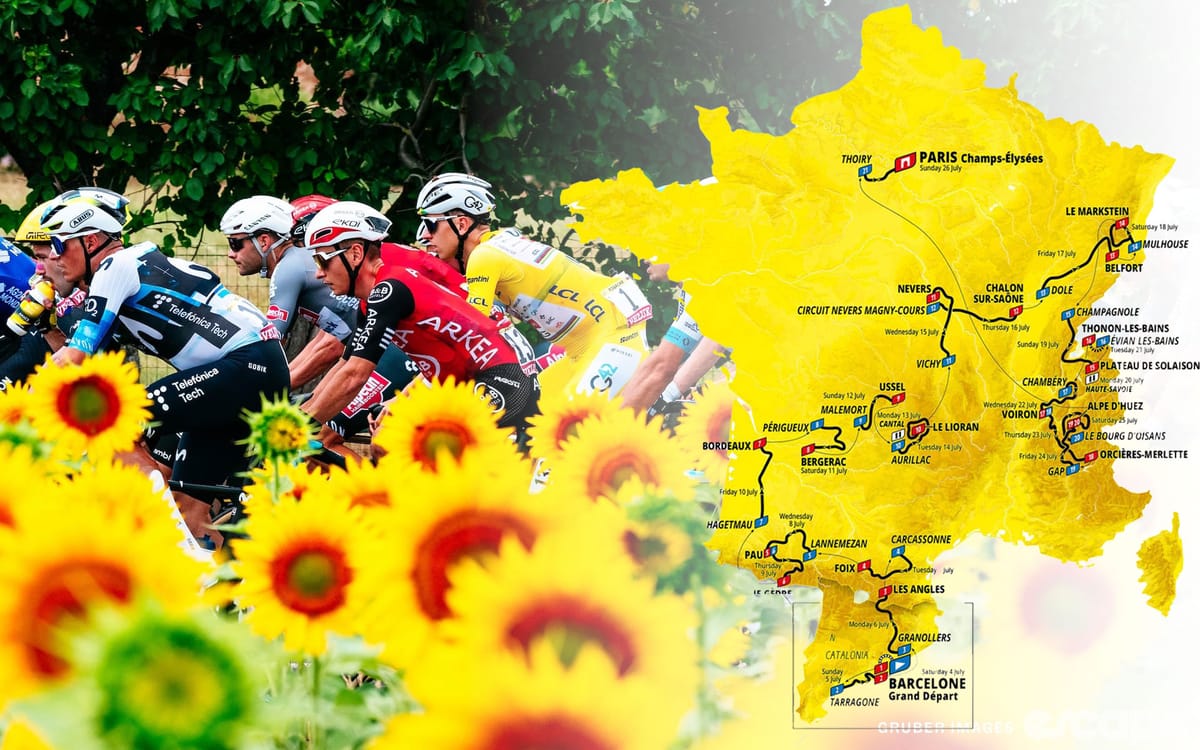
A preview of all 21 Tour de France stages, from the Grand Départ in Barcelona to the grand finale in Paris.

Gruber Images
The biggest bike race in the world is almost here. The 2026 Tour de France will roll out from Barcelona in Spain on July 4, moving into France two days later and carrying on for three weeks before finishing in Paris on July 26.
With the coming spectacle looming larger with every day, it’s time to preview the route. In a broad sense, this is a climber-friendly Tour even for our climber-friendly era, with a whopping 54,450 meters of total elevation – about 2,000 more than either of the last two years – and only one individual time trial of just 26.1 km to go with the opening team time trial of 19.6 km.
While the time trials will certainly leave their mark on the race, it will be the climbs that will decide the overall title. Those climbs are scattered throughout the three weeks of racing, with a few early challenges before an especially challenging final week.
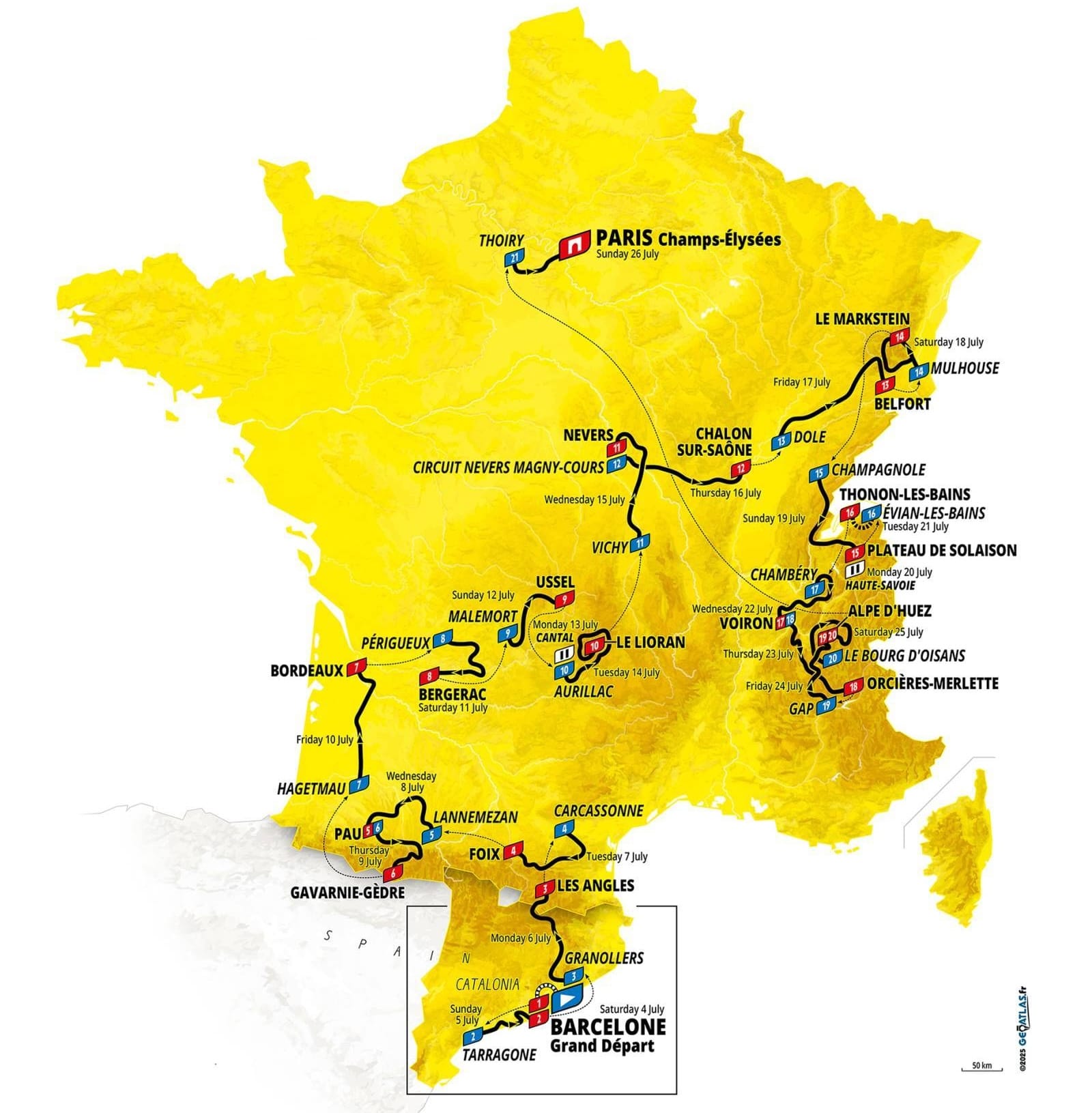
We will take a deep dive on the Tour start list and break down the favorites for the yellow jersey and the other big names likely to shine a bit closer to the start of the race. For now, let’s take a more in-depth look at the many challenges on offer across the 21 stages that will (hopefully) keep us on the edge of our seats this July …
Stage 1: Barcelona to Barcelona – 19.6 km (TTT)
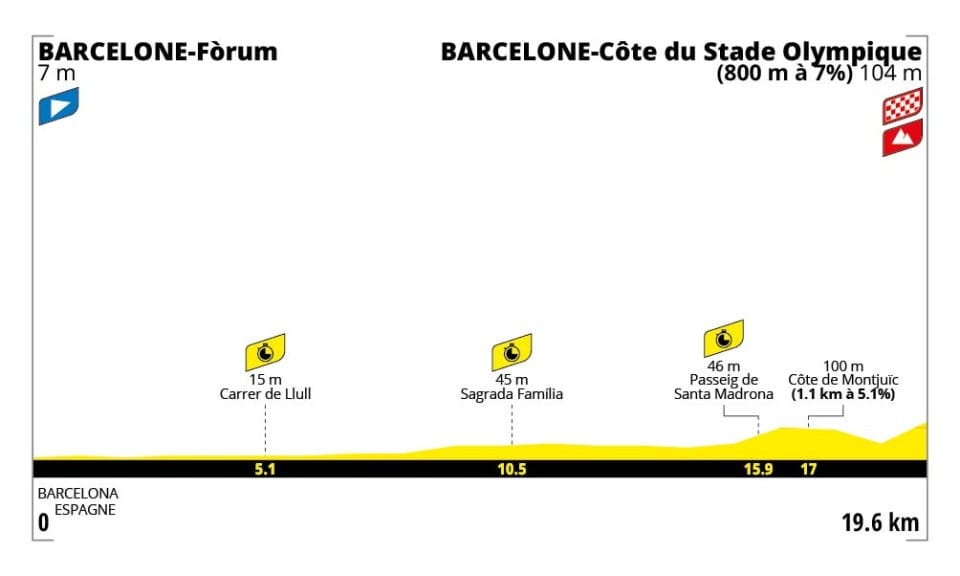
Date: Saturday, July 4, 2026
Stage type: Team time trial
Total elevation gain: 200 m
Summary: The Tour de France opens with a TTT in Barcelona, Spain, using the new rules already trialed at Paris-Nice and the Tour Auvergne-Rhône-Alpes, where riders finish with their own times rather than the time of the fourth rider across the line. The stage will immediately give riders from the top teams – including the biggest favorites for the overall title – an advantage in the overall standings. It’s mostly flat until the final third, where the road pitches up first for the 1.1 km Montjüic climb and then for a shorter (800 m) but steeper (7%) final push to the line. Expect the support riders from the best-prepared squads to go all in over the flat 15 km that start the stage before launching their leaders on the steeper stuff.
Stage 2: Tarragona to Barcelona – 168.5 km
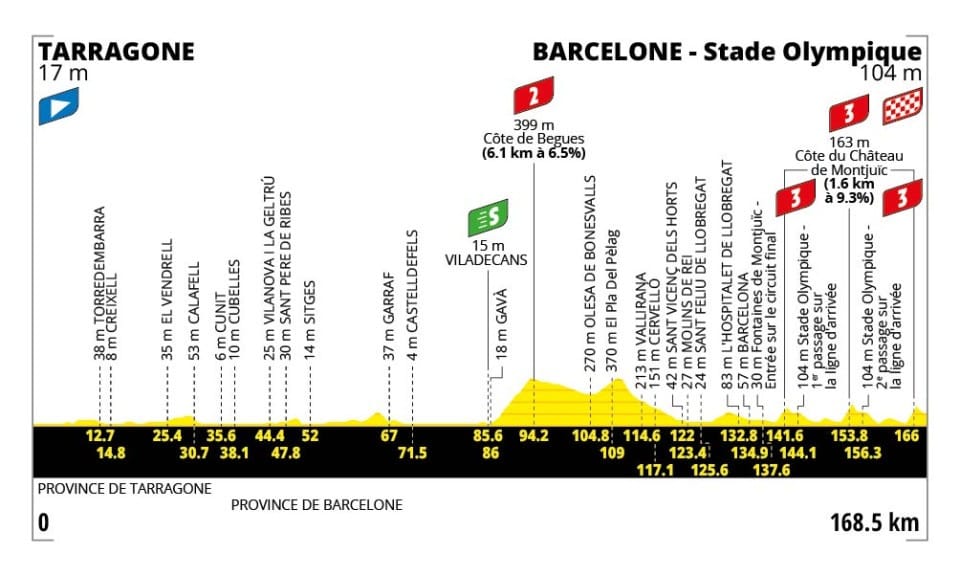
Date: Sunday, July 5, 2026
Stage type: Hilly
Total elevation gain: 2,500 m
Summary: The Tour’s second stage will give the puncheurs a shot at yellow. Once again, the Montjüic will play a key role in the stage. This time, riders will climb up to the castle atop the hill, a 1.6 km ascent at 9.3%, and they’ll do it three times. Those challenges could inspire attacks, or the stage could end in a reduced sprint. Either way, the GC riders might even get involved.
Stage 3: Granollers to Les Angles – 195.5 km
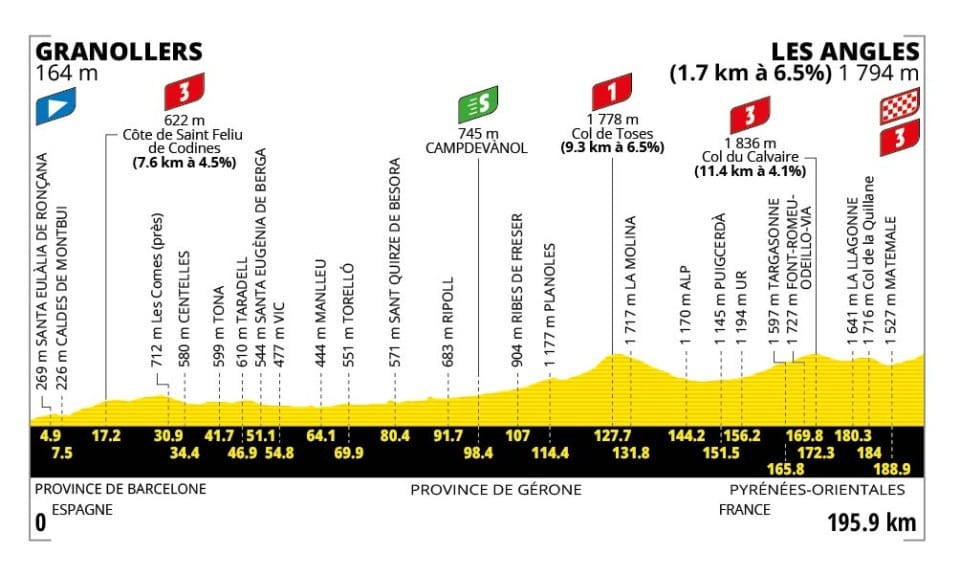
Date: Monday, July 6, 2026
Stage type: Mountain
Total elevation gain: 3,850 m
Summary: Stage 3 will take the Tour from Spain into France, and it will tackle a Cat. 1 along the way before ending with a Cat. 3 uphill finish. The Les Angles climb isn’t especially hard, but a finish at 6.5% could once again set up the puncheurs to fight for the win. The GC riders can’t be counted out either, although there’s also a chance that a break could have a shot.
Did we do a good job with this story?