
After spending extensive assets on the defensive side of the ball since handing Jalen Hurts a five-year, $255 million extension, the Philadelphia Eagles decided to load up the offensive side of the ball with not one, not two, but their first five selections in the 2026 NFL Draft on new offensive players.
They added to the trenches in the middle rounds, procured a new quarterback for the Howie Roseman QB factor, and even procured a pair of new weapons for Hurts in the passing game, with Makai Lemon and Eli Stowers presenting the highest upside of any rookies drafted by the Birds since DeVonta Smith back in 2021.
So, when the Eagles came together for their first taste of action since coming up woefully short in the Wildcard round of the 2026 NFL Playoffs, fans were keeping a close eye on the offensive side of the ball, where Lemon and Stowers got their first taste of action in a midnight green uniform.
Now granted, rookie minicamp isn’t exactly a joint practice with a heated rival like the New England Patriots. There aren’t hard hits, sophisticated schematic clashes, or really anything to write home about on the field, but it does showcase how new players look in the context of their new team, which matters.
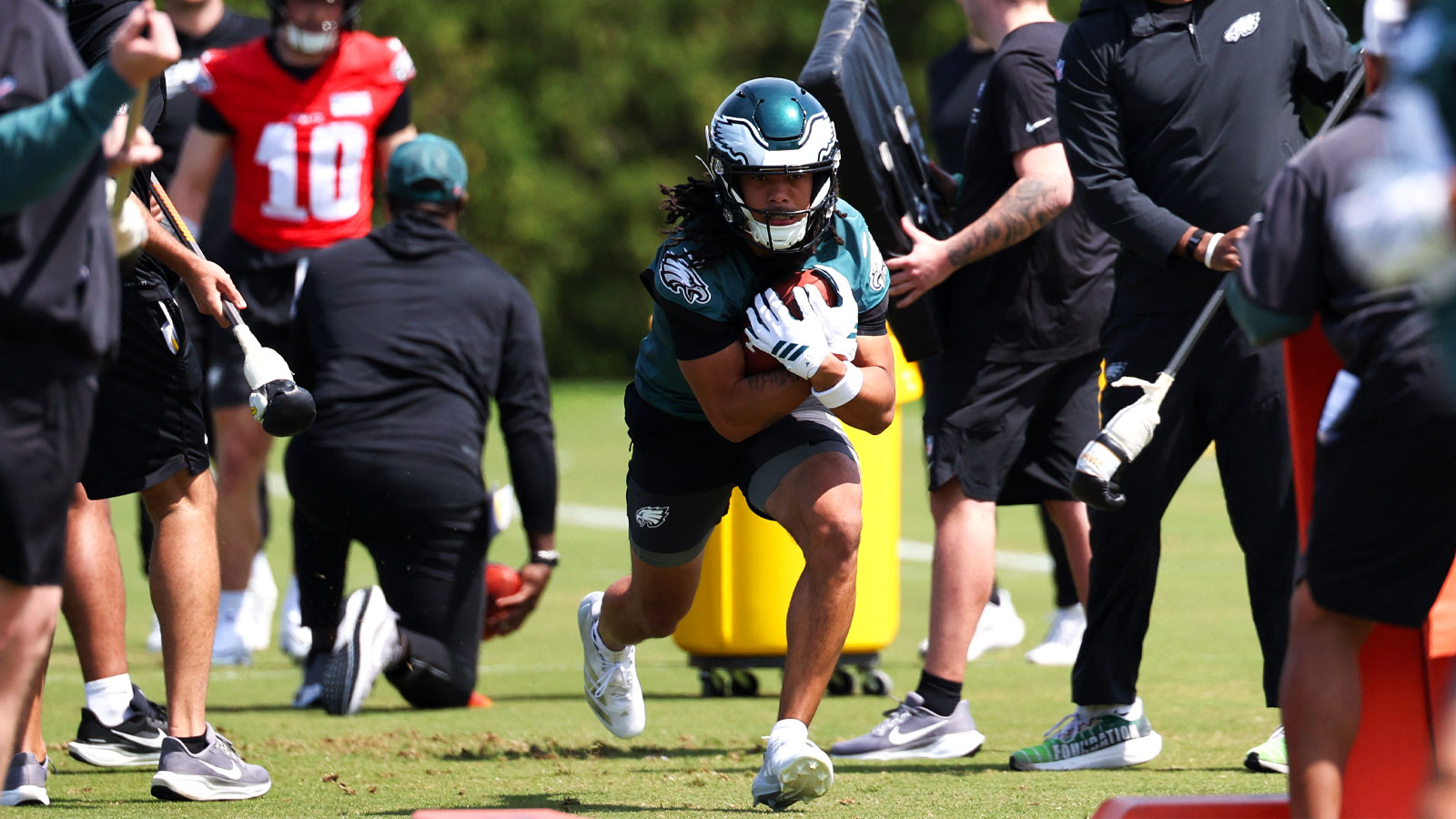
But which player stood out most? Well, while Lemon and Stowers earned the majority of the external attention, because the Eagles only had one quarterback in camp, the player who got the most attention, but from his coaches and his teammates, was fifth-round pick Cole Payton, who touched the ball more than any other player after a career spent at North Dakota State.
Cole Payton was incredibly productive at North Dakota State
Standing 6-foot-2, 232 pounds, Payton is almost the same size as his new teammate, Stowers, and when the ball is in his hands past the line of scrimmage, he plays like him, too.
Coming up as a quarterback out of Omaha, Nebraska, Payton didn’t get the same attention as Stowers as a signal caller, committing to North Dakota State as a 2-star recruit instead of a football powerhouse like Texas A&M, but that didn’t stop him from producing at a high level.
Beginning his career as a backup to Cam Miller, who was drafted in the sixth round by the Las Vegas Raiders last spring, Payton really only became a starter in 2025 but made the most out of it, completing 161 of his 224 passes for 2,719 yards and 16 touchdowns versus just six interceptions. Payton also put in work on the ground, rushing the ball 136 times for 777 yards and 13 more touchdowns during the 2025 season alone.
Unlike other quarterbacks the Eagles have drafted during the Hurts era, like, say, Tanner McKee or last year’s sixth-round pick, Kyle McCord, Payton is a true dual-threat passer, even if he throws the ball with the opposite hand of QB1. When he’s tasked with picking up yards on the ground, either on designated runs or when he calls his own number on a passing down, Payton runs with a reckless abandon that led to three fumbles last season but also routinely created highlight reel performances worthy of dazzling fans on social media.
If the Eagles ever do need to call Payton’s No. 10 this fall, which is unlikely, considering he’s currently QB4 on the depth chart behind Hurts, McKee, and Andy Dalton, the NDSU quarterback should be able to produce with his arm and his legs, with the added bonus of having six months of experience throwing balls to Lemon and Stowers.
Cole Payton is open to helping the Eagles however they want
After getting an exclusive run playing quarterback for the Eagles during rookie minicamp, Payton’s production will fall considerably when the entire team comes together, sliding down to the bottom of the pecking order as the Eagles look to get ready for the regular season.
For some young passer, that’s just the price of being a Day 3 pick, with the prospects of making the 53-man roster a simple number game, but Payton is one of the few exceptions to that basic rule, as he brings so much more to the table than just throwing passes.
Because Payton didn’t become a starting quarterback full-time until his final season in Fargo, his coaches gave him a chance to do a little bit of everything, from taking reps at tight end and running back in games to working through additional drills during practice. Discussing his potential to be a Tayson Hill-style performer at the bottom of the roster in 2026 and beyond, Payton told The Athletic’s Zach Berman that he is down to do whatever the Eagles want, even if that means running down returnmen on special teams.
“If that’s what the team wants, if that’s what the team needs, I’m all for it,” said Payton via The Athletic’s Zach Berman.
“In college, I got a couple reps at running back, tight end, even in the game, so we played with that a little bit. In practice, I was doing special teams drills. As a junior, I also started on punt even as the backup quarterback, so I’ve done a little bit of it. I just love the game of football.”
On one hand, the idea of the Eagles risking a quarterback they believe could fill a long-term role on special teams isn’t something the team has previously been open to. If they view Payton as a potential long-term backup for Hurts, or better yet, a quarterback with future starting potential, then risking a career-ending injury on punt coverage likely isn’t worth it. But if they instead are willing to view Payton as a do-it-all bottom-of-the-roster player like, say, Trey Burton as a rookie, then why not give him a spot all over the field to see what he can do, as even if he ends up landing on IR, the Eagles would likely turn to outside help before calling their QB4’s number over a meaningful stretch of games.
After spending extensive assets on the defensive side of the ball since handing Jalen Hurts a five-year, $255 million extension, the Philadelphia Eagles decided to load up the offensive side of the ball with not one, not two, but their first five selections in the 2026 NFL Draft on new offensive players.