
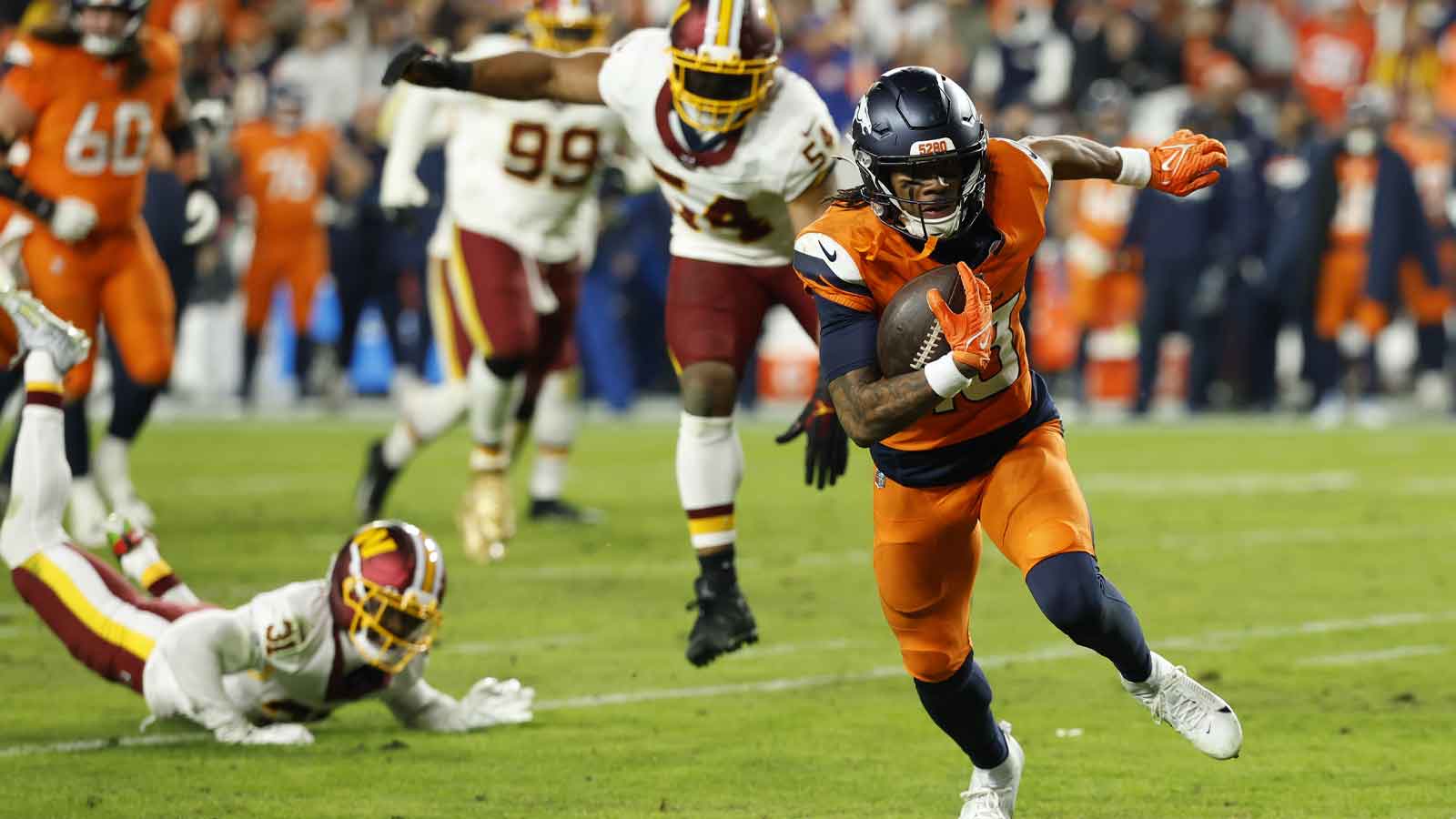
The Denver Broncos are actively enhancing their offensive lineup around Bo Nix by bringing in veteran wide receiver Hakeem Butler, who had an impressive season in the UFL. Butler led the spring league in receiving yards and earned the Offensive Player of the Year award, providing head coach Sean Payton with another intriguing option in a crowded receiving corps.
Payton has made it clear that improving the ground game is a top priority for the Broncos in 2026. Last season’s loss in the AFC Championship Game highlighted the challenges that arise when the running game falters, and striking a balance between the run and pass has become crucial for the team.
The Broncos have approached the offseason with a mindset that they are on the brink of success. This is often the result when a young quarterback shows significant improvement, as the team reaches the AFC Championship Game, and the front office opts for aggressive moves rather than patience. However, the 2026 season will not be determined solely by the big-name acquisitions; Bo Nix will need more than just one star receiver, and Sean Payton will require more than just creative play designs.
For a team that was one game away from the Super Bowl, the lesser-known offensive players need to convert their potential into actual production. This is especially important given Denver’s two significant offensive questions: can the run game be made dependable, and can the receiving corps become more efficient instead of just deeper?
Two players stand out as sleeper breakout candidates who could help answer those questions:
RJ Harvey, RB
Although RJ Harvey might not seem like a typical sleeper, since the Broncos used valuable draft capital to select him, he qualifies because the national focus on Denver’s offense has shifted toward Nix, Waddle, Courtland Sutton, and the overall passing-game improvements. Consequently, the most crucial offensive development may be overlooked: Harvey’s presence in the backfield.
The Broncos selected Harvey in the second round of the 2025 NFL Draft after an outstanding final season at UCF, where he rushed for 1,577 yards and 22 touchdowns, contributing to the receiving game as well. Denver highlighted his explosiveness in their official draft narrative, noting his FBS-best rate of carries that gained at least 10 yards in 2024.
Payton needs a running back who can do more than gain three yards on a carry, and he needs someone who can capitalize on defenses playing with lighter boxes, create big plays, and add energy to an offense that often relied too heavily on Nix to make plays.
Harvey can provide that spark. J.K. Dobbins brings veteran experience, and the Broncos’ backfield includes several players competing for roles. Last season, the Broncos struggled with that consistency, which made them easier to defend, particularly in adverse weather and late-game scenarios.
Harvey’s main advantage is his quickness. He can reach top speed rapidly, reads gaps effectively, and possesses the acceleration to turn a typical inside zone play into a significant gain, and this is vital for a quarterback like Nix; explosive runs can shift down-and-distance situations, hinder pass rushers, make play-action more believable, and create simpler passes without relying on the quarterback to constantly face third-and-long.
The ability to contribute in the passing game is equally important. Payton has always valued running backs who can make an impact in the air, and Harvey arrived with sufficient skills to be more than a two-down back. He can be utilized in screens, checkdowns, angle routes, and motion plays, which don’t require him to dominate touches but instead ensure that the defense must account for him whenever he is on the field.
Pat Bryant, WR
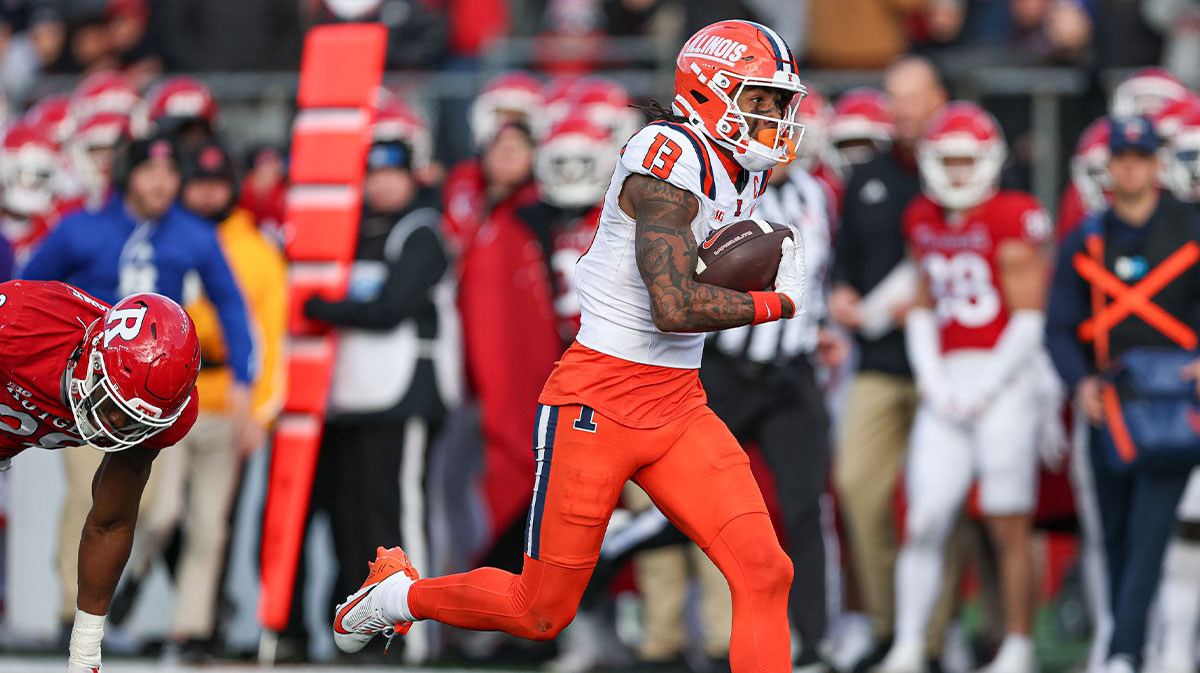
Pat Bryant has a tougher path to gaining attention, but he may have a clearer route to earning trust.
The receiver room in Denver is crowded. Jaylen Waddle adds speed to the group, Courtland Sutton remains the established big target, and Marvin Mims Jr. brings both return value and vertical ability. Also, Troy Franklin has chemistry with quarterback Bo Nix from their days at Oregon, too, and this crowded lineup makes Bryant an intriguing prospect.
The Broncos require someone who can win specific downs, especially in tight coverage, and Bryant’s profile coming out of Illinois was built on reliability, size, contested catches, and effectiveness in the red zone. Denver selected him with the 74th pick in the 2025 NFL Draft after he recorded 54 receptions for 984 yards and 10 touchdowns in his final college season, and these details matter in Denver’s offense. Bo Nix has enough mobility and creativity, but the Broncos cannot afford to waste drives due to missed opportunities.
A receiver who can win at the catch point and handle physical coverage provides the quarterback with a different type of option, as not every throw has to be wide open. Sometimes, a playoff-caliber offense needs a target who can box out a defender, finish through contact, and convert a contested catch into a first down.
While he was not a featured weapon, he found ways to contribute to a loaded offense, and the next challenge for him is to transform situational trust into a more substantial role.
The trade for Waddle could actually benefit him, in the end, as a true speed threat can alter coverages, open up intermediate spaces, and create more favorable matchups for receivers who excel in size and timing. Bryant has to be reliable in the areas where Denver’s offense requires physicality, on third downs, in the red zone, on boundary routes, and during late-clock situations.
The comparison that has emerged surrounding Bryant is quite clear. After the draft, Payton remarked that aspects of Bryant’s game reminded him of former Saints receiver Michael Thomas. This doesn’t mean Bryant is destined to become a prime Thomas, and it’s important not to impose that pressure on him, but the significance of Payton’s comment lies in the skill set, as he understands the value of a strong, precise receiver who can operate effectively underneath and challenge defensive backs with body control.
Denver’s passing game now boasts more speed, and he can provide the needed structure.
His breakout performance doesn’t need to resemble 1,200 yards, as a meaningful improvement could look like 45 receptions, six touchdowns, and a growing role in crucial situations. Such progression would be significant for a team aiming to enhance efficiency around Nix.
The Broncos’ offense needs substance beyond the headlines.
Denver has made headline-grabbing moves, with Waddle providing a new explosive element to the passing game, Butler generating camp storylines, and J.K. Dobbins adding veteran experience to the backfield. Ultimately, Nix is the player who will determine how far this team can go.
However, playoff contenders are often distinguished by players who transform smaller opportunities into consistent value.
Running back Harvey can make the Broncos’ run game more dynamic, and meanwhile, Bryant can offer Nix a dependable target in the parts of the field where flashy plays become less prevalent and physical football takes precedence. These represent the kind of internal improvements that can help a good offense become more complete, and they have already shown they can get close.
In 2026, Harvey and Bryant have the potential to become substantial contributors.
The Denver Broncos are actively enhancing their offensive lineup around Bo Nix by bringing in veteran wide receiver Hakeem Butler, who had an impressive season in the UFL. Butler led the spring league in receiving yards and earned the Offensive Player of the Year award, providing head coach Sean Payton with another intriguing option in a crowded receiving corps.